Acts 3:13
The God of Abraham, and of Isaac, and of Jacob, the God of our fathers, hath glorified his Son Jesus; whom ye delivered up, and denied him in the presence of Pilate, when he was determined to let him go.
Translations
The God of Abraham, and of Isaac, and of Jacob, the God of our fathers, has glorified his Son Jesus; whom you delivered up, and denied him in the presence of Pilate, when he was determined to let him go.
King James Version, KJV Cambridge Paragraph Bible
The God of Abraham, and of Isaac, and of Jacob, the God of our fathers, hath glorified his Son Jesus; whom ye delivered up, and denied him in the presence of Pilate, when he was determined to let him go.
The God of Abraham, and of Isaac, and of Jacob, the God of our fathers hath glorified his Son Jesus; whom ye delivered up, and denied him in the presence of Pilate, when he was determined to let him go.
Revised Version, American Standard Version
The God of Abraham, and of Isaac, and of Jacob, the God of our fathers, hath glorified his Servant Jesus; whom ye delivered up, and denied before the face of Pilate, when he had determined to release him.
'The God of Abraham, and of Isaac, and of Jacob, the God of our fathers, did glorify His child Jesus, whom ye delivered up, and denied him in the presence of Pilate, he having given judgment to release [him],
The God of Abraham and Isaac and Jacob, the God of our fathers, has glorified his servant Jesus, whom ye delivered up, and denied him in the presence of Pilate, when he had judged that he should be let go.
The God of Abraham and Isaac and Jacob,—the God of our fathers, hath glorified his servant Jesus:—whom, ye, indeed, delivered up and denied to Pilate’s, face when he had adjudged to release him;
Berean Standard Bible, Majority Standard Bible
The God of Abraham, Isaac, and Jacob, the God of our fathers, has glorified His servant Jesus. You handed Him over and rejected Him before Pilate, even though he had decided to release Him.
The God of Abraham, Isaac, and Jacob, the God of our fathers, has glorified his Servant Jesus, whom you delivered up and denied in the presence of Pilate, when he had determined to release him.
The God of Abraham, of Isaac, and of Jacob, the God of our fathers, has given glory to his servant Jesus; whom you gave up, turning your backs on him, when Pilate had made the decision to let him go free.
The God of Abraham, and Isaac, and Iacob, the God of our fathers hath glorified his Sonne Iesus, whom ye betrayed, and denied in the presence of Pilate, when he had iudged him to be deliuered.
Douay-Rheims (Challoner revision)
The God of Abraham, and the God of Isaac, and the God of Jacob, the God of our fathers, hath glorified his Son Jesus, whom you indeed delivered up and denied before the face of Pilate, when he judged he should be released.
Pictures
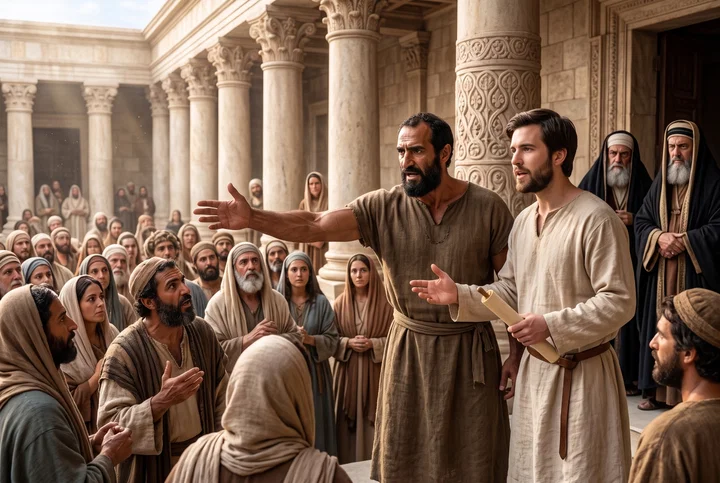
Cross-references 20 of 33
- Acts 4:12
Neither is there salvation in any other: for there is none other name under heaven given among men, whereby we must be saved.
Peter declares that salvation is found in Jesus alone.
- Acts 2:23-24
Him, being delivered by the determinate counsel and foreknowledge of God, ye have taken, and by wicked hands have crucified and slain:
Jesus was delivered up and killed, but God raised him from the dead.
- Luke 23:20-25
Pilate therefore, willing to release Jesus, spake again to them.
Pilate sought to release Jesus, but the people demanded his crucifixion.
- Acts 4:10
Be it known unto you all, and to all the people of Israel, that by the name of Jesus Christ of Nazareth, whom ye crucified, whom God raised from the dead, even by him doth this man stand here before you whole.
Peter charges his hearers with crucifying Jesus and declares that God raised him.
- Acts 3:17-18
And now, brethren, I wot that through ignorance ye did it, as did also your rulers.
Christ’s suffering fulfilled what God had foretold through the prophets.
- Acts 3:6
Then Peter said, Silver and gold have I none; but such as I have give I thee: In the name of Jesus Christ of Nazareth rise up and walk.
The lame man is healed through Jesus’ name.
- Exodus 3:6
Moreover he said, I am the God of thy father, the God of Abraham, the God of Isaac, and the God of Jacob. And Moses hid his face; for he was afraid to look upon God.
Names the God of Abraham, Isaac, and Jacob.
- Acts 3:19
Repent ye therefore, and be converted, that your sins may be blotted out, when the times of refreshing shall come from the presence of the Lord;
Repentance and conversion lead to sins being blotted out.
- John 19:12-16
And from thenceforth Pilate sought to release him: but the Jews cried out, saying, If thou let this man go, thou art not Cæsar’s friend: whosoever maketh himself a king speaketh against Cæsar.
Pilate seeks to release Jesus but delivers him to be crucified.
- Matthew 27:24
When Pilate saw that he could prevail nothing, but that rather a tumult was made, he took water, and washed his hands before the multitude, saying, I am innocent of the blood of this just person: see ye to it.
Pilate recognizes Jesus’ innocence but sentences him under pressure.
- John 19:11
Jesus answered, Thou couldest have no power at all against me, except it were given thee from above: therefore he that delivered me unto thee hath the greater sin.
Jesus identifies the one who delivered him to Pilate as bearing greater sin.
- Luke 23:14
Said unto them, Ye have brought this man unto me, as one that perverteth the people: and, behold, I, having examined him before you, have found no fault in this man touching those things whereof ye accuse him:
Pilate finds Jesus innocent, though the crowd demands his death.
- John 18:31
Then said Pilate unto them, Take ye him, and judge him according to your law. The Jews therefore said unto him, It is not lawful for us to put any man to death:
The leaders say they cannot execute Jesus and press their charge before Pilate.
- Acts 2:36
Therefore let all the house of Israel know assuredly, that God hath made that same Jesus, whom ye have crucified, both Lord and Christ.
Peter declares the people responsible for Jesus’ death.
- John 19:7
The Jews answered him, We have a law, and by our law he ought to die, because he made himself the Son of God.
The leaders press their charge before Pilate, demanding Jesus’ death.
- 1 John 2:23
Whosoever denieth the Son, the same hath not the Father: [but] he that acknowledgeth the Son hath the Father also.
Denying the Son means not having the Father.
- 1 Corinthians 2:8
Which none of the princes of this world knew: for had they known it, they would not have crucified the Lord of glory.
The rulers’ ignorance led to their crucifixion of Jesus.
- Luke 23:16
I will therefore chastise him, and release him.
Pilate says he will release Jesus.
- Matthew 26:69-75
Now Peter sat without in the palace: and a damsel came unto him, saying, Thou also wast with Jesus of Galilee.
Peter denied knowing Jesus under pressure in the high priest’s courtyard.
- Luke 23:5
And they were the more fierce, saying, He stirreth up the people, teaching throughout all Jewry, beginning from Galilee to this place.
Pilate finds Jesus innocent, but the crowd demands his death.
Commentary
Each commentary is drawn from primary sources: the writings of Ellen G. White and Adventist pioneers and periodicals. Each commentary is separate. Its own words are not a quotation; follow the references to read the source passages.
Ellen G. White
13 sources
Peter spoke to the men of Israel at the temple to explain why healing power still worked through Jesus after his death, when the priests expected miracles to cease and the people wondered how a man lame from birth was made strong.EW 159.2AA 57.2–58.2 He directly charged his hearers with handing Jesus over and disowning him before Pilate when Pilate was resolved to release him.EW 159.2Ms 22, 1900, par. 5–10Ms 160a, 1898, par. 26–28 The God of Abraham and of Isaac and of Jacob, the God of their fathers, glorified His Son Jesus.EW 159.2Ms 22, 1900, par. 5–10Ms 160a, 1898, par. 26–28 That glorifying meant God raised Jesus from the dead and exalted him, vindicating him against his rejection so that as risen and ascended his work went on.EW 159.2Ms 22, 1900, par. 5–10RH Jun 8, 1911 The strength given to the lame man came not from the apostles' own power or holiness but from Jesus himself, received through faith in his name and merits.EW 159.2RH Jun 8, 1911SG1 80.2
Peter's Temple Address
Peter spoke to the men of Israel to explain why miracles continued after Jesus was crucified.EW 159.2 The priests had expected miracles to cease with His death, while the people wondered where His followers got power to heal the man lame from birth.EW 159.2 He denied that the cure came by the disciples' own power or holiness.EW 159.2
At the temple gate the cripple had hoped to be healed by Jesus but found that Jesus had been put to death.AA 57.2–58.2 Yet healing still came afterward through Jesus' name.AA 57.2–58.2
The address directly accuses the hearers of delivering up Jesus and denying Him in the presence of Pilate.EW 159.2Ms 22, 1900, par. 5–10Ms 160a, 1898, par. 26–28SG1 80.2AA 58.3–59.1 Pilate was determined and resolved to let Him go and release Him, but they denied Him before Pilate even then.EW 159.2Ms 22, 1900, par. 5–10Ms 160a, 1898, par. 26–28Ms 160, 1898, par. 23–26SG1 80.2 It places responsibility for His rejection on them, charging them with rejecting, crucifying, killing, and murdering the Son of God.Ms 22, 1900, par. 5–10RH Jun 8, 19117RED 13.3SLP 11.1AA 65.2–66.2 Whom they rejected and crucified, God raised from the dead.RH Jun 8, 19117RED 13.3
God Glorified His Son
The God of Abraham and of Isaac and of Jacob, the God of the fathers worshiped by Israel, glorified His Son Jesus.EW 159.2Ms 22, 1900, par. 5–10Ms 160a, 1898, par. 26–28Ms 160, 1898, par. 23–26SG1 80.2 That God is the God worshiped by Abraham, Isaac, Jacob, and Israel, and He glorified Jesus as His Son, as the Son of the infinite God.Ms 22, 1900, par. 5–10Ms 160a, 1898, par. 26–28Ms 160, 1898, par. 23–26SG1 80.2AA 65.2–66.2 His glorifying of Jesus means He raised Jesus from the dead, exalted Him, and vindicated Him in contrast to His rejection by men.EW 159.2Ms 22, 1900, par. 5–10RH Jun 8, 19117RED 13.3SLP 11.1 As thus risen and ascended, Jesus was proved exalted, and His work continued afterward.EW 159.2RH Jun 8, 19117RED 13.3SLP 11.1AA 65.2–66.2
It was Jesus, not the apostles' own power or holiness, who was the source of the miracle-working power that made the lame man strong.EW 159.2RH Jun 8, 1911SG1 80.2AA 58.3–59.17RED 13.3 That healing was done through faith in His name and through His merits, and the power of that name was received through faith in Jesus whom God raised from the dead.EW 159.2RH Jun 8, 1911SG1 80.2AA 58.3–59.17RED 13.3 After the resurrection and ascension the disciples bore bold witness to Him as the Son of God.SPBC 139.2Ms 160a, 1898, par. 26–28Ms 160, 1898, par. 23–26SLP 11.1AA 65.2–66.2 That bold testimony was given through the Holy Spirit, reflected His words and works, proclaimed His resurrection, and carried forward His teaching and the proclamation that He was risen and ascended and the source of the power by which they healed.SPBC 139.2Ms 160a, 1898, par. 26–28Ms 160, 1898, par. 23–26SLP 11.1AA 65.2–66.2
His suffering fulfilled what God had foretold through the prophets.7RED 13.3 He had been rejected and crucified in part because His purity and holiness rebuked selfishness and corruption.4SP 47.1
Sources
Pioneers and periodicals
37 sources
Peter spoke these words in Jerusalem after God healed the lame man at the temple gate through him, to turn the wonder from himself to Jesus.ST Mar 11, 1897ST Jun 1, 1882ST Jan 22, 1902 He names Israel's God, the God of Abraham and of Isaac and of Jacob, as the one who glorified His Son and Servant Jesus.STST Jan 7, 1897ST Jun 1, 1882ST Jan 7, 1897ST Jul 8, 1897 That glorifying stands against what his hearers did, when they handed Jesus over and disowned Him before Pilate even while Pilate was resolved to release Him.STST Jul 15, 1897ST Mar 11, 1897ST Jan 22, 1902 God's glorifying meant raising Jesus from the dead and exalting Him, vindicating the one they rejected.RH Jun 8, 1911ST Feb 7, 1884ST Jul 15, 1897 The healing itself was not by Peter's own power or holiness but by faith in Jesus' name, and Peter pressed the guilt home not to drive to despair but to call to repentance so sins could be forgiven through the crucified Christ.RH Jun 8, 1911ST Feb 7, 1884STST Jul 18, 1900ST Jan 7, 1897
Setting and Wording
The verse belongs to Peter's address after the healing of the lame man at the Beautiful Gate of the Jerusalem temple, given as evidence of God's power working through him.ST Mar 11, 1897ST Jun 1, 1882ST Jan 22, 1902ST Jul 18, 1900 It was spoken in Spirit-empowered preaching after Pentecost, when Peter preached after the Holy Spirit had been given and brought many to belief.RH Feb 10, 1916ST Dec 21, 1888 It belongs to the first notable miracle wrought through Peter and John after Peter's thrice-repeated profession of full-hearted love for the Lord and his speaking first on the day of Pentecost, and to the occasion when about five thousand were converted as Peter preached Jesus and the resurrection.RH Nov 21, 1871ST Dec 21, 1888
The healing account was public, done openly before potential opponents so it could not easily have been concealed as a sham.RH Feb 12, 1861 Its history, including miracles and crucifixion, is partly confirmed by Jewish records that acknowledge those events though they attribute the miraculous power to magic.RH Sep 5, 1865 The event recorded in chapter 3 led to the apostles' imprisonment and trial before the Sanhedrin in chapter 4.ST Mar 11, 1897 The third chapter divides naturally into two portions, and the verse belongs to a discourse reported at length, one of several such discourses in Acts 1-14 all marked by a common striking feature, dealing with witnesses with Peter prominent.ST Jun 2, 1898
The verse names God as the God of Abraham and of Isaac and of Jacob, the God of the fathers, the God worshiped by Israel.ST Jan 7, 1897ST Sep 10, 1896ST Jul 8, 1897ST Jan 22, 1902ST Jan 22, 1902 It identifies Jesus as God's Son, whom God glorified.STST Jun 1, 1882STST Jul 18, 1900RH Dec 10, 1867 Those who hold it so also identify Jesus as God's Servant, whom God glorified.ST Jan 7, 1897ST Jan 7, 1897ST Jul 8, 1897ST Jan 22, 1902RH Nov 17, 1904 The verse charges that the hearers delivered Jesus up and denied him in the presence of Pilate, when Pilate was determined and ready to let him go.STST Jul 15, 1897ST Mar 11, 1897ST Jan 7, 1897ST
Rejection and Glorification
The God of Israel, the God of the ancestors, glorified Jesus his Son, while the people handed him over and disowned and denied and rejected him before Pilate even when Pilate intended and was resolved and ready and determined to release him.STST Jul 15, 1897ST Jan 22, 1902ST Jul 18, 1900ST Jan 14, 1897 God's honoring of Jesus stands in direct contrast to the people's delivering him up and denying him in Pilate's presence.STST Jan 22, 1902ST Jul 18, 1900ST Jan 22, 1902ST Jan 14, 1897 The healing therefore is set not as the apostles' own work but as God's act in glorifying the very one the hearers had rejected.STST Jan 22, 1902ST Jul 18, 1900
That glorifying included raising Jesus from the dead.RH Jun 8, 1911ST Jul 15, 1897 His resurrection and exaltation vindicated him as the Son of God and as the source of the apostles' miracles, so that they acted only in his name and gave him all the honor.RH Jun 8, 1911ST Feb 7, 1884 What the people did to him was done in ignorance, as Peter explains.ST Jul 15, 1897
The leaders who delivered and rejected him were guilty of his death.STST Mar 28, 1911 Their demand and pressure led Pilate to hand Jesus over for crucifixion, although Pilate had decided to release him.STST Mar 28, 1911 Their demand for his crucifixion made them more responsible, though the Roman governor also bore responsibility.ST Mar 28, 1911 What was done to him would have caused his death, for he was effectively killed by the Roman soldiers as one accused of sedition.ST Sep 4, 1907
Healing Points to Jesus
The lame man's healing came from no power or holiness or goodness in the apostles themselves, but from God, the God of Israel's ancestors, who honored Jesus after men had handed Him over and disowned Him before Pilate when Pilate meant to set Him free.RH Jun 8, 1911ST Feb 7, 1884STST Jan 7, 1897ST Jan 22, 1902 Jesus, God's Son and Servant, raised from the dead and vindicated by resurrection and exaltation, was Himself the source of the power displayed, and the apostles acted only in His name and gave Him all the honor.RH Jun 8, 1911ST Feb 7, 1884ST Jan 22, 1885STST Jan 22, 1902 They credited Him rather than themselves for the miracle, pointing to Jesus as the one through whose name the healing was wrought.RH Jun 8, 1911ST Jan 22, 1885ST Jan 22, 1902RH Nov 17, 1904ST Dec 12, 1895 Their plain naming of the people's crime in handing Him over was to awaken conscience rather than to drive to despair, since through the mercy of the crucified Christ those who repent and turn to God may have sins canceled through faith in His blood.ST Feb 7, 1884ST Jan 22, 1885
The healing was accomplished through faith in His name and merits.RH Jun 8, 1911 It stands as proof that God can heal the sick miraculously, and that the power in the name of Jesus can save, freeing even a degraded person from sin and giving strength to resist temptation.RH Jun 8, 1911RH Nov 12, 1914 That name remains as powerful now as then, showing the gospel at work through consecrated people united with God, who when filled with the Spirit can speak and suffer and be patient and earnest, bold and kind.RH Nov 12, 1914
Peter deliberately joined Jesus to the patriarchs and to Israel's God in order to turn wondering attention away from the apostles to Jesus and the gospel.ST Jan 22, 1902ST Jul 18, 1900RH Nov 17, 1904 Gratitude for healing was thus to go to God, and no human agent was to receive worship as though the power were his own.RH Nov 17, 1904ST Dec 12, 1895RH Jul 8, 1909 To honor God in the miracle meant to honor Jesus, whose power Peter carefully identified as standing behind it.RH Nov 17, 1904ST Dec 12, 1895RH Jul 8, 1909 The miracle itself was not an end in itself but led on to the call to repent and be converted.ST Jul 18, 1900
The living man, restored before all eyes, testified to the resurrection of the crucified Christ.ST Jan 14, 1897 The slain Jesus was thereby declared to be the source of a miracle none could question.ST Jan 14, 1897RH Sep 22, 1868
Prophecy and Sabbath Truth
Peter's address running from verse 12 to the close of the chapter teaches that Jesus himself is the prophet Moses foretold and the Restorer of all things. No other prophet must therefore come to restore all things before Christ can come. In that same chapter Peter refers to Moses' prophecy of Jesus in Deuteronomy 18:15-18.
Even in the gospel age God is still identified as the God of Abraham, Isaac, and Jacob, the God of Israel.ST Sep 10, 1896 Spoken immediately after the healing of the lame man, the verse declares the God who glorified His Son Jesus to be the God of the fathers, who desires to be known and remembered by that name.ST Sep 10, 1896 The Sabbath is the perpetual sign between Him and Israel that He sanctifies them, so Israel must keep the Sabbath as the sign of connection with Him.ST Sep 10, 1896 He is the God of the Gentiles only as they accept Him and become Israel through righteousness by faith.ST Sep 10, 1896
The verse belongs to Peter's address after the healing at the temple, where he speaks of Jesus' crucifixion, resurrection, and ascension and exaltation.ST Jun 1, 1882RH Nov 21, 1871 It identifies Jesus as God's Son, whom God glorified, and charges the hearers with delivering Him up and denying Him in the presence of Pilate when Pilate was determined and willing to let Him go.ST Jun 1, 1882RH Nov 21, 1871 That preaching of Jesus and the resurrection was given on the occasion when about five thousand were converted, with His crucifixion, resurrection, and exaltation as its theme.RH Nov 21, 1871 Yet the sermon mentions these events without instructing the hearers to celebrate any particular day.ST Jun 1, 1882 Though preaching the resurrection gave an excellent opportunity to proclaim a new Sabbath in honor of the resurrection, Peter said not one word about such a day, proving that no change of the Sabbath had taken place and that the apostles and believers remained seventh-day observers.RH Nov 21, 1871
Call to Repentance and Courage
Peter's naming of the crime leads straight to the call to repent and be converted, so that through the mercy of the crucified Christ sins may be canceled and forgiven through faith in his blood.ST Feb 7, 1884ST Jan 22, 1885ST Jul 18, 1900 The charge was laid to awaken conscience, not to drive to despair, and the miracle itself directs attention to Jesus and the gospel rather than to healing as an end in itself.ST Jan 22, 1885ST Jul 18, 1900 Guilt rests on the hearers for the death of God's Son, who died in love for them, and recognizing that each sinner shares responsibility for Christ's death brings conviction of sin.ST Nov 14, 1892
After his conversion Peter boldly accused the assembled Jews, in sharp contrast to his earlier thrice denial under pressure when he had claimed he would never deny though all others did and had professed willingness to die for his Master.RH Sep 28, 1869ST Jan 28, 1913 He had learned to distrust his own strength and rely on God, trusting not in himself for sustaining grace but in Christ who told him to strengthen his brethren, with the miracle done through Christ and not by any holiness in himself.RH Sep 28, 1869ST Jan 28, 1913 Peter himself had been a poor, lost, guilty sinner, yet Jesus looked on him with a loving face full of sorrow, bringing memory of sin so that he wept over his cruelty and ungratefulness, asked forgiveness, and was restored to fellowship and communion.ST Jan 28, 1913 Even when filled with the Holy Ghost after thrice professing full-hearted love and speaking first at Pentecost, at a height where inbred pride and love of men's good opinion seemed conquered and he seemed to have cause never to fall, pride of heart and fear of man still remained in his character and later led him to dissemble.ST Dec 21, 1888ST Jan 28, 1913 His denial had pierced Jesus afresh and wounded him in the house of his friends.ST Jan 28, 1913
Introducing testimony by naming the God of Abraham, Isaac, and Jacob was wise, because Jews gave respectful attention to favorable mention of their fathers, and mentioning what hearers valued approached their prejudice to present Christ.ST Jan 22, 1902 The chapter shows what Spirit-filled, consecrated people united with God can do: speak and suffer, and be patient and earnest, bold and kind, with the name of Jesus remaining as powerful as then.
Sources