Acts 6:5
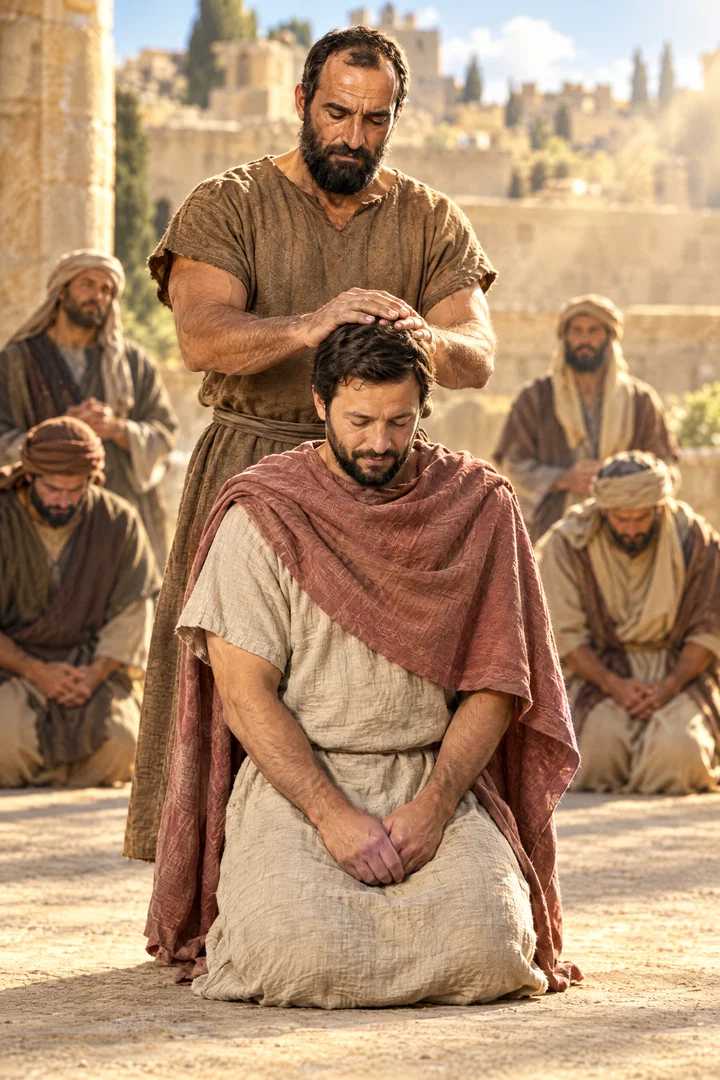
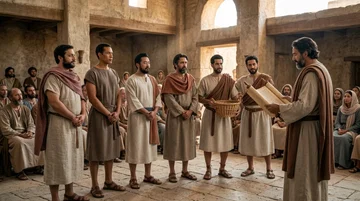
And the saying pleased the whole multitude: and they chose Stephen, a man full of faith and of the Holy Ghost, and Philip, and Prochorus, and Nicanor, and Timon, and Parmenas, and Nicolas a proselyte of Antioch:
Translations
American King James Version, King James Version, KJV Cambridge Paragraph Bible
And the saying pleased the whole multitude: and they chose Stephen, a man full of faith and of the Holy Ghost, and Philip, and Prochorus, and Nicanor, and Timon, and Parmenas, and Nicolas a proselyte of Antioch:
Webster Bible, Revised Version
And the saying pleased the whole multitude: and they chose Stephen, a man full of faith and of the Holy Spirit, and Philip, and Prochorus, and Nicanor, and Timon, and Parmenas, and Nicolas a proselyte of Antioch:
And the saying pleased the whole multitude: and they chose Stephen, a man full of faith and of the Holy Spirit, and Philip, and Prochorus, and Nicanor, and Timon, and Parmenas, and Nicolaüs a proselyte of Antioch;
And the thing was pleasing before all the multitude, and they did choose Stephen, a man full of faith and the Holy Spirit, and Philip, and Prochorus, and Nicanor, and Timon, and Parmenas, and Nicolaus, a proselyte of Antioch,
And the saying pleased the whole multitude: and they chose Stephen, a man full of faith and [ the] Holy Spirit, and Philip, and Prochorus, and Nicanor, and Timon, and Parmenas, and Nicolas, a proselyte of Antioch,
And the word was pleasing in the sight of all the throng; and they selected Stephen, a man full of faith and Holy Spirit, and Philip and Prochorus and Nicanor and Timon and Parmenas and Nicholaus, a proselyte of Antioch;
Berean Standard Bible, Majority Standard Bible
This proposal pleased the whole group. They chose Stephen, a man full of faith and of the Holy Spirit, as well as Philip, Prochorus, Nicanor, Timon, Parmenas, and Nicolas from Antioch, a convert to Judaism.
These words pleased the whole multitude. They chose Stephen, a man full of faith and of the Holy Spirit, Philip, Prochorus, Nicanor, Timon, Parmenas, and Nicolaus, a proselyte of Antioch,
And this saying was pleasing to all of them: and they made selection of Stephen, a man full of faith and of the Holy Spirit, and Philip and Prochorus and Nicanor and Timon and Parmenas and Nicolas of Antioch, who had become a Jew:
And the saying pleased the whole multitude: and they chose Steuen a man full of fayth and of the holy Ghost, and Philippe, and Prochorus, and Nicanor, and Timon, and Parmenas, and Nicolas a Proselyte of Antiochia,
Douay-Rheims (Challoner revision)
And the saying was liked by all the multitude. And they chose Stephen, a man full of faith, and of the Holy Ghost, and Philip, and Prochorus, and Nicanor, and Timon, and Parmenas, and Nicolas, a proselyte of Antioch.
Pictures
Cross-references 20 of 21
- Acts 8:5
Then Philip went down to the city of Samaria, and preached Christ unto them.
Philip, chosen among the seven, preaches Christ in Samaria.
- Acts 7:54-60
When they heard these things, they were cut to the heart, and they gnashed on him with their teeth.
Stephen, one of the seven, bears witness and is stoned for his faith.
- Acts 21:8
And the next day we that were of Paul’s company departed, and came unto Cæsarea: and we entered into the house of Philip the evangelist, which was one of the seven; and abode with him.
Identifies Philip as one of the seven and as an evangelist.
- 1 Timothy 3:8-12
Likewise must the deacons be grave, not doubletongued, not given to much wine, not greedy of filthy lucre;
Gives character qualifications for deacons, the church office traced to Acts 6.
- Acts 8:26-38
And the angel of the Lord spake unto Philip, saying, Arise, and go toward the south unto the way that goeth down from Jerusalem unto Gaza, which is desert.
Philip preached to and baptized the Ethiopian eunuch.
- Acts 6:10
And they were not able to resist the wisdom and the spirit by which he spake.
Stephen’s opponents could not resist the wisdom and Spirit with which he spoke.
- Acts 6:1
And in those days, when the number of the disciples was multiplied, there arose a murmuring of the Grecians against the Hebrews, because their widows were neglected in the daily ministration.
Choosing the seven addressed the complaint about neglected widows and quieted the murmuring.
- Revelation 2:6
But this thou hast, that thou hatest the deeds of the Nicolaitans, which I also hate.
The Nicolaitans are linked by name to Nicolas, though he is denied as their leader.
- Acts 6:13
And set up false witnesses, which said, This man ceaseth not to speak blasphemous words against this holy place, and the law:
False witnesses accuse Stephen of speaking against the law.
- Revelation 2:15
So hast thou also them that hold the doctrine of the Nicolaitans, which thing I hate.
Pergamos is reproved for members who hold the Nicolaitans’ doctrine.
- 1 Timothy 3:13
For they that have used the office of a deacon well purchase to themselves a good degree, and great boldness in the faith which is in Christ Jesus.
Faithful service as a deacon brings spiritual strength.
- Acts 8:12
But when they believed Philip preaching the things concerning the kingdom of God, and the name of Jesus Christ, they were baptized, both men and women.
Philip preached the gospel there with power.
- Acts 8:1-2
And Saul was consenting unto his death. And at that time there was a great persecution against the church which was at Jerusalem; and they were all scattered abroad throughout the regions of Judæa and Samaria, except the apostles.
Describes the aftermath of Stephen’s death and burial.
- Acts 6:15
And all that sat in the council, looking stedfastly on him, saw his face as it had been the face of an angel.
The council sees Stephen’s face as an angel’s.
- Acts 11:24
For he was a good man, and full of the Holy Ghost and of faith: and much people was added unto the Lord.
Both describe a man as full of the Holy Ghost and faith.
- Acts 4:32
And the multitude of them that believed were of one heart and of one soul: neither said any of them that ought of the things which he possessed was his own; but they had all things common.
Explains the shared goods behind the food distribution.
- Acts 13:9
Then Saul, ( who also is called Paul,) filled with the Holy Ghost, set his eyes on him,
another example of being filled
- John 14:26
But the Comforter, which is the Holy Ghost, whom the Father will send in my name, he shall teach you all things, and bring all things to your remembrance, whatsoever I have said unto you.
A listed instance of pneuma translated “Ghost.”
- Acts 5:32
And we are his witnesses of these things; and so is also the Holy Ghost, whom God hath given to them that obey him.
Another listed use of “Holy Ghost” for pneuma.
- Exodus 18:21
Moreover thou shalt provide out of all the people able men, such as fear God, men of truth, hating covetousness; and place such over them, to be rulers of thousands, and rulers of hundreds, rulers of fifties, and rulers of tens:
Both texts describe choosing qualified helpers to share responsibility.
Commentary
Each commentary is drawn from primary sources: the writings of Ellen G. White and Adventist pioneers and periodicals. Each commentary is separate. Its own words are not a quotation; follow the references to read the source passages.
Ellen G. White
34 sources
When the disciples were multiplying and a complaint arose that Greek widows were being neglected, the proposal to choose seven men pleased the whole multitude and they together chose Stephen, a man full of faith and of the Holy Ghost, with Philip, Prochorus, Nicanor, Timon, Parmenas and Nicolas.AA 87.1–88.1ST Feb 14, 188413MR 187.3–188.2Lt 9, 1899, par. 1–8 The men were to be of honest report and full of the Holy Spirit and wisdom, and Stephen stood foremost among them and at their head as deeply pious, bold, learned, and suited by his Greek speech and customs to care for the Greek widows and to preach to Greek-speaking Jews.AA 97.1ST Feb 14, 188413MR 187.3–188.2Lt 9, 1899, par. 1–87RED 28.3 They were set apart to share the practical responsibility of attending to the business of the cause and caring for widows, orphans and the needy, so that those called to preach would not be tied down by secular cares but could give themselves to prayer and the ministry of the word.7T 252.2–313MR 187.3–188.2RH Oct 5, 190521MR 97.2–4Lt 164, 1902, par. 17–18 The choice was made only after careful, prayerful deliberation for the guidance of the Holy Spirit, and the men were then set apart for their work as deacons by the laying on of hands.1MR 191.3AA 88.2EW 80.3–81.1Ms 8, 1863, par. 8–921MR 262.2–4 The selection satisfied all minds and quieted the murmuring, and God blessed the order to strengthen the unity of the church and advance it in number and strength, with a great company of the priests becoming obedient to the faith.7RED 28.33SP 292.2AC1 28.3RH Feb 16, 1911SLP 15.1
Setting and Selection
The verse belongs to the time when the number of disciples was multiplying and a complaint arose that the Greek widows were being neglected in the daily ministration, a grievance that required prompt attention lest it divide believers.AA 87.1–88.1 The proposal to meet the need pleased the whole multitude, and the entire body of believers together approved it and chose the seven, so that the selection was not the act of one person alone.ST Feb 14, 188413MR 187.3–188.2Lt 9, 1899, par. 1–8Ms 6, 1900, par. 10–1121MR 97.2–4 The same united approval is seen in that the whole congregation and the people accepted the apostles' plan and arrangement for the assigned service.Lt 164, 1902, par. 17–18Ms 91, 1899, par. 30–33
The seven were chosen to share the practical responsibility in closely united work rather than leaving great responsibility to one person.13MR 187.3–188.2Ms 91, 1899, par. 30–33 Their task was to attend to the business of the cause and to supervise the disbursement of funds and the care of widows, orphans, fatherless children, and other worthy poor and needy people.21MR 97.2–4Lt 164, 1902, par. 17–187RED 28.33SP 292.2 Stephen was placed first and at the head of this work of oversight and distribution.7RED 28.33SP 292.2
The choice was brought before God and made with earnest prayer for guidance, that the Holy Spirit would show whether the candidates were acceptable to serve as God's representatives.1MR 191.3GW92 132.1–2 It was made in accord with the Holy Spirit by men who had given evidence of fitness, and those chosen were then set apart for their duties as deacons by the laying on of hands.AA 88.2EW 80.3–81.1 The apostles led in this unitedly in the Holy Spirit at a time when growing responsibilities required others to share burdens previously carried by a few.AA 88.2
The appointment was not made hastily but only after careful, prayerful deliberation and reliance on God.Ms 8, 1863, par. 8–921MR 262.2–4 Even the apostles, though men of faith filled with the Holy Spirit and empowered to do mighty works, acted with trembling and fear in selecting bearers of the church's burdens.Ms 8, 1863, par. 8–9 They chose after careful consideration, waiting until character, fitness for the office, and developed character were known.Ms 8, 1863, par. 8–921MR 262.2–4
Being a good man who can pray with power and talk to the point is no proof of a call to devote time to labor for souls as God's mouthpiece.1T 208.1–209.1 Even those who had power over unclean spirits and to heal the sick dared not set anyone apart for the holy work on their own wisdom alone, but waited for unmistakable manifestation of the Holy Spirit.1T 208.1–209.1 God lays on chosen ministers, in union with the church and with manifest tokens of the Spirit, the duty of deciding who is fit for the holy work and who should go and who is unfit to go, for He will not entrust the burden for His flock to unqualified individuals, and leaving the decision to scattered individuals here and there brings confusion and distraction everywhere.1T 208.1–209.1
The Men Chosen
The men were to be of honest report and full of the Holy Spirit and wisdom, devoted people of faith and prayer, with Stephen specifically singled out as a man full of faith and of the Holy Ghost.13MR 187.3–188.2Lt 9, 1899, par. 1–8Ms 6, 1900, par. 10–1121MR 97.2–4Lt 164, 1902, par. 17–18 Those entrusted with church responsibilities must therefore have genuine spiritual qualifications and serve faithfully and unselfishly.Lt 9, 1899, par. 1–8Lt 194, 1898, par. 4–5Lt 60, 1906, par. 19 Their example supplies the standard for sharing leadership as honest and steadfast people, filled with the Holy Spirit, not open to being bought, sold, or misled.Lt 194, 1898, par. 4–5Lt 60, 1906, par. 19
Stephen was chosen first and stood foremost among the seven and at their head.AA 97.17RED 28.33SP 292.2AC1 28.3RH Feb 23, 1911 Though Jewish by birth and religion, he spoke Greek and knew Greek customs and manners, which made him especially suited to oversee distribution to Greek-speaking widows and gave him opportunity to preach the gospel in the synagogues of Greek-speaking Jews.AA 97.1ST Feb 14, 18847RED 28.33SP 292.2AC1 28.3 He was deeply pious and broad in faith, bold in proclaiming his faith, learned in the prophecies and the law, speaking with wisdom through the power of the Holy Spirit, and he performed wonders and miracles.AA 97.1ST Feb 14, 1884RH Feb 23, 1911
Being appointed to this special service did not prevent the seven from teaching the faith, for they were qualified by faith and the Spirit's wisdom both to handle church responsibilities and to instruct others in the truth.ST Feb 14, 1884AA 89.2–3RH Feb 16, 1911SLP 15.1 They taught earnestly and successfully and helped bring many to the faith.AA 89.2–3RH Feb 16, 1911SLP 15.1 Philip is named among the seven deacons, and when Saul's persecution scattered the Jerusalem church and disrupted their work, Philip preached to the Samaritans and baptized the Ethiopian eunuch.SLP 204.1
Stephen's fullness of faith and the Holy Spirit is the mark of the spiritual life sought in the church, and he stands among the faithful servants who would be condemned and killed for serving God.ST Oct 3, 1878DA 619.3–5
Order and Its Fruit
The choosing in Acts 6:5 sets forth God's approved plan, order, and system for organizing the church, to be maintained now as in the apostles' days.7T 252.2–3RH Oct 5, 1905Ms 6, 1900, par. 10–1121MR 97.2–43SP 293.2 Qualified, wise, God-devoted people who understand heaven's principles and walk with God are chosen to transact the temporal and business responsibilities of the cause, while others attend to spiritual work.RH Oct 5, 1905Ms 6, 1900, par. 10–1121MR 97.2–4Lt 164, 1902, par. 17–18Ms 104, 1902, par. 25–27 Those called to preach, to minister in word and doctrine, and to oversee the spiritual interest of the church are thus not tied to one place by secular, political, or administrative cares.7T 252.2–3RH Oct 5, 1905Ms 104, 1902, par. 25–27ST Feb 14, 18843SP 293.2 They are left free to give themselves to prayer, meditation, study of Scripture, ministry of the word, teaching the truth, and evangelism.7T 252.2–3RH Oct 5, 1905Ms 104, 1902, par. 25–27ST Feb 14, 18843SP 293.2
Each worker is to carry out the duties entrusted to him rather than take on responsibilities assigned to others.RH Oct 5, 1905ST Feb 14, 1884 All matters of a temporal nature properly come before the proper officers to be adjusted by them.ST Feb 14, 18843SP 293.2 Only matters so difficult as to baffle their wisdom are to be carried into the council of those who have oversight of the entire church, though difficult matters could still be brought to the leaders overseeing the whole church.ST Feb 14, 18843SP 293.2 Entering into lesser details of business and dealing with the various temperaments of those who meet in church capacity dims clear spiritual discernment.3SP 293.2 Burdening ministers with business oversight is not conducive to their spirituality.7T 252.2–33SP 293.2
The prosperity, numbers, and strength of the cause depends very largely on this arrangement.3SP 293.2 Its instructions apply to choosing people to handle business matters and give counsel and to choosing God's servants generally.Ms 33, 1895, par. 5Lt 60, 1906, par. 19 They should be devoted, faithful, spiritually qualified men of faith and prayer, set apart for that work and sent out to proclaim the gospel.Ms 33, 1895, par. 5Lt 60, 1906, par. 19 They are to work humbly and devotedly among people rather than gather in large numbers in one place.Lt 60, 1906, par. 19 In the setting of the chapter, the widows and fatherless were to be supported by special donations, while the tithe was consecrated to God and used to support the ministry.1MR 191.3
The selection satisfied all minds and quieted the dissatisfaction and murmuring.7RED 28.33SP 292.2AC1 28.3 The men's work and godly example strengthened the unity of the church while helping care for the poor and manage the church's needs.7RED 28.33SP 292.2AC1 28.3AA 89.2–3 Their earnest teaching helped bring many to the faith.AA 89.2–3 The appointment was blessed by God and helped the church grow and advance in number and strength, with a great company of the priests becoming obedient to the faith.RH Feb 16, 1911SLP 15.1 The success came both through the greater freedom secured to the apostles for their own work and through the zeal and power manifested by the seven.RH Feb 16, 1911SLP 15.1
Sources
Pioneers and periodicals
85 sources
The whole congregation gladly accepted the apostles' plan to meet the neglect of the Greek-speaking widows in the daily sharing of aid by choosing seven men for the work.CO 36.1–3ST Jun 7, 1883RH May 7, 1901 All those chosen bore Greek names, fitting men taken from the wronged group to guard its interests and keep peace in the church.ST Feb 14, 1884ST Nov 28, 1878ST Jun 7, 1883 Presented to the apostles and set apart by prayer with the laying on of hands, they became the forerunners of deacons, caring for temporal business and serving tables so the apostles could give themselves to prayer and the ministry of the word.CO 36.1–3ST Mar 26, 1885RH May 7, 1901ST Jul 28, 1881 They were to be of good report and full of the Holy Spirit, wisdom, faith and power, with Stephen named first as a man full of faith and of the Holy Spirit, the pattern of spiritual character required for even practical service.ST Nov 28, 1878CO 36.1–3ST Feb 12, 1902ST Sep 19, 1900 That appointment to practical duty did not shut them out from spiritual ministry, for Stephen did great wonders and witnessed with irresistible wisdom unto martyrdom, Philip went on to preach as an evangelist, and through this order the word increased and disciples greatly multiplied.CO 34.2ST Feb 12, 1902ST Jun 7, 1883RH Feb 3, 1852RH Feb 12, 1901
Historical Setting and Wording
The verse belongs to the response to a complaint that Greek-speaking widows were being neglected in the daily distribution of aid, a dispute over the distribution of alms that called for trusted men to oversee the work.ST Jun 7, 1883RH Feb 4, 1862ST Jun 1, 1882ST Apr 5, 1883 It is part of the record of the provision made for the poor in the primitive church, which maintained widows and others in need from a common fund supplied by united believers who sold possessions.ST Jun 2, 1898ST Aug 25, 1881ST Apr 5, 1883 Goods were shared according to each person's need rather than indiscriminately, and the whole multitude approved the proposal and chose seven men to see to the orderly distribution.ST Jun 7, 1883RH Feb 4, 1862ST Aug 25, 1881ST Jun 1, 1882 The apostles entrusted the practical care of the community's funds to these men so they could devote themselves to preaching and prayer, and the chapter has its own distinct subject and says nothing about sanctifying the first day of the week.RH Feb 4, 1862ST Jun 2, 1898ST Jun 1, 1882
All the names chosen are Greek, suggesting that men were chosen from the aggrieved party to represent its interests and protect its rights, helping remove grounds for complaint and preserve harmony.ST Jun 7, 1883 Stephen spoke Greek and understood Greek customs, which suited him to supervise the distribution of aid to Greek-speaking widows and other needy people, including widows, orphans and the poor, and the choice quieted the complaints and restored harmony.ST Feb 14, 1884ST Nov 28, 1878ST Jun 7, 1883 The verse lists the seven as Stephen, Philip, Prochorus, Nicanor, Timon, Parmenas, and Nicolas a proselyte of Antioch, with Stephen described as full of faith and of the Holy Ghost or Holy Spirit.CO 36.1–3RH May 7, 1901RH Sep 27, 1870RH Feb 24, 1859 They were chosen by the whole multitude, the whole church and gathered believers, by the congregation's decision, providing a precedent for a church choosing members to serve in an appointed office.CO 36.1–3RH May 7, 1901RH Feb 24, 1859RH Nov 10, 1874 Their selection followed direction to choose men of good character and spiritual wisdom so the apostles would not leave the word of God to serve tables, and though not yet called deacons in the record they are understood as those who served the church in practical, secular matters in contrast with the ministry of the word.CO 36.1–3RH Sep 27, 1870
The word translated Ghost is pneuma, also translated spirit, wind and life, with ghost having the older sense of breath.ST Feb 21, 1878 The word for men is aner, a specific term limited here by the stated number seven, unlike anthropos, the generic term used in 2 Timothy 2:2, so the example does not establish that a generic term is limited in the same way.RH Nov 12, 1872 The tension between Greeks and Hebrews is a small but historically fitting detail that supports the account's credibility, and the believers' willingness to give is linked to conviction of Christianity's truth grounded in the evidence of miracles.ST Apr 5, 1883
Choosing and Setting Apart
The saying pleased the whole multitude, and the whole church approved the apostles' proposal and chose seven men for the work.ST Feb 14, 1884CO 36.1–3ST Jun 7, 1883RH May 7, 1901ST Jul 28, 1881 The choice followed the apostles' direction to select men of good character and spiritual wisdom so that the apostles could continue in preaching instead of leaving the word of God to serve tables.CO 36.1–3RH Aug 29, 1854RH Aug 29, 1854 It was made to address the complaint about the distribution of aid and to oversee the church's practical affairs and care for the poor and needy as a religious responsibility.CO 36.1–3ST Jun 7, 1883RH May 7, 1901 The disciples approved the proposal and chose seven men of good report, full of the Holy Spirit and wisdom, to serve the church and relieve the apostles of serving tables so they could devote themselves to prayer and preaching.RH May 7, 1901RH Aug 29, 1854RH Aug 29, 1854
Those chosen were presented to the apostles, who set them apart through prayer and the laying on of hands.CO 36.1–3RH May 7, 1901ST Jul 28, 1881RH Aug 29, 1854ST Feb 12, 1902 Their appointment to the deacon's office to care for the temporal work of the church was carried out in this way, freeing the apostles for their special work.ST Jul 28, 1881ST Feb 12, 1902RH Aug 29, 1854 The word translated appoint in Acts 6:3 is the same word translated ordain in Titus 1:5.ST Jul 28, 1881 So far as the record goes the seven were not yet called deacons, though in later development the office of deacon became a regular appointment in the churches.RH Aug 24, 1916
The Lord accepted this united decision of the believers gathered at Jerusalem when they chose the committee of seven over the business of distribution from the common treasury.RH Aug 24, 1916 Their appointment was blessed by God and helped the church grow in number and strength.RH Feb 16, 1911RH May 2, 1907 It provides an example of the Lord guiding the church in choosing its workers, directing the choice through other people and making His will clear with conviction and unity through the Spirit's presence. Their selection involved the laying on of hands and the gift of the Holy Spirit, which qualified them for the duties of their office.RH Mar 1, 1860ST
This shared selection illustrates cooperation among distinct church offices and an administration adapted to the church's needs, rather than rule by one person or independent action by individuals. The church body chose its officers and presented the choice to the apostles and to a wider gathering of brethren for approval, with the aim of maintaining order and a healthy state in the church.ST Jan 1, 1885RH Dec 27, 1853 Their appointment followed seeking God's guidance and prayer, and had the approval of both the church and the Holy Spirit, after which they were set apart by the laying on of hands and commissioned to serve.RH May 7, 1901
Deacons Office and Qualifications
The seven chosen to serve tables over the church's practical needs are the forerunners of the later office of deacon, for deacon means a servant, and this account records the creation and introduction of that office in the Christian church when the need for it appeared.ST Mar 26, 1885RH Sep 27, 1870RH Sep 8, 1874RH Sep 8, 1910 Though the men are not called deacons in the passage, they are understood as the early church's deacons, named as Stephen, Philip, Prochorus, Nicanor, Timon, Parmenas, and Nicolas a proselyte from Antioch.RH Sep 27, 1870RH Aug 20, 1908 Their work was to manage secular and temporal matters, including the church's finances and care of practical needs, so the apostles could give time and attention to other duties, and the apostles required no new instruction because they already knew the office from the Word of God.ST Mar 26, 1885RH Sep 27, 1870RH Oct 15, 1861RH Sep 8, 1910 This shows the continuance of two classes of ministers, one ministering in spiritual things and the other in temporal things, each class solemnly set apart to the work of its sacred office as in the Jewish church, with the chosen servants' example supporting the deacon's work as a faithful, willing helper who labors for the church's good.RH Sep 8, 1874RH Aug 20, 1908RH Sep 8, 1910
Their service was largely temporal and secular, managing business and serving tables, in contrast with and freeing the apostles to continue in prayer and the ministry of the word instead of leaving the word of God to serve tables.CO 36.1–3ST Mar 26, 1885RH May 7, 1901CO 34.2RH Sep 27, 1870 The whole church chose the seven for the work of serving the poor, including Stephen who was full of faith and the Holy Spirit, following the apostles' direction to select men of good character and spiritual wisdom, and they were then presented to the apostles who prayed and laid hands on them, appointing them to care for the poor and needy as a religious responsibility.CO 36.1–3RH May 7, 1901 This illustrates God's plan of assigning business responsibilities to wise, God-devoted people who understand heaven's principles and walk with God, while others attend to spiritual work, with each worker to carry out the duties entrusted to them rather than take on responsibilities assigned to others.RH Oct 5, 1905 Their service as assistants to the elders did not prevent Stephen and Philip from preaching the gospel and becoming powerful ministers of the word when the Lord opened the way.RH May 7, 1901CO 34.2
Their practical work included caring for the poor and needy, managing church funds, distributing funds and necessities and the abundance given by united believers so that none lacked the necessities of life and goods were shared according to each person's need rather than indiscriminately.CO 36.1–3RH Sep 8, 1874ST Aug 12, 1897RH Aug 20, 1908ST Aug 25, 1881 Those entrusted with this financial work were chosen to distribute what was given, not to raise money.ST Aug 12, 1897 The office is one of practical detail management of the church: keeping the building clean and in order, providing seats and hymn-books for strangers, taking the collections, and at quarterly meeting providing basins, towels, buckets and water for the ordinance of humility, with deaconesses providing unfermented bread and wine with dishes, decanter, goblets and linen cloths for the Lord's supper, and ensuring the ordinances were not neglected when a minister was absent.RH Jul 22, 1909
They were required to be of honest report and full of the Holy Ghost, wisdom, faith and power, with Stephen further described as full of faith and power.CO 36.1–3RH Nov 22, 1906RH Feb 12, 1901 This practical service was entrusted to men distinguished by spiritual character, not merely administrative ability, for even those serving the community's material needs could be deeply pious and empowered by God.ST May 24, 1883 Being filled with the Spirit was a qualification for serving and proclaiming the gospel, and without this fullness they cannot attain the qualifications for the office described in 1 Timothy 3.RH Sep 27, 1870RH Nov 22, 1906 The chosen men were brought before the apostles, who prayed and laid hands on them, and this appointment was followed by growth of God's word and the disciples' number.RH Feb 12, 1901
Deacons hold office by election by the whole church followed by ordination, which should take place as soon as possible after election, and a deacon is not entitled to assist in administering the Lord's supper until ordained.RH May 30, 1854ST Jan 1, 1885RH Jul 22, 1909RH Nov 10, 1874 The congregation chose men for service and those appointed to church office were set apart with prayer and the laying on of hands, showing the church body choosing its officers.RH May 30, 1854ST Jan 1, 1885RH Nov 10, 1874 Their office is subordinate and their duties chiefly concern the church's temporal needs, serving as a help and as subordinate willing helpers assisting the elders, though they also have an important part in promoting its spiritual needs, and they were ordained officers chosen when the church needed them according to its circumstances.RH Oct 15, 1861RH Sep 8, 1874RH Mar 5, 1857ST Jan 1, 1885
The same fullness of the Holy Ghost required for preaching the Word is required to minister properly in temporal and financial matters, for those entrusted with financial work needed to be filled with the Holy Spirit just as those who preached the Word did.ST Feb 12, 1902ST Aug 12, 1897 Even natural gifts are strengthened by the operation of the Holy Spirit.ST Feb 12, 1902 The prosperity of the church and of the cause depends very largely upon each branch of its work and its various departments being under men of decided ability for their department who are qualified for their positions.ST Feb 12, 1902 Matters of a temporal nature properly come before the proper officers to be adjusted by them, and only matters so difficult as to baffle their wisdom are to be carried into the council of those who have oversight of the entire church, and this same order and system must be maintained in the church now as in the days of the apostles.
Stephen Full of Faith
Stephen stands first and foremost among the seven, a man full of faith and of the Holy Ghost.ST Nov 28, 1878RH Feb 23, 1911ST Sep 19, 1900ST Feb 12, 1902 He was chosen first by the whole multitude to oversee practical care, and being a Greek-speaking Jew who understood Greek customs he was suited to supervise the distribution of food, funds and aid to Greek-speaking widows, orphans and the poor.ST Feb 14, 1884ST Nov 28, 1878 That choice quieted complaint and restored harmony, while the new office did not keep him from spiritual work but gave greater opportunity to develop and show the Spirit begun in his heart.ST Nov 28, 1878ST Feb 12, 1902 Though appointed to serve tables he became powerful in spiritual work, performing great wonders and miracles, preaching the gospel in Greek-Jewish synagogues and defending the faith with wisdom and the power of the Holy Spirit.ST Feb 14, 1884RH Feb 23, 1911ST Sep 19, 1900
His fullness is the mark of the Spirit-filled life sought in believers, in leaders, in workers, and even in children.ST Jan 1, 1885ST Oct 8, 1912RH Mar 22, 1870ST Aug 12, 1875 The men chosen were qualified by faith and the Spirit's wisdom to handle church responsibilities, and Stephen is singled out for his witness in life, word and death.ST Feb 14, 1884ST Oct 8, 1912 Spiritual fullness, not personal size, strength or ability, is what matters.RH Jun 20, 1871 Appointment to practical service did not prevent teaching the faith.ST Feb 14, 1884
To be full of the Holy Ghost is to have a lasting, abiding endowment, not a temporary inspiration. The Spirit's indwelling so fills and governs a person as to shape every thought, word, action and the influence of the whole life. Stephen had this fullness before the storm of persecution and remained filled after passing through it.
Holiness did not make him less human or change his physical and mental nature. It brought his human powers and nature under divine control. God opposed the sin and self that hinder people from fulfilling His purpose, not their humanity.
To be full of faith is to trust God completely and believe all He said, including His promise of holiness to be lived out day by day. Such faith rests on God's promise without reservation or questioning, even when feeling and emotion are absent, becoming a settled habit of trust. It is strong confidence in God's willingness to answer prayer, joined with compassion for the afflicted, through which mighty miracles were performed.ST May 24, 1883 This fullness of faith and the Holy Ghost is the essential qualification for those assigned practical service, including caring for the poor and sick, who can thereby attain great piety and be used powerfully by God.ST May 24, 1883
His holiness, nourished by close intercourse with God, was reflected in his appearance, so that those who looked saw a face like an angel's.ST Apr 6, 1888 That beauty of holiness is open to all, comes through prayer and meditation on holy things, and can increase even as the body ages and decays.ST Apr 6, 1888 He is as one of the Lord's trees full of sap, the sap being the Spirit of God as the blood and life of a tree from which flower and fruit come.ST Oct 1, 1902 To be so filled causes bringing forth the fruit of love, joy, peace, long-suffering, gentleness, goodness, faith, meekness and temperance, thus becoming trees of righteousness, the planting of the Lord, that He might be glorified.ST Oct 1, 1902
That fullness gave sustaining power to rise above hostile surroundings and remain fixed on Jesus despite the mob and the stones. Even a weak person can be full, and may remain full day by day as God fills the renewed soul.RH Jun 20, 1871 He is held up as a model of a Christian leader devoted to God's work.RH Apr 21, 1903 Being full of faith and the Holy Ghost is the condition in which all believers should come to transact church business, joined with prayer for a great and happy meeting, and these qualities are the fitting marks of Christian workers needed where the church's spiritual condition is low, a description even put as a question whether children's hearts are so full.RH Apr 21, 1903RH Mar 22, 1870ST Aug 12, 1875
Philip Nicolas and Others
The Philip named here is one of the seven chosen to serve in the Jerusalem church, not Philip the apostle of the twelve who remained in Jerusalem with the other apostles.RH Jan 7, 1862ST Jun 7, 1883ST Feb 14, 1884ST Jan 16, 1901ST Sep 16, 1897 He is identified as one of the deacons chosen in Acts 6, and the appointment shows that preaching and the miracle-working signs that follow belief were not invested in the apostles alone but belong to those who believe through their preaching.ST Jan 16, 1901ST Sep 16, 1897ST Feb 4, 1897 The verse is connected to the question whether preaching and baptizing were duties of his deaconship, and whether a deacon's work extended beyond the church's temporal affairs.RH Jan 7, 1862
That Philip became an evangelist, a traveling preacher and pioneer specially called and fitted by God to proclaim from place to place the gospel of God, the good tidings of salvation in Jesus Christ from sin and bondage.ST Dec 1, 1898ST Feb 4, 1897RH Jan 7, 1862 After the dispersion of the believers he preached Christ in Samaria and baptized the Ethiopian official.ST Jun 7, 1883ST Jan 16, 1901 He is the Philip later called the evangelist, who lived at Caesarea and took Paul and his company into his house when they came there.ST Apr 15, 1903 Faithful service in the diaconate could lead to a higher degree of ministry, and like Stephen he worked actively in spiritual ministry as well as carrying out the practical duties of his office.RH Jan 7, 1862ST Feb 26, 1902
Nicolas is named as a proselyte of Antioch among the seven chosen as deacons, one of the seven primitive deacons described as full of the Holy Ghost.RH Jun 10, 1862RH Jun 10, 1862 The verse contains nothing to warrant an unfavorable opinion of him, and gives no basis for identifying this Christian deacon as the leader of the Nicolaitans.RH Jun 10, 1862RH Jun 10, 1862 The name Nicholas was common at the time and could have been given to the sect on many other accounts, so identifying him as its infamous leader has no certainty and the sect may instead have followed another person named Nicholas.RH Jun 10, 1862RH Jun 10, 1862
Others connect this Nicolas with later apostasy and the immoral sect called the Nicolaitans, to whose doctrine the verse is connected because that doctrine was attributed to Nicholas.ST Nov 29, 1910RH Mar 26, 1857 Among those who make the connection, some attribute that sect to a mistaken understanding of his teaching and others to another Nicolas.ST Nov 29, 1910 The verse raises whether preaching and baptizing belonged to the deaconship, while their office is subordinate with duties chiefly concerning temporal needs and also an important part in promoting spiritual needs.RH Jan 7, 1862RH Mar 5, 1857 Men chosen for service who had given good evidence of ability and spiritual character were set apart by laying on of hands and commissioned to serve, including baptizing and administering the Lord's Supper, with presenting the bread and cup keeping the believers' memory of Christ's suffering and death fresh.RH May 7, 1901
Wider Ministry and Pattern
Appointment to practical service did not shut Stephen and Philip out of teaching and preaching but opened wider opportunity to develop and display the Spirit's work.ST Feb 14, 1884RH Feb 16, 1911CO 34.2RH Aug 29, 1854 Those chosen to serve tables and relieve the apostles of that burden could still teach the faith earnestly and successfully when the Lord opened the way, with Stephen teaching powerfully and performing wonders and miracles and Philip becoming an evangelist.ST Feb 14, 1884RH Feb 16, 1911CO 34.2RH Aug 29, 1854 Manual labor and serving in a practical capacity were no bar to effective preaching.ST Jun 3, 1908 Taking up business for the church or self-supporting work did not deprive a person of spiritual power or take away the power of the gospel.ST Jun 3, 1908RH Feb 16, 1905
Stephen, full of faith and the power of the Holy Spirit, performed great and wondrous miracles among the people and witnessed so convincingly for Christ that many were won over to the truth, even priests.ST Feb 12, 1902ST May 24, 1883ST Feb 4, 1897RH Aug 27, 1901 His faith was strong confidence in God's willingness to answer prayer, bringing compassion for the afflicted and mighty miracles, showing that those assigned to care for the poor and sick can attain great piety and be used powerfully by God.ST Feb 12, 1902ST May 24, 1883 The ability to withstand learned opponents came not from scholarship alone but from God's Spirit and faith, with firm trust in Scripture, for had he doubted it or yielded ground he would have been overcome.ST May 24, 1883ST Jun 7, 1883 His defense of the faith before the Sanhedrin led to his stoning.RH Aug 27, 1901
He was a Greek-speaking Jew, familiar with Greek customs, who preached the gospel in the synagogues of the Greek Jews and defended his faith with wisdom and the power of the Holy Spirit.RH Feb 23, 1911ST Mar 3, 1914 False witnesses testified that he spoke blasphemous words against the law and the temple, yet his teaching about the temple did not mean the Ten Commandments were abolished or changed.RH Feb 3, 1852RH Nov 21, 1871 After testifying that the nation slew the Just One he was stoned, becoming the first martyr witness.RH Aug 24, 1916RH Aug 27, 1901 Freeing the apostles for prayer and the ministry of the word, together with the zeal and power of the seven, caused the word of God to increase and the disciples to multiply greatly in number and strength, a growth not due to the apostles alone.RH Feb 16, 1911ST Feb 12, 1902RH Feb 12, 1901ST Jul 29, 1913 The seven were set apart through prayer and the laying on of hands to care for the poor and needy as a religious responsibility, and their service helped the word increase as more became believers.CO 36.1–3ST Feb 12, 1902ST Jul 29, 1913
The choosing of helpers as numbers grew exemplifies gospel order, organization and system, continuing the pattern of appointed leaders with strict order established by Christ and practiced in the apostolic age.RH Aug 29, 1854RH May 30, 1854RH Aug 15, 1854RH Jan 7, 1862 The congregation chose men of good report, full of the Holy Spirit and wisdom, suited to the church's needs, and those appointed were set apart with prayer and the laying on of hands.RH Aug 29, 1854RH May 30, 1854RH Jan 7, 1862 Two classes were solemnly set apart, with deacons responsible for temporal matters including finances and practical needs, temporal matters adjusted by proper officers and only baffling difficulties carried to those overseeing the whole church.RH Oct 15, 1861 The church's call guided by the Word may be the first indication to persons that the Lord is calling them to the work.CO 34.1 The Lord directed the choice through other people and revealed his plans through the community's selection, with the agreement of the believers, and a God-called gift proved by its fruits is then to be recognized by fellow ministers and ordained by elders with the laying on of hands.RH Jan 28, 1902 Prayerful selection after seeking the Lord's direction can make his will clear, bringing clarity, conviction, unity and the Spirit's presence to touch hearts even in a divided church.
The example is the model for selecting deacons to take on practical service and share the message of Christ, with the congregation accepting those practical and witnessing responsibilities together.RH Dec 27, 1853ST Nov 11, 1897 It applies to setting apart someone so ordinances including the Lord's Supper are not neglected when a minister is absent, with deacons then set apart by elders.RH Dec 27, 1853RH Jun 26, 1855 As offerings and needs grew, men were selected to oversee proper distribution, introducing the deacon's office and ensuring resources were shared appropriately, and a brother may be ordained to that office by prayer and the laying on of hands.RH Nov 13, 1860 The response to the complaint about distribution to widows was decided by the apostles together, not by Peter alone.ST Dec 3, 1894 The chapter says nothing about sanctifying the first day of the week, its selection being a response to the dispute over alms.ST Jun 1, 1882 Preaching and the miracle-working signs that follow belief belong not to apostles alone but to all who believe through their preaching, as proved by Philip the deacon preaching in Acts 8, and gospel preachers full of faith and the Holy Spirit may be chosen without high status, formal titles or a fixed place to preach.ST Jan 16, 1901
Sources