Acts 8:1
And Saul was consenting unto his death. And at that time there was a great persecution against the church which was at Jerusalem; and they were all scattered abroad throughout the regions of Judæa and Samaria, except the apostles.
Translations
And Saul was consenting to his death. And at that time there was a great persecution against the church which was at Jerusalem; and they were all scattered abroad throughout the regions of Judaea and Samaria, except the apostles.
And Saul was consenting unto his death. And at that time there was a great persecution against the church which was at Jerusalem; and they were all scattered abroad throughout the regions of Judæa and Samaria, except the apostles.
And Saul was consenting unto his death.And at that time there was a great persecution against the church which was at Jerusalem; and they were all scattered abroad throughout the regions of Judea and Samaria, except the apostles.
And Saul was consenting to his death. And at that time there was a great persecution against the church which was at Jerusalem; and they were all dispersed throughout the regions of Judea and Samaria, except the apostles.
And Saul was consenting unto his death. And there arose on that day a great persecution against the church which was in Jerusalem; and they were all scattered abroad throughout the regions of Judaea and Samaria, except the apostles.
And Saul was consenting unto his death.And there arose on that day a great persecution against the church which was in Jerusalem; and they were all scattered abroad throughout the regions of Judæa and Samaria, except the apostles.
And Saul was assenting to his death, and there came in that day a great persecution upon the assembly in Jerusalem, all also were scattered abroad in the regions of Judea and Samaria, except the apostles;
And Saul was consenting to his being killed. And on that day there arose a great persecution against the assembly which was in Jerusalem, and all were scattered into the countries of Judaea and Samaria except the apostles.
And, Saul, was taking pleasure with them in his death. Moreover there arose, in that day, a great persecution against the assembly which was in Jerusalem; [and], all, were scattered abroad throughout the countries of Judaea and Samaria, except the apostles.
Berean Standard Bible, Majority Standard Bible
And Saul was there, giving approval to Stephen’s death.On that day a great persecution broke out against the church in Jerusalem, and all except the apostles were scattered throughout Judea and Samaria.
Saul was consenting to his death. A great persecution arose against the assembly which was in Jerusalem in that day. They were all scattered abroad throughout the regions of Judea and Samaria, except for the apostles.
And Saul gave approval to his death. Now at that time a violent attack was started against the church in Jerusalem; and all but the Apostles went away into all parts of Judaea and Samaria.
And Saul consented to his death, and at that time, there was a great persecution against the Church which was at Hierusalem, and they were all scattered abroad thorowe the regions of Iudea and of Samaria, except the Apostles.
Douay-Rheims (Challoner revision)
And at that time there was raised a great persecution against the church which was at Jerusalem; and they were all dispersed through the countries of Judea, and Samaria, except the apostles.
Pictures
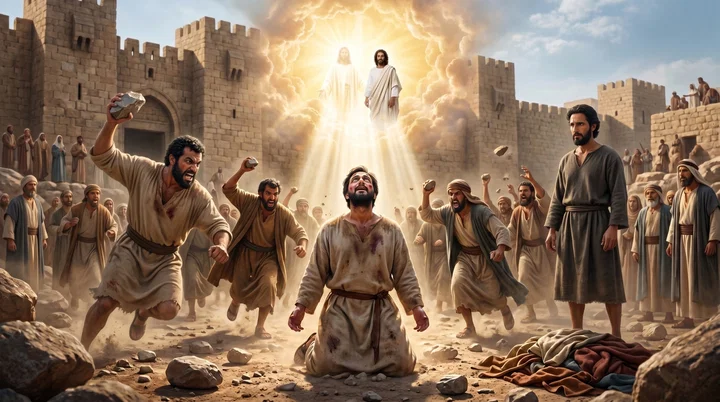
Cross-references 20 of 37
- Acts 7:58-60
And cast him out of the city, and stoned him: and the witnesses laid down their clothes at a young man’s feet, whose name was Saul.
Stephen’s death is the event Saul approved and precedes the persecution and scattering.
- Acts 9:1-2
And Saul, yet breathing out threatenings and slaughter against the disciples of the Lord, went unto the high priest,
Saul pursues Jesus’ disciples to arrest them, continuing the persecution.
- Acts 1:8
But ye shall receive power, after that the Holy Ghost is come upon you: and ye shall be witnesses unto me both in Jerusalem, and in all Judæa, and in Samaria, and unto the uttermost part of the earth.
The scattering advanced Jesus’ commissioned witness from Jerusalem through Judea and Samaria.
- Acts 22:20
And when the blood of thy martyr Stephen was shed, I also was standing by, and consenting unto his death, and kept the raiment of them that slew him.
Paul recalls standing by and consenting to Stephen’s death.
- Acts 11:19-21
Now they which were scattered abroad upon the persecution that arose about Stephen travelled as far as Phenice, and Cyprus, and Antioch, preaching the word to none but unto the Jews only.
Believers scattered by persecution carried the gospel to Antioch, where many turned to the Lord.
- Acts 8:14
Now when the apostles which were at Jerusalem heard that Samaria had received the word of God, they sent unto them Peter and John:
Jerusalem’s apostles respond to the gospel’s spread in Samaria by sending Peter and John.
- Acts 8:5-8
Then Philip went down to the city of Samaria, and preached Christ unto them.
Scattered disciples carried the gospel to Samaria, where Philip preached and brought healing and joy.
- Acts 26:9-11
I verily thought with myself, that I ought to do many things contrary to the name of Jesus of Nazareth.
Saul recalls imprisoning and persecuting believers and voting for their deaths.
- Acts 7:58
And cast him out of the city, and stoned him: and the witnesses laid down their clothes at a young man’s feet, whose name was Saul.
Saul was present as Stephen was stoned, with the witnesses laying their clothes at his feet.
- Acts 22:4-5
And I persecuted this way unto the death, binding and delivering into prisons both men and women.
Paul recounts imprisoning and pursuing believers before his conversion.
- 1 Timothy 1:13
Who was before a blasphemer, and a persecutor, and injurious: but I obtained mercy, because I did it ignorantly in unbelief.
Paul recalls persecuting the church before receiving mercy for acting in ignorance and unbelief.
- Matthew 10:23
But when they persecute you in this city, flee ye into another: for verily I say unto you, Ye shall not have gone over the cities of Israel, till the Son of man be come.
The scattered believers fled persecution and preached elsewhere.
- Galatians 1:13
For ye have heard of my conversation in time past in the Jews’ religion, how that beyond measure I persecuted the church of God, and wasted it:
Paul recalls his intense persecution of the church.
- Acts 6:5
And the saying pleased the whole multitude: and they chose Stephen, a man full of faith and of the Holy Ghost, and Philip, and Prochorus, and Nicanor, and Timon, and Parmenas, and Nicolas a proselyte of Antioch:
Stephen, whose death preceded the persecution, was one of the seven chosen by the Jerusalem church.
- Acts 11:22-26
Then tidings of these things came unto the ears of the church which was in Jerusalem: and they sent forth Barnabas, that he should go as far as Antioch.
Barnabas strengthens the growing church at Antioch and brings Saul to teach there.
- Luke 24:47
And that repentance and remission of sins should be preached in his name among all nations, beginning at Jerusalem.
Christ’s command to begin preaching in Jerusalem explains why the apostles stayed.
- Acts 6:10
And they were not able to resist the wisdom and the spirit by which he spake.
Saul disputed with Stephen but could not resist his wisdom and spirit.
- Acts 9:3-4
And as he journeyed, he came near Damascus: and suddenly there shined round about him a light from heaven:
Jesus stops Saul on Damascus road
- Matthew 10:5-6
These twelve Jesus sent forth, and commanded them, saying, Go not into the way of the Gentiles, and into any city of the Samaritans enter ye not:
The disciples’ first mission was limited to Israel and excluded Samaritans.
- Mark 16:15
And he said unto them, Go ye into all the world, and preach the gospel to every creature.
Persecution scattered the disciples into the mission they had neglected.
Commentary
Each commentary is drawn from primary sources: the writings of Ellen G. White and Adventist pioneers and periodicals. Each commentary is separate. Its own words are not a quotation; follow the references to read the source passages.
Ellen G. White
55 sources
After Stephen's death a great and severe persecution arose against the church at Jerusalem and scattered all the believers except the apostles throughout Judea and Samaria.AA 103.1RH Nov 11, 1902Ms 11, 1900, par. 6–7 Saul consented to and approved Stephen's death, stood by and took charge of the clothes of those who stoned him, and then hunted Christians in their houses to deliver them for imprisonment and death.AA 103.1RH Mar 2, 19113SP 299.3–300.13SP 299.1SG1 98.1 The Lord permitted this persecution to scatter His representatives abroad where they could proclaim the gospel with power as Christ had commanded, and it did not silence their testimony but carried it farther.RH Nov 11, 19027MR 362.1GC 252.1GC88 251.3–252.1 This was needed because after Pentecost the disciples remained in Jerusalem to shield the members and failed to educate new converts to become workers, so when they inclined to colonize in one place persecution scattered them.RH Nov 11, 19027MR 362.18T 215.2–3 God desires His people dispersed and not colonized in one place, so Christian work is not to be confined to a few localities but to spread to many places, and believers should go willingly to share truth rather than wait to be driven by persecution.6T 330.28T 215.2–3RH Apr 11, 1912Ms 94a, 1903, par. 7–8
Persecution and Scattering Described
After Stephen's death a great and severe persecution arose against the church at Jerusalem and scattered all the believers except the apostles throughout Judea and Samaria.AA 103.1RH Nov 11, 1902Ms 11, 1900, par. 6–7RH Mar 2, 1911 Saul supported the killing of believers and took an active part in the persecution, and Stephen and several others died for their faith in this assault on the church.AA 103.1RH Nov 11, 1902RH Mar 2, 1911 The scattering drove all the members except the apostles abroad, fulfilling the command to carry the gospel to Judea, Samaria and the uttermost part of the earth.RH Nov 11, 1902Ms 11, 1900, par. 6–7
The persecution included hunting Christians down, seizing them in their houses, and handing them over to priests, rulers and councils for imprisonment and death.AA 103.1ST Dec 5, 1878RH Mar 2, 1911RH Feb 23, 1911AC1 36.1 Men and women alike were seized and committed to prison, and many faithful and worthy believers were killed.AA 103.1COL 308.2–3RH Mar 2, 1911SLP 23.1 Stephen was not the only one killed, for Saul's later statement that he voted for believers to be put to death shows others besides Stephen were put to death, and among the messengers who died were Stephen and James.COL 308.2–3RH Mar 2, 1911SLP 23.1
No legal sentence had been passed upon Stephen, and the Roman authorities had been bribed with large sums of money to make no investigation of the case.ST Dec 5, 1878RH Feb 23, 19117RED 36.1 They made no special effort to stay the cruel work of imprisonment and death, but secretly aided the Jews in order to conciliate them and to secure their favor.ST Dec 5, 1878RH Feb 23, 1911AC1 36.17RED 36.1SLP 20.1
Many of those scattered had been living temporarily in Jerusalem and returned to their distant homes when violent persecution broke out, while others were driven to different places including Macedonia and Cyprus.AC1 36.27RED 36.23SP 300.2Ms 111, 1899, par. 9–13AA 166.1–2 They had to flee their homes and were brought into great trial of affliction and deep poverty.Ms 111, 1899, par. 9–13 Those who left Jerusalem preached Christ in nearby cities, at first among Hebrew- and Greek-speaking Jews, and the Lord blessed the preaching so that many believed and turned to the Lord.ST Jun 12, 1879ST Jun 12, 18798RED 3.1
Saul's Consent and Violence
Saul consented to Stephen's death and approved of the killing, standing by while he was stoned and taking charge of the garments of those who stoned him, with the witnesses who accused Stephen laying their clothes at his feet before casting the first stones.RH Mar 2, 19113SP 299.1SG1 98.1AC1 35.1–2AC1 54.2 He guarded the clothes of the killers as they did the deed.SG1 98.1AC1 54.2Ms 99, 1894, par. 15–17
He had taken an active part in the dispute and trial against Stephen, standing as a leading opponent present at the trial and actively working against the teaching of Christ.3SP 299.1AC1 35.1–2AC1 31.1–27RED 31.1–2 He argued against Stephen and tried to convince the people that his teaching was dangerous and blasphemous, accepting the religious leaders' judgment that Stephen was a blasphemer and Jesus an impostor.SLP 21.17RED 31.1–2 He acted with frenzied zeal at the trial and death.RH Feb 23, 1911
Afterward Saul hunted Christians down, seized them in their houses, and handed them over to the priests and rulers and brought them before councils for imprisonment and death.AA 103.1ST Dec 5, 18783SP 299.3–300.1RH Feb 23, 1911AC1 36.1 He caused believers, both men and women, to be imprisoned, scourged, put in stocks, and killed, without evidence of wrongdoing beyond their faith in Jesus.RH Mar 2, 1911SLP 21.1Ms 99, 1894, par. 15–17 His zeal in carrying forward this persecution made him a terror to the Christians at Jerusalem, and he pursued them even beyond Jerusalem.AA 103.1RH Feb 23, 1911AC1 36.17RED 36.1
His zeal in the persecution brought him esteem among the Jews and helped lead to his election to the Sanhedrin.ST Dec 5, 1878 His later statement that he voted for believers to be put to death shows that Stephen was not the only believer killed, but that many faithful people were killed through his opposition.RH Mar 2, 1911SLP 23.1
He did all this without the Spirit of God, moved by a religious zeal that was not from heaven and was not true religion, yet as sincere as a man could be in false religious ideas.Ms 99, 1894, par. 15–17 His conscientiousness was erroneous and placed him on Satan's side instead of the Lord's side, and in harming saints who believed in Jesus he was persecuting Jesus Himself.SLP 21.1Ms 99, 1894, par. 15–17
At the same time he was shaken by Stephen's courageous death, his faith and constancy, and the glory upon his face, and the memory of it remained to convict him.SLP 21.1AA 101.3 He was angered by his own secret conviction that Stephen was honored by God at the very time he was dishonored by men.RH Feb 23, 1911
He later felt deep responsibility, guilt, sorrow, and stain for consenting to Stephen's death and for killing many faithful people.SLP 23.1ST Dec 19, 1878AC1 54.17RED 54.1 He recalled his consent when explaining his past to Jesus, and the memory of the part he had played came vividly to him when he himself was stoned at Lystra.ST Dec 19, 1878SLP 60.2–3 He sought to vindicate the truth for which Stephen had died by preaching that Jesus is the Son of God, and by preaching boldly to his Jewish brethren the truth for which Stephen had died.ST Dec 19, 1878AC1 54.17RED 54.1
He hoped that boldly witnessing to the Jews in Jerusalem even at the cost of his own life might make amends for his fearful account against himself.AC1 54.13SP 322.2AC1 54.2 His later danger in Jerusalem echoed the violence he had once supported, for his Jewish opponents planned to kill him while he wanted to keep preaching to them.SLP 37.1 But Christ told him to leave because they would not accept his testimony and sent him to the Gentiles.3SP 322.2AC1 54.2 He was chosen to take Stephen's place in labor and suffering for Christ.ST Dec 5, 1878
Apostles Remaining in Jerusalem
When the great persecution broke out against the church at Jerusalem after Stephen's death, the believers were scattered abroad through Judea and Samaria, but the apostles remained in Jerusalem for a time.RH Mar 2, 19113SP 299.3–300.1AC1 36.27RED 36.2 Many who left had been living there only temporarily and now returned to their distant homes.AC1 36.27RED 36.2 The apostles stayed because Christ had directed them to work in Jerusalem first, and they waited for the Spirit to show them when it was their duty to leave.AC1 36.27RED 36.23SP 300.2
For a time the priests and rulers did not dare to arrest the apostles.7RED 36.23SP 300.2 Their restraint came because Stephen's dying testimony had injured their standing with the people, making them afraid to move openly against the apostles.7RED 36.23SP 300.2 Meanwhile Saul's violent persecution helped scatter the church from Jerusalem and disrupted the work of its seven deacons, so that Philip changed where and how he labored.SLP 204.1
Providence in Forced Dispersion
The Lord permitted the great persecution against the church at Jerusalem to scatter His representatives abroad, driving all the members except the apostles throughout Judea and Samaria and onward to the uttermost part of the earth, where they could work for others and where the gospel was then proclaimed with power as Christ had commanded.RH Nov 11, 19027MR 362.1 Their scattering carried out Jesus' command to spread the gospel throughout the world, and persecution was permitted when they remained together in Jerusalem.RH Nov 11, 19027MR 362.1
This was needed because after Pentecost, when thousands were converted in one day, the disciples remained in Jerusalem thinking their work was to shield the church members from the snares of the enemy.RH Nov 11, 19027MR 362.1 They were in danger of being satisfied with what had been accomplished and failed to educate the new converts to become workers together with God in carrying the gospel to those who had not heard it.RH Nov 11, 19027MR 362.1 Remaining together left them in danger of missing that strength to resist temptation is best gained by active service, so the martyrdom of Stephen and other Christians and the driving out of the members forced God's representatives abroad where they could work for others.RH Nov 11, 19027MR 362.1
When the disciples followed their inclination to remain in large numbers in Jerusalem instead of going into all the world to preach the gospel to every creature, persecution was permitted to come upon them so that they were scattered to all parts of the inhabited world.8T 215.2–3Ms 94a, 1903, par. 7–8 God desires His people to be dispersed throughout the earth and not to colonize in one place, and their dispersion carried them into wider fields of gospel work.8T 215.2–3Ms 94a, 1903, par. 7–8 Under God's providence this scattering became a means of spreading the believers beyond their home city and home region into other regions, other parts of the world, beyond their own country and nearby cities, and along major travel routes.6T 330.2MC 64.2RH Jan 22, 1901CEv 23.1–2 There they sought the lost to bring them to God and sought people who could be brought into Christ's fold, carrying the gospel beyond Jerusalem and beyond the Jews to the wider world.6T 330.2MC 64.2RH Jan 22, 1901CEv 23.1–2GC88 328.1
God's permitting of conditions that drive His people out of Jerusalem and scatter them through Judea and Samaria so that the light might shine in new places happened in Old Testament times as well as New Testament times.Ms 21, 1911, par. 8 That persecution did not silence their testimony, but helped carry it farther and furthered the gospel, as in apostolic times.GC 252.1GC88 251.3–252.1 Killing Stephen was terrible evil done against Christ in the person of His saint, yet even those who did it could still repent and be forgiven.Ms 11, 1900, par. 6–7
Prophecy and Doctrinal Lessons
The great persecution against the church at Jerusalem arose after Christ's crucifixion, following the Jewish nation's rejection of the gospel.COL 308.2–3GC88 328.1 That rejection was sealed at the end of the seventy weeks in A.D. 34, when Stephen's martyrdom drove the disciples from Jerusalem and their scattering carried the gospel beyond the Jews to the wider world.GC88 328.1 The persecution included the imprisonment of many believers and the deaths of messengers such as Stephen and James, and it preceded the judgment of Jerusalem's destruction and the scattering of the Jewish nation.COL 308.2–3
The verse reveals two armies in conflict, the army of heaven and the army of false religious zealots.Ms 11, 1900, par. 6–7 The same two parties still exist today under two distinct generals who were once united in the same work in the heavenly courts.Ms 11, 1900, par. 6–7 The originator of sin is now the leader of the great apostasy and will continue to work in the children of disobedience until he and all who have united with him are destroyed.Ms 11, 1900, par. 6–7 Saul acted without the Spirit of God, moved by a religious zeal not from heaven and not true religion, yet as sincere as a man could be in false religious ideas, and his erroneous conscientiousness placed him on Satan's side instead of the Lord's side.Ms 99, 1894, par. 15–17 In harming saints who believed in Jesus he was persecuting Jesus Himself, and the same false religious zeal and spirit still animates many religionists today to bring distress upon God's sons and daughters and to persecute Christ in the person of His saints.Ms 99, 1894, par. 15–17
Those scattered from Jerusalem abroad through Judea and Samaria and other places were not ministers and were not ordained, yet wherever they went they preached the gospel.Ms 75, 1896, par. 1 God does not rest His work on a few ministers, so men who fear God can do as much and as well as ministers.Ms 75, 1896, par. 1 After Stephen's death persecution drove the Christians from Jerusalem and scattered them to different places, some going to Macedonia, forcing them to flee their homes into great trial of affliction and deep poverty.Ms 111, 1899, par. 9–13 Though themselves exiled and poor, these scattered believers later gave out of their poverty beyond their power to help feed the suffering believers in Jerusalem when famine came.Ms 111, 1899, par. 9–13
Missionary Application Today
The scattering after Stephen's death shows that persecution at Jerusalem became under God's providence a means of spreading believers beyond their home city into other regions and along major travel routes to seek the lost and bring them to God.6T 330.2MC 64.2RH Jan 22, 1901CEv 23.1–2 It therefore illustrates that Christian labor is not to be confined to one locality or to nearby cities, but is to go beyond one's own country into many places where people can be brought into Christ's fold.6T 330.2MC 64.2RH Jan 22, 1901CEv 23.1–2 Believers are not to stay centered together in companies in a few places while cities lie unworked, but there must be much spreading about through division and subdivision of experienced workers.Lt 189, 1909, par. 19–20 Physicians, men and women, are to share in this scattered work, going into unworked cities to begin missionary work in several places, uniting efforts in one city and then dividing to enter the next.Lt 189, 1909, par. 19–20 Only small, unpretentious buildings are to be put up, with small schools for training workers on the field, and the Holy Spirit will cooperate with truly converted workers to make the truth a power to convert thousands.Lt 189, 1909, par. 19–20
God desires His workers today to be in many places meeting the people where they are, going into the work with the ability God has given them and seeking counsel of Him.Ms 38, 1900, par. 19 The work of the canvasser is to be united with that of the missionary evangelist, rather than occupying too much time in fitting men up to do missionary work, so that workers will learn practical lessons in the field.Ms 38, 1900, par. 19 Men who fear God can do as much and as well as ministers, for God does not rest His work on a few ministers.Ms 75, 1896, par. 1 Such men are to be taken to go and take hold of the work in unworked fields and countries without waiting to be ordained, while more experienced laborers work the large cities.Ms 75, 1896, par. 1 When persecution becomes severe in one place workers are to flee to another place and then to another, God leading them and making them a blessing in many places and opening places where there is religious freedom.RH Oct 7, 1902 This going from city to city to labor and find hearts to receive the message causes the truth to be proclaimed far more widely and continues as long as probation continues until the Son of man comes.RH Oct 7, 1902
The same scattering will happen again when persecution scatters God's people in many countries, and this scattering serves the dissemination of truth so that no soul is left in darkness where enlightenment is possible.Lt 32, 1908, par. 23Lt 32a, 1908, par. 12 Divine wisdom is revealed in leading His people beforehand to train all their faculties and capabilities, so that those who have received an all-round education will have great advantage wherever they are scattered.Lt 32, 1908, par. 23Lt 32a, 1908, par. 12 This scattering is urgent because the work is fast closing up, wickedness is increasing on every side, and there is only a short time left to work.Ms 43, 1912, par. 1–2 God scatters into new places those to whom He has committed great light, and many will have to move out whether they wish to or not.Ms 43, 1912, par. 1–2 God can use dispersion to carry the truth into new places, so His people should go willingly to share it rather than wait to be driven by persecution.RH Apr 11, 1912
Sources
Pioneers and periodicals
90 sources
Saul consented to Stephen's death by standing with those who stoned him, holding their clothes and voting for it, and at that same day a great and severe persecution arose against the whole church at Jerusalem that raided homes, imprisoned men and women and put many believers to death.ST Jun 7, 1883RH Nov 16, 1916ST Feb 11, 1897ST Feb 26, 1902 All the believers were scattered abroad throughout Judea and Samaria except the apostles, who remained in Jerusalem with only a few disciples while Philip and the other scattered deacons and the great body of Christians went out.RH Nov 16, 1916ST Feb 11, 1897RH Dec 7, 1905 The Lord permitted this persecution to force disciples who thought their duty ended in Jerusalem to go to regions beyond as Christ had commanded, so those scattered went everywhere preaching Christ and the word, and churches appeared beyond Jerusalem as Samaria received the Holy Ghost.RH Nov 11, 1902ST May 1, 1907ST Mar 11, 1897RH Dec 7, 1905ST Mar 3, 1898 The scattering in the autumn of A.D. 34 marks the close of the seventy weeks, 490 years allotted to the Jewish people, completing three and one-half years of confirming the covenant after the crucifixion in the spring of A.D. 31 and ending Israel's time as God's special people when the gospel began to go to Samaria and the Gentiles.ST May 1, 1907ST Jul 18, 1911ST Sep 20, 1910RH May 1, 1900ST Apr 15, 1880 The exception of the apostles proves the preaching was done not by apostles but by common disciples and ordinary church members, so the whole church and not leaders alone is responsible for missionary work by telling what they know of Jesus.RH Mar 16, 1916RH Jun 22, 1916ST Jul 26, 1883
Saul and Persecution
Saul consented to Stephen's death by being present at his trial and stoning, voting in favor of it and standing with the killers while Stephen defended the faith.RH Nov 16, 1916ST Feb 11, 1897ST Feb 26, 1902ST Feb 19, 1902 He held their clothes and cared for their garments during the execution.RH Nov 16, 1916ST Feb 26, 1902 This is the first testimony concerning Saul, recording his consent to the death of one of the church's deacons before his conversion and his later preaching of Christ, showing he was already aligned with violent opposition to the church from which his later persecution grew.RH Mar 23, 1869RH May 19, 1904
At that time, rendered on that day in the Revised Version, a great, general and severe persecution arose against the whole church at Jerusalem after Stephen sealed his testimony with his blood.ST Jun 7, 1883RH Nov 16, 1916ST Feb 11, 1897ST Feb 19, 1902 Its violence is portrayed as beastlike, continuing the image of those who gnashed their teeth at Stephen.ST Jun 7, 1883 Led by Saul it raided homes, seized men and women, imprisoned them and voted for many worthy believers to be put to death, so that Stephen was not the only one killed.ST Dec 5, 1878RH Feb 23, 1911ST Feb 14, 1884
The persecution was carried out by Jews as the first general persecution, using perverted civil government as Satan's instrument of attack and carried out under the authority of law.ST Feb 26, 1902ST Feb 26, 1902 No legal sentence had been passed upon Stephen, and it was an illegal mob execution without the Roman governor's sanction.RH Feb 23, 1911ST Feb 26, 1902 This was made possible because Pilate had been summoned to Rome for trial and Tiberius had died, leaving the Sanhedrin room to act during unsettled Roman rule.ST Feb 26, 1902 The Roman authorities had been bribed with large sums to make no investigation of the case, made no special effort to stay the cruel work, and secretly aided the Jews in order to conciliate them and secure their favor, showing the Jewish church could use civil power against differing belief.ST Dec 5, 1878RH Feb 23, 1911ST Jun 16, 1914
Saul's part shows zealous, energetic but misguided and fanatical sincerity.ST May 29, 1884ST Nov 5, 1896 As a Cilician scholar, associate of Gamaliel's school, and member of the Sanhedrin that condemned Stephen, he united with his associates in securing condemnation and took joy in the work.ST Dec 5, 1878ST May 8, 1884 He acted with a sincere conscience and honestly believed he was serving God, illustrating that sincere zeal for God can lead someone to oppose Christ and His followers.ST May 29, 1884ST Mar 26, 1912 Yet sincerity alone did not make him innocent or righteous, for he was responsible for learning what was right and could have known better.ST May 29, 1884ST Mar 26, 1912 His opposition was blasphemy against the Holy Spirit's work in Stephen, for which he later obtained mercy because he acted ignorantly in unbelief.ST Aug 19, 1913
His zeal in carrying forward this persecution brought him esteem among the Jews and terror to the Christians at Jerusalem, and helped lead to his election to the Sanhedrin.ST Dec 5, 1878RH Feb 23, 1911 It drove him to pursue believers even to Damascus, seizing Christians in their homes to put them in prison and continuing the Sanhedrin's effort to intensify its attack there.ST Mar 10, 1914ST Jan 22, 1885ST Oct 24, 1900 Before his conversion he is the example of the wicked persecuting the righteous and of opposers of truth going even to the taking of life, manifesting the power by which the church has been opposed from its birth and will be opposed until the end of time.RH Jun 8, 1916ST Feb 4, 1897
Scattering and Apostles
At that time, on that very day, a great persecution struck the church at Jerusalem after Stephen sealed his testimony with his blood, and all the believers were scattered abroad throughout the regions of Judea and Samaria except the apostles.ST Jun 7, 1883RH Nov 16, 1916ST Feb 11, 1897ST Feb 19, 1902 The scattering carried away the great body of Christians, including Philip and the other deacons, while the apostles remained in Jerusalem.RH Dec 7, 1905RH Mar 16, 1916ST Jul 26, 1883RH Jan 9, 1855 Only a few disciples, including Peter and John, stayed with the apostles, and Jerusalem continued as the recognized headquarters.ST Jun 20, 1906 Those scattered were ordinary church members other than the apostles, lay members driven from the city who went everywhere preaching the word.RH Dec 7, 1905RH Mar 16, 1916ST Jul 26, 1883
The apostles were not in haste to leave because God still had work for them in Jerusalem.ST Jun 7, 1883 Repentance and remission of sins was to be preached in His name among all nations beginning at Jerusalem, so they stayed following the leading of the Spirit of God.ST Jun 7, 1883 Their remaining was also staying much longer than designed, for apostle means one sent to go forth to the world with the gospel, not a board staying in one place as a ruling governing body.ST Sep 11, 1907 The first disciples had lingered because everything prospered with grace and unity and sharing with the needy and favor with the people and daily additions, clinging to home comforts and fellowship and pleasant associations.ST May 8, 1901ST Mar 3, 1898 Love of ease had taken possession of their minds and deterred them from giving the light to others, manifesting concentration instead of God's design of diffusion by leaving large companies and going into unenlightened regions to labor for those without the light.ST May 8, 1901ST Mar 3, 1898
The persecution came within a year of the appointment of the seven, placed in A.D. 33, with the marginal chronology for Stephen's martyrdom in A.D. 34, three years after the church was organized and perfected in A.D. 31.ST Jun 20, 1906RH Jan 9, 1855RH Mar 12, 1901 Its violence is portrayed as beastlike, continuing the image of those who gnashed their teeth at Stephen.ST Jun 7, 1883 It lasted for a time, until the churches had rest, and the scattering carried the gospel light to many places. It was followed by twelve years of exile after this dispersion until the council at Jerusalem in A.D. 46, during which the scattered brethren raised up churches named for their places such as Ephesus, Philippi, Macedonia, Corinth, and Rome.ST Jun 20, 1906
The verse calls God's people by the simple word church as their name.RH Oct 1, 1861 Read with the next verse it confirms that Stephen died and was buried.ST Aug 29, 1878 Because all the apostles remained in Jerusalem, the Philip who went down to Samaria and preached Christ and baptized the eunuch was not Philip the apostle but Philip the evangelist, one of the seven, since the apostles afterward sent Peter and John to Samaria when Samaria received the word.ST Jun 7, 1883 The scattered church remained one fellowship of brethren and sisters spread out geographically in different places who still belong together.RH May 27, 1862
Gospel Spreads Outward
The scattering sent the believers everywhere preaching the word and presenting Christ wherever they went, and multitudes joined the cause as churches appeared beyond Jerusalem.ST May 1, 1907ST Mar 11, 1897RH Dec 7, 1905 The witness went not only to Jews but certainly to the Samaritans who had previously been excluded from the disciples' teaching, and Samaria received the word and the Holy Ghost.ST May 1, 1907ST Mar 11, 1897RH Dec 3, 1908 The flight carried the gospel to Damascus where converts were gained, to Antioch where a church was established, and to other cities, while the Ethiopian carried it to his own people.ST Mar 10, 1914ST May 1, 1907ST May 7, 1902 Peter later visited the new churches to strengthen them, and the work proves Philip who preached in Samaria and baptized the eunuch was the evangelist scattered from Jerusalem.ST May 1, 1907ST Mar 11, 1897
The Lord permitted the great persecution stirred by the enemy of righteousness to force disciples who thought their duty ended in Jerusalem to go into the regions beyond as they should have done willingly.RH Nov 11, 1902ST May 1, 1907ST Mar 3, 1898 After Pentecost thousands were converted in one day, yet the disciples remained in Jerusalem to shield the members, clinging to home comforts and fellowship rather than going among the outcasts of the heathen where trials had to be met.RH Nov 11, 1902ST Mar 3, 1898 Jerusalem thus held a large concentrated church while remote regions were left without a witness, and God sent the scattering for the sake both of those who should carry the light and those who desired to receive it.ST Mar 3, 1898ST May 7, 1902 It was obedience to Christ's command to flee from one city to another when persecuted and to witness in Judea, Samaria, and the uttermost part of the earth, teaching diffusion not concentration and carrying out the missionary commission for the evangelization of the world.RH Nov 11, 1902RH Dec 7, 1905ST Mar 3, 1898ST Jun 7, 1883 The church's attempt to settle and enjoy the gifts given was answered by this dispersal to testify of God and the truth, since the Spirit's gifts are given for service and the spread of the gospel and strength to resist temptation is best gained by active service.RH Nov 11, 1902RH Nov 17, 1910
The enemies thought to crush the gospel by driving the disciples from Jerusalem, but instead they caused it to spread, for God can cause even wrath to praise Him and nothing can be done against the truth but for the truth.ST Jul 26, 1883ST Feb 4, 1897ST Jun 7, 1883 The apparent disaster became the direct means of furthering the work all the more, proving opposition works to its advantage and all things work together for good to them that love God.ST Jul 26, 1883ST Feb 4, 1897 The attempt to root out the religion of Jesus only sowed its seed broadcast like seed carried by wind, and every scattered believer became a new center of power proving power remained in the Name of Jesus.ST Jun 7, 1883ST Feb 26, 1902 The scattering overruled by God became like the sowing of good seed bringing abundant fruit, and the same law holds afterward as in the wider preaching that followed Stephen's stoning.ST Feb 26, 1902
The reading of Acts 2-8 shows God's power with consecration and trust in His word, with preaching bringing saved people into the church and souls saved to serve.ST Sep 23, 1908 Yet even after scattering the disciples preached at first only to Jews, including Hebrew- and Greek-speaking Jews, not yet understanding the gospel was for every people including idol worshipers and Gentiles.ST Jun 12, 1879ST Jan 23, 1893ST Jan 9, 1893 The full scope became clear only with the later work at Antioch.ST Jan 9, 1893 Opposition to Jesus' teachings led to this dispersal and pursuit even beyond Palestine, which could have been avoided by conformity to the customs of the time, but the scattering spread the truth as part of God's plan for the message to reach the known world rather than remain confined to Palestine and nearby countries.ST Oct 8, 1912ST Jul 4, 1906RH May 16, 1871
End of Seventy Weeks
The scattering after Stephen's death marks the year A.D. 34, in the autumn of that year, as the close of the seventy weeks.ST Jul 18, 1911ST Sep 20, 1910RH Oct 27, 1904ST Jul 17, 1901ST Apr 7, 1898 Those seventy weeks are 490 years cut off from the 2,300 years and allotted to the Jewish people.ST Jul 18, 1911ST Sep 20, 1910RH May 1, 1900RH Oct 27, 1904RH Oct 3, 1912 They complete three and one-half years of confirming the new and everlasting covenant to the Jews after the crucifixion in the spring of A.D. 31, first by Christ and then through the disciples.ST Jul 18, 1911ST Apr 15, 1880ST Jul 17, 1901ST Apr 7, 1898 Until that point the disciples had confined their work to the Jews and labored first among the house of Israel through the seven prophetic years.RH May 1, 1900ST Apr 15, 1880RH Oct 3, 1912 When the reckoning reached the autumn of A.D. 34 the 490 years were fulfilled.ST Jul 18, 1911ST Sep 20, 1910ST Jul 17, 1901ST Apr 7, 1898
That hour is Israel's cutting off as God's special people and standard-bearers, the end of national probation and of their last special privileges.ST May 1, 1907ST Sep 20, 1910RH Feb 18, 1902ST Jun 26, 1907ST Apr 7, 1898 It came by the official act of the Jewish elders and Sanhedrin in condemning Stephen to death, which was the formal rejection of Christ and the final separation of the Jewish nation from Christ.ST May 1, 1907ST Jul 17, 1901ST Apr 7, 1898 It was the second rejection after the crucifixion, filling Jerusalem's cup of iniquity before its destruction by pagan Rome.ST May 1, 1907ST Jul 17, 1901ST Apr 7, 1898 The separation came because they rejected the Saviour's priesthood in their behalf after three and a half years of preaching to the Jews following the death of Christ.ST Jul 17, 1901ST Apr 7, 1898 From then on the nation ceased to represent God on earth and was set aside, though the gospel was still given afterward with fuller light.ST May 1, 1907ST Sep 20, 1910RH Feb 18, 1902
From that turning point the gospel ceased to be preached exclusively to the Jews and began going to Samaria, to the Gentiles, and soon to all lands.ST May 1, 1907ST Sep 20, 1910ST Apr 15, 1880RH Oct 27, 1904RH Oct 3, 1912 The scattered believers went everywhere preaching the word, witnessing for Christ wherever they went, not only to the Jews but certainly to the Samaritans, revealing God's design that the gospel now be carried directly to other nations.ST May 1, 1907RH Oct 27, 1904RH Oct 3, 1912 The apostles turned from the Jews, and Jews and Gentiles stood on equal opportunity.ST Apr 15, 1880RH Feb 18, 1902RH Oct 3, 1912 Paul was called and raised up as apostle to the Gentiles to bear the Lord's name before Gentiles and kings.ST Jun 26, 1907ST Apr 7, 1898 From then on God began gathering from the Gentiles a people for His name.ST Sep 20, 1910RH Feb 18, 1902ST Apr 7, 1898
Church Doctrine Proved
The exception of the apostles proves the preaching that followed was done not by the apostles, because they were not scattered and remained at Jerusalem, but by the common disciples, the great bulk of believers and ordinary church members other than the apostles.RH Mar 16, 1916RH Jun 22, 1916RH Oct 15, 1908RH Dec 7, 1911RH Dec 1, 1904 After Stephen's martyrdom persecution scattered the believers from Jerusalem throughout Judea and Samaria, and that scattering stirred those who had become settled in Jerusalem to carry out their missionary commission, so those scattered went everywhere preaching the word.ST Jul 26, 1883RH Dec 7, 1911RH Dec 1, 1904 They went everywhere by simply talking about Jesus and telling what they knew, with the message of salvation flying from lip to ear, descending from ear to heart, coming up from heart to lip, and going forth again to the ears of others, not with eloquent discourse after the dialectical fashion of the schools.ST Jul 26, 1883RH Oct 15, 1908 Their personal labor and testimony caused heathen temples to be forsaken by worshipers and heathen priests to tremble lest their idols have no more devotees.RH Oct 15, 1908 The whole church and not only its leaders is therefore responsible for missionary work and for making the truth known by personal testimony and influence, so that personal liberality with money cannot absolve from the personal duty of laboring for the lost and the world can never be brought to the knowledge of Christ by an ordained set of ministers alone.RH Jun 22, 1916RH Oct 15, 1908RH Dec 7, 1911
The account beginning here shows Philip preached Christ, many accepted the gospel and were baptized, but the Holy Ghost was not yet bestowed until Peter and John came and laid their hands upon the disciples and the Holy Ghost came upon them, bringing the gospel to Samaria where believers received the Holy Ghost and multitudes joined the cause.ST Mar 11, 1897 The church's attempt to settle and enjoy the gifts God had given instead of sharing them with others was answered by persecution that scattered believers from Jerusalem into Judea and Samaria to testify of God and the truth, showing that the Spirit's gifts are given for service and the spread of the gospel, not to be kept for oneself.RH Nov 17, 1910 The apostles stood as the Lord's representatives to men, and having received the Holy Spirit they spoke by the direction of the Spirit, so their word was the word of God through them and carried with it the power of God's command, including the power to remit sins and to retain sins.ST Jan 22, 1902 This joins with Acts 5 and Acts 9 as proof of the operations of the early disciples under Christ's promise of power to witness for Him by copying His life and work.ST Jan 22, 1902 Everywhere they went they preached the Word with power and influence, with wisdom, courage, self-denial and fidelity, with miracles wrought, the sick healed, and signs and wonders following the believers, proving they were being led by a superhuman power with an all-seeing eye and master hand at the helm, Christ Himself continuing to direct the work through the Holy Spirit.RH Oct 15, 1908ST Jun 26, 1901
When the Samaritans and the Ethiopian eunuch were instructed, no hint of a new first-day Sabbath was given to them, though each would have needed it if it had been made, which proves the Sabbath had not been changed at that time.RH Nov 21, 1871 The passage challenges the claim that converts were not taught to keep it, asking for scriptural proof that they were not.RH Nov 9, 1911 The great persecution of the Jerusalem church came within a year of the appointment of the seven, in A.D. 33, and those scattered — including Philip and other deacons — went out preaching, yet their preaching did not make them teachers by virtue of the office of deacon.RH Jan 9, 1855 Apostle means one sent, not a board staying in one place to act as the ruling governing body of the church, and their remaining at Jerusalem was staying there much longer than the Lord designed, because His commission to them was not to remain in one place but to go forth to the world and bear the message of His gospel.ST Sep 11, 1907 When Jerusalem persecuted the disciples they fled and preached the gospel elsewhere rather than using military force to stop the persecution, and the spread of Christianity under Rome's greatest tyrants demonstrates that its power came from God and not from an earthly source or human government, with God checking the persecuting city in His own time and way and later using pagan Rome to chastise it.ST Nov 19, 1896ST Jan 20, 1904
Mission Call Today
The persecution that scattered all but the apostles from Jerusalem through Judea and Samaria was permitted because the disciples thought duty ended with witnessing in Jerusalem, clinging to home comforts, pleasant associations and fellowship while remote regions were left without witness.ST Mar 3, 1898ST Jun 7, 1883ST Oct 25, 1899 God sent it for the sake both of those who should carry the light and of those who desired to receive it, to teach that evangelistic labor must work by diffusion and not by concentration.ST Mar 3, 1898RH Nov 17, 1910ST Oct 25, 1899 Christian labor is therefore not to be confined to one locality or to large companies at the center, but to go beyond one's own country and nearby cities into unenlightened and unentered fields where trials must be met.RH Jan 22, 1901ST Mar 3, 1898ST Oct 25, 1899 Believers were prepared for that unexpected missionary emergency by study of the Word and self-denial, so that when dispersed they went everywhere preaching the Word.ST Mar 3, 1898RH Nov 17, 1910ST Nov 1, 1899 Their dispersal shows that serving God in separate communities as light bearers need not be a hindrance but can become a blessing and means of witness, and pressure at home that drives faithful men to places like Brazil where workers are few and self-support is possible serves mission, so God's people should go willingly rather than wait to be scattered.RH Jan 22, 1901ST Mar 3, 1898RH Dec 14, 1916
Flight under that pressure was obedience to Christ's direction that when persecuted in one city to flee into another, since principle forbade resistance and to remain only to be massacred would gain nothing for the cause.ST Mar 3, 1898ST Jun 7, 1883ST Nov 19, 1896 When God permits trusting servants to be expelled it is evidence their work is done there and He would have them go elsewhere, looking to Him for help rather than to civil power.RH Oct 7, 1902ST Mar 3, 1898ST Nov 19, 1896 Providence so allowed persecution to spread the truth through all that region and to keep converts who loved one another's company from becoming clannish and settling down content with having received the truth.RH Oct 7, 1902ST Mar 3, 1898ST Jun 7, 1883 Driven out they proved sincerity by preaching with love of truth unquenched, their power coming from God not an earthly source, and God checked the persecuting city in His own time and way, later using pagan Rome to chastise it.ST Jun 7, 1883ST Nov 19, 1896ST May 21, 1896 When persecution becomes severe in one place workers are to flee to another and then to another, God leading them and making them a blessing in many places where religious freedom opens to find receptive hearts, and this going from city to city continues as long as probation continues until the Son of man comes, as opposition under the heathen Roman Empire went with worldwide advance and is what will drive the gospel forward in the latter days as in China.RH Oct 7, 1902ST Mar 3, 1898ST May 21, 1896
Christians in trouble must not think God has forgotten them nor stop to pity themselves, mourn hardships and murmur, for God had an object in allowing it in order to use them in His service.ST Jul 26, 1883ST Feb 4, 1897 Murmuring and complaining over trials forfeits honor in God's service and causes loss of souls who would otherwise receive truth, while by being scattered believers were obliged to learn patience carrying the gospel to the ends of the earth.ST Jul 26, 1883ST Feb 4, 1897 The apparent disaster was made the direct means of furthering the work all the more, proving opposition works to its advantage and all things work together for good to them that love God, for enemies thought to crush the gospel by driving disciples away but caused it to spread, since even wrath is made to praise Him and nothing can be done against the truth but for the truth.ST Jul 26, 1883ST Feb 4, 1897ST Jun 7, 1883 Persecution drives the insincere out and makes the sincere powerful for good, with safety depending on Providence.ST Jul 26, 1883ST Feb 4, 1897 No one however opposed should be rejected as hopeless before probation closes, for Saul consented to Stephen's death despite hearing his powerful discourse and seeing his face shine, yet Stephen's witness was not fruitless but influenced Saul who became his successor, a staunch defender converted to Christ, so that martyr and persecutor last seeing each other as enemies will be reconciled in glory worshiping together at the Saviour's feet saved by the same love.RH Jul 4, 1871ST Jun 27, 1900ST May 25, 1915
That scattering is the early-rain pattern for a future persecution when Spirit-empowered believers will go everywhere sharing publications and warnings to seek the Lord.RH Jun 30, 1904RH Oct 15, 1908ST Jul 6, 1904 Then as at first the work will advance not by ministers alone but by thousands of voices hastening from place to place with faces lighted with holy consecration, with miracles wrought, the sick healed and signs and wonders following.RH Jun 30, 1904RH Oct 15, 1908 The same zeal and missionary spirit that characterized those scattered early Christians is now lacking and is what will cause the work to be cut short in righteousness in the final warning to all the earth.RH Jun 30, 1904RH Oct 15, 1908 The scattering was the working of Satanic malice in swifter operation to crush out hope, the religion of ceremony warring against the religion of soul and attacking gospel-given freedom to worship according to belief by invective, hatred, threatenings and slaughter with thumbscrew, rack, fire and dungeon, which slink into darkness as gospel light permeates.ST Jul 6, 1904RH Oct 31, 1912ST Oct 10, 1900 The same warfare against unpopular present truth is waged today, whether in suffering for freedom to worship, in exile as under Russia spreading belief where sent, from Armenia to Egypt, in China where martyrs' blood as in the Boxer uprising crowds chapels in Peking, and in America where the law holds that persecution spreads the doctrine condemned as New England persecutions did and the banishment of Roger Williams in 1635 planted a state for soul freedom from civil control.ST Jul 6, 1904RH Oct 31, 1912ST Oct 10, 1900RH Jan 21, 1909ST May 21, 1896
Saul who approved Stephen's death pursued followers with malicious intent in a setting where the Jewish church could use civil power against differing belief, but was converted on the way to Damascus and became Paul.ST Jun 16, 1914ST Sep 19, 1900 He then served Christ through persecution and suffering, enduring continued persecution from Damascus onward and ultimately dying for the faith by pagan authority.ST Jun 16, 1914ST Sep 19, 1900
Sources