Acts 6:1
And in those days, when the number of the disciples was multiplied, there arose a murmuring of the Grecians against the Hebrews, because their widows were neglected in the daily ministration.
Translations
American King James Version, King James Version, KJV Cambridge Paragraph Bible, Webster Bible
And in those days, when the number of the disciples was multiplied, there arose a murmuring of the Grecians against the Hebrews, because their widows were neglected in the daily ministration.
Revised Version, American Standard Version
Now in these days, when the number of the disciples was multiplying, there arose a murmuring of the Grecian Jews against the Hebrews, because their widows were neglected in the daily ministration.
And in these days, the disciples multiplying, there came a murmuring of the Hellenists at the Hebrews, because their widows were being overlooked in the daily ministration,
But in those days, the disciples multiplying in number, there arose a murmuring of the Hellenists against the Hebrews because their widows were overlooked in the daily ministration.
But, in these days, the disciples, multiplying, there arose a murmuring of the Grecian Jews against the Hebrews, in that, their widows, were being overlooked in the daily ministry.
Berean Standard Bible, Majority Standard Bible
In those days when the disciples were increasing in number, the Grecian Jews among them began to grumble against the Hebraic Jews because their widows were being overlooked in the daily distribution of food.
Now in those days, when the number of the disciples was multiplying, a complaint arose from the Hellenists against the Hebrews, because their widows were neglected in the daily service.
Now in those days, when the number of the disciples was increasing, protests were made by the Greek Jews against the Hebrews, because their widows were not taken care of in the distribution of food every day.
And in those dayes, as the nomber of ye disciples grewe, there arose a murmuring of the Grecians towards ye Hebrewes, because their widowes were neglected in the dayly ministring.
Douay-Rheims (Challoner revision)
And in those days, the number of the disciples increasing, there arose a murmuring of the Greeks against the Hebrews, for that their widows were neglected in the daily ministration.
Pictures
Cross-references
- 1 Timothy 3:8-13
Likewise must the deacons be grave, not doubletongued, not given to much wine, not greedy of filthy lucre;
Sets out the qualifications and faithful service of deacons.
- Acts 6:7
And the word of God increased; and the number of the disciples multiplied in Jerusalem greatly; and a great company of the priests were obedient to the faith.
The organized care for the needy is followed by the word spreading and disciples multiplying.
- Acts 6:5-6
And the saying pleased the whole multitude: and they chose Stephen, a man full of faith and of the Holy Ghost, and Philip, and Prochorus, and Nicanor, and Timon, and Parmenas, and Nicolas a proselyte of Antioch:
The church chooses and appoints seven men to serve, including Stephen and Philip.
- Acts 21:8
And the next day we that were of Paul’s company departed, and came unto Cæsarea: and we entered into the house of Philip the evangelist, which was one of the seven; and abode with him.
Philip, chosen among the seven, is later identified as an evangelist.
- Acts 4:34-35
Neither was there any among them that lacked: for as many as were possessors of lands or houses sold them, and brought the prices of the things that were sold,
Shared resources are distributed to those in need, prompting concern over equitable distribution.
- Acts 8:5
Then Philip went down to the city of Samaria, and preached Christ unto them.
Philip, one of the seven, preached Christ in Samaria.
- 1 Timothy 3:13
For they that have used the office of a deacon well purchase to themselves a good degree, and great boldness in the faith which is in Christ Jesus.
Faithful service as a deacon is linked with boldness in the faith.
- Acts 2:45
And sold their possessions and goods, and parted them to all men, as every man had need.
Believers sold possessions and shared resources to meet others’ needs.
- Acts 4:32
And the multitude of them that believed were of one heart and of one soul: neither said any of them that ought of the things which he possessed was his own; but they had all things common.
Earlier unity and shared possessions contrast with the later murmuring.
- Acts 6:8-15
And Stephen, full of faith and power, did great wonders and miracles among the people.
Stephen, one of the seven, preaches the gospel.
- Acts 9:29
And he spake boldly in the name of the Lord Jesus, and disputed against the Grecians: but they went about to slay him.
Uses the same term for Greek-speaking Jews.
- Romans 12:7
Or ministry, let us wait on our ministering: or he that teacheth, on teaching;
“Ministry” and “ministering” translate the same Greek word.
- 1 Timothy 3:12
Let the deacons be the husbands of one wife, ruling their children and their own houses well.
Cited in defining the office and service of deacons.
- Acts 5:14
And believers were the more added to the Lord, multitudes both of men and women.)
Believers were increasingly added before the disciples multiplied.
- 2 Corinthians 3:7-9
But if the ministration of death, written and engraven in stones, was glorious, so that the children of Israel could not stedfastly behold the face of Moses for the glory of his countenance; which glory was to be done away:
“Ministration” translates the same Greek word in each phrase.
- 2 Corinthians 9:13
Whiles by the experiment of this ministration they glorify God for your professed subjection unto the gospel of Christ, and for your liberal distribution unto them, and unto all men;
Cited as another use of “ministration.”
- Acts 11:20
And some of them were men of Cyprus and Cyrene, which, when they were come to Antioch, spake unto the Grecians, preaching the Lord Jesus.
Uses the same term for Greek-speaking Jews.
Commentary
Each commentary is drawn from primary sources: the writings of Ellen G. White and Adventist pioneers and periodicals. Each commentary is separate. Its own words are not a quotation; follow the references to read the source passages.
Ellen G. White
32 sources
As the number of disciples rapidly multiplied, a murmuring arose of the Greek-speaking Jews against the Hebrew-speaking Jews because the Grecian widows were being overlooked and neglected in the daily distribution of assistance.13MR 187.3–188.2ST Feb 14, 1884Ms 104, 1899, par. 5–614MR 278.1–279.2AA 88.2 The Grecians were Jews from other countries of the Roman Empire who spoke only Greek, while the Hebrews were Jews of Palestine and by far the larger number.7RED 28.1AC1 28.1–23SP 291.2 That daily ministration was the orderly disbursement of funds set apart for widows, orphans, and the worthy poor.Lt 9, 1899, par. 1–81MR 191.37RED 28.3 Any partiality in that care was grievous to God and contrary to the gospel, and the complaint threatened division, so it called for prompt action to remove its cause and restore harmony.AA 87.1–88.17RED 28.1ST Feb 14, 1884 The church answered by choosing seven trustworthy, Spirit-filled, wise men to oversee the business and care of the poor, so the apostles could be relieved of temporal affairs and continue in prayer and the ministry of the word.13MR 187.3–188.2Ms 104, 1899, par. 5–6AA 89.2–33SP 292.2EW 80.3–81.1
The Widows Neglected
In those days the number of the disciples was rapidly multiplied, and it continued to grow despite opposition to the apostles.14MR 278.1–279.2AA 88.2SLP 14.1 That rapid growth increased the burdens of the leaders and exposed practical needs in the daily care of widows that required careful organization and wider distribution of responsibilities so growth would not be endangered.14MR 278.1–279.2AA 88.2
The Grecians were Greek-speaking Jews, residents of other countries where the Greek language was spoken, Jews who had lived in the Roman Empire and spoke only Greek.7RED 28.1AC1 28.1–23SP 291.2RH Feb 16, 1911 The Hebrews were Hebrew-speaking Jews of Palestine, Jews by birth who spoke Hebrew, and by far the larger number of converts.7RED 28.1RH Feb 16, 1911 Those who held the other wording taught that many Hebrew-speaking Jews had lived in the Roman Empire and spoke only Greek.AC1 28.1–23SP 291.2
The Grecians and the Jews of Palestine had a history of distrust and antagonism, with longstanding distrust between Jews by birth and residents of other countries.AA 87.1–88.1RH Feb 16, 1911SLP 14.3 Though Christian love had united the believers, suspicion revived those old divisions and jealousies and could still stir conflict.AA 87.1–88.1RH Feb 16, 1911SLP 14.3
A murmuring arose of the Grecians against the Hebrews because the Grecian widows were being overlooked and neglected in the daily distribution of assistance and provision.13MR 187.3–188.2ST Feb 14, 1884Ms 104, 1899, par. 5–6Ms 91, 1899, par. 30–33AC1 28.3 They were said to receive less generous support than the needy among the Hebrew widows, getting less than Hebrew widows while Greek-speaking converts complained their widows were receiving less.7RED 28.1ST Feb 14, 1884AC1 28.3 The matter was brought before the gathered believers rather than decided by one person.Ms 91, 1899, par. 30–33
The daily ministration was the orderly disbursement of funds appropriated to widows, orphans, and the worthy poor in the church's daily care.Lt 9, 1899, par. 1–81MR 191.37RED 28.3 Widows and the fatherless were to be supported through special donations, while tithe was consecrated to the Lord and reserved for the support of the ministry.Lt 9, 1899, par. 1–81MR 191.3
Any partiality or unequal treatment in that care would have been grievous to God and opposed to the spirit of the gospel, violating it.AA 87.1–88.17RED 28.1ST Feb 14, 1884RH Feb 16, 1911SLP 14.3 The complaint threatened division and dissatisfaction, so it called for prompt measures and prompt action to remove its cause and to restore peace, harmony, and fairness among the believers.AA 87.1–88.17RED 28.1ST Feb 14, 1884RH Feb 16, 1911SLP 14.3
Organizing for Ministry Needs
The complaint was not settled by one person alone but was brought before the gathered believers for action.Ms 91, 1899, par. 30–33 The apostles called the believers together to take prompt measures to meet the need.13MR 187.3–188.2Ms 104, 1899, par. 5–6 The remedy was to share the work among several chosen men so the apostles could continue in prayer and preaching.13MR 187.3–188.2Ms 104, 1899, par. 5–6Ms 91, 1899, par. 30–33 Those seven were to work closely together, which shows the care needed in selecting people for church service and in assigning responsibility.Ms 91, 1899, par. 30–33
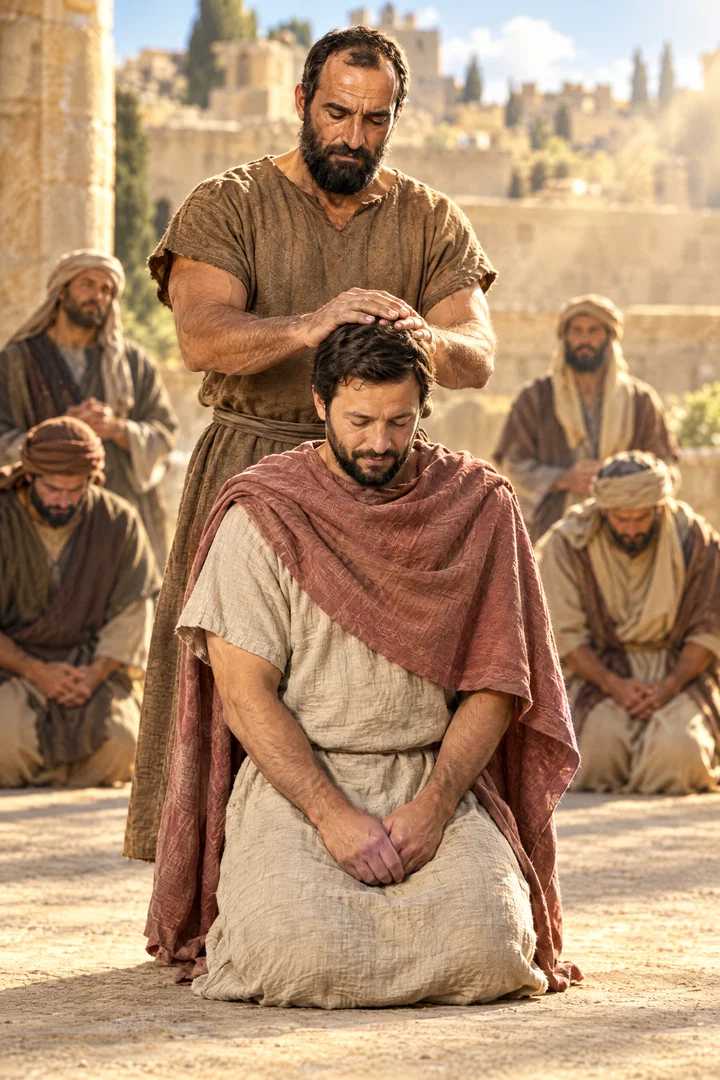
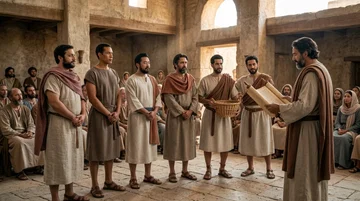
The church answered the murmuring by choosing and appointing seven qualified men to oversee the work.AA 89.2–33SP 292.27RED 28.3SLP 15.1 They were set apart with prayer and the laying on of hands and entrusted with service so the church could preserve peace and unity.EW 80.3–81.1 Their charge was to attend to the business of the cause and the care of the poor, to attend to individual needs, and to manage financial interests.AA 89.2–33SP 292.27RED 28.3 This organization of practical care helped unite the church and freed the apostles for preaching.AA 89.2–3
Those entrusted with this work were to be trustworthy, Spirit-filled, and wise.Lt 9, 1899, par. 1–821MR 97.2–4 They were to be full of faith and the wisdom of the Spirit, devoted people of faith and prayer.Ms 33, 1895, par. 53SP 292.27RED 28.3 They were to be God-fearing, honest and steadfast men, filled with the Holy Spirit, whose character and fitness for the work were known.RH Oct 5, 1905Lt 194, 1898, par. 4–521MR 262.2–4 Such officers were to distribute resources fairly so that no believer would lack life's necessities.Lt 9, 1899, par. 1–8
Selection for such duties was to be made without haste.21MR 262.2–4 It was to be brought before the Lord with earnest prayer and reliance on God for guidance.1MR 191.321MR 262.2–4Ms 8, 1863, par. 8–9 This care was required even though the apostles were men of faith filled with the Holy Spirit and able to perform mighty works and miracles.21MR 262.2–4Ms 8, 1863, par. 8–9 The men chosen were then set apart with prayer and the laying on of hands.EW 80.3–81.1
Stephen was chosen first and placed at the head with supervision of the disbursement of funds appropriated to widows, orphans, and the worthy poor.3SP 292.27RED 28.3 Although a Jew by birth and religion, he spoke the Greek language and knew the customs and manners of the Greeks.3SP 292.27RED 28.3 This selection met the minds of all and quieted the dissatisfaction and murmuring.3SP 292.27RED 28.3
The verse opens a Bible plan and gospel order that separates practical administration from spiritual ministry.7T 252.2–3RH Oct 5, 190521MR 97.2–4 By an orderly system of responsible officers, church business and practical service are organized so gospel ministers are not burdened with secular affairs.7T 252.2–3ST Feb 14, 1884 Church leaders should not take personal charge of every task nor be tied to one place by business duties, but should delegate necessary service to qualified people.21MR 97.2–4Ms 104, 1902, par. 25–2717MR 53.2–4 Difficult matters beyond the officers' judgment are to be brought to those overseeing the whole church.ST Feb 14, 1884
By delegating business and temporal responsibilities, the apostles were relieved as far as possible of secular affairs.AA 88.2SLP 14.3AA 89.2–3ST Feb 14, 1884 They were thus able to continue in prayer and the ministry of the word.13MR 187.3–188.2Ms 104, 1899, par. 5–6SLP 14.3 They could give time to prayer, study, and teaching, and carry the message to many communities without endangering the church's growth.Ms 104, 1902, par. 25–27AA 88.2ST Feb 14, 1884 The complaint made it necessary to distribute church responsibilities more widely for this purpose.AA 88.2
The same pattern calls for appointing trustworthy officers to distribute resources fairly.Lt 9, 1899, par. 1–8 It is also a model for appointing at least seven honest, steadfast, Spirit-filled men to share the General Conference president's duties so authority is not concentrated in one person.Lt 194, 1898, par. 4–5 The appointment of the seven was greatly blessed by God to unite the church and advance it in numbers and strength, with even a great company of priests becoming obedient to the faith.RH Feb 16, 1911SLP 15.1 That blessing came both because the apostles were freed to preach Christ and because the seven served with zeal and power.SLP 15.1 Ordination to the special business of distribution did not shut the seven out from teaching, for they were fully qualified to instruct in the truth and worked earnestly and successfully.AA 89.2–3RH Feb 16, 1911SLP 15.1
Sources
Pioneers and periodicals
77 sources
In those days the number of disciples in Jerusalem was multiplied in rapid growth after Pentecost.RH May 7, 1901RH Aug 15, 1854ST Jul 29, 1913 The Hebrews were Jews by birth who spoke Hebrew, while the Grecians were Jews who had lived abroad and spoke Greek, and the Grecian widows were being neglected and overlooked in the daily distribution, receiving less care than the Hebrew widows.RH Feb 16, 1911CO 36.1–3ST Apr 5, 1883ST May 24, 1883 The daily ministration was the daily service of supplying needs from a common fund by distributing provisions, food, funds, and necessities to the poor and widows.ST Apr 5, 1883RH Sep 27, 1870AUST May 31, 1920ST Jun 2, 1898ST Aug 12, 1897 The response to that murmuring was the origin of the office of deacon, when the church chose seven men of good reputation full of the Spirit and wisdom, whom the apostles appointed and ordained over this work by prayer and laying on of hands.CO 36.1–3ST Mar 26, 1885ST Jul 28, 1881RH Nov 21, 1871ST Feb 12, 1902 That plan divides the church's burdens and separates practical administration from spiritual ministry, so that those responsible for preaching need not leave the word of God to serve tables but can give themselves continually to prayer and the ministry of the word.RH Oct 5, 1905ST Feb 14, 1884CO 36.1–3RH Jan 9, 1855RH Sep 8, 1910
Language and Historical Setting
The verse belongs to the rapid growth after Pentecost when the number of disciples in Jerusalem was multiplied, with the whole body gathered about Jerusalem and thousands more added after the church was kept pure by the slaying of Ananias and Sapphira.RH May 7, 1901RH Aug 15, 1854ST Jul 29, 1913RH Mar 27, 1913 That increase brought increasing burdens of administrative detail in distributing aid from the common treasury for the needy, and care for widows stood as a practical church responsibility whose administration required orderly arrangements within the apostolic pattern of gospel order practiced by Christ's immediate followers.RH May 7, 1901RH Aug 15, 1854 The apostles then devoted themselves continually to prayer and the ministry of the word, while power rested upon the deacons set apart to serve the growing work so that the word of God increased further, every soul who accepted God's word becoming a witness of that word in his own life so the word multiplied in the multiplication of believers, even though with the twelve looking after affairs there was still chance for oversight or mistakes.ST Jul 29, 1913RH Mar 27, 1913
The Hebrews were Jews by birth who spoke Hebrew, while the Grecians were Jews who had lived in foreign countries and spoke Greek, including residents of other countries, with most converts speaking Hebrew.RH Feb 16, 1911ST Nov 28, 1878ST May 24, 1883 Grecians are to be distinguished from Greeks, who could mean natives of Greece or Gentiles.ST May 24, 1883 The existence of these Greek-speaking Jews is explained by the scattering of Jews among other countries through the Assyrian and Babylonian captivities and by Alexander settling many in Egypt.ST May 24, 1883 Those Greek-speaking Jews used the Septuagint, the Greek translation of the Old Testament.ST May 24, 1883
The word rendered ministration is the Greek diakonia, meaning service, the act of performing service, or the service itself.RH Dec 12, 1854RH Mar 8, 1906RH Jul 8, 1852RH Feb 17, 1852RH Jan 1851 In the verse it means the daily service of supplying people's needs by serving and distributing provisions, food, funds, alms, and necessities to the poor and widows.RH Sep 27, 1870AUST May 31, 1920ST Jun 2, 1898ST Jun 1, 1882 It records the provision made for the poor in the primitive church in a daily ministration in which widows were cared for, and the trouble over the distribution of alms in which Grecian widows were neglected led to the choice of seven deacons and to the choice of church servants to handle secular matters distinct from those devoted to preaching the word.RH Sep 27, 1870ST Jun 2, 1898ST Jun 1, 1882 That daily ministration was care for the poor from a common fund and common treasury, likely sustained by believers who sold possessions and contributed their abundance, and the growth of such support is naturally connected with conviction of Christianity's truth and the evidence of miracles.ST Apr 5, 1883ST Aug 12, 1897ST May 24, 1883 The seven qualified men were appointed to distribute the believers' abundance, not to raise money, overseeing distribution and relieving the apostles so they could focus on prayer and preaching.ST Aug 12, 1897ST May 24, 1883
Neglect and Murmuring Explained
As the number of disciples was multiplied after Pentecost, a murmuring and complaint arose from the Grecian believers against the Hebrew believers because the Grecian widows were being neglected and overlooked in the daily distribution of food, aid, alms and support.CO 36.1–3ST Apr 5, 1883ST Jun 7, 1883RH May 7, 1901RH Jan 9, 1855 The grievance was that the Greek-speaking widows were receiving less care, less generous support and a smaller and unfair share than the needy Hebrew widows.ST Feb 14, 1884ST Jun 7, 1883ST Feb 12, 1902 Their complaint was just, and the widows were subsequently provided for.RH Jun 2, 1859
Any such partiality and unequal care was grievous to God and would have displeased Him and opposed the spirit of the gospel.ST Feb 14, 1884RH Feb 16, 1911ST Nov 28, 1878 The neglect reflected partiality and a failure to live by the selfless love and wisdom God gives, while caring for the poor and refusing to despise even the least of His people are expressions of Christ's life in the church.RH Feb 16, 1911ST Nov 28, 1878RH May 29, 1900 The unequal care arose while the apostles were giving priority to preaching Christ and the church had not yet adequately organized its work of caring for dependent widows.ST Feb 12, 1902RH Aug 20, 1908 They were becoming overburdened even by the legitimate work of caring for the poor from the common treasury, with increasing burdens of administrative detail as the whole body gathered about Jerusalem.RH Aug 20, 1908 Even with the twelve looking after affairs there was chance for oversight and mistakes.
The neglect may have resulted from national partiality or, more likely, from the Grecian widows being fewer, less able to speak up, and easy to overlook, so that ordinary service unintentionally neglected some members.RH Aug 10, 1911ST May 24, 1883 The dispute reflected jealousy and longstanding distrust and antagonism between Greek-speaking and Hebrew-speaking groups, tensions known in that country and period.RH Feb 16, 1911ST Apr 5, 1883ST May 24, 1883 That old division could still stir conflict despite unity in Christian love, and the complaint threatened division.RH Feb 16, 1911ST Apr 5, 1883ST May 24, 1883
The grievance called for prompt action to remove grounds for complaint and to restore peace, harmony, fairness and good order and care within the church.ST Feb 14, 1884RH Feb 16, 1911ST Nov 28, 1878ST Jun 7, 1883RH Dec 27, 1853
Selection and Ordination Described
The whole body of the twelve apostles together took up the complaint and determined the course to be followed, not Peter acting alone.ST Dec 3, 1894 The church itself was to select seven men of honest report, full of the Spirit and wisdom, trustworthy, qualified and God-fearing, to take charge of this practical work.CO 36.1–3RH Aug 29, 1854RH Apr 4, 1871RH May 30, 1854RH Nov 21, 1871 These seven were then brought before the apostles, who prayed and laid hands upon them, appointing and ordaining them over this business of serving the needy.CO 36.1–3ST Jul 28, 1881RH Aug 29, 1854RH May 30, 1854 Their appointment was a proper exercise of apostolic authority in creating this office for the care of the poor.RH Nov 21, 1871
The word by which they were set over this work is the same word elsewhere rendered ordain when used of elders, as in Titus 1:5, here rendered appoint, meaning to ordain men over this work.ST Jul 28, 1881 The laying on of hands in their appointment was joined with the work and gift of the Holy Spirit, which fitted them for their duties.ST Jul 28, 1881RH Mar 1, 1860ST The seven so appointed were Grecians, chosen from and to represent the complaining party, that its rights might be guarded.ST Jun 7, 1883 This choice removed ground for complaint and helped preserve harmony.ST Jun 7, 1883
Stephen stands first in the list of those chosen by the people, and Philip was one of the seven.ST Jun 7, 1883ST Apr 15, 1903ST Sep 16, 1897ST Feb 12, 1902ST Feb 4, 1897 This Philip was Philip the evangelist, distinct from Philip the apostle, since the apostles remained in Jerusalem.ST Jun 7, 1883ST Sep 16, 1897 He afterward preached in Samaria and baptized the Ethiopian eunuch, was driven from Jerusalem, and later dwelt at Caesarea where he entertained Paul.ST Mar 3, 1914ST Jun 7, 1883ST Apr 15, 1903 Stephen and Philip also served as evangelists, and the record goes on from their appointment to Stephen's arrest and testimony before the council.ST Mar 3, 1914ST Feb 4, 1897ST Aug 19, 1897
The appointment was blessed of God, for power rested upon those set apart and the church grew stronger and increased in number.RH Feb 16, 1911ST Jul 29, 1913 The wisdom of the step was at once shown in the increase of the word of God.ST Jul 29, 1913ST Feb 12, 1902 Every soul receiving the word became a witness of it in his own life, so that the word multiplied in the multiplication of believers.ST Jul 29, 1913 This followed the keeping of the church pure by the slaying of Ananias and Sapphira, after which thousands more were added.ST Jul 29, 1913 Though ordained for a special task, the seven were also qualified to teach the faith and did so with earnestness and success.RH Feb 16, 1911
Deacons and Their Work
The complaint over neglected widows called for a new organization for ministering to the needy, and the response was the origin and institution of the office of deacon.ST Mar 26, 1885ST Feb 12, 1902ST Mar 26, 1885 Seven deacons were appointed in this setting, establishing the first deacons and creating an office by proper apostolic authority.RH Nov 21, 1871ST Mar 26, 1885 The need for fair distribution as the disciples grew led shortly afterward to the selection of men to take special charge of the offerings. This action added to the recognized working force of the church and relieved the apostles from heavy temporal burdens so they could give themselves exclusively to the ministry of the word, and its wisdom was at once shown by the increase of the word of God.ST Feb 12, 1902
In the beginning the apostles took responsibility for both the ministry of the word and the temporal things of the church, but the attempt to do double work failed.RH Sep 8, 1910 No new instruction was needed because the apostles already knew the deacon's office from the word of God in the Jewish system, so they followed that pattern in selecting these officers.RH Sep 8, 1910 The verse therefore establishes the continuation in the church of Christ of two classes of ministrants known from the Jewish system, one ministering in spiritual things and the other in temporal things, with each class solemnly set apart to the work of its sacred office.RH Sep 8, 1910RH Sep 8, 1910 The complaint made necessary the appointment of seven ministrants over the business of the church to provide proper ministration.RH Sep 8, 1910
Deacons are servants of the church whose work is largely practical and temporal, assisting the elders.CO 34.2 Their ministration was practical service supplying people's needs, and the seven were to oversee the practical service of distributing provisions, food, clothing, funds, and aid, while the twelve devoted themselves to prayer and the ministry of the word.RH Sep 27, 1870RH Jul 31, 1856RH Jul 31, 1856 This temporal work assigned to deacons, including care of the sick and poor, dependent widows, neglected needs, secular affairs, and the detail management of the church, is distinct from elders' oversight of spiritual interests and from those devoted to preaching the word.RH Oct 15, 1861RH Mar 5, 1857 The deacon's subordinate office is especially connected with meeting temporal needs, while the deacon's qualifications also equip him to promote spiritual needs.RH Mar 5, 1857
The office was established to address practical care for those in need, especially the poor and their daily provision, following the example of the early church's provision as in choosing a committee to attend to the poor.RH Sep 8, 1874 The deacon has special responsibility to see that the needs of poor widows are supplied, to distribute aid, and to ensure that no one lacks life's necessities.RH Sep 8, 1874RH Aug 20, 1908 That responsibility applies to the care and administration of church funds and offerings.RH Aug 20, 1908 When the disciples were multiplied, deacons were provided to attend to temporal and detail management, applied to keeping the church clean and in order, providing seats and hymn-books for strangers, taking the collections, and seeing that basins, towels, buckets, and water are ready for footwashing and that unfermented bread and wine with dishes, decanter, goblets, and linen cloths are ready for the Lord's supper.RH Jul 22, 1909
Deacons must be full of the Holy Spirit, without which the qualifications for deacons in 1 Timothy 3 cannot be attained.RH Sep 27, 1870 Faithful service in this subordinate office can bring spiritual strength and boldness in the faith.CO 34.2 The office does not shut out spiritual work but gives increased opportunity to develop the work of the Spirit begun in the heart and to manifest it in eminent degree, since assigning a humble Christian to practical work is the best way to call out the possibilities that lie in the heart.ST Feb 12, 1902 Those chosen were not limited to temporal affairs but, though ordained for a special task, were also qualified to teach the faith with earnestness and success: Stephen taught powerfully and stands first on the list of those chosen, and Philip, one of the seven, served as an evangelist, with both Stephen and Philip also serving to oversee distribution of food and clothing to the poor as the first deacons.RH Feb 16, 1911RH Aug 29, 1854ST Feb 12, 1902ST Feb 4, 1897 Serving in a practical capacity is no bar to preaching, for people able to serve in another way could also preach, perhaps as well as or better than those who did nothing but preach, which raises the question whether Philip's preaching and baptizing were duties of the deacon's office and suggests the work may not have been limited to temporal affairs.RH Jan 7, 1862ST Jun 3, 1908
Deacons come into this work by election by the church followed by ordination as soon as possible, and only after ordination may assist in administering the Lord's supper.RH Jul 22, 1909 The two chosen brethren were thus ordained to that office after the church chose members to be set apart for it.RH Feb 24, 1859 The church should set apart members to serve rather than depend on traveling messengers to administer the Lord's supper, in order to maintain orderly church service so the church can remain healthy and attend to its duties.RH Dec 27, 1853 The work of attending to temporal affairs essential to prosperity belongs to deacons so the ministry will not be burdened; deacons may lead religious meetings when the minister is absent, but administering the ordinances is not their duty.RH Jan 9, 1855
Order and Present Application
As the number of disciples grew a complaint arose because the Greek-speaking widows were being overlooked in the daily care and distribution of food and aid to the poor.CO 36.1–3RH Jan 9, 1855RH Jul 31, 1856RH Mar 1, 1860ST Aug 12, 1897 The chapter gives a Bible plan for assigning responsibilities that divides the burdens of the church and separates practical administration from spiritual ministry.RH Oct 5, 1905CO 36.1–3RH Jan 9, 1855 Practical duties were entrusted to others so the apostles need not leave the word of God to serve tables but could give themselves continually to prayer, study, teaching, preaching and the ministry of the word.CO 36.1–3RH Jan 9, 1855RH Jul 31, 1856RH Mar 1, 1860RH Dec 25, 1913 The need for this practical care led to the church choosing seven men of good reputation who were full of the Spirit, wise, trustworthy, qualified and God-fearing, who were presented to the apostles, prayed over, and appointed by laying on of hands to oversee distribution and care for the poor and needy.RH Oct 5, 1905CO 36.1–3RH Jul 31, 1856RH Mar 1, 1860ST Aug 12, 1897 Preaching and prayer were treated as the chief work, since serving tables was work others could perform, and the arrangement enabled the apostles to meet their responsibility for both spiritual and practical needs.RH Oct 5, 1905CO 36.1–3RH Dec 25, 1913
In the beginning the apostles took responsibility for both the ministry of the Word and the temporal things of the church, but the two kinds of ministry belong to different classes of ministrants and the attempt to do double work failed.ST Feb 14, 1884RH Sep 8, 1910RH Aug 20, 1908 They became overburdened even by the legitimate work of caring for the poor, and the neglect of the Grecian widows made necessary the appointment of seven ministrants over the business of the church to provide proper ministration.RH Sep 8, 1910RH Aug 20, 1908 A mind largely occupied with business cares and perplexities cannot be in the best condition for appreciating and presenting spiritual truth, and a man absorbed in secular affairs cannot lift his hearers above the ordinary plane of Christian experience.RH Aug 20, 1908 Therefore spiritual leaders should be relieved as far as possible of business and other practical burdens so they can give time to prayer, study and teaching.ST Feb 14, 1884RH Aug 20, 1908
When the number of disciples was multiplied the church needed to introduce plans of organization not known or needed when disciples were few, appointing to each a place and a work.RH Jan 7, 1862 The same order and system maintained in the days of the apostles must be maintained now, and the same need now rests on the remnant church which must organize in its present form though that was not needful when Sabbath-keepers were few and far between.RH Jan 7, 1862 That order brings prosperity to the work, increase of the word of God, multiplication of disciples, and the loud cry of the third angel.RH Jan 7, 1862 The prosperity of the cause depends very largely upon its various departments being conducted by men of ability who are qualified for their positions.
The increasing burdens of administrative detail in distributing from the common treasury for the needy brought chance for oversight or mistakes even with the twelve looking after affairs. The need called not for setting aside the systematic cooperative plan so everyone would manage independently, but for sharing responsibilities by calling in other helpers and strengthening the regular channels for carrying forward the financial side of the gospel work. A church may recognize and call people to work in meeting its practical needs, as shown by choosing seven men for service when Greek-speaking believers complained that their widows were overlooked in the daily distribution.CO 34.1
All matters of a temporal nature properly come before the proper officers to be adjusted by them, and only matters of so difficult a character as to baffle their wisdom are to be carried into the council of those who have the oversight of the entire church.ST Feb 14, 1884 The church's growth brought a practical problem in the daily care of widows that was addressed through an orderly system of responsible officers, with difficult matters beyond the officers' judgment brought to those overseeing the whole church.ST Feb 14, 1884
The setting serves as a pattern for seeking God's guidance in church appointments through prayer, showing how God can guide and bless His church as in apostolic times. A divided choice for deacon in a growing church was settled after prayer with a powerful sense of the Lord's presence attending the appointment. The Lord used other people to communicate His direction and appoint the seven to their work, and prayer helped the church discern whom to appoint in responding to division by choosing and ordination.RH Jan 28, 1902
When the number of disciples is multiplied the increased burden requires new organization.RH Dec 2, 1915 When believers live at a distance and cannot regularly reach the mother church, and when leading men are present who can act as officers, the time has come to grant letters to those believers to form a church in their own place and to lay its burdens and work largely upon them.RH Dec 2, 1915 Electing and ordaining elders, a deacon, a clerk and a treasurer in their own place causes them to develop faster than under outside supervision alone.RH Dec 2, 1915
God set organized agencies in motion for His people in the days after Pentecost, with apostles, elders and deacons having oversight of the multiplied church, looked up to in word and doctrine as God-ordained men.RH Jun 3, 1862 Even within the early church ordinary service could unintentionally neglect some members and give rise to misunderstandings and conflict, and similar difficulties can occur in church life.RH Aug 10, 1911 Selecting only some to perform a duty causes difficulty because the rest think those chosen are in better favor and are hurt and jealous, as was seen when it became necessary to select seven to aid in carrying on the work.ST Nov 11, 1897
The complaint led the apostles to arrange for seven qualified men to oversee distribution, and the seven were appointed to distribute the believers' abundance, not to raise money.ST Aug 12, 1897 The widows' situation shows why a system of support must be fair and must account for people who lack property.RH Feb 19, 1861 A community without widows at present should still consider that other communities may have them and that its own circumstances may change.RH Feb 19, 1861
The account belongs to the apostolic pattern of gospel order practiced by Christ's immediate followers, showing the need for orderly church service so the church can remain healthy and attend to its duties.RH Dec 27, 1853RH Aug 15, 1854 It is cited as part of the New Testament pattern for appointing deacons to address the problem in the daily care of widows by choosing servants and setting them apart by prayer and the laying on of hands.RH May 30, 1854 This example supports setting apart members to serve rather than depending on traveling messengers to administer the Lord's Supper.RH Dec 27, 1853
The apostles appointed deacons to administer secular affairs so the apostles could devote their mental powers to their ministry.RH Oct 27, 1859 Capable workers should take responsibility for practical and business duties, like serving tables, so that those called to ministry can devote themselves to the word of God and prayer.RH Aug 22, 1871
Sources