Acts 7:33
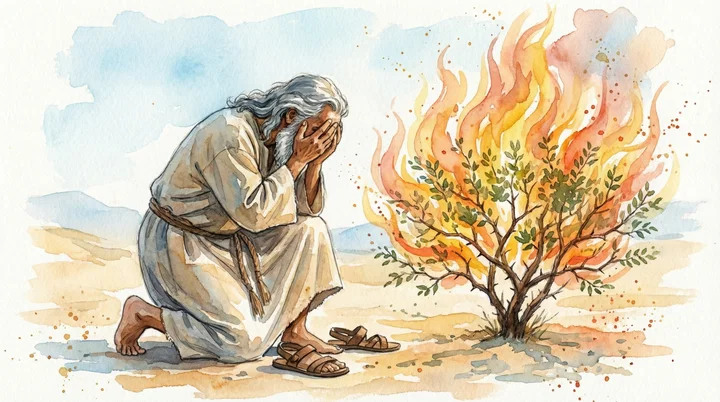
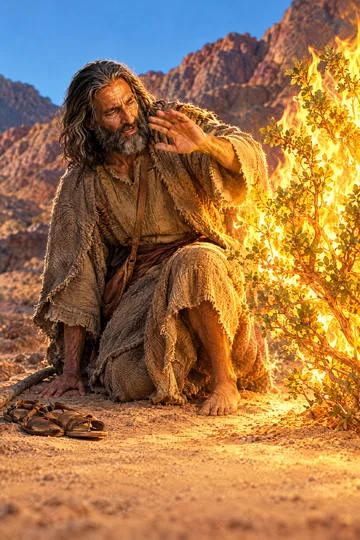
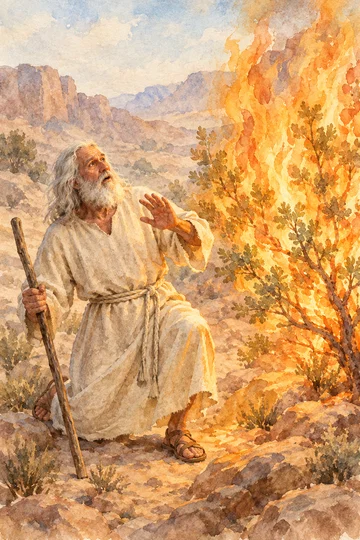
Then said the Lord to him, Put off thy shoes from thy feet: for the place where thou standest is holy ground.
Translations
Then said the Lord to him, Put off your shoes from your feet: for the place where you stand is holy ground.
King James Version, KJV Cambridge Paragraph Bible, Webster Bible
Then said the Lord to him, Put off thy shoes from thy feet: for the place where thou standest is holy ground.
Revised Version, American Standard Version
And the Lord said unto him, Loose the shoes from thy feet: for the place whereon thou standest is holy ground.
and the Lord said to him, Loose the sandal of thy feet, for the place in which thou hast stood is holy ground;
And the Lord said to him, Loose the sandal of thy feet, for the place on which thou standest is holy ground.
And the Lord said unto him—Loose the sandals of thy feet; for, the place whereon thou art standing, is, hallowed ground.
Berean Standard Bible, Majority Standard Bible
Then the Lord said to him, ‘ Take off your sandals, for the place where you are standing is holy ground.
The Lord said to him, ‘ Take off your sandals, for the place where you stand is holy ground.
And the Lord said, Take off the shoes from your feet, for the place where you are is holy.
Then the Lord said to him, Put off thy shoes from thy feete: for the place where thou standest, is holy ground.
Douay-Rheims (Challoner revision)
And the Lord said to him: Loose the shoes from thy feet, for the place wherein thou standest, is holy ground.
Pictures
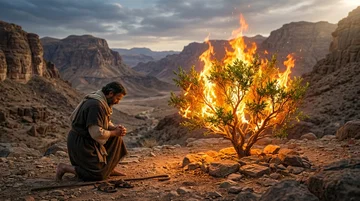
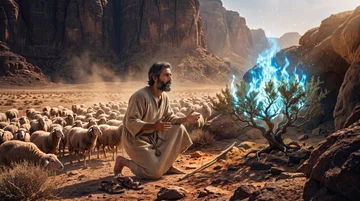
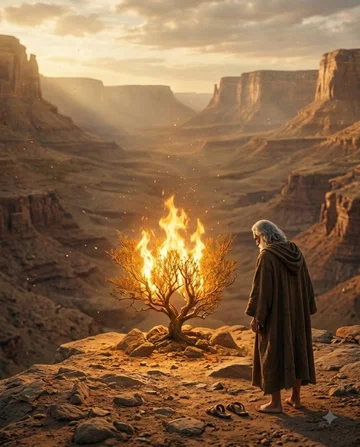
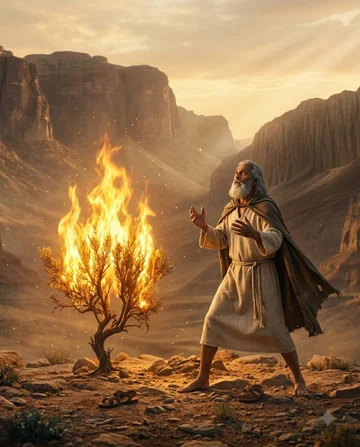
Cross-references
- Exodus 3:5
And he said, Draw not nigh hither: put off thy shoes from off thy feet, for the place whereon thou standest is holy ground.
God tells Moses to remove his shoes because he stands on holy ground.
- Joshua 5:15
And the captain of the LORD’s host said unto Joshua, Loose thy shoe from off thy foot; for the place whereon thou standest is holy. And Joshua did so.
Joshua is told to remove his shoes on holy ground.
- Exodus 3:6
Moreover he said, I am the God of thy father, the God of Abraham, the God of Isaac, and the God of Jacob. And Moses hid his face; for he was afraid to look upon God.
Moses hides his face because he is afraid to look upon God.
- Genesis 28:17
And he was afraid, and said, How dreadful is this place! this is none other but the house of God, and this is the gate of heaven.
Both express awe and reverence at a place made holy by God's presence.
- Acts 7:38
This is he, that was in the church in the wilderness with the angel which spake to him in the mount Sina, and with our fathers: who received the lively oracles to give unto us:
Stephen recalls the angel speaking to Moses at Mount Sinai.
- Exodus 3:10
Come now therefore, and I will send thee unto Pharaoh, that thou mayest bring forth my people the children of Israel out of Egypt.
God commissions Moses to bring Israel out of Egypt.
- Exodus 2:23
And it came to pass in process of time, that the king of Egypt died: and the children of Israel sighed by reason of the bondage, and they cried, and their cry came up unto God by reason of the bondage.
Israel’s bondage and cry to God precede Moses’ commission and Pharaoh’s resistance.
Commentary
Each commentary is drawn from primary sources: the writings of Ellen G. White and Adventist pioneers and periodicals. Each commentary is separate. Its own words are not a quotation; follow the references to read the source passages.
Ellen G. White
8 sources
Acts 7:33 belongs to Stephen's clear, thrilling defense before the council in answer to the charge of blasphemy.3SP 296.2 In that defense he rehearsed the history of God's chosen people from Abraham to Solomon, showing thorough knowledge of the Jewish economy and its spiritual meaning now made manifest through Christ.3SP 296.2 He took up the most impressive points from the national records of Israel to vindicate his cause, while holding the assembly spellbound.3SP 296.2 It was his final testimony, spoken under the Holy Spirit before people who resisted his words, whose occasion, time, and place matter for understanding its significance.7RED 34.1
Stephen spoke these words shortly before his stoning, in which Saul acted a part.RH Mar 6, 1900 Through this speech he set forth prophetic evidence that Jesus, though crucified, was the Son of God.AC1 53.2 Paul afterward proclaimed that same message.AC1 53.2 In the verse Stephen recounts the Lord appearing to Moses and declaring the ground where Moses stood holy, which was sacred because of God's presence.Ms 17, 1908, par. 18–28
The Moses episode to which the verse belongs came after forty years of faithful work as a humble shepherd in Midian.GW92 316.1Ms 45, 1890, par. 11–13Ms 69, 1912, par. 1 Those years of humble work trained and disciplined Moses through hardship and prepared him to deliver and lead Israel.GW92 316.1Ms 45, 1890, par. 11–13Ms 69, 1912, par. 1 The account presents that long preparation as the setting of Moses' call to deliver his people.GW92 316.1Ms 45, 1890, par. 11–13 It does not explain the command to remove the shoes or the meaning of the holy ground.Ms 45, 1890, par. 11–13
Sources
Pioneers and periodicals
23 sources
The Lord spoke to Moses at the burning bush in the wilderness of Sinai after forty years in Midian, telling him to take the shoes from his feet when he drew near to see the flame and heard Him declare Himself the God of Abraham, Isaac, and Jacob.ST Aug 26, 1897ST Feb 28, 1906 The ground was holy only because the Lord's presence made it so, and that presence required reverence shown by removing the shoes.ST Aug 26, 1897ST Feb 28, 1906ST Aug 26, 1897 The command came at the close of Moses's forty years as a shepherd alone with God and nature, which untaught him his Egyptian learning and showed him how little he was and how great God is, and gave him courage to stand without fear before Pharaoh on the mission to deliver Israel and make known God's statutes and laws.ST Feb 28, 1906ST Oct 29, 1902ST Sep 24, 1896 Stephen rehearsed this history in his defense before the council against the charge of blasphemy, tracing God's presence with Israel from Moses and the angel at Sinai through the tabernacle and Solomon's house to show that God's purpose does not depend on sacred buildings and that the Most High dwells not in houses made with hands.ST Nov 28, 1878ST Sep 2, 1897ST Jun 14, 1883 His stoning for that pointed testimony against stiff-necked resisters of the Holy Ghost was the Jews' second rejection of Christ and marked the end of the seventy weeks in the autumn of A.D. 34, when the Jewish nation ceased as a nation to be God's special people and the gospel went to the Gentiles through Paul and the scattered church.ST Sep 2, 1897STST Jun 26, 1907ST
Moses And Stephen Contexts
The command was given to Moses at the burning bush in the wilderness of Mount Sinai after forty years in Midian.ST Aug 26, 1897 As he wondered at the flame of fire in the bush and drew near to behold it, the voice declared Himself the God of Abraham and of Isaac and of Jacob.ST Aug 26, 1897 He was then told to loose the shoes from his feet because the place where he stood was holy ground, made holy by the Lord's presence.ST Aug 26, 1897
It came at the close of a forty-year graduating course as a shepherd alone with God and nature.ST Sep 24, 1896 Before that had been a forty-year preparatory course in Egypt, when at age forty he was learned in all the wisdom of the Egyptians and mighty in words and deeds and believed himself great enough to conquer Egypt and deliver Israel.ST Sep 24, 1896 The wilderness years were needed to unlearn his Egyptian education and to teach him how little he was and how great God is.ST Sep 24, 1896 Only when that lesson was complete was he sent on one of the greatest missions ever given to mortal man, becoming Moses the man of God.ST Sep 24, 1896
The encounter belonged to his commission to make Israel know God's statutes and laws.ST Feb 28, 1906 That commission was set in Israel's enslavement in Egypt, where Pharaoh sought to prevent the people from resting.ST Feb 28, 1906 The meeting in Midian, after years largely alone with God, gave Moses courage to stand before Pharaoh without fear.ST Oct 29, 1902 The same account presents Moses as first rejected by the Jews and later made their deliverer, showing that a rejected man could be entrusted with a divine mission.ST Nov 22, 1899
The verse stands in Stephen's defense before the council against the charge of blasphemy, in his solemn rehearsal of Israel's history centered on Moses and the angel at Sinai.ST Nov 28, 1878ST Jun 14, 1883 That rehearsal includes Moses receiving the law and God's presence among Israel.ST Nov 28, 1878 It goes on through Israel's idolatry in the wilderness, the tabernacle of testimony in the wilderness brought in with Joshua, David's desire and Solomon's building of a house for God, and the declaration that the Most High dwells not in houses made with hands, for heaven is His throne and earth His footstool.ST Sep 2, 1897ST Jun 14, 1883ST Sep 2, 1897
The sermon was pointed to Jews who had resisted much light, setting their sins before them.RH Apr 7, 1868 It charged them as stiff-necked resisters of the Holy Ghost who betrayed and murdered the Righteous One and kept not the law.ST Sep 2, 1897 The charge provoked rage that ended in Stephen's death.RH Apr 7, 1868 Before his stoning he saw Jesus standing on the right hand of God, and while being stoned he prayed for Jesus to receive his spirit and for his murderers to be forgiven, with Saul acting a part in his death.RH Mar 6, 1900ST Sep 2, 1897 A great persecution by Saul followed that scattered the Jerusalem church through Judea and Samaria to preach the Word.ST Sep 2, 1897
Prophecy Doctrine And Christ
Stephen's stoning was the Jews' second rejection of Christ, corresponding to their rejection of Him at the crucifixion, and it marked the end of the seventy weeks in A.D. 34.STST Messiah had been cut off in the midst of the week in A.D. 31, and the last half-week that followed was closed by that martyrdom, during which the apostles continued ministering to the Jews.ST At the close of the seventieth week in the autumn of A.D. 34, when Stephen was martyred, the Jewish Sanhedrin formally rejected the Gospel.ST Jun 26, 1907ST At that time the Jewish nation ceased as a nation to be God's special people and to serve His purpose.STST Afterward Paul was called as apostle to the Gentiles, and believers scattered in persecution and went among other nations preaching the Word and winning people from them.STST Jun 26, 1907ST
Stephen's solemn account of Moses' history and his encounter with God at Sinai belongs to his defense against the charge of blasphemy, and his argument shows that God's purpose is not dependent on sacred buildings or places.ST Jun 14, 1883 His sermon in Acts 7 says nothing about a change of the Sabbath, and had Christ changed the Sabbath at His resurrection Stephen would have known it by the time he preached that sermon that so excited the Jews and would have mentioned it, so his silence shows the Sabbath was not changed and the plain word of God stands against tradition.RH Apr 3, 1879 The verse is part of the account of God's care for Israel in the deliverance from Egypt, with Christ as their invisible leader and benefactor.ST Feb 19, 1902 Stephen found Christ in these Old Testament Scriptures and proclaimed Him from them, which teachers can use to point pupils to Christ.ST Feb 19, 1902ST May 15, 1884
Reverence And Application
The command was given at the burning bush in the wilderness of Mount Sinai after forty years in Midian, when Moses wondered at the flame of fire in the bush and drew near to behold it.ST Aug 26, 1897 Then the voice declared Himself the God of Abraham and of Isaac and of Jacob and told him to loose the shoes from his feet because the place where he stood was holy ground.ST Aug 26, 1897ST Aug 26, 1897 The ground was holy because the presence of the Lord made it holy, and that presence required reverence.ST Aug 26, 1897ST Feb 28, 1906ST Aug 26, 1897 That commission belonged to making Israel know God's statutes and laws while Israel was enslaved in Egypt and Pharaoh sought to keep the people from resting.ST Feb 28, 1906 Moses was to remove his shoes and approach God with reverence and not with undue familiarity.ST Feb 26, 1880
People may come boldly into God's presence through Jesus as their righteousness and substitute, yet they must not approach presumptuously as though God were their equal.ST Feb 26, 1880 When His presence is clearly realized, sinful people bow humbly and reverence His holiness and power.ST Feb 26, 1880 A place of worship is to be treated as sacred because God may honor worshipers with His presence.RH Mar 12, 1908 In the East removing shoes expresses that reverence for holy ground in God's presence, serving much the same purpose as removing a hat in the West.RH Mar 12, 1908 The same description of holy ground applies to a place set apart for secret prayer, where a person feels a sacred and heavenly atmosphere because ground becomes holy by God's presence.RH May 5, 1863
The place where Moses stood was set apart as sacred, and that image shows the common paths of motherhood and fatherhood should be treated as holy ground.ST Nov 7, 1892 Ground set apart by God is sacred, and that image shows individual rights as gifts from God are a domain made free by God.ST Aug 20, 1894 To enter that domain by violation or coercion breaks what God has made free, so people must respect those rights and not coerce others.ST Aug 20, 1894
Sources