Amos 7:14
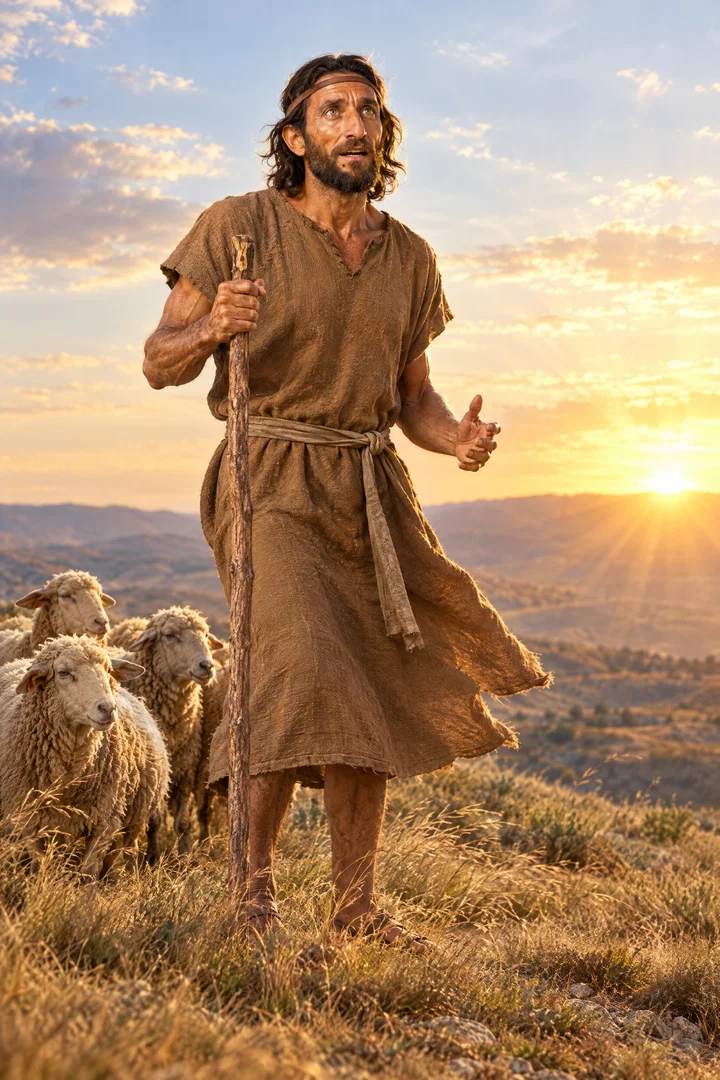
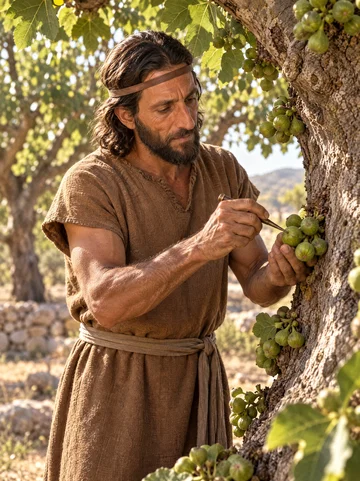
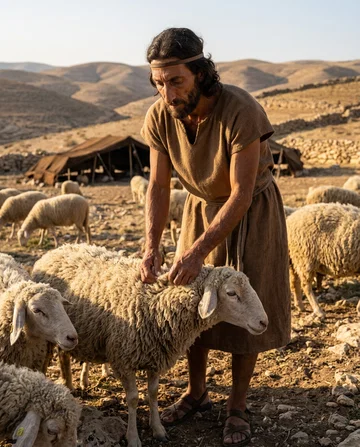
Then answered Amos, and said to Amaziah, I was no prophet, neither was I a prophet’s son; but I was an herdman, and a gatherer of sycomore fruit:
Translations
Then answered Amos, and said to Amaziah, I was no prophet, neither was I a prophet’s son; but I was an herdsman, and a gatherer of sycomore fruit:
Then answered Amos, and said to Amaziah, I was no prophet, neither was I a prophet’s son; but I was an herdman, and a gatherer of sycomore fruit:
Then answered Amos, and said to Amaziah, I was no prophet, neither was I a prophet’s son; but I was a herdman, and a gatherer of sycomore fruit:
Then answered Amos, and said to Amaziah, I was no prophet, neither was I a prophet's son; but I was a herdman, and a gatherer of sycamore fruit:
Then answered Amos, and said to Amaziah, I was no prophet, neither was I a prophet’s son; but I was an herdman, and a dresser of sycomore trees:
Then answered Amos, and said to Amaziah, I was no prophet, neither was I a prophet’s son; but I was a herdsman, and a dresser of sycomore-trees:
And Amos answereth and saith unto Amaziah, 'I [am] no prophet, nor a prophet's son [am] I, but a herdsman I [am], and a cultivator of sycamores,
And Amos answered and said to Amaziah, I was no prophet, neither was I a prophet's son; but I was a herdman, and a gatherer of sycamore fruit.
Then answered Amos, and said unto Amaziah, No prophet, was I,—nor the son of a prophet, was I,—but, a herdman, was I, and a preparer of sycamore fruit;
Berean Standard Bible, Majority Standard Bible
“ I was not a prophet,” Amos replied, “ nor was I the son of a prophet; rather, I was a herdsman and a tender of sycamore-fig trees.
Then Amos answered Amaziah, “ I was no prophet, neither was I a prophet’s son, but I was a herdsman, and a farmer of sycamore figs;
Then Amos in answer said to Amaziah, I am no prophet, or one of the sons of the prophets; I am a herdman and one who takes care of sycamore-trees:
Then answered Amos, and said to Amaziah, I was no Prophet, neither was I a prophets sonne, but I was an herdman, and a gatherer of wilde figs.
Douay-Rheims (Challoner revision)
And Amos answered and said to Amasias: I am not a prophet, nor am I the son of a prophet: but I am a herdsman plucking wild figs.
Pictures
Cross-references
- Amos 1:1
The words of Amos, who was among the herdmen of Tekoa, which he saw concerning Israel in the days of Uzziah king of Judah, and in the days of Jeroboam the son of Joash king of Israel, two years before the earthquake.
Both identify Amos as a herdsman of Tekoa.
- Jeremiah 1:5
Before I formed thee in the belly I knew thee; and before thou camest forth out of the womb I sanctified thee, and I ordained thee a prophet unto the nations.
contrasts birth-ordained prophets with Amos
- 1 Samuel 16:11
And Samuel said unto Jesse, Are here all thy children? And he said, There remaineth yet the youngest, and, behold, he keepeth the sheep. And Samuel said unto Jesse, Send and fetch him: for we will not sit down till he come hither.
Both were called while tending sheep.
- Exodus 4:10-12
And Moses said unto the LORD, O my Lord, I am not eloquent, neither heretofore, nor since thou hast spoken unto thy servant: but I am slow of speech, and of a slow tongue.
Both show God giving words to speakers who feel unqualified.
- Amos 7:7-8
Thus he shewed me: and, behold, the Lord stood upon a wall made by a plumbline, with a plumbline in his hand.
The plumbline message provoked opposition.
- Hebrews 5:4
And no man taketh this honour unto himself, but he that is called of God, as was Aaron.
both cited as proof of divine call
- 1 Kings 10:27
And the king made silver to be in Jerusalem as stones, and cedars made he to be as the sycomore trees that are in the vale, for abundance.
Sycamores were abundant in Palestine.
Commentary
Each commentary is drawn from primary sources: the writings of Ellen G. White and Adventist pioneers and periodicals. Each commentary is separate. Its own words are not a quotation; follow the references to read the source passages.
Ellen G. White
7 sources
Amos was by background no professional prophet and no son of a prophet, but a herdsman and lowly shepherd from Tekoa, a husbandman and tiller of the soil, and a gatherer of sycamore fruit.GW92 316.1Ms 117a, 1901, par. 43GC88 142.1–2Ms 92, 1902, par. 19–31GC 142.3 He was not a priest or other prominent person, but an ordinary working man outside the recognized prophetic order.GC88 142.1–2Ms 92, 1902, par. 19–31GC 142.3 His own answer to Amaziah therefore disclaimed both office and lineage as the ground of his speaking.Ms 92, 1902, par. 19–31GC 142.3
From that ordinary work God called and chose him and raised him up as His representative and inspired prophet-messenger to Israel.GW92 316.1GW 332.3–333.1Ms 117a, 1901, par. 43Ms 92, 1902, par. 19–31Lt 57, 1896, par. 10–11 He was given a message to proclaim, sent to warn His chosen people and to convey truth to them.GW92 316.1Ms 92, 1902, par. 19–31Lt 57, 1896, par. 10–11 That commission set him to rebuke powerful leaders in a dangerous work.GC88 142.1–2
His calling shows that God calls people to His work from humble occupations and chooses servants from every rank of life.GW92 316.1Ms 117a, 1901, par. 43 He can call and instruct ordinary people to serve Him, and ordinarily He chose humble, despised people rather than high-ranking religious or civic leaders to serve as prophets.Ms 92, 1902, par. 19–31GC 142.3 His lowly occupation did not prevent him from serving as God's messenger.GW 332.3–333.1 Nor did his humble background as a shepherd make his message less authoritative.GC88 142.1–2
Sources
Pioneers and periodicals
38 sources
Amos was a herdsman and shepherd from Tekoa in Judah and a gatherer and dresser of sycamore fruit who declared he was no prophet by profession, training, lineage, or human appointment when confronted by Amaziah the priest of Bethel.RH Jun 22, 1916RH Mar 12, 1857RH Jul 14, 1910RH Jan 26, 1905ST Dec 8, 1909 The Lord took him while he was faithfully following the flock and engaged in ordinary work and commanded him to go and prophesy to Israel in the northern kingdom.RH Mar 12, 1857RH Jul 14, 1910ST May 19, 1909 His call shows that the prophetic office follows no fixed rule of succession or class, and that God often passes by the great to equip humble workers with His message and supply what they lack.RH Sep 13, 1906ST May 19, 1909RH Mar 13, 1900RH Aug 19, 1915 Obeying that command, he stood at Bethel with courage and plain speech to deliver God's plumb-line warning to turn from idols and sin or face sure destruction.RH Mar 12, 1857RH Dec 23, 1915ST May 19, 1909RH Dec 14, 1905 His diligence in lowly duties prepared him for greater service, proving that faithful work in small things must not be despised because God calls those already busy to higher responsibility.RH Jul 14, 1910RH Jul 14, 1910ST Jul 22, 1886
Identity and Historical Setting
Amos was a herdsman and shepherd from Tekoa in Judah, in Judea, and a gatherer and dresser of sycamore fruit and a fruit gardener.RH Jun 22, 1916ST Dec 8, 1909STSTST May 24, 1910 He was not a prophet by profession, and his name means burdened, burdened for his people.RH Jun 22, 1916ST Dec 8, 1909 The sycamore of Palestine was an Asian wild fig-tree, also called wild figs, distinct from the American tree called sycamore or button-wood, though the trees resemble one another.RH Sep 12, 1854
He was no prophet by profession, prior office, training, lineage, family inheritance, or position in the world, and no prophet's son, but an ordinary herdsman and humble working man.RH Mar 12, 1857RH Jul 14, 1910ST May 19, 1909RH Aug 19, 1915ST Jul 22, 1886 He had not set out to prophesy, and God called him while he was tending and following the flock.RH Mar 12, 1857RH Jul 14, 1910RH Jan 26, 1905 His humble occupation before the Lord called him to prophesy shows that God may choose prophetic messengers from lowly backgrounds.ST May 19, 1909RH Aug 19, 1915
The words are his answer to Amaziah the priest of Bethel, spoken at Bethel in reply to the priest who opposed his message.RH Mar 12, 1857RH Jan 26, 1905RH Dec 14, 1905 Bethel was a center of idolatry and a royal seat in the northern kingdom of Israel, the northern kingdom of the Ten Tribes to which many of his prophecies referred.ST Dec 8, 1909STST Sep 8, 1898 After Amaziah complained and accused him of treason and demanded that he stop, Amos was expelled from the kingdom, and is thought to have returned home and written his prophecy.RH Jun 22, 1916ST Dec 8, 1909
His prophesying belonged to the reigns of Uzziah king of Judah and Jeroboam II king of Israel.ST Oct 29, 1885ST Dec 8, 1909 It was two years before an earthquake, between about 800 and 786 B.C., after Israel's victories and recovery of its territory.ST Oct 29, 1885
God's Call and Equipping
Amos 7:14 reveals a second way in which God calls prophets, for men who were not ordained and sanctified before birth and who did not receive their qualifications through their parents.RH Sep 13, 1906 Amos was such a prophet, called to supply a want created by lack on the part of others.RH Sep 13, 1906 His calling proves that God is never short of instrumentalities to accomplish His work.RH Sep 13, 1906
The prophetic office was not limited to a particular class, family, station in life, prior office, or human appointment, and it follows no fixed rule of succession.RH Aug 19, 1915ST Mar 15, 1910 Amos was no prophet by family line, prior office, training, or human establishment, but a herdsman and gatherer of sycamore fruit from Tekoa before God chose him as messenger.RH Aug 19, 1915ST Mar 15, 1910 Old Testament prophets received their work by divine call, and ministry exercised in the name of God can come only from God.RH Aug 15, 1912
Jehovah took Amos while he was faithfully tending and following the flock and engaged in ordinary, peaceful work, and commanded him, Go, prophesy unto My people Israel.RH Mar 12, 1857RH Jul 14, 1910ST May 19, 1909ST He was an ordinary herdsman and gatherer and dresser of sycamore fruit, not a prophet by profession, inheritance, training, lineage, or position in the world, and he had not set out to prophesy.RH Mar 12, 1857ST May 19, 1909ST His answer to Amaziah's demand that he stop was that he was obeying God's command, and the message he was commanded to deliver would be fulfilled despite disregard.RH Mar 12, 1857 God never calls lazy or idle people when He needs workers, but calls someone already busy at work, and He may call from humble daily work to greater responsibility.RH Jul 14, 1910RH Sep 5, 1912
God's work is committed not to one class of men but to humble workers with a proportionate burden.ST May 19, 1909 With the Lord's call and a message from Him a man is fully equipped for duty, for God Himself supplies what humble instruments lack.ST May 19, 1909RH Mar 13, 1900 Amos's herding and fruit-gathering was work done only by the poor, proving that God chooses humble instruments for exalted work.RH Mar 13, 1900 True worth is not worldly knowledge or ability but the fear of the Lord and departing from evil, which the poorest can have as easily as the great.RH Mar 13, 1900
Message and Courageous Delivery
Amos had not set out to prophesy, for he was an ordinary herdsman and gatherer of sycamore fruit rather than a prophet by profession or inheritance.RH Mar 12, 1857 God took him while he was tending the flock and commanded him to go and prophesy to Israel, having specially chosen him for that mission to Israel.RH Mar 12, 1857RH Dec 14, 1905 When Amaziah the priest at Bethel demanded that he stop, his answer was obedience to that divine command.RH Mar 12, 1857RH Dec 14, 1905 The message he had been commanded to deliver would be fulfilled despite disregard, and rejecting his warnings brought evil upon the people.RH Mar 12, 1857RH Dec 14, 1905
He was no professional prophet nor a prophet's son, yet he was called to displace Amaziah who had departed from God.RH Dec 23, 1915 Bethel must be God's house, not Jeroboam's, and Amos carries the plumb-line message in the midst of Israel, standing straight by God's straightness with the plumb line in hand.RH Dec 23, 1915 His work was the Lord's work and not his own, bearing a decided message to both houses of Israel and Judah to turn from sins, put away idols, and worship God.ST May 19, 1909 That message warned of pestilence and sure destruction for their offensive doings.ST May 19, 1909
He delivered that reproof at Bethel with courage, in simple straightforward speech rich in rural figures, declaring what the Lord Jehovah had shown him.ST May 19, 1909 His herdsman's vocation shaped the figures he used in prophecy.ST May 19, 1909ST May 24, 1910 He did not fear the king nor leave Israel until he had delivered it, but fearlessly did his duty though opposed by Amaziah the priest of Bethel.ST May 19, 1909 His humble position as a simple shepherd, rather than a prophet by profession or birth or from a prophetic family, did not prevent him from rebuking powerful rulers, priests, and scholars and confronting those in authority, even at risk to his life.ST May 19, 1909RH Apr 7, 1863ST Nov 5, 1885
While engaged in ordinary, peaceful work in Tekoa he received the spirit of inspiration and was called to prophetic duty.ST That call brought danger as well as influence, as humble work gave way to lasting prophetic ministry.ST His words thus became enduring spiritual nourishment for later generations.ST
Bible Authorship and Prophecy
Amos was a herdsman and a gatherer of sycamore fruit, not a prophet by profession nor a member of a prophetic family, showing that a writer of Scripture could come from ordinary working life rather than a learned or royal station.RH Jul 16, 1914 He was a poor and lowly worker, yet his place among those who wrote the Bible proves that a herdsman and fruit gatherer was numbered among its writers.RH Jan 11, 1915 Alongside him stand kings, emperors, princes, poets, sages, philosophers, fishermen, statesmen, taxgatherers, preachers, exiles, captains, legislators and judges, showing that men of every grade and class wrote the sixty-six books.RH Jan 11, 1915 That breadth of station makes the authorship of the Bible wonderful and diverse.RH Jan 11, 1915
His work belongs to the reigns of Uzziah of Judah and Jeroboam II of Israel, two years before an earthquake, between about 800 and 786 B.C., after Israel's victories and recovery of its territory.ST Oct 29, 1885 He was a shepherd of Tekoa in Judea whose name means burdened, burdened for his people, and he prophesied at Bethel in those reigns.ST Dec 8, 1909 The priests accused him of treason and expelled him from the northern kingdom to which many of his prophecies referred.ST Dec 8, 1909 There he foretold the nation's captivity and destruction and the downfall of apostasy.ST Oct 29, 1885ST Dec 8, 1909 From that downfall the prophecy points forward to the last days when there shall be a famine of the Word, given with striking illustrations from shepherd life.ST Dec 8, 1909
Lessons for Humble Service
God often chooses the humblest instruments for His work, passing by the great to use the lowly.RH Apr 11, 1854ST Oct 30, 1884 He may entrust His work and revelation to humble people rather than to those regarded as learned or powerful.RH Mar 13, 1900RH Apr 11, 1854 Amos was no prophet by profession or by family inheritance, but a herdsman and gatherer of sycamore fruit, work done only by the poor.ST May 19, 1909RH Mar 13, 1900 True worth is not worldly knowledge or ability but the fear of the Lord and departing from evil, which the poorest can have as easily as the great.RH Mar 13, 1900 God took him as he followed the flock and sent him to prophesy to His people, Himself supplying what humble instruments lack for exalted work.RH Mar 13, 1900RH Apr 11, 1854 Those who feel unqualified can therefore acknowledge humble beginnings while answering God’s call to go and serve.ST May 19, 1909
Diligence in ordinary duties prepares a person for further service, and humble work should not be despised.RH Jul 14, 1910ST Jul 22, 1886 While faithfully tending the flock the Lord called Amos from humble daily work to the greater responsibility of prophesying to Israel.RH Jul 14, 1910RH Jul 14, 1910 His humble occupation is the day of small things that must not be despised, and diligence in it made him available for a more responsible position.RH Jul 14, 1910 Those who now gather sycamore fruit, follow herds, or keep sheep must faithfully perform their work, look well to their condition, and be diligent to know their state.RH Jul 14, 1910 They must make every occasion a great occasion, because while engaged in humble occupations they may be measured for higher work.RH Jul 14, 1910 Doing so emulates the Tekoites and brings efficiency in all positions, availability for higher work, a life of service, and a crown of reward, while refusing like their nobles who put not their necks to the work of the Lord brings failure and oblivion.RH Jul 14, 1910 His ordinary occupation did not prevent God from choosing him as a prophet though he was not from a prophetic family.ST Jul 22, 1886
The emphasis is on work rather than position, for a prophet is God’s messenger.RH Jan 26, 1905 Jehovah took him from following the flock and told him to go prophesy to Israel.RH Jan 26, 1905 Not boastfully claiming to be a prophet and in the line of the prophets does not make him a deceiver.RH Jan 26, 1905 His distinction cautions that one may deny being a prophet while still having experiences understood as manifestations of the Holy Spirit, so that impressions and mental images should not all be accepted as such.RH Nov 27, 1860
He was a herdsman with flocks under his care, and that care included the Sabbath the same as any day.ST Jun 19, 1907 Sabbath observance permits necessary chores for the life and welfare of people and stock, reduced always to a practical, merciful minimum.ST Jun 19, 1907 Such chores include feeding and milking cows, feeding and watering horses, and feeding chickens and other fowls.ST Jun 19, 1907 This gives the pattern for a Sabbath-keeping farm laborer hired by the month and living on the premises to do such chores.ST Jun 19, 1907
Predicting Without Claiming Prophethood
Amos's denial that he was a prophet by profession or descended from a prophetic family, but had been a herdsman and gatherer of sycamore fruit, provides language for expressing confidence in predicting that an opposing publication will fail, while acknowledging that people can sometimes foresee a little of what lies ahead.RH Dec 19, 1865 The same denial distinguishes such confident prediction that a dishonest merchant will fail from any claim to prophetic office or miraculous revelation.ST Aug 3, 1882
The denial of being a prophet or a prophet's son can be used while still foretelling judgment, as in warning that a whirlwind is coming upon legislators who refuse to represent the men who sent them to the legislative halls and to sanction a ministers' bill, and upon exacting corporations and grinding monopolies, so near that low rumbling thunder can already be heard in the distance, soon to break with pent-up fury in a battle of the ballots.RH Apr 8, 1909 It teaches that it does not require a prophet or the son of a prophet to tell that within three years the country will pass through a terrible crisis unless there is an immediate change in the relations of capital and labor, where Christian conduct and common sense have been thrown to the winds and labor unions have assumed so arrogant an attitude that a great crash is almost inevitable.RH Oct 1, 1903 A prophet or a prophet's son is one with special calling to interpret signs, yet such standing is not needed to understand what is now in view, for with the light that prophecy throws upon current history, and with clouds larger than a man's hand in the horizon, the meaning of these signs can and should be discerned without prophetic office.RH Dec 1, 1904
Saying I am not a prophet nor the son of a prophet does not mean careless gazing at the course of the world, but leaves room to hold that the present age is marked and peculiar and different from all other times heard or read of, and to scan its present aspects in order to learn what coming events they foreshadow.RH Jun 2, 1868 The phrase a prophet, nor son of a prophet describes one who is not a professional prophet or part of a prophetic family, and is used to say that no prophetic status is needed to recognize the danger of religious laws enforced by the state.
Sources