1 Samuel 16:11
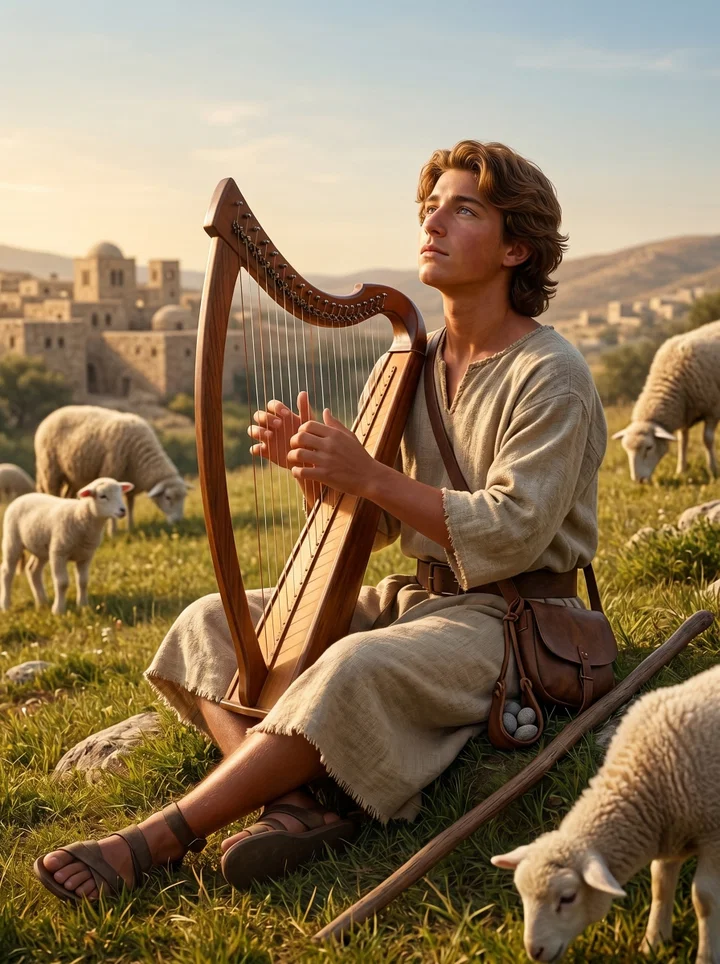
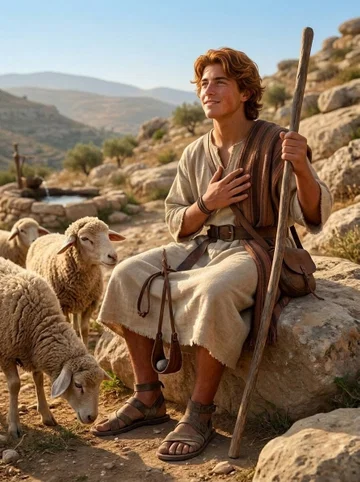
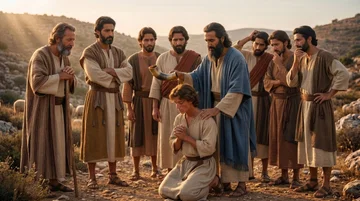
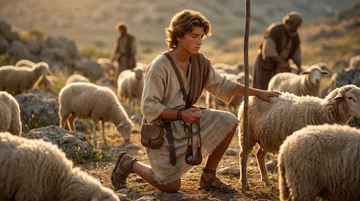
And Samuel said unto Jesse, Are here all thy children? And he said, There remaineth yet the youngest, and, behold, he keepeth the sheep. And Samuel said unto Jesse, Send and fetch him: for we will not sit down till he come hither.
Translations
And Samuel said to Jesse, Are here all your children? And he said, There remains yet the youngest, and, behold, he keeps the sheep. And Samuel said to Jesse, Send and fetch him: for we will not sit down till he come here.
King James Version, Revised Version
And Samuel said unto Jesse, Are here all thy children? And he said, There remaineth yet the youngest, and, behold, he keepeth the sheep. And Samuel said unto Jesse, Send and fetch him: for we will not sit down till he come hither.
And Samuel said unto Jesse, Are here all thy children? And he said, There remaineth yet the youngest, and behold, he keepeth the sheep. And Samuel said unto Jesse, Send and fetch him: for we will not sit down till he come hither.
And Samuel said to Jesse, Are here all thy children? And he said, There remaineth yet the youngest, and behold, he keepeth the sheep. And Samuel said to Jesse, Send and bring him: for we will not sit down till he hath come hither.
And Samuel said unto Jesse, Are here all thy children? And he said, There remaineth yet the youngest, and, behold, he is keeping the sheep. And Samuel said unto Jesse, Send and fetch him; for we will not sit down till he come hither.
And Samuel saith unto Jesse, 'Are the young men finished?' and he saith, 'Yet hath been left the youngest; and lo, he delighteth himself among the flock;' and Samuel saith unto Jesse, 'Send and take him, for we do not turn round till his coming in hither.'
And Samuel said to Jesse, Are these all the young men? And he said, There is yet the youngest remaining, and behold, he is feeding the sheep. And Samuel said to Jesse, Send and fetch him; for we will not sit at table till he come hither.
Then said Samuel unto Jesse—Are these all the young men? And he said—There yet remaineth, the youngest, but lo! he is tending the sheep. Then said Samuel unto Jesse—Do, send, and summon him, for we cannot sit round, until he cometh in hither.
Berean Standard Bible, Majority Standard Bible
And Samuel asked him, “ Are these all the sons you have?”“ There is still the youngest,” Jesse replied, “ but he is tending the sheep.”“ Send for him,” Samuel replied. “ For we will not sit down to eat until he arrives.”
Samuel said to Jesse, “ Are all your children here?”He said, “ There remains yet the youngest. Behold, he is keeping the sheep.”Samuel said to Jesse, “ Send and get him, for we will not sit down until he comes here.”
Then Samuel said to Jesse, Are all your children here? And he said, There is still the youngest, and he is looking after the sheep. And Samuel said to Jesse, Send and make him come here: for we will not take our seats till he is here.
Finally, Samuel said vnto Ishai, Are there no more children but these? And hee sayde, There remaineth yet a litle one behinde, that keepeth the sheepe. Then Samuel saide vnto Ishai, Sende and set him: for we will not sit downe, till he be come hither.
Douay-Rheims (Challoner revision)
And Samuel said to Isai: Are here all thy sons? He answered: There remaineth yet a young one, who keepeth the sheep. And Samuel said to Isai: Send, and fetch him, for we will not sit down till he come hither.
Pictures






Cross-references
- 1 Samuel 16:7
But the LORD said unto Samuel, Look not on his countenance, or on the height of his stature; because I have refused him: for the Lord seeth not as man seeth; for man looketh on the outward appearance, but the LORD looketh on the heart.
God corrects Samuel’s judgment of Eliab and explains David’s selection by the heart, not appearance.
- 1 Samuel 17:45-50
Then said David to the Philistine, Thou comest to me with a sword, and with a spear, and with a shield: but I come to thee in the name of the LORD of hosts, the God of the armies of Israel, whom thou hast defied.
David moves from tending sheep to defeating Goliath in the Lord’s name.
- 1 Samuel 16:1
And the LORD said unto Samuel, How long wilt thou mourn for Saul, seeing I have rejected him from reigning over Israel? fill thine horn with oil, and go, I will send thee to Jesse the Beth-lehemite: for I have provided me a king among his sons.
God sends Samuel to Jesse to anoint the chosen successor to Saul.
- Isaiah 11:1
And there shall come forth a rod out of the stem of Jesse, and a Branch shall grow out of his roots:
The promised Messiah comes from Jesse’s family.
- 1 Samuel 17:28
And Eliab his eldest brother heard when he spake unto the men; and Eliab’s anger was kindled against David, and he said, Why camest thou down hither? and with whom hast thou left those few sheep in the wilderness? I know thy pride, and the naughtiness of thine heart; for thou art come down that thou mightest see the battle.
Eliab angrily rebukes David at the battlefield.
- 2 Samuel 7:12-16
And when thy days be fulfilled, and thou shalt sleep with thy fathers, I will set up thy seed after thee, which shall proceed out of thy bowels, and I will establish his kingdom.
God promises David an enduring house and throne through his offspring.
- Psalms 78:70-72
He chose David also his servant, and took him from the sheepfolds:
God takes David from tending sheep to lead Israel.
- 1 Chronicles 2:13-15
And Jesse begat his firstborn Eliab, and Abinadab the second, and Shimma the third,
Lists Jesse’s sons and names David seventh.
- 1 Samuel 17:12
Now David was the son of that Ephrathite of Beth-lehem-judah, whose name was Jesse; and he had eight sons: and the man went among men for an old man in the days of Saul.
States that Jesse had eight sons.
- 2 Samuel 7:8
Now therefore so shalt thou say unto my servant David, Thus saith the LORD of hosts, I took thee from the sheepcote, from following the sheep, to be ruler over my people, over Israel:
David was taken from tending sheep to rule Israel.
- Ruth 4:22
And Obed begat Jesse, and Jesse begat David.
Names Jesse as David’s father and David as the king Samuel anointed.
- Psalms 89:19-20
Then thou spakest in vision to thy holy one, and saidst, I have laid help upon one that is mighty; I have exalted one chosen out of the people.
God chooses and anoints David, through whom the Messiah is promised.
- 1 Samuel 17:34-35
And David said unto Saul, Thy servant kept his father’s sheep, and there came a lion, and a bear, and took a lamb out of the flock:
David recounts killing a lion and a bear while tending sheep.
- Hebrews 11:32
And what shall I more say? for the time would fail me to tell of Gedeon, and of Barak, and of Samson, and of Jephthae; of David also, and Samuel, and of the prophets:
David is named among those who acted through faith.
- 2 Samuel 5:2
Also in time past, when Saul was king over us, thou wast he that leddest out and broughtest in Israel: and the LORD said to thee, Thou shalt feed my people Israel, and thou shalt be a captain over Israel.
David’s tribes recall God’s earlier choice of him.
- 1 Chronicles 28:4
Howbeit the LORD God of Israel chose me before all the house of my father to be king over Israel for ever: for he hath chosen Judah to be the ruler; and of the house of Judah, the house of my father; and among the sons of my father he liked me to make me king over all Israel:
both show God choosing David from his father's house
- 1 Corinthians 1:27-28
But God hath chosen the foolish things of the world to confound the wise; and God hath chosen the weak things of the world to confound the things which are mighty;
God chooses those the world despises.
Commentary
Each commentary is drawn from primary sources: the writings of Ellen G. White and Adventist pioneers and periodicals. Each commentary is separate. Its own words are not a quotation; follow the references to read the source passages.
Ellen G. White
14 sources
Samuel passed in review the seven sons Jesse presented without the Lord indicating any of them, and left perplexed he asked if these were all, was told the youngest had been left out as a mere youth keeping his father's sheep in the field, and ordered him fetched declaring they would not sit down till he came hither.SG4 77.4–78.1PP 638.2–641.1RH Feb 13, 1913ED 266.1–3 God had chosen that youngest shepherd boy to succeed Saul after his rejection as the anointed ruler and captain of Israel with the promise of the throne.1SP 367.3–368.1SG4 77.4–78.1Ms 163, 1902, par. 4 He refused every noble-appearing elder brother, though handsome in countenance and lofty in stature, because they were proud, self-centered and not right in heart, for man looks on the outward appearance but the Lord looks on the heart.YCDCP 2.1SG4 77.4–78.1RH Feb 13, 1913ED 266.1–3 David's lowly, faithful and courageous filling of the humble office of shepherd did not hinder his choice but fitted him to in time exchange the shepherd's crook for the scepter, for being little in his own sight, humble, sincere and open to the Holy Spirit, God trained his character and gave him a prudent and understanding heart.1SP 367.3–368.1SG4 77.4–78.1Ms 163, 1902, par. 4RH Nov 11, 1915ED 266.1–3 So no human judgment can tell beforehand which youth will prove most promising and render the best service, since God sees in many a child passed by as unpromising capabilities far above those of apparent promise, and therefore all youth must receive thorough training to fit them for the highest usefulness.YCDCP 2.1RH Feb 13, 1913ED 266.1–3
Samuel Questions Jesse
Samuel had first looked closely at Eliab and then in turn at the six other sons who were present at the service, and the Lord gave no sign that any of them was His choice.PP 638.2–641.1 With all seven passed over, he was left perplexed and bewildered, waiting in painful suspense.PP 638.2–641.1
When asked if these were all his children, Jesse answered that there still remained the youngest, who was out keeping his father's sheep in the field.SG4 77.4–78.1PP 638.2–641.1RH Feb 13, 1913 He had been left out of those brought forward because he was regarded as a mere youth and was not counted among the promising children.RH Feb 13, 1913ED 266.1–3 His early life had been spent in the humble home at Bethlehem, tending the sheep in that lowly and humble work.SG4 77.4–78.116MR 335.2RH Oct 30, 1900
Samuel then directed that the shepherd boy be summoned from the sheepfold and from the field.PP 638.2–641.1RH Feb 13, 1913 He declared that they would not sit down till he came hither.PP 638.2–641.1RH Feb 13, 1913
God Chooses David
God had selected David, Jesse's youngest son, to be ruler and captain and anointed king of Israel in Saul's place after Saul was rejected, giving him the promise of the throne and appointing him to succeed Saul.1SP 367.3–368.1SG4 77.4–78.1Ms 163, 1902, par. 4ED 254.2–3RH Nov 11, 1915 The Lord refused every noble-appearing older son whom Samuel would have chosen by handsome countenance, fine stature, and dignified appearance, because man looks on the outward appearance while the Lord looks on the heart.YCDCP 2.1SG4 77.4–78.1RH Feb 13, 1913 The elder brothers were set aside because Eliab's heart was not right with God and he did not fear the Lord, and they were proud, self-centered, and self-confident and lacked the qualifications God saw as essential in a ruler, for Eliab would have made a proud, exacting ruler.SG4 77.4–78.1ED 266.1–3
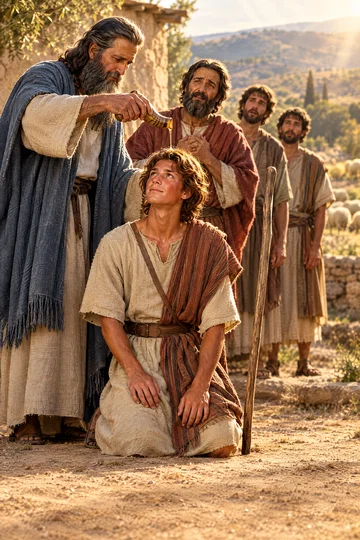
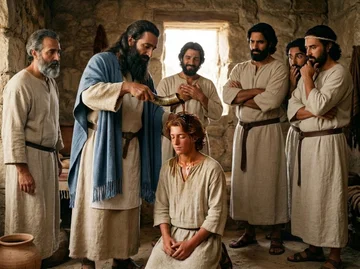
David's lowly work as a shepherd did not prevent his being chosen to rule, but his faithful and courageous filling of that humble office was the reason God chose him to in time exchange the shepherd's crook for the scepter.1SP 367.3–368.1SG4 77.4–78.1RH Nov 11, 1915RH Dec 24, 1908 David was not of lofty stature, but his beautiful countenance expressed humility, honesty, and true courage; he had preserved the simplicity and sincerity of his youth, was little in his own sight, and was open to the Holy Spirit, so in providence God trained and prepared him and shaped his character, and from his anointing gave him a prudent and understanding heart.SG4 77.4–78.1Ms 163, 1902, par. 4ED 266.1–3 Guided by the angel of God, Samuel was shown that David was God's chosen, summoned him from his humble work, and anointed him; David thus became one of the lowly whom God raised up as a representative man taught by inspiration to convey truth to His people.SG4 77.4–78.116MR 335.2
At that time David was strict in all the ceremonies of religion and distinguished by boldness and unwavering trust in God, remarkable for fidelity and reverence, with firmness, humility, love of justice, sincerity, fervor, and decision of character that qualified him to carry out God's high purposes, to instruct Israel in devotion, and to rule as a generous and wise monarch, and while thus true to God, God calls him a man after His own heart.SG4 85.2–3 Though utterly helpless in himself, the shepherd lad's trust in God's word and promise of the throne enabled him to withstand Saul, the established monarch bent on holding fast his power, and thus to withstand the power of the whole world, as a witness to the power of God's word against human power and policy in support of evil.ED 254.2–3RH Nov 11, 1915RH Dec 24, 1908 David was pre-eminently qualified to bear the responsibilities of the kingdom, and when exalted to the throne his course contrasted with the kings of other nations because he abhorred idolatry and zealously kept Israel from being seduced into idolatry by surrounding nations, so he was greatly beloved and honored by his people; yet Abner knew of this divine appointment and was unwilling for David to succeed Saul, working to divide Israel to exalt himself.SG4 85.2–3PP 698.2–3
Training Promising Youth
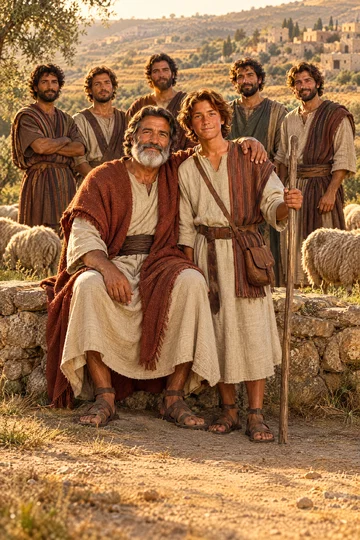
No human judgment can tell beforehand which youth will prove most promising and render the best service to God, for human estimates of promise often prove at fault.YCDCP 2.1RH Feb 13, 1913ED 266.1–3 When the noble sons of Jesse passed before Samuel, his eye rested on the handsome countenance and fine stature of the eldest son and he judged by outward appearance that this must be the Lord's anointed, but God refused him and every noble-appearing older son, because man looks on the outward appearance while the Lord looks on the heart.YCDCP 2.1RH Feb 13, 1913 Those brothers whom Samuel would have chosen were proud, self-centered and self-confident and did not possess the qualifications God saw to be essential in a ruler of His people, so they were set aside for the one they lightly regarded.ED 266.1–3 David, the youngest son, a mere youth left in the field keeping the sheep and not counted among the promising children, had to be sent for from the field at Samuel's word that they would not sit down till he came, and when he passed before Samuel God commanded that he be anointed, for this was he.YCDCP 2.1RH Feb 13, 1913ED 266.1–3
God sees in many a child whom parents would pass by capabilities far above those revealed by others thought to possess great promise.ED 266.1–3 Therefore no family member can be judged unpromising by age or appearance, and no one can decide what is great and small in life's possibilities.RH Feb 13, 1913ED 266.1–3 David had preserved the simplicity and sincerity of his youth and, while little in his own sight, could be trained by God for the responsibilities of the kingdom.ED 266.1–3
For this reason all children and youth must receive thorough general education to fit them for usefulness, places of responsibility, and the highest service as laborers together with God.YCDCP 2.1RH Feb 13, 1913ED 266.1–3 Though utterly helpless in himself, the shepherd lad to whom God gave the promise of the throne trusted in God's word so as to withstand Saul, the established monarch bent on holding fast his power, and thus to withstand the power of the whole world.ED 254.2–3 His stand is the result of faith and a witness to the power of God's word against human power and policy in support of evil, placing him in the world's true nobility and royal line in which youth today are called to take their places through the same faith.ED 254.2–3
Sources
Pioneers and periodicals
63 sources
God sent Samuel to Bethlehem to anoint one of Jesse's sons as king after Saul was rejected for disobedience, and seven sons passed before him without being chosen.ST Dec 22, 1914RH Feb 18, 1873ST Sep 20, 1883RH Aug 14, 1856 When Samuel asked whether all were present, Jesse answered that the youngest, David, about fifteen years old, remained keeping the sheep, so Samuel had him fetched without delay and anointed him in the midst of his brethren, and the Spirit of the Lord came upon him though he was not yet crowned.ST Nov 14, 1895ST Jul 2, 1885RH Feb 18, 1873ST Apr 22, 1903ST Dec 22, 1914 The choice was the Lord's own, who looks on the heart while man looks on outward appearance, passing by the tall noble-looking elder brothers and taking the youthful shepherd overlooked as unpromising.ST Dec 12, 1895RH Aug 14, 1856ST Jun 19, 1884ST Nov 18, 1903 That lowly shepherd work on the plains of Bethlehem trained David in communion with God, faithfulness, patience and sympathy, fitting him to exchange a shepherd's staff for a scepter.ST Nov 14, 1895ST Apr 22, 1903RH Nov 18, 1909ST Apr 29, 1908RH Sep 3, 1914 From David alone of the sons, not from the seven elders, Messiah was to come, continuing the promised Seed through Judah and Jesse to Jesus Christ as the son of David.RH Nov 18, 1862ST Oct 15, 1896
Setting and Wording
God sent Samuel to Bethlehem to anoint one of Jesse's sons as king in Saul's place after the Lord rejected Saul as king for disobedience, reserving to himself the right to choose Israel's king.ST Sep 20, 1883RH Aug 14, 1856RH Dec 18, 1913ST Aug 19, 1889 The kingdom remained first God's and became David's only secondarily by gift, for God said he had provided himself a king, so David had no first right of his own.RH Aug 14, 1856 God announced that he had chosen a man to take Saul's place and identified David as that man called to the throne, a choice Jonathan accepted but Saul could not submit to.ST Sep 20, 1883 Samuel carried out that work after God redirected him from grief over Saul to his present duty, coming to Bethlehem to anoint David, the great-grandson of Ruth the believing Moabitess, to be king of Israel in place of Saul.RH Dec 18, 1913ST Aug 19, 1889ST Feb 17, 1904
God did not name the chosen son in advance, so Samuel examined the sons Jesse presented, and the eldest and the six who followed him — seven in all — were not the one chosen by Heaven.ST Dec 22, 1914RH Feb 18, 1873ST Apr 22, 1903 With the Spirit of divine wisdom and discernment Samuel discerned that none yet seen was chosen, and when none was chosen he asked in perplexity whether all the children were present and required that the remaining son be brought before the gathering could proceed.ST Jul 2, 1885ST Apr 22, 1903ST Dec 22, 1914ST Dec 22, 1914RH Jan 28, 1902 Jesse's family had not yet presented the one chosen for the kingship, for Jesse had not considered the absent son a candidate.ST Dec 22, 1914ST Dec 22, 1914 The Lord made his purpose known through Samuel and would not let him proceed until David was brought.ST Dec 22, 1914RH Jan 28, 1902
Jesse answered that there remained yet the youngest, David, who was away keeping his father's sheep on the plains of Bethlehem at about fifteen years old.ST Nov 14, 1895ST Jul 2, 1885RH Feb 18, 1873ST Apr 22, 1903RH Nov 18, 1862 He was the youngest son, left out while his brothers passed before Samuel, keeping the sheep at Bethlehem, which was his family home and city.ST Nov 14, 1895ST Jul 2, 1885ST Dec 15, 1898 Samuel ordered Jesse to send and fetch him, saying they would not sit down till he came hither, so the family waited and David was brought in without delay.ST Nov 14, 1895ST Apr 22, 1903ST Mar 31, 1909ST Dec 22, 1914ST Dec 22, 1914 Though not initially present, David was the son God chose, and his arrival led to the Lord making known that he was the chosen king.ST Dec 22, 1914RH Jul 5, 1915RH Jan 28, 1902
David was then anointed in the midst of his brethren and in their presence, and the Spirit of the Lord came upon him with power from that day forward, yet he was anointed and Spirit-guided and not yet crowned.ST Nov 14, 1895ST Jul 2, 1885ST Apr 22, 1903ST Mar 31, 1909RH Sep 3, 1901 That anointing assured David while still young that he would become king after Saul, a promise that remained with him during his later flight from Saul.ST Dec 30, 1913 The anointing was not made public, because that could have caused confusion or rebellion and would have brought David to the kingdom prematurely, and Samuel carried out the duty God gave him trusting that God would guide what came next.ST Aug 19, 1889 Jesse had eight sons with David the youngest, seven having passed before Samuel before David was sent for, while those who noted the difficulty contrasted this with 1 Chronicles naming David the seventh son and with 1 Samuel 17:12 saying Jesse had eight sons.RH Feb 18, 1873RH Nov 18, 1862
David was born in Bethlehem of godly parents of the stock of Israel and tribe of Judah, making Bethlehem the city of David to which Joseph as a descendant of David went with Mary to be registered.ST Apr 22, 1903ST Dec 15, 1898ST Apr 28, 1914 The Lord directed Samuel to anoint David, from the tribe of Judah and the city of Bethlehem, to be king over Israel, and the verse places his shepherding and his summons in Bethlehem.ST Apr 28, 1914RH Jul 20, 1905 In this chapter the English word anointed is the Greek word Christ in the Septuagint.ST Jul 20, 1904
God's Choice of King
God himself chose David to be king over Israel long before Saul died, reserving to himself the right to choose Israel's king.RH Aug 14, 1856ST Jun 19, 1884 In that choice Jehovah took pleasure in David among all the house of his father to be king over Israel forever, having chosen Judah to be prince and the house of Jesse in Judah as the family.ST Nov 18, 1903 The kingdom remained first God's and became David's only secondarily by gift, for God said he had provided himself a king, so David had no first right of his own.RH Aug 14, 1856
Samuel's own judgment about Jesse's sons was not competent without the Holy Spirit's direct guidance, for human infallibility belongs not to the prophet but to divine inspiration bestowed upon him.ST Aug 10, 1904 Man looks on outward appearance while the Lord looks on the heart, so outward appearance did not commend David but his courage, character, and excellent spirit did.ST Dec 12, 1895RH May 9, 1907RH Dec 24, 1867ST Mar 22, 1883 Even the poorest in appearance may be one with whom the Lord delights to dwell, and God recognized in the humble shepherd the heart suited to lead His people.ST Dec 12, 1895RH Dec 24, 1867
David was at first overlooked and left out because he was young, poor in appearance, and not kingly in appearance like Saul, while human judgment favored his tall, noble-looking elder brothers.ST Dec 12, 1895RH Nov 18, 1909ST Dec 22, 1914RH Dec 24, 1867 Samuel rested on the handsome countenance and fine stature of the eldest noble son as surely the anointed, yet God refused him and all the noble older sons and chose the youngest left in the field and not counted among promising children.RH Feb 13, 1913 Saul was also kingly in appearance and was fit when first chosen with a changed heart, with the fault that disqualified him developing later through himself.ST Dec 12, 1895
God's choice of David from Jesse's sons for special work was a temporal appointment to be earthly king and earthly progenitor continuing the promised line; it did not itself assure David's own salvation nor reject his brothers from salvation or condemn them.ST Oct 15, 1896ST Apr 10, 1907 His lowly work and unexpected selection illustrate that God chooses by His own purpose, not according to human expectations.ST Mar 17, 1887 God sees deeper than people and takes from the sheepfold those the world rejects and overlooks to make them king, to bring life and salvation to those who follow His providence.ST Jul 21, 1909
Shepherd Training for Kingship
David was trained not in war but as a humble shepherd, keeping his father's sheep on the plains of Bethlehem and caring for the tender ones of the flock, and his ordinary work as a shepherd was the setting in which he was called without scorning the ordinary duties given him.ST Nov 14, 1895ST Apr 22, 1903RH Sep 3, 1914RH Jul 14, 1910
That life in contact with nature gave lessons in contemplating God's works, communion with God in early solitude, singing praises with his harp, self-reliance, patience, and sympathy for the people, reflected later in his poetry and poured out as a shepherd bard amid the quiet flock and sheepfolds.ST Nov 14, 1895ST Aug 4, 1914RH Dec 15, 1859ST Aug 19, 1889
Faithful, willing, helpful service in that humble, ordinary duty showed love for work, singing while at work, obedience to father and mother, and love for God, which was working for the Lord.RH Nov 18, 1909ST Apr 29, 1908ST Oct 18, 1877
That faithful attention to everyday duty, carried out faithfully and courageously, prepared him for a leading position in the nation, for the serious responsibilities of ruling Israel, for exchanging a shepherd's staff for a scepter, and for slaying Goliath, and his ordinary occupation did not prevent God from calling him to greater service and honor.ST Nov 14, 1895ST Apr 29, 1908RH Jul 14, 1910ST Oct 18, 1877ST Aug 19, 1889
God works by means with deep, wisely laid plans, giving long preparation to the men He raises up, so for David tending the flock came first and then suffering as the victim of the hatred and envy of a king and his courtiers before he could reign.RH Aug 22, 1865
After he was brought in and anointed, David returned obediently to the same shepherd work, and that obedience and humility in the fear of the Lord was true greatness.ST Nov 14, 1895
His lowly beginnings and hardships disciplined and softened his character before his public victory over Goliath, his later rule, and his trials.ST Oct 4, 1877
Messianic Line and Promise
The verse marks the next step in the line of the promised Seed after Judah, for Jesse was chosen from the families sprung from Judah and David was chosen from Jesse's sons, to be followed by Solomon from David's sons.ST Oct 15, 1896 That choice appointed David as an earthly progenitor of the Messiah, continuing the promise first given to Abraham that the Seed would come through his family.ST Oct 15, 1896 Being so chosen did not reject David's brothers from salvation, nor did it in itself assure David's own salvation.ST Oct 15, 1896
Jesse had eight sons and David was the youngest, keeping the sheep when Samuel came, and from none of the seven elder sons but from David alone was Messiah to derive his origin.RH Nov 18, 1862 That origin was fulfilled in Jesus Christ as the son of David.RH Nov 18, 1862 Jehovah chose David out of all the house of his father to be king over Israel forever, taking pleasure in him among the sons of his father, with Judah chosen to be prince and the house of Jesse in Judah chosen as the family.ST Oct 19, 1888ST Nov 18, 1903 David, a shepherd from Bethlehem, was the youngest son keeping the sheep when Samuel sent for him and anointed him as the future king of Israel.ST Oct 19, 1888 His reign was expected to bring Israel renewal, and the promised Bright and Morning Star was to come from David's line, with a throne established forever.ST Oct 19, 1888
David was summoned because God had promised him the throne, and his lowly work as a shepherd did not prevent him from being chosen to rule.RH Nov 11, 1915RH Dec 24, 1908 His humble position as the youngest son tending sheep when Samuel asked whether all the children were present did not prevent God's choice.RH Nov 11, 1915RH Dec 24, 1908 Trusting that promise, the shepherd lad was enabled to stand against Saul, the established king and monarch determined to keep his power.RH Nov 11, 1915RH Dec 24, 1908
The verse places David's shepherding and anointing in Bethlehem, linking the town with the future king whose line would lead to the Messiah.ST Mar 1, 1910 David was the youngest son tending his father's sheep when Samuel came to Jesse's house and summoned him and anointed him above his brothers near Bethlehem.ST May 27, 1908ST Mar 1, 1910 The fields where David had once kept his flocks were later watched by shepherds on the night Jesus was born.ST May 27, 1908 There amid the quiet flock and the sheepfolds on the hills around Bethlehem, David as shepherd bard played his harp and poured out deep, strong inspiration in song.RH Dec 15, 1859 The same prophetic star that rose over the shepherds at Christ's birth had already shed light on David's inner vision.RH Dec 15, 1859
Links to Later Life
The keeping of his father's sheep was the proving ground that fitted David to slay Goliath and to be king, for in taking good care of the flock he was working for the Lord, loving work, singing while he worked, obeying his father and mother, and loving God.RH Nov 18, 1909 The tall, noble-looking older sons were passed by and the youngest keeping the sheep was chosen, because God was searching for a boy who would make a good king when he became a man.RH Nov 18, 1909 That same shepherd setting was where he played the harp, and his music brought gladness and kindly feelings to Saul and drove away the evil spirits troubling him.ST Aug 4, 1914
Samuel would not proceed until David was brought in from tending the sheep, and David was then chosen and anointed as Israel's future king in front of his brothers.RH Sep 3, 1901 That public preferring stirred Eliab's envy.RH Sep 3, 1901 Summoned from the flock and anointed while still young, David afterward met with bitter jealousy and discourtesy from Eliab, which became evident when David defeated Goliath.ST Aug 17, 1904
God's choice of David to succeed Saul after Saul's disobedience forfeited the throne did not mean David should seize the throne by killing Saul.ST Jan 17, 1906 He trusted that the prophecy would be fulfilled in God's own time and way, even when urged to take Saul's life.ST Jan 17, 1906 The prophet's words and the anointing assured the young shepherd that he would become king after Saul, and that promise remained with him during his later flight from Saul.ST Dec 30, 1913 Still keeping sheep when Samuel came to anoint him, with his future destiny known to God but not yet publicly fulfilled, he is the wise shepherd who waits patiently and does not let a tyrant's hatred turn him from that destiny, showing that apparent delay and loss can precede victory.RH Mar 4, 1873
Born in Bethlehem as great-grandson of the believing Moabitess Ruth, David was anointed there to be king of Israel in Saul's place, and through him God gave Israel messages of mercy, songs of praise, and prophecies of great things yet to be in unapproachable poetry.ST Feb 17, 1904 After his anointing and while still uncrowned, he fled to Bethlehem to escape the wrath of Saul, who had turned from the leading of God to take counsel of his own will.ST Feb 17, 1904 Saul was rejected from being king because he added stubbornness to rebellion, failing the test of utterly destroying the Amalekites by following his own way, and the youngest son fetched from keeping the sheep is the one to whom favor is given in his place.RH Jul 24, 1860 Stubbornness closes the heart and causes good angels to depart from a person and attend upon some David instead.RH Jul 24, 1860
Lessons for Youth and Service
God entrusts honor and knowledge to humble people rather than to those esteemed wise or learned, choosing humble instruments for his work.RH Apr 11, 1854ST Jul 22, 1886ST Oct 30, 1884 David was the youngest son, a shepherd boy of Bethlehem tending sheep when Samuel came to anoint a king, and his absence did not exclude him, for Samuel required that he be fetched before the gathering continued.RH Apr 11, 1854ST Jul 22, 1886ST Mar 15, 1910ST Oct 30, 1884 His work as a shepherd preceded his later role, for God chose the shepherd lad and made him king.ST Mar 15, 1910ST Oct 30, 1884
David was found while already busy at his task caring for his father's sheep when Samuel came to choose a servant for God's work.RH Sep 5, 1912 He was occupied with useful work when God called him to serve, for he was called to God's service while engaged in useful work and not while idle.RH Sep 5, 1912RH Jan 28, 1902 A young person's appearance does not reveal the possibilities or usefulness God sees in that life, for God looks at the heart while people judge by outward appearance.RH May 9, 1907 Human judgment cannot tell which youth will best serve God, for Samuel rested on the handsome countenance and fine stature of Jesse's eldest noble son as surely the anointed, yet the Lord refused him and all the noble older sons.RH Feb 13, 1913
David was the youngest son, a mere youth left in the field keeping the sheep and not counted among the promising children, and at Samuel's word that they would not sit down till he came he was sent for and God chose him to be anointed.RH Feb 13, 1913 God was searching for a boy who would make a good king when he became a man, passing by all the tall, noble-looking older sons and choosing the youngest keeping his father's sheep.RH Nov 18, 1909 Taking good care of his father's sheep was working for the Lord, showing he loved to work, sang while he worked, obeyed his father and mother, and loved God, which fitted him to slay Goliath and to be king.RH Nov 18, 1909 God is now looking for boys and girls to do his work, who get ready by doing their work well at home.RH Nov 18, 1909
No family member can be judged unpromising by age or appearance, since even one whom Samuel might not have chosen as a leader was chosen by God.RH Feb 13, 1913RH Aug 18, 1910 All children and youth must therefore receive thorough general education to fit them for usefulness and places of responsibility as laborers together with God, and parental encouragement can help prepare the overlooked child for the work to which God may call him.RH Feb 13, 1913RH Aug 18, 1910 Because God's choice is almost sure to fall on an overlooked child rather than the one parents would pick, parents must continue the education of every child beyond church-school work at home into a higher school, even at sacrifice, since they do not know which child the Lord will call.RH Dec 18, 1913 David was slighted by his father from his earliest youth, being left out when his other children were brought forward, and this neglect began the furnace of affliction in which he was tried from his youth.RH Jul 1, 1862
The youngest son still keeping the sheep, called for after Jesse's older sons had passed before Samuel, points to Loma Linda as the youngest of the denomination's training schools, yet one with an important work to accomplish for God.
Sources