Amos 7:15
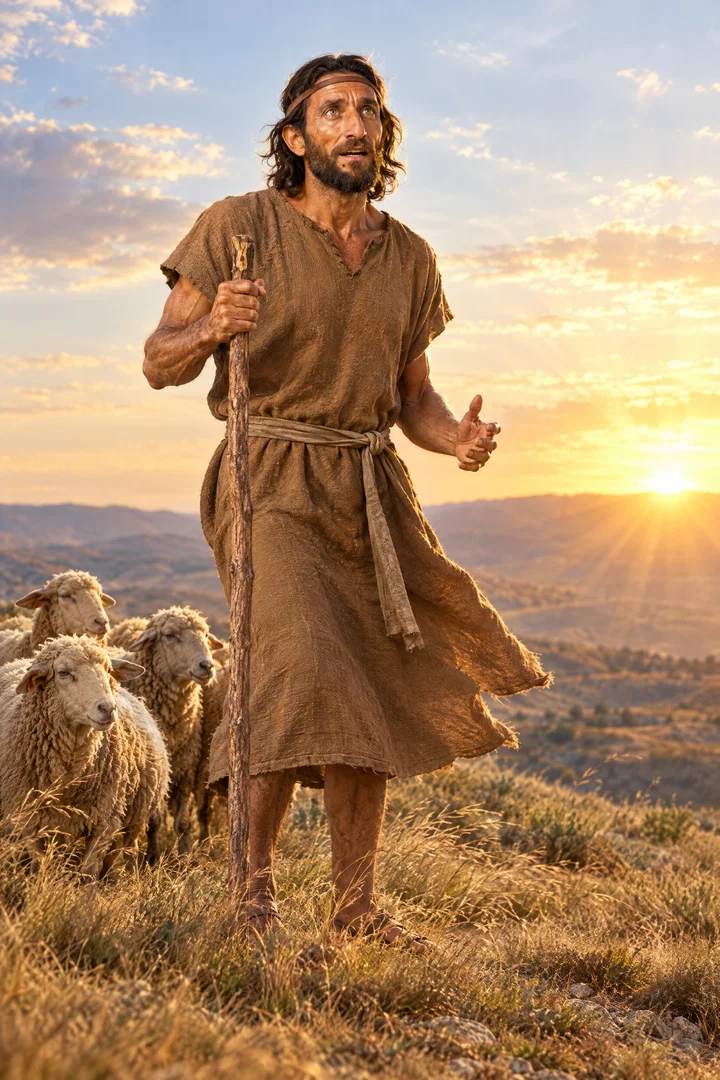
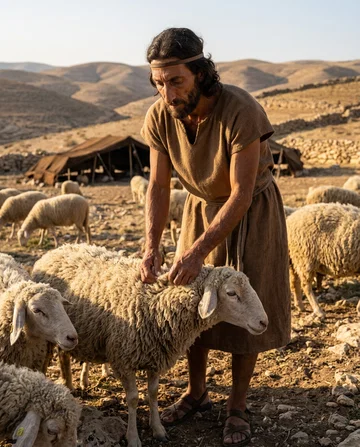
And the LORD took me as I followed the flock, and the LORD said unto me, Go, prophesy unto my people Israel.
Translations
American King James Version, Webster Bible
And the LORD took me as I followed the flock, and the LORD said to me, Go, prophesy to my people Israel.
And the LORD took me as I followed the flock, and the LORD said unto me, Go, prophesy unto my people Israel.
and the Lord took me as I followed the flock, and the Lord said unto me, Go, prophesy unto my people Israel.
and the LORD took me from following the flock, and the LORD said unto me, Go, prophesy unto my people Israel.
and Jehovah took me from following the flock, and Jehovah said unto me, Go, prophesy unto my people Israel.
and Jehovah taketh me from after the flock, and Jehovah saith unto me, Go, prophesy unto My people Israel.
And Jehovah took me as I followed the flock, and Jehovah said unto me, Go, prophesy unto my people Israel.
But Yahweh, took me away, from following the flock,—and Yahweh, said unto me, Go prophesy against my people Israel.
Berean Standard Bible, Majority Standard Bible
But the LORD took me from following the flock and said to me, ‘ Go, prophesy to My people Israel.’
and the LORD took me from following the flock, and the LORD said to me, ‘ Go, prophesy to my people Israel.’
And the Lord took me from the flock, and the Lord said to me, Go, be a prophet to my people Israel.
And the Lord tooke me as I followed the flocke, and the Lord said vnto me, Go, prophecie vnto my people Israel.
Douay-Rheims (Challoner revision)
And the Lord took me when I followed the flock, and the Lord said to me: Go, prophesy to my people Israel.
Pictures
Cross-references
- 1 Kings 19:19
So he departed thence, and found Elisha the son of Shaphat, who was plowing with twelve yoke of oxen before him, and he with the twelfth: and Elijah passed by him, and cast his mantle upon him.
Elisha and Amos were called to prophetic work while occupied with their labor.
- Exodus 3:1-10
Now Moses kept the flock of Jethro his father in law, the priest of Midian: and he led the flock to the backside of the desert, and came to the mountain of God, even to Horeb.
Both were called by God while tending flocks and sent to serve Israel.
- 1 Samuel 16:11-13
And Samuel said unto Jesse, Are here all thy children? And he said, There remaineth yet the youngest, and, behold, he keepeth the sheep. And Samuel said unto Jesse, Send and fetch him: for we will not sit down till he come hither.
Both were called by God while tending sheep.
- Amos 1:1
The words of Amos, who was among the herdmen of Tekoa, which he saw concerning Israel in the days of Uzziah king of Judah, and in the days of Jeroboam the son of Joash king of Israel, two years before the earthquake.
Both texts identify Amos as a herdsman from Tekoa and place his prophecy in Jeroboam’s reign.
- Ezekiel 2:3-7
And he said unto me, Son of man, I send thee to the children of Israel, to a rebellious nation that hath rebelled against me: they and their fathers have transgressed against me, even unto this very day.
Both describe God sending a prophet to speak to rebellious Israel, whether they listen or not.
- Jeremiah 1:5
Before I formed thee in the belly I knew thee; and before thou camest forth out of the womb I sanctified thee, and I ordained thee a prophet unto the nations.
God appointed Jeremiah as a prophet, as he called Amos to prophesy.
- Judges 6:11-14
And there came an angel of the LORD, and sat under an oak which was in Ophrah, that pertained unto Joash the Abi-ezrite: and his son Gideon threshed wheat by the winepress, to hide it from the Midianites.
Gideon, like Amos, was called by the LORD while doing humble work.
- Ezekiel 3:4
And he said unto me, Son of man, go, get thee unto the house of Israel, and speak with my words unto them.
Both commission a prophet to go to Israel with God's words.
- Hebrews 5:4
And no man taketh this honour unto himself, but he that is called of God, as was Aaron.
Both show that ministers are called by God.
- Exodus 4:10-12
And Moses said unto the LORD, O my Lord, I am not eloquent, neither heretofore, nor since thou hast spoken unto thy servant: but I am slow of speech, and of a slow tongue.
Both show God giving words to unfit speakers.
- Isaiah 6:8-9
Also I heard the voice of the Lord, saying, Whom shall I send, and who will go for us? Then said I, Here am I; send me.
Both prophets are called by God to go and deliver his message.
- 1 Samuel 3:10
And the LORD came, and stood, and called as at other times, Samuel, Samuel. Then Samuel answered, Speak; for thy servant heareth.
God called Samuel to serve him.
- Isaiah 50:4
The Lord GOD hath given me the tongue of the learned, that I should know how to speak a word in season to him that is weary: he wakeneth morning by morning, he wakeneth mine ear to hear as the learned.
The Lord equips his servants to speak his message.
Commentary
Each commentary is drawn from primary sources: the writings of Ellen G. White and Adventist pioneers and periodicals. Each commentary is separate. Its own words are not a quotation; follow the references to read the source passages.
Ellen G. White
6 sources
Amos was a humble working man when the Lord took him, a husbandman and tiller of the soil, a herdsman and shepherd from Tekoa following the flock.GW 332.3–333.1GW92 316.1Ms 117a, 1901, par. 43Ms 92, 1902, par. 19–31GC 142.3 He was a humble shepherd taken to become a prophet, lowly and ordinary rather than prominent.GC88 142.1–2Ms 92, 1902, par. 19–31GC 142.3 The Lord took him away from his regular work and sent him to prophesy and to deliver His message of warning to His people Israel.GW 332.3–333.1GW92 316.1GC88 142.1–2Ms 92, 1902, par. 19–31GC 142.3
His call shows God does not limit His choice by rank or occupation, and humble work did not prevent him from being chosen for prophetic service.GW 332.3–333.1GW92 316.1Ms 117a, 1901, par. 43 God chooses ordinary, lowly, and despised workers and not only high priests, prominent people, or high-ranking religious and political leaders.Ms 117a, 1901, par. 43GC88 142.1–2GC 142.3 Prophetic authority and strength come from God's call and word, not from worldly status or numbers.GC88 142.1–2GC 142.3
Amos illustrates that God may entrust a solitary, despised person with a work opposed by powerful institutions.GC88 142.1–2 His servants can be called to rebuke rulers and religious leaders despite danger and opposition.GC88 142.1–2 The verse shows God can lead and instruct ordinary people who are willing to receive His words and serve for His glory.Ms 92, 1902, par. 19–31
Sources
Pioneers and periodicals
24 sources
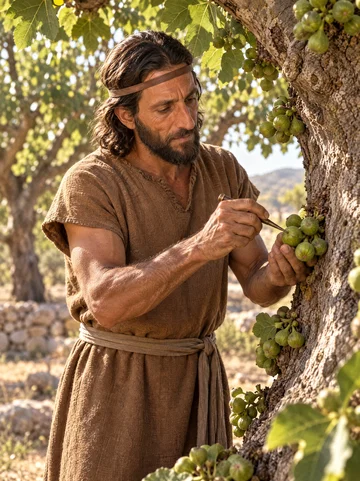
The Lord took Amos while he was following the flock, lifting him from his work as a herdsman and shepherd from Tekoa in Judah and as a gatherer and dresser of sycamore fruit to go and prophesy to Israel in the northern kingdom at Bethel.RH Jun 22, 1916ST May 19, 1909RH Jan 26, 1905ST Dec 8, 1909ST His authority came from being taken and commanded by God, not from being a prophet or a prophet's son by birth, succession, rank, learning, or standing, and his work was the work of a prophet as God's messenger sent to speak God's words.ST May 19, 1909RH Jan 26, 1905RH Mar 12, 1857RH Aug 15, 1912 God often chooses humble, ordinary people of low rank rather than priests, leaders, or the powerful, and sends them to rebuke the powerful even at personal risk.ST May 19, 1909STRH Mar 13, 1900RH Apr 7, 1863ST Nov 5, 1885 He called Amos while he was faithfully and busily occupied in his ordinary daily work, for humble work does not prevent choice for greater responsibility but diligence in it prepares and makes ready for service, and when He wants a worker He calls a worker already at work.RH Jul 14, 1910STRH Jul 14, 1910RH Sep 5, 1912 To everyone He calls He gives a definite commission with a message and charge, fully equipping with strength and wisdom for duty and requiring immediate obedience that makes His work the chief concern of life.ST May 19, 1909RH Jul 14, 1910
Amos's Setting and Mission
The Lord took Amos just as he was following the flock, lifting him out of his daily work as a herdsman and shepherd.RH Jun 22, 1916ST Jul 22, 1886RH Apr 11, 1854 He was from Tekoa in Judah, in Judea, and earned his living as a herdsman and as a gatherer and dresser of sycamore fruit, work belonging to the poor rather than to the learned or powerful.RH Jan 26, 1905ST Dec 8, 1909RH Mar 13, 1900RH Apr 11, 1854 He was no prophet by occupation nor a prophet's son by birth, but a shepherd and fruit gardener whom the Lord called to prophesy to Israel.RH Jun 22, 1916RH Jan 26, 1905RH Mar 13, 1900
The call came during the reigns of Uzziah king of Judah and Jeroboam son of Joash, Jeroboam II of Israel.ST Oct 29, 1885ST Dec 8, 1909 It was two years before the earthquake, and is placed between about 800 and 786 B.C.ST Oct 29, 1885 It followed Israel's successes under Jeroboam, which had exalted the nation.ST Oct 29, 1885
Though himself from Judah, Amos was sent to the northern kingdom of Israel.RH Jun 22, 1916STST May 24, 1910 His field was Bethel, a center of idolatry and a royal seat, where he spoke against idolatry and wrongdoing.RH Jun 22, 1916ST His charge was to warn Israel and Judah to turn from sin and idolatry and to worship God, and his message also warned the nations around them.ST May 19, 1909ST May 24, 1910 He delivered it at a time when Israel's idolatry and royal power made the mission dangerous.ST
He carried out the command by going and courageously bringing God's reproof.ST May 19, 1909STRH Mar 12, 1857 That reproof included prophecy of Israel's captivity and destruction.RH Mar 12, 1857 He did the work faithfully and without fear despite opposition from Israel's priest.ST May 19, 1909RH Mar 12, 1857 The priests accused him of treason and expelled him, yet he obeyed.ST Dec 8, 1909RH Mar 12, 1857
God's Choice of Prophets
Prophetic authority comes from being taken and commanded by the Lord, not from being a prophet or a prophet's son by birth, occupation, succession, social standing, learning, or rank, and prophetic work follows no fixed rule of succession.ST May 19, 1909RH Jan 26, 1905RH Mar 12, 1857RH Aug 19, 1915RH Apr 11, 1854 The Lord took Amos from following the flock and sent him to prophesy to Israel, though he was a herdsman and a gatherer and dresser of sycamore fruit and had not set out to be a prophet.ST May 19, 1909RH Jan 26, 1905RH Mar 12, 1857ST Jul 22, 1886RH Apr 11, 1854 His humble occupation did not prevent God from choosing him, for he was not of the learned or powerful class.RH Aug 19, 1915ST Jul 22, 1886RH Apr 11, 1854 The call itself equipped him with a message and responsibility to warn Israel and Judah to turn from sin and idolatry and worship God, and his authority to speak against Israel and its rulers came from God and not from prophetic family or personal ambition.ST May 19, 1909RH Mar 12, 1857 He carried out that duty faithfully and without fear despite opposition from Israel's priest.ST May 19, 1909RH Mar 12, 1857
There are two ways prophets are called, and Amos belongs to the second.RH Sep 13, 1906 Some are ordained and sanctified before birth, but men like Amos are without those prior qualifications and are called to supply a want caused by lack in others.RH Sep 13, 1906 Though only a herdsman following the flock, he was taken by the Lord and commanded to go prophesy to His people Israel, proving God is never short of means to accomplish His work.RH Sep 13, 1906 His lowly standing as a poor herdsman illustrates that God often chooses humble, ordinary people of low rank rather than high priests, religious or political leaders, or the powerful.RH Mar 13, 1900RH Apr 7, 1863ST Nov 5, 1885 Herding and gathering sycamore fruit were occupations followed only by the poor, yet the Lord took him as he followed the flock and sent him to prophesy to Israel.ST May 19, 1909RH Mar 13, 1900 God has in this way chosen shepherds and humble men to serve as prophets and to rebuke powerful people even when doing so put their lives at risk.RH Apr 7, 1863ST Nov 5, 1885
True worth for God's work is not knowledge or ability but the fear of the Lord and departing from evil.RH Mar 13, 1900 Denying the title of prophet does not make him a deceiver, for though he made no boastful claim to the title or to standing in the line of the prophets, his work was the work of a prophet.RH Jan 26, 1905 A prophet is God's messenger sent to speak God's words, and Jehovah took him from following the flock and commanded him to go prophesy to Israel.RH Jan 26, 1905 The taking of Amos proves all Old Testament prophets were called of God and that ministry done in God's name can come only from God, so a divine call is necessary.RH Aug 15, 1912 The call displaced the unfaithful priest who had departed from God and replaced him with Amos, taken from following the flock, to bear the plumb-line message in the midst of Israel.RH Dec 23, 1915
Bethel, the house of God, must be God's chapel and court and not the king's.RH Dec 23, 1915 God's way must be wholly God's, in the path of His commandments and not in the bypath of human tradition.RH Dec 23, 1915 The command to go guarantees God will fulfill the warnings Amos was commissioned to proclaim against Israel and its rulers.RH Mar 12, 1857
Faithfulness in Humble Duty
The Lord took Amos while he was faithfully following his flock, busily occupied in his ordinary daily work tending sheep as a herdsman and gathering fruit.RH Jul 14, 1910STRH Jul 14, 1910 Humble work of that kind did not prevent his choice for greater responsibility.RH Jul 14, 1910RH Jul 14, 1910 Diligence in ordinary duties prepared him and made him ready to serve when called.RH Jul 14, 1910
God never goes to the lazy or the idle when He needs men for His service.RH Sep 5, 1912 When He wants a worker He calls a worker already at work, as He took Amos busy following the flock and told him to go prophesy to Israel.RH Sep 5, 1912
The call lifts men from humble occupations to higher, more responsible work.RH Jul 14, 1910 It turned Amos's peaceful labor as herdsman and fruit gatherer toward duty and danger and made him a powerful moral voice.ST His prophecy was preserved for later generations.ST His book, in its six pages, contains a lifetime of courageous living to be patiently meditated on and made one's own through obedience.RH Nov 16, 1911
To everyone He calls He gives a definite commission to go work for Him, with a message and a charge.ST May 19, 1909 He fully equips them for duty with strength and wisdom for the work.ST May 19, 1909 The command to go requires immediate obedience that makes His work the chief concern of life.ST May 19, 1909 His commission is definite, His promise is broad, and His reward is sure: efficiency in every position, availability for higher work, a life of service, and a crown.ST May 19, 1909RH Jul 14, 1910
True worth for God's work is not knowledge or ability but the fear of the Lord and departing from evil, for Amos was no prophet nor a prophet's son but a herdsman and gatherer of sycamore fruit, occupations followed only by the poor, yet taken to prophesy to Israel.RH Mar 13, 1900 The day of small things is therefore not to be despised but every occasion is to be made a great occasion.RH Jul 14, 1910 Gatherers of sycamore fruit, followers of herds, and keepers of sheep must faithfully perform their work, look well to their condition, and be diligent to know their state, because while they work they are being measured for greater service.RH Jul 14, 1910 Refusing to put the neck to the work of the Lord means a life of failure and ultimate oblivion.RH Jul 14, 1910
Sources