Daniel 11:40
And at the time of the end shall the king of the south push at him: and the king of the north shall come against him like a whirlwind, with chariots, and with horsemen, and with many ships; and he shall enter into the countries, and shall overflow and pass over.
Translations
American King James Version, King James Version, KJV Cambridge Paragraph Bible, Webster Bible
And at the time of the end shall the king of the south push at him: and the king of the north shall come against him like a whirlwind, with chariots, and with horsemen, and with many ships; and he shall enter into the countries, and shall overflow and pass over.
And at the time of the end shall the king of the south contend with him: and the king of the north shall come against him like a whirlwind, with chariots, and with horsemen, and with many ships; and he shall enter into the countries, and shall overflow and pass through.
And at the time of the end shall the king of the south contend with him; and the king of the north shall come against him like a whirlwind, with chariots, and with horsemen, and with many ships; and he shall enter into the countries, and shall overflow and pass through.
'And at the time of the end, push himself forward with him doth a king of the south, and storm against him doth a king of the north, with chariot, and with horsemen, and with many ships; and he hath come in to the lands, and hath overflowed, and passed over,
And at the time of the end shall the king of the south push at him; and the king of the north shall come against him like a whirlwind, with chariots, and with horsemen, and with many ships; and he shall enter into the countries, and overflow and pass through.
And, in the time of the end, will the king of the south, push at him, and the king of the north, will rush against him, with chariots and with horsemen, and with many ships,—and he will enter the lands, and overwhelm and pass over;
Berean Standard Bible, Majority Standard Bible
At the time of the end, the king of the South will engage him in battle, but the king of the North will storm out against him with chariots, horsemen, and many ships, invading many countries and sweeping through them like a flood.
“ At the time of the end the king of the south will contend with him; and the king of the north will come against him like a whirlwind, with chariots, with horsemen, and with many ships. He will enter into the countries, and will overflow and pass through.
And at the time of the end, the king of the south will make an attack on him: and the king of the north will come against him like a storm-wind, with war-carriages and horsemen and numbers of ships; and he will go through many lands like overflowing waters.
And at ye end of time shall the King of the South push at him, and the king of the North shall come against him like a whirlewind with charets, and with horsemen, and with many ships, and he shall enter into ye countreis, and shall ouerflow and passe through.
Douay-Rheims (Challoner revision)
And at the time prefixed the king of the south shall fight against him, and the king of the north shall come against him like a tempest, with chariots, and with horsemen, and with a great navy, and he shall enter into the countries, and shall destroy, and pass through.
Pictures
Cross-references 20 of 24
- Daniel 12:1
And at that time shall Michael stand up, the great prince which standeth for the children of thy people: and there shall be a time of trouble, such as never was since there was a nation even to that same time: and at that time thy people shall be delivered, every one that shall be found written in the book.
Michael stands up and the time of trouble begins after Daniel 11’s conflict.
- Daniel 11:45
And he shall plant the tabernacles of his palace between the seas in the glorious holy mountain; yet he shall come to his end, and none shall help him.
The king of the north comes to his end without help.
- Daniel 11:35
And some of them of understanding shall fall, to try them, and to purge, and to make them white, even to the time of the end: because it is yet for a time appointed.
The persecution and purification extend to the time of the end.
- Daniel 8:17-19
So he came near where I stood: and when he came, I was afraid, and fell upon my face: but he said unto me, Understand, O son of man: for at the time of the end shall be the vision.
Both visions emphasize the appointed time of the end.
- Daniel 11:5-15
And the king of the south shall be strong, and one of his princes; and he shall be strong above him, and have dominion; his dominion shall be a great dominion.
Introduces the northern and southern kingdoms whose conflict returns in verse 40.
- Daniel 12:4
But thou, O Daniel, shut up the words, and seal the book, even to the time of the end: many shall run to and fro, and knowledge shall be increased.
Both describe events associated with the time of the end.
- Daniel 12:9
And he said, Go thy way, Daniel: for the words are closed up and sealed till the time of the end.
The words are sealed until the time of the end.
- Daniel 11:44
But tidings out of the east and out of the north shall trouble him: therefore he shall go forth with great fury to destroy, and utterly to make away many.
The troubling tidings mark the next phase after the southern conflict in the same prophetic sequence.
- Daniel 8:19
And he said, Behold, I will make thee know what shall be in the last end of the indignation: for at the time appointed the end shall be.
Both describe events at the appointed time of the end.
- Daniel 11:14
And in those times there shall many stand up against the king of the south: also the robbers of thy people shall exalt themselves to establish the vision; but they shall fall.
Rome’s rise is described as establishing the vision amid the Seleucid-Ptolemaic conflict.
- Daniel 11:2-4
And now will I shew thee the truth. Behold, there shall stand up yet three kings in Persia; and the fourth shall be far richer than they all: and by his strength through his riches he shall stir up all against the realm of Grecia.
Begins the prophetic outline with Persia, Alexander, and the division of his kingdom.
- Daniel 10:1
In the third year of Cyrus king of Persia a thing was revealed unto Daniel, whose name was called Belteshazzar; and the thing was true, but the time appointed was long: and he understood the thing, and had understanding of the vision.
Dates the vision continued in chapters 11 and 12.
- Daniel 11:16
But he that cometh against him shall do according to his own will, and none shall stand before him: and he shall stand in the glorious land, which by his hand shall be consumed.
A new power, identified as Rome, enters the prophecy.
- Daniel 11:31
And arms shall stand on his part, and they shall pollute the sanctuary of strength, and shall take away the daily sacrifice, and they shall place the abomination that maketh desolate.
The verse links the overthrow of pagan governments with the establishment of papal power.
- Daniel 11:11
And the king of the south shall be moved with choler, and shall come forth and fight with him, even with the king of the north: and he shall set forth a great multitude; but the multitude shall be given into his hand.
The verse continues the prophecy concerning the divisions of Alexander’s empire.
- Daniel 11:13
For the king of the north shall return, and shall set forth a multitude greater than the former, and shall certainly come after certain years with a great army and with much riches.
Both describe conflicts involving the kings of the north and south.
- Daniel 11:15
So the king of the north shall come, and cast up a mount, and take the most fenced cities: and the arms of the south shall not withstand, neither his chosen people, neither shall there be any strength to withstand.
The verse describes conflict between the northern and southern kingdoms in the prophecy concerning Alexander’s empire.
- Daniel 11:6
And in the end of years they shall join themselves together; for the king’s daughter of the south shall come to the king of the north to make an agreement: but she shall not retain the power of the arm; neither shall he stand, nor his arm: but she shall be given up, and they that brought her, and he that begat her, and he that strengthened her in these times.
same power as in verse 40
- Daniel 11:36
And the king shall do according to his will; and he shall exalt himself, and magnify himself above every god, and shall speak marvellous things against the God of gods, and shall prosper till the indignation be accomplished: for that that is determined shall be done.
Introduces the power referred to as “him.”
- Daniel 8:3-8
Then I lifted up mine eyes, and saw, and, behold, there stood before the river a ram which had two horns: and the two horns were high; but one was higher than the other, and the higher came up last.
Daniel 8 is grouped with Daniel 11 as a prophecy of the empires.
Commentary
Each commentary is drawn from primary sources: the writings of Ellen G. White and Adventist pioneers and periodicals. Each commentary is separate. Its own words are not a quotation; follow the references to read the source passages.
Ellen G. White
4 sources
This text stands among the prophecies of Daniel 7-12 entrusted to Daniel as God's ambassador to reveal the mysteries of ages to come.PK 547.1 Its full meaning was not grasped even by Daniel himself, for like the rest of those writings it was shut up and sealed until the time of the end.PK 547.1 It belongs to the end of the days, the closing period of this world's history, when Daniel after resting will stand again in his lot and place.PK 547.1
That prophecy is now nearing complete fulfillment, having almost reached its final fulfilment.9T 14.2–15.4RH Nov 24, 1904Lt 80, 1910, par. 3 Its fulfillment is bound up with war and scenes of trouble, with the world stirred by war and with wars and growing trouble among nations.9T 14.2–15.4RH Nov 24, 1904Lt 80, 1910, par. 3 The prophesied scenes of trouble are soon to take place, preceding and accompanying that nearing completion, and the trouble will continue until Jesus comes.9T 14.2–15.4RH Nov 24, 1904Lt 80, 1910, par. 3
Sources
Pioneers and periodicals
133 sources
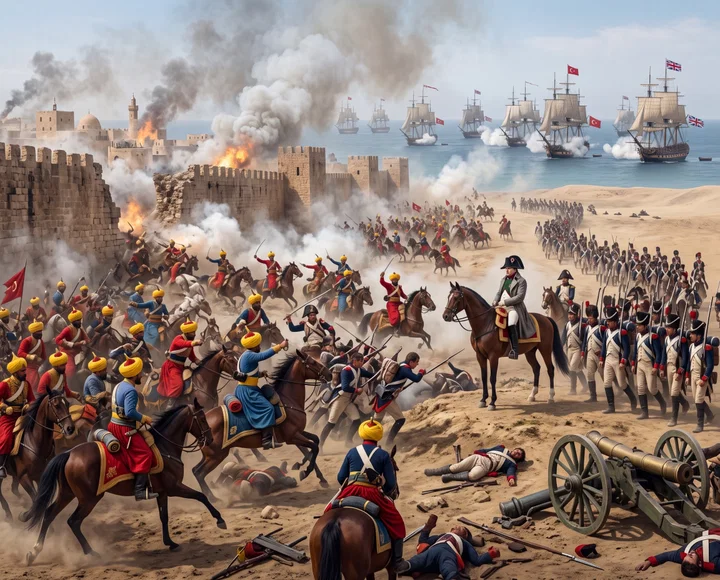
At the time of the end beginning in 1798 at the close of the 1,260 years, Egypt as the king of the south pushes at France and Turkey as the king of the north comes against France like a whirlwind with chariots, horsemen and many ships, then enters the countries and overflows and passes over.RH Dec 12, 1912ST Mar 2, 1904RH Mar 27, 1913RH Jan 16, 1913RH Mar 6, 1913 The verse belongs to a literal consecutive prophecy reaching over about twenty-five centuries from Medo-Persia through Greece, Rome and papal domination to Michael standing up, the time of trouble, deliverance and resurrection.RH Dec 12, 1912ST Dec 24, 1912ST Jan 8, 1880RH Dec 28, 1911 Him is France under Napoleon, the willful infidel king of verses 36-39, while the south is Egypt under the Mamelukes and the north is the Ottoman Empire ruling from Constantinople the former northern territory of Syria, Asia Minor, Thrace and Macedon.ST Mar 2, 1904RH Mar 27, 1913RH Nov 14, 1912RH Mar 21, 1871 The push was Egypt's feeble resistance at Alexandria, Cairo and the Pyramids in July 1798, and the whirlwind was Turkey declaring war in September 1798, gathering vast forces in Syria, allying with Russia and England by land and sea, driving France back from Syria and repossessing Palestine and Egypt.RH Apr 24, 1913RH Apr 3, 1913RH Mar 20, 1913RH Apr 24, 1913RH Dec 19, 1912 Those who held other readings teach instead that France is the south and Turkey the north, or that England is the north coming with many ships, or that Russia is the latter-day north, or that the north is the continuing papal Roman power.ST Apr 30, 1912RH May 18, 1916RH Apr 10, 1900RH Oct 9, 1916RH Jan 20, 1853 The same Turkish king of the north continues as the focus to his end between the seas in the glorious holy mountain, coming to his end with none to help him when Michael stands up.RH Nov 16, 1914RH Jan 23, 1913ST Dec 24, 1912
Place in Prophecy
Daniel 11 is a literal prophecy without symbols, tracing in direct language the leading empires from Medo-Persia through the rise and division of Greece, the conflicts of the northern and southern kingdoms, Rome, and papal domination toward the time of the end.RH Dec 12, 1912RH Dec 28, 1911ST Sep 21, 1915ST Jul 8, 1897 The papal persecution portrayed in Daniel 11:32-35 continues through the 1,260 years to 1798, when that period closes and the time of the end begins.RH Dec 12, 1912 The outline thus reaches across about twenty-five centuries toward the eternal kingdom of God, dealing with the destiny and times of nations so far as the people of God are concerned.ST Sep 21, 1915ST Jul 8, 1897 It is one of three important prophecies that bring the Turkish power to view in its latter portion.ST Jul 8, 1897
The chapter belongs to the great vision of Daniel 10-12, given in the third year of Cyrus when Daniel was ninety-one, and forms the closing vision of the book.ST Apr 9, 1912 It explains Daniel 8 more fully and runs parallel to it, supplementing and developing Daniel 8-9, and it stands as the last of four parallel lines covering the same field as Daniel 2, 7, and 8-9.ST Dec 24, 1912ST Apr 9, 1912ST Apr 9, 1912 Like those earlier lines it covers the same ground and reaches the same end: the standing up of Michael, who is Jesus Christ, the great time of trouble, deliverance of His people, resurrection of the dead, the end of earthly rule and of the fourth monarchy at Christ's second coming and everlasting reign.ST Dec 24, 1912ST Jan 8, 1880ST Apr 9, 1912 The prophecy was sealed until the time of the end, when knowledge would increase and study be revived. After tracing events from Persia through the end of the earlier northern and southern kingdoms, through the Roman Empire, the apostasy of the church, the Reformation, and the French Revolution, it brings the king of the south and the king of the north back into prominence at the time of the end for the events near the close of time.RH Oct 9, 1916
King of the north and king of the south are territorial titles rooted in the division of Alexander's empire, with Palestine as the point of reference and battlefield.RH Nov 14, 1912ST Jan 10, 1878RH Dec 19, 1912 The north was first the Seleucid kingdom north of Palestine, including Syria and later Macedonia, Thrace, and Asia Minor, and the south was Ptolemaic Egypt founded by Ptolemy, with the northern division also described as founded by Seleucus and as assigned to Lysimachus.RH Nov 14, 1912ST Jan 7, 1913RH Dec 19, 1912 The names remain tied to those territories despite later changes in borders, rulers, and dynasties, so that a change of ruler changes which power bears the title and the identities depend on the regions ruled rather than on a particular king.RH Dec 12, 1854ST Jan 10, 1878 After the Ottoman Turks gained much of the former northern kingdom's territory and ruled Syria, Asia Minor, Thrace, and Macedon from Constantinople, the same city from which the Seleucid kings had governed that territory for 250 years, Turkey became the king of the north.RH Nov 14, 1912ST Jan 7, 1913 At the time of Napoleon's invasion Egypt was nominally subject to Turkey but governed in practice by the Mameluke chiefs, while Sudan and Libya were not under Turkish domination, so Egypt in practice under the Mamelukes was the king of the south.RH Dec 19, 1912
The king of the north in Daniel 11:40 is one and the same power as the king of the north introduced in verse 5 and verse 6 and continued as a principal subject through verse 15, since the same designation in the same prophecy cannot be applied to entirely different powers.RH Jan 23, 1913 Its origin, location, and other information given in the first part therefore identify the king of the north in verse 40.RH Jan 23, 1913 The verse reintroduces the south and the north after the interval in which Rome became the principal actor without ever being called the king of the north, and from this point the king of the north occupies a prominent place in international conflicts to the very end itself.ST Dec 24, 1912 Under this reckoning the titles stay with the powers holding the original northern and southern territory so long as they have any place in prophecy, and since 1453 Turkey has held the northern territory to its downfall and extinction.RH Nov 14, 1912ST Jan 7, 1913 The continuous power of the closing verses to verse 45 is thus Turkey, linked to the title through the fourfold division of the Greek kingdom.ST Apr 20, 1915ST Jun 15, 1882 Those who held Rome to be the new king of the north taught that it succeeded the Seleucid power, took possession of its territories and more, and continued the persecuting work of which the earlier king was the type.ST Apr 30, 1912
The prophecy as a whole concerns the Roman power, pagan and papal, not Antiochus Epiphanes, a Syrian king who could not resist the mandates of Rome.RH Dec 23, 1852RH Dec 10, 1857RH Nov 21, 1854 Rome takes its place in verse 14 to establish the vision and is the great subject of the last half of Daniel as Babylon is of the first half, sketching from Medo-Persia to the invasion of Grecia, then Grecia to the rise of Rome, and continuing that Rome-centered outline toward the end.RH May 29, 1900 Its last twenty-five verses are not to be applied to one man, and the king of France is not the prince of the covenant.RH Jan 10, 1871 Beyond Antiochus Epiphanes and Rome, pagan and papal, as the two great powers persecuting God's government, covenant, and people, stands Christ's glorious kingdom.ST Apr 9, 1912
Time of the End
At the time of the end means beginning in 1798 at the close of the 1,260 years of papal supremacy, persecution and treading down of God's people.RH Dec 12, 1912RH Jan 16, 1913RH Mar 6, 1913ST Jul 8, 1897RH Jan 9, 1913 That supremacy was proclaimed in 533, took effect in 538, and was broken by events in France from 1793 to 1798, including the pope taken captive and papal power temporarily suppressed over conscience and liberty.RH Jan 16, 1913RH Mar 6, 1913RH Jan 9, 1913RH Nov 19, 1872 Daniel 11:32-35 describes that persecution as lasting even to the time of the end for a time appointed, and that appointed time is those 1,260 years from 538 to 1798.RH Dec 12, 1912ST Jul 8, 1897RH Nov 19, 1872 The opening clause of the verse therefore fixes 1798 as the definite starting point for seeking its fulfillment, when God's people were delivered and the pushing of the king of the south begins.RH Dec 12, 1912RH Mar 6, 1913RH Jan 9, 1913
The time of the end is not the end of time but an indefinite period extending from the close of papal rule to the end, with no definite prophetic period extending to the end itself.ST Aug 5, 1913ST May 20, 1875 It is the period when the visions sealed until that time are unsealed, study of God's word is revived, knowledge increases, and the wise understand.ST Aug 5, 1913ST Oct 28, 1908ST May 20, 1875 It is marked by signs in sun, moon and stars, distress of nations with perplexity, the sea and waves roaring, men's hearts failing for fear of things coming on the earth, and powers of heaven shaken, written both as predictions in His word and again in the physical, social, religious, commercial and political worlds.ST Aug 5, 1913STST Feb 7, 1906 The prophecy reaching this verse thus belongs to the past century through the present, extending from Persia and Greece through Alexander's divided kingdom to Michael standing up, the closing of God's work and Christ's second coming.ST Oct 28, 1908STST Feb 7, 1906
One position held places the renewed conflict within the time of the end associated with the close of the 2,300 days in 1844, not necessarily at its beginning, as the culmination of the long period of Daniel 8:14.ST Apr 30, 1912ST Apr 9, 1912ST Apr 30, 1912 Another position marks the time of the end by the darkening of the sun on May 19, 1780, with the verse applied to a later invasion of Egypt by a strong power meeting weak resistance, followed by Turkey's victorious war against it.RH May 15, 1900RH May 15, 1900 In that reckoning the him pushed against and attacked is the willful king arising at the time of the end, first atheistical and later idolatrous, neither papal nor Mohammedan.RH May 15, 1900RH May 15, 1900
Who Are the Kings
The king of the south is Egypt, in practice ruled by the Mamelukes though nominally subject to Turkey, and the king of the north is Turkey, the Ottoman Empire ruling Syria, Asia Minor, Thrace, Macedon and the former northern territory from Constantinople, the same city from which the Seleucids governed, while him is France under Napoleon.ST Mar 2, 1904RH Mar 27, 1913RH Mar 21, 1871RH May 15, 1900ST May 30, 1878 France is the willful, infidel, atheistical then idolatrous king of verses 36-39, neither papal nor Mohammedan, identified by matching the specifications and by its revolution, denial of God, self-exaltation, moral degradation, and dividing land for gain.ST Mar 2, 1904RH Mar 27, 1913RH Dec 12, 1912 At the time of the end, identified as 1798, Egypt was to oppose France and Turkey was to attack France with great force, forming a triple war involving Egypt, France and Turkey in which Turkey's arms succeeded.ST Mar 2, 1904RH Mar 27, 1913RH Mar 21, 1871 The verse thus brings three powers into view, Egypt as the king of the south, Turkey as the king of the north, and France as the invading aggressor, with no change in the locations of north and south after their long interval from the scene.RH May 15, 1900ST May 30, 1878RH Dec 12, 1912 The Ottoman Empire, not Great Britain or Russia, is the power that comes to its end in the closing events of earth's history, in close connection with God's people being delivered when Michael stands up and with the resurrection.RH May 15, 1900
Some readings make France the king of the south and Turkey the king of the north, with France's expedition against Egypt and Turkey's declaration of war against France belonging to the conflict described.RH Apr 10, 1900RH Oct 9, 1916RH May 1, 1913 In this conflict France, identified with the king of the south, invades Egypt and confronts Turkey, identified with the king of the north, and the north's advance like a whirlwind with ships and forces is Turkey's resistance to Napoleon, its pursuit of the French, and its recovery and conquest of territories including Palestine, Egypt, Libya and Ethiopia from 1798 to 1825.RH Apr 10, 1900RH Oct 9, 1916RH May 1, 1913 At this point the prophecy shifts from France to Turkey as the king of the north, and after this conflict the king of the south drops from the prophecy while the king of the north continues on to his fall and extinction through disintegration and fall.RH Apr 10, 1900RH Nov 14, 1912 Both north and south then hold their ground by the help of other powers at the close of the French Revolution, and the north's victory brings Syria, including Palestine, under Turkish control.RH May 1, 1913RH Nov 14, 1912
Other readings make France the king of the south pushing against the papal power by Napoleon I restoring papal authority to France at the end of the 1,260 years of papal rule.RH Jan 20, 1853RH Jan 20, 1853RH Jan 20, 1853 The king of the north is England, which came against Napoleon and France with its allies, with Wellington's forces capturing Napoleon, the British blockade of the French coast, and Nelson's victory at the Nile destroying most of the French fleet to fulfill the reference to many ships.RH Jan 20, 1853RH Jan 20, 1853 Napoleon then entered other countries and overran them, bringing continental European governments under French influence and control, as civil governments serve as agents that support or alter the power of the church of Rome in reversing the decline of papal power and bringing the Pope under civil authority.RH Jan 20, 1853RH Jan 20, 1853 In another form, in 1798 France pushed against the Papacy and England pushed against France, and this fulfillment identifies 1798 as the time of the end.RH Aug 24, 1869
Still others identify the latter-day king of the north as Russia, as Russia under Emperor Nicholas advancing like a whirlwind to bring the defeat of Turkey and any other lands in its path.RH May 18, 1916RH Feb 17, 1903 The pushing is the pushing back of the Turkish frontier from the east and from the north, particularly in the north, and again and again in modern times he goes forth with great fury to resist these encroachments and prevent the loss of territory.RH May 18, 1916 The expected driving of the Turk from Europe by Russia is presented as fulfillment of this prophecy and as a sign of the approaching standing up of Michael and the unprecedented time of trouble, leading through the time of trouble to the resurrection and the deliverance of God's people and to a final attempt to fight the Prince of princes.RH Feb 17, 1903 The Turkish power is then troubled by tidings out of the north, meaning Russia north of Turkey with its designs upon Turkey, going forth with great fury to destroy and utterly to make away many, fulfilled in outline by the humiliation of Russia and support of Turkey by the powers of Europe in the Crimean wars.RH Oct 8, 1901
Another position makes the king of the north the continuing Roman power in papal form, succeeding the Seleucids and retaining its religious center in Rome, expressed at different times through individual rulers or coalitions.ST Apr 30, 1912ST Apr 30, 1912ST Apr 30, 1912 The verse belongs to the closing description of Rome, the persecuting power that perverts truth, and its career to the end, following the suffering of God's people and their being tried and made white and extending to the time of the end.ST Apr 30, 1912RH Jan 10, 1856 The renewed conflict is placed within the time of the end, not necessarily at its beginning, in the time following the end of the 2,300 days of Daniel 8 which ended in 1844.ST Apr 30, 1912ST Apr 30, 1912 The king of the south is the opposing power based in Egypt, representing powers that accept a division of the world in contrast to the northern power's demand for dominion over all, specifically Britain which controls Egypt and opposes the north's ambition for world rule.ST Apr 30, 1912ST Apr 30, 1912 At times the north acts through a northern confederacy that will reinstate the Papacy, with combined armies and navies with chariots, horsemen and ships sweeping over opposing countries like a destructive storm, seeking world dominion and a compromise that gives the Papacy a seat in Jerusalem regarded as the holiest place on earth, with Babylon's boast that she will see no sorrow.ST Apr 30, 1912ST Apr 30, 1912 The northern king's campaign marks the end of the indignation and leads to the time when Michael stands up, a time of unprecedented trouble, and the deliverance of Daniel's people from death and corruption, when those found written in the books are freed from their sleep in the dust of the earth.RH Jan 10, 1856
Meaning of the Words
To push is to attack or to make a vigorous effort in opposition, and the prophecy foretells that the conflict will occur without fixing whether the attacker will win or lose.RH Mar 20, 1913RH Apr 24, 1913 Egypt as the king of the south fulfilled this by resisting the French invasion and conquest of 1798, though Mameluke forces and native hostility could not stop Napoleon.RH Mar 20, 1913RH Apr 24, 1913RH Dec 19, 1912 That resistance was comparatively feeble, a mere push at the Pyramids that put Egypt in French possession, yet it met the timing and event required at the time of the end.ST Jul 15, 1897RH Dec 19, 1912RH May 15, 1900
Coming like a whirlwind pictures overwhelming, irresistible force by which the king of the north advances against his opponent.RH Feb 16, 1911ST Jul 15, 1897 The whirlwind denotes strife, war, and bloodshed, a resolute, prolonged, and bloody war with preparations for sustained and destructive battles whose horrors devastate like a whirlwind.RH Feb 16, 1911RH Apr 24, 1913
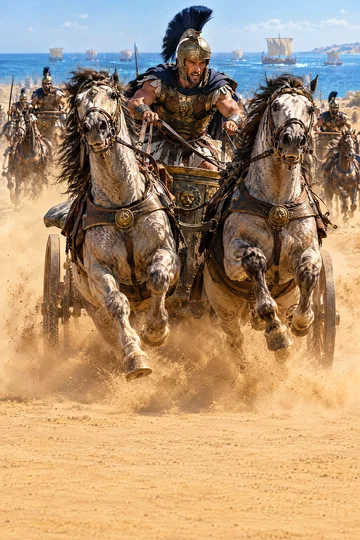
Coming with chariots and horsemen describes Turkish land forces and a distinguishing national characteristic of Turks and Arabs as a wandering, horse-riding people who readily assemble large cavalry forces, with chariots understood as artillery carriages and horsemen as Turkish cavalry.ST Jul 15, 1897RH Mar 27, 1913RH May 15, 1900 Coming with many ships was literally fulfilled by fleets serving Turkey's cause: the Turkish navy, Russia's Black Sea fleet, and England's Mediterranean fleet joined to carry a Turkish army from Rhodes toward Egypt.RH Mar 27, 1913RH Dec 19, 1912ST Jun 8, 1882 Thirty Turkish ships brought 12,000 troops with Russian and British ships to Acre, the British fleet aided the Turks from fear that France would gain ascendancy in the Orient and followed near the shore abreast of the land forces, and the Battle of the Nile exemplifies the naval fighting in this war.ST Jul 15, 1897RH Dec 19, 1912RH May 15, 1900 The 1801 battle of Alexandria and the Ottoman public celebration and reward of British soldiers confirm that England acted as ally rather than as the northern king.RH May 15, 1900RH May 15, 1900
Entering into the countries and overflowing and passing over refers to the king of the north, not to Napoleon's career, and expresses the result of the whirlwind attack.ST May 30, 1878RH Mar 21, 1871ST Jun 8, 1882 Turkey and its allies prevailed and drove the French back into Egypt, so that Napoleon retreated for the first time and could not resist this northern whirlwind.ST May 30, 1878ST Jul 15, 1897RH Mar 21, 1871 In that victorious advance Turkey repossessed Syria, Palestine, and Egypt with Judea, Syria, Arabia, Ethiopia, and Libya recovered to Turkish rule, while Edom and Moab were left untouched and Egypt was made tributary with tribute in gold, silver, and grain.RH Mar 21, 1871ST Jun 8, 1882RH Mar 21, 1871 The unexpected French defeat at the siege of Acre and retreat to Egypt in 1799 showed providence preventing Napoleon's plans from bringing Turkey to its end, because the time for the king of the north to come to his end had not yet arrived.RH Apr 24, 1913ST Jun 8, 1882ST Jun 8, 1882
In this prophetic language a king acting, rising, or standing up means reigning, and raising up a king means bringing him to the throne and causing him to reign.ST May 6, 1886ST Dec 27, 1905 So the standing up of Michael means Christ finishing His work as priest, leaving the Father's throne, and taking His own throne to reign as king.ST May 6, 1886ST Dec 27, 1905
Fulfilled in 1798 and 1799
The verse opens the closing events centered on him and fixes their beginning at the time of the end, providing the definite starting point for seeking fulfillment.ST Apr 30, 1912RH Apr 24, 1913ST Jun 8, 1882RH Mar 13, 1913RH Dec 19, 1912 At that time a renewed conflict breaks out in which the king of the south pushes against another power and the king of the north comes against him suddenly with overwhelming military force and many ships, entering various countries and sweeping through them.ST Apr 30, 1912RH Apr 24, 1913RH Mar 13, 1913RH Dec 19, 1912 In 1798 France sent fleet and troops to invade Egypt and Turkey, and before the year ended both Egypt and Turkey were at war with France.RH Apr 24, 1913RH Dec 28, 1911ST Jun 8, 1882RH Mar 13, 1913 That triangular warfare among France, Egypt, and Turkey is the fulfillment at the beginning of the time of the end, at the close of the 1,260 years of papal domination.RH Dec 28, 1911ST Jun 8, 1882RH Dec 19, 1912
Egypt is the king of the south as in the earlier divisions of Alexander's empire, Turkey ruling Syria, Thrace, and Asia Minor is the king of the north, and him is the French government represented by Napoleon.RH Dec 28, 1911ST Jun 8, 1882RH Mar 13, 1913 Napoleon invaded Egypt to weaken England and gain access to Hindustan and India, his army took Alexandria on July 2, 1798 and Cairo, and he reorganized Egypt as an intended permanent French colony.RH Apr 11, 1907RH Mar 20, 1913RH Dec 28, 1911 Egypt pushed at France but made only a comparatively feeble resistance, for its rulers offered little more than a push while Mameluke forces and native hostility resisted and the Pyramids put Egypt in French possession.RH Apr 11, 1907ST Jun 19, 1884RH Dec 28, 1911ST Jun 8, 1882 Egypt at the time was only nominally Turkish under Mameluke chiefs, while Sudan and Libya were not under Turkish domination, yet Turkey as the power on which Egypt depended then entered the conflict with England's help and ultimately gained more than it had lost.RH Apr 11, 1907RH Dec 28, 1911
Turkey came like a whirlwind when the sultan, stirred by invasion of its dependency and emboldened by destruction of the French fleet at the Nile, declared war in September 1798, decreed an army to restore authority on the Nile, and gathered vast forces in Syria.RH Apr 11, 1907RH Apr 24, 1913RH Mar 27, 1913RH Dec 19, 1912 It allied with Russia and England for naval support, so that the many horsemen were the vast Turkish land forces gathered in Syria and the many ships were the Turkish navy with Russia's Black Sea fleet and England's Mediterranean fleet joined to carry a Turkish army from Rhodes toward Egypt.RH Apr 24, 1913RH Mar 27, 1913RH Dec 19, 1912 Napoleon marched from Cairo into Syria to attack Turkey, took El Arish, Gaza, and Jaffa, and defeated a Turkish army near Nazareth and the Jordan.RH Apr 10, 1913RH Apr 3, 1913 He then met strong, sustained resistance at Saint Jean d'Acre north of Carmel, lost many soldiers, endured a hard retreat, and returned to Cairo with his plans for an empire in the East frustrated, while a Turkish army and English and Russian fleets prepared to attack Egypt.RH Apr 24, 1913RH Apr 3, 1913RH Dec 19, 1912RH Apr 24, 1913
That northern triumph fulfilled overflowing and passing over, for the conflict caused by the French invasion beginning in 1798 ended in complete victory for Turkey.RH Apr 24, 1913RH May 1, 1913RH Mar 6, 1913 Turkey defeated the French armies, drove them back into Egypt, recovered Judea, Syria, Palestine, and Egypt, and France relinquished Judea to Turkish control.ST Jun 19, 1884RH Dec 26, 1912ST Mar 2, 1904 Turkey then extended its rule over Syria, Egypt, Arabia, Ethiopia, and Libya, restoring Turkish rule and making Egypt tributary with tribute in gold, silver, and grain, becoming master of the southern countries by 1825, while Edom and Moab remained untouched.RH Feb 12, 1914RH Dec 26, 1912ST Jun 19, 1884 Egypt's resistance ended in conquest and it did not escape another rule despite the popularity of French government there, and the verse thus marks a return to conflict between Egypt and the northern power occupying the former northern territory.RH Dec 26, 1912RH Mar 6, 1913ST Jun 19, 1884
Turkey to His End
The same Turkish king of the north remains the focus of the prophecy to his end in the Near East, especially Syria, Palestine, and the eastern Mediterranean, the pivotal meeting place of East and West.RH Nov 16, 1914RH Nov 16, 1914RH May 11, 1916 He is the power ruling that territory from the Euphrates to the shores of the Dardanelles, holding almost the identical dominion from the Euphrates to the sea and northward over Asia Minor and the shores of the Dardanelles, and the latter-day king of the north must be the power ruling this same region during the time of the end.RH Nov 16, 1914RH Dec 19, 1912RH May 11, 1916 In his advance in conquest he is driven from Europe into Asia with Constantinople abandoned for Jerusalem, establishing his capital in Palestine and setting his palace between the seas in the glorious holy mountain.RH Nov 16, 1914RH Dec 19, 1912RH May 11, 1916 He comes to his end with none to help him, and his end is the signal that the great day of God is at hand.RH Dec 19, 1912RH May 11, 1916 That end brings Michael standing up, unprecedented trouble, deliverance of those written in the book, and resurrection, with the struggle over Turkey's territory, especially Jerusalem, drawing nations together into worldwide conflict and issuing in the end of earthly governments and Michael's reign.RH Nov 16, 1914RH Dec 19, 1912
Turkey's steady disintegration fulfills the fall foretold, beginning about 1783 with the Crimea and continuing through Greece, Algeria, Egypt, Servia, Bosnia, Bulgaria, Roumelia, Roumania, Montenegro, Tripoli, Albania, and Macedonia.RH Nov 14, 1912ST Dec 24, 1912 That steady loss of power, prestige, and possessions leaves only Constantinople in Europe and reduces territory and population to one third.RH Nov 14, 1912ST Dec 24, 1912 The contrast between possessions a century ago and dwindled possessions now shows the course toward that end, as part of a prophecy outlining world history from Daniel's time to the end of time, including the breakup of the Roman Empire, the rise of the Ottoman kingdom as a great power, and its final destruction just before Christ's coming.RH Nov 14, 1912ST Dec 24, 1912
After 1798 the southern pushing ends with Turkey reestablishing undisputed sovereignty in the south in 1825, then the struggle shifts east and north.RH Apr 9, 1914RH Feb 26, 1914 Russia wrestles territory from Turkey's northern and eastern dominions in the war of 1828-29, and Egyptian forces under Ibrahim Pasha defeat the Turkish army at Konieh in 1832, advance through Asia Minor toward Constantinople, threaten the empire's survival, and leave much of the Ottoman Empire effectively severed from its center until Russian intervention halts the advance.RH Mar 5, 1914RH Apr 9, 1914RH Mar 19, 1914RH Feb 26, 1914 Egypt destroys Turkey at Nezib in 1839 with the fleet defecting at Alexandria, and European powers impose the Treaty of London in 1840, taking responsibility for preserving Turkey's integrity and independence, compelling Mehmet Ali to submit, ending Turkey's independence and beginning unreversed dependence.RH Apr 9, 1914RH Apr 30, 1914RH Mar 19, 1914RH Feb 26, 1914 These pressures and that 1840 ending belong to the close of the prophetic period of an hour and a day and a month and a year under the sixth trumpet rather than fulfilling the verse itself.RH Apr 9, 1914RH Mar 19, 1914RH Feb 26, 1914
The final campaign draws nations for Turkey's territory, especially Jerusalem, leading to worldwide conflict, Armageddon, the last universal war, and the gathering of nations for battle before Christ appears to overthrow the gathered forces, with peace coming only afterward when Christ begins his reign.RH Nov 16, 1914RH Aug 3, 1916ST Apr 30, 1912ST Mar 1, 1877 The expected removal of Turkish power from Europe prepares the way for the kings of the East, and the Turk comes to his end under the sixth plague with the drying of the Euphrates removing Turkish power from Europe.RH Aug 3, 1916RH Mar 16, 1916RH Nov 6, 1900 That gathering gives place to the three divisions of the world, with persecution distinct from the plagues on the wicked, and the warfare is against Christ the Lamb, the rightful King, not a fight for the Christian religion.RH Nov 6, 1900ST Apr 30, 1912ST Mar 1, 1877 The last events of Daniel 11, including the king of the north coming to his end, occur during the plagues, after Christ's ministry in the heavenly sanctuary has ceased and probation has closed, so waiting to see those events before taking a stand will be too late, while others leave the time of Christ's reign to God without speculation.RH Dec 14, 1905RH Mar 16, 1916ST Mar 1, 1877
Contemporary struggles are steps in that end, with fulfillment seen in present developments in Europe and the prophecy giving the true meaning of the Eastern question.RH Dec 14, 1911RH Dec 26, 1912RH Nov 9, 1911RH Jan 4, 1912RH Sep 28, 1916 The Italian war against Turkey and the seizure of Tripoli in 1911 further weakens Turkish power, which is ultimately to be eliminated from the map of Europe, amid the Balkan and European wars and England's dealings with Turkey.RH Dec 14, 1911RH Dec 26, 1912RH Nov 9, 1911RH Jan 4, 1912RH Sep 28, 1916 Turkey is a buffer that has kept other nations back and stands in the way of their advance, and when Turkey is removed the nations will rush for its territory.RH Nov 16, 1914ST Jul 29, 1897 Turkey hangs on while emerging despoiled from every conflict of the last hundred years, crumbling and dependent on European powers while its sultan stands as a major opponent of Christianity.RH Dec 14, 1911RH Nov 9, 1911RH Sep 28, 1916
Certainty and Warning
Daniel 11 is definite and dependable history written in advance, and its predictions have been fulfilled with minute accuracy through past centuries, giving certainty that what remains will also be fulfilled.ST Nov 24, 1914 Its specifications have been met step by step with patient tracing except for the crowning event, the coming of the Son of man.ST Oct 10, 1878 It is a continuous prophetic history running from the Medo-Persian kingdom to the dismemberment of the Turkish Empire, a dismemberment rapidly taking place, with the next event Michael standing up.RH Nov 24, 1910 The chapter foretells the rise and fall of nations, and those foretellings are fulfilled in history, including the struggle between Russia and Japan spoken of in biblical prophecy.ST Mar 1, 1905 The prophecies have almost reached their final fulfillment, and the wars and growing troubles among nations that continue until Jesus comes show the increasing time of trouble and the nearness of the end.RH Nov 24, 1904RH Aug 3, 1905 The definite time fixed by the verse makes it possible to identify events meeting its specifications, and prophecy thus stands as a light in darkness converging with the other great lines on Christ's coming.ST Nov 24, 1914ST Oct 10, 1878RH Nov 24, 1910
The prophecy is almost fulfilled, with only deliverance, the kingdom, and the coming of the Son of man remaining, indicating that the final crisis is near.ST Oct 10, 1878 Its closing verses were being watched, and the movement of people from the Transcaucasus to Ismidt, where they waited for their leader to leave Constantinople for Jerusalem, was a significant development connected with them. The decrease of Ottoman power in recent history is the decline described leading up to the second advent, and is evidence that the day of the Lord is near.RH Jun 2, 1904 That prophecy of Turkey and his end gives the true meaning of the Eastern question, and its fulfillment is seen in present developments in Europe.RH Dec 26, 1912 Its message is to be carried to the Turkish Empire, whose changing political situation and opening to gospel work call for urgent action.RH Sep 24, 1908 It is being fulfilled before eyes with startling emphasis on the portent of this time and the events soon to be enacted, making the hour thrilling and urgent, for God in mercy holds in check the winds of war to give time to prepare and to sound to all the world the warning of the coming blessed King, so now it is high time to awake out of sleep, for salvation is nearer than when belief began, the day is at hand, the end is imminent and perhaps sooner than realized, calling for watching, praying, and preparation for the latter rain.RH Sep 24, 1908RH Dec 26, 1912
The prophecy has been fulfilled through nearly all its specifications, with its final step still future.RH Dec 14, 1905 The last events, including the king of the north coming to his end, occur during the plagues, after Christ's ministry in the heavenly sanctuary has ceased and probation has closed, so waiting to see those events before taking a stand for God will be too late.RH Dec 14, 1905 The French Revolution stands at the time of the end, at the beginning of that period when the papal power received its deadly wound, and France served as the instrument through which judgments fell on that apostate system.RH Dec 12, 1912RH Dec 12, 1912 That revolution is an object lesson to nations of the consequences of rejecting God, His saving truth, and calls to reform, for France rejected the Reformation and other efforts to correct religious and social abuses, and the Revolution's slaughter and upheaval were divine judgment and retribution, the harvest of that rejection.RH Dec 12, 1912 The birth of the Haitian black republic was one result of that revolution.RH Jul 25, 1907
Sources