Daniel 4:19
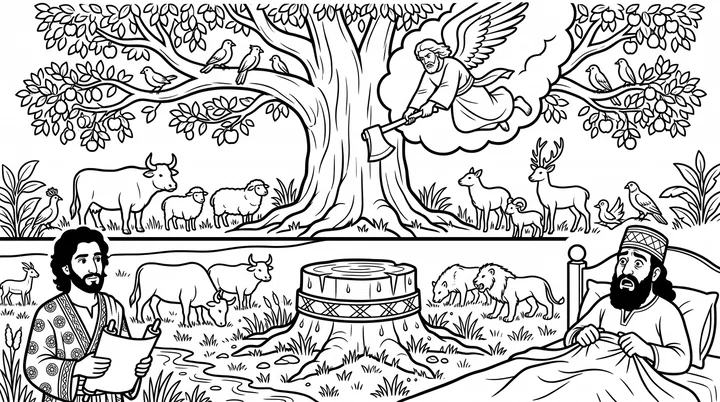
Then Daniel, whose name was Belteshazzar, was astonied for one hour, and his thoughts troubled him. The king spake, and said, Belteshazzar, let not the dream, or the interpretation thereof, trouble thee. Belteshazzar answered and said, My lord, the dream be to them that hate thee, and the interpretation thereof to thine enemies.
Translations
Then Daniel, whose name was Belteshazzar, was astonished for one hour, and his thoughts troubled him. The king spoke, and said, Belteshazzar, let not the dream, or the interpretation thereof, trouble you. Belteshazzar answered and said, My lord, the dream be to them that hate you, and the interpretation thereof to your enemies.
King James Version, KJV Cambridge Paragraph Bible
Then Daniel, whose name was Belteshazzar, was astonied for one hour, and his thoughts troubled him. The king spake, and said, Belteshazzar, let not the dream, or the interpretation thereof, trouble thee. Belteshazzar answered and said, My lord, the dream be to them that hate thee, and the interpretation thereof to thine enemies.
Then Daniel, whose name was Belteshazzar, was astonished for one hour, and his thoughts troubled him. The king spoke, and said, Belteshazzar, let not the dream, or the interpretation of it, trouble thee. Belteshazzar answered, and said, My lord, the dream be to them that hate thee, and the interpretation of it to thy enemies.
Then Daniel, whose name was Belteshazzar, was astonied for a while, and his thoughts troubled him. The king answered and said, Belteshazzar, let not the dream or the interpretation, trouble thee. Belteshazzar answered and said, My lord, the dream be to them that hate thee, and the interpretation thereof to thine adversaries.
Then Daniel, whose name was Belteshazzar, was stricken dumb for a while, and his thoughts troubled him. The king answered and said, Belteshazzar, let not the dream, or the interpretation, trouble thee. Belteshazzar answered and said, My lord, the dream be to them that hate thee, and the interpretation thereof to thine adversaries.
'Then Daniel, whose name [is] Belteshazzar, hath been astonished about one hour, and his thoughts do trouble him; the king hath answered and said, O Belteshazzar, let not the dream and its interpretation trouble thee. Belteshazzar hath answered and said, My lord, the dream — to those hating thee, and its interpretation — to thine enemies!
Then Daniel, whose name is Belteshazzar, was astonied for one hour, and his thoughts troubled him. The king spoke and said, Belteshazzar, let not the dream, nor its interpretation, trouble thee. Belteshazzar answered and said, My lord, the dream be to them that hate thee, and its interpretation to thine enemies!
Then, Daniel, whose name was Belteshazzar, was astonished for about one moment, and, his thoughts, troubled him. The king spake and said, O Belteshazzar, let neither, the dream, nor the interpretation, trouble thee. Belteshazzar answered and said, My Lord, The dream, be for them who hate thee, and, the interpretation, for them who are thy foes.
Berean Standard Bible, Majority Standard Bible
For a time, Daniel, who was also known as Belteshazzar, was perplexed, and his thoughts alarmed him.So the king said, “Belteshazzar, do not let the dream or its interpretation alarm you.”“ My lord,” replied Belteshazzar, “may the dream apply to those who hate you, and its interpretation to your enemies!
Then Daniel, whose name was Belteshazzar, was stricken mute for a while, and his thoughts troubled him. The king answered, “Belteshazzar, don’t let the dream or the interpretation trouble you.”Belteshazzar answered, “ My lord, may the dream be for those who hate you, and its interpretation to your adversaries.
Then Daniel, whose name was Belteshazzar, was at a loss for a time, his thoughts troubling him. The king made answer and said, Belteshazzar, do not be troubled by the dream or by the sense of it. Belteshazzar, answering, said, My lord, may the dream be about your haters, and its sense about those who are against you.
It is thou, O King, that art great and mightie: for thy greatnesse is growen, and reacheth vnto heauen, and thy dominion to the endes of the earth.
Douay-Rheims (Challoner revision)
Then Daniel, whose name was Baltassar, began silently to think within himself for about one hour: and his thoughts troubled him. But the king answering, said: Baltassar, let not the dream and the interpretation thereof trouble thee. Baltassar answered, and said: My lord, the dream be to them that hate thee, and the interpretation thereof to thy enemies.
Pictures
Cross-references
- Daniel 4:27
Wherefore, O king, let my counsel be acceptable unto thee, and break off thy sins by righteousness, and thine iniquities by shewing mercy to the poor; if it may be a lengthening of thy tranquillity.
Daniel urges the king to turn from sin and show mercy to the poor.
- Daniel 2:27-28
Daniel answered in the presence of the king, and said, The secret which the king hath demanded cannot the wise men, the astrologers, the magicians, the soothsayers, shew unto the king;
Daniel explains that God reveals the king’s dream and its meaning.
- Daniel 4:34-37
And at the end of the days I Nebuchadnezzar lifted up mine eyes unto heaven, and mine understanding returned unto me, and I blessed the most High, and I praised and honoured him that liveth for ever, whose dominion is an everlasting dominion, and his kingdom is from generation to generation:
After his affliction, Nebuchadnezzar praises God and acknowledges his rule.
- Daniel 4:30-32
The king spake, and said, Is not this great Babylon, that I have built for the house of the kingdom by the might of my power, and for the honour of my majesty?
The king’s boast is followed by the foretold judgment, teaching that God rules human kingdoms.
- Daniel 4:25
That they shall drive thee from men, and thy dwelling shall be with the beasts of the field, and they shall make thee to eat grass as oxen, and they shall wet thee with the dew of heaven, and seven times shall pass over thee, till thou know that the most High ruleth in the kingdom of men, and giveth it to whomsoever he will.
Warns Nebuchadnezzar of the judgment that would follow his rebellion.
- Daniel 5:22
And thou his son, O Belshazzar, hast not humbled thine heart, though thou knewest all this;
Belshazzar knew Nebuchadnezzar’s humbling yet refused to learn.
- Daniel 2:31-38
Thou, O king, sawest, and behold a great image. This great image, whose brightness was excellent, stood before thee; and the form thereof was terrible.
The earlier dream names Nebuchadnezzar as the image’s head of gold.
- Jeremiah 27:6
And now have I given all these lands into the hand of Nebuchadnezzar the king of Babylon, my servant; and the beasts of the field have I given him also to serve him.
Nebuchadnezzar is called God’s servant, yet remains under God’s authority.
- Daniel 4:14
He cried aloud, and said thus, Hew down the tree, and cut off his branches, shake off his leaves, and scatter his fruit: let the beasts get away from under it, and the fowls from his branches:
The tree-cutting command belongs to the same dream and its judgment.
- Job 33:15-17
In a dream, in a vision of the night, when deep sleep falleth upon men, in slumberings upon the bed;
God uses dreams to warn people and turn them from harmful purposes and pride.
- Daniel 1:17
As for these four children, God gave them knowledge and skill in all learning and wisdom: and Daniel had understanding in all visions and dreams.
Daniel’s understanding of dreams reflects the wisdom God gave him.
- Genesis 41:1-32
And it came to pass at the end of two full years, that Pharaoh dreamed: and, behold, he stood by the river.
Both recount troubling prophetic dreams given to rulers.
- Daniel 4:1-3
Nebuchadnezzar the king, unto all people, nations, and languages, that dwell in all the earth; Peace be multiplied unto you.
quoted as opening of same proclamation
Commentary
Each commentary is drawn from primary sources: the writings of Ellen G. White and Adventist pioneers and periodicals. Each commentary is separate. Its own words are not a quotation; follow the references to read the source passages.
Ellen G. White
13 sources
Daniel was stunned and troubled for an hour because he understood that the dream foretold dreadful disaster and divine judgment against the king himself, and though the king told him not to be troubled by the dream or its meaning and he answered that he wished it would fall on the king's enemies instead, the interpretation pointed directly to the king.Ms 29, 1895, par. 13–16Ms 233, 1902, par. 14–17Ms 169, 1904, par. 2–3Lt 114, 1903, par. 12–147MR 66.1–67.1
The dream was of a great tree standing for Nebuchadnezzar's greatness and prosperity with nations under his rule, given after he had seen the deliverance in the fiery furnace and confessed the living God but then lost that holy impression by not walking in the light.8T 126.313MR 60.1–61.2Ms 15, 1896, par. 4–6
He would not flatter the king or soften the meaning to gain favor, but knew his solemn duty to speak the fearful truth plainly despite the cost, that it was aimed at the king for his pride and arrogance.Ms 29, 1895, par. 13–16Ms 169, 1904, par. 2–3PK 517.2–3
It was a plain warning sent to impress his understanding before the Lord acted, that by God's decree he would be driven from men, lose his reason, live with the beasts in suffering and humiliation for seven years, and then be converted and restored.Ms 233, 1902, par. 14–17Lt 114, 1903, par. 12–14PK 522.2
The experience teaches all entrusted with God's work to give unflattering reproof without fear when wrong principles are clearly shown, even if troubled for a time at reproving a leader, for a Watcher marks their works and they are more accountable than the heathen king.Ms 29, 1895, par. 13–16Lt 188, 1901, par. 1
It warns against trusting in self, wisdom, or human strength and calls for obedience to the divine will, for God gives light and gracious opportunity to learn truth and reform, but to refuse and neglect it brings judgment, as Belshazzar his grandson proved when he forgot this lesson, wasted his means and light, and brought calamity on Babylon.PK 522.221MR 53.3–4Lt 201, 1899, par. 3–4
Dream's Context and Meaning
The verse belongs to Nebuchadnezzar's dream of a great tree, which set forth his greatness and prosperity at a time when nations lived under his sovereignty and his kingdom was firmly established among loyal subjects.8T 126.3 This was another dream God gave to the king and recorded in the fourth chapter of Daniel, given after he had seen the deliverance of the three Hebrews from the fiery furnace and had acknowledged their God as the living God.13MR 60.1–61.2Ms 15, 1896, par. 4–6 That holy impression upon his mind was lost because he did not continue to walk in the light he had received.13MR 60.1–61.2Ms 15, 1896, par. 4–6
It was the king's last dream, which the wise men would not attempt to interpret because it evidently predicted adversity, so Daniel was summoned to interpret it.Ms 29, 1895, par. 13–16 Daniel understood the meaning of the dream at once, and was astonied and troubled for one hour because its import was dreadful.Ms 169, 1904, par. 2–3Lt 114, 1903, par. 12–14 He was deeply troubled because he foresaw that its interpretation foretold disaster and judgment against the king himself.Ms 169, 1904, par. 2–3Lt 114, 1903, par. 12–147MR 66.1–67.1
The king urged him not to let the dream or its interpretation trouble him.Ms 29, 1895, par. 13–16Ms 169, 1904, par. 2–37MR 66.1–67.1 Daniel answered with concern that the dream be to them that hated the king and its interpretation to his enemies instead.Ms 29, 1895, par. 13–16Ms 169, 1904, par. 2–37MR 66.1–67.1 In fact the interpretation referred directly to the king and warned of the judgment that would strike him.Ms 233, 1902, par. 14–17PK 517.2–3
Faithful Unflattering Witness
Daniel was summoned to interpret Nebuchadnezzar's last dream after the wise men would not attempt it because it evidently predicted adversity.Ms 29, 1895, par. 13–16 He understood the meaning at once and was astonished and troubled for an hour because its import was dreadful, foreseeing judgment against the king.Ms 29, 1895, par. 13–16Ms 169, 1904, par. 2–3PK 517.2–3 He hesitated to tell the king what the dream meant, unwilling to flatter him or to distort the interpretation to secure favor and gain.Ms 29, 1895, par. 13–16Ms 169, 1904, par. 2–3PK 517.2–3 The king urged him not to let the dream or its interpretation trouble him, and Daniel answered with the wish that the dream and its meaning would fall on those who hated the king and on his enemies instead.Ms 29, 1895, par. 13–16Ms 169, 1904, par. 2–3
Yet he recognized a solemn duty to tell the truth of Babylon plainly, despite the consequences.Ms 29, 1895, par. 13–16Ms 169, 1904, par. 2–3 The fearful message was directed against the king himself because of his pride and arrogance, and Daniel had to declare it to him without evasion.Ms 29, 1895, par. 13–16Ms 169, 1904, par. 2–3PK 517.2–3 This is a lesson of vital importance to all connected with the work of God about faithful, unflattering truth-telling.Ms 29, 1895, par. 13–16 Those entrusted with sacred truth are far more accountable than the heathen king, and a Watcher takes cognizance of their works.Ms 29, 1895, par. 13–16
So a messenger may for a time be troubled and keep still from dread of reproving a leader's course of action that contradicts right.Lt 188, 1901, par. 1 Once the matter is distinctly set before him, as when the case of Nebuchadnezzar is presented, he must speak plainly.Lt 188, 1901, par. 1 When principles in God's work are exposed that the Lord will not sustain or favor, the reproof must be given.Lt 188, 1901, par. 1
Divine Warning and Lessons
Daniel's troubled pause and his wish that the dream and its meaning might fall on the king's enemies was part of a plain warning given before the Lord acted, meant to impress Nebuchadnezzar's understanding that the interpretation pointed directly to himself and foretold the judgment about to strike him.Ms 233, 1902, par. 14–17 The tree of his dream foretold his downfall, that by the decree of God he would lose his reason, be banished from the society of men to live among the beasts, and remain in that condition for seven years.Lt 114, 1903, par. 12–14PK 522.2 That humiliation involved untold suffering before his conversion and miraculous restoration.PK 522.2
The record stands as a warning against trusting in oneself and one's own wisdom or relying on human strength.21MR 53.3–4 It teaches the divine will and the responsibility of rendering obedience to it, and the truth about God, who gives gracious opportunities and means by which men may become more fully acquainted with truth.PK 522.2 The experience shows that God gives people light to instruct them and lead them to reform, but that failing to receive and practice that instruction brings judgment.PK 522.2Lt 201, 1899, par. 3–4
Belshazzar, the grandson, knew of Nebuchadnezzar's banishment, conversion, and restoration, yet allowed love of pleasure and self-glorification to efface lessons he should never have forgotten.PK 522.2 He wasted the opportunities granted him, neglected the means within his reach, disregarded the light and thereby lost its benefits, passing by with indifference what Nebuchadnezzar had finally gained at the cost of suffering.PK 522.2Lt 201, 1899, par. 3–4 His neglect brought the coming calamity upon Babylon.PK 522.2Lt 201, 1899, par. 3–4
Sources
Pioneers and periodicals
41 sources
Daniel was struck silent for an hour, his thoughts troubled because he saw the dream meant humiliation and calamity for Nebuchadnezzar.ST Dec 23, 1897ST Jan 16, 1912ST Sep 21, 1904 He hesitated not from difficulty in understanding but from pain at having to announce judgment to a king who had treated him kindly, and the king urged him not to let the dream or its meaning trouble him.ST Dec 23, 1897RH May 4, 1869ST Sep 21, 1904 He answered by wishing the evil upon the king's enemies instead, showing his care, before declaring that the great tree stood for the king himself in his far-reaching dominion.ST Dec 23, 1897RH Jan 2, 1900RH May 4, 1869ST Jan 16, 1912ST Jun 10, 1913 The warning was merciful and conditional, calling the king to break off sins by righteousness and mercy to prolong his peace, teaching that the Most High rules in the kingdom of men.RH May 4, 1869RH Nov 22, 1906ST Oct 18, 1905ST Dec 1, 1914ST Oct 30, 1879 Daniel spoke plainly without softening the message, faithful at the hour despite fear of displeasure, an example of integrity for God's workers.ST Oct 30, 1879ST Nov 24, 1898ST Jun 10, 1913ST Oct 16, 1901RH Feb 27, 1900
Troubled Messenger's Words
Daniel was astonied for one hour, struck dumb and silent, his thoughts troubled because he at once understood that the dream foretold severe humiliation and calamity for Nebuchadnezzar.ST Dec 23, 1897ST Jan 16, 1912ST Sep 21, 1904 His hesitation came not from any difficulty in interpreting the dream but from reluctance and pain at having to announce terrible judgment to a king who had treated him favorably and considerately.RH May 4, 1869ST Sep 21, 1904 The king noticed Daniel's distress and reassured him that neither the dream nor its interpretation should trouble him.ST Dec 23, 1897RH May 4, 1869ST Sep 21, 1904
Daniel then answered respectfully, wishing that the dream might be to them that hate the king and its interpretation to his enemies rather than to the king himself.ST Dec 23, 1897RH May 4, 1869ST Jan 16, 1912ST Jan 16, 1912ST Jan 16, 1912 That wish revealed his care for the king and his desire that the king not suffer, and it was evident in the respectful way he addressed him even while deeply troubled by the dream and its meaning.RH Jan 2, 1900ST Jan 16, 1912ST Jan 16, 1912 Only after that did he explain plainly that the dream concerned the king himself.RH May 4, 1869ST Jan 16, 1912 The great tree seen in the dream represents Nebuchadnezzar himself and his far-reaching greatness, dominion, empire, and Babylonian kingdom.ST Jan 16, 1912ST Jan 16, 1912ST Jun 10, 1913
The chapter uses bapto in the phrase rendered wet with the dew of heaven, and this is a secondary meaning of bapto distinct from baptizo, the word used for the ordinance of baptism.ST Apr 22, 1880 It therefore does not establish the meaning of baptizo nor support sprinkling as baptism.ST Apr 22, 1880
History and Fulfillment
Daniel 4:19 stands in Nebuchadnezzar's own public account of the experience that changed him, a royal proclamation in which the king himself tells of himself and Babylon and Daniel and God, written for all posterity and preserved through Daniel as a faithful record.RH May 15, 1900ST Oct 16, 1901ST Jan 16, 1912 Though Babylon remained idolatrous, and later rulers and priests of heathen cults did their best to obliterate the knowledge and worship of the true God from Babylonian history, the chapter was kept as God's instruction to nations, showing how great are His signs and how mighty His wonders, His kingdom an everlasting kingdom and His dominion from generation to generation.ST Oct 16, 1901 It opens a lesson worthy of profoundest study by the mightiest of earth and for these very days, a lesson which if learned by Nimrod the first king of Babylon and followed ever since would have wrought a far different story of earth's ages.ST Oct 16, 1901
The inspired record shows the king came to recognize that God was just and right and his own ways evil and submitted to God, yet inspiration of the record does not mean Nebuchadnezzar himself or his words were inspired.ST Jul 16, 1912 The warning came toward the close of his reign in complete tranquillity and prosperity when his conquests and most of his great works were completed. It was sent to turn him from a prideful purpose, from assuming the glory of building Babylon, and from trying to take God's place by directing worship and punishing disobedience.RH Nov 22, 1906ST Dec 3, 1896ST Jul 1, 1903ST Mar 18, 1903 That assumption of glory was presumption, and proud Babylon was humbled with him.ST Jul 1, 1903ST Mar 18, 1903
The threatened judgment was conditional and merciful, meant to teach that God rules and to prolong peace.RH May 4, 1869ST Oct 30, 1879ST Oct 28, 1908 Daniel kindly counseled the king to break off sins by righteousness and show mercy to the poor, which might avert the judgment or lengthen his tranquillity, but continued rebellion would bring ruin.RH May 4, 1869RH Nov 22, 1906ST Oct 30, 1879ST Jun 10, 1913ST Oct 28, 1908 The great tree represented the Babylonian kingdom, and the king's changed heart represented Nebuchadnezzar himself, who would be driven into the field for seven years to learn that the Most High rules human kingdoms and gives them to whom He wills.ST Jun 10, 1913
Within a year the king was smitten and driven from men for seven years in a curious and very unusual madness termed lycanthropy, in which a man believes he is not a man but a beast.RH Apr 25, 1912ST Dec 29, 1887 He eschewed human habitations, lived wild in the open air night and day, fed on herbs and ate grass like an ox, disused language, rejected all ordinary human food, lost the erect posture, disused clothing, and became covered with a rough coat of hair while his nails and hair grew like those of an animal.ST Dec 29, 1887ST Jul 29, 1875 At the zenith of Babylonian power the wings of his outrageous pride and soaring ambition were thus clipped by insanity, and from that degraded bestial condition he learned his utter weakness before the supreme God.RH Apr 25, 1912RH Jan 23, 1908
The madness was not permanent, with even the date of recovery announced, and after suffering obscuration for seven years his intellect suddenly returned to him.ST Jan 17, 1906 He then acknowledged that the Most High rules over human kingdoms and acts according to His will, that Jehovah rules in the affairs of men and is above all gods.RH Nov 22, 1906ST Dec 29, 1887ST Jan 17, 1906 Lifted up from the earth and restored to a sane appreciation of his humble position as a man in relation to Almighty God, he learned this through chastisement and humility and made it known in a royal proclamation for other kings to learn from.ST Oct 18, 1905RH Jan 23, 1908 The glory of his kingdom, his honor and brightness, returned so that his last days as an old man were as brilliant as his first before he expired at Babylon in the forty-fourth year of his reign.
The verse belongs to the historical part of Daniel, which comes chronologically before Daniel 7 even though the book places the prophetic section after the historical section.ST Apr 5, 1877 It belongs to the seven times prophecy of Nebuchadnezzar's dream and its interpretation.ST Aug 13, 1912
God's Rule and Mercy
The chapter teaches nations and rulers that the Most High rules in the kingdom of men and gives it to whomever He wills.ST Oct 18, 1905ST Dec 1, 1914 Kings owe Him homage, and only those who live in harmony with His righteous rule can endure.ST Oct 18, 1905ST Dec 1, 1914 Daniel warned Nebuchadnezzar of this rule and urged him to break off sins by practicing righteousness and showing mercy to the poor, for continued rebellion would bring ruin.ST Oct 28, 1908 That warning was a message of mercy given before the threatened judgment, and Nebuchadnezzar learned the lesson through chastisement and humility and then made it known in a royal proclamation for other kings to learn from.ST Oct 18, 1905ST Oct 28, 1908
It proclaims the gospel of the kingdom of God, which is righteousness by faith.RH Aug 22, 1907ST Nov 26, 1912 That gospel is God's work in laying human glory in the dust and doing for man what he cannot do for himself.RH Aug 22, 1907 It was given again and again as a healing remedy through messengers bearing the gospel of creative power, to bring Nebuchadnezzar and Babylon to know God's name and nature, life and power, kingdom and authority.ST Nov 26, 1912 It counters the fundamental Babylonian error that man is himself divine, part of the divine, and can save and perpetuate himself indefinitely.RH Aug 22, 1907ST Nov 26, 1912 It had power to convert Nebuchadnezzar and bring him to praise and honor the King of heaven whose works are truth and whose ways are judgment.RH Aug 22, 1907ST Nov 26, 1912
Pride, the glorification of man, is presumption and the essence of righteousness by works that can never make anyone acceptable to God.RH Aug 22, 1907ST Mar 18, 1903 Nebuchadnezzar's assuming the glory of building Babylon was a conspicuous illustration of that sin.ST Mar 18, 1903 His earlier refusal to learn from God's warnings left him vulnerable to humiliation, for pride can prevent a person from accepting the Spirit's influence.RH Oct 22, 1901 When he sought to take God's place by directing worship and punishing disobedience, God humbled him and proud Babylon was humbled with him.ST Jul 1, 1903 The punishment came at the zenith of Babylonian power, when the wings of his outrageous pride and soaring ambition were clipped by the judgment of insanity, from whose degraded bestial condition he was afterward lifted up and restored to a sane appreciation of his humble position as a man in relation to Almighty God.RH Jan 23, 1908RH Oct 22, 1901
God's message was a call to personal choice to acknowledge heaven's right to rule within him and yield himself as God's servant.RH May 15, 1900 When at last received through breaking off sins by righteousness, it healed Nebuchadnezzar.RH Aug 22, 1907ST Nov 26, 1912 That healing exchanged Babylonian confusion and despair for certainty of truth, hope, and the light of everlasting bright hope.ST Nov 26, 1912 It brought him to the knowledge of God and His righteousness and to praise the King of heaven, bearing to all the world a touching testimony to the goodness and wisdom of the Almighty and demonstrating in his life what God intended for all.RH Aug 22, 1907ST Nov 26, 1912
Prophecy and Proclamation
The tree dream is a symbol prophecy whose meaning is fully opened by inspiration and whose application is made without fear, showing that prophecy was given to make future events known rather than to conceal them, and that the key to prophecy is found in the Bible itself.RH Sep 2, 1909 It stands as one of five symbol prophecies in Daniel given in symbols and afterward fully interpreted, which together with explained prophecies in Revelation furnish the basis for general prophetic interpretation and supply the key for unlocking other important prophecies and shutting out fanciful exposition.RH Sep 2, 1909 The dream foretold Nebuchadnezzar's deposition, the cause of his being deposed, and his humiliating experience.ST Jun 28, 1899 Its fulfillment displayed God's foreknowledge of the future and His control over earthly kings, humbled Nebuchadnezzar, and brought him to a changed heart and faith.ST Jan 17, 1906
The vision was given not for Nebuchadnezzar alone but through him for all earthly rulers after him as a divine warning of what is coming, including the eternal future, and it is folly to disregard it while the prudent foresee the evil and hide themselves.ST Nov 28, 1900 It opens a lesson worthy of the profoundest study by the mightiest of earth and for the very last days, for Daniel is preeminently God's instruction to the nations in the last days, declaring how great are His signs and how mighty His wonders, His kingdom an everlasting kingdom and His dominion from generation to generation.ST Oct 16, 1901 Having learned through chastisement and humility that God rules human kingdoms and that kings owe Him homage, Nebuchadnezzar made the lesson known in a royal proclamation for other kings to learn from.ST Oct 18, 1905 That warning before he was driven from men, followed by seven years living wild and then restored understanding, was one way God left Himself not without witness to Babylon and to all nations, and when his understanding returned he published to all peoples, nations, and languages in all the earth the signs and wonders the high God had wrought toward him, having learned that Jehovah rules in the affairs of men and is above all gods.ST Dec 29, 1887
The proclamation made the lesson as personal to everyone as if each had passed through the experience himself, teaching that the Most High rules in the kingdom of men and gives it to whomever He will, and that He is the King of heaven whose works are truth and whose ways are judgment, so that all men might put confidence in God and not forget His doings and keep His commands.RH May 29, 1900 The chapter is one part of a threefold making known of the gospel of the kingdom together with the dream of the image and the deliverance from the furnace, preached in Babylon so that all who would accept it might be saved from impending destruction.RH Aug 22, 1907RH May 29, 1900 That gospel is righteousness by faith, the work of God in laying the glory of man in the dust and doing for man what he cannot do for himself, abasing those who walk in pride because pride, the glorification of man, is the essence of righteousness by works and can never make anyone acceptable to God, and it had power to convert Nebuchadnezzar and bring him to praise and honor the King of heaven.RH Aug 22, 1907 It is an example of God making His truth known through Gentile kings when Israel failed to carry the gospel to the world, and of how God wrought for His people in connection with the overthrow of Babylon through Daniel, so that Cyrus by association with Daniel recognized the true God as great over all others.ST Dec 19, 1892RH Nov 11, 1902
The testimony left no lasting impression on those who followed Nebuchadnezzar in the kingdom, with iniquity culminating in his grandson Belshazzar.ST Feb 4, 1886 Nebuchadnezzar was the grandfather of Belshazzar, father being used in the accommodated sense according to the custom of calling ancestors fathers however remote the relationship.ST Jun 28, 1899 Belshazzar knew of Nebuchadnezzar's humiliation and the reason for it, yet his presumption went beyond that of his grandfather, publicly defiling the vessels of the Lord's house to insult the God who had humiliated Nebuchadnezzar, showing the influence of excessive strong drink and dependence on defenses set up by human hands.ST Jun 28, 1899 His immediate successors disregarded the message and did not glorify the living God but soon forgot His works, and Babylon's greatness waned until the armies of Medo-Persia came.RH May 29, 1900
Faithful Witness and Example
Daniel was faithful to the king, and when the danger to the king was revealed he gave counsel intended to prolong peace and security.ST Oct 30, 1879 Though deeply troubled by what the dream meant, he was willing to interpret it plainly despite its fearful meaning.ST Jun 10, 1913 He was reluctant and troubled about telling the interpretation, wishing that the dream and its meaning concerned the king's enemies rather than the king himself, yet he told it faithfully just as it had been given to him.ST Oct 16, 1901 The great tree stood for the Babylonian kingdom, and the judgment foretold that Nebuchadnezzar would be driven into the field for seven years to teach him that the Most High rules human kingdoms and gives them to whomever He wills, with the call to show forsaking of sin by showing mercy to the poor.ST Jun 10, 1913
His real principle and integrity stood out against the prevailing wickedness of his time, proving that he did not count the cost of right-doing.ST Nov 24, 1898 In fearlessly interpreting the dream he was not deterred by the pomp and glory of the royal court.ST Nov 24, 1898 Fear of incurring royal displeasure did not lead him to soften the message or abate one iota from its pointedness.ST Nov 24, 1898
He was faithful and ready at that step of the king's experience, and when called to explain the dream he was equal to the occasion, awake to the time, and able to give the message for the hour.RH Feb 27, 1900 This was the same integrity of principle he had held from the beginning with his three companions.RH Feb 27, 1900 It continued through learning and through explaining the king's dream and through the fiery furnace test, and continued afterward in revealing Belshazzar's character and failure and the ruin of the nation.RH Feb 27, 1900 Daniel in Babylon is an example of what God wants His workers to be in the world in its closing act, showing God leading each worker individually.RH Dec 20, 1906
Sources