Daniel 5:23
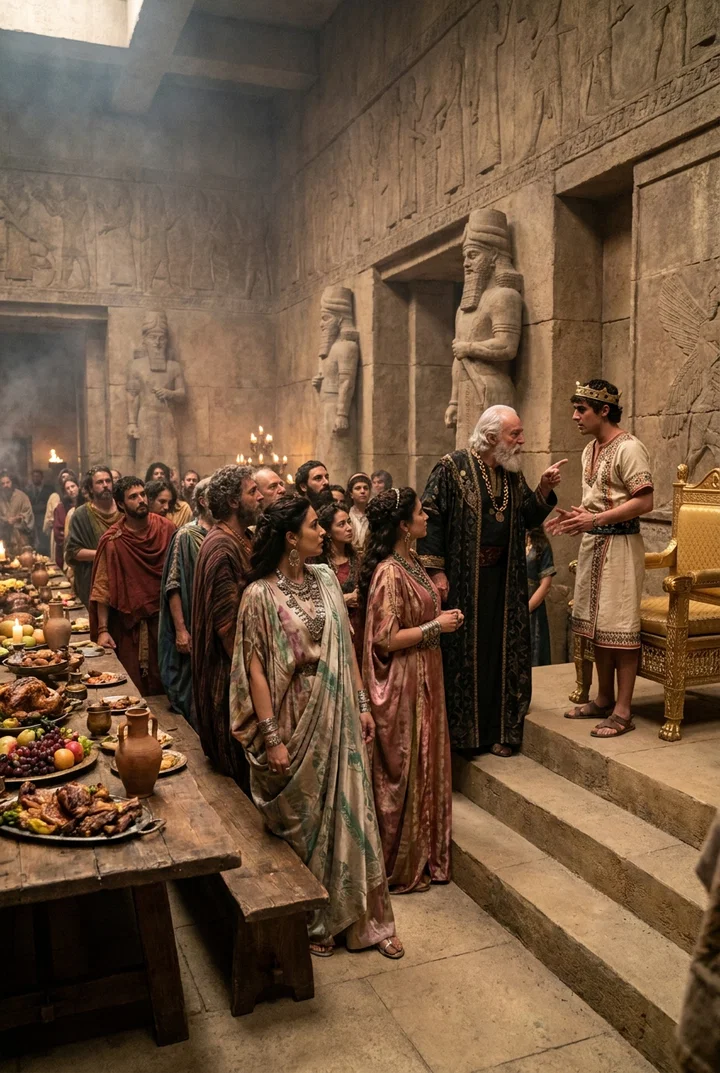
But hast lifted up thyself against the Lord of heaven; and they have brought the vessels of his house before thee, and thou, and thy lords, thy wives, and thy concubines, have drunk wine in them; and thou hast praised the gods of silver, and gold, of brass, iron, wood, and stone, which see not, nor hear, nor know: and the God in whose hand thy breath is, and whose are all thy ways, hast thou not glorified:
Translations
But have lifted up yourself against the Lord of heaven; and they have brought the vessels of his house before you, and you, and your lords, your wives, and your concubines, have drunk wine in them; and you have praised the gods of silver, and gold, of brass, iron, wood, and stone, which see not, nor hear, nor know: and the God in whose hand your breath is, and whose are all your ways, have you not glorified:
But hast lifted up thyself against the Lord of heaven; and they have brought the vessels of his house before thee, and thou, and thy lords, thy wives, and thy concubines, have drunk wine in them; and thou hast praised the gods of silver, and gold, of brass, iron, wood, and stone, which see not, nor hear, nor know: and the God in whose hand thy breath is, and whose are all thy ways, hast thou not glorified:
but hast lifted up thyself against the Lord of heaven; and they have brought the vessels of his house before thee, and thou, and thy lords, thy wives, and thy concubines, have drunk wine in them; and thou hast praised the gods of silver, and gold, of brass, iron, wood, and stone, which see not, nor hear, nor know: and the God in whose hand thy breath is, and whose are all thy ways, hast thou not glorified:
But hast lifted up thyself against the Lord of heaven; and they have brought the vessels of his house before thee, and thou, and thy lords, thy wives, and thy concubines, have drank wine in them; and thou hast praised the gods of silver, and gold, of brass, iron, wood, and stone, which see not, nor hear, nor know: and the God in whose hand thy breath is, and whose are all thy ways, thou hast not glorified.
but hast lifted up thyself against the Lord of heaven; and they have brought the vessels of his house before thee, and thou and thy lords, thy wives and thy concubines, have drunk wine in them; and thou hast praised the gods of silver, and gold, of brass, iron, wood, and stone, which see not, nor hear, nor know: and the God in whose hand thy breath is, and whose are all thy ways, hast thou not glorified:
but hast lifted up thyself against the Lord of heaven; and they have brought the vessels of his house before thee, and thou and thy lords, thy wives and thy concubines, have drunk wine from them; and thou hast praised the gods of silver and gold, of brass, iron, wood, and stone, which see not, nor hear, nor know; and the God in whose hand thy breath is, and whose are all thy ways, hast thou not glorified.
and against the Lord of the heavens thou hast lifted up thyself; and the vessels of His house they have brought in before thee, and thou, and thy great men, thy wives, and thy concubines, are drinking wine with them, and gods of silver, and of gold, of brass, of iron, of wood, and of stone, that are not seeing, nor hearing, nor knowing, thou hast praised: and the God in whose hand [is] thy breath, and all thy ways, Him thou hast not honoured.
but hast lifted up thyself against the Lord of the heavens; and they have brought the vessels of his house before thee, and thou and thy nobles, thy wives and thy concubines, have drunk wine in them; and thou hast praised the gods of silver and gold, of brass, iron, wood, and stone, which see not, nor hear, nor know; and the God in whose hand thy breath is, and whose are all thy ways, hast thou not glorified:
but, against the Lord of the heavens, hast uplifted thyself, and, the vessels of his house, have they brought before thee, and, thou, and thy nobles, thy wives and thy concubines, have been drinking, wine, therein, and, gods of silver and gold, of bronze, iron, wood and stone, which see not nor hear nor know, hast thou praised,—whereas, God, in whose hand thy breath is and whose are all thy ways, him, hast thou not glorified.
Berean Standard Bible, Majority Standard Bible
Instead, you have exalted yourself against the Lord of heaven. The vessels from His house were brought to you, and as you drank wine from them with your nobles, wives, and concubines, you praised your gods of silver and gold, bronze and iron, wood and stone, which cannot see or hear or understand. But you have failed to glorify the God who holds in His hand your very breath and all your ways.
but have lifted up yourself against the Lord of heaven; and they have brought the vessels of his house before you, and you and your lords, your wives, and your concubines, have drunk wine from them. You have praised the gods of silver and gold, of bronze, iron, wood, and stone, which don’t see, or hear, or know; and you have not glorified the God in whose hand your breath is, and whose are all your ways.
But you have been lifting yourself up against the Lord of heaven, and they have put the vessels of his house before you, and you and your lords, your wives and your women, have taken wine in them; and you have given praise to gods of silver and gold, of brass and iron and wood and stone, who are without the power of seeing or hearing, and without knowledge: and to the God in whose hand your breath is, and whose are all your ways, you have not given glory;
But hast lift thy selfe vp against the Lord of heauen, and they haue brought the vessels of his House before thee, and thou and thy princes, thy wiues and thy concubines haue drunke wine in them, and thou hast praysed the gods of siluer and golde, of brasse, yron, wood and stone, which neither see, neither heare, nor vnderstand: and the God in whose hand thy breath is and all thy wayes, him hast thou not glorified.
Douay-Rheims (Challoner revision)
But hast lifted thyself up against the Lord of heaven: and the vessels of his house have been brought before thee: and thou, and thy nobles, and thy wives, and thy concubines have drunk wine in them: and thou hast praised the gods of silver, and of gold, and of brass, of iron, and of wood, and of stone, that neither see, nor hear, nor feel: but the God who hath thy breath in his hand, and all thy ways, thou hast not glorified.
Pictures
Cross-references 20 of 46
- Daniel 5:30-31
In that night was Belshazzar the king of the Chaldeans slain.
Belshazzar’s defiance is followed by his death and Babylon’s fall to the Medes.
- Daniel 4:30-37
The king spake, and said, Is not this great Babylon, that I have built for the house of the kingdom by the might of my power, and for the honour of my majesty?
Nebuchadnezzar’s pride, judgment, and acknowledgment of God taught the lesson Belshazzar ignored.
- Daniel 4:17
This matter is by the decree of the watchers, and the demand by the word of the holy ones: to the intent that the living may know that the most High ruleth in the kingdom of men, and giveth it to whomsoever he will, and setteth up over it the basest of men.
The Most High rules human kingdoms and appoints their rulers.
- Daniel 5:2-4
Belshazzar, whiles he tasted the wine, commanded to bring the golden and silver vessels which his father Nebuchadnezzar had taken out of the temple which was in Jerusalem; that the king, and his princes, his wives, and his concubines, might drink therein.
Belshazzar’s feast profanes the temple vessels and praises idols.
- Isaiah 45:1-2
Thus saith the LORD to his anointed, to Cyrus, whose right hand I have holden, to subdue nations before him; and I will loose the loins of kings, to open before him the two leaved gates; and the gates shall not be shut;
God opens Babylon’s gates for Cyrus’s conquest.
- Daniel 5:5
In the same hour came forth fingers of a man’s hand, and wrote over against the candlestick upon the plaister of the wall of the king’s palace: and the king saw the part of the hand that wrote.
The hand writes judgment during Belshazzar’s feast profaning the sacred vessels.
- Daniel 5:27
TEKEL; Thou art weighed in the balances, and art found wanting.
Belshazzar is weighed and found wanting for his defiance.
- Daniel 4:34-37
And at the end of the days I Nebuchadnezzar lifted up mine eyes unto heaven, and mine understanding returned unto me, and I blessed the most High, and I praised and honoured him that liveth for ever, whose dominion is an everlasting dominion, and his kingdom is from generation to generation:
Nebuchadnezzar honored God’s sovereignty, but Belshazzar disregarded his confession.
- Revelation 14:7
Saying with a loud voice, Fear God, and give glory to him; for the hour of his judgment is come: and worship him that made heaven, and earth, and the sea, and the fountains of waters.
The call to fear God and give him glory repeats the honor Belshazzar withheld.
- Jeremiah 51:57
And I will make drunk her princes, and her wise men, her captains, and her rulers, and her mighty men: and they shall sleep a perpetual sleep, and not wake, saith the King, whose name is the LORD of hosts.
Babylon’s leaders become drunk and die in the city’s downfall.
- Daniel 5:6
Then the king’s countenance was changed, and his thoughts troubled him, so that the joints of his loins were loosed, and his knees smote one against another.
Belshazzar is terrified by God’s warning during the feast.
- Daniel 3:1-6
Nebuchadnezzar the king made an image of gold, whose height was threescore cubits, and the breadth thereof six cubits: he set it up in the plain of Dura, in the province of Babylon.
Nebuchadnezzar commands worship of a golden image, reflecting Babylonian idolatry.
- Proverbs 16:18
Pride goeth before destruction, and an haughty spirit before a fall.
Pride leads to downfall.
- Psalms 115:5-6
They have mouths, but they speak not: eyes have they, but they see not:
Both texts describe idols as lifeless and unable to see or hear.
- Daniel 5:1
Belshazzar the king made a great feast to a thousand of his lords, and drank wine before the thousand.
Belshazzar’s feast involved drinking from the sacred vessels.
- Romans 1:25
Who changed the truth of God into a lie, and worshipped and served the creature more than the Creator, who is blessed for ever. Amen.
Both describe idolatry as worshiping created things instead of glorifying God.
- Daniel 2:37-38
Thou, O king, art a king of kings: for the God of heaven hath given thee a kingdom, power, and strength, and glory.
Belshazzar knew God gave the kingdom
- Daniel 4:25
That they shall drive thee from men, and thy dwelling shall be with the beasts of the field, and they shall make thee to eat grass as oxen, and they shall wet thee with the dew of heaven, and seven times shall pass over thee, till thou know that the most High ruleth in the kingdom of men, and giveth it to whomsoever he will.
It teaches the lesson of God’s sovereignty that Belshazzar failed to heed.
- Isaiah 13:19
And Babylon, the glory of kingdoms, the beauty of the Chaldees’ excellency, shall be as when God overthrew Sodom and Gomorrah.
Foretells Babylon’s overthrow, fulfilled in its doom.
- Daniel 5:29
Then commanded Belshazzar, and they clothed Daniel with scarlet, and put a chain of gold about his neck, and made a proclamation concerning him, that he should be the third ruler in the kingdom.
Daniel was made third ruler in Belshazzar’s kingdom despite the announced doom.
Commentary
Each commentary is drawn from primary sources: the writings of Ellen G. White and Adventist pioneers and periodicals. Each commentary is separate. Its own words are not a quotation; follow the references to read the source passages.
Ellen G. White
27 sources
Belshazzar lifted himself against the Lord of heaven in deliberate pride and self-glorification, profaning the consecrated vessels of God's house by drinking wine in them with his lords and women at a drunken feast, and praising lifeless idols of metal and wood and stone instead of glorifying the God in whose hand his breath was and whose were all his ways.PK 529.2–3Ms 79, 1908, par. 8–12RH Sep 24, 1908PK 522.2PK 524.3 He did this with full light and opportunity to know his duty, for he knew how God had humbled Nebuchadnezzar for forgetting God and exalting himself and then restored him, yet he did not humble himself but repeated his sins.PK 529.2–3Ms 79, 1908, par. 8–12Ms 50, 1893, par. 27–30 God was present as unseen witness of the unholy scene, and in the midst of the feast judgment was pronounced by the writing on the wall, leaving the king and his guests terrified before God, his evil works reaching their full measure until he was slain and his kingdom passed to others.PK 529.2–3PK 5225T 244.4–5PK 524.3PK 524.2 Babylon was shattered and left desolate because in prosperity its rulers regarded themselves as independent of God and ascribed the glory of their kingdom to human achievement, persisting in presumption until they passed the limits of God's forbearance.Ms 50, 1893, par. 27–30PK 501.31MR 50.26MR 391.1–3RH Feb 6, 1900 Knowledge of God's dealings makes guilt greater and removes excuse, so those who know yet persist in disobedience and self-exaltation cannot excuse themselves, for every breath depends on God and no one can safely set aside His Word as the guide of thought and speech and deed.Ms 79, 1908, par. 8–12Lt 51a, 1897, par. 19–20PK 524.3Lt 81, 1896, par. 41–42
Belshazzar's Defiant Sacrilege
To lift up oneself against the Lord of heaven is deliberate pride and self-glorification, exalting self, trusting in one's own power, and reckoning without God, as the climax of pride and folly with harmful results.RH Sep 24, 1908PK 522.2PK 524.3Lt 65, 1895, par. 8–9 He profaned the sacred, consecrated vessels of God's house, including the golden vessels, by having them brought before him and drinking wine in them at a drunken feast with his thousand lords and princes, his wives and his concubines, making light of what God had chosen as sacred in sacrilegious mirth.PK 529.2–3Ms 79, 1908, par. 8–12RH Sep 24, 1908Ms 50, 1893, par. 27–30Lt 51a, 1897, par. 19–20 The bringing of the vessels before him and the drinking in them turned devotion consecrated to God toward revelry and dishonor.Lt 8, 1893, par. 14–155T 244.4–5SLP 10.1–13.1Lt 40a, 1878, par. 6–12Lt 23a, 1890, par. 9–10
He praised lifeless idols of silver and gold, of brass, iron, wood, and stone, which see not, nor hear, nor know, instead of glorifying God.PK 529.2–3Ms 79, 1908, par. 8–12RH Sep 24, 1908Ms 50, 1893, par. 27–30Lt 51a, 1897, par. 19–20 Those gods were soulless and unable to perceive or understand, yet he gave them the honor due to the living God.Lt 8, 1893, par. 14–155T 244.4–5SLP 10.1–13.1Lt 40a, 1878, par. 6–12Lt 23a, 1890, par. 9–10 The God he failed to glorify holds each person's breath in His hand and governs all their ways, sustaining life and ruling over all human ways.PK 529.2–3Ms 79, 1908, par. 8–12RH Sep 24, 1908Ms 50, 1893, par. 27–30Lt 51a, 1897, par. 19–20 Every breath and every way of life depends on Him, and stewardship entrusted by Him must be answered for.Lt 8, 1893, par. 14–15PK 524.3Lt 23a, 1890, par. 9–10
He acted with full light and opportunity to know God's will and his duty to obey, for he knew how God had humbled Nebuchadnezzar for forgetting God and glorifying himself and then restored him, and how pride had brought him low.PK 529.2–3Ms 79, 1908, par. 8–12Ms 50, 1893, par. 27–30Lt 51a, 1897, par. 19–20PK 522.2 Yet he did not humble himself, but neglected the means to know truth, misused power, repeated his grandfather's sins, and maintained a defiant attitude that wasted his opportunities.PK 529.2–3Ms 79, 1908, par. 8–12PK 522.2PK 522.1PK 524.3 Wine beclouded reason and took away reverence and self-control, leading to forgetting God.Lt 40a, 1878, par. 6–12 The feast was led by a proud, passionate, self-indulgent, gluttonous, drunken, corrupt king who took the lead in riot and blasphemy amid music and dancing, feasting and sparkling wine, and idolatrous sacrifices, with nothing held sacred.Lt 40a, 1878, par. 6–12
God was present as an unseen witness of the unholy scene, seeing the sacred vessels dedicated to Him used for profane purposes and hearing praise directed to idols, with a heavenly messenger watching on the night of the feast.Lt 8, 1893, par. 14–155T 244.4–5SLP 10.1–13.1Lt 40a, 1878, par. 6–12Lt 23a, 1890, par. 9–10
Judgment Falls on Babylon
His rebellion brought the divine judgment announced by the writing on the wall, for though he knew how God had humbled Nebuchadnezzar he failed to learn humility, profaned the vessels from God's house and praised lifeless idols instead of glorifying the God who holds each person's breath and governs all their ways.PK 529.2–3 With his thousand lords he profaned the golden vessels of Jehovah, making light of what God had chosen as sacred and defying God Himself in sacrilegious mirth, while God was a witness of the unholy scene.5T 244.4–5 In the midst of the feast a bloodless hand traced mysterious characters on the palace wall, filling the terrified king and courtiers with dread as their doom was pronounced by the servant of the Most High.PK 529.2–35T 244.4–5
His defiance brought him before the judgment of the eternal God, where his evil deeds and rebellion stood exposed.PK 524.2 It was a personal rebellion in which he exalted himself, trusted his own power, and failed to honor the God who held his life and ways in His hand, and his guilt awakened his conscience and left him terrified before God's presence.PK 524.3 He had to answer for the stewardship entrusted to him, with no excuse for wasting his opportunities and maintaining a defiant attitude.PK 524.3 God's power made the king and his guests terrified, and no one can hide the intensity of that fear before God's presence.PK 524.2
His evil works had reached their full measure, so that on the night of the feast, while a heavenly messenger watched him as he exalted himself against God, profaned the sacred vessels and honored lifeless idols instead of glorifying the God who sustained his life and governed his ways, God's protection and restraint were withdrawn.Lt 23a, 1890, par. 9–10 He was slain and his kingdom passed to others.Lt 23a, 1890, par. 9–10 The city was swept with destruction and left a desolate ruin of broken structures, towers and barren plain, as the Daniel 5 history of lifting up against the Lord of heaven ends.PK 522
The fall of Babylon came in an hour of feasting and revelry.Lt 109a, 1898, par. 5–8Ms 47a, 1898, par. 2–5 This was the literal fulfillment of divine prophecy in the history of nations, giving the reason Babylon was shattered and broken and passed away.PK 501.3 In prosperity its rulers regarded themselves as independent of God, lifted themselves against the Lord of heaven, forgot God, and ascribed the glory and honor of their kingdom to human achievement instead of glorifying Him whose power sustains human life and whose authority extends over all human ways.PK 501.31MR 50.2RH Feb 6, 1900 His pride and refusal to humble himself, defying the Lord of heaven despite knowing what God had done for Nebuchadnezzar, profaning the vessels from God's house by drinking from them and honoring lifeless idols instead of the God who sustained his breath and ruled all his ways, brought him to the limit of God's patience.Ms 50, 1893, par. 27–30 His presumption and blasphemy show that people can persist in defiance, insolence and disobedience until they pass the limits of God's forbearance, after which God intervenes, for divine forbearance does not continue without end.Ms 50, 1893, par. 27–306MR 391.1–3
Warnings for Later Generations
Knowing God's dealings makes guilt greater and removes all excuse, so that to lift up self against the Lord of heaven after knowing how He humbled Nebuchadnezzar for pride and self-glorification and then restored him is defiance without defense.Ms 79, 1908, par. 8–12Lt 51a, 1897, par. 19–20PK 524.3 To profane the vessels of God's house at a feast and praise lifeless idols of silver and gold, brass, iron, wood, and stone which see not nor hear nor know, while failing to honor the God in whose hand breath is and whose are all ways, is to trust one's own power and waste entrusted stewardship.Ms 79, 1908, par. 8–12Lt 51a, 1897, par. 19–20PK 524.3 Those who know God's counsel and judgments yet persist in disobedience, self-exaltation, and a defiant attitude will have conscience awakened and stand terrified before God's presence, and judgment follows disregard of His warnings.Ms 79, 1908, par. 8–12Lt 51a, 1897, par. 19–20PK 524.3
Condemnation falls not only for doing wrong but for failing to use opportunities and abilities to do right.SLP 14.1–211MR 98.3–99.3 Belshazzar had great opportunity to know the living God and do His will through what happened to Nebuchadnezzar when he forgot God, yet he disregarded that heaven-sent instruction and light and repeated his grandfather's sins.SLP 14.1–211MR 98.3–99.3Lt 201, 1899, par. 3–4 To reject such light forfeits the benefits obedience could have brought, and to neglect and fail to practice God's lessons brings judgment and coming calamity.SLP 14.1–211MR 98.3–99.3Lt 201, 1899, par. 3–4 To reckon without God is folly with harmful consequences, and those who trust their own judgment as if they had all wisdom, especially leaders who rule arrogantly, bring harm rather than glorifying God.Lt 65, 1895, par. 8–9
Belshazzar's feast warns that turning devotion and powers consecrated to God toward human beings or other earthly objects dishonors God and repeats idolatry.SLP 10.1–13.1Lt 40a, 1878, par. 6–12 God was present as unseen witness, seeing sacred vessels dedicated to Him used for profane purposes and hearing praise directed to idols, making a history to testify to the close of time.SLP 10.1–13.1Lt 40a, 1878, par. 6–12 The same sin is repeated when men praise sparkling wine in the heart and degrade their powers, and the only safeguard for youth and age is total abstinence from wine and tobacco, purposing like Daniel not to taste luxuries and wines at fashionable resorts and making God their strength.Lt 40a, 1878, par. 6–12
Profaning soulless golden vessels with a thousand lords in sacrilegious mirth, making light of what God chose as sacred and defying God Himself, warns against still greater guilt.5T 244.4–5 That greater guilt is tracing words of calumny and falsehood against the servants of Christ, which profanes not vessels but the characters of those Christ purchased by His blood.5T 244.4–5 God witnesses those deeds, and the bloodless hand that traced mysterious characters on the palace wall and filled the terrified king and courtiers with dread keeps faithful record of every act of injustice or oppression against God's people in the books of final accounts, weighing motives, character, life, soul, and every word in the balances of His sanctuary for punishment to the close of time.5T 244.4–5Lt 40a, 1878, par. 6–12
Because every breath and every way of life depends on God, no one can safely set aside God's Word as a guide.Lt 81, 1896, par. 41–42 That truth governs daily work, where God's Word must guide action and the Holy Spirit must direct thought, speech, and deed.Lt 81, 1896, par. 41–42 As Babylon lifted itself against the Lord of heaven in idolatry at an hour of feasting and reveling, so it will be at the end of the world in the present period of peculiar momentous importance.Ms 168, 1898, par. 1–3 Students of God's Word in the last days will work away from the customs and appointments of the world's great counselors, will not take the position that the Lord delays His coming and all things remain as they were from the beginning of creation, and only the wise virgins prepared with oil in their vessels with their lamps will go forth to meet the Bridegroom.Ms 168, 1898, par. 1–3
Sources
Pioneers and periodicals
93 sources
Daniel spoke the charge to Belshazzar at his feast on the night Babylon fell, after the handwriting on the wall interrupted the revelry and he was brought in to interpret it.RH Jan 9, 1900ST May 20, 1913RH Jul 1, 1902 To lift himself against the Lord of heaven was proud, deliberate defiance, shown when he had the consecrated vessels from God's house brought in and drank wine in them with his lords, wives and concubines.ST Jun 28, 1899ST Sep 20, 1905ST Sep 20, 1905RH May 11, 1869ST Feb 13, 1907 In that drunken revelry he praised lifeless gods of silver and gold, of brass, iron, wood and stone, which see not nor hear nor know, exalting them above the living Creator, while the God in whose hand his breath was and whose were all his ways he did not glorify.RH Jun 12, 1900ST Sep 6, 1899ST Jan 23, 1912ST Sep 17, 1885ST Feb 20, 1912 He sinned with full knowledge, refusing to humble his heart though he knew how God had given Nebuchadnezzar dominion and then humbled him for pride until he confessed that God rules in the kingdom of men.ST Sep 20, 1905RH May 11, 1869ST Oct 18, 1905 For that insult the hand was sent to write his judgment, that his kingdom was numbered and finished, weighed and found wanting, and divided to the Medes and Persians, and it was executed that very night when he was slain and Babylon fell.RH Nov 26, 1857ST Sep 6, 1899ST Sep 10, 1885ST Feb 13, 1907ST May 20, 1897 Because every person's breath and ways are in God's hand every moment, life and rule belong to Him and He must be glorified, and the fall of proud Babylon stands as a warning that nations and men who set self against Him will be weighed and found wanting.RH Nov 26, 1857ST Sep 6, 1899ST Aug 2, 1910ST Apr 14, 1898RH Feb 27, 1900
Night and Historical Setting
The words are Daniel's direct personal rebuke to Belshazzar at his idolatrous feast on the night Babylon fell.RH Jan 9, 1900ST May 20, 1913ST Oct 5, 1904 God had interrupted the revelry by sending forth a hand to write the doom of Babylon upon the wall, and Daniel was then brought in to read and interpret it.RH Jan 9, 1900ST May 20, 1913ST Nov 28, 1892 Daniel first refused the offer of purple clothing, a gold chain, and place as third ruler in a kingdom about to end, then rehearsed the history of what God had done for Nebuchadnezzar in giving dominion and humbling pride, then gave the rebuke of this verse, and then gave the interpretation of the writing.RH Jan 9, 1900ST May 20, 1913ST Oct 5, 1904 The account belongs to the handwriting on the wall in the last years of the Babylonian kingdom and was studied for its practical lessons.RH Jan 9, 1900RH Jul 1, 1902ST Nov 28, 1892 In standing before the wicked king in presence of court, officers, and lords and telling him he had lifted himself against the Lord of heaven, Daniel showed himself a faithful interpreter of God's providence, ready on the hour to give God's message for that test, and fearless in not softening the pointed message for fear of royal displeasure, taking up the heavy cross of reproof under sense of unworthiness simply because God and duty required it.RH Jan 9, 1900ST Oct 5, 1904RH Mar 31, 1868
Belshazzar was the son of Nabonidus, also called Nabonadius, and reigned conjointly with his father, associated with him upon the throne as second ruler and eldest son and heir while his father gave his last days to religious devotions, worship of the gods, and temple-building and left grave affairs of state to the pleasure-loving son.ST Dec 24, 1894STST May 20, 1913 Because he was himself only the second ruler he could offer Daniel no higher place than third ruler in the kingdom.ST May 20, 1913ST May 20, 1913 He was the grandson of Babylon's mightiest king Nebuchadnezzar, and as the last king of rich, proud, luxurious, voluptuous Babylon, under whom the kingdom reached its height in pride and luxury and then came to an end, he is described as weak, dissolute, sacrilegious, and cowardly, answering to the lion whose wings were plucked.STST Aug 13, 1896 His reign began in 549 B.C., he was made joint king about B.C. 540, his third year was B.C. 538, and his last year when he was slain and Babylon's supremacy ended was the same year as the visions of Daniel 8 and Daniel 9, while Daniel received the dream recorded in Daniel 7:1 in Belshazzar's first year.ST Dec 24, 1894ST Jul 10, 1901ST Apr 5, 1877 Those who held that he reigned jointly with his absent father Evil Merodach placed the same charge of deliberate rebellion against the Lord of heaven upon him as grandson of Nebuchadnezzar.ST Aug 13, 1896
The account of Belshazzar is exactly confirmed by Babylonian records and proves true against the claim that no such king existed, so that the biblical record stands as history, not myth.ST Jul 23, 1885RH Aug 17, 1905ST Oct 23, 1901 Nabonidus left his son Belshazzar in command of Babylon while he himself took the field against Cyrus, and Cyrus then advanced on and captured the city.ST Jul 23, 1885 Nabonidus names Belshazzar in prayer as his son and joint ruler, calling him eldest son and offspring of his heart on a cuneiform cylinder from about 556-539 that records Nabonidus' prayer to the moon-god for himself and for Belshazzar his son, and an ancient inscription mentions Belshazzar's death.RH May 13, 1909ST May 20, 1913ST Oct 23, 1901 This twofold witness written in stone and in Scripture agrees without collusion and proves the record in Daniel true and reliable.ST May 20, 1913 The hall where the feast took place is claimed to have been uncovered in the ruins of ancient Babylon.RH Apr 6, 1911
On that night Babylon was sixty miles in circumference with massive walls, a great defending army, and provisions for twenty years, and after a siege of nearly two years scoffed at Cyrus from its walls.STRH Nov 26, 1857 The king and the whole city gave themselves in apparent security to an annual festival in which the whole night was usually spent in mirth, feasting, drunkenness, revelry, and dissipation, an impious feast with Belshazzar's lords, wives, and concubines drinking wine from the sacred vessels.RH Nov 26, 1857ST Jan 15, 1880ST May 20, 1913 In false security, disorder, and confusion the huge brass river gates were all left open and unguarded, so no one noticed the Euphrates going down.STRH Nov 26, 1857ST Jan 15, 1880 Cyrus's soldiers, entering its comparatively dry channel, found free entrance into the heart of the city and surprised the palace, and the night's work cost them kingdom and freedom, ending with Belshazzar slain while vainly shut up feasting and drinking with his lords instead of driving away his foes.STRH Nov 26, 1857ST Jan 15, 1880 In that overthrow the prophecies concerning that destruction were literally fulfilled, when the two-leaved gates were opened and the gates were not shut and the mighty men of Babylon forbore to fight, remained in their holds, failed in might, and became as women.RH Nov 11, 1862 In B.C. 538 the Medes under Darius and the Persians led by Cyrus, Darius's nephew, took the city by stratagem, which is identified as how the Babylonian kingdom was overthrown.ST May 20, 1913RH Jun 27, 1878
The verse belongs to Daniel 5:1-31, the account of Belshazzar's feast and the taking of Babylon, which fulfilled a previous prediction about the Babylonian Empire.RH Jan 9, 1900 The handwriting on the wall was fully explained before Babylon's predicted overthrow swiftly followed.RH Sep 2, 1909 The chapter records the end of Babylonian rule and the rise of the power that succeeded it, and describes the state of affairs in the city that night.ST Oct 29, 1885 Daniel 5 is part of the historical part of the book while Daniel 7 begins the prophetical part, with chronological order set aside to keep the historical writings together and the prophetical writings uninterrupted.ST Apr 5, 1877 The narrative chapter is nevertheless more or less prophetic and gives rulers and nations practical lessons for life.ST Oct 21, 1908
Defiance Against Heaven
To lift himself against the Lord of heaven was pride and contempt, presumption and deliberate defiance, setting self above God and taking all glory to himself.ST Jun 28, 1899ST Sep 20, 1905ST Sep 20, 1905ST Jun 28, 1899ST Mar 18, 1903 It was a public, bold and blasphemous insult to His face, dashing himself against the Rock of Ages, despising earthly rulers and armies as well as God despite having received kingdom and power as an inheritance, and trusting mighty defenses while feasting as danger threatened.ST Jun 28, 1899ST Sep 20, 1905RH Mar 8, 1915 The act turned holy things to an unholy and selfish use, and showed that apparent victory and possession of sacred things does not defeat God's purpose but stands against the true religion of humble faith.ST Jun 28, 1899ST Mar 18, 1903
He profaned the sacred, consecrated vessels taken from God's house and temple at Jerusalem by having them brought before him and drinking wine in them with his lords, wives and concubines.RH May 11, 1869ST Feb 13, 1907ST Jan 18, 1883ST Aug 13, 1896ST Sep 17, 1885 The feast gathered a thousand lords with golden goblets amid lavish eating, drinking and merriment.RH May 11, 1869ST Feb 13, 1907 The vessels were treated with contempt because they had been dedicated to God, debasing what was holy to honor Baal the sun-god and his images and to celebrate Babylon's power over the Hebrews.ST Aug 13, 1896ST Sep 17, 1885ST Nov 26, 1912 In the setting of the fall this drunken revelry with benumbed conscience connects intemperance, luxurious revelry and self-pleasure with contempt for God and the downfall of kingdoms.ST Feb 20, 1912ST Nov 26, 1912
He praised the gods of silver and gold, of brass, iron, wood and stone, which see not nor hear nor know.ST Jan 23, 1912ST Sep 17, 1885ST Feb 20, 1912RH Mar 8, 1915 They are lifeless, worthless, no gods, in contrast to the living, compassionate Creator and God of mercy.ST Jan 23, 1912ST Sep 17, 1885 In drunken revelry to praise them was to exalt them above the Creator and bow to Baal.ST Jan 23, 1912ST Sep 17, 1885 The verse thus shows the folly of worshiping idols that cannot see, hear or know.ST Feb 20, 1912
The God he did not glorify is the One in whose hand his breath is and whose are all his ways, who holds each person's breath and life in His hand every moment and governs every course and affair.RH Sep 24, 1908RH Jun 12, 1900ST Sep 6, 1899ST Sep 10, 1885ST Jan 15, 1880 Life and authority belong to God, so refusing to honor Him while giving worship to false gods is rebellion against the God on whom life, rule and future depend.RH Jun 12, 1900ST Sep 10, 1885ST May 20, 1897 Forgetting His teaching and power and choosing self-pleasure over doing good, Belshazzar failed to give the first and highest service due from king to lowliest.RH Jun 12, 1900ST Sep 6, 1899
Knowledge Rejected and Judged
Belshazzar did not humble his heart though he sinned with full knowledge of how the Most High had humbled Nebuchadnezzar for pride until he learned that God rules in the kingdom of men and appoints over it whom He will.ST Sep 20, 1905RH May 11, 1869ST Oct 18, 1905STST Aug 13, 1896 He knew from public record and privilege that God had given Nebuchadnezzar dominion, that the attempt to force God's servants to worship the great golden image on the plain of Dura utterly failed with the death of the warriors and the miraculous preservation in the furnace, and that Nebuchadnezzar was humbled by seven years of insanity and exile until restored to confess that God does according to His will and is able to abase those who walk in pride.ST Sep 20, 1905RH May 11, 1869ST Oct 18, 1905 He continued in sin even after seeing how God had punished the Jews, repeated the sins for which Nebuchadnezzar had been reproved and punished, rejected the gospel of the kingdom proclaimed by Daniel and his companions, and refused the warning and saving light that could have retained his kingdom and life.RH May 11, 1869ST Aug 13, 1896ST Jun 21, 1883
This daring and insulting challenge to God is the reason the part of the hand was sent from God to write the judgment.RH Nov 26, 1857ST Sep 10, 1885RH May 11, 1869 The writing declared that God had numbered his kingdom and finished it, weighed him in the balances of justice and found him wanting by God's estimate of moral worth, and divided his kingdom and given it to the Medes and Persians.RH Nov 26, 1857ST Sep 6, 1899ST Sep 10, 1885ST Jan 15, 1880ST Feb 13, 1907 Ignoring God's dealings and true wisdom in government brings ruin, and by failing to recognize God as giver of life Belshazzar lost life and kingdom.RH Nov 26, 1857ST Sep 6, 1899ST May 20, 1897
The judgment was carried out that very night when Babylon fell and Belshazzar was killed and Darius the Median took the kingdom.RH Nov 26, 1857ST Feb 13, 1907ST May 20, 1897ST May 20, 1913 In B.C. 538 the Medes under Darius and the Persians led by Cyrus, Darius's nephew, took the city by stratagem, and though secure within walls, when the promised time came at the end of Jerusalem's seventy years of captivity for Babylon's king to be punished, he was slain and his rule ended.RH Nov 26, 1857ST May 20, 1913ST Apr 9, 1896 This proved that the Most High rules in the kingdom of men and gives it to whomever He will, and that when rulers do not serve His purpose their days are numbered.ST Apr 9, 1896 No one perished in the fall except by his own choice.RH Nov 26, 1857
The chapter reveals God as Judge to nations and rulers, for He holds a nation accountable, weighs character, and sets it aside when it can no longer serve His glory.ST Jan 23, 1912ST Jul 16, 1912ST Dec 1, 1914 In long-suffering mercy He does not overthrow nations or peoples until their iniquity is full and there is no more hope of good from them.ST Feb 10, 1898 Belshazzar's sacrilege filled Babylon's cup of iniquity and showed the kingdom no longer fit to rule, it reached God's limit of mercy, took the last step across a hidden boundary beyond return, and sealed the fate sufficient for the handwriting.ST Aug 13, 1896ST May 20, 1913
God Who Holds Life
God holds every person's breath in His hand, which means life comes from Him every moment and not only at creation in the beginning.ST Aug 2, 1910ST Apr 14, 1898RH Mar 21, 1865 Man was not made to have life in himself, but was made receptive so as to receive life fresh from God every day as water flowing from a fountain.ST Apr 14, 1898 Life does not dwell in the earth, where death is widespread, but has its source above the ground, hidden in God, and life is found only in Him.ST Aug 2, 1910 Every word coming from the Lord everywhere in earth and air proclaims this truth as a song of immortal youth, and all nature teaches it in its own holy speech — shining stars, dazzling suns, circling planets, the round earth, winds sweeping over the deep, waves breaking on the shore, rest-giving breezes, whispering zephyrs, rippling streams, woodlands, meadows, valleys, and fragrant blooming flowers all sing and teach that life is only in God.ST Aug 2, 1910 Whoever bends a listening ear can hear it, whoever trains a free vision can see it, all who heed wisdom's lessons can read it, and all who give their love to truth can know it.ST Aug 2, 1910 The God so identified is the one who holds a person's life and breath and directs all their ways, and human life and every person's way are in His hands, including God-given bodily and mental powers which are borrowed strength to be consecrated to Him rather than treated as self-owned or lived with as though needing no God.RH Feb 27, 1900RH Feb 27, 1900ST Feb 26, 1902 To know what He has done and yet despise that knowledge, defy Him, and fail to glorify Him brings judgment as weighed, found wanting, and set aside, with Babylon perishing as the proof.RH Feb 27, 1900RH Feb 27, 1900
He rules over human kingdoms, appoints their rulers, gives dominion, and deserves the glory due Him, so that kings owe Him homage and allegiance.RH Jun 12, 1900ST Oct 18, 1905RH Jun 12, 1900 Nebuchadnezzar's chastening had taught that God rules human kingdoms, and Belshazzar should have learned from that lesson yet knowingly exalted himself against the Lord of heaven.RH Jun 12, 1900ST Oct 18, 1905ST Oct 23, 1901 Life and authority belong to God, and to refuse to honor Him while giving worship to false gods, taking all glory to self, profaning the sacred vessels and praising lifeless idols, is rebellion against Him.RH Jun 12, 1900ST Apr 9, 1896RH Jun 12, 1900 All power and honor are gifts from God and give no ground for self-glorification or pride in borrowed strength, and putting human pride and false worship in God's place led to Babylon's fall.RH Jun 12, 1900 By failing to recognize God as giver of life and governor of all ways, Belshazzar lost life and kingdom, for when rulers do not serve His purpose their days are numbered, as proved when Babylon was weighed in the balances of His righteous purposes and found wanting and Medo-Persia under Cyrus overthrew her in B.C. 538.ST Apr 9, 1896ST Nov 28, 1900
Idols of silver and gold, of brass, iron, wood and stone are worthless, lifeless no-gods because they cannot see, hear or know, while the God of mercy is living and compassionate.RH Apr 4, 1907 To worship them instead of the Creator who sustains breath and directs ways is folly and contempt that brings accountability.RH Apr 4, 1907
Because He holds life and governs all ways, He must be recognized, respected and glorified, and life and future depend on whether one honors Him.ST Sep 6, 1899RH Apr 6, 1905 God will weigh each person's character by His standard of moral worth, and the sentence of weighed and found wanting applies beyond Belshazzar to all who may likewise be found wanting.ST Sep 6, 1899ST Jan 15, 1880 Every person depends on God for life and is accountable to Him in all ways, even sinners who keep outward religious duties but have not always loved, obeyed and pleased God, which exposes guilt and need of pardon.RH Dec 15, 1859 Since God is sovereign over His subjects His commands bind everyone and even the least requirement is not to be treated lightly or disobeyed in rebellion. To refuse to hear God's Word even for a few minutes, making excuses to avoid His services, while gladly walking miles through hot sun and laboring night and day in beer-drinking, drumming, dancing and merrymaking, is failure to respect the God who keeps life and is untiring work in the service of Satan.RH Apr 6, 1905 As the life-sustaining Lord of hosts who sits upon the circle of the earth with its inhabitants as grasshoppers and in whom all live and move and have being, He invites everyone in every vocation — the mechanic at his trade, the merchant at his store, the farmer as he sows his seed — to prove Him by returning tithe, promising to open the windows of heaven and pour out blessing beyond room to receive it, to rebuke the devourer and preserve the fruits of the ground, so that all nations call His obedient people blessed and happy. Loyalty to Him requires refusing human commands when they conflict with His law and honoring His law above earthly powers.ST Sep 6, 1899
Babylon Foretold and Repeated
The night of the feast and the taking of the city fulfilled earlier prediction concerning the Babylonian empire, with the handwriting fully explained before the predicted overthrow swiftly followed and the prophecies of that destruction literally fulfilled when the two-leaved gates were opened and were not shut and the mighty men forbore to fight, remained in their holds, failed in might and became as women.RH Jan 9, 1900RH Sep 2, 1909RH Nov 11, 1862 Though secure within walls, the king was judged when the promised time came to punish Babylon's king at the end of Jerusalem's seventy years of captivity, and he and his princes drinking that night were slain, so that anyone setting himself against God will be found wanting. The incidents of that account stand like present conditions concerning desecration of sacred time, decrees interfering with religious convictions, penalties for violating them, nearness of the end of worldly kingdoms, glorious deliverance promised, and duty to the world in view of all this.RH Jan 9, 1900
The overthrow was God's working for His people, opening the way for them to regain liberty and religious privileges.ST Dec 19, 1892ST Apr 23, 1912 Association with Daniel in connection with that overthrow led Cyrus to recognize the true God as great above all other gods.ST Dec 19, 1892
Ancient Babylon's contempt for God and confidence in its permanence before its fall serves as a prophecy of modern Babylon, which likewise exalts itself and faces inevitable fall, with the meaning of Babylon later applied to the power represented as Babylon the Great.RH Oct 11, 1915RH Jul 31, 1900 The charge of lifting up self against the Lord of heaven and refusing Him His rightful place reveals Babylon's defining principle of humanity lifting itself against God and shutting Him out of human nature.RH Oct 21, 1902 That principle reappears covertly where God manifested in the flesh is professed but His coming in sinful flesh like ours is denied.RH Oct 21, 1902 It is repeated openly in adopting the dogma of infallibility, which makes repentance for the past and reform for the future impossible and seals destruction, after knowledge of the true God had been revealed and the gospel of the kingdom proclaimed made the insult to His face by drinking the wine of Babylon from the vessels of His house while praising false gods sufficient cause for the handwriting.RH Aug 21, 1900 After Nebuchadnezzar returned to worship, later kings turned again and the empire died apostate in final apostasy.ST Jul 6, 1915 The story of God's dealings with Nebuchadnezzar, through which the gospel of the kingdom had been thoroughly declared with clearness and power so that it need not be repeated to leave men without excuse, must now be made known as the fullness of the message of Revelation 14:6-12, preaching the gospel of the kingdom for a witness wherever it is told in demonstration of the Spirit and of power, so that men make their final choice either to glorify God or to lift themselves against Him, and no one perishes except by his own choice.RH Jun 19, 1900 Individuals holding that teaching may still be saved through personal repentance and faith, and therefore the call is now sounded to come out of her.RH Aug 21, 1900
Lavish feasting, eating and drinking and merriment with a thousand lords drinking wine from golden goblets in defiance of the Lord of heaven, forgetting His teaching and power and choosing self-pleasure over doing good while the Medes threatened, with confidence in defenses and provisions, stands under God's handwriting on walls more enduring than palaces, unseen but present.ST May 22, 1907ST Oct 18, 1905 That writing declares that when they say peace and safety then sudden destruction comes and they shall not escape, as Belshazzar saw too late and died that night and his kingdom passed away, so the same feasting for universal peace under a worldwide cry of peace stands under the same sentence.ST May 22, 1907 Like revelries at Waterloo on the eve of Napoleon's downfall and like the abandoned feast on the fatal night the kingdom was handed to Darius the Mede, it shows men feasting and insisting great military preparation means only peace while destruction marches in plain sight.ST May 19, 1898 It warns against voluntarily closing the senses to a military spirit such as the world has never known, which marks the last days when the nations are angry.ST May 19, 1898 The same pattern applies to San Francisco, whose injustice and love of wealth are grounds for divine judgment, with disaster as a warning calling people to recognize God and His message and to honor Him whose hand sustains life and directs every person's ways.RH Feb 20, 1908
Warning and Duty Today
What was written beforehand was written for instruction, and the fall of Belshazzar, last king of rich, proud, luxurious and voluptuous Babylon, is a most striking lesson preeminently applicable today and profitable to study as truth for today.STSTST His feast and the taking of Babylon in Daniel 5:1-31 fulfilled previous prediction about the Babylonian empire, and its incidents resemble present conditions concerning desecration of sacred time, decrees interfering with religious convictions, penalties for violating them, nearness of the end of worldly kingdoms, promised glorious deliverance, and duty to the world in view of it all.RH Jan 9, 1900 He was not sole king but reigned conjointly with his father Nabonadius, who gave his last days to religious devotions and temple-building and left grave affairs of state to the pleasure-loving Belshazzar, grandson of Nebuchadnezzar, Babylon's mightiest king.ST The chapter presents his profaning of the sacred vessels and praising lifeless idols while the living God held his breath and directed his ways as deliberate rejection of God's authority and of prophetic messages given to Babylon, and refusal to heed them brought judgment and fall.ST Nov 26, 1912
God weighed Belshazzar and found him wanting, finished his kingdom and gave it to the Medes and Persians, and carried it out that very night when Babylon fell and he was slain.RH Nov 26, 1857 His guilt was profaning vessels from God's house, praising lifeless idols, exalting himself, and failing to honor the God who sustained his life and governed all his ways, though accountable to Him.RH Nov 26, 1857ST Sep 6, 1899 The sentence applies beyond him: people are measured by God's estimate and standard of moral worth, each character will be weighed, and life and future depend on honoring Him.RH Nov 26, 1857ST Sep 6, 1899ST Jan 15, 1880 Anyone who sets self against God will be found wanting, and those who know what God has done yet despise that knowledge, defy Him and refuse to humble themselves are humbled by judgment, weighed, found wanting and set aside like Belshazzar.RH Feb 27, 1900RH Feb 27, 1900 Though secure within walls, when the promised time came at the end of Jerusalem's seventy years of captivity for Babylon's king to be punished, prophecy was fulfilled. The verse thus exposes sinners who keep outward duties yet have not loved, obeyed and pleased God, showing guilt and need of pardon.
Breath is held in God's hand and must be returned to Him in glory, for He controls breath and every person's way, and failure to glorify Him with breath is corrupt breathing. Belshazzar dwelt in a figurative atmosphere of self-love, error and hatred that must be shunned, and on the night the handwriting doomed him he was rebuked for not using breath to glorify God. God-given bodily and mental powers are borrowed strength to be consecrated to Him rather than treated as self-owned by those who live as though they need no God.ST Feb 26, 1902 Since God is sovereign over subjects and His commands bind everyone in every way, even the least requirement is not to be treated lightly or disobeyed in rebellion. To refuse to hear God's Word even briefly and make excuses to avoid His services, while gladly walking miles through hot sun and laboring night and day in beer-drinking, drumming, dancing and merrymaking, is failure to respect the God who keeps life and is untiring work in Satan's service.RH Apr 6, 1905 Remembering that He holds each breath brought comfort in poor health, yet the rich man's sudden death despite plans for tomorrow shows no one can control or secure life while neglecting God and left without hope.RH Mar 21, 1865ST Apr 9, 1912
The drunken feast connects revelry and benumbed conscience with contempt for God and downfall of kingdoms, for Belshazzar defied the Lord of heaven by using temple vessels for drink and praising lifeless gods that cannot see, hear or know.ST Feb 20, 1912 His luxurious revelry and pride accompanied Babylon's ruin, showing wealth and luxury foster vice and decay that bring a nation down.ST Sep 5, 1911 On that night of impious feasting the gates were left open while soldiers were drunk and officers overconfident and morally abandoned, letting Cyrus's army enter.RH Oct 11, 1915 Belshazzar with a thousand lords drinking wine from golden goblets amid lavish eating, drinking and merriment stands under God's handwriting on more enduring walls than his palace, unseen but present, declaring that when they say peace and safety sudden destruction comes and they shall not escape.ST May 22, 1907 He saw it too late, died that night, his kingdom passed away, and the same feasting for universal peace under a worldwide cry of peace stands under the same sentence.ST May 22, 1907 Neither wealth nor fame can reckon with death's stern summons when the angel testifies God gives breath, and the rich man's sudden death proves none controls life while neglecting God.ST Nov 5, 1912ST Apr 9, 1912
Daniel standing before the wicked king in presence of court, officers and lords telling him he had lifted himself against the Lord of heaven did not lack humility but acted from it.RH Mar 31, 1868 Under sense of unworthiness and weakness he took up the heavy cross of hard, unpleasant reproof simply because God and duty to His cause required it, prompted by God's high claims as Creator and Giver of existence and every good, his own unworthiness, and the necessity of doing whatever God required as no more than reasonable duty in view of the great sacrifice, if it would meet God's approbation.RH Mar 31, 1868 Faithful and ready through every earlier step of truth, he was ready on the hour to give God's message for that test, revealing the king's character and marking the nation's sinking into ruin, serving as interpreter of God's providence to a ruler.RH Feb 27, 1900RH Feb 20, 1900 Faithful study brings Heaven's approval as his account exemplifies, and his faithful service and praise of God contrast with Belshazzar's self-exaltation, refusal to acknowledge God, and dishonor by vessels and idols.RH Feb 11, 1915RH Jun 19, 1900 The handwriting images conscience bringing guilty actions into review and awakening remorse with horror, warning none escapes reckoning.RH Aug 9, 1864 While Belshazzar is remembered in infamy for opposition, God's purposes and word endure and His kingdom proves superior, with Daniel surviving as witness.
Sources