Daniel 5:2
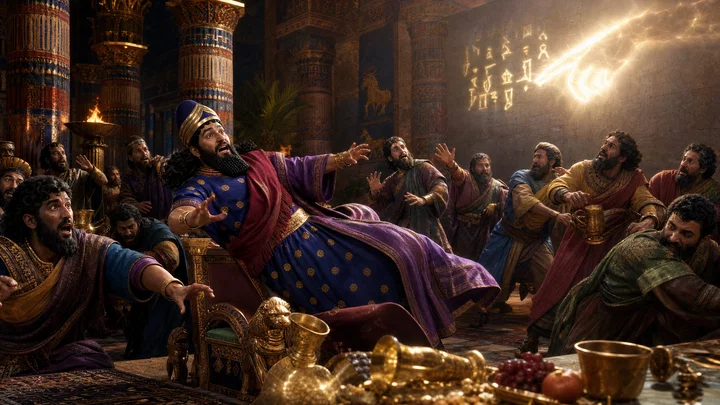
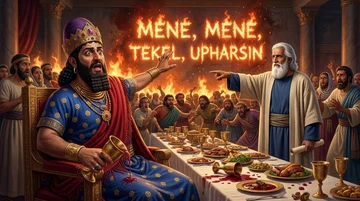
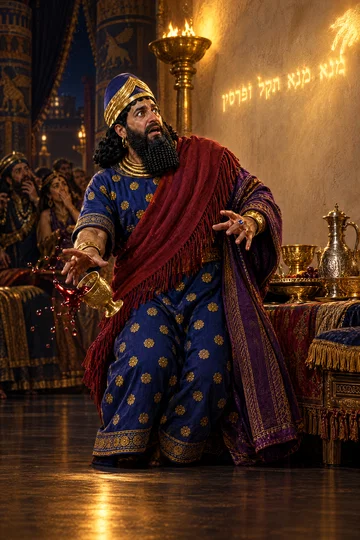
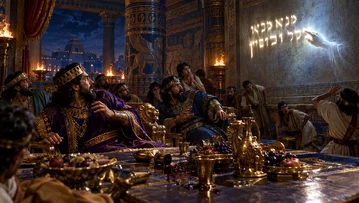
Belshazzar, whiles he tasted the wine, commanded to bring the golden and silver vessels which his father Nebuchadnezzar had taken out of the temple which was in Jerusalem; that the king, and his princes, his wives, and his concubines, might drink therein.
Translations
American King James Version, King James Version, KJV Cambridge Paragraph Bible
Belshazzar, whiles he tasted the wine, commanded to bring the golden and silver vessels which his father Nebuchadnezzar had taken out of the temple which was in Jerusalem; that the king, and his princes, his wives, and his concubines, might drink therein.
Belshazzar, while he tasted the wine, commanded to bring the golden and silver vessels which his father Nebuchadnezzar had taken out of the temple which was in Jerusalem; that the king, and his princes, his wives, and his concubines, might drink in them.
Belshazzar, whiles he tasted the wine, commanded to bring the golden and silver vessels which Nebuchadnezzar his father had taken out of the temple which was in Jerusalem; that the king and his lords, his wives and his concubines, might drink therein.
Belshazzar, while he tasted the wine, commanded to bring the golden and silver vessels which Nebuchadnezzar his father had taken out of the temple which was in Jerusalem; that the king and his lords, his wives and his concubines, might drink therefrom.
Belshazzar hath said — while tasting the wine — to bring in the vessels of gold and of silver that Nebuchadnezzar his father had taken from the temple that [is] in Jerusalem, that drink with them may the king, and his great men, his wives, and his concubines.
Belshazzar, while he tasted the wine, commanded to bring the golden and silver vessels that Nebuchadnezzar his father had taken out of the temple which was in Jerusalem; that the king and his nobles, his wives and his concubines, might drink in them.
Belshazzar, gave word, at the flavour of the wine, to bring the vessels of gold and silver, which Nebuchadnezzar his father, had brought forth, out of the temple which was in Jerusalem,—that the king and his nobles, his wives and his concubines, might drink therein.
Berean Standard Bible, Majority Standard Bible
Under the influence of the wine, Belshazzar gave orders to bring in the gold and silver vessels that Nebuchadnezzar his father had taken from the temple in Jerusalem, so that the king could drink from them, along with his nobles, his wives, and his concubines.
Belshazzar, while he tasted the wine, commanded that the golden and silver vessels which Nebuchadnezzar his father had taken out of the temple which was in Jerusalem be brought to him, that the king and his lords, his wives and his concubines, might drink from them.
Belshazzar, while he was overcome with wine, gave orders for them to put before him the gold and silver vessels which Nebuchadnezzar, his father, had taken from the Temple in Jerusalem; so that the king and his lords, his wives and his other women, might take their drink from them.
And Belshazzar whiles he tasted the wine, commanded to bring him the golden and siluer vessels, which his father Nebuchad-nezzar had brought from the Temple in Ierusalem, that the King and his princes, his wiues, and his concubines might drinke therein.
Douay-Rheims (Challoner revision)
And being now drunk he commanded that they should bring the vessels of gold and silver which Nabuchodonosor his father had brought away out of the temple, that was in Jerusalem, that the king and his nobles, and his wives and his concubines, might drink in them.
Pictures
Cross-references 20 of 44
- Daniel 5:30-31
In that night was Belshazzar the king of the Chaldeans slain.
Belshazzar is slain that night, and the kingdom passes to the Medes.
- Daniel 5:25-28
And this is the writing that was written, MENE, MENE, TEKEL, UPHARSIN.
The handwriting announces judgment and declares the king weighed and found wanting.
- Daniel 4:31-37
While the word was in the king’s mouth, there fell a voice from heaven, saying, O king Nebuchadnezzar, to thee it is spoken; The kingdom is departed from thee.
Nebuchadnezzar’s humiliation and testimony warned Belshazzar that God rules and humbles the proud.
- Jeremiah 51:57
And I will make drunk her princes, and her wise men, her captains, and her rulers, and her mighty men: and they shall sleep a perpetual sleep, and not wake, saith the King, whose name is the LORD of hosts.
Babylon’s rulers become drunk and die as the city falls.
- Daniel 5:23
But hast lifted up thyself against the Lord of heaven; and they have brought the vessels of his house before thee, and thou, and thy lords, thy wives, and thy concubines, have drunk wine in them; and thou hast praised the gods of silver, and gold, of brass, iron, wood, and stone, which see not, nor hear, nor know: and the God in whose hand thy breath is, and whose are all thy ways, hast thou not glorified:
Belshazzar profaned the temple vessels and failed to glorify God.
- Isaiah 45:1-2
Thus saith the LORD to his anointed, to Cyrus, whose right hand I have holden, to subdue nations before him; and I will loose the loins of kings, to open before him the two leaved gates; and the gates shall not be shut;
God foretold that gates would be opened before Cyrus, enabling Babylon’s capture during the feast.
- Daniel 3:24-28
Then Nebuchadnezzar the king was astonied, and rose up in haste, and spake, and said unto his counsellors, Did not we cast three men bound into the midst of the fire? They answered and said unto the king, True, O king.
Guests at the feast had witnessed God’s power and the Hebrews’ rescue from the fiery furnace.
- Revelation 14:8
And there followed another angel, saying, Babylon is fallen, is fallen, that great city, because she made all nations drink of the wine of the wrath of her fornication.
Belshazzar’s drinking from the temple vessels foreshadows Babylon’s fall.
- Isaiah 47:11
Therefore shall evil come upon thee; thou shalt not know from whence it riseth: and mischief shall fall upon thee; thou shalt not be able to put it off: and desolation shall come upon thee suddenly, which thou shalt not know.
Babylon’s sudden ruin comes while it feels secure, fulfilled that feast night.
- Jeremiah 25:11-12
And this whole land shall be a desolation, and an astonishment; and these nations shall serve the king of Babylon seventy years.
Babylon’s overthrow followed the end of the prophesied seventy years of captivity.
- Jeremiah 51:39
In their heat I will make their feasts, and I will make them drunken, that they may rejoice, and sleep a perpetual sleep, and not wake, saith the LORD.
Foretells Babylon’s rulers feasting, becoming drunk, and not waking.
- Daniel 1:2
And the Lord gave Jehoiakim king of Judah into his hand, with part of the vessels of the house of God: which he carried into the land of Shinar to the house of his god; and he brought the vessels into the treasure house of his god.
Nebuchadnezzar took the temple vessels from Jerusalem to Babylon.
- Daniel 8:1
In the third year of the reign of king Belshazzar a vision appeared unto me, even unto me Daniel, after that which appeared unto me at the first.
Dates Daniel’s vision to Belshazzar’s third year.
- Daniel 4:17
This matter is by the decree of the watchers, and the demand by the word of the holy ones: to the intent that the living may know that the most High ruleth in the kingdom of men, and giveth it to whomsoever he will, and setteth up over it the basest of men.
Belshazzar’s feast disregards the truth that God rules kingdoms.
- Isaiah 14:4-11
That thou shalt take up this proverb against the king of Babylon, and say, How hath the oppressor ceased! the golden city ceased!
The taunt over Babylon’s fallen king connects with Belshazzar’s fall.
- Daniel 5:11
There is a man in thy kingdom, in whom is the spirit of the holy gods; and in the days of thy father light and understanding and wisdom, like the wisdom of the gods, was found in him; whom the king Nebuchadnezzar thy father, the king, I say, thy father, made master of the magicians, astrologers, Chaldeans, and soothsayers;
Also identifies Nebuchadnezzar as Belshazzar’s grandfather.
- Jeremiah 50:1-3
The word that the LORD spake against Babylon and against the land of the Chaldeans by Jeremiah the prophet.
Prophesies Babylon’s destruction.
- Daniel 5:29
Then commanded Belshazzar, and they clothed Daniel with scarlet, and put a chain of gold about his neck, and made a proclamation concerning him, that he should be the third ruler in the kingdom.
Belshazzar makes Daniel the third ruler.
- Daniel 7:1
In the first year of Belshazzar king of Babylon Daniel had a dream and visions of his head upon his bed: then he wrote the dream, and told the sum of the matters.
Names Belshazzar as king in the first year of Daniel’s vision.
- Daniel 5:13
Then was Daniel brought in before the king. And the king spake and said unto Daniel, Art thou that Daniel, which art of the children of the captivity of Judah, whom the king my father brought out of Jewry?
Both verses identify Belshazzar and refer to Nebuchadnezzar as his predecessor.
Commentary
Each commentary is drawn from primary sources: the writings of Ellen G. White and Adventist pioneers and periodicals. Each commentary is separate. Its own words are not a quotation; follow the references to read the source passages.
Ellen G. White
41 sources
Intoxicated while tasting wine, Belshazzar commanded the golden and silver vessels taken from the temple at Jerusalem to be brought that he and his princes, wives and concubines might drink from them.PK 523.3HRP 3.2 Those vessels had been consecrated to God and set apart as sacred to Him, so to use them for drinking was contempt, irreverence and defiance that treated nothing as too holy to profane.SLP 10.1–13.1PK 523.3 Wine had beclouded his reason and made him forget God, leaving him void of self-control and swayed by base passion in pride and love of pleasure.PK 522.2Lt 40a, 1878, par. 6–125MR 182.2–183.3 God was present as an unseen heavenly Witness who saw and heard the sacrilege, and when the idolatrous revelry reached its height a hand wrote doom on the palace wall, and that night Belshazzar was weighed and found wanting, slain, and his kingdom passed to others.5T 244.4–5CTBH 20.1–21.2SLP 10.1–13.120MR 286.4 The same Witness still sees and records such intemperance and revelry, and the sudden overthrow while absorbed in feasting will be repeated at the end of the world when only those prepared will meet the Bridegroom.MYP 228.3–229.1RH Nov 24, 19044MR 242.3Ms 168, 1898, par. 1–321MR 386.4–387.2
Historical Setting
The verse belongs to Belshazzar's feast on a night of revelry, near the close of Daniel's life, after Babylon had passed from Nebuchadnezzar to unwise successors and was undergoing gradual decline.PK 522.2PK 522.1 Belshazzar's pride and love of pleasure led him to disregard what he had learned from Nebuchadnezzar's humiliation, conversion and restoration, and to ignore his duty to obey God.PK 522.2
The feast was held while Babylon was under siege, with the king trusting the city's defenses and abundant supplies, feeling safe and spending the time in revelry.PK 523.1 Babylon's fall came during that time of feasting and revelry, in that very hour of feasting and revelry.Lt 109a, 1898, par. 5–8Ms 47a, 1898, par. 2–5
The calamity that followed came because Belshazzar disregarded the light God had given Nebuchadnezzar, showing that rejecting heaven-sent instruction forfeits its benefits and brings judgment.PK 522.2Lt 201, 1899, par. 3–4 Babylon's rulers forgot God in their prosperity and credited human achievement with the kingdom's honor and glory, and Babylon passed away because of it.RH Feb 6, 1900
Wine beclouded Belshazzar's reason, shut away reason and made him forget God, and intoxicated he commanded the consecrated vessels to be brought for drinking in blasphemous presumption while leading in riot and blasphemy.Lt 40a, 1878, par. 6–12 Intoxicated he was void of self-control, hasty and violent in temper, gracious to flatterers and cruel as the grave when opposed, molded as wax by flattery and ferocious as a tiger when provoked, self-indulgent, gluttonous, drunken and corrupt at heart and swayed by basest passions.Lt 40a, 1878, par. 6–12 As a ruler who disregards sacred things his conduct is like a drunken man's loud, boastful behavior.Lt 40a, 1878, par. 6–125MR 182.2–183.3
Sacred Vessels Profaned
While he was tasting the wine Belshazzar commanded the golden and silver vessels which his father Nebuchadnezzar had taken out of the temple in Jerusalem to be brought, that the king and his princes, his wives and his concubines might drink therein.PK 523.3HRP 3.2Lt 8, 1893, par. 14–15DA 539.2 Intoxicated in the midst of the feast, he ordered them brought in for himself and his guests to drink from.PK 523.310MR 307.1Lt 8, 1893, par. 14–15
Those vessels had been consecrated to God, to Jehovah, and set apart as sacred and belonging to Him.SLP 10.1–13.1Ms 17, 1890, par. 17–18Lt 8, 1893, par. 14–15 To call for them for drinking was to treat what was sacred as though nothing were too holy for the king to profane.PK 523.3 It was contempt and irreverence and open defiance of God.Ms 17, 1890, par. 17–1810MR 307.1Lt 8, 1893, par. 14–15
The king with his officials, wives, concubines and thousand lords then drank wine from the vessels while praising gods of silver and gold.5T 244.4–5CTBH 20.1–21.2Ms 17, 1890, par. 17–18 It was idolatrous revelry with music and dancing, feasting and sparkling wine and idolatrous sacrifices, with merriment and indulgence in wine and disregard for sacred things.CTBH 20.1–21.2Lt 40a, 1878, par. 6–12RH Apr 6, 1916 Feasting and drinking and dancing and singing were carried so far that they dulled the senses and were accompanied by lustful, licentious indulgence.SLP 10.1–13.1Ms 16, 1896, par. 9–10
The command itself was blasphemous presumption, with the wine-besotted king taking the lead in riot and blasphemy.Lt 40a, 1878, par. 6–12 In that act he crossed the limits of God's forbearance, showing that blasphemy and disobedience can exhaust divine patience.6MR 391.1–3 Its spirit was that of Israel's revelry around the golden calf, where feasting and drinking without regard for God led to shameless, lustful excess and dishonored God.Lt 40a, 1878, par. 6–12SPBC 156.319MR 111.1–3 Judgment was about to fall.19MR 111.1–3Ms 16, 1896, par. 9–10
Unseen Witness and Judgment
Belshazzar did not feast alone, for God Himself was present as an unseen, heavenly Witness to the sacrilege of Daniel 5:2.5T 244.4–5CTBH 20.1–21.2SLP 10.1–13.1PK 524.1Lt 113, 1893, par. 23–28 Angels looked on, and a messenger from the invisible world watched as the sacred vessels were profaned in idolatrous mirth.5T 244.4–5PK 524.1Lt 23a, 1890, par. 9–10 He saw the actions, heard the dishonoring words spoken while the revelers praised their idols, and recorded the intemperance, though the king had no thought that he had an uninvited divine Witness in his hall.CTBH 20.1–21.2SLP 10.1–13.120MR 286.4MYP 228.3–229.1Lt 113, 1893, par. 23–28 That history was preserved to testify to the close of time.5T 244.4–5
When the revelry reached its height, a hand wrote their doom upon the palace wall.CTBH 20.1–21.220MR 286.4Lt 113, 1893, par. 23–28 A bloodless hand traced mysterious characters that filled the terrified king and his courtiers with dread.20MR 286.4ST Jan 14, 1913Lt 113, 1893, par. 23–28 The king turned pale and called for the astrologers, and the feast that had rung with boasting ended in terror.CTBH 20.1–21.2ST Jan 14, 1913Lt 47, 1891, par. 14–16 In that writing judgment upon Belshazzar and his kingdom was announced by the servant of the Most High.CTBH 20.1–21.2ST Jan 14, 1913
That very night his evil works reached their full measure.Lt 23a, 1890, par. 9–10 God's protection and restraint ceased from the defiant king.Lt 23a, 1890, par. 9–10 Weighed in the balances, he was found wanting, and before morning he was slain and his kingdom passed to others.4MR 242.3Lt 23a, 1890, par. 9–10 His overthrow shows that neglect of God-given obligations is also seen and brings accountability.MYP 228.3–229.1
God is witness of such deeds and keeps faithful record of them.MYP 228.3–229.1ST Jan 14, 1913 The deeds of those who persist carelessly in sin are written in heaven's books.MYP 228.3–229.14MR 242.3 The scene illustrates that the Lord weighs character in the sanctuary.4MR 242.3
Scripture Parallels and Prophecy
The sacrilegious feast belongs with Israel's reveling around the golden calf, for both were feasting and drinking without regard for God that dishonored Him and ran into shameless, lustful excess.SPBC 156.319MR 111.1–3 In both cases revelry and indulgence dishonored God while judgment was about to fall.SPBC 156.319MR 111.1–3 The divine Witness who observed that sacrilege was personally present, watching the gold and silver vessels taken from the temple in Jerusalem being brought for the king and his princes, wives and concubines to drink wine from.DA 539.2 That same Witness was present in the council that plotted the death of Christ, impressing the rulers and convicting them that they were fighting against God.DA 539.2
Belshazzar and his thousand lords made light of what God had chosen as sacred to Himself by profaning the golden vessels of Jehovah in sacrilegious mirth while praising the idols of Babylon.ST Jan 14, 1913 The God whom they defied witnessed the unholy scene and keeps faithful record of such deeds, and punishment came in the midst of the feast when a bloodless hand traced mysterious characters upon the palace wall, filling the terrified king and courtiers with dread as their doom was pronounced by the servant of the Most High.ST Jan 14, 1913 Tracing words of calumny and falsehood against the servants of Christ is an even greater profanation than profaning soulless vessels, because it profanes the characters of those whom Christ purchased by His blood.ST Jan 14, 1913 Every act of injustice or oppression against God's people is recorded by that same hand.ST Jan 14, 1913
The fall of Babylon came at an hour of feasting and reveling, with the king and his court absorbed in feasting when sudden overthrow came.Ms 168, 1898, par. 1–3 That sudden overthrow will be repeated at the end of the world, when many take the position that the Lord delays His coming and all things remain as they were.Ms 168, 1898, par. 1–3 Only the wise virgins with oil in their vessels with their lamps will then be prepared to meet the Bridegroom.Ms 168, 1898, par. 1–3 Babylon passed away because its rulers forgot God in prosperity and credited human achievement with the kingdom's honor and glory, refusing to obey His law.RH Feb 6, 1900 Its fate shows that nations are humiliated when they forget God, and if they do not humble themselves and confess their sins they suffer the penalty of transgression.RH Feb 6, 1900
Temperance and Daily Application
The feast stands in gluttony and drunkenness, with wine-drinking and misuse of the sacred vessels taken from the temple, and the fall of Babylon is tied to that intemperance.CH 110.13T 162.2CTBH 43.1–44.2 Indulgence of appetite and passion is the foundation of her sins and the cause of her wickedness.CH 110.13T 162.2CTBH 43.1–44.2 As with the inhabitants of the Noachian world and of Sodom and Gomorrah, Babylon was corrupted through indulgence of perverted appetite.HRP 3.2 Intellect was benumbed so that the sacred claims of God could not be discerned, and appetite enslaved its servants unto destruction.HRP 3.2
Wine beclouded reason, shut it away, and made the king forget God, leading to dishonor and profanation of the God of heaven by calling for the golden and silver vessels consecrated to Jehovah.Lt 40a, 1878, par. 6–12 The wine-besotted king led in riot and blasphemy at an idolatrous feast of music and dancing, feasting and sparkling wine, while idolatrous sacrifices burned and praise was given to gods of gold and silver.Lt 40a, 1878, par. 6–12 Indulgence in wine and tobacco prepares the way for every excess of wild license.Lt 40a, 1878, par. 6–12 The only safeguard for youth and mature age is total abstinence and purposing, like Daniel, not to eat luxuries or taste wines at fashionable resorts while making God the strength.Lt 40a, 1878, par. 6–12
Belshazzar's feast is the example of a gathering where people are absorbed in eating, drinking and pleasure while Christ is absent from their thoughts and put out of mind.RH Apr 6, 1916Ms 53, 1894, par. 14–16 Its merriment, indulgence in wine and disregard for sacred things, with indulgence in food, drink and merriment, led to forgetfulness of God and dishonoring of His name.RH Apr 6, 1916Ms 53, 1894, par. 14–16RH Apr 20, 1916Ms 53, 1894, par. 42–43 The same forgetfulness and dishonor follows giving the heart to the fascination of the clubroom, suppers, world-loving associates, worldly entertainments and company that draw people away from God.RH Apr 20, 1916Ms 53, 1894, par. 42–43 God is nevertheless a witness to such conduct, with a witness from the invisible world present, and He sees its intemperance and records it as intemperance.RH Apr 6, 1916Ms 53, 1894, par. 14–16
Careless, selfish conduct dishonors Christ and is witnessed by heaven, for angels witnessed the idolatrous dishonor of the revelry.RH Nov 24, 1904 God was there as an ever-present silent witness while the holy vessels were profaned for drinking, and His hand traced the characters upon the wall in judgment.21MR 386.4–387.2 He is still present where sin is done in secret and people think no eye sees, and His judgments are abroad in the earth as Christ's coming draws near.21MR 386.4–387.2 The same Witness is present in all scenes of mirth and revelry now and can suddenly change their features, as He in a moment changed the features of that sacrilegious scene of mirth and revelry.Ms 52, 1900, par. 5–9 That scene is the pattern of those who claim to belong to God while their hearts are set on worldly pleasure and worldly gain and they indulge a false hope.Ms 52, 1900, par. 5–9
Taking honor for oneself and turning people from God dishonors Him, as was done when the king and his guests drank from what belonged to God and praised gods of silver and gold while an unseen Witness observed the sacrilege.Ms 17, 1890, par. 17–18 Feasting, drinking, dancing and singing became so excessive that they dulled the senses and accompanied lustful indulgence.Ms 16, 1896, par. 9–10 The feast thus shows how people under Satan's influence can be led into shameful conduct and become a reproach before others when the senses are dulled.Ms 16, 1896, par. 9–10 Judgment was about to fall, though God gave opportunity to turn from sin.Ms 16, 1896, par. 9–10
Sources
Pioneers and periodicals
110 sources
On the night Babylon fell Belshazzar held a drunken feast for his lords with his princes, wives and concubines, and while tasting wine commanded the golden and silver vessels Nebuchadnezzar had plundered from the temple in Jerusalem to be brought that they might drink therein.RH Nov 26, 1857ST Feb 4, 1886ST Jan 15, 1880ST Sep 17, 1885ST Father here means grandfather or ancestor, for Belshazzar was Nebuchadnezzar's grandson through his daughter, ruling jointly as second ruler with his father Nabonidus during Babylon's last years while Medo-Persia besieged the city.RH Nov 26, 1857ST Jan 15, 1880ST Jul 23, 1885ST Sep 10, 1885 The act was deliberate sacrilegious defiance, turning vessels set apart for God's worship into common drinking cups while praising gods of gold, silver, brass, iron, wood and stone and insulting the King of heaven.RH Nov 26, 1857ST Feb 4, 1886RH Jan 9, 1900ST Sep 22, 1890ST Feb 13, 1907 That profanation filled Babylon's guilt and brought immediate judgment, with the handwriting MENE, TEKEL, PERES upon the palace wall and the slaying of Belshazzar that same night and the giving of his kingdom to the Medes and Persians.RH Nov 26, 1857ST Sep 22, 1890ST Jan 15, 1880RH Sep 2, 1909 The history is also prophecy of the last days, when modern Babylon repeats the same contempt by putting its wine in the Lord's cup, desecrating sacred things and exalting itself against God, and will likewise fall in the midst of feasting and drunken confidence in its permanence.RH May 29, 1900RH Jul 31, 1900RH Oct 11, 1915RH Oct 26, 1911RH May 29, 1900
Night Feast and Setting
Belshazzar made a great feast to a thousand of his lords and drank wine before the thousand, with the king together with his princes, his wives, and his concubines drinking therein in reckless, licentious revelry led by the king himself, with wine flowing freely.RH Nov 26, 1857ST Jan 15, 1880ST Sep 17, 1885RH May 29, 1900RH May 29, 1900 The indulgence belonged to luxurious feasting and drunken revelry that marked moral decay before the fall.ST Sep 5, 1911
The command to bring the vessels was given whiles he tasted the wine, that is through the counsel of fermented wine, amid merriment, indulgence, drunken hilarity, luxury, and lascivious celebration.ST Jun 9, 1914RH Sep 10, 1903RH May 29, 1900ST Sep 28, 1904RH May 29, 1900 He made merry over the wine cup in disregard for sacred things, absorbed in eating, drinking, and pleasure.RH Apr 6, 1916RH Sep 10, 1903
The feast was an annual festival kept with unusual abandon, identified as the feast of the god Tammuz.ST Jan 15, 1880RH May 29, 1900 Its fourteenth day of Tammuz was celebrated with orgies in which women took part, explaining the presence of wives and concubines.ST Nov 27, 1884
It took place on the night Babylon fell, in 538 B.C., in Babylon's final year under its last king.RH Nov 26, 1857ST Sep 22, 1890ST May 20, 1897ST Dec 24, 1894 It came at the end of the rule of Nebuchadnezzar, his son, and his son's son, only a quarter of a century after Nebuchadnezzar's death when Babylon's greatness was waning.RH May 29, 1900 The city's drunken revelry and careless presumption formed the setting for its sudden capture and passing into Persian rule.STST Sep 17, 1885
At the time the armies of Medo-Persia under Cyrus were already before the city and besieging it, with the Medes and Persians outside.ST Jan 15, 1880RH May 29, 1900STST Jun 28, 1899 The king trusted in mighty walls, moat, brass gates, river defenses, and ample provisions and felt secure in apparent security behind the city's defenses.ST Sep 22, 1890STST Oct 18, 1905 In false security and contempt for the besieging army he laughed at the foe and mocked him from inside, boasting in nightly revel of his power as if he himself ruled and Babylon would stand forever.ST Sep 17, 1885STRH May 29, 1900ST Oct 18, 1905RH May 29, 1900 The city gave itself to revelry, mirth, dance, song, and banquets instead of fighting, shutting itself inside while its defenders failed to fight.ST Sep 17, 1885RH Nov 11, 1862
That confusion, drunkenness, and careless presumption left the river gates unguarded and open, with the brass river-gates all left open in disorder.RH Nov 26, 1857ST Jan 15, 1880STST Jan 15, 1880 Cyrus's troops marched down the diverted and dried Euphrates channel, entering through the dried river channel and through the two-leaved gates into the heart of the city unnoticed and reaching the palace.RH Nov 26, 1857ST Sep 22, 1890ST Jan 15, 1880RH Nov 26, 1857
The feast was held in the royal palace setting, identified as Nebuchadnezzar's grand audience hall with plaster-covered walls where the doom was written.RH Oct 29, 1908 That hall where Nebuchadnezzar was enthroned is identified as the scene of the feast and was reported uncovered in excavations at Babylon.RH Oct 29, 1908RH Apr 6, 1911 It belonged among occasions illuminated by lamps and torches made from animal fat, tree resin, and beeswax.
Words and Family Ties
The golden and silver vessels were those Nebuchadnezzar had seized by plunder from the temple in Jerusalem and carried to Babylon, where he deposited and stored them.ST Feb 4, 1886STST Aug 13, 1896RH May 29, 1900RH Nov 10, 1863 They were from the city of God, made according to the Lord's own instruction for use in His worship, and some of them may have been the ones brought out for use at the feast.RH May 29, 1900RH Nov 10, 1863ST Aug 9, 1899 The word father for Nebuchadnezzar means grandfather or ancestor after the Scripture manner and custom, where father and son can describe a more distant family relationship or a predecessor and successor, and Belshazzar was Nebuchadnezzar's grandson and descendant.RH Nov 26, 1857ST Jan 15, 1880ST Sep 10, 1885ST Oct 18, 1905ST Jan 23, 1912 Son likewise can mean a descendant.ST Jan 23, 1912ST Jan 11, 1916
Belshazzar, also called Bel-shar-uzur, was the son of Nabonidus, also called Nabonadius, not Nabonidus himself.ST Jul 23, 1885ST Jul 10, 1901ST May 17, 1883 He was Nebuchadnezzar's grandson through Nebuchadnezzar's daughter, who married Nabonidus and became Belshazzar's mother.ST Aug 27, 1885ST Jan 11, 1916ST May 17, 1883 He ruled jointly with his father, associated upon the throne as second ruler and heir while Nabonidus gave the last part of his life to the worship of the gods and the building of temples.ST May 20, 1897ST Sep 17, 1885ST May 20, 1913ST May 17, 1883 He was left in sole command in Babylon and in charge of affairs there during his father's absence in the field fighting the Persians, defending the city against them, while Nabonidus was away and after defeat retreated to Borsippa.ST Jul 23, 1885ST Sep 17, 1885ST May 20, 1913
His reign is placed alongside his father Nabonidus during the final three years of Babylon beginning in 540 B.C.ST Jan 23, 1912 His reign is also reckoned as beginning in 549 B.C., with its third year in 538 B.C., when he was overthrown and succeeded by Darius.ST Jul 10, 1901 He is the same Belshazzar in whose first year Daniel received the vision recorded in Daniel 7:1.ST Apr 5, 1877
Sin of Desecration
Belshazzar ordered the sacred gold and silver vessels Nebuchadnezzar had taken from God's temple in Jerusalem to be brought to his feast, that he and his princes, wives and concubines might drink wine from them.ST Feb 4, 1886RH Jan 9, 1900ST Jan 23, 1912ST Oct 21, 1908ST Sep 17, 1885 Those vessels had been seized through Babylonian plunder and deposited and stored in Babylon, made according to the Lord's own instruction for His worship, and some of them may have been the ones used at the feast.RH Jan 9, 1900ST Feb 13, 1907 To use them at a royal pagan banquet was to treat what was set apart for worship as ordinary drinking cups for the king and his guests.ST Feb 4, 1886ST Oct 21, 1908ST Sep 17, 1885 That desecration belonged to the feast and revelry that brought the Babylonian Empire to its end, even as it providentially put Daniel in prominence in the succeeding kingdom so the true God was made known to the new rulers.RH Jan 9, 1900 It was part of a defiant celebration of Babylon's greatness honoring Babylon's idols and profaning what belonged to God, even as judgment announced the kingdom's end.ST Feb 13, 1907
While drinking wine from them they praised gods of gold, silver, brass, iron, wood and stone and blasphemed the God of heaven and earth.RH Nov 26, 1857ST Sep 22, 1890ST Jan 15, 1880ST Jan 23, 1912ST Jan 23, 1912 By that act they debased what was holy to the Lord to honor the heathen sun-god Baal and his images.ST They put creations of men's minds and deification of human ideas in place of the Creator, and under that influence right principles became confused.RH May 29, 1900RH May 29, 1900 That blasphemous use brought immediate divine witness in the handwriting on the palace wall.ST Sep 22, 1890
The act was impious revelry and desecration, presumption, mocking of God, profound contempt, insult and sacrilegious defiance to His face.RH Nov 26, 1857RH May 11, 1869ST Sep 10, 1885RH Jun 16, 1868ST Sep 17, 1885 It exalted powerless idols above the Creator and insulted the worship of the King of Heaven to whom the vessels had been dedicated.ST Sep 17, 1885ST Nov 26, 1912ST Jan 23, 1912 It was an example of mocking God by an impious and idolatrous king feasting with vessels taken from God's temple in Jerusalem.RH Jun 16, 1868 After Babylon had repeatedly received messages about God, Belshazzar and his subjects so insulted the worship of the King of Heaven during a national feast.ST Nov 26, 1912
It was a deliberate, studied, public and formal act.RH May 29, 1900RH May 29, 1900ST Jun 28, 1899 It was done in utter contempt for the besieging army and in perfect confidence in the protection of Babylon's walls and gates and resources.RH May 29, 1900 While a powerful foe besieged the city, it mocked the besieging army outside the walls and insulted the King of heaven inside.RH May 29, 1900 It was a deliberate public defilement intended to insult the God who had humbled Nebuchadnezzar.ST Jun 28, 1899
The feast was connected with Babylon's former victories over the Jews, and the vessels were used to celebrate the victory by which they had been taken.RH May 11, 1869 Using vessels dedicated to the true God while drinking from them and praising idols of metal, wood and stone was a boast in the supposed superiority of Babylon's gods.RH May 11, 1869
Nebuchadnezzar had treated the sacred vessels taken from Jerusalem's temple with reverence, but Belshazzar in drunken revelry summoned them for the banquet.ST Jan 23, 1912 That was a tremendous fall from Nebuchadnezzar's testimony after his humiliation to praise and extol and honor the King of heaven whose works are truth and whose ways are judgment and who is able to abase all who walk in pride.ST Sep 28, 1904 It was a sacrilegious profanation no earlier Babylonian king had dared. It marked Babylon's guilt as full and showed the kingdom unfit to rule, displaying the drunkenness and moral corruption of its king and court.
The command repudiated the true religion taught in Babylon by Daniel and others who feared God, which Nebuchadnezzar had been brought to acknowledge and worship.RH Apr 10, 1916 By using the sacred vessels dedicated to the worship of the God of heaven to drink the wine of Babylon while worship was offered to false gods, Belshazzar completed Babylon's relapse into idolatry after Nebuchadnezzar's death and rendered its apostasy hopeless.RH Apr 10, 1916 That sacrilegious use of the holy vessels demonstrated Babylon's unfitness to continue ruling and its corruption, defying the God on whom he depended, and judgment followed.ST Oct 23, 1901
Belshazzar acted against known light only a quarter of a century after Nebuchadnezzar's death, at the end of the rule of Nebuchadnezzar, his son and his son's son, when the greatness of Babylon was waning and the armies of Medo-Persia under Cyrus were already before the city.RH May 29, 1900 The great truths that the Most High rules in the kingdom of men and gives it to whomsoever He will, and that He is the King of heaven whose works are truth and whose ways are judgment, had been made known in Nebuchadnezzar's threefold experience of the dream of the image, the deliverance of the three Hebrews from the furnace, and the dream of the tree, and had been declared to all the world by royal proclamation so that all men might put confidence in God and not forget God's doings and keep His commands.RH May 29, 1900 Belshazzar should have known from Nebuchadnezzar's experience that God rules human kingdoms and is due homage, but he did not profit from that lesson, had not learned that the Most High rules, but thought he himself ruled and that Babylon would stand forever.STST Oct 18, 1905ST Jan 23, 1912 Instead of learning he lifted himself against the Lord of heaven, forgot God's doings, did not glorify Him in whose hand his breath was, and after Babylon had repeatedly received messages about God insulted His worship.RH May 29, 1900RH Apr 10, 1916ST Nov 26, 1912
It was whiles he tasted the wine, or through the counsel of the wine, that he commanded the vessels from the house of God to be brought for idol worship.RH May 29, 1900 By putting the wine of Babylon in the cups from the Lord's house, from the city of God, the praise due the living God was given to false gods which were the work of men's hands.RH May 29, 1900RH May 29, 1900 It was a public formal repudiation of the gospel of the kingdom received and proclaimed by his grandfather Nebuchadnezzar, choosing praise of the work of men's hands instead of glorifying Him that liveth forever.RH May 29, 1900 In rejecting the gospel of the kingdom and the authority of the Most High and teaching heathen rites, he exalted himself above all that is called God or that is worshiped and blinded minds to the true teaching of the kingship of God.RH May 29, 1900 The choice brought the inevitable consequence of losing both life and kingdom while Nebuchadnezzar was established in his kingdom, for the fall of the men prepares the way for the fall of Babylon itself, and that fall comes during feasting and drunkenness.RH May 29, 1900RH May 29, 1900
Judgment and Fall
The sacrilegious drinking brought immediate divine witness, for as Belshazzar made merry over the wine cup a man's hand appeared writing doom upon the palace wall.RH Nov 26, 1857ST Sep 22, 1890RH Sep 2, 1909RH Sep 10, 1903ST May 22, 1907 The sight sobered the wicked king in the midst of revelry, his countenance changed, his knees smote together, and he and his courtiers were filled with dread as his guilty soul felt divine retribution.RH Nov 26, 1857ST Sep 22, 1890ST Jan 15, 1880 The writing was MENE, TEKEL, PERES, explained by Daniel after the wise men failed: God hath numbered thy kingdom and finished it, thou art weighed in the balances and found wanting, thy kingdom is divided and given to the Medes and Persians.RH Nov 26, 1857ST Jan 15, 1880RH Sep 2, 1909 The account whose meaning was thus explained had its prediction of Babylon's overthrow speedily fulfilled.RH Sep 2, 1909
The chapter reveals God as Judge, who uses nations for His glory, then sets them aside and raises up another when they can no longer serve that purpose.ST Jan 23, 1912ST Jul 16, 1912 It records the termination of the kingdom and the close of the Babylonian Empire, with Belshazzar's final year marking its end.ST Jan 23, 1912ST Oct 23, 1901 In it Babylon is brought under God's judgment, weighed in the balances of divine justice and found wanting.ST Dec 1, 1914 That weighing applies to all who are measured by God's scales of moral worth.ST Jan 15, 1880 Its doom-bearing lesson of arrogant excess and profanation at a lavish feast is applied to conspicuous luxury, with judgment weighing those responsible and finding them wanting.ST Jan 15, 1880ST Apr 29, 1913
The sentence was executed that same night, for Belshazzar was slain and Babylon passed into Persian rule, losing kingdom and freedom as the Babylonian empire ended.RH Nov 26, 1857STRH Nov 26, 1857ST Oct 29, 1885ST May 22, 1907 His princes were killed with him during the festival, and the drunken were made to sleep a perpetual sleep.RH Nov 26, 1857ST The feast took place as the empire that had held Jacob's descendants captive was celebrating over them, and that night the kingdom passed to the Medes and Persians, opening the way for the Jewish people to regain liberty and religious privileges.ST Apr 23, 1912 The sudden entry through gates left open literally fulfilled the prophecy that Cyrus is the Lord's shepherd and anointed, whose right hand is held to subdue nations, to open before him the two-leaved gates that shall not be shut, and to order Jerusalem built and the foundation of the temple laid.RH Oct 11, 1915
Babylon was the glory of kingdoms, the beauty of the Chaldees' excellency, and the lady of kingdoms, comforting herself that she would be a lady forever and would never sit as a widow nor know loss of children.ST Feb 4, 1886 At the very time of Belshazzar's feast that boast was cut off, and evil, mischief, and desolation came suddenly upon her from an unknown source that could not be put off.ST Feb 4, 1886 Loss of children and widowhood came in one day in full measure because of the multitude of her sorceries and the abundance of her enchantments.ST Feb 4, 1886 The day of a world power is reckoned from its certain dominance to its decline, and when a state will no longer be used by God He casts it down from its height, breaks down its mighty walls, and opens its invulnerable gates.ST Mar 5, 1912 Weak, dissolute and sacrilegious Belshazzar, the one king named after the great Nebuchadnezzar under whom Babylon reached her zenith, marks that decline, for character determines the greatness and permanency of dominion, and his act came only a quarter of a century after Nebuchadnezzar's death when greatness was waning and the conqueror was at the gates.RH May 29, 1900ST Mar 5, 1912
Before the reading Belshazzar promised Daniel the third rulership if he could read the inscription, and after the reading, although it pronounced the doom of Babylon, he commanded that Daniel be clothed with purple, with a chain of gold put upon his neck, and proclaimed third ruler in the kingdom.RH Jan 9, 1900ST May 20, 1913 That same overthrow providentially put Daniel in a prominent place in the succeeding kingdom so the true God was made known to the new rulers.RH Jan 9, 1900ST Dec 19, 1892 Through God's working for His people in overthrowing Babylon and through Daniel's association with Cyrus, Cyrus was led to recognize the true God as great above all others.ST Dec 19, 1892 Belshazzar could offer only the third place because he himself was second, sharing rule with Nabonidus his father who held the first, so the Babylonian throne was occupied conjointly with first and second places both filled.ST May 17, 1883RH Dec 24, 1872 Belshazzar's lords were astonished at the writing on the wall before they understood it, showing that people can be astonished by what they do not yet understand.RH Dec 6, 1853
History Confirmed and Foreshadowed
The details of the night belong to confirmed history, for Babylonian inscriptions agree that Nabonidus left Belshazzar in command while he himself was away in the field, and that Cyrus afterward captured the city.ST Jul 23, 1885 An ancient record also mentions the death of Belshazzar, confirming the historical account of his reign.RH May 13, 1909 The feast itself fell on the night Babylon was taken, with king, princes, wives and concubines drinking together, and the presence of the women is explained because the fourteenth day of Tammuz was kept with orgies in which women took part.ST Nov 27, 1884 Belshazzar was the eldest son of Nabonidus, the offspring of his heart, his son and heir, associated with his father upon the throne as second ruler while Nabonidus gave his last years to worship of the gods and building of temples.ST May 20, 1913 A cuneiform cylinder from about 556-539 preserves the prayer of Nabonidus to the moon-god for himself and for Belshazzar his son, naming Bel-shar-usur as son and joint ruler of Babylon.ST May 20, 1913ST Oct 23, 1901
This writing outside the Bible concurs with the Bible as a twofold witness that cannot be collusive.ST May 20, 1913 It proves the record in Daniel true against the charge that Nabonidus was the last king of Babylon and Belshazzar never existed.ST May 20, 1913 Belshazzar was a real person who lived and ruled as king at the overthrow of Babylon, not a mythical character introduced into a Hebrew legend about the fall.ST May 20, 1913RH Aug 17, 1905
The history of Belshazzar's feast and the fall of Babylon of the Chaldees is also prophecy, revealing the circumstances and causes that lead to the fall of Babylon in the last days.RH May 29, 1900 The events of that fateful night reveal the cause of the downfall, and the lesson and present meaning are understood through the Bible's application of the name Babylon to a later power.RH Jul 31, 1900RH May 29, 1900 The fall of the men in Babylon prepares the way for the fall of Babylon itself, and that fall comes during a time of feasting and drunkenness.RH May 29, 1900 The king's feast with the temple vessels expressed contempt for God and confidence in the permanence of Babylon just before its fall, and this serves as a prophecy that modern Babylon will likewise fall after contempt for its enemies and confidence in its own permanence.RH May 29, 1900RH Oct 11, 1915
That prophetic history is being repeated when the wine of Babylon is drunk even in the cup of the Lord and the true God, the King of heaven, is not glorified.RH May 29, 1900RH May 29, 1900 It was whiles he tasted the wine, through the counsel of the wine, that Belshazzar commanded the golden and silver vessels from the house of God to be brought for idol worship, vessels from the city of God made according to the Lord's own instruction for His worship, yet filled with the wine of Babylon so that by this confusion of Jerusalem with Babylon the praise due the living God was given to false gods, the work of men's hands and the deification of human ideas put in place of the revelation of Himself and the gospel of His kingdom made known in His dealing with Nebuchadnezzar.RH May 29, 1900 In rejecting the gospel of the kingdom and the authority of the Most High and teaching heathen rites, Belshazzar exalted himself above all that is called God or that is worshiped and blinded minds to the true teaching of the kingship of God.RH May 29, 1900 The darkness of the last night of Belshazzar's feasting is now settling upon the inhabitants of the world, while many instead of watching unto prayer while the enemy works with great wrath as a roaring lion are given over to surfeiting and drunkenness, creating need for those who will give the true gospel message, Behold your God.RH May 29, 1900
The same defiance is repeated when modern Babylon exalts itself against God by claiming infallibility.RH Aug 21, 1900 On the last night of Babylon of the Chaldeans Belshazzar exalted himself against God and insulted Him to His face by using the vessels from the house of God to drink the wine of Babylon while praising false gods, after the knowledge of the true God had been revealed and the gospel of the kingdom proclaimed, and that defiance sealed the fate of king and kingdom, for refusal to glorify the God in whose hand his breath was and whose were all his ways was sufficient cause for the handwriting on the wall.RH Aug 21, 1900 Claiming infallibility makes repentance for the past and reform for the future impossible and seals destruction, though individuals holding its teaching may still be saved through personal repentance and faith, while God now sounds the call to come out of her lest His people share her sins and receive her plagues.RH Aug 21, 1900
The vessels of the Lord's house turned into instruments for drinking Babylon's wine image sacred things turned to serve what opposes God.RH Oct 26, 1911 Belshazzar profaned vessels set apart for service in God's temple by using them to drink Babylon's wine while honoring other gods, and the vessels represent sacred things of God, especially His commandments.RH Oct 26, 1911RH May 14, 1914 Modern Babylon likewise uses those sacred things to spread its wine, and the fourth commandment is used to fasten Sunday observance upon the people.RH May 14, 1914 This profanation illustrates how Babylon used what belonged to the Lord to serve a false gospel, a pattern echoed when religious forms are used to express human teaching instead of God's word.RH Aug 22, 1907
The act was desecration of sacred things and belonged to the feast and revelry that brought the Babylonian Empire to its end in fulfillment of earlier prediction of its fall.RH Jan 9, 1900 The same overthrow providentially put Daniel in prominence in the succeeding kingdom so the true God was made known to the new rulers.RH Jan 9, 1900 The history gives a pattern for present conditions: desecration of sacred time, decrees of law interfering with religious convictions, penalties inflicted for violating such laws, nearness of the end of the kingdoms of this world, a glorious deliverance promised, and duty to the world in view of all this.RH Jan 9, 1900
Scriptural Links and Doctrines
The drunken feast in which the golden and silver vessels taken from the temple at Jerusalem were brought for the king and his court to drink from, followed that same night by Belshazzar being slain, is the literal historical overthrow and death of the king of Babylon.ST Jun 23, 1881RH May 5, 1874ST Mar 15, 1877 That history is what Isaiah 14:4-30 pictures in figurative language as the king of Babylon going down to sheol where overthrown kings rise from thrones to meet and taunt him.ST Jun 23, 1881RH May 5, 1874ST Mar 15, 1877 The speaking and rising and mocking in sheol is therefore figure, not proof that the dead in sheol are conscious or converse together or sit on thrones in the earth.ST Mar 15, 1877 The episode belongs with Jeremiah 51 and Isaiah 14 in the account of Babylon's overthrow.ST Jun 21, 1883RH Mar 28, 1865 It also belongs with the continued wickedness of Babylon's king, who persisted in sin even after seeing God punish the Jews, and was punished by God.ST Jun 21, 1883
Shutting himself inside Babylon to feast and drink with his lords instead of driving away his enemies shows cowardice and weakness, and the kingdom then passed to the Medes and Persians when he was killed.RH Apr 23, 1857 This cowardice may explain the lion's wings being plucked.RH Apr 23, 1857 His weakness, unsupported by God, is illustrated by the feast and by the change from the conquering lion's fearless heart to a human heart. Under the last weak and pusillanimous king the eagle wings of rapid conquest and ruling power that Babylon had under Nebuchadnezzar were plucked and a man's heart was given to it.ST May 3, 1877
Bringing the vessels taken from God's temple in Jerusalem to Babylon and using them at the pagan royal feast, where king and officials and wives and concubines drank from them, profaned the temple vessels and illustrates the trampling of God's sanctuary.RH Nov 10, 1863 Profaning sacred vessels taken from Jerusalem by using them for a feast is an example of sacrilege and of robbing God.RH Jul 22, 1873 Treating as ordinary what God had set apart serves as an example of desecrating what God sanctified, applied to those who treat the Sabbath as common.RH Jul 15, 1875
God witnessed the sacrilege of ordering the gold and silver vessels taken from the Jerusalem temple to be brought in while drinking wine so that he and his officials and wives and concubines could drink from them, and the revelers faced judgment.RH Apr 6, 1916 Belshazzar and his thousand lords made light of what God had chosen as sacred to Himself by profaning the golden vessels of Jehovah in sacrilegious mirth while praising the idols of Babylon.ST Jan 14, 1913 The God whom they defied witnessed the unholy scene, and punishment came in the midst of the feast when a bloodless hand traced mysterious characters upon the palace wall, filling the terrified king and courtiers with dread as doom was pronounced by the servant of the Most High.ST Jan 14, 1913 God is nevertheless witness to such conduct where people are absorbed in eating and drinking and pleasure while Christ is absent from thought, and records it as intemperance.RH Apr 6, 1916 The revelry was an act of idolatrous dishonor that angels witnessed, warning that careless selfish conduct dishonors Christ and is witnessed by heaven.RH Nov 24, 1904 He keeps faithful record of such deeds, and tracing words of calumny and falsehood against the servants of Christ is an even greater profanation than profaning soulless vessels, because it profanes the characters of those whom Christ purchased by His blood, with every act of injustice or oppression against God's people recorded by the same hand.ST Jan 14, 1913
The feast of the impious and idolatrous king using the sacred vessels taken from God's temple in Jerusalem is an example of mocking God.RH Jun 16, 1868 Using the holy vessels from the Jerusalem temple at a riotous feast was an act of presumption.ST Mar 18, 1903 Belshazzar was a bold, blasphemous king who opposed God and was utterly broken when he dashed himself against the Rock of Ages.ST Aug 13, 1902
Daniel appeared before Babylon's last king at the godless feast.RH Jul 1, 1902ST Jan 30, 1912 It was the blasphemous feast that Belshazzar made for his lords, during which the handwriting mysteriously appeared on the wall in the last years of the Babylonian kingdom.RH Jul 1, 1902ST Oct 5, 1904 Belshazzar was king in conjunction with his father, who was then absent from Babylon in command of the army, and the queen who afterward speaks was Belshazzar's mother.ST Oct 5, 1904
Warnings for Today
Strong drink helped ruin a nation, for under its influence right principles are confused and sacred things despised.RH May 29, 1900STST Feb 20, 1901 Belshazzar's night of drunken revelry with luxurious feasting belonged to the moral decay and corruption that came before the fall to the Medes and Persians.ST Sep 5, 1911ST Drunk at his great feast he ordered the sacred golden and silver vessels of Jerusalem brought out so he and his nobles, wives and concubines could drink from them in honor of Babylon's gods.ST That profanation no earlier Babylonian king had dared marked guilt as full and showed the kingdom unfit to rule, and the fall of the men prepared the way for the fall of Babylon itself amid feasting and drunkenness.RH May 29, 1900
Merriment and indulgence in wine with disregard for sacred things make a gathering where people are absorbed in eating, drinking and pleasure while Christ is absent from thought, yet God witnesses it and records it as intemperance.RH Apr 6, 1916 Such drinking with world-loving company brings forgetfulness of God and dishonoring of His name, and the same follows giving the heart to the fascination of the clubroom, suppers and world-loving associates.RH Apr 20, 1916 Careless selfish conduct that idolatrously dishonors Him is witnessed by angels and dishonors Christ.RH Apr 6, 1916RH Nov 24, 1904
A heart overcharged with surfeiting and drunkenness is made gross, heavy, sensual, debased and stupefied, earthly-minded and incapacitated for refined spiritual enjoyment and contemplation, caring only what to eat and drink.RH Nov 6, 1860 Such revelling with eating and drinking and unspiritual hilarity leaves one not waiting with loins girt for the Lord's return, not ready nor getting ready, and unable to receive admonition from events as the fig leaf shows summer is nigh, so the day comes unawares for want of sobriety and watchfulness.RH Nov 6, 1860 Instead of watching unto prayer while the enemy works with great wrath as a roaring lion seeking to devour, many are given over to surfeiting and drunkenness while the darkness of Belshazzar's last night settles upon the world, creating need for the true gospel message, Behold your God.RH May 29, 1900
The feast was of rich men not without blame who knew the corrupt deeds and darkness around them and knew the right, yet loved yellow metal more and refused care for their brother with the excuse of not being his keeper, and that self-indulgent love of gold while drinking brings God's just destructive judgment.ST Apr 19, 1910 Great proud men heaping gold on gold and filling deep cellars with costly rare old wines greater than Thebes or Babel ever stored, sitting at wine till ghostly dawn with wine running like a rivulet as the mark of blazing greed, sin and shame, joined with despising His daughter and mocking His son, bring the red handwriting on the wall and then sudden surge, topple and fall into dust and darkness followed by light in which night and day are burned away.ST Apr 19, 1910ST Apr 19, 1910 To keep wallowing and drinking in the same way is to repeat that sin and shame and bring the same fall, repeated at the end as the last Belshazzar's feast under the seven-headed beast.ST Apr 19, 1910ST Apr 19, 1910 As an image of a society loving wealth and wrongdoing more than what is right, the feast figures San Francisco's corruption and love of gold, with the city's destruction as divine judgment, where failure to repent after judgment hardens the heart and invites further displeasure.RH Feb 20, 1908
The fall of Belshazzar, last of the kings of rich, proud, luxurious, voluptuous Babylon, is a lesson from the past useful in the present, a most striking lesson preeminently applicable today, written aforetime for learning and profitable to study.STST Church festivals using feasting and delicacies are Belshazzar-like when they profanely misuse religious gatherings and resemble Babylon's revelry while opposing expectation of Christ's return.LDT 159.1–2 A lavish feast in a church where costly food and drink were served or sold alongside opposition to the second advent applies the same Belshazzar-like example of using Jerusalem's sacred vessels for a feast with court and household.GSAM 152.1
In prosperity Babylon's rulers forgot God and credited human achievement with the kingdom's honor and glory until Babylon passed away.RH Feb 6, 1900 Nations are humiliated when they forget God and refuse His law, and if they do not humble themselves and confess they suffer transgression's penalty.RH Feb 6, 1900 Abandoned and debauching revelry on the fatal night the kingdom was handed to Darius the Mede was revelry on the eve of downfall, like revelries at Waterloo on the eve of Napoleon's downfall, when men insist military preparation means only peace while the foe marches up with noisy parade and they voluntarily close all senses to hide his approach.ST May 19, 1898 It warns against being deceived about such portents, for the last days are when nations are angry and a military spirit such as the world never knew is seen, heard and felt.ST May 19, 1898
The wine and royal revelry stand in humorous contrast to the mistaken idea that the only feast was of pulse and water.ST Jun 10, 1886 Belshazzar's name remains infamous as a ruler who opposed the truth of God's word, while the word itself stands.ST Jul 15, 1908
Sources