Deuteronomy 16:19
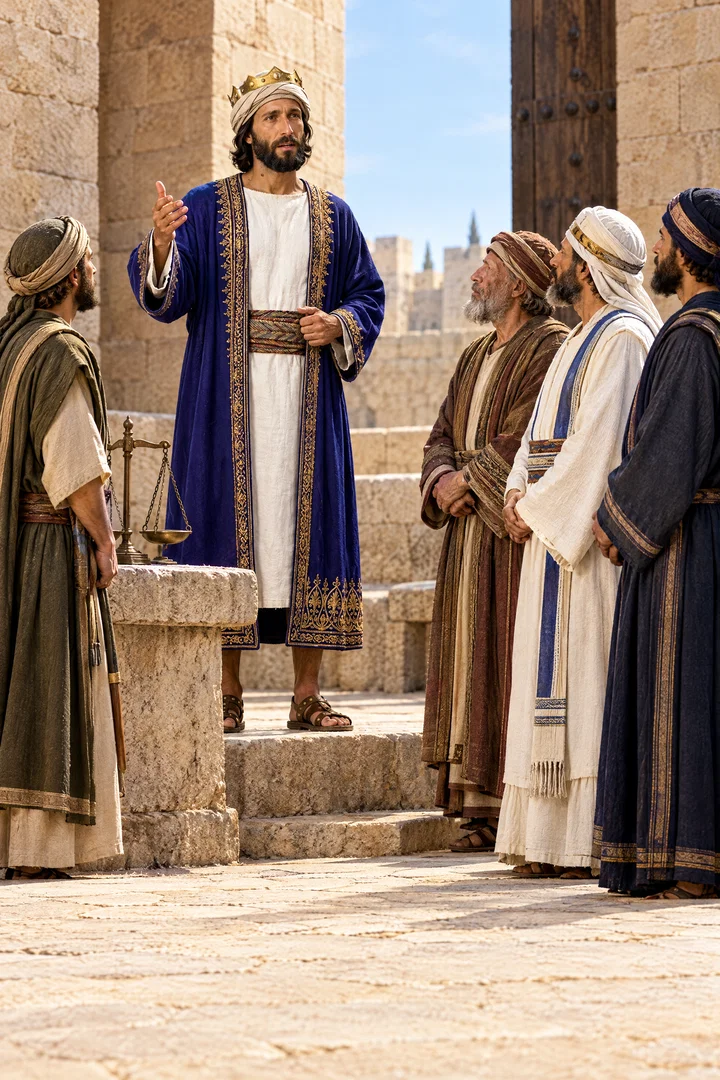
Thou shalt not wrest judgment; thou shalt not respect persons, neither take a gift: for a gift doth blind the eyes of the wise, and pervert the words of the righteous.
Translations
You shall not wrest judgment; you shall not respect persons, neither take a gift: for a gift does blind the eyes of the wise, and pervert the words of the righteous.
King James Version, KJV Cambridge Paragraph Bible
Thou shalt not wrest judgment; thou shalt not respect persons, neither take a gift: for a gift doth blind the eyes of the wise, and pervert the words of the righteous.
Thou shalt not wrest judgment; thou shalt not respect persons, neither take a gift; for a gift doth blind the eyes of the wise, and pervert the words of the righteous.
Thou shalt not wrest judgment; thou shalt not respect persons: neither shalt thou take a gift; for a gift doth blind the eyes of the wise, and pervert the words of the righteous.
Thou shalt not wrest justice: thou shalt not respect persons; neither shalt thou take a bribe; for a bribe doth blind the eyes of the wise, and pervert the words of the righteous.
Thou dost not turn aside judgment; thou dost not discern faces, nor take a bribe, for the bribe blindeth the eyes of the wise, and perverteth the words of the righteous.
Thou shalt not wrest judgment; thou shalt not respect persons, neither take a bribe; for the bribe blindeth the eyes of the wise, and perverteth the words of the righteous.
Thou shalt not wrest judgment, thou shalt not take note of faces,—nor shalt thou accept a bribe, for the bribe, blindeth the eyes of wise men, and perverteth the words of righteous men.
Berean Standard Bible, Majority Standard Bible
Do not deny justice or show partiality. Do not accept a bribe, for a bribe blinds the eyes of the wise and twists the words of the righteous.
You shall not pervert justice. You shall not show partiality. You shall not take a bribe, for a bribe blinds the eyes of the wise and perverts the words of the righteous.
You are not to be moved in your judging by a man's position, you are not to take rewards; for rewards make the eyes of the wise man blind, and the decisions of the upright false.
Wrest not thou ye Law, nor respect any person, neither take rewarde: for the reward blindeth ye eyes of the wise, and peruerteth ye worde of ye iust.
Douay-Rheims (Challoner revision)
And not go aside to either part. Thou shalt not accept person nor gifts: for gifts blind the eyes of the wise, and change the words of the just.
Pictures
Cross-references
- 1 Samuel 8:3
And his sons walked not in his ways, but turned aside after lucre, and took bribes, and perverted judgment.
Samuel’s sons take bribes and pervert judgment, violating the instruction against corrupt justice.
- 1 Samuel 12:3
Behold, here I am: witness against me before the LORD, and before his anointed: whose ox have I taken? or whose ass have I taken? or whom have I defrauded? whom have I oppressed? or of whose hand have I received any bribe to blind mine eyes therewith? and I will restore it you.
Samuel calls Israel to witness that he took no bribe.
- Deuteronomy 1:16
And I charged your judges at that time, saying, Hear the causes between your brethren, and judge righteously between every man and his brother, and the stranger that is with him.
Both require judges to judge fairly.
Commentary
Each commentary is drawn from primary sources: the writings of Ellen G. White and Adventist pioneers and periodicals. Each commentary is separate. Its own words are not a quotation; follow the references to read the source passages.
Ellen G. White
4 sources
Judges and rulers are commanded not to twist judgment, not to show favoritism based on who people are, and not to take gifts or bribes.Lt 102, 1901, par. 12–13ST Feb 2, 1882PP 604.1Lt 102, 1901, par. 16 The prohibition covers distorting justice, favoring persons unfairly, and accepting any gift that would bend a decision.Lt 102, 1901, par. 12–13ST Feb 2, 1882PP 604.1Lt 102, 1901, par. 16 The reason given is that a gift blinds the eyes of even the wise and perverts the words and judgments of the righteous.Lt 102, 1901, par. 12–13ST Feb 2, 1882PP 604.1Lt 102, 1901, par. 16 Such a gift clouds sound judgment and corrupts the just cause, turning aside what is right.Lt 102, 1901, par. 12–13ST Feb 2, 1882PP 604.1Lt 102, 1901, par. 16
The command stands within a broader call for Israel to pursue what is wholly just, so that they may live and inherit the land God gives them.Lt 102, 1901, par. 12–13ST Feb 2, 1882PP 604.1 That pursuit includes fair treatment of the widow and the fatherless.ST Feb 2, 1882PP 604.1 Samuel's sons violated this instruction by seeking gain, taking bribes, and perverting justice.PP 604.1 For public leaders the requirement is equitable judgment that upholds the stranger's rights and relieves the oppressed.ST Feb 2, 1882 It refuses bribes that would clear the guilty or punish the innocent, with God's word as the guide and test for decisions.ST Feb 2, 1882
Its principle is not limited to courts but is to be practiced in the life of God's people and in their institutions.Lt 102, 1901, par. 16
Sources
Pioneers and periodicals
11 sources
The verse belongs to the addresses Moses gave just before his death, in the second section of Deuteronomy in chapters 5 to 26 that reviews the law for the new generation.RH Feb 24, 1916 It stands among the laws Moses recalled to Israel before they crossed the Jordan, and the section gives the book its name Deuteronomy meaning second law or duplicate of the law.RH Feb 24, 1916ST Mar 1, 1910 That setting emphasizes the sacred importance of God's law and the need to keep it.ST Mar 1, 1910
The verse belongs to the church laws regulating Israel's assembling and worship.RH Nov 12, 1908 As law it was limited to Israel as a nation and as a church and expired with the rejection of the Jewish nation, so it is not legally binding today, but its great underlying principle remains binding.RH Nov 12, 1908 The rulers and officers appointed over Israel were located in all parts of the land among the people, within their gates, to associate with them, study their conditions, needs and interests, and counsel and guide them in all that pertained to their spiritual welfare, judging them fairly without partiality.RH May 16, 1907
The verse forbids judges, rulers, and others responsible for justice to twist judgment, respect persons or show favoritism, or take a gift or bribe.ST Feb 2, 1882RH May 16, 1907ST Jun 23, 1909 A gift blinds the eyes of even the wise and perverts the words and judgment of the righteous, corrupting judgment and conduct.ST Feb 2, 1882ST Jun 23, 1909 It stands with instruction for fair treatment of widows and fatherless people.ST Feb 2, 1882 It requires public leaders to judge equitably, uphold the stranger's rights, relieve the oppressed, and refuse bribes that would clear the guilty or punish the innocent, with God's word as the guide and test for their decisions.ST Feb 2, 1882
Justice must be administered fairly between people without regard to either party's position or place.ST Mar 11, 1908 Public officials must not favor or discriminate against people because of occupation or other social distinctions but must administer equal justice to all.ST Mar 11, 1908ST Dec 16, 1903 Receiving favors can create confidence and influence strong enough to make impartial judgment difficult when the giver's interests are involved. Money used to influence officials can therefore lead them to act unjustly.ST Feb 2, 1882
The justice and integrity enjoined upon ancient Israel is the rule for all who make and execute laws in nations and families.ST Jul 8, 1880 Lawmakers and judges must themselves obey the higher laws that are the foundation of all rule and live under higher control with the sense that the eye of God is upon them.ST Jul 8, 1880 They must judge uprightly without swerving from the right, showing no favoritism, despising bribes, and acting with kindness, sympathy, and the highest motives.ST Jul 8, 1880 Keeping this calls for all the powers in vigorous action through temperance in all things, free from narcotics and strong drink, so the mind keeps clear discrimination between the sacred and the common and has wisdom to deal justly.ST Jul 8, 1880
The verse warns against the biasing power of imperial favor, as when bishops who accepted Constantine's favors could become biased toward him.ST Jul 1, 1875 Eusebius's praise of Constantine and silence about his serious faults show how such favor could compromise truthful judgment and historical testimony.ST Jul 1, 1875 Taking bribes can lead to serious corruption and even cut lives short.ST Jun 23, 1909
Sources