Deuteronomy 21:3
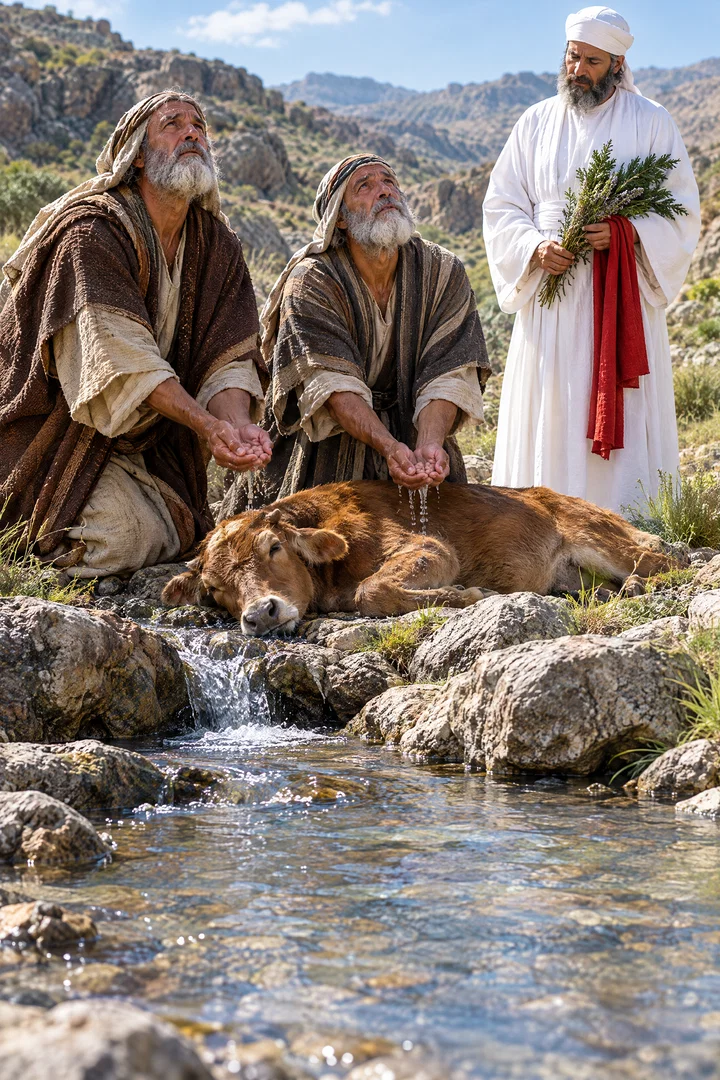
And it shall be, that the city which is next unto the slain man, even the elders of that city shall take an heifer, which hath not been wrought with, and which hath not drawn in the yoke;
Translations
And it shall be, that the city which is next to the slain man, even the elders of that city shall take an heifer, which has not been worked with, and which has not drawn in the yoke;
And it shall be, that the city which is next unto the slain man, even the elders of that city shall take an heifer, which hath not been wrought with, and which hath not drawn in the yoke;
and it shall be, that the city which is next unto the slain man, even the elders of that city shall take a heifer, which hath not been wrought with, and which hath not drawn in the yoke;
And it shall be that the city which is next to the slain man, even the elders of that city shall take a heifer which hath not been wrought with, and which hath not drawn in the yoke;
and it shall be, that the city which is nearest unto the slain man, even the elders of that city shall take an heifer of the herd, which hath not been wrought with, and which hath not drawn in the yoke;
and it shall be, that the city which is nearest unto the slain man, even the elders of that city shall take a heifer of the herd, which hath not been wrought with, and which hath not drawn in the yoke;
and it hath been, the city which [is] near unto the slain one, even the elders of that city have taken a heifer of the herd, which hath not been wrought with, which hath not drawn in the yoke,
and the city that is nearest unto him that is slain, even the elders of that city shall take a heifer that hath not been wrought with, that hath not drawn in the yoke;
and it shall be that the city that is nearest unto the slain, the elders of that city shall take a heifer of the herd which hath not been wrought with, which hath not drawn in a yoke;
Berean Standard Bible, Majority Standard Bible
Then the elders of the city nearest the victim shall take a heifer that has never been yoked or used for work,
It shall be that the elders of the city which is nearest to the slain man shall take a heifer of the herd, which hasn’t been worked with and which has not drawn in the yoke.
And whichever town is nearest to the body, the responsible men of that town are to take from the herd a young cow which has never been used for work or put under the yoke;
Aud let ye Elders of that citie, which is next vnto the slaine man, take out of the droue an heifer that hath not bene put to labour, nor hath drawen in the yoke.
Douay-Rheims (Challoner revision)
And the ancients of that city which they shall perceive to be nearer than the rest, shall take a heifer of the herd, that hath not drawn in the yoke, nor ploughed the ground,
Pictures
Cross-references
- Numbers 19:2
This is the ordinance of the law which the LORD hath commanded, saying, Speak unto the children of Israel, that they bring thee a red heifer without spot, wherein is no blemish, and upon which never came yoke:
Both texts prescribe an unyoked heifer for an offering.
Commentary
Each commentary is drawn from primary sources: the writings of Ellen G. White and Adventist pioneers and periodicals. Each commentary is separate. Its own words are not a quotation; follow the references to read the source passages.
Ellen G. White
1 source
When a killing is left without a known murderer, the law lays the burden on the leadership of the city found closest to the dead person.ST Jan 20, 1881 Those elders are to take a young female cow that has never been put to labor and has never pulled under a yoke, and to use it in a solemn ceremony carried out before the people.ST Jan 20, 1881 The rite declares that the taking of life is never to be passed over lightly, but obliges those in authority to search hard for the one who did it and to make public their hatred of the deed.ST Jan 20, 1881 Any careless neglect that protects the wrongdoer brings the guilt of shed innocent blood upon the community itself.ST Jan 20, 1881
Sources
Pioneers and periodicals
5 sources
Deuteronomy 18-21 is the closing reading that concludes Numbers and extends to Deuteronomy 21.ST Mar 1, 1910 It is a repetition of the law, a rehearsal of the wonderful things God had done for His people and of some of the chief laws connected with Israel.ST Mar 1, 1910 It was given by Moses before the Israelites crossed the Jordan River into the promised land, to bring to their remembrance the lessons God taught them during forty years of wandering in the wilderness and to impress the sacred import of God's holy law and the necessity of keeping it.ST Mar 1, 1910
When a slain person was found near a city and the killer was unknown, the elders of the city nearest the body were to take a heifer that had not been worked and had never borne or drawn the yoke.ST Jan 20, 1881RH May 16, 1912ST Mar 11, 1908ST Jun 2, 1914 This taking was the beginning step of a solemn public ceremony addressing the unsolved killing.ST Jan 20, 1881ST Jun 2, 1914 The city was thereby held responsible for a crime committed nearby.ST Mar 11, 1908
In the rest of the ceremony the elders killed the heifer and washed their hands over its body while asking God not to hold the guilt of innocent blood against them.RH May 16, 1912 The rite places responsibility for a nearby unsolved murder on the nearest city and its rulers.ST Jan 20, 1881ST Mar 11, 1908 Murder must not be treated carelessly but abhorred and diligently investigated, with rulers diligently seeking the killer and showing abhorrence of the crime.ST Jan 20, 1881 Negligence that shields the guilty makes the community share in the guilt of innocent blood.ST Jan 20, 1881
Sources