Deuteronomy 22:4
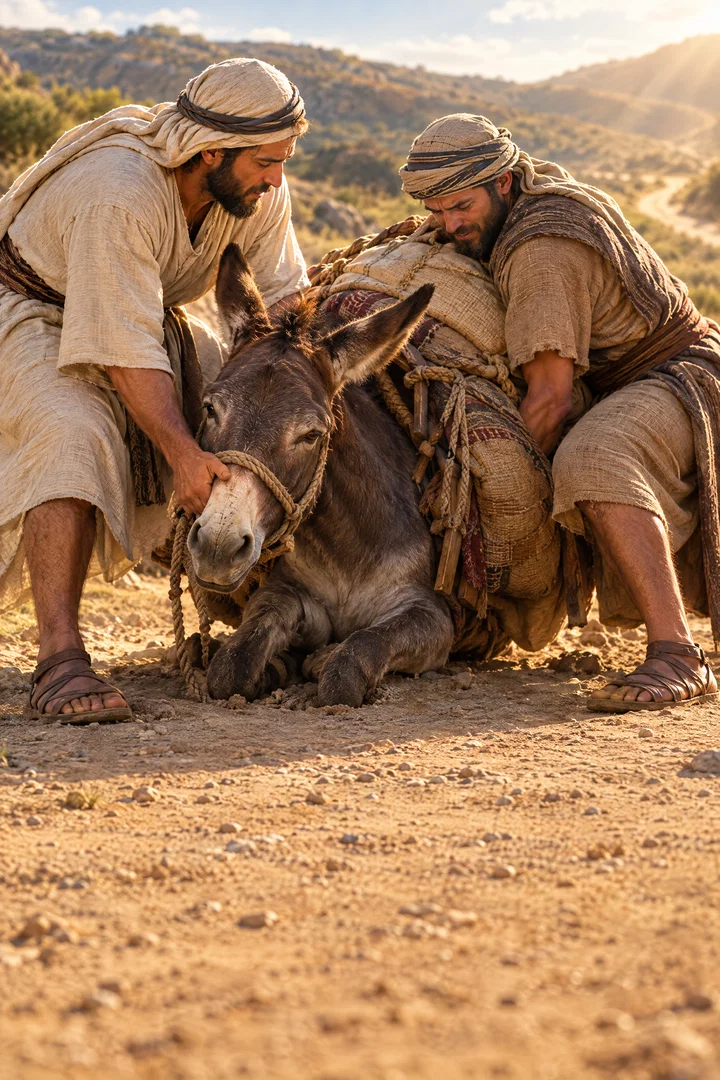
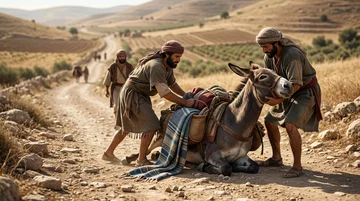
Thou shalt not see thy brother’s ass or his ox fall down by the way, and hide thyself from them: thou shalt surely help him to lift them up again.
Translations
You shall not see your brother’s ass or his ox fall down by the way, and hide yourself from them: you shall surely help him to lift them up again.
King James Version, KJV Cambridge Paragraph Bible
Thou shalt not see thy brother’s ass or his ox fall down by the way, and hide thyself from them: thou shalt surely help him to lift them up again.
Thou shalt not see thy brother's ass or his ox fall down by the way, and hide thyself from them: thou shalt surely help him to lift them up again.
Revised Version, American Standard Version
Thou shalt not see thy brother’s ass or his ox fallen down by the way, and hide thyself from them: thou shalt surely help him to lift them up again.
'Thou dost not see the ass of thy brother, or his ox, falling in the way, and hast hid thyself from them; thou dost certainly raise [them] up with him.
Thou shalt not see thy brother's ass or his ox fall by the way, and hide thyself from them: thou shalt in any case [ help] him to lift them up.
Thou shalt not see the ass of thy brother or his ox fallen in the way, and turn away from them,—thou shalt, raise, them with him.
Berean Standard Bible, Majority Standard Bible
If you see your brother’s donkey or ox fallen on the road, you must not ignore it; you must help him lift it up.
You shall not see your brother’s donkey or his ox fallen down by the way, and hide yourself from them. You shall surely help him to lift them up again.
If you see your brother's ox or his ass falling down on the road, do not go by without giving him help in lifting it up again.
Thou shalt not see thy brothers asse nor his oxe fal downe by the way, and withdrawe thy selfe from them, but shalt lift them vp with him.
Douay-Rheims (Challoner revision)
If thou see thy brother’s ass or his ox to be fallen down in the way, thou shalt not slight it, but shalt lift it up with him.
Pictures
Cross-references
- Luke 10:33-35
But a certain Samaritan, as he journeyed, came where he was: and when he saw him, he had compassion on him,
The Samaritan shows practical mercy by helping someone in need.
- Matthew 12:11-12
And he said unto them, What man shall there be among you, that shall have one sheep, and if it fall into a pit on the sabbath day, will he not lay hold on it, and lift it out?
Jesus teaches that rescuing an animal on the Sabbath is lawful.
Commentary
Each commentary is drawn from primary sources: the writings of Ellen G. White and Adventist pioneers and periodicals. Each commentary is separate. Its own words are not a quotation; follow the references to read the source passages.
Ellen G. White
1 source
Jesus, present in the pillar of cloud, gave this as a specific direction requiring acts of mercy toward both people and animals.Ms 87, 1894, par. 37 Its plain requirement is that when a neighbor's donkey or ox has fallen down on the road, a person must not see it and hide himself or look away, but must surely help lift it up again.Ms 87, 1894, par. 37 It belongs to the far-reaching requirements of God's law, which calls for supreme love to God and impartial love to neighbors.Ms 87, 1894, par. 37
Those requirements also take in the speechless creatures, which cannot express in words their wants or sufferings.Ms 87, 1894, par. 37 One who loves God will not only love fellow human beings but will regard the creatures God has made with tender compassion.Ms 87, 1894, par. 37 Where the Spirit of God is present in a person, it leads him to relieve suffering rather than to create suffering.Ms 87, 1894, par. 37
Sources
Pioneers and periodicals
5 sources
To see a brother's donkey or ox collapsed on the road and to hide oneself from the sight is forbidden, and to help him without fail to raise the animal again is commanded, so that active assistance takes the place of indifference as a binding obligation.RH Feb 24, 1916ST Jan 5, 1882ST Mar 3, 1909ST Jan 21, 1903RH Nov 9, 1916 The law is broken by looking the other way when a neighbor's animal has fallen, and it is kept by stopping to lift it with him.RH Feb 24, 1916ST Jan 5, 1882ST Mar 3, 1909ST Jan 21, 1903 Rescue of what has fallen down rather than neglect of it is what is required.RH Feb 24, 1916ST Mar 3, 1909ST Jan 21, 1903
That mercy is owed especially to those in distress, and the priest and Levite who passed by the wounded traveler on the roadside stand as examples of failure in precisely this mercy demanded by the law.ST Jan 5, 1882 To pass by suffering without acting is to fall short of the help the commandment enjoins.ST Jan 5, 1882
The same requirement shows that rest and blessing were intended even for beasts of burden, while necessary care and rescue from danger were still to be given.ST Jan 21, 1903 For that reason lifting a sheep fallen into a pit on the Sabbath is lawful, confirming that doing good and relieving suffering on that day is permitted.ST Jan 21, 1903
In its setting with verses 1-4 the command belongs to practical care for a neighbor's animals and property, not ignoring an animal in trouble but helping to restore it.RH Nov 9, 1916 That care extends to noticing a neighbor's livestock strayed into a field of grain and either informing the neighbor or driving the animals out.RH Nov 9, 1916 Such a considerate act may win the neighbor.RH Nov 9, 1916
Sources