Ecclesiastes 12:6
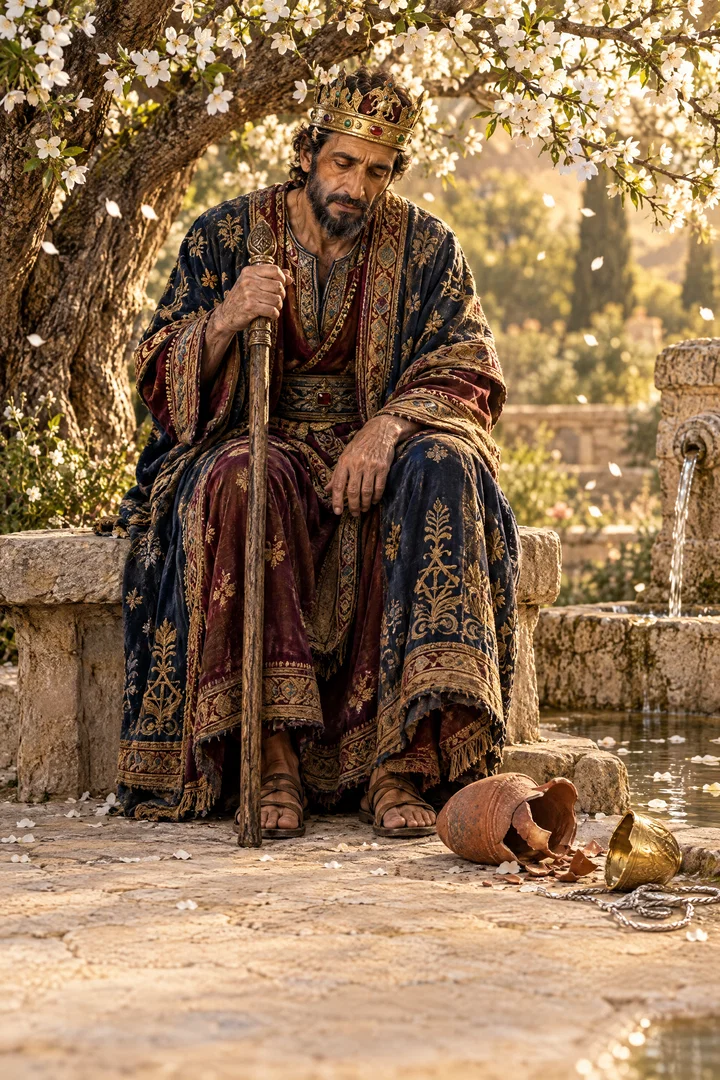
Or ever the silver cord be loosed, or the golden bowl be broken, or the pitcher be broken at the fountain, or the wheel broken at the cistern.
Translations
American King James Version, King James Version
Or ever the silver cord be loosed, or the golden bowl be broken, or the pitcher be broken at the fountain, or the wheel broken at the cistern.
or ever the silver cord be loosed, or the golden bowl be broken, or the pitcher be broken at the fountain, or the wheel broken at the cistern.
Or ever the silver cord shall be loosed, or the golden bowl be broken, or the pitcher be broken at the fountain, or the wheel broken at the cistern.
or ever the silver cord be loosed, or the golden bowl be broken, or the pitcher be broken at the fountain, or the wheel broken at the cistern;
before the silver cord is loosed, or the golden bowl is broken, or the pitcher is broken at the fountain, or the wheel broken at the cistern,
While that the silver cord is not removed, And the golden bowl broken, And the pitcher broken by the fountain, And the wheel broken at the well.
— before the silver cord be loosed, or the golden bowl be broken, or the pitcher be shattered at the fountain, or the wheel be broken at the cistern;
Or ever the silver cord be loosed, or the golden bowl be broken,—or the bucket by the fountain be shivered, or the wheel at the well be broken;
Berean Standard Bible, Majority Standard Bible
Remember Him before the silver cord is snapped
and the golden bowl is crushed,
before the pitcher is shattered at the spring
and the wheel is broken at the well,before the silver cord is severed,
or the golden bowl is broken,
or the pitcher is broken at the spring,
or the wheel broken at the cistern,Before ever the silver cord is cut, or the vessel of gold is broken, or the pot is broken at the fountain, or the wheel broken at the water-hole;
Whiles the siluer coarde is not lengthened, nor the golden ewer broken, nor the pitcher broken at the well, nor the wheele broken at the cisterne:
Douay-Rheims (Challoner revision)
Before the silver cord be broken, and the golden fillet shrink back, and the pitcher be crushed at the fountain, and the wheel be broken upon the cistern,
Pictures
Cross-references
- Job 14:10-12
But man dieth, and wasteth away: yea, man giveth up the ghost, and where is he?
The dead rest without returning to earthly life until awakening.
- Genesis 3:19
In the sweat of thy face shalt thou eat bread, till thou return unto the ground; for out of it wast thou taken: for dust thou art, and unto dust shalt thou return.
The body returns to the earth at death.
- Job 34:14-15
If he set his heart upon man, if he gather unto himself his spirit and his breath;
God gathers a person’s spirit and breath, and all flesh dies.
- Psalms 146:4
His breath goeth forth, he returneth to his earth; in that very day his thoughts perish.
At death, a person’s thoughts perish.
Commentary
Each commentary is drawn from primary sources: the writings of Ellen G. White and Adventist pioneers and periodicals. Each commentary is separate. Its own words are not a quotation; follow the references to read the source passages.
Ellen G. White
6 sources
Ecclesiastes 12:6 belongs to the closing description of old age and approaching death that urges remembering the Creator before life ends.PK 80.2–4RH Feb 8, 1906 It marks the time and day of death when life ends.PK 80.2–4GC88 549.3–550.1RH Feb 8, 19064SP 369.1ST Apr 16, 1885 The loosened silver cord, broken golden bowl, broken pitcher at the fountain and broken wheel at the cistern picture the breaking and failure of the delicate supports that sustain bodily life.PK 80.2–4RH Feb 8, 1906 The images show that life ends and the body returns to the earth.RH Feb 8, 1906
In that very day of death a person's thoughts perish.GC88 549.3–550.1GC 549.34SP 369.1ST Apr 16, 1885 The dead lie in silent, unconscious sleep in the grave and know nothing of anything done under the sun.GC88 549.3–550.1GC 549.34SP 369.1ST Apr 16, 1885 The dead do not go immediately to heaven nor receive their reward at death.4SP 369.1 For the righteous this unconsciousness is restful and blessed rest.4SP 369.1ST Apr 16, 1885
Whether the interval until the resurrection is long or short, it passes for the dead as only a moment.GC88 549.3–550.1ST Apr 16, 1885 The dead remain in this sleep until God awakens them at the resurrection.GC88 549.3–550.1GC 549.34SP 369.1ST Apr 16, 1885 The righteous are awakened to immortality, a glorious immortality.GC88 549.3–550.14SP 369.1ST Apr 16, 1885 That awakening comes by the trump of God.GC88 549.3–550.1ST Apr 16, 1885
Consciousness resumes where it stopped, so the awakened begin thinking where they ceased.GC88 549.3–550.1ST Apr 16, 1885 The pang of death is the last sensation before sleep and triumphant victory over death is the first glad thought on rising.ST Apr 16, 1885
Sources
Pioneers and periodicals
34 sources
The verse pictures death as the loosing and breaking of precious, fragile things, a graphic figure for the decay of physical power in old age and the dissolution of the body when life comes to its end.RH May 21, 1872ST Oct 16, 1884ST May 17, 1910ST Jul 27, 1904 When the cord is loosed and the bowl is broken the body returns to dust in the earth and the breath of life returns to God who gave it, and the dead enter a silent, unconscious sleep in the grave with no knowledge of anything done under the sun.ST Apr 16, 1885RH Jun 14, 1870ST Jun 7, 1877RH Oct 7, 1909 It belongs to the command to remember the Creator in youth, to seek and serve Him early before evil habits obstruct the path and before the infirmities of old age and death take away the strength of youth.RH Sep 26, 1912RH Dec 29, 1868ST Dec 9, 1880ST Jul 25, 1878 That sleep is held with hope of meeting again, for at the Lord's descent and the last trumpet the dead in Christ will rise first to eternal life and glorious immortality.RH Nov 5, 1914 The loosed cord and broken bowl therefore mark the final limit of opportunity, when probation is over and destiny is fixed, so the choice to accept eternal life must be made now before that uncertain and sudden end.RH Mar 26, 1857RH Oct 6, 1859RH Feb 4, 1873
Pictures of Bodily Dissolution
Death is pictured as things loosed or broken, a beautiful and graphic figure for lying down in death and for life coming to its end.RH May 21, 1872ST Oct 16, 1884 The broken golden bowl and the loosed silver cord are images of death when it approaches and life ends.
The silver cord is usually understood as the spinal cord, and the broken pitcher and wheel picture the cessation of the blood's flow, together with the surrounding symbols portraying the dissolution of man.ST Mar 23, 1915 It does not refer to a future plague.ST Mar 23, 1915 The circulation of the blood is taught here, in which the heart sends blood through the system and the blood returns to the lungs to be purified, a process harmed by tobacco.RH Jan 1, 1861
The breaking of the golden bowl, the breaking of the pitcher at the fountain, and the breaking of the wheel at the cistern portray the breaking of life's delicate supports and fragile mechanisms.RH Feb 8, 1906RH Apr 11, 1907RH May 9, 1907 When the pitcher and wheel cease their work, life ends and the body returns to the earth.RH Feb 8, 1906 At the loosing of the silver cord the lamp of life goes out, the eyes close, and life ends. This belongs to the warning to remember the Creator before old age and death arrive and to serve him before old-age infirmities lead to death.RH Feb 8, 1906RH Dec 29, 1868 When life ends at the breaking of the golden bowl, worldly wealth, achievement, fame, and intellectual ability will not bring comfort, while the good done for others and the lives helped will be the precious memories.RH Apr 11, 1907 The imagery marks the end of earthly life for an old man whose life had worn out and stopped.RH May 9, 1907
The verse belongs to an eloquent, graphic description of the decay of human life and the decline of physical power in old age.ST May 17, 1910ST Jul 27, 1904 It pictures life coming to its end as the body passes from youthful strength through age and decline.ST Jul 25, 1878 The man is being unbuilt as his strength wears away, picturing the body being unbuilt after age has worn out its strength.RH Dec 29, 1868ST Jun 12, 1879 This depicts dissolution, not a person being translated to heaven.RH Dec 29, 1868ST Jun 12, 1879 Because life is brief, the early years should be filled with truth and pure, lofty thought, and life should end in a return to God.ST Jul 25, 1878
Life is pictured as a silver cord that finally slips away and as a fragile, precious thread that can be cut, with a life that can end and years that pass without return.ST Oct 1, 1894ST Dec 22, 1914 The silver cord slowly untwisting and the golden bowl suddenly breaking show both gradual decline and sudden death.ST Nov 17, 1898 Both evoke the loss of a loved one and the grief of bereavement.ST Nov 17, 1898 The last strands of the cord mark the precious final moments of an aged person looking toward eternity as the body weakens and death approaches.ST Oct 1, 1894 The swiftly forged silver chain echoes this brevity and the swiftly passing years that never return.ST Dec 22, 1914
Old age is when the silver cord waxes loose and the golden bowl gleams not so fair, marking life drawing to its end.RH Oct 23, 1900RH Dec 26, 1865 It means faded hair and a face lined with weariness and care, with life's load more grievous.RH Oct 23, 1900 It means declining sight and strength and brief remaining years.RH Oct 23, 1900RH Dec 26, 1865 The years whirl past like spectral forms, with no backward pace and no past step to retrace.RH Oct 23, 1900 It is standing on the peak of life's hill with the steep way behind and the promised land ahead, with sunset tints already seen, nearness of the blessed haven with no grief nor tears, hope fixed on God, and the eternal morning that knows no shades of night when Christ appears.RH Oct 23, 1900RH Dec 26, 1865
Call to Remember Creator
The verse belongs to the command to remember the Creator, and to remember him precisely as Creator.ST Dec 4, 1884 There are many gods and many lords, but there is only one Creator, and it is by creating all things that he distinguishes himself as the one living and true God.ST Dec 4, 1884 It counsels seeking God early in youth, before evil habits obstruct the right path and before sorrow and declining strength make life bitter.RH Sep 26, 1912 The early years are therefore to be filled with truth and pure, lofty thought, because life is brief and passes from youthful strength through age and decline to its end and return to God.RH Sep 26, 1912ST Jul 25, 1878
It warns to remember and obey God throughout life, before death and decay take away the strength of youth. The young are urged to serve him before old-age infirmities lead to death, and not to wait until then to be prepared.RH Dec 29, 1868ST Dec 9, 1880 The loosening and breaking portray the unbuilding of the body after age has worn out its strength, which is the common human fate and not a translation to heaven of the righteous only.RH Dec 29, 1868ST Dec 9, 1880 In this way the verse is bound to the approach of life's end and departure from this world.
The loosening of the silver cord and the breaking of the golden bowl picture death approaching in old age.RH Mar 26, 1857 They warn that life is ending, probation is over, and each person's destiny is fixed.RH Mar 26, 1857
Unconscious Sleep in Death
When people die their bodies return to dust in the earth and their breath of life, or spirit, returns to God who gave it.RH Jun 14, 1870ST Jun 7, 1877RH Oct 7, 1909 Man means the whole human race, so just as dust means the bodies of all, spirit means the spirits of all, righteous and wicked alike.RH Jun 14, 1870ST Jun 7, 1877 All go to one place, the long home, with no separation between them at death.ST Jun 7, 1877 The loosening of the silver cord marks the end of life, when the spirit of life returns to God who gave it.RH Oct 7, 1909
Death came because of sin and the body returns to dust. The silver cord is loosed and the golden bowl is broken as the breaking of the body's life. The breath that returns to God is not conscious by itself, but breath and body together make a living soul.
In the day of death the body fails, the thoughts perish, and the dead enter a silent, unconscious sleep in the grave.ST Apr 16, 1885 That sleep is like dreamless sleep, with no knowledge of anything done under the sun.ST Apr 16, 1885 The dead do not praise the Lord and do not awaken before the resurrection. For the righteous this sleep is blessed rest, with long or short time passing as only a moment until they are awakened to glorious immortality.ST Apr 16, 1885 Consciousness resumes where it stopped, with the pang of death as the last sensation before sleep and triumphant victory over death as the first glad thought on rising, so the moment of death and the moment when God calls the dead to life are as one to the dead person.ST Apr 16, 1885RH Apr 7, 1903
The verse describes the dissolution of the whole person and the common human fate, not only the righteous.RH Dec 29, 1868ST Dec 9, 1880ST Jun 12, 1879 It pictures the body being unbuilt after age has worn out its strength, in the decline of old age that leads to death, not a person being translated to heaven.RH Dec 29, 1868ST Dec 9, 1880ST Jun 12, 1879 Together with the surrounding symbols it portrays the dissolution of man, and it does not refer to a future plague.ST Mar 23, 1915 The brittle cord of life is not broken prematurely when death is delayed, but when it is finally loosed the person dies and enters the sleep of death until God calls the dead to life.RH Apr 7, 1903
Resurrection Hope and Comfort
Death is sleep with hope of meeting again when the Lifegiver comes and the dead are raised. The dead remain silent, like those in dreamless sleep, until Christ returns, not praising the Lord or awakening before the resurrection, and at the last trumpet the dead in Christ rise and receive eternal life and glorious immortality. Death as the breaking of the silver cord is the last enemy that enters a home and brings grief, and the hope that comforts mourners is that the Lord will descend and the dead in Christ will rise first.RH Nov 5, 1914 Those believers who are still alive when the Lord comes need not die before His return, but will be changed to immortal life without the silver cord being loosed and the bowl broken.ST Aug 20, 1912
The loosing of the silver cord and breaking of the golden bowl mark the end of earthly life when life has worn out and stopped in old age.RH May 9, 1907 The same breaking pictures youth cut off in death, as when two young women died in youth and slept in hope of the resurrection. The pitcher broken at the fountain pictures sudden death, literally fulfilled when a husband dies suddenly.RH Dec 17, 1908 The loosening of the silver cord of life pictures sudden yet peaceful death, as when Carolyn parted gently.RH Jul 20, 1911 That parting from life at the breaking of the pitcher and loosing of the silver cord can happen so gently and peacefully for one prepared to sleep that there is no terror, agitation, or fearful last struggle, and those watching can hardly realize they are in the presence of death.RH Dec 24, 1867
The silver cord slowly untwisting and the golden bowl suddenly breaking both evoke the loss of a loved one and the grief of bereavement.ST Nov 17, 1898 When life ends at the breaking of the golden bowl at its fountain, worldly wealth, achievement, fame, and intellectual ability will not bring comfort, while the good done for others and the lives helped will be the precious memories.RH Apr 11, 1907 Old age when the silver cord waxes loose and the golden bowl gleams not so fair means faded hair, a face lined with weariness and care, a more grievous load, declining sight and strength, brief remaining years, and years whirling past like spectral forms with no backward pace.RH Oct 23, 1900RH Dec 26, 1865 Yet it is standing on the peak of life's hill with the steep way behind and the promised land ahead, with sunset tints already seen, nearness of the blessed haven with no grief nor tears, hope fixed on God, and the eternal morning that knows no shades of night when Christ appears.RH Oct 23, 1900RH Dec 26, 1865
Urgency to Choose Now
The loosed silver cord and broken golden bowl mark the end of life and the final limit of opportunity, when it is too late to secure a treasure and inheritance in heaven.RH Oct 6, 1859RH Feb 4, 1873 That end is uncertain and sudden, and after it no further choosing or preparing is possible.RH Oct 6, 1859RH Feb 4, 1873 Life is uncertain, so the choice to accept eternal life must be made now, for the hope of turning to God later can deceive, and death may come before good intentions are carried out.RH Oct 6, 1859RH Feb 4, 1873 Delay is dangerous, because death may suddenly intervene, the coming Judge may appear through the dissolving heavens, and the sitting of mercy may cease, leaving the delaying soul unprepared for ruin, while choosing now secures enduring life.RH Feb 4, 1873
Death is when the weary beating heart ceases to beat and busy feet enter endless rest and the journey to the goal is finished. It can come suddenly in the night before morning light, so to rest careless and thoughtless on the couch at night is dangerous.
Sources