Genesis 3:19
In the sweat of thy face shalt thou eat bread, till thou return unto the ground; for out of it wast thou taken: for dust thou art, and unto dust shalt thou return.
Translations
In the sweat of your face shall you eat bread, till you return to the ground; for out of it were you taken: for dust you are, and to dust shall you return.
In the sweat of thy face shalt thou eat bread, till thou return unto the ground; for out of it wast thou taken: for dust thou art, and unto dust shalt thou return.
KJV Cambridge Paragraph Bible, Revised Version, American Standard Version
in the sweat of thy face shalt thou eat bread, till thou return unto the ground; for out of it wast thou taken: for dust thou art, and unto dust shalt thou return.
In the sweat of thy face shalt thou eat bread, till thou shalt return to the ground; for out of it wast thou taken: for dust thou art, and to dust shalt thou return.
by the sweat of thy face thou dost eat bread till thy return unto the ground, for out of it hast thou been taken, for dust thou [art], and unto dust thou turnest back.'
In the sweat of thy face shalt thou eat bread, until thou return to the ground: for out of it wast thou taken. For dust thou art; and unto dust shalt thou return.
In the sweat of thy face, shalt thou eat bread, until thou return to the ground, because therefrom, wast thou taken,—For, dust, thou art, And, unto dust, shalt thou return.
Berean Standard Bible, Majority Standard Bible
By the sweat of your brow
you will eat your bread,
until you return to the ground—
because out of it were you taken.
For dust you are,
and to dust you shall return.”You will eat bread by the sweat of your face until you return to the ground,
for you were taken out of it.
For you are dust,
and you shall return to dust.”With the hard work of your hands you will get your bread till you go back to the earth from which you were taken: for dust you are and to the dust you will go back.
In the sweate of thy face shalt thou eate bread, till thou returne to the earth: for out of it wast thou taken, because thou art dust, and to dust shalt thou returne.
Douay-Rheims (Challoner revision)
In the sweat of thy face shalt thou eat bread till thou return to the earth, out of which thou wast taken: for dust thou art, and into dust thou shalt return.
Pictures




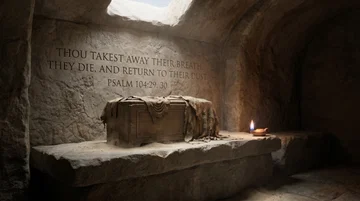
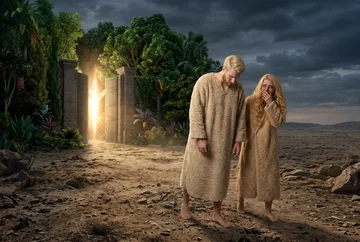
Cross-references 20 of 60
- Genesis 2:7
And the LORD God formed man of the dust of the ground, and breathed into his nostrils the breath of life; and man became a living soul.
Man is formed from the ground and returns to dust.
- Genesis 2:17
But of the tree of the knowledge of good and evil, thou shalt not eat of it: for in the day that thou eatest thereof thou shalt surely die.
The sentence on Adam explains the death penalty announced beforehand.
- Romans 5:12
Wherefore, as by one man sin entered into the world, and death by sin; and so death passed upon all men, for that all have sinned:
both teach death came on all through Adam's fall
- Genesis 2:15
And the LORD God took the man, and put him into the garden of Eden to dress it and to keep it.
Eden’s pleasant work contrasts with toil after the curse.
- 1 Corinthians 15:22
For as in Adam all die, even so in Christ shall all be made alive.
All die in Adam, but in Christ they are made alive.
- Ecclesiastes 12:7
Then shall the dust return to the earth as it was: and the spirit shall return unto God who gave it.
Both describe the body returning to dust and the spirit returning to God.
- Genesis 3:4-5
And the serpent said unto the woman, Ye shall not surely die:
The serpent denies that disobedience brings death, contrary to God’s sentence.
- Psalms 146:4
His breath goeth forth, he returneth to his earth; in that very day his thoughts perish.
At death, a person returns to the earth and his thoughts perish.
- Genesis 5:5
And all the days that Adam lived were nine hundred and thirty years: and he died.
Adam’s death after 930 years fulfills the sentence that he would return to dust.
- Ecclesiastes 3:20
All go unto one place; all are of the dust, and all turn to dust again.
Both teach that humans return to the dust from which they came.
- Genesis 3:23-24
Therefore the LORD God sent him forth from the garden of Eden, to till the ground from whence he was taken.
Adam is expelled from Eden to till the ground after sin.
- Revelation 22:3
And there shall be no more curse: but the throne of God and of the Lamb shall be in it; and his servants shall serve him:
The curse of toil and death is gone in the restored creation.
- 1 Corinthians 15:47
The first man is of the earth, earthy: the second man is the Lord from heaven.
Both describe the first man as earthly and made from dust.
- Romans 6:23
For the wages of sin is death; but the gift of God is eternal life through Jesus Christ our Lord.
Death is the wages and consequence of sin, as pronounced in Eden.
- Genesis 3:6
And when the woman saw that the tree was good for food, and that it was pleasant to the eyes, and a tree to be desired to make one wise, she took of the fruit thereof, and did eat, and gave also unto her husband with her; and he did eat.
Adam and Eve’s disobedience brought the sentence of death and curse.
- Daniel 12:2
And many of them that sleep in the dust of the earth shall awake, some to everlasting life, and some to shame and everlasting contempt.
Both describe the dead sleeping in the dust until they awaken.
- Genesis 1:27
So God created man in his own image, in the image of God created he him; male and female created he them.
Contrasts humanity made in God’s image with the return to dust.
- Genesis 4:11-12
And now art thou cursed from the earth, which hath opened her mouth to receive thy brother’s blood from thy hand;
Cain’s punishment increases Adam’s curse, as the ground withholds its strength.
- Isaiah 26:19
Thy dead men shall live, together with my dead body shall they arise. Awake and sing, ye that dwell in dust: for thy dew is as the dew of herbs, and the earth shall cast out the dead.
The dead return from dust and rise to life.
- Genesis 2:9
And out of the ground made the LORD God to grow every tree that is pleasant to the sight, and good for food; the tree of life also in the midst of the garden, and the tree of knowledge of good and evil.
Eden’s fruitful ground contrasts with the curse’s blighted ground.
Commentary part 1 of 5
Each commentary is drawn from primary sources: the writings of Ellen G. White and Adventist pioneers and periodicals. Each commentary is separate. Its own words are not a quotation; follow the references to read the source passages.
Ellen G. White
154 sources
God sentenced Adam to gain his food by painful, sweating toil all his life until he dies and returns to the ground from which he was made, because he listened to Satan and his wife and ate what God had forbidden.1SP 42.3ST Jan 23, 1879PP 59.2Ms 97, 1901, par. 3–8Ms 139, 1903, par. 22–25 To return to dust is literal death and the utter extinction of life, not entrance into a higher existence, for sin cut man off from the tree of life that would have perpetuated his life forever.GC 532.2–3GC88 532.2–533.14SP 352.2EW 103.2 Work itself was not the curse, for tending Eden was pleasant and honorable, but after sin it became wearisome struggle with stubborn soil, thorns and weeds, appointed in love as needed discipline to check indulgence, develop self-control and aid recovery.CTBH 172.2Ms 8b, 1894 [Copy 2], par. 12–14FE 512.5–513.1RP 24.2–4RH Oct 3, 1912 The same disobedience brought a curse that marred the earth, so nature no longer shows God's glory in its first brightness but bears decay in withering plants, extremes of heat and cold, diseased and suffering animals, and harder cultivation, yet still holds blessings for persevering labor under God.ST Feb 27, 1879SG3 61.3SPBC 200.1CTBH 169.3–4ED 26.2–3 Before hearing of toil, sorrow and death, Adam heard the promise of a Deliverer, and Christ came to pass over Adam's ground, conquer where he failed, bear his guilt and regain all that was lost so the race may be restored.ST Jan 22, 1880STB 516.2–3ST Mar 7, 1878RH Apr 29, 1875
Sentence Upon Adam
The sentence falls upon Adam because he listened to his wife and ate from the tree God had commanded him not to eat.PP 59.2Ms 139, 1903, par. 22–2518MR 33.2–34.1 He had listened to Satan's misrepresentation of God, and he fell from his high estate with no excuse, for all his wants were generously supplied and only one prohibition was laid upon him.Ms 97, 1901, par. 3–8 He followed his own way in harmony with Satan's temptation and against God's known will in a vain attempt to elevate and bless himself.Ms 139, 1903, par. 22–2518MR 33.2–34.1 By that choice he gained an experimental knowledge of disobedience and of good and evil, lost fidelity and loyalty to God, and opened the floodgates of woe and of evil and suffering upon the world and the whole human family.Ms 97, 1901, par. 3–8Ms 139, 1903, par. 22–25Ms 31, 1901, par. 4–818MR 33.2–34.1
He was condemned to gain his food and eat bread by painful, sweating, hard labor all the days of his life until he dies and returns to the ground from which he was taken.PP 59.2Ms 31, 1901, par. 4–8SG3 45.2 That life after disobedience was changed from happy labor to toil and anxiety, a life of toil, sorrow, disappointment, grief and pain ending in death.ST Jan 23, 1879SG3 45.2 The hardship brought an ongoing acquaintance with evil throughout life, good now joined by evil which God had previously withheld.ST Jan 23, 1879ST Dec 23, 1886
For dust thou art means man was formed from the dust of the earth and is dust, and unto dust shalt thou return means he returns to dust in death.ED 25.4–26.1SG1 118.1 The words about returning to dust declare the penalty of death and the utter end of mortal life.SG3 45.2 Even the human greatness of kings and crowned monarchs ends in dust, their lofty rank, earthly honors, grandeur, strife for supremacy and life itself not lasting.Ms 75, 1886, par. 8–9 So all people, including the great men of the earth, are mortal dust, and lips that speak earthly praise are mortal, making honor from them temporary.RH Jul 23, 1901
The ground was cursed for Adam's sake, so in sorrow he eats of it all the days of his life.Ms 97, 1901, par. 3–8Ms 139, 1903, par. 22–25Ms 31, 1901, par. 4–8 It was made to bring forth thorns and thistles and weeds, briers, brambles, and the herb of the field, requiring hard labor with stubborn soil.Ms 97, 1901, par. 3–8Ms 139, 1903, par. 22–25RH Feb 24, 1874LC1 117.1Ms 120, 1899, par. 8 Man must therefore eat by hard labor and sweat among thistles, brambles, thorns and weeds brought by the curse, which Satan had sown.Ms 31, 1901, par. 4–8Ms 120, 1899, par. 8 With time that curse has lain more and more heavily on the land, making it harder to cultivate and make productive, the soil more barren and requiring double labor.SG4 155.2–3
The sentence confirms that God's warning of death for disobedience was true, contrary to the serpent's claim that they would not die.ST Dec 23, 1886 It declares the penalty for sin to be literal death by returning to the ground and becoming dust again, not entrance into a more exalted state of existence. Satan's promise that eating would give higher perceptions to know good and evil and make them like angels in heaven proved a lie.Ms 120, 1899, par. 8 That opening of the eyes proved true only in that disobedience opened eyes to discern folly, know evil, and taste the bitter fruit of transgression.
Curse Upon Nature
Human disobedience brought a curse that marred the earth, so nature now gives only an imperfect testimony about its Creator and cannot reveal His character in perfection.8T 255.3–256.16T 358.1–359.1 Defiled by sin, the earth no longer displays God's glory in its original brightness, is separated from heaven, yet still retains lessons of the Creator that can be understood when rightly read.ST Feb 27, 1879COL 18.1 Though cursed after Adam's transgression, the earth remained rich and beautiful and lovely and fruitful, even while showing sure and certain signs of decay.ST Feb 27, 1879SG3 61.3 Sorrow, pain and death came as results of that disobedience, and the curse on earth and humanity for transgression of God's law was accompanied by a promise of pardon through Christ the Redeemer.ST Jan 22, 18806T 358.1–359.1
The curse was first felt lightly, then lay more and more heavily on the land with time.1SP 57.1SG3 50.1SG4 155.2–3 Cain's murder of Abel brought a double curse upon the ground already cursed for Adam's sin, and Cain murmured and rebelled against God over that sentence while Abel submitted to God's authority.1SP 57.1SG3 50.11SP 54.1ST Dec 16, 1886SG3 47.1–48.1 That curse still rested in Noah's day together with Cain's curse, and it increased greatly at the Flood and is permitted to become as broad and deep as transgression itself as transgression becomes almost universal.7MR 123.118MR 353.5–354.1 The longer the earth remains under the curse the harder it is to cultivate and make productive.SG4 155.2–3
Decay entered as a continual witness of sin and warning of its results.ED 26.2–3ED 27.2–3 Adam and Eve saw it in drooping flowers and falling leaves and learned that every living thing must die, mourning frail delicate flowers more deeply than men now mourn their dead, and grieving especially when sturdy and goodly trees cast off leaves and dissolved and withered.ED 26.2–31SP 58.1PP 62.1 Even the air depended on for life bore the seeds of death, and the atmosphere once mild and uniform changed to marked extremes of heat and cold, for which garments of skins were mercifully provided as protection.ED 26.2–3PP 61.5 Yet alongside decay nature gives recurring signs of life that recall the loss while offering hope of renewal and redemption.ED 27.2–3
The curse rests heavily on the whole human race in misery and suffering, and also on cattle and beasts and fish in the sea and upon the earth itself.SG4 146.218MR 353.5–354.1Lt 84, 1898, par. 6–7 Beasts have degenerated in size and length of years, and languish with cancers, tumors and disease.SG4 146.218MR 353.5–354.1 They suffer more than they otherwise would because of man's wrong habits and intemperance, while depraved appetite craves what is most injurious to health.SG4 146.2HLT1 58.2–4 Taking animal life for food belongs to the transgression that would not have occurred had the curse never fallen, for flesh of dead animals was not man's original food but was permitted after the Flood because all vegetation had been destroyed.CTBH 169.3–47MR 123.1 Since the Flood the curse is seen in the shortening of human existence and in rapidly increasing physical, mental and moral degeneracy, with diseased flesh sold in marketplaces bringing disease among men, so that there is no safety in eating flesh and soon milk and anything from animal creation will not be safe to use, and those who disobey and alienate themselves from God's will place themselves where He cannot give divine favor and protection.7MR 123.118MR 353.5–354.1Lt 84, 1898, par. 6–7
Cultivation became much harder, for the soil has become more barren and double labor must be spent upon it, and the ground groans under the curse.SG4 155.2–3 Refusing to work the soil from laziness, ignorance and unwillingness increases the harm and multiplies the curse, while faithful labor is honorable and makes possessors of land and a comfortable home truly prosperous.SPBC 200.1FE 326.2Ms 8b, 1894 [Copy 2], par. 46–47 Even so the earth still has hidden blessings and treasures in its depths and strength to give forth to those who work it with courage and will and perseverance, but it can do nothing without God's blessing.SPBC 200.1STE 108.1–109.1FE 326.2Ms 8b, 1894 [Copy 2], par. 46–47 Because labor was lightened in mercy, men with inventive faculties were raised up to build implements, though God is not in all inventions, since Satan has largely controlled minds and hurried them to new inventions that lead them to forget God, and the ancients before the Flood needed no modern labor-saving machines.SG4 155.2–3 If God's people obey His requirements and cooperate with Him in tilling the soil and giving the land its sabbath, diseased land will be restored to health and brought back to prosperous and beautiful condition as a praise to His name, even as hearts controlled by God reflect His character, whereas selfishness, covetousness and managing without God's wisdom cause it to lose vigor, with dearth and sickness testifying to disobedience.Ms 121, 1899, par. 16–18
Even in decay under sin the world remains very beautiful, and with God's blessing it as it is could be enjoyed were it not defiled by the corrupt and wicked deeds of men who tread the soil, whose ignorance, selfishness and sins fill it with moral leprosy and deadly malaria.Ms 8a, 1894, par. 23Ms 8b, 1894 [Copy 2], par. 30–31Ms 8, 1894 [Copy 1], par. 30–31 The curse on nature was appointed in great mercy to witness to man of the character and results of rebellion against God.PP 59.4 While Adam stayed loyal to Heaven all nature was in subjection to him as ruler over earth and living creatures, but when he rebelled against divine law the inferior creatures rebelled against his rule, and that experience was meant to show the sacredness of God's law and lead men to see by experience the danger of setting it aside even in the slightest degree.PP 59.4 Though tens of thousands fall under temptation, youth must therefore be rescued from defiling influences as the hope for missionary labor, trusting that God lives and reigns.Ms 8a, 1894, par. 23
Meaning of Death
The penalty for sin is return to the ground from which man was taken, dust to dust, meaning literal death and the utter extinction of life, not entrance into a more exalted existence.GC 532.2–3GC88 532.2–533.14SP 352.2 Satan's promise that disobedience would bring great light, freedom and a higher state proved false, and he was no benefactor of the race.GC 532.2–34SP 352.2 The promised opening of the eyes proved true only in that after disobedience Adam and Eve discerned their folly, knew evil, and tasted the bitter fruit of transgression.GC 532.2–34SP 352.2 Adam understood the sentence in this literal sense, while immortality, promised on condition of obedience, was lost and could not be passed to his descendants, though it has been brought within reach through Christ and the gospel for those who believe in the Son and seek it by patient well-doing.GC88 532.2–533.1
Continued living depended on free access to the tree of life in Eden whose fruit has power to perpetuate life and immortality, and obedience would have kept that access so man would have lived forever.GC 532.2–3GC88 532.2–533.1EW 103.2 Sin cut him off from the tree and made him subject to death, leaving fallen man without right to it.GC 532.2–3GC88 532.2–533.1SG3 88.1 Cherubim with flaming sword guard the way so fallen man cannot approach and eat and live forever as immortal sinners, and thus transgression is not immortalized.EW 103.2Ms 129, 1899, par. 2–4Ms 140, 1903, par. 16 Because of this lost condition under death, in great love God gave His Son to die that man might find pardon and live, Christ having promised before the world was to bear the penalty if man should fall.EW 103.2Ms 129, 1899, par. 2–4
The sentence of death was not executed speedily, and its full execution and burden were delayed and restrained because Christ undertook to redeem humanity and bear the wrath that justice placed on sinners.CTBH 42.1–32RED 16.2–17.1 Eve felt no immediate ill effect but a pleasurable sensation of a new and more exalted life such as angels feel, which she set against God's positive command that eating brings certain death, and Adam let that false experience seduce him to eat.CTBH 42.1–3 The delay emboldens continued transgression while men follow inclination and claim divine approval, but true experience always agrees with natural and divine law.CTBH 42.1–3 Adam remained fallen, but through faith in Christ he could find refuge and hope of life amid death.2RED 16.2–17.1
At first the sentence of death pronounced by the Maker filled Adam with horror and appeared terrible to him.1SP 57.2SG3 50.2ST Feb 6, 1879PP 82.2 He first learned its reality when Cain his firstborn murdered Abel, leaving him doubly bereaved in Abel's death and Cain's rejection and bowed down with anguish and remorse for his own sin.PP 82.2 After living hundreds of years to nearly a thousand, witnessing death, decay and misery, and beholding wide-spreading corruption that would bring the Flood, he came to regard ending a miserable life of suffering and sorrow as just and merciful.1SP 57.2SG3 50.2ST Feb 6, 1879PP 82.2
Satan claimed this dust-to-dust sentence gave him undisputed possession and dominion over the bodies of the dead as his captives and property in the grave, never to be released because the power of the grave had never been broken.Ms 69, 1912, par. 59–65PP 478.2–479.110MR 160.1–3 In consequence of sin even Moses in his own merits was death's lawful captive.PP 478.2–479.1 Christ broke the fallen foe's power by giving life to the dead for the first time in raising Moses to immortal, glorified life in the name of the Redeemer, despoiling Satan of his prey.Ms 69, 1912, par. 59–65PP 478.2–479.110MR 160.1–3 That raising began His work of making alive that which was dead, proving the sentence does not leave the dead forever in Satan's possession, that Christ has power to ransom those Satan holds captive, that although men die they will live again, and making the resurrection of the righteous dead forever certain.Ms 69, 1912, par. 59–65PP 478.2–479.110MR 160.1–3
Those formed from dust who choose rebellion and refuse the salvation purchased by the Son's death will ultimately be consumed by fire and return to dust again, left as though they had not been.EW 185.1SG1 118.1 They will not be shut up to endure endless misery, nor taken to heaven where the company of the pure and holy would make them exceedingly miserable.EW 185.1 Then justice is satisfied, and this dealing shows the benevolence and compassion of God, giving reason to admire His character and adore His holy name, with all the heavenly host saying Amen after the wicked are destroyed from the earth.EW 185.1
Through disobedience all fell from high estate and became subject to death, for the wages of sin is death.4T 11.3ST May 31, 1910ED 15.2RH Nov 12, 1903 The verse records the punishment inflicted for the disobedience in Eden and stands as warning, showing God's retributive justice never fails and He holds creatures strictly accountable and exacts strict regard for His commandments.4T 11.3ST May 31, 1910 It proves the law is binding and punishable, and the broken law demanded that the penalty for transgression be paid.Ms 196, 1903, par. 1 It is to be set before all in responsibility, especially rulers of nations and those united with them, to make them realize accountability to God and need to obey all His requirements, with obedience bringing reward and disobedience bringing punishment deciding destiny.Lt 188, 1903, par. 7–9
Purpose of Labor
The decree to eat bread by sweat of face was not given as a curse, for work itself belongs to Eden before sin.CTBH 172.2Ms 8b, 1894 [Copy 2], par. 12–14FE 314.1STE 92.2–93.2SPBC 192.2–3 In Eden tilling the soil and caring for what God had planted was a blessing and a pleasure, pleasant and honorable and happy instruction under God, not degrading, and had there been no transgression it would have remained only pleasure.CTBH 172.2Ms 8b, 1894 [Copy 2], par. 12–14FE 314.1STE 92.2–93.2SPBC 192.2–3 Judicious labor was ordained as a blessing indispensable to happiness and prosperity, and even toilsome labor under the sentence did not originate with the enemy of souls.ST Nov 12, 1885ST May 4, 1882 After the fall the order of things changed and the earth was cursed, so toil rests heavily and becomes a heavier burden as sin and its curse deepen.Ms 8b, 1894 [Copy 2], par. 12–14FE 314.1STE 92.2–93.2ST Jan 18, 1916SPBC 192.2–3 Through faith and hope labor is still to be a blessing to the descendants of Adam and Eve, because God never meant humans to have nothing to do.Ms 8b, 1894 [Copy 2], par. 12–14FE 314.1STE 92.2–93.2SPBC 192.2–3 Labor becomes what humans make it: rightly used it is a pleasure and blessing, while idleness that lives on money and supposes money increases moral worth, or constant drudgery relieved only by drink and exciting amusements, perverts God's order and degrades men to little better than brutes.Ms 8b, 1894 [Copy 2], par. 12–14FE 314.1
After disobedience work changed from pleasure to painful struggle.SG3 45.21SP 43.2CT 274.1ED 214.2ST Jan 18, 1916 While obedience lasted labor in the garden was joy and the earth freely supplied needs, but after departure from obedience man was doomed to wrestle with the evil sown by Satan and to earn food by hard work against the power to which he had yielded his will.CT 274.1RH Oct 3, 1912ST Oct 9, 1884 Driven from Eden he must struggle with stubborn soil outside Eden to earn daily bread, a life of toil and anxiety instead of happy labor, attended with anxiety, weariness, pain, disappointment, grief and hardship until return to the ground.SG3 45.21SP 43.2ED 214.2ST Jan 18, 1916ST Oct 9, 1884 Sin changed labor from the blessing given at creation, yet labor remains a source of happiness and development.ED 214.2ST Jan 18, 1916
The life of toil and care was appointed in love as discipline made needful by sin.ED 214.2CT 274.2ST Jan 18, 1916ST Jun 25, 1885GC88 67.2–3 God uses labor to lessen and resist the evil brought into the world by disobedience: it makes Satan's temptations ineffectual, frustrates temptation, stays the tide of evil and holds back its spread.FE 512.5–513.1RP 24.2–4ED 214.2CT 274.2 Its discipline checks indulgence of appetite and passion, restrains self-indulgence, develops self-control, and promotes industry, purity, firmness, happiness and development, making labor part of God's great plan for recovery from the ruin of the fall.RP 24.2–4RH Oct 3, 1912ED 214.2CT 274.2 Even toilsome labor is therefore a blessing and a school for training: it occupies the mind, strengthens body, brain, bone and muscle, develops the faculties, brings healthful weariness and refreshing sleep, relieves sorrow and remorse, guards happiness and health, and is necessary for physical, mental and moral well-being.ST Nov 12, 1885ST Jun 25, 1885ST May 4, 1882ST Oct 9, 1884CTBH 97.1 Human wants are supplied only by personal labor with forethought, care and faith, and though laborious and wearisome such work is wholesome and exactly what fallen man needs.ST Jun 25, 1885GC88 67.2–3
Earning bread by honest physical toil is God's ordained plan and duty for all with strength, rich and poor alike.Ms 84, 1897, par. 1–2STB 31.32T 529.25T 181.2–3Ms 9, 1879, par. 17 Hard physical work to obtain food was given to Adam and to all his descendants, requiring proportionate use of limbs and muscles as God's gifts alongside mental effort, because after transgression the earth must be worked under disadvantage and produces thorns and briars.Ms 84, 1897, par. 1–2Ms 84, 1897, par. 20 Learning to do useful work builds self-reliance and prepares a person to support himself, prepares youth for greater responsibility including ministry and medicine, and faithful use of time and strength includes tithes and offerings.STB 31.3Ms 84, 1897, par. 20 God has not bound Himself to fill barns with bounty and granaries with plenty while a man neglects to work to sustain himself and his family, and temporal work is not lost time to be divorced from spiritual service or abandoned for wholly religious duties.Ms 9, 1879, par. 17Ms 84, 1897, par. 20 Avoiding work, refusing to earn bread by sweat of brow, living on others, gambling, amusement, dependence and idleness run contrary to that plan.Ms 8b, 1894 [Copy 2], par. 12–14FE 314.15T 181.2–3
Jesus Himself entered this lot in His youth when He learned the trade of a carpenter and labored and toiled with His own hands in obedience to parents to supply temporal wants.RH Jul 2, 190816MR 121.1Ms 143, 1897, par. 22 By doing so He honored physical labor and made His practical life a lesson on its dignity, an encouragement and source of strength to every human being in performing the commonplace duties of life.RH Jul 2, 190816MR 121.1Ms 143, 1897, par. 22 Sin does not shut man out from working together with God in daily toil, though labor never again stands on the high and holy ground it had before sin.Ms 77, 1896, par. 4Ms 77, 1896, par. 2–3 The more sinful and separated from God he becomes, the less enjoyment he finds in tilling the soil and doing what pleases God, and the more fully his bread comes by hard, sweating toil, which stirs unpleasant resentment against the Maker for not letting him give loose rein to his own inclinations and make his own laws, through which Satan works by human agency to please himself.Ms 77, 1896, par. 4 The repentant agriculturist and tiller of the soil who gives entire heart, soul and body to God and receives His directions still has great encouragement, for his labor becomes much less burdensome and his repentance proves itself by obedience in accepting the Lord's plans.Ms 77, 1896, par. 4
Call to Obedience
What looked like a small act of taking forbidden fruit opened the floodgates of woe upon the world, for Adam listened to Satan's misrepresentation with no excuse when all wants were supplied and only one prohibition laid, and by listening to his wife and eating what God had commanded him not to eat he fell from high estate, lost beautiful Eden and was expelled, bringing guilt, sorrow, suffering, disease and death under Satan's power.Ms 97, 1901, par. 3–8Ms 139, 1903, par. 22–25Ms 31, 1901, par. 4–8Lt 35a, 1877, par. 3–62RED 74.3 That fall changed God's order to carnal desires, gave an experimental knowledge of disobedience and of good and evil with loss of fidelity and loyalty, and began a decline of the race that still increases as men repeat his disregard of God's commands and violate natural law to their suffering.Ms 139, 1903, par. 22–252RED 74.3ST Feb 11, 1875 The ground was cursed for his sake to bring forth thorns and thistles and weeds, to be eaten of in sorrow by hard labor all the days of life, with bread eaten by sweat until return to the ground from which man was taken, dust to dust, a lesson that God's Word is to be sacredly respected and His requirements implicitly obeyed.Ms 97, 1901, par. 3–8Ms 139, 1903, par. 22–25Ms 31, 1901, par. 4–8
Violating God's command brings merited punishment, for God's retributive justice never fails and He holds His creatures strictly accountable for His commandments and exacts strict regard for them.4T 11.3ST May 31, 1910Lt 188, 1903, par. 7–9 The law given in Eden carried its penalty for disobedience, and Adam and Eve experienced the bitter results of breaking it, proving every transgressor will sooner or later learn that God means what He says and will punish sin, not overlooking it or treating it lightly now any more than in Adam's day.ST May 31, 1910FE 504.1–31SP 59.1 The later destruction of the rebellious in the Flood illustrates that warnings against disobedience are fulfilled.FE 504.1–3 The verse is therefore to be set first before all in responsibility, especially rulers of nations and those united with them, to point them to the divine law as basis of all right conduct and accountability to God, where obedience brings reward and disobedience brings punishment and decides eternal destiny.Lt 188, 1903, par. 7–9Lt 110, 1896, par. 9–15 The law could not be changed to meet man in his fallen condition, for if change were possible Adam would have been pardoned and retained Eden, but the penalty remained death and Adam with all posterity was placed on probation under an unalterable law.Lt 110, 1896, par. 9–15
God is not unmerciful in bringing this misery, for misery and disease come because men will not submit to His requirements but depart from His wise arrangements and indulge appetite and sinful desires at expense of health and life, bringing suffering upon themselves by wrong habits that bring their sure result.Lt 35a, 1877, par. 3–6Lt 16a, 1870, par. 6–9 He is severe and exacting toward transgression and does not overlook disobedience or excuse the sinner in sin, yet mercy covers guilt after sin is repented of and forsaken.Lt 35a, 1877, par. 3–6 The penalty of death required the Son of God to step in and pledge His own life to pay the debt of transgression and make it possible through His blood for fallen man to keep the law, which exalts the law and evidences its sacred character.Lt 35a, 1877, par. 3–6Ms 143, 1898, par. 28 That provision does not abolish the law to give unconditional pardon, for the Father does not show benevolence at the expense of justice or set aside principles of righteousness, which would exalt the sinner in impenitence and encourage transgression instead of abating it.Ms 143, 1898, par. 28
The same experiment is repeated today whenever men follow their own way and human wisdom against a plain thus saith the Lord, receiving Satan's inventions through human policy and placing human tradition above God's expressed commandments, as in changing the Sabbath to the first day of the week.Ms 139, 1903, par. 22–2518MR 33.2–34.1 Man's vain attempt to elevate and bless himself by following his own way in harmony with Satan's temptation and against God's known will only gains experimental knowledge of disobedience and opens evil and suffering to the family, and safety is only in full confidence in God's word.Ms 139, 1903, par. 22–2518MR 33.2–34.1 To protect the family from further transgression the light of the law with its positive promises to the obedient must be made so clearly known as a city set upon a hill that all intelligences can understand it, and obedience is required to become members of the royal family, children of the heavenly King.Lt 90, 1898, par. 14–16
Losing the right to the Eden home by disobeying a command disproves once in grace always in grace, and choosing that same disobedience now forfeits the right to Eden restored and to heaven.Lt 236, 1903, par. 21–22Ms 2, 1904, par. 38–41Ms 8, 1888, par. 31–32 God's law is the transcript of His character, so disregarding that law disregards Christ, while Christ came to save His people from transgression and impart His righteousness to those who obey so they can overcome, with keeping the commandments as the test of love.Ms 8, 1888, par. 31–32Ms 16, 1895, par. 19 In preparing for Paradise restored perverted appetite must be brought under strict control, for indulgence weakens power to resist evil and enables Satan to fasten habits and ensnare in his devices, and what is eaten and how food is prepared influences moral tendencies.Ms 126, 1903, par. 21–226MR 36.5–37.1 Int
What looked like a small act of taking forbidden fruit opened the floodgates of woe upon the world, for Adam listened to Satan's misrepresentation with no excuse when all wants were supplied and only one prohibition laid, and by listening to his wife and eating what God had commanded him not to eat he fell from high estate, lost beautiful Eden and was expelled, bringing guilt, sorrow, suffering, disease and death under Satan's power.Ms 97, 1901, par. 3–8Ms 139, 1903, par. 22–25Ms 31, 1901, par. 4–8Lt 35a, 1877, par. 3–62RED 74.3 That fall changed God's order to carnal desires, gave an experimental knowledge of disobedience and of good and evil with loss of fidelity and loyalty, and began a decline of the race that still increases as men repeat his disregard of God's commands and violate natural law to their suffering.Ms 139, 1903, par. 22–252RED 74.3ST Feb 11, 1875 The ground was cursed for his sake to bring forth thorns and thistles and weeds, to be eaten of in sorrow by hard labor all the days of life, with bread eaten by sweat until return to the ground from which man was taken, dust to dust, a lesson that God's Word is to be sacredly respected and His requirements implicitly obeyed.Ms 97, 1901, par. 3–8Ms 139, 1903, par. 22–25Ms 31, 1901, par. 4–8
Violating God's command brings merited punishment, for God's retributive justice never fails and He holds His creatures strictly accountable for His commandments and exacts strict regard for them.4T 11.3ST May 31, 1910Lt 188, 1903, par. 7–9 The law given in Eden carried its penalty for disobedience, and Adam and Eve experienced the bitter results of breaking it, proving every transgressor will sooner or later learn that God means what He says and will punish sin, not overlooking it or treating it lightly now any more than in Adam's day.ST May 31, 1910FE 504.1–31SP 59.1 The later destruction of the rebellious in the Flood illustrates that warnings against disobedience are fulfilled.FE 504.1–3 The verse is therefore to be set first before all in responsibility, especially rulers of nations and those united with them, to point them to the divine law as basis of all right conduct and accountability to God, where obedience brings reward and disobedience brings punishment and decides eternal destiny.Lt 188, 1903, par. 7–9Lt 110, 1896, par. 9–15 The law could not be changed to meet man in his fallen condition, for if change were possible Adam would have been pardoned and retained Eden, but the penalty remained death and Adam with all posterity was placed on probation under an unalterable law.Lt 110, 1896, par. 9–15
God is not unmerciful in bringing this misery, for misery and disease come because men will not submit to His requirements but depart from His wise arrangements and indulge appetite and sinful desires at expense of health and life, bringing suffering upon themselves by wrong habits that bring their sure result.Lt 35a, 1877, par. 3–6Lt 16a, 1870, par. 6–9 He is severe and exacting toward transgression and does not overlook disobedience or excuse the sinner in sin, yet mercy covers guilt after sin is repented of and forsaken.Lt 35a, 1877, par. 3–6 The penalty of death required the Son of God to step in and pledge His own life to pay the debt of transgression and make it possible through His blood for fallen man to keep the law, which exalts the law and evidences its sacred character.Lt 35a, 1877, par. 3–6Ms 143, 1898, par. 28 That provision does not abolish the law to give unconditional pardon, for the Father does not show benevolence at the expense of justice or set aside principles of righteousness, which would exalt the sinner in impenitence and encourage transgression instead of abating it.Ms 143, 1898, par. 28
The same experiment is repeated today whenever men follow their own way and human wisdom against a plain thus saith the Lord, receiving Satan's inventions through human policy and placing human tradition above God's expressed commandments, as in changing the Sabbath to the first day of the week.Ms 139, 1903, par. 22–2518MR 33.2–34.1 Man's vain attempt to elevate and bless himself by following his own way in harmony with Satan's temptation and against God's known will only gains experimental knowledge of disobedience and opens evil and suffering to the family, and safety is only in full confidence in God's word.Ms 139, 1903, par. 22–2518MR 33.2–34.1 To protect the family from further transgression the light of the law with its positive promises to the obedient must be made so clearly known as a city set upon a hill that all intelligences can understand it, and obedience is required to become members of the royal family, children of the heavenly King.Lt 90, 1898, par. 14–16
Losing the right to the Eden home by disobeying a command disproves once in grace always in grace, and choosing that same disobedience now forfeits the right to Eden restored and to heaven.Lt 236, 1903, par. 21–22Ms 2, 1904, par. 38–41Ms 8, 1888, par. 31–32 God's law is the transcript of His character, so disregarding that law disregards Christ, while Christ came to save His people from transgression and impart His righteousness to those who obey so they can overcome, with keeping the commandments as the test of love.Ms 8, 1888, par. 31–32Ms 16, 1895, par. 19 In preparing for Paradise restored perverted appetite must be brought under strict control, for indulgence weakens power to resist evil and enables Satan to fasten habits and ensnare in his devices, and what is eaten and how food is prepared influences moral tendencies.Ms 126, 1903, par. 21–226MR 36.5–37.1 Intemperance in desire for food brought the loss, and indulged inclination, delicate unhealthful cooking, unhealthful dress and habit weaken physical, mental and moral efficiency and make it impossible to overcome temptation, so the body must be cared for to keep sincere piety and religious fervor.SG4 120.2Ms 126, 1903, par. 21–226MR 36.5–37.1
Cain murmured and rebelled against the curse pronounced on the ground and the race, cherishing rebellion and self-exaltation and questioning divine justice and authority, while Abel submitted to God's authority, saw justice and mercy in His dealings with the fallen race and gratefully accepted the hope of redemption.1SP 54.1ST Dec 16, 1886SG3 47.1–48.1PP 71.1 The fall with its introduction of sin and just retribution, joined to creation, atonement and perpetuity of the law, is a pillar of faith and foundational truth practically rejected wholly or in part by many professing Christians and spiritualized away under claims of wisdom and learning.GC88 582.34SP 398.3 Searching its grand sacred history and hidden treasures holds amazing strength and beauty reaching to eternity, gives strength of intellect beyond philosophy, develops powers of mind by dignified simplicity and elevated themes and sharp clear light from the throne, and is among the most important knowledge to be gained.MYP 254.2–255.1CT 427.3Ms 8, 1896, par. 4–6 The authentic history of creation and the fall gives true knowledge of the beginning that keeps the mind from fables and conjectures, from enfeebling error and bewildering false theories, and from tyranny of superstition and falsehood, with no need to depend on human conjectures.Ms 42, 1904, par. 7
By seeking knowledge God had withheld the first parents came to know sin and its results, humanity became estranged from God and earth separated from heaven.MH 427.2 Eve had every fruit freely available to make her happy, yet the forbidden appeared more desirable and she was intemperate in desire, ate and through her influence her husband ate, so appetite took control of reason.SG4 120.2 Suffering, trouble, burdens, pain, hardship and physical decline entered what obedience would have kept free, and if God's law had always been obeyed men would never have known suffering.CH 19.1–2ED 295.1 The same course continues since the fall, with men like Eve beguiled to disregard prohibitions while flattering themselves consequences will not be so fearful, violating moral and physical and health laws and running to excess in almost everything, so intemperance in almost every form exists and disease steadily increases as effect follows cause across generations.SG4 120.2CH 19.1–2LC1 179.1
Promise of Redemption
Before Adam and Eve heard toil and sorrow and return to dust, they heard the promise of a Deliverer, for judgment did not leave them without hope.STB 516.2–3JIOKP 37.2–3Ms 111, 1907, par. 8–9 Their transgression lost paradise, brought the curse upon the earth, and began the reign of death with a dark future that in itself had no hope, yet in connection with that curse God gave the promise of pardon through a Saviour to come.ST Jan 22, 1880ST Apr 8, 1875 That promise was a star of hope lighting gloom hanging over man and the world given him as dominion, like the pall of death, and so the gospel was first preached in Eden, preached to Adam by Christ.ST Jan 22, 1880RH Apr 29, 1875 The curse was accompanied by that promise of pardon through Christ the Redeemer, who bore the guilt, and Adam and Eve grieving their wrongdoing, feeling sincere sorrow and repentance for guilt and believing the precious promise, were saved from utter ruin.ST Jan 22, 1880ST Apr 8, 1875RH Apr 29, 1875
From the fall God began the gradual unfolding of His purposes in the plan of redemption, His work from that beginning remaining the same in all time although with different degrees of development and different manifestations of power to meet the wants of men in different ages.ST Jun 3, 1886 From the fall onward through the patriarchal and Jewish ages even to the present, Noah, Abraham, Isaac, Jacob and Moses understood the gospel through Christ and looked for salvation of the race through man's Substitute and Surety.ST Jun 3, 1886 Adam and Eve by eating the forbidden fruit transgressed the law, were driven from Eden and began a succession of falls in which the race became weak in moral power, unable to overcome in its own strength and facing eternal death.RH Jul 9, 1901Ms 84, 1886, par. 5–6 To meet the sentence of toil and death and provide for the fallen ruined race laboring under the oppressive load of sin, the Son laid aside robes of royalty, high command, riches and heavenly home, clothed divinity with humanity, became poor and walked as a man among men, a man of sorrows acquainted with grief suffering insult, reproach and mockery though Majesty of heaven, to open escape by taking transgressions and just penalty upon Himself.RH Jul 9, 1901Ms 18, 1887, par. 4 By meeting and conquering the prince of darkness He brought divine aid by which men can claim certain victory, overcome as He overcame by perfect obedience, come into possession of an immortal inheritance, and through obedience be brought back to the Eden home with another trial and possibility of regaining it.RH Jul 9, 1901Ms 84, 1886, par. 5–6
Christ in the wilderness of temptation passed over the same ground where Adam fell, won the victory where Adam failed through appetite, redeemed the disgrace of Adam's failure and fall, and placed the family on vantage ground with God so it is possible to overcome in their own behalf through merits of the crucified and risen Saviour.ST Mar 7, 1878Lt 148a, 1897, par. 3–4 Adam's fall brought the lot of laboring for food and eventually returning to ground to become dust again, and Christ's victory over temptation and appetite redeems that disgrace.ST Mar 7, 1878Lt 148a, 1897, par. 3–4 All that was lost by yielding to Satan can be regained through Christ given at infinite cost to redeem the race from the destroyer and restore the family to sonship with God, to His likeness and image for those who accept salvation.STB 516.2–3JIOKP 37.2–3Ms 111, 1907, par. 8–9
Adam lived nearly a thousand years among men as witness to results of sin, commanded to instruct posterity in the way of the Lord, faithfully seeking to stem evil by treasuring what God revealed and repeating it even to the ninth generation.PP 82.1 He described man's holy happy estate in Paradise, repeated the history of the fall, told of sufferings by which God taught necessity of strict adherence to law, and explained merciful provisions for salvation.PP 82.1 Few gave heed to his words and he was often met with bitter reproaches for sin that brought woe upon posterity.PP 82.1
The verse belongs to humanity's beginning and fall, when original life in harmony with nature's laws gave way to sin and misery, marking loss of original harmony, health and abundance to poverty, sickness, suffering and present hardship connected with selfishness and indulgence of appetite.STLC1 131.2–132.1 Adam's rebellion brought the curse of transgression upon earth, leaving the world disloyal, seared and marred by rebellion against the Creator, with men corrupted by Satan's inventions and led astray by false representations of God's character.Ms 20, 1898, par. 4–5 That ruined condition Christ entered in human nature to meet and prove false and to redeem by withstanding temptation and saving the world, for the curse marks the fallen condition for which He came.LC1 131.2–132.1Ms 20, 1898, par. 4–5 The contrast between Eden's glories as seen by sinless eyes and earth's present state after sin was not mentioned in Jesus' teaching about nature.STE 68.2
The penalty for disobedience to the law given in Eden and result of Adam and Eve's transgression is to be set forth first when pointing everyone in responsibility, especially rulers of nations and those united with them, to divine law as basis of all right conduct, to make them realize accountability to God and need to obey all requirements, with obedience bringing reward and disobedience bringing punishment.Lt 188, 1903, par. 7–9Lt 90, 1898, par. 14–16 Their disobedience brought guilt and sorrow with penalty so grave the Son gave Himself to save humanity from it, opening floodgates of disappointment, sorrow and suffering upon the world.ST May 11, 1876Ms 193, 1897, par. 4ST May 11, 1876 To protect the family from further transgression the light of law with positive promises to the obedient must be made known as clearly as a city on a hill that all intelligences can understand, and obedience is required to become members of the royal family, children of the heavenly King.Lt 90, 1898, par. 14–16 Parents are to feel responsibility to educate children, with mothers as queens in households training them to be obedient to all statutes and commandments by keeping this fact before tender minds, for to keep disobeying now perpetuates that same fall and a parent who does so sets a bad example leading children and family to follow in it.Ms 193, 1897, par. 4ST May 11, 1876Ms 20, 1894, par. 38–42
This earth was cursed because of sin so as long as life lasts people must fight evils that came by the curse, and in the last days vermin of every kind will multiply with troublesome harmful insects and reptiles that annoy, torment, even kill people and destroy work of hands and fruit of land, which must be guarded against and destroyed with faithfulness in spraying and exterminating, doing the given part and leaving the rest with the Lord.Ms 70, 1901, par. 18–2320MR 338.1–5 Evil will cease only when Satan ceases to exist, when Satan with agencies he employed to annoy and grieve will be cast into lake of fire and brimstone, and then sin will be no more.Ms 70, 1901, par. 18–2320MR 338.1–5 The body feels effects of the curse in pain, infirmity and weakness, and this condition must be pressed against and borne up under rather than yielded to, talked about, dwelt on or magnified until life becomes useless and miserable, for giving up to every feeling and repining pleases the enemy.15MR 332.2–333.2Ms 4, 1860, par. 17–19 Those under the curse must bear up, seek God earnestly for strength, talk faith, act faith, manifest courage, exercise strength given, attend to daily duties with effort to overcome infirmity, and the Lord will assist them.15MR 332.2–333.2Ms 4, 1860, par. 17–19
Continual worry and all care and anguish rending hearts came because sin marred God's purpose, for man was made for happiness not to be kept in continual worry, and at creation was perfectly happy in the Garden, an emblem of heaven and love of God with beautiful fragrant flowers, fruit trees bearing precious treasures for good of man, and birds caroling praise in untainted purity.Ms 85, 1899, par. 22–23 It is not in God's order that people be crowded into cities huddled in terraces and tenements, and those sights and sounds of Eden are just what God would still have men and women rejoice in today.Ms 85, 1899, par. 22–23
Sources