Esther 3:5
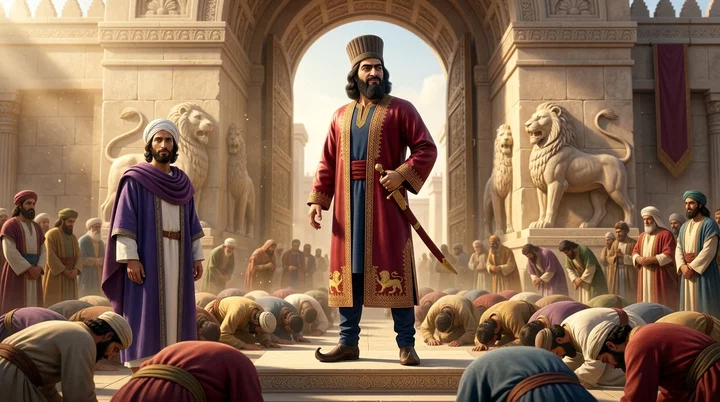
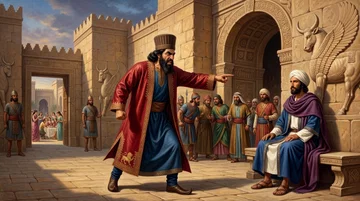
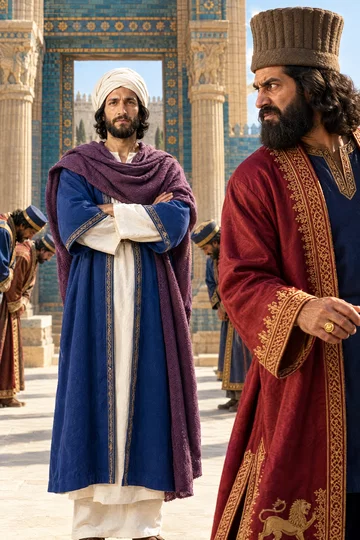
And when Haman saw that Mordecai bowed not, nor did him reverence, then was Haman full of wrath.
Translations
American King James Version, King James Version, KJV Cambridge Paragraph Bible, Webster Bible
And when Haman saw that Mordecai bowed not, nor did him reverence, then was Haman full of wrath.
Revised Version, American Standard Version
And when Haman saw that Mordecai bowed not down, nor did him reverence, then was Haman full of wrath.
And Haman seeth that Mordecai is not bowing and doing obeisance to him, and Haman is full of fury,
And when Haman saw that Mordecai bowed not, nor did him reverence, Haman was full of fury.
And, when Haman saw that Mordecai did not bend nor bow down unto him, then was Haman filled with wrath;
Berean Standard Bible, Majority Standard Bible
When Haman saw that Mordecai would not bow down or pay him homage, he was filled with rage.
When Haman saw that Mordecai didn’t bow down nor pay him homage, Haman was full of wrath.
And when Haman saw that Mordecai did not go down before him and give him honour, Haman was full of wrath.
And when Haman sawe that Mordecai bowed not the knee vnto him, nor did reuerence vnto him, then Haman was full of wrath.
Douay-Rheims (Challoner revision)
Now when Aman had heard this, and had proved by experience that Mardochai did not bend his knee to him, nor worship him, he was exceeding angry.
Pictures
Cross-references
- Esther 8:11-12
Wherein the king granted the Jews which were in every city to gather themselves together, and to stand for their life, to destroy, to slay, and to cause to perish, all the power of the people and province that would assault them, both little ones and women, and to take the spoil of them for a prey,
A new decree enables the Jews to defend themselves from destruction.
- Esther 5:14
Then said Zeresh his wife and all his friends unto him, Let a gallows be made of fifty cubits high, and to morrow speak thou unto the king that Mordecai may be hanged thereon: then go thou in merrily with the king unto the banquet. And the thing pleased Haman; and he caused the gallows to be made.
gallows built before honoring decree
- Esther 4:1
When Mordecai perceived all that was done, Mordecai rent his clothes, and put on sackcloth with ashes, and went out into the midst of the city, and cried with a loud and a bitter cry;
Shows Mordecai’s response after learning of the destruction decree.
- Daniel 3:16-18
Shadrach, Meshach, and Abed-nego, answered and said to the king, O Nebuchadnezzar, we are not careful to answer thee in this matter.
Both Mordecai and the three Hebrews refuse worship contrary to faithfulness to God.
- Deuteronomy 25:17-18
Remember what Amalek did unto thee by the way, when ye were come forth out of Egypt;
It describes the Amalekite attack as the origin of the conflict.
- Esther 7:3-6
Then Esther the queen answered and said, If I have found favour in thy sight, O king, and if it please the king, let my life be given me at my petition, and my people at my request:
Esther exposes Haman’s threat to her people.
Commentary
Each commentary is drawn from primary sources: the writings of Ellen G. White and Adventist pioneers and periodicals. Each commentary is separate. Its own words are not a quotation; follow the references to read the source passages.
Ellen G. White
3 sources
Haman was filled with wrath and became enraged when he saw that Mordecai would not bow to him nor show him reverence.5T 450.1ST Feb 22, 1910Ms 51, 1899, par. 25–26 The reverence Haman demanded belonged to God alone, so Mordecai reserved it for God and, in faithfulness to God's law, would not flatter Haman's vanity and pride.5T 450.1ST Feb 22, 1910Ms 51, 1899, par. 25–26 That refusal did Haman no harm and was no injury to him.5T 450.1ST Feb 22, 1910Ms 51, 1899, par. 25–26
Mordecai's faithfulness to God's law made him a rebuke to those who rejected it.5T 450.1 Haman's wrathful malice then turned that refusal into the occasion for a plot against the Jews, God's people.ST Feb 22, 1910Ms 51, 1899, par. 25–26
The verse thus illustrates how offended pride can stir hostility toward those who remain faithful to God.ST Feb 22, 1910 Mordecai's example represents Sabbath keepers, whose obedience to God may likewise provoke hostility and persecution.5T 450.1
Sources
Pioneers and periodicals
17 sources
At the court of Xerxes, Haman the descendant of Agag was filled with wrath when Mordecai would not bow to him nor show him reverence.ST Apr 23, 1902ST Sep 20, 1899ST Oct 27, 1898 Mordecai refused because he feared and worshiped God, to whom alone such reverence belongs, and would bow to no man.ST Feb 22, 1910RH Mar 13, 1913ST Mar 4, 1886 Haman's polite manner vanished in wrath and exposed a murderous, scheming spirit, as his fury at Mordecai turned into revengeful planning to destroy all the Jews in the empire.ST Apr 23, 1902ST Nov 19, 1896ST Jun 27, 1911ST Feb 27, 1893RH Dec 22, 1910 God frustrated his purpose and by wonderful providence overruled all his plotting for the preservation and salvation of His people, so that deliverance followed the threat and the prepared gallows.RH Aug 11, 1863ST Nov 19, 1896ST Jun 27, 1911ST Aug 20, 1896 Mordecai thus stands as a picture of Sabbath keepers as a Mordecai in the gate, whose loyalty to God's law and refusal to bow to compulsory religious observance rebukes opposing powers and stirs the persecuting hostility of offended pride.ST Feb 22, 1910ST Aug 20, 1896RH Mar 13, 1913RH Jan 23, 1908RH Mar 18, 1915
Context and Meaning
The scene stands at the court of Xerxes, the Ahasuerus of Esther, among the Medo-Persian rulers.ST Oct 27, 1898 Haman was the descendant of King Agag himself, and his wrath at Mordecai was the cropping up again of the Amalekites in lasting opposition to God and His throne.ST Sep 20, 1899 That ancient enmity continued because Saul had been instructed to destroy that wholly wicked power but failed to do it, leaving this later threat to God's people.ST Jan 31, 1906 The Amalekites who survived Saul's campaign grew in strength and influence and were likely among those later destroyed by the Jews in Mordecai's time, once Haman's plan and Mordecai's Jewish identity brought the old conflict between Israel and the Amalekites to the fore.ST Jan 31, 1906
Mordecai's refusal to bow or show reverence came from his fear and worship of God, for he would bow to no one but God.ST Feb 22, 1910RH Mar 13, 1913ST Mar 4, 1886 Such reverence belongs only to God, and Mordecai would not honor a man with it as with God.ST Feb 22, 1910RH Mar 13, 1913ST Sep 20, 1899 He had done Haman no harm, yet Haman became furious because that divine honor was withheld from him.ST Feb 22, 1910ST Feb 27, 1893RH Mar 13, 1913 When Mordecai refused, Haman's polite manner vanished and he became full of wrath, revealing that his politeness was self-serving and concealed a murderous, scheming spirit.ST Apr 23, 1902ST Feb 27, 1893RH Dec 22, 1910
His wrath was anger provoked by refusal to bow and give reverence, Haman becoming full of wrath when Mordecai bowed not nor did him reverence.ST Apr 23, 1902ST Feb 27, 1893ST Apr 23, 1912 That wrathful, angry motive is the kind of killing in anger that was absent when Seleucus Philopator was coolly and treacherously slain by his treasurer Heliodorus in hope of obtaining the kingdom, neither in anger nor in battle.ST Apr 23, 1912
Wrath to Deliverance
Haman's fury when Mordecai would not bow or show him reverence turned into revenge against more than Mordecai himself, for his anger at one Jew became a plan to destroy all the Jews in the empire, making Mordecai's Jewish identity central to the wider events of Esther 3-9.ST Apr 23, 1902ST Nov 19, 1896ST Jun 27, 1911ST Feb 27, 1893ST Mar 4, 1886 That hostility led him to induce the king to decree their destruction, seeking the death of all of God's people.ST Jun 27, 1911ST Feb 27, 1893ST Mar 4, 1886 After lots were cast for twelve months, the revengeful plot gained the king's consent.RH Aug 11, 1863ST Dec 20, 1899 Orders were then sent into all the king's provinces that all Jews should be destroyed and killed and caused to perish in one day, both young and old, little children and women, and Haman made the gallows on which to hang Mordecai.RH Aug 11, 1863
God frustrated Haman's purpose and preserved His people.ST Nov 19, 1896ST Jun 27, 1911 By wonderful providence He overruled all the plotting to the preservation and salvation of the Jews, so that the threat against them was followed by deliverance.ST Nov 19, 1896ST Jun 27, 1911ST Aug 20, 1896 No decree honoring the Israel of God was passed until after this threat of destruction and after the gallows were prepared, proving that the blessings of God are ever preceded by great affliction and that the road to every blessing is strewn with afflictions.RH Aug 11, 1863 In this conflict Mordecai served as a means by which God proclaimed His saving power before the Medo-Persian rulers.ST Oct 27, 1898
Example for Believers
Haman became furious when Mordecai refused to bow to him and give him reverence, and the refusal of a human demand about worship became the occasion for persecution.ST Feb 22, 1910ST Aug 20, 1896 That reverence belonged to God alone, and Mordecai had done Haman no harm, yet his faithfulness stirred hostility born of offended pride.ST Feb 22, 1910 What followed shows the wider threat against God's people and then their deliverance.ST Aug 20, 1896
Mordecai stands as a picture of Sabbathkeepers as a Mordecai in the gate, whose loyalty to God's law will not conform or bow to compulsory religious observance.RH Mar 13, 1913RH Jan 23, 1908RH Mar 18, 1915 Their obedience rebukes those who reject that law, and for that reason they are unwelcome to opposing religious powers.RH Mar 13, 1913RH Jan 23, 1908 Those who resist such compulsion are treated as enemies by forces seeking to impose Sunday observance through law.RH Mar 18, 1915
They are targeted because they keep God's commandments, and their loyalty may provoke persecution.RH Mar 13, 1913RH Mar 18, 1915 The powers arrayed against them seek to put them out of the way.RH Jan 23, 1908
Sources