Exodus 11:8
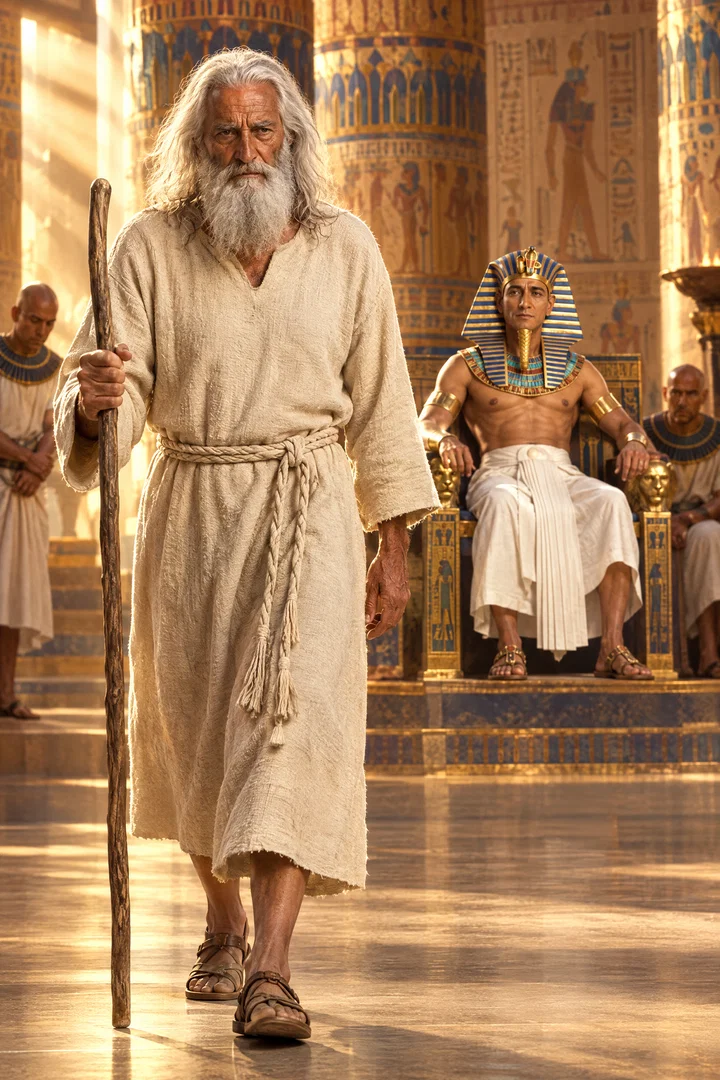
And all these thy servants shall come down unto me, and bow down themselves unto me, saying, Get thee out, and all the people that follow thee: and after that I will go out. And he went out from Pharaoh in a great anger.
Translations
And all these your servants shall come down to me, and bow down themselves to me, saying, Get you out, and all the people that follow you: and after that I will go out. And he went out from Pharaoh in a great anger.
King James Version, KJV Cambridge Paragraph Bible
And all these thy servants shall come down unto me, and bow down themselves unto me, saying, Get thee out, and all the people that follow thee: and after that I will go out. And he went out from Pharaoh in a great anger.
And all these thy servants shall come down to me, and bow down themselves to me, saying, Depart thou, and all the people that follow thee; and after that I will depart: and he went out from Pharaoh in a great anger.
Revised Version, American Standard Version
And all these thy servants shall come down unto me, and bow down themselves unto me, saying, Get thee out, and all the people that follow thee: and after that I will go out. And he went out from Pharaoh in hot anger.
and all these thy servants have come down unto me, and bowed themselves to me, saying, Go out, thou and all the people who [are] at thy feet; and afterwards I do go out;' — and he goeth out from Pharaoh in the heat of anger.
And all these thy bondmen shall come down unto me, and bow down to me, saying, Go out, thou, and all the people that follow thee; and after that I will go out. And he went out from Pharaoh in a glowing anger.
So shall all these thy servants come down unto me and bow themselves down to me saying—Go forth, thou and all the people who are in thy footsteps, and after that, will I go forth. And he went forth from Pharaoh, in a heat of anger.
Berean Standard Bible, Majority Standard Bible
And all these officials of yours will come and bow before me, saying, ‘ Go, you and all the people who follow you!’ After that, I will depart.”And hot with anger, Moses left Pharaoh’s presence.
All these servants of yours will come down to me, and bow down themselves to me, saying, “ Get out, with all the people who follow you;” and after that I will go out.’” He went out from Pharaoh in hot anger.
And all these your servants will come to me, going down on their faces before me and saying, Go out, and all your people with you: and after that I will go out. And he went away from Pharaoh burning with wrath.
And all these thy seruants shall come downe vnto me, and fal before me, saying, Get thee out, and all the people that are at thy feete, and after this will I depart. So he went out from Pharaoh very angry.
Douay-Rheims (Challoner revision)
And all these thy servants shall come down to me, and shall worship me, saying: Go forth thou, and all the people that is under thee: after that we will go out.
Pictures
Cross-references
- Exodus 12:30
And Pharaoh rose up in the night, he, and all his servants, and all the Egyptians; and there was a great cry in Egypt; for there was not a house where there was not one dead.
death in every house broke resistance
- Exodus 14:27-28
And Moses stretched forth his hand over the sea, and the sea returned to his strength when the morning appeared; and the Egyptians fled against it; and the LORD overthrew the Egyptians in the midst of the sea.
demand for release ends in drowned pursuers
- Exodus 4:22-23
And thou shalt say unto Pharaoh, Thus saith the LORD, Israel is my son, even my firstborn:
Warns Pharaoh that God will strike Egypt’s firstborn.
- Exodus 13
And the LORD spake unto Moses, saying,
Continues the account of Israel’s deliverance from Egypt.
- Exodus 10:7
And Pharaoh’s servants said unto him, How long shall this man be a snare unto us? let the men go, that they may serve the LORD their God: knowest thou not yet that Egypt is destroyed?
Pharaoh’s servants urge him to let Israel go as Egypt is laid waste.
- Psalms 105:26-38
He sent Moses his servant; and Aaron whom he had chosen.
Recounts God’s deliverance of Israel from Egypt.
- Exodus 12:13
And the blood shall be to you for a token upon the houses where ye are: and when I see the blood, I will pass over you, and the plague shall not be upon you to destroy you, when I smite the land of Egypt.
gives blood on doorposts passing over
- 1 Samuel 4:7-8
And the Philistines were afraid, for they said, God is come into the camp. And they said, Woe unto us! for there hath not been such a thing heretofore.
Philistines remembered them as literal
- Revelation 11:6
These have power to shut heaven, that it rain not in the days of their prophecy: and have power over waters to turn them to blood, and to smite the earth with all plagues, as often as they will.
The witnesses’ power to bring plagues recalls the plagues on Egypt.
Commentary
Each commentary is drawn from primary sources: the writings of Ellen G. White and Adventist pioneers and periodicals. Each commentary is separate. Its own words are not a quotation; follow the references to read the source passages.
Ellen G. White
4 sources
This verse records Moses' fearless final declaration of God's word to rebellious Pharaoh just before leaving his presence, faithfully setting forth the nature and effects of the last dreadful plague.1SP 197.2–198.2SG3 221.3–222.1ST Mar 18, 1880 The announced plague would come about midnight and be more dreadful than any plague yet seen in Egypt, killing every firstborn from Pharaoh on the throne to the lowest maidservant behind the mill and even the firstborn of beasts, and causing a cry of grief throughout all Egypt such as had never been and would never be again.SG3 221.3–222.1 Israel would be completely protected so that no harm would touch any person or animal among them, not so much as by a dog moving its tongue against them, to show that the Lord makes a distinction between the Egyptians and Israel.SG3 221.3–222.1
After that plague all Pharaoh's servants and great counselors would humble themselves to come down to Moses, bow before him, and urge him to leave Egypt with all the Israelites who followed him, after which Moses would depart.1SP 197.2–198.2SG3 221.3–222.1ST Mar 18, 1880 Pharaoh became exceedingly angry and enraged because he could not intimidate Moses or make him tremble before royal authority.SG3 221.3–222.1ST Mar 18, 1880 Moses spoke boldly and remained courageous despite that anger because he leaned for support upon a mightier arm and power than that of any earthly monarch rather than on earthly authority, and he went out from Pharaoh in great anger.1SP 197.2–198.2SG3 221.3–222.1ST Mar 18, 1880 The verse belongs to the account of the final plague showing that Jehovah executes judgment in the earth.PP 758.3–760.1
Sources
Pioneers and periodicals
27 sources
Moses gave his fearless final warning to rebellious Pharaoh that the dreadful last plague, the death of the firstborn, was coming, and that Pharaoh's own servants would bow before him and urge him to leave with all Israel following him, after which he would go out.ST Mar 18, 1880ST Dec 7, 1904ST Feb 4, 1913ST Dec 25, 1901ST Dec 4, 1901 He then went out from Pharaoh's presence for the last time in great hot anger and righteous indignation, courageous in reliance on a mightier arm than any earthly monarch, which enraged the king who could not intimidate him.ST Mar 18, 1880ST Dec 7, 1904ST Feb 4, 1913 Through these plagues Jehovah showed himself above Egypt's gods and greater than every power they were believed to govern, demonstrating his wisdom, love, power and right to rule in delivering Israel from bondage.RH Mar 11, 1915ST Mar 7, 1906ST Nov 1, 1899ST Nov 27, 1901 The plagues of Exodus 7-12 were real and literal judgments sent just before Israel's deliverance, picturing the seven last plagues of Revelation 15 and 16 that will be poured out as real and literal judgments just before the final deliverance of the saints.STRH Dec 23, 1851ST May 31, 1910RH Mar 23, 1852ST Oct 28, 1930 Moses still in Egypt through the plagues shows the saints will remain on earth through the seven last plagues, protected by the seal of the living God, and his going out from Pharaoh for the last time was a type of the close of probation when the wrath of God will be poured out without mixture.ST Jul 18, 1878ST Dec 4, 1901
Setting and Plain Meaning
This is Moses' fearless final declaration and warning to rebellious Pharaoh about the last dreadful plague, the death of Egypt's firstborn.ST Mar 18, 1880ST Dec 25, 1901ST Dec 4, 1901 It faithfully portrays the nature and effects of that most terrible visitation, of which Pharaoh had been warned since Moses and Aaron first appeared before him.ST Mar 18, 1880ST Dec 25, 1901 He had ignored that warning, and the nine previous plagues had served the double purpose of preparing the Israelites to undertake the exodus and warning Pharaoh so he might relent and escape this last plague.ST Dec 25, 1901
Moses warned that after that judgment Pharaoh's own servants would come down to him, bow down themselves before him, and urge him to leave with all the Israelites who followed him, and after that he would go out.ST Mar 18, 1880ST Dec 7, 1904ST Feb 4, 1913 After speaking, Moses went out from Pharaoh's presence for the last time in great, hot anger and righteous indignation.ST Dec 7, 1904ST Feb 4, 1913ST Dec 4, 1901 He stood courageous in reliance for support upon a mightier arm than that of any earthly monarch, so that the king was exceedingly angry and enraged because he could not intimidate Moses or make him tremble before royal authority.ST Mar 18, 1880 His anger represented the anger of the Lord.ST Dec 4, 1901
The verse belongs to the account of the plagues in Exodus 5-12, culminating in the death of Egypt's firstborn and Israel's hurried departure, and to the section in Exodus 11 to 13 covering the last plague, the Passover, and the going out of Egypt.ST Jan 25, 1910RH Jan 20, 1916 It recounts Moses' confrontation with Pharaoh before the departure while Israel was still in Egypt.RH Jan 20, 1916ST Jul 18, 1878 It concerns the last of ten plagues, the most terrible visitation and final disaster ending the series.ST Apr 13, 1904ST Dec 25, 1901 The aftermath was Israel's deliverance connected with the Passover, indeed the very first Passover, kept at Rameses in Egypt on the night the children were led out of bondage toward Canaan.ST Apr 13, 1904ST May 22, 1907 The name Passover means that when the angel saw the blood on the doorposts he passed over that house and did not slay the eldest child.ST May 22, 1907
The account of the Egyptian plagues lasted several months, with the tenth plague occurring in the following March or April.ST May 6, 1913 Egyptian historical records and public monuments would not be expected to mention these events directly because nothing was ever registered there except successes and triumphs.RH Apr 23, 1908 The court historians omitted the terrible plagues that afflicted Egypt for a whole year and the disaster at the Red Sea, and the king inscribed no account of them upon his buildings.RH Apr 23, 1908 The plagues brought on Egypt before Israel went out toward Canaan were literal, known in Egypt itself and still remembered with dread by Philistia.ST
God's Power and Deliverance
God's religious system was set against Egypt's, and both were associated with miraculous acts.RH Mar 11, 1915 Through the plagues Jehovah showed that He was above Egypt's gods and greater than every power they were believed to govern.ST Nov 1, 1899 Those miracles exposed the powerlessness of Egypt's gods and showed the supremacy of the God of the Hebrews.RH Mar 11, 1915ST Nov 1, 1899 God's power worked through the message Moses delivered, for God's word both brought Egypt's plagues and announced that Pharaoh's servants would finally bow to Moses and demand that he and the people leave.ST Apr 4, 1911
Through Israel's deliverance from bondage God demonstrated His wisdom, love, power, and right to rule, and showed Israel its obligation to obey Him.ST Mar 7, 1906 That same deliverance humbled Egypt and showed the power of Israel's God, giving the people a personal knowledge of Himself connected with the protection of Israel's firstborn and the later escape through the Red Sea.ST Mar 7, 1906ST Nov 27, 1901 The oppression of Israel in Egypt over the right to worship the true God, Creator of heaven and earth, and to keep His commandments, particularly the Sabbath, came to a direct issue and crisis in the latter part of their stay.RH Mar 25, 1909 The power of the oppressor was then broken so the people were delivered only through the terrible plagues that followed and the direct intervention and miraculous power of God.RH Mar 25, 1909
God did not sanction even the modified slavery in which Israel remained for a time as serfs of the Egyptians, but demanded their instant release.RH Oct 1, 1861 On refusal He brought terrible judgments on their Egyptian oppressors, then led Israel out as an army of fugitive slaves and drowned their pursuers in the Red Sea.RH Oct 1, 1861 The verse stands on the way from Israel in oppression and bondage with the whole power of Egypt set against them to Israel's song of triumph beyond the Red Sea with the host of Egypt overthrown.ST Jan 30, 1912 It shows God's mighty work in saving them as creative power made manifest again, such as was never done in the saving of any nation.ST Jan 30, 1912
God redeemed Israel from Egyptian bondage with a mighty hand, but hundreds of years of slavery had unfitted Israel to comprehend His great salvation and the character He required. So He gave them a great multiple object-lesson by various forms and rites that taught the great plan of salvation, beginning with instructing Moses to ask free-will offerings to make Him a sanctuary that He might dwell among them. The leaving foretold here was a whole nation marching out of Egyptian bondage to the awful music of darkness, plague, and storm.ST Sep 28, 1904 That deliverance was accompanied and heralded by terrible convulsions in nature, in the same pattern by which the age after the Deluge was preceded by convulsion, the Jewish age was opened with volcanic action, thunder, lightning and quaking ground, the first coming of Jesus was accompanied by starry wonder, solar obscuration and earthquake, and the last advent to judge the world and change all things will be preceded and accompanied by thunder, lightning, hail, star-falls, roaring seas and an unparalleled earthquake.ST Sep 28, 1904
Pattern of Final Plagues
The plagues of Exodus 7-12, including the river turned to blood, were real and literal judgments upon Egypt.RH Dec 23, 1851ST May 31, 1910RH Mar 23, 1852 Therefore the seven last plagues of Revelation 15 and 16 are to be understood as real and literal, and the judgments of Revelation 16 are literal.RH Dec 23, 1851ST May 31, 1910RH Mar 23, 1852 Their pouring out causes the time of trouble.RH Mar 23, 1852
Those Egyptian plagues came just before the deliverance of Israel, and they foreshadow the seven last plagues that will be poured out just before the final deliverance of the saints.RH Dec 23, 1851ST Oct 28, 1930 The literal going out of Egypt toward Canaan pictures the deliverance of God's people from the dark Egypt of earth.ST The plagues visited on Egypt picture the last plagues recorded in Revelation 16.ST
Moses was still in Egypt confronting Pharaoh in great anger just before the final plague and the Exodus, which proves Israel remained in the land through the plagues upon Egypt.ST Jul 18, 1878 In like manner the saints will remain on the earth through the outpouring of the seven last plagues and will not be removed until after six of the plagues have fallen.ST Jul 18, 1878 They must witness the fearful scenes of the time of trouble in a situation like Israel in Egypt, protected through it by the seal of the living God so that though destruction falls around them it will not come near them, until they are delivered after crying to God day and night.ST Jul 18, 1878 Moses going out from Pharaoh for the last time in hot anger was a type of the close of probation, when the wrath of God will be poured out without mixture upon the world of wickedness, for his anger represented the anger of the Lord that He would strive no longer with the enemies of His people.ST Dec 4, 1901
Sources