Exodus 12:30
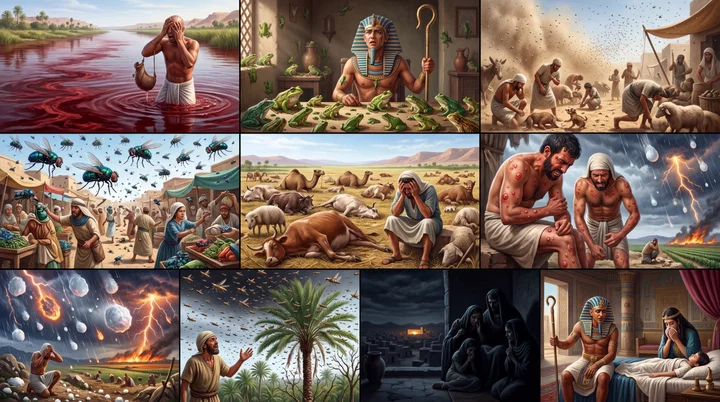
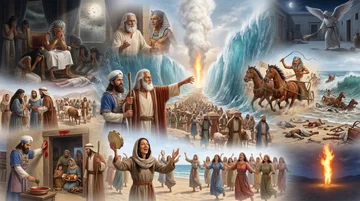
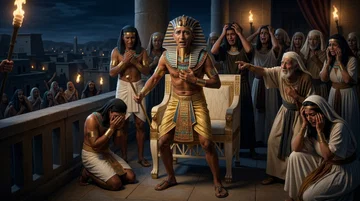
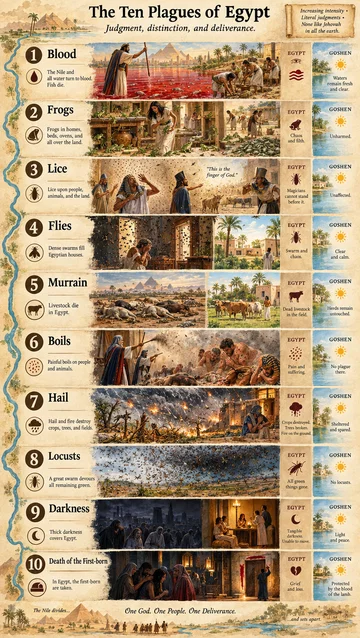
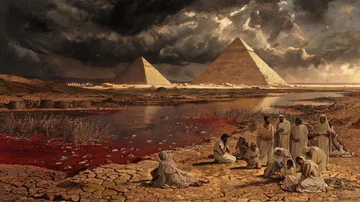
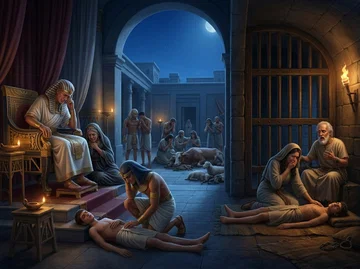
And Pharaoh rose up in the night, he, and all his servants, and all the Egyptians; and there was a great cry in Egypt; for there was not a house where there was not one dead.
Translations
American King James Version, King James Version, KJV Cambridge Paragraph Bible, Revised Version, American Standard Version
And Pharaoh rose up in the night, he, and all his servants, and all the Egyptians; and there was a great cry in Egypt; for there was not a house where there was not one dead.
And Pharaoh rose in the night, he, and all his servants, and all the Egyptians; and there was a great cry in Egypt: for there was not a house where there was not one dead.
And Pharaoh riseth by night, he and all his servants, and all the Egyptians, and there is a great cry in Egypt, for there is not a house where there is not [one] dead,
And Pharaoh rose up in the night, he, and all his bondmen, and all the Egyptians; and there was a great cry in Egypt; for there was not a house in which there was not one dead.
Then rose up Pharaoh by night, he, and all his servants, and all the Egyptians, and there arose a great outcry throughout Egypt,—for there was not a house, where there was not one dead.
Berean Standard Bible, Majority Standard Bible
During the night Pharaoh got up— he and all his officials and all the Egyptians— and there was loud wailing in Egypt; for there was no house without someone dead.
Pharaoh rose up in the night, he, and all his servants, and all the Egyptians; and there was a great cry in Egypt, for there was not a house where there was not one dead.
Then Pharaoh got up in the night, he and all his servants and all the Egyptians; and a great cry went up from Egypt; for there was not a house where someone was not dead.
And Pharaoh rose vp in the night, he, and all his seruants and all the Egyptians: and there was a great crye in Egypt: for there was no house where there was not one dead.
Douay-Rheims (Challoner revision)
And Pharao arose in the night, and all his servants, and all Egypt: for there was not a house wherein there lay not one dead.
Pictures
Cross-references 20 of 47
- Exodus 12:13
And the blood shall be to you for a token upon the houses where ye are: and when I see the blood, I will pass over you, and the plague shall not be upon you to destroy you, when I smite the land of Egypt.
The blood marked the houses spared during the final plague.
- 1 Corinthians 5:7
Purge out therefore the old leaven, that ye may be a new lump, as ye are unleavened. For even Christ our passover is sacrificed for us:
Christ is identified as the Passover sacrifice foreshadowed by the event.
- Exodus 12:22
And ye shall take a bunch of hyssop, and dip it in the blood that is in the bason, and strike the lintel and the two side posts with the blood that is in the bason; and none of you shall go out at the door of his house until the morning.
hyssop applied blood to the door
- Exodus 5:2
And Pharaoh said, Who is the LORD, that I should obey his voice to let Israel go? I know not the LORD, neither will I let Israel go.
Pharaoh’s defiance is humbled by the night of death.
- Exodus 12:12
For I will pass through the land of Egypt this night, and will smite all the firstborn in the land of Egypt, both man and beast; and against all the gods of Egypt I will execute judgment: I am the LORD.
The final plague executes judgment against Egypt and its gods.
- Exodus 12:23
For the LORD will pass through to smite the Egyptians; and when he seeth the blood upon the lintel, and on the two side posts, the LORD will pass over the door, and will not suffer the destroyer to come in unto your houses to smite you.
angel passed over Israelite homes
- Exodus 12:42
It is a night to be much observed unto the LORD for bringing them out from the land of Egypt: this is that night of the LORD to be observed of all the children of Israel in their generations.
The Passover night is kept in remembrance of Israel’s deliverance from Egypt.
- Exodus 14:28
And the waters returned, and covered the chariots, and the horsemen, and all the host of Pharaoh that came into the sea after them; there remained not so much as one of them.
The Egyptians’ judgments culminate in the drowning of Pharaoh’s pursuing army.
- Exodus 11:6
And there shall be a great cry throughout all the land of Egypt, such as there was none like it, nor shall be like it any more.
It also foretells a great cry throughout Egypt.
- Exodus 13:3
And Moses said unto the people, Remember this day, in which ye came out from Egypt, out of the house of bondage; for by strength of hand the LORD brought you out from this place: there shall no leavened bread be eaten.
Israel is told to remember the LORD’s deliverance from Egypt.
- Deuteronomy 16:1-6
Observe the month of Abib, and keep the passover unto the LORD thy God: for in the month of Abib the LORD thy God brought thee forth out of Egypt by night.
It gives instructions for the Passover sacrifice and meal commemorating the exodus.
- Exodus 12:11
And thus shall ye eat it; with your loins girded, your shoes on your feet, and your staff in your hand; and ye shall eat it in haste: it is the LORD’s passover.
The hasty Passover meal was eaten on the night of judgment.
- Revelation 16
And I heard a great voice out of the temple saying to the seven angels, Go your ways, and pour out the vials of the wrath of God upon the earth.
The final plagues echo the plagues inflicted on Egypt.
- Exodus 4:23
And I say unto thee, Let my son go, that he may serve me: and if thou refuse to let him go, behold, I will slay thy son, even thy firstborn.
God warns Pharaoh that Egypt’s firstborn will die if he refuses to release Israel.
- Numbers 3:13
Because all the firstborn are mine; for on the day that I smote all the firstborn in the land of Egypt I hallowed unto me all the firstborn in Israel, both man and beast: mine shall they be: I am the LORD.
Egypt’s firstborn deaths led the Lord to claim Israel’s spared firstborn as his own.
- Exodus 12:7
And they shall take of the blood, and strike it on the two side posts and on the upper door post of the houses, wherein they shall eat it.
Blood on the doorposts marked the Israelite homes to be spared.
- Exodus 12:14
And this day shall be unto you for a memorial; and ye shall keep it a feast to the LORD throughout your generations; ye shall keep it a feast by an ordinance for ever.
The Passover feast memorializes Israel’s deliverance from Egypt.
- Exodus 12:17-20
And ye shall observe the feast of unleavened bread; for in this selfsame day have I brought your armies out of the land of Egypt: therefore shall ye observe this day in your generations by an ordinance for ever.
The feast of unleavened bread is prescribed as a memorial of Israel’s deliverance at Passover.
- Exodus 12:34
And the people took their dough before it was leavened, their kneadingtroughs being bound up in their clothes upon their shoulders.
Israel carries its unleavened dough as it leaves Egypt in haste.
- Leviticus 23:5
In the fourteenth day of the first month at even is the LORD’s passover.
The Passover ordinance recalls the night of Egypt’s firstborn deaths.
Commentary
Each commentary is drawn from primary sources: the writings of Ellen G. White and Adventist pioneers and periodicals. Each commentary is separate. Its own words are not a quotation; follow the references to read the source passages.
Ellen G. White
31 sources
At midnight the Lord struck every firstborn in Egypt, from Pharaoh on the throne to the captive in the dungeon, with the firstborn of cattle also dying by one destroying angel passing from house to house.SG3 228.2ST Apr 1, 1880PP 279.44SP 441.1GC88 614.1–2 Pharaoh with his servants and all the Egyptians rose in the night to find not a house without one dead, and a great cry of wailing went up through the whole land in the most dreadful of the plagues.SG3 228.21SP 204.117MR 350.2–351.14T 20.5–21.1SG3 246.1 While wrath fell on the Egyptians the destroyer passed over the homes of Israel gathered behind doorposts sprinkled with the blood of the slain lamb, so that obedient faith proved by works delivered them.17MR 350.2–351.14T 20.5–21.1SG3 223.1PP 279.3LC1 29.2–30.1 The calamity broke Pharaoh's haughty pride, and he with his officers and people bowed and implored Israel to depart in haste with all their possessions lest all Egypt die.SG3 228.2ST Apr 1, 1880PP 279.44T 20.5–21.1SG3 246.1 The blood on the doors stands as the blood of Christ sheltering the believing sinner from wrath to come, while Pharaoh's ruin shows that God destroys no one but every one destroyed destroys himself by sowing unbelief and reaping obstinacy.COL 84.4LC1 29.2–30.1Ms 56, 1898, par. 51–52
Midnight Judgment on Egypt
At midnight the Lord struck every firstborn in Egypt, from Pharaoh on the throne to the captive in the dungeon, and the firstborn of cattle also died.SG3 228.2ST Apr 1, 1880PP 279.44T 20.5–21.1 The stroke fell on the heir of Pharaoh and on the eldest-born of the captive alike, with none escaping, and the slaying extended from the king's household to the captive's and to the beasts.SG3 228.2ST Apr 1, 18804T 20.5–21.1 One destroying angel passed from house to house among the Egyptians to slay the firstborn of man and beast, which was God's commanded judgment in the Passover events.4SP 441.1SG3 223.1GC88 614.1–2PP 27514MR 1.3–3.1 That single angel's work brought mourning throughout the land, for God permitted the destroying power to act.4SP 441.1GC88 614.1–214MR 1.3–3.1
Pharaoh, his servants, and all the Egyptians rose up in the night, and there was a great cry and wailing throughout Egypt because there was not a house without one dead.SG3 228.21SP 204.1ST Apr 1, 188017MR 350.2–351.1 Grief spread through every level of Egyptian society, from Pharaoh and his servants to the lowliest people, and from the king's household down to the lowliest servant.SG3 246.11SP 219.1COS 103.1–41T 264.4–266.1 Every Egyptian household had a death, and the universal wailing filled all the land.1SP 204.11SP 219.15T 274.2 This was the most dreadful plague, coming closer and more severe than all before it, after repeated warnings and Pharaoh's continued doubt, hardened refusal, long resistance, and persistent refusal to let Israel go.4T 20.5–21.1SG3 246.11SP 219.15T 274.21T 264.4–266.1 It was the last of the plagues sent because he persisted in refusing to let Israel go.4T 20.5–21.15T 274.2Lt 102, 1906, par. 11–13
The calamity humbled Egypt's pride; Pharaoh's haughty pride was broken and he remembered his proud boast that he did not know the Lord and would not obey Him to let Israel go.ST Apr 1, 1880PP 279.4SG3 246.11SP 219.1 The proud king who had been exceedingly angry and would not humble himself had his defiance turned into submission by the universal death.SG3 246.11SP 219.1 Pharaoh faced his devastated land with the dead body of his own firstborn, with the firstborn dead in his whole household and in every family of his kingdom.COL 84.4Ms 56, 1898, par. 51–52
Israel Spared and Released
While the destroying angel was moving from house to house among the Egyptians, the children of Israel had followed the directions God had given them and were all ready for their journey, waiting to be told to go.SG3 228.2ST Apr 1, 1880 They were gathered with their families inside their own dwellings behind doorposts sprinkled with the blood of the slain lamb, having separated themselves and their children from the Egyptians.DA 76.1SG3 223.1Ms 28, 1895, par. 10–11 The angel of death passed over the homes of the children of Israel and did not enter there, so the destroyer did not enter the blood-marked houses.4T 20.5–21.1SG3 223.1PP 279.3 Israel was delivered while wrath fell in death upon the Egyptians, the blood on the doorposts marking their homes as protected and making clear whose people God favored.PP 279.3LC1 29.2–30.1Lt 31, 1891, par. 4–6
Safety required faith proved by works, for the blood marked them as God's people and protected them from the destroyer.17MR 350.2–351.1SG3 223.1 An Israelite who failed to obey and mark the door would suffer the same fate as the Egyptians, and any Israelite found that night in an Egyptian house would fall by the hand of the destroying angel like the Egyptians.17MR 350.2–351.1SG3 223.1LC1 29.2–30.1 Quite a number of Egyptians were led by the signs and wonders to acknowledge that the God of the Hebrews was the only true God and that their own gods were without knowledge and had no power to save or destroy.SG3 223.1 They entreated permission to come with their families into Israelite houses that night, pledging henceforth to choose the God of Israel as their God, and they were welcomed in and preserved and decided to leave Egypt to worship Him.SG3 223.1
That night Pharaoh called Moses and Aaron before him and ordered them to depart without delay and to serve the Lord with flocks and herds as requested.SG3 228.2ST Apr 1, 1880PP 279.44T 20.5–21.1 He humbled himself and went in haste with his counselors and rulers to Goshen and bowed before them, telling them to go and serve their God.ST Apr 1, 1880SG3 246.11SP 219.1 He asked their blessing in hope it would protect him from further effects of the plague, thinking a blessing from God's servant would shield him.SG3 228.2ST Apr 1, 1880SG3 246.11SP 219.1 Pharaoh's officers and people joined in urging and imploring Israel to go out in haste, saying they were all dead men.SG3 228.2ST Apr 1, 1880SG3 246.11SP 219.1 Horror-stricken, they feared that unless God's curse was removed all Egypt would die and the land would become a vast burial ground.4T 20.5–21.1SG3 246.11SP 219.1
The Israelites were released from bondage that same night and went out from Egypt as an independent nation.COS 103.1–4DA 76.1 They were driven out with all their possessions, including their flocks and herds, which were theirs and had not been sold to Pharaoh.DA 76.11SP 205.2 The night is kept yearly as the Passover memorial and feast ordinance, commanded to be told from generation to generation.DA 76.1SG3 223.1LC1 29.2–30.1 The story of the sprinkled blood, the death-dealing angel, and the departure from bondage was rehearsed in solemn assembly, in solemn silence in the night assembly of the paschal service, with men with girded loins, shoes on feet and staff in hand eating the hasty meal of lamb, unleavened bread and bitter herbs.ED 42.2SG3 223.1ST Nov 2, 1915 Parents were to relate to inquiring children their wonderful preservation when the firstborn were slain, to fix it forever in memory, to call minds from worldly cares and temporal anxieties, to stir the imagination and impress the heart, and to increase love and reverence for God and trust in Him in all trials.SG3 223.1LC1 29.2–30.1ST Nov 2, 1915
Doctrines and Lasting Lessons
The night of death was the final judgment that proved Jehovah to be the true God who executes judgment on the earth, exposing the powerlessness of Egypt's idols, affirming His supremacy, insisting on Israel's deliverance, and making clear whose people He favored.PP 758.3–760.1Lt 31, 1891, par. 4–6 While the firstborn died throughout Egypt and Israel was spared, Pharaoh's repeated rejection of warnings and evidence brought judgment upon his own household and nation.Lt 31, 1891, par. 4–6 That judgment came through one destroying angel passing from house to house, illustrating the destructive power holy angels exercise when God commands them.4SP 441.1GC88 614.1–2 It was the devastating result of God permitting the destroying power to act, so that death entered every house and a great cry arose.14MR 1.3–3.1
God delivered His people from Egypt by His mighty power notwithstanding Pharaoh's opposition, in order that they might keep the law given in Eden.8T 197.4–198.1 He brought them to Sinai to hear its proclamation, speaking the Ten Commandments with His own voice in awful grandeur to demonstrate their importance.8T 197.4–198.1 By that power and glory He made known His majesty and authority as Ruler of the world, to impress the people with the sacredness of His law and the importance of obeying it as the faith once delivered to the saints by Christ the Redeemer speaking from Sinai.8T 197.4–198.1 God did not compel Pharaoh to disbelieve, and God destroys no one; everyone destroyed destroys himself by stifling conscience, fulfilling the law that whatsoever a man sows that he also reaps, which warns men to be careful what seed they sow.COL 84.4Ms 56, 1898, par. 51–52 That destruction was not God destroying man but man destroying himself, and at that point God could say to Israel, I gave Egypt for thee.Ms 56, 1898, par. 51–52
By rejecting the first warning Pharaoh himself put unbelief and obstinacy as seed into the soil and reaped obstinacy as harvest.COL 84.4Ms 126, 1901, par. 20–22 Though strong and convincing light making known the great I AM compelled him to yield, as soon as pressure was removed his unbelief returned and counteracted the light.Ms 126, 1901, par. 20–22 Left to its natural course with no need for God by some new power to interfere with its growth, any more than with growing corn, the seed germinated and brought forth fruit after its kind.Ms 126, 1901, par. 20–22 He hardened his heart and went from step to step of unbelief until no working of God's power would convince him, and the firstborn, the pride of every household, were laid low throughout the vast realm of Egypt as the harvest left to germinate, with his resistance continuing until the sea closed over his horses, chariots and soldiers.COL 84.4Ms 56, 1898, par. 51–52Ms 126, 1901, par. 20–22
The slain lamb is a symbol of the death of the Son of God, to be associated by those celebrating it with His future death.LC1 29.2–30.1 The blood marking the doorposts is a symbol of the blood of Christ, which is efficacious for the believing sinner to cleanse from sin and shelter from the wrath to come upon the impenitent and unbelieving world, as wrath fell in death upon the Egyptians while Israel was delivered.LC1 29.2–30.1 None could be benefited by this provision for salvation unless by acts manifesting faith they did the work left them to do.LC1 29.2–30.1 The saving of those who gathered their children into their homes behind marked doorposts applies as a lesson to protect children from influences that weaken faith and to recognize the lasting importance of home teaching.Ms 28, 1895, par. 10–11 Though Israel's children were spared that night of death and great cry, the Israelites later forgot this deliverance and the divine power that had freed them from Egypt.PP 292.1–3
After this last plague Pharaoh consented to let the Israelites start on their journey.Ms 126, 1901, par. 20–22Lt 102, 1906, par. 11–13 It was the last of the plagues sent because he persisted in refusing to let Israel go.Lt 102, 1906, par. 11–13 Yet hardness of heart afterward came upon him, and he hurried with his army after a people delivered by the arm of Omnipotence, fighting against a Power greater than any human power, until with his host he perished in the waters of the Red Sea.Ms 126, 1901, par. 20–22Lt 102, 1906, par. 11–13
Sources
Pioneers and periodicals
85 sources
At midnight Pharaoh with his servants and all the Egyptians rose with a great cry because the firstborn died from the throne to the dungeon with the cattle, so that there was not a house without one dead.ST Apr 1, 1880ST Jan 21, 1889ST May 28, 1894 It was the tenth plague and the climax of the contest with Pharaoh, breaking his stubborn resistance and compelling the hurried release of Israel from bondage.ST Nov 14, 1906ST Apr 13, 1904 While death entered every unmarked Egyptian house, the houses marked with the blood of the paschal lamb were passed over and spared, so the same night held terrible grief for Egypt and salvation for those trusting the blood.ST Apr 13, 1904ST Jan 21, 1889ST May 22, 1907 It was God's righteous retribution in infinite justice for choosing sin and for long cruel oppression and slaying of Israel's children, executed after long patience.ST Jan 22, 1885RH Mar 11, 1915 Christ is our Passover, and the lamb slain on the fourteenth day of the first month met its antitype in the death of Jesus the Lamb of God on that same day, whose blood must be applied for salvation.ST May 28, 1894ST Aug 13, 1874 The plagues coming just before Israel's deliverance shadow forth the seven last plagues of Revelation 16 that will be just as real and literal before the final deliverance of the saints.RH Dec 23, 1851STST Jul 18, 1878
Night of Universal Death
At midnight Pharaoh with his servants and all the Egyptians rose in the night with a great cry and wailing because the firstborn had been struck dead.ST Apr 1, 1880ST Jan 21, 1889ST May 28, 1894RH Jan 20, 1916ST Dec 14, 1904 The destroyer passed from house to house and smote every firstborn in the land, from the firstborn of Pharaoh on the throne to the firstborn of the captive in the dungeon, together with all the firstborn of cattle, so that there was not a house without one dead.ST Apr 1, 1880ST May 28, 1894ST Dec 14, 1904RH Apr 9, 1901 While Israel waited ready for the journey, the Egyptians who had mocked their great preparations and ridiculed the token of blood on the doorposts now mourned throughout the land.ST Apr 1, 1880ST Jan 21, 1889 Pharaoh's haughty pride was humbled as he remembered his proud boast that he did not know the Lord and would not let Israel go, and he called for Moses and Aaron by night to order Israel out with flocks and herds to serve the Lord.ST Apr 1, 1880 He asked their blessing in hope that a blessing from God would protect him from further effects of the plague, and his officers and the people joined in imploring Israel to go, saying they were all dead men.ST Apr 1, 1880ST Dec 14, 1904
The stroke was the tenth plague, the death of the firstborn, which brings the contest with Pharaoh and the infliction of the plagues to its climax.ST Nov 14, 1906ST Apr 13, 1904 It was the final disaster in the series and the final judgment after Pharaoh had repeatedly hardened his heart against God's demands, and it broke his stubborn resistance.ST Nov 14, 1906ST Apr 13, 1904ST Feb 4, 1913ST May 14, 1894 It caused the hurried departure and release of Israel from bondage in Egypt, with the ordinance of the Passover given in close connection with it and the firstborn claimed as the Lord's.RH Jan 20, 1916ST May 14, 1894 In contrast to Israel's Passover deliverance, which shows pardon and the blotting out of sin through the blood of Christ typified by the blood on the doorposts, every Egyptian home became a house of mourning.ST Apr 13, 1904
The death of the firstborn is the last of the ten plagues upon Egypt in Exodus 6-12.ST Jan 20, 1909RH Oct 31, 1912ST Aug 12, 1913 It followed Pharaoh's refusal of the reasonable request to let God's people go that they might serve Him, whom God had called His firstborn son.ST Jan 20, 1909RH Oct 31, 1912 At first the plagues were brought not against human beings but against the gods the Egyptians worshiped, and almost every plague, including this death in every Egyptian house, was connected with their worship in some way to show that their gods were utterly unworthy of trust.ST Jan 20, 1909 The Egyptians had enslaved the people whose family had once preserved them and had gone on to kill their children, and the plague answered that wrong, while Israelites also were liable to suffer the judgment if they failed to follow God's specific instructions.RH Oct 31, 1912 The death of Pharaoh's son while still young belongs to that plague, and Egyptian discoveries are said to fit the Bible record.ST Aug 12, 1913
The same stroke is counted as the eleventh and last miracle in Egypt.ST Jan 22, 1885ST Jan 14, 1889 God had revealed Himself as the true God by miraculous power fitted to destroy the various forms of idolatry in Egypt, and this last miracle was a judgment to manifest to all minds that Jehovah is the God who executes judgment in the earth.ST Jan 22, 1885ST Jan 14, 1889 It was righteous retribution in infinite justice for Egypt's long cruel oppression of Israel and for slaying Israelite children at birth.ST Jan 22, 1885 In the mid-watches of the night the angel of pestilence was sent to the dwellings of Egypt and breathed in the face of all the firstborn, so that by morning the hope of every family from palace to cottage was a corpse and an agonizing wail rose from the stricken parents of the whole nation.ST Jan 22, 1885 The stroke taught the cruel taskmasters by means that entered their souls that the true God is a God not only of power but of judgment, to be feared by evildoers and reverenced by those that do well.ST Jan 22, 1885
The night belonged to the exodus when 430 years had expired from the promise to Abraham.RH Dec 17, 1861 Israel's leaving is placed 1491 years before Christ, on the fifteenth day of the first month, when after being thrust out just after midnight some three million people marched from Rameses to Succoth driving flocks and herds and carrying what they could on their shoulders.ST Jul 17, 1879ST Jan 28, 1886 The tenth plague falls in March or April after plagues lasting several months, within the narrative of the journey from Egypt to Canaan by way of the vicinity of Mount Sinai.ST May 13, 1880 That fifteenth of Abib was a night of heavy work and travel, wholly unlike the weekly Sabbath rest of the Lord.ST Jul 17, 1879RH Apr 14, 1874
Egyptian court records would not be expected to mention such a disaster, and the king would not have recorded the loss of his son on public monuments.RH Apr 23, 1908 The widespread death reached from Pharaoh's household to the captive's, and the loss of Pharaoh's eldest son is reflected in the reported succession of that Pharaoh by his second son, with no account of his first son.RH Apr 7, 1874ST Aug 12, 1913 The great cry that night centered on the sudden and mysterious death of a royal or noble youth in connection with the feast of passing the dead at the beginning of the year, immediately after which a royal order went out for the hasty departure of the enslaved people led by Moses after miracles performed by him in Lower Egypt.RH Mar 18, 1858 The death of Pharaoh's son while still young belongs to that last plague, and Egyptian discoveries are said to fit the Bible record.ST Aug 12, 1913
The night of deliverance belonged to the same day as the events associated with it, for the word day can include the night as well as the daylight hours, supporting a full twenty-four-hour day beginning at evening.RH Dec 12, 1871ST Jun 12, 1879 It was a night of heavy work and travel on the first day of unleavened bread in Egypt, marking the end of the count of weeks from Genesis 1 and of time from the rest-day of the Creator in Eden, and such labor is wholly unlike the weekly Sabbath.ST Jul 17, 1879ST Jun 12, 1879 Abib is the first month of Israel's sacred year and the seventh month of the civil year reckoned from creation, and the passage treats the Passover rather than a change of the weekly Sabbath as the memorial of deliverance.RH Nov 7, 1871RH Apr 14, 1874 The chapter at most describes the arrangement for that one Passover year and does not prove that the week began with the year, for the holy days in connection with the Passover feast were not necessarily always upon the weekly Sabbath. Changes in beginning or closing the month or the year did not break the week, the weeks were all full and the year did not close with a defective week, so different days of the week fell on different dates of the month.
The warning of the death of the firstborn had been given beforehand at court by the prophet, and the stroke falls in the night upon the king's people.ST Dec 7, 1904 The warning was known and believed beforehand even by some Egyptians, including a prison keeper who had believed the prophets and their God for forty years since Moses taught him before fleeing Egypt, and who had sworn to the prophets to aid the escape of the Hebrew prisoners.ST Dec 7, 1904 Its reach was such that Hebrew firstborn locked in Egypt's prison dungeons were in danger of perishing with Egypt unless they were freed beforehand.ST Dec 7, 1904
Passover Deliverance Remembered
While death entered every unmarked Egyptian house, the houses of Israel marked with the blood of the paschal lamb were passed over and spared, so the same night held terrible grief for Egypt and salvation for those trusting the blood.ST Apr 13, 1904ST Jan 21, 1889ST May 22, 1907ST May 8, 1879ST May 12, 1898 The firstborn died and every Egyptian home became a house of mourning, with a great cry arising at midnight because every house had a death, and the wail of people and animals was so widespread that no Egyptian household was without a dead person.ST Apr 13, 1904ST Jan 21, 1889ST Feb 4, 1889 The feast was called Passover because the angel passed over houses marked with blood and did not slay their oldest child, and the Israelite child whose father applied the blood was spared and even slept through the cry.ST May 22, 1907ST Feb 4, 1889 This judgment stands in contrast to Israel's deliverance, which shows pardon and the blotting out of sin through the blood of Christ typified by the blood on the doorposts, and it contrasts the Egyptians' deaths with the protection given to the Israelites who acted in faith.ST Apr 13, 1904ST Jan 21, 1889 The Passover commemorated this deliverance and Israel's departure from Egypt.ST May 12, 1898
Israel would have shared the death if they had refused God's instruction about the blood, for Israelites were also liable to suffer the judgment if they failed to follow God's specific instructions.RH Oct 31, 1912 Even any Hebrew child found in an Egyptian habitation was destroyed, while the blood on the lintel was the blood of Christ, who alone saved the firstborn of the Hebrews from the curse.RH Feb 7, 1907 While the judgment fell the Hebrews waited through the night ready for hasty flight with girded loins, sandals on feet and staff in hand, with unbaked bread in the kneading-trough and scattered flocks gathered in, in thrilling silence with quiet joy mingled with regret at leaving their birthplace, the house of bondage, for the promised land.ST Feb 4, 1889 That earnest waiting through the night for departure was an act of entire consecration to God and death to the world, with the same state of mind as if to die that day, like the faith of Abraham in offering Isaac, Noah in building the ark, Lot in leaving Sodom, Daniel in the lions' den, and the three Hebrews in the fiery furnace, and it was a severe faith test for those who trusted the proclaimed time and prepared to leave.RH Oct 6, 1904RH Aug 27, 1914 The angel of death passed from house to house among the Egyptians, and the destroyer smote all the firstborn in the land, from the firstborn of Pharaoh on the throne to the firstborn of the captive in the dungeon, with all the firstborn of cattle, so that there was not a house without one dead and a great cry and wailing rose throughout all Egypt.ST Apr 1, 1880
The Egyptians who had mocked Israel's great preparations and ridiculed the token of blood on the doorposts now mourned, and Pharaoh's haughty pride was humbled as he remembered his proud boast that he did not know the Lord and would not let Israel go.ST Apr 1, 1880 He called for Moses and Aaron by night to order Israel out with flocks and herds to serve the Lord, asking their blessing in hope that a blessing from God would protect him from further effects of the plague, and his officers and the people joined in imploring Israel to go, saying they were all dead men.ST Apr 1, 1880 The Passover is the God-given memorial of Israel's deliverance from Egypt, with its office plainly declared to keep that deliverance in remembrance, recording the mighty rush out of the land on the fourteenth of the first month after the night of death in every Egyptian house.RH Dec 17, 1857 It commemorated Israel's deliverance from Egyptian bondage and served as a shadow of something good to be done for the human race and as a type of Christ's work, with its time expressly given in Exodus 12.RH Jan 14, 1862ST Aug 13, 1885ST Apr 23, 1896 The night was kept in remembrance of the Lord's bringing Israel out of Egypt, and the great cry after the death of the firstborn was the event the Passover was designed to call to mind.RH Nov 13, 1860ST May 31, 1905
The Feast of Unleavened Bread was given as a second distinct memorial declaring how the fearful Egyptians hurried Israel away with dough before it was leavened.ST Sep 13, 1877 The weekly Sabbath is not the memorial of the deliverance from Egypt, for a weekly rest has no fitness to memorialize a midnight flight and rush that could come but once a year, and a rest cannot memorialize a rush.RH Jan 7, 1862ST Sep 13, 1877 There is nothing in resting on the seventh day of every week to commemorate a midnight flight on the fifteenth day of the first month, so the weekly Sabbath does not commemorate the exodus.RH Apr 14, 1874 The Passover was a fitting memorial of that deliverance, while the Sabbath was established at creation and memorializes creation and the Creator's rest, wholly different in nature from God's day of rest after six days of labor in creating the world.RH Dec 17, 1857ST May 31, 1905RH Jan 7, 1862 The deliverance out of Egypt is commemorated instead by the two-fold memorial of the Passover and the Feast of Unleavened Bread, just as the Sabbath memorializes creation, and the Passover, not the Sabbath, is the appointed memorial of that deliverance.RH Nov 15, 1853RH Apr 14, 1874
The original Passover instructions in Exodus 12-13 are distinct from the materially changed temple form of celebration with its added injunctions, its use of wine not enjoined in the Pentateuch, and its closing Hallel song not required by the original instructions.ST Feb 22, 1899 The story was afterward rehearsed in solemn silence in the night assembly of the paschal service at Jerusalem, with men with girded loins, shoes on feet and staff in hand eating the hasty meal of lamb, unleavened bread and bitter herbs, to stir the imagination and impress the heart.ST Nov 2, 1915 With story and song and commandments amid nature and kindly association it was fixed forever in the memory of children and youth, together with the sprinkled blood that spared Israel, the death-dealing angel bringing death into every Egyptian house, and the grand march out of the land of bondage.ST Nov 2, 1915 The ordinance of the Passover was given in close connection with the tenth-plague stroke that brought the contest with Pharaoh to its climax and caused the hurried departure of Israel from Egypt, and the firstborn were claimed as the Lord's. Because the firstborn males of Israel were spared that memorable night when Egypt mourned the loss of all its firstborn sons, God claimed every firstborn son in Israel for His special service, originally designed not as a special class or caste priesthood but as a representative order to whom all the people would be related, a station afterward filled by the tribe of Levi.RH Dec 1, 1910
God's Justice Against Egypt
The death of the firstborn was righteous retribution in infinite justice for choosing sin and standing with oppression, for long cruel enslavement of Israel, and for slaying Israelite children at birth.ST Jan 22, 1885RH Mar 11, 1915RH Oct 31, 1912 Those who had identified themselves with sin were destroyed with it, and the stroke came only after long patience with Egypt's abuse of Israel and Pharaoh's refusal to release Israel whom God called His firstborn son.RH Mar 11, 1915RH Oct 31, 1912RH Oct 1, 1861 The judgments opposed that oppression and preceded deliverance from bondage, forcing the release of God's people.RH Oct 1, 1861ST Feb 26, 1885 In the mid-watches of the night the angel of pestilence was sent to the dwellings of Egypt and breathed in the face of all the firstborn, so that by morning the hope of every family from palace to cottage was a corpse and an agonizing wail rose from the stricken parents of the whole nation.ST Jan 22, 1885 The stroke taught the cruel taskmasters by means that entered their souls that the true God is a God not only of power but of judgment, to be feared by evildoers and reverenced by those that do well.ST Jan 22, 1885
Pharaoh blindly and stubbornly hardened his heart with contempt for God and His law, rejecting miracle after miracle with increasing hardness until his land was laid waste.RH Mar 25, 1909ST Feb 4, 1913RH Jan 7, 1915 Each visitation was more severe than the preceding, yet he would not release Israel until compelled by universal death in every house from the king upon the throne down to the most humble and lowly, with wailing and mourning throughout Egypt.RH May 1, 1866RH Apr 9, 1901 Sudden destruction without remedy then confronted him in every family, breaking his stubborn resistance and compelling him to command Israel to go.RH Mar 25, 1909RH May 1, 1866 Even after seeing the pale faces of the firstborn and ordering their departure, he regretted letting Israel go and hardened again with principles unchanged once the dead were buried.RH May 1, 1866ST Feb 9, 1915 The night stood as proof of God's power over Egypt's false gods, known to Israel only the night before it happened.RH Apr 9, 1901
The miracles and plagues displayed God's wisdom, love, power, ability and right to rule, with the deliverance beginning in oppression and ending in triumph showing His mighty creative power in saving a nation.ST Mar 7, 1906ST Jan 30, 1912 They belonged to the conflict between God's religious system and Egypt's, showing His power over Egypt's gods and that they were utterly unworthy of trust.RH Mar 11, 1915ST Jan 20, 1909 At first the plagues were brought not against human beings but against the gods the Egyptians worshiped, and almost every plague, including death in every Egyptian house, was connected with their worship to expose it.ST Jan 20, 1909 This last miracle was a judgment to manifest to all minds that Jehovah is the God who executes judgment in the earth, alone all-embracing, all-powerful and all-wise, with Egypt's gods as nothing before Him.ST Jan 14, 1889ST Nov 1, 1899
The destroyer was one of God's angels commissioned to pass through Egypt, passing from house to house at midnight and smiting all the firstborn from Pharaoh on the throne to the captive in the dungeon with all the firstborn of cattle, while Satan was responsible only by inducing the sin.ST Apr 1, 1880ST Jan 22, 1885 The work was done by God's spoken Word through Moses, not by power in Moses himself, for the same Word that turned the rivers into blood smote the land until this final death, proving the power manifested by God's servants lies in the message God speaks and is decided by how men receive or reject it.ST Apr 4, 1911 Moses and Aaron had no part in causing the final death, which was completed by God's power alone.ST Jul 3, 1879 Pharaoh's haughty pride was then humbled as he remembered his boast that he did not know the Lord, and he called for Moses and Aaron by night to order Israel out with flocks and herds to serve the Lord, asking their blessing in hope of protection, while his officers and people joined in imploring Israel to go as dead men.ST Apr 1, 1880
The judgment displayed mercy by delivering the oppressed and assuring loyal subjects of protection, with a reasonable request to let God's people go that they might serve Him, which Pharaoh refused.ST Jan 20, 1909ST Feb 26, 1885 It came after repeated warnings and stubborn oppression, and God's mercy remains even when He punishes the guilty who have rejected it.ST Feb 26, 1885 The night's death in every house with a great cry was real and literal history, tangible and comparable in kind to the other plagues, shadowing plagues to come that will be just as real and literal before final deliverance.RH Dec 23, 1851RH Mar 23, 1852 This deliverance is true history of divine origin and authority in which God adopted Israel as a peculiar people, recognized as reality by all the other Old Testament books on which priesthood, sacrifices, covenants, promises and the whole system of laws rest as instituted by God, and ratified in the fullest manner by the New Testament whose revealed redemption is founded upon it and dependent upon it.ST May 8, 1879 The exodus account was supervised directly by Moses and stated as positively as creation, treating both as reliable history.ST Jul 28, 1881
Pharaoh's resistance concerned letting Israel go to worship God and keep the Sabbath, refusing until the angel of death visited every Egyptian family.RH Mar 25, 1909 The law given through Israel was for every person of whatever race or nationality, not for Israel alone, with Israel as the chosen light to surrounding nations revealing what it means to be a member of God's government.ST Jun 13, 1906 The Ten Commandments were the constitution of natural and individual life, and the added rites, services, ceremonies and instructions were by-laws explaining the real meaning of that Sinai law, how to be kept from transgressing it and what to do when violated.ST Jun 13, 1906 Israel in Egypt still observed God's ordinances, keeping circumcision as necessary to eat the Passover and standing ready to eat it, proving they had not forgotten God and His past dealings.RH Sep 24, 1872
Christ and Final Plagues Foreshadowed
Christ is our Passover, and the lamb slain on the fourteenth day of the first month met its antitype when Jesus the Lamb of God died on that same day.ST Aug 13, 1874RH Mar 31, 1874 The Passover commemorated the deliverance from Egyptian bondage and was a type of Christ's work, and God honored the feast itself rather than a day of the week, standing first in a sequence with the resurrection as the antitype of first-fruits and the outpouring of the Holy Spirit as the antitype of Pentecost, saying nothing about changing the Sabbath.ST Apr 23, 1896RH Mar 31, 1874 The blood on the doorposts typified the blood of Christ that must be applied for salvation and for entrance to the promised land, marking the home for deliverance so the firstborn child within was spared and carried safely out toward the promised land.ST May 28, 1894RH Apr 24, 1879 Israel would have shared the death that fell at midnight from Pharaoh on the throne to the captive in the dungeon with the firstborn of cattle, if they had refused God's instruction about the blood, so refusing Christ's blood leaves no escape.ST May 28, 1894RH Apr 24, 1879
Israel's Passover deliverance shows pardon and the blotting out of sin through the blood of Christ typified by the blood on the doorposts, set against a final disaster in which every Egyptian home became a house of mourning.ST Apr 13, 1904 The saving from Egyptian bondage means salvation from the heavier, more accursed bondage of sin, yet the sprinkling of the Passover blood avails nothing if the sin is not repented of.ST Aug 20, 1912 Israel is called God's first-born, but all in Israel who identify themselves with sin will share the fate of Egypt's first-born in the night of doom.ST Aug 20, 1912
The plagues of Egypt were real and literal history known by painful experience, with death in every house and a great cry in the night, and they came just prior to the deliverance of Israel.RH Dec 23, 1851ST They shadow forth the seven last plagues of Revelation 16, which will be just as real and literal and will be poured out just before the final deliverance of the saints.RH Dec 23, 1851RH Mar 23, 1852ST Oct 28, 1930 The going out of Egypt toward Canaan foreshadows the deliverance of God's people from the dark Egypt of earth, providing the historical parallel for the calamities and time of trouble before they are delivered.STST Jul 18, 1878 As Israel experienced the Egyptian plagues, God's people will remain on earth through the first six final plagues but be protected by God.ST Jul 18, 1878
The judgment of death fell on the firstborn in every unmarked house while the houses marked with the blood of the paschal lamb were spared as the destroying angel passed over, so a visible distinguishing mark exempted God's people from the destruction falling on the wicked around them.ST May 8, 1879 That mark is the pattern for the sealing of the 144,000 before the four winds of war and trouble are let loose, the seal being a distinguishing religious characteristic that exempts its bearers from the judgments of God.ST May 8, 1879 At the time when the wicked have fully united with Satan and God vindicates the authority of His downtrodden law, the angel of death who in ancient Egypt slew the firstborn only goes forth with a broader commission, not to slay the firstborn only but to slay utterly old and young, maids, little children, and women.ST Jul 24, 1893
The final sign before Israel left Egypt, the great cry after the deaths of the firstborn at midnight, was a type of the true midnight cry of 1844.RH Aug 19, 1851 That night of deliverance was a way-mark that God had led Israel and claimed them as His people, and Israel's departure is an example of God bringing a people out of spiritual Egypt in the last days, with the midnight cry marking their departure and the message after they are free calling them to keep God's commandments on the way to the promised inheritance.RH May 29, 1856 The children of Israel standing all night waiting for departure acted in entire consecration to God and death to the world, with the same state of mind as if to die that day, the same faith that led Abraham to offer Isaac, Noah to build the ark, Lot to leave Sodom, Daniel to go into the lions' den, and the three Hebrews to go into the fiery furnace.RH Aug 27, 1914LDT 173.1–174.1 That earnest waiting illustrates the earnestness of those giving the midnight cry as they neared the termination of the 2300 days, daring to be accounted fools, madmen, or anything else by opposers, because the final truth brings such a test of faith and requires buying for oneself the individual experience that prepares to meet the Lord by believing God's truth and venturing out upon it by strong faith that gives glory to God.RH Aug 27, 1914LDT 173.1–174.1
After generations of slavery the delivered people needed instruction in God's salvation and character, and the sanctuary and its rites were given as a many-sided object lesson to teach the plan of salvation. The deliverance of Israel from Egypt illustrates the great controversy between good and evil and gives a lesson with new significance and beauty.
Warning and Life Applied
The tenth plague stands as a warning not to wait for a like disaster before ending injustice toward the enslaved.RH Aug 19, 1862 The judgments on Egypt followed refusal to release Israel, opposed the oppression of Israel, and came before deliverance from bondage.RH Oct 1, 1861 Each visitation grew more severe than the one before, yet stubbornness held until universal death in every house from throne to lowliest compelled release, and even after burial the heart hardened again with principles unchanged.RH May 1, 1866 That same selfish love of slavery and desperate resolve to cherish it appeared in the South, holding slaves with a firm Pharaoh-like grasp and determined they shall not go, with consciences seared and hardened, willing to yield only while suffering and then seeking to make the slave feel oppressive power.RH May 1, 1866 Only God can wrench the slave from such a relentless oppressor, and hardened hearts must expect further judgment to burst over their heads.RH May 1, 1866
The children of Israel are the enslaved under hard taskmasters, with Lincoln as their Moses deliverer.RH May 10, 1864 The cold dead firstborn, or worse the father and husband, lay in every house, joined with thick darkness that can be felt, so that the whole nation stands dark, unable to see a track in the woods, tell who is met, or find the way home, but only stand still and feel it.RH May 10, 1864 While judgment for the sin of oppression rests on the nation, every enslaved person has light in the dwelling and quarters that comforts and sustains until morning, talking, singing, working, playing with the children, warming and feeding, and telling him never to mind the dark long night for it will last till morning and never go out.RH May 10, 1864
The midnight destruction when no house was without one dead and a great cry arose was written for instruction of those living in the last days before the overflowing scourge comes upon dwellers of the earth.RH Feb 7, 1907 Even any Hebrew child found in an Egyptian habitation was destroyed, while the blood on the lintel, which is the blood of Christ, alone saved the Hebrew firstborn from the curse.RH Feb 7, 1907 All who are Israelites indeed are therefore to prepare, with parents to gather children into their own houses away from those disregarding God's commandments and teaching and practicing evil, to get out of large cities as fast as possible, and to establish church-schools.RH Feb 7, 1907
Egypt's night of doom brought mourning into every household, picturing the sorrow that touches every home and heart and the world's fear, suffering and misery.RH Dec 16, 1915ST Sep 8, 1909 The midnight cry of weeping and wailing when death entered every house shows the terrors touching the condition of the ungodly, as an alarm powerful enough to awaken people.RH Nov 20, 1856RH Aug 24, 1869 The weeping and wailing of the lost will be more terrible than that cry.RH Nov 20, 1856 If heard for one moment it would rouse the student at his books, arrest the dancer, stop armies in battle, call sleepers from beds, bend the most stubborn knees, and extort the one loud cry for salvation from perishing.RH Nov 20, 1856
God led Israel out of slavery with order, bringing His people out of the confusion of distracted bondage, for He is not the author of confusion but brings harmony out of chaos.ST Aug 18, 1881 The night when Pharaoh and all his servants and all the Egyptians rose with a great cry over death in every house belonged to that orderly deliverance.ST Aug 18, 1881 Like other great divine interventions in history, the deliverance from Egypt was accompanied by striking events in nature such as darkness, plague and storm.ST Sep 28, 1904
Sources