Exodus 2:6
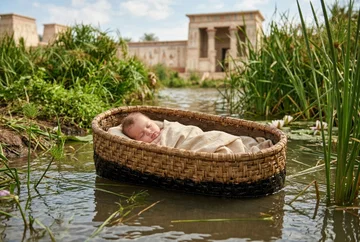
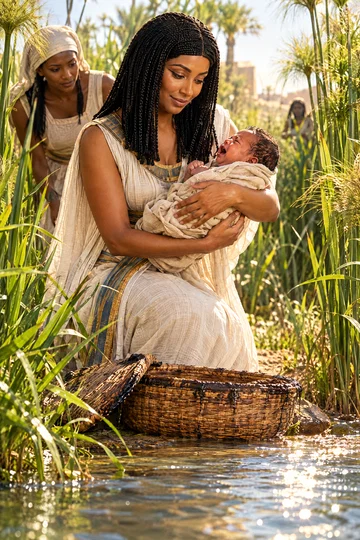
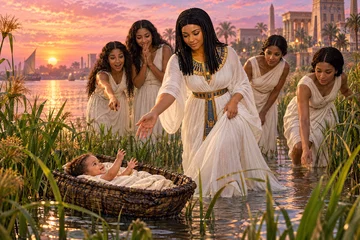
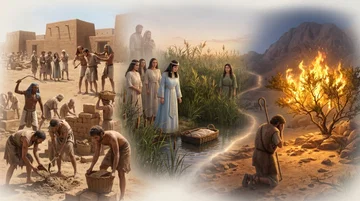
And when she had opened it, she saw the child: and, behold, the babe wept. And she had compassion on him, and said, This is one of the Hebrews’ children.
Translations
American King James Version, King James Version
And when she had opened it, she saw the child: and, behold, the babe wept. And she had compassion on him, and said, This is one of the Hebrews’ children.
And when she had opened it, she saw the child: and behold, the babe wept. And she had compassion on him, and said, This is one of the Hebrews’ children.
And when she had opened it, she saw the child: and behold, the babe wept. And she had compassion on him, and said, This is one of the Hebrews' children.
Revised Version, American Standard Version
And she opened it, and saw the child: and, behold, the babe wept. And she had compassion on him, and said, This is one of the Hebrews’ children.
and openeth, and seeth him — the lad, and lo, a child weeping! and she hath pity on him, and saith, 'This is [one] of the Hebrews' children.'
And she opened [ it], and saw the child, and behold, the boy wept. And she had compassion on him, and said, This is [ one] of the Hebrews' children.
And she opened and beheld it—even the child, and lo! a boy weeping,—so she took pity on him, and said, Of the children of the Hebrews, is this.
Berean Standard Bible, Majority Standard Bible
When she opened it, she saw the child, and behold, the little boy was crying. So she had compassion on him and said, “ This is one of the Hebrew children.”
She opened it, and saw the child, and behold, the baby cried. She had compassion on him, and said, “ This is one of the Hebrews’ children.”
And opening it, she saw the child, and he was crying. And she had pity on him, and said, This is one of the Hebrews' children.
Then she opened it, and sawe it was a childe: and beholde, the babe wept: so she had compassion on it, and sayde, This is one of the Ebrewes children.
Douay-Rheims (Challoner revision)
She opened it and seeing within it an infant crying, having compassion on it she said: This is one of the babes of the Hebrews.
Pictures


Cross-references
- Acts 7:22
And Moses was learned in all the wisdom of the Egyptians, and was mighty in words and in deeds.
adoption gave Moses Egyptian learning
- Hebrews 11:23
By faith Moses, when he was born, was hid three months of his parents, because they saw he was a proper child; and they were not afraid of the king’s commandment.
Moses’ parents hid him by faith, unafraid of the king’s command.
- Exodus 1:22
And Pharaoh charged all his people, saying, Every son that is born ye shall cast into the river, and every daughter ye shall save alive.
Pharaoh’s death decree threatens Moses, whom compassion preserves.
- Acts 7:20-21
In which time Moses was born, and was exceeding fair, and nourished up in his father’s house three months:
Moses’ beauty moved Pharaoh’s daughter to compassion and led her to preserve and adopt him.
- Exodus 2:10
And the child grew, and she brought him unto Pharaoh’s daughter, and he became her son. And she called his name Moses: and she said, Because I drew him out of the water.
Moses grows up in Pharaoh’s household after Pharaoh’s daughter adopts him.
- Exodus 1:15-17
And the king of Egypt spake to the Hebrew midwives, of which the name of the one was Shiphrah, and the name of the other Puah:
The midwives defy Pharaoh’s order to kill Hebrew boys and preserve their lives.
- Hebrews 11:24-25
By faith Moses, when he was come to years, refused to be called the son of Pharaoh’s daughter;
Moses later refused Egypt’s status and chose affliction with God’s people.
- Matthew 2:16
Then Herod, when he saw that he was mocked of the wise men, was exceeding wroth, and sent forth, and slew all the children that were in Bethlehem, and in all the coasts thereof, from two years old and under, according to the time which he had diligently enquired of the wise men.
Herod’s decree to kill children mirrors Pharaoh’s attempt to kill Moses.
- Exodus 4:10-16
And Moses said unto the LORD, O my Lord, I am not eloquent, neither heretofore, nor since thou hast spoken unto thy servant: but I am slow of speech, and of a slow tongue.
Moses grows from the Hebrew child rescued in Egypt to the one called to deliver Israel.
- Micah 6:4
For I brought thee up out of the land of Egypt, and redeemed thee out of the house of servants; and I sent before thee Moses, Aaron, and Miriam.
Miriam is named among those sent to lead Israel’s deliverance from Egypt.
- Exodus 3:7-10
And the LORD said, I have surely seen the affliction of my people which are in Egypt, and have heard their cry by reason of their taskmasters; for I know their sorrows;
God calls Moses to lead Israel out of Egypt.
Commentary
Each commentary is drawn from primary sources: the writings of Ellen G. White and Adventist pioneers and periodicals. Each commentary is separate. Its own words are not a quotation; follow the references to read the source passages.
Ellen G. White
13 sources
Pharaoh's daughter had the pitched ark fetched from the water's edge, uncovered it, saw the lovely weeping babe, pitied him as one of the Hebrews' children whose loving mother had hidden him to save his life, and chose at once to rescue him and take him as her son.SG3 180.1–182.11SP 162.2PP 242.2–243.3 Angels watched with deep interest while God directed her steps to that very spot, guided Miriam's watchful waiting nearby, and so ordered events that permission was given for his own mother to nurse and rear him free from fear of the cruel decree against the Hebrew boys.1SP 162.2Ms 52, 1903, par. 8 By that compassion the decree was overruled, for Moses was brought into Pharaoh's household to receive the training that fitted him to lead Israel out of Egypt.1SP 164.2 He then spent his first twelve years in a lowly Hebrew home in Goshen, where his mother taught him love and loyalty to God and to his people, and those early truths held firm through later ungodly influences and laid the foundation of his greatness.ED 61.3ED 61.2RH Oct 30, 1900 That mother was Jochebed, strong in faith and unafraid of the king's command, whose faithful work shows that to a very great extent the mother holds the destiny of her children for eternity, shaping mind and character in the tender years when impressions last for life.CE 223.2–224.1MH 372.1ST Nov 10, 1881
Compassion at the River
The strange pitched ark of bulrushes lay at the water's edge when the princess came, and she sent one of her waiting maids to fetch it.SG3 180.1–182.11SP 162.2PP 242.2–243.3 She removed its cover and saw within a lovely babe weeping, and she had compassion on him.SG3 180.1–182.11SP 162.2PP 242.2–243.3 She recognized at once that he was one of the Hebrews' children, and she knew that a tender Hebrew mother had taken this singular means to preserve the life of her much-loved child.1SP 162.2PP 242.2–243.3 His tears awakened her sympathy, and she decided at once that his life should be saved and that he should be her son, adopting him as her own.SG3 180.1–182.11SP 162.2PP 242.2–243.3
The helpless infant had been placed there by his anxious mother, who committed him to God with earnest prayers mingled with tears.1SP 162.2Ms 52, 1903, par. 8 Angels and the heavenly host watched with interest as the child lay there, and they directed Pharaoh's daughter to the river to the very spot near where he lay.1SP 162.2Ms 52, 1903, par. 8 The Lord God guided in all these transactions, from the placing and the watching by Miriam to the finding by the princess and Miriam's receiving permission to fetch a nurse.1SP 162.2Ms 52, 1903, par. 8 In this way his own mother was brought to care for him without fear, despite Pharaoh's cruel decree of death against all the male children of the Hebrews.Ms 52, 1903, par. 8
Miriam, as a child watching beside the Nile over the hidden basket, displayed force of character.Ms 52, 1903, par. 8PP 382.3 Her self-control and tact at that moment God made instrumental in preserving Moses as the deliverer of His people.PP 382.3 The record of these minute details was placed on record by the same divine Instructor who guided the prophetic records of Revelation and the history of the life of Christ and His condemnation and crucifixion.Ms 52, 1903, par. 8 It shows that the Bible deals with the smallest details of life as well as the greatest affairs, and that all actions are seen by God and by the heavenly angels.Ms 52, 1903, par. 8
Through this compassion Pharaoh's decree against the Hebrew boys was overruled.1SP 164.2 Moses was brought into Pharaoh's family, where he received the education and preparation that qualified him to lead Israel out of Egypt.1SP 164.2
Mother's Early Influence
Exodus 2:6 belongs to the time of Moses' early childhood, when he spent his first twelve years among his Hebrew kindred before soon passing from his mother's care to those who did not know God and being separated from his people.ED 61.3ED 61.2RH Oct 30, 1900 That early training took place in a lowly cabin and humble home in Goshen.FE 95.5–96.1RH Oct 30, 1900 In that brief time his mother used what time she had to teach him love and loyalty to God and to teach him about God and his people.ED 61.3RH Oct 30, 1900 The truths formed in those early years remained firm despite later influences, and those twelve years laid the foundation of his greatness through one little known to fame.ED 61.3ED 61.2
That Hebrew home education made the youth of Israel vigorous in body and mind, quick to perceive and strong to act.FE 95.5–96.1 The heart was prepared like good ground for the growth of the precious seed, and the mind was trained to see God in the words of revelation and the scenes of nature.FE 95.5–96.1 Thus the stars of heaven, the trees and flowers of the field, the lofty mountains and the babbling brooks spoke to him, and the voices of the prophets heard throughout the land met a response in his heart.FE 95.5–96.1
His mother was Jochebed, the Hebrew mother of Moses the deliverer of Israel, strong in faith and not afraid of the king's commandment.MH 372.1 Responsibility rests especially upon the mother, by whose life-blood the child is nourished and its physical frame built up.MH 372.1 She imparts to the child mental and spiritual influences that tend to the shaping of mind and character from the earliest years.MH 372.1ST Nov 10, 1881
Her work as a Hebrew slave and exile mother is the starting point of far-reaching influence, for though in bondage she shaped the whole future life of Moses and his great mission as leader of Israel, proving that no other work equals the work of the Christian mother.CE 223.2–224.1 To a very great extent the mother holds the destiny of her children in her hands, dealing with developing minds and characters not for time only but for eternity, sowing seed that will spring up and bear fruit for good or for evil.CE 223.2–224.1 Her task is to impress the image of the divine upon a human soul, especially during the early years when she forms character and makes impressions that remain through life, and while children are very young.CE 223.2–224.1 Parents are to direct instruction and training while children are very young so they become Christians, trained not as heirs to an earthly throne but as kings unto God to reign through unending ages.CE 223.2–224.1 Every mother's moments are priceless because her work will be tested in the solemn day of accounts, when many failures and crimes will be traced to ignorance and neglect in guiding childish feet, and many who blessed the world with genius and truth and holiness will be found to owe their guiding principles to a praying Christian mother.CE 223.2–224.1
Sources
Pioneers and periodicals
66 sources
Pharaoh's daughter came down to bathe at the Nile with her maidens, saw the ark among the reeds, sent to fetch it and opened it herself to find a beautiful Hebrew baby boy weeping inside.ST May 7, 1894ST May 7, 1894RH Mar 9, 1869ST Oct 10, 1911 His helpless crying reached her heart and stirred her pity and mother love, and she had compassion on him even though her father's decree had condemned him to death.ST May 7, 1894RH Mar 9, 1869 She understood at once that he was one of the Hebrews' children and determined to adopt him for her own son and heir, giving him the name Moses, Saved from the water, and bringing him up in Pharaoh's household at royal expense in all the wisdom of Egypt.RH Jan 9, 1913RH Mar 9, 1869RH Nov 17, 1910RH Feb 3, 1910 In this God in special providence preserved and raised up the deliverer He had chosen for that hour, causing the very royal house that sought to destroy him to protect and train him and turning the edict meant to end him into the means of his preparation.ST May 7, 1894ST Jun 11, 1894ST Jul 21, 1881RH Nov 17, 1910 Her compassion opened the way for his watching sister to offer a Hebrew nurse, so his own mother was hired to nurse him for twelve years and used those years to implant love and loyalty to God and shut his soul forever against Egyptian idolatry.RH Aug 26, 1909RH Jan 9, 1913ST Dec 25, 1901
Historical Setting in Egypt
This moment lies three and one-half millenniums ago, when Egypt ruled the world as the greatest of kingdoms, famed for might and power and skill and wisdom in statecraft.ST Nov 14, 1906 That kingdom deified its annually overflowing and fertilizing river as a god and worshiped the sun, from whom its kings took title as representatives of the sun-god upon the throne of men.ST Nov 14, 1906 The child is one of the few descendants of the nomadic patriarch Abraham who had sought supplies from Egypt's granaries.ST Nov 14, 1906 His people had before been honored in Egypt through Joseph, a captive slave of the same people who as prime minister taught Pharaoh to store grain in plenteous years to grow rich in famine.ST Nov 14, 1906 Joseph instituted one of the best land-laws the world has known, an easy combined rental and tax, so that while he lived and while his memory lived among the rulers his laws governed, the country flourished, and there was no oppression.ST Nov 14, 1906
The verse belongs to Israel's long sojourn in bitter slavery in Egypt.ST Feb 28, 1906RH Dec 17, 1861RH May 16, 1854ST Jan 20, 1909 They were surrounded by polytheism, idolatry and licentiousness, and had well-nigh lost the knowledge of God and His laws, so that Sabbath observance was difficult if not impossible.ST Feb 28, 1906RH May 16, 1854 Yet they prospered in spite of oppression.ST Jan 20, 1909 The events of Exodus 1-14 would not be expected to obtain direct mention in Egypt's historical records, because nothing was ever registered on the public monuments except successes and triumphs.RH Apr 23, 1908
The babe is the goodly son born to Amram and Jochebed of the tribe of Levi.ST Nov 12, 1894ST Sep 5, 1900RH Feb 3, 1910 He lived with his father, mother, brother Aaron and sister Miriam in a little thatched cabin by the riverside almost hidden by reeds, while his father was away making brick. A cruel sun-worshiping king who did not love God had commanded that boy babies of families loving the true God be thrown into the river and taken away, so the birth was kept secret. The baby was hid three months without being taken into the sunshine until he grew too large to hide.ST Mar 30, 1904RH Feb 3, 1910 His mother was impressed that God would care for him and might need him for a great work, so she put him wholly under the Lord's care.
She wove a little basket, covered the outside with pitchy mud until every opening was sealed, and lined the inside soft. She laid the baby in the watertight vessel and with Miriam placed it in the water among the tall reeds and tall vegetation at the river's brink.ST Mar 30, 1904RH Feb 3, 1910 Miriam was left nearby to watch what would happen without going to the baby. The Pharaoh of the oppression is Rameses II, a strong-willed cruel king who made Israel serve with rigor and from whose presence Moses later fled into Midian, and who lived to almost one hundred years old.RH Aug 24, 1905RH Jun 25, 1901
His identity is certain because his name was written on his mummy case and again upon his burial coverings.RH Jun 25, 1901 His mummy was found in July 1881 in a deep rock chamber in the royal cemetery among the hills across the plain from Thebes, carried across the plain to the Nile and to the museum at Cairo, and unwrapped June 1, 1886 and photographed.RH Jun 25, 1901 The princess who rescues the child is the daughter of Seti I, father of Rameses II the chief oppressor.ST Nov 25, 1886 Seti I was a mighty conqueror whose face struck terror to the ancestors of Moses and Aaron, opened a canal between the Red Sea and the Mediterranean, and began rebuilding the Great Wall in front of that canal which had fallen into ruins during the rule of the Shepherd kings.ST Nov 25, 1886
The verse is true history of the early life of Moses, belonging with his being hidden three months by his parents and his later flight into Midian.ST Apr 13, 1904 The same Exodus 2 account is largely reproduced in Acts 7, proving the Old Testament record reliable and corroborated in the New Testament.ST Apr 13, 1904 Acts gives further detail about the significance and scope of his education in Pharaoh's house and his later belief that he was to save his people.RH Jun 6, 1912 There truly was a Moses and an Israel in Egypt.ST May 10, 1910
Discovery Compassion and Adoption
Pharaoh's daughter came down to bathe at the verge of the Nile while her maidens walked along the riverside, spotted the ark of bulrushes among the flags by the river's brink, sent her handmaid to fetch it, and herself discovered and opened it, and that personal discovery gave her a personal interest in the child.ST May 7, 1894ST May 7, 1894 When the ark was opened and brought to her she saw inside a crying baby boy.ST May 7, 1894RH Mar 9, 1869 He was the most beautiful babe she had ever beheld, beautiful enough to be a king's heir.RH Mar 9, 1869ST Oct 10, 1911 His beauty, innocence, and cruel fate were a most expressive testimony to her father's cruelty and to the bitter servitude and cruel anguish of the Hebrews.RH Mar 9, 1869
The record, behold, the babe wept, was an appeal she could not resist.RH Mar 9, 1869 His helpless weeping reached her heart and stirred her pity and mother love and mother instinct.RH Mar 9, 1869 God used the child's tears to move her with compassion and to preserve him for His purpose.RH May 24, 1864 She had compassion on him even though the king had decreed the child's death, her heart proving stronger than man's law.ST May 7, 1894 So the babe found a protector in the very family of the king who had decreed its death.ST May 7, 1894
She understood at once and said, This is one of the Hebrews' children.ST Feb 12, 1880RH Jan 9, 1913RH Mar 9, 1869 She identified him as a Hebrew child from his lighter complexion or features and because only a Hebrew mother would have needed to hide her child.ST May 7, 1894 She recognized his people despite taking compassion on him, and her compassion began his rescue while Israel was oppressed as part of the providential preparation of the future deliverer.RH Jan 25, 1912RH Feb 4, 1873 She determined to adopt him for her own child and to make him her son, even heir to the throne and to all the treasures in Egypt.RH Mar 9, 1869 She took the Hebrew foundling from the basket in the Nile into the imperial palace of Egypt, and that elevation was a great honor.RH Feb 3, 1910ST Nov 3, 1881ST Aug 11, 1909 He was given the name Moses, which in the Egyptian original signifies Saved from the water.RH Feb 3, 1910
Her compassion led to his being brought up in Pharaoh's household and educated at his expense.RH Jan 9, 1913RH Nov 17, 1910 He was raised in the king's palace and received a princely education in all that the wisdom of Egypt, then the most advanced and cultured nation, could give.RH Mar 9, 1869ST Nov 7, 1878RH Jan 13, 1874 This was needful to confer on him the utmost advantage of earthly wisdom, so that the future deliverer was educated and trained at royal expense.RH Mar 9, 1869RH Nov 17, 1910 Her recognition of him as a Hebrew child gave his sister watching from afar the opening to offer with admirable tact to find a Hebrew nurse.RH Mar 9, 1869 So unwittingly yet providentially she employed Moses' own mother to act as his nurse.RH Jan 9, 1913RH Jan 25, 1912 He was placed in his mother's care for twelve years during his early years even after adoption, with his mother receiving wages for nursing her own child and receiving the work as a charge from God to form his character.RH Aug 26, 1909ST Dec 25, 1901RH Jan 25, 1912RH Mar 9, 1869
Providence Preserving the Deliverer
The verse belongs to God's preservation of the male children of Israel in spite of Pharaoh's effort and decree to destroy them by killing the Hebrew boys and casting them into the river.ST Mar 30, 1904ST Dec 20, 1899 The child Moses is kept alive as part of that preservation, his birth and remarkable preservation coming through divine providence.ST Jan 28, 1913 His mother hid him three months, then laid him in a watertight basket of bulrushes among the reeds of the Nile, and God preserved him from the decree so that he could lead Israel out of bondage into the promised land.ST Mar 30, 1904ST Nov 28, 1878 His rescue began while Israel was still oppressed, when Pharaoh's daughter found the Hebrew child, recognized his people, and felt compassion for him, as part of the providential preparation of the future deliverer who by God's care became Israel's leader.RH Feb 4, 1873ST Dec 20, 1899ST Nov 28, 1878
The weeping of the babe and the compassion it stirred in Pharaoh's daughter belong to God's overruling care in preserving and raising up Moses, the one He had chosen to deliver His people from Egypt.ST May 7, 1894ST Jun 11, 1894 He was raised up to fill an important place in God's work and great plan, a man specially called and fitted for that particular occasion, and the compassion and preservation of the child fulfill God's promise to deliver him and honor him.ST May 7, 1894RH Oct 19, 1916 God preserved Moses by the very royal family that sought to subjugate his people and destroy him, for after his mother hid him as long as she dared and committed him to the goodness of God where the princess came down to bathe in the sacred Nile, the daughter of that very king was led to where he was set out.RH Nov 17, 1910 When the babe was brought to her he stirred her pity and mother love, and she took him up and adopted the doomed Hebrew child as her own son, so that the future deliverer was educated and trained at royal expense.RH Nov 17, 1910
The attempt to destroy the child who would deliver Israel failed, for the very decree meant to prevent his future became part of the means by which he was brought up in Pharaoh's court and gained the education he needed.ST Jul 21, 1881RH Mar 9, 1869 That edict commanding every Hebrew male child to be thrown into the river was meant to blend the Hebrews with the Egyptians and prevent their existence as a separate people.RH Mar 9, 1869 The king who knew not Joseph tried in this way to deal wisely by stopping Israel's increase and preventing their leaving the country, but every means he devised against Israel God caused to work for their growth, turning Pharaoh's opposition into growth for Israel.RH Nov 17, 1910 Behind the edict Satan stirred up Pharaoh because the time of deliverance was at hand and God was about to raise up a deliverer, hoping to destroy Moses as soon as he was born just as he afterward tried to destroy the child Jesus, but God caused it to fail each time.RH Mar 9, 1869 This exposes the impotence of Satan's malice and gives reason for stronger faith, for it was needful for Moses to be educated in Pharaoh's court to secure the utmost advantage of earthly wisdom.ST Jul 21, 1881RH Mar 9, 1869
Satan meant through Pharaoh's decree that every Hebrew male child be put to death that Israel would never leave bondage and that Moses, the type of Christ, would perish so he would never lead God's people out of bondage into the typical land of promise, but after his mother hid him three months at home and then placed him in a little watertight basket among the reeds, compassion spared him, God overruled and preserved him, and he led the people out.RH Nov 28, 1912 What at the time must have seemed a small accidental occurrence was all providential special providence: his pious mother in her last extremity committed him to the flags by the river's brink and just then Pharaoh's daughter came, her heart was touched, and she saved him, adopted him, and gave him the education without which he never could have led God's people.RH Jan 30, 1872 God was in the anguish his mother suffered in leaving him there, proving that He who keeps Israel never slumbers nor sleeps, His watchcare is never withdrawn, and He withholds no good thing from those who walk uprightly, so that when all things are seen as they are His hand will be recognized even in occurrences now passed over without thought.RH Jan 30, 1872
God's guarding of the infant among the river reeds proves the infinite God who rules the universe has poor, weak, sinful people on His heart, knows their frame, remembers they are dust, and pities them as a father pities his children.RH Oct 21, 1902 Their great loads are nothing to Him, and He invites them to give Him their burdens and roll anxieties over on Him, lightening the load by putting grace into their hearts and supplying strength underneath, becoming the chief bearer without releasing them from duty and personal responsibility.RH Oct 21, 1902 The preservation of Moses as an infant likewise assures a bereaved mother that God cares for and protects children, giving comfort concerning the welfare of a little girl whose father was to be executed.ST Dec 9, 1913
Training for Future Leadership
The opening of the basket begins the training God gives His servants, for the helpless infant born under sentence of death was preserved to be raised up to fill an important place in His work and great plan.ST Jun 11, 1894RH Oct 19, 1916RH Sep 17, 1914 He was the one chosen, called and fitted for that particular occasion, part of God's deep and wisely laid plan to free Israel and to begin the exodus movement through him.ST Jun 11, 1894RH Sep 17, 1914RH Aug 22, 1865 Although trained in all the wisdom of Egypt, then the most advanced and cultured nation in the world, he was given a special training of forty years in the desert, alone with God and nature, before he was fitted to deliver his people, so that eighty years were spent in preparation.ST Jun 11, 1894RH Sep 17, 1914RH Aug 22, 1865 Some of that early discipline was sharp but beneficial.RH Aug 22, 1865
His rescue allowed his mother to nurse him, and his preservation allowed her to teach him before he was taken to the palace.ST Nov 13, 1901RH Jan 25, 1912RH Apr 2, 1861 That early upbringing and the early lessons she taught about God, His dealings with Israel, and His promises prepared him for the work God later called him to do as deliverer, guide and lawgiver, and for the great work ahead.ST Nov 13, 1901RH Jan 25, 1912RH Apr 2, 1861 After his mother hid him as long as she dared, she placed him in a little ark of bulrushes and committed him to the goodness of God where the princess royal came down to bathe in the sacred Nile. When the babe was brought to her he stirred her pity and mother love, and she adopted the doomed Hebrew child as her son.RH Aug 26, 1909 Unwittingly yet in God's providence she employed Moses' own mother to act as his nurse, in whose care he was placed for twelve years.RH Aug 26, 1909
During those twelve years with his Hebrew kindred, faithful and prayerful teaching of the history, traditions, prophecies and providential dealings of God relating to his own people shut his soul forever against the corrupting influences of abominable Egyptian idolatry. Jochebed knew her child must soon pass beyond her care from the humble home in Goshen to the palace of the Pharaohs under the guardianship of those who knew not God, so she the more earnestly endeavored to link his soul with heaven by implanting love and loyalty to God.RH Aug 26, 1909 That foundation laid in childhood could not be renounced under any after-influence in Egypt.RH Aug 26, 1909 His early training in the lowly cabin home in Goshen shows the Lord Himself directing the education of Israel, caring not only for religious interests but for whatever affected mental or physical well-being within divine law.RH Oct 30, 1900 The home taught His requirements and made children acquainted with all His dealings with their fathers, often recounting the mighty works of God in the deliverance of His people and the promises of the Redeemer to come, using figures and symbols to fix the lessons more firmly in memory, and in that humble home the great truths of God's providence and of the future life were impressed on his young mind before separation.RH Oct 30, 1900
His mother's devoted care and teaching later shaped him to remain loyal to God despite growing up amid Egyptian heathenism and sun-worship.RH May 7, 1901RH Feb 3, 1910 He was the goodly son born to Amram and Jochebed of the tribe of Levi, whose beauty helped move his mother to arrange for his preservation, hidden three months in the home to escape Pharaoh's decree that every Hebrew male child be destroyed at birth, then laid in a water-tight vessel among tall vegetation where Pharaoh's daughter came to bathe, discovered and drew out and opened it, saw the weeping child, was moved to compassion, adopted him as her own, and gave him the name Moses, which in the Egyptian original signifies Saved from the water.RH May 7, 1901RH Feb 3, 1910 He was thus provided as deliverer to lead Israel, groaning under taskmasters and educated in sun-worship, out of Egypt to a better country and to knowledge of the Most High.RH Feb 3, 1910 God chooses a child to be trained as a mighty leader to call Israel out of Egypt, for the call to life's work comes in youth, with God selecting and preparing a child beforehand for the great work of saving men.RH Oct 19, 1916RH Jun 13, 1912 That calling proves every faithful child is just as truly called and has a special place designated where God has stationed him to work in cooperation with Christ for the salvation of souls.RH Oct 19, 1916RH Jun 13, 1912
The verse introduces Moses as one who knew heartache and homesickness.ST Feb 18, 1913 Though called to bear responsibilities such as none before him nor after him bore in carrying the burden of a great and rebellious people, he at times longed for his peaceful home in Midian and the restful quiet of the desert.ST Feb 18, 1913 There for forty pleasant and prosperous years he guided and tended the innocent flocks of his father-in-law.ST Feb 18, 1913
Mother's Faithful Early Work
The opening of the little ark revealed a weeping infant whose helpless cry touched the heart of the princess who found him and awakened her motherly instinct and pity, moving her to take him as her own son and even as heir to the throne and to all the treasures of Egypt. That cry securing a royal adoption displays the prominence and power of motherhood. His own mother's prayers and careful training through twelve years as his hired nurse then made him the man of God, the deliverer of his people, and the greatest author and poet of all ages. His mother saved him for his great career as lawgiver and leader of his people through the wilderness by days and nights of watching beside his hidden cradle in the rushes of the river, and her story runs always with his name and fame.RH Sep 16, 1902 Mother is therefore the noblest name for the noblest women, carrying full recognition of the mother as parent and partner in rearing and demanding for her the love and honor due for unparalleled devotion and service to child and home.RH Sep 16, 1902
She knew her son would be taken from her while yet a child to be surrounded by all the vices and alluring temptations and by the pomp, pride and heathen splendor that a king's court could offer.RH Aug 28, 1913 With greatest earnestness she therefore improved the few years of earliest childhood allowed her, instilling principles and planting truth in mind and heart as a safeguard against evil so that he could remain true to God and to his own manhood amid such influences.RH Aug 28, 1913 His after life of service to God was the result of his mother's efforts. That outcome shows the duty and privilege of parents to help boys and girls in character building, for their prayers and tears watered the seed that grew into the abundant harvest of his godly life.RH Jul 28, 1904 It proves that a child trained in the way of the Lord will not depart from it when he comes to manhood, and it gives courage to parents.RH Jul 28, 1904
The Hebrew mother, an exile and a slave, by that work shaped the whole future life of Moses and the great mission he fulfilled as leader of Israel.RH Mar 4, 1915 Her work testifies to the importance of the Christian mother's work, than which no other work can equal, for to a very great extent the mother holds in her own hands the destiny of her children.RH Mar 4, 1915 She deals with developing minds and characters, working not for time alone but for eternity, sowing seed that will bear fruit for good or for evil and impressing upon a human soul the image of the divine, with impressions made in early years remaining through life.RH Mar 4, 1915 Children should therefore be directed and trained very young to be Christians, to be trained not as heirs to an earthly throne but as kings unto God to reign through unending ages.RH Mar 4, 1915 Jochebed working through the home to bring one of the greatest blessings the world has received, joined with Mary the mother of Jesus, proves that the home designed before the fall to educate the human family remains, despite the changed instruction required by sin, the principal gateway for the entrance of the Gospel.
He became a great, good, holy and eminently useful man because his infant years were trained and molded not by a fashionable mother but by a great and good mother who was plain, practical, industrious, economical, diligent in business, prayerful and God-fearing.ST Apr 3, 1879 His mother had great influence in shaping his character from the earliest years.ST Nov 10, 1881 His rescue as an infant is cited as the Bible's recognition of the child's worth and of the value of proper training.ST Nov 19, 1902 Her watchful care and prayerful teaching in early childhood laid the foundation for his useful life after he was placed in the princess's care.RH Jul 2, 1908 His life is presented as an instructive example for children, offering ideals worth imitating among those who accomplished great things for God through faith.RH Dec 14, 1911
Wider Doctrine and Application
The opening of the basket stands just before the time of the promise sworn to Abraham drew nigh.ST Feb 28, 1906 Israel had long sojourned in slavery in Egypt, surrounded by polytheism, idolatry and licentiousness, and had well-nigh lost the knowledge of God and His laws, so that Sabbath observance was difficult if not entirely impossible.ST Feb 28, 1906 Moses was qualified and commissioned by Jehovah to make the people know the statutes of God and His laws, yet was at once reprimanded by Pharaoh because he made the people rest from their work.ST Feb 28, 1906 Stringent measures were then enforced to crush out that attempt at Sabbath observance.ST Feb 28, 1906
The rescue belongs to Israel's deliverance from Egyptian bondage, in which God redeemed Israel with a mighty hand. Hundreds of years of slavery had unfitted them to comprehend God's great salvation and the character He required. Therefore God gave them the sanctuary as a great, multiple object-lesson that by various forms and rites taught the great plan of salvation. The same early account shows the doctrine of the second advent was known during the period from Jacob to David.ST Oct 11, 1883 Jochebed instructed Moses in his youth, and at forty he left Pharaoh's court to join the Hebrews in slavery.ST Oct 11, 1883
The elevation of a Hebrew foundling taken from a basket in the Nile into the imperial palace of Egypt was a great honor.ST Nov 3, 1881 It pictures adoption into the royal family of Heaven, where those picked up in the beggarly rags of sin and guilt are renewed after the image of God and adopted as His children.ST Nov 3, 1881 That adoption is a supreme honor far greater than being brought into Pharaoh's palace, and it shows what is meant by the coveted title Sons of God.ST Nov 3, 1881 The babe in the ark of bulrushes is an illustrious example of divine strength made perfect in human weakness and of the power of minorities when God is on their side.ST Jul 14, 1887 Truth and right are not determined by numbers, and the few need not be intimidated or discouraged when the multitude opposes them.ST Jul 14, 1887
As the son of a poor Levite, Moses proves that God chooses the humblest instruments for His work and exalts the humble.ST Jul 22, 1886 Pharaoh's daughter rescuing Moses from the Nile by compassion for the Hebrew child illustrates how a woman's humane instinct can thwart a ruler's tyranny.ST Mar 30, 1876 The story of the babe in the ark of bulrushes is told and sung by nearly all nations of men together with the Babe of Bethlehem in the manger.ST Mar 1, 1905 That wide telling shows how widely the Bible has spread and endured, and this story of Moses points forward to the time when the triumphant church will sing the song of Moses and the Lamb on the sea of glass.ST Mar 1, 1905
Sources