Acts 7:22
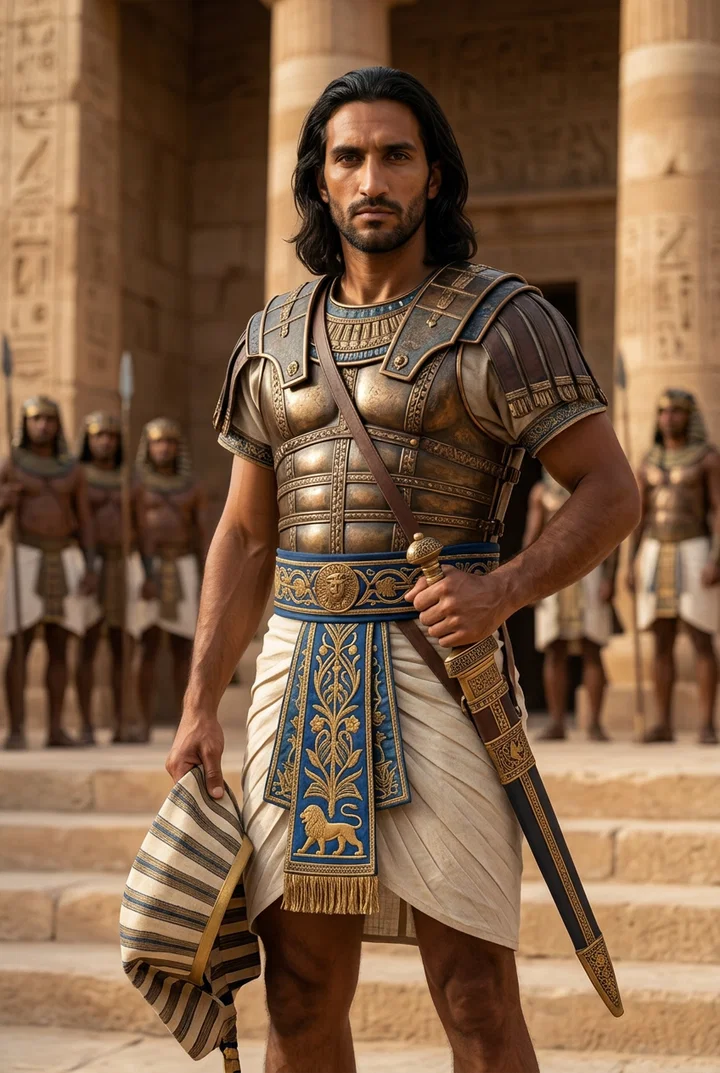
And Moses was learned in all the wisdom of the Egyptians, and was mighty in words and in deeds.
Translations
American King James Version, King James Version, KJV Cambridge Paragraph Bible, Webster Bible
And Moses was learned in all the wisdom of the Egyptians, and was mighty in words and in deeds.
Revised Version, American Standard Version
And Moses was instructed in all the wisdom of the Egyptians; and he was mighty in his words and works.
and Moses was taught in all wisdom of the Egyptians, and he was powerful in words and in works.
And Moses was instructed in all [ the] wisdom of the Egyptians, and he was mighty in his words and deeds.
And, so Moses was trained in all the wisdom of the Egyptians, and was mighty in his words and works.
Berean Standard Bible, Majority Standard Bible
So Moses was educated in all the wisdom of the Egyptians and was powerful in speech and action.
Moses was instructed in all the wisdom of the Egyptians. He was mighty in his words and works.
And Moses was trained in all the wisdom of Egypt, and was great in his words and works.
And Moses was learned in all the wisdome of the Egyptians, and was mightie in wordes and in deedes.
Douay-Rheims (Challoner revision)
And Moses was instructed in all the wisdom of the Egyptians; and he was mighty in his words and in his deeds.
Pictures
Cross-references 20 of 23
- Exodus 2:11-15
And it came to pass in those days, when Moses was grown, that he went out unto his brethren, and looked on their burdens: and he spied an Egyptian smiting an Hebrew, one of his brethren.
Records Moses’ failed intervention and flight from Egypt.
- Hebrews 11:24-26
By faith Moses, when he was come to years, refused to be called the son of Pharaoh’s daughter;
Moses rejected Egyptian status and pleasures, choosing affliction with God’s people and God’s reward.
- Exodus 2:10
And the child grew, and she brought him unto Pharaoh’s daughter, and he became her son. And she called his name Moses: and she said, Because I drew him out of the water.
Moses became Pharaoh’s daughter’s son and was raised in her household.
- Exodus 3:1
Now Moses kept the flock of Jethro his father in law, the priest of Midian: and he led the flock to the backside of the desert, and came to the mountain of God, even to Horeb.
Moses was tending sheep when God called him to serve.
- Numbers 12:3
(Now the man Moses was very meek, above all the men which were upon the face of the earth.)
Moses is described as exceptionally meek after his wilderness training.
- Acts 7:30-34
And when forty years were expired, there appeared to him in the wilderness of mount Sina an angel of the Lord in a flame of fire in a bush.
After forty years in Midian, God appears to Moses and commissions him to deliver Israel.
- Exodus 3:10
Come now therefore, and I will send thee unto Pharaoh, that thou mayest bring forth my people the children of Israel out of Egypt.
God sends Moses to lead Israel out of Egypt.
- Exodus 4:10
And Moses said unto the LORD, O my Lord, I am not eloquent, neither heretofore, nor since thou hast spoken unto thy servant: but I am slow of speech, and of a slow tongue.
Moses describes his difficulty speaking when called, contrasting with his wisdom and might in speech.
- Exodus 1:22
And Pharaoh charged all his people, saying, Every son that is born ye shall cast into the river, and every daughter ye shall save alive.
Pharaoh’s decree led to Moses being raised in the royal household.
- Exodus 14:21-22
And Moses stretched out his hand over the sea; and the LORD caused the sea to go back by a strong east wind all that night, and made the sea dry land, and the waters were divided.
Moses parts the sea as an act of deliverance.
- Deuteronomy 4:34
Or hath God assayed to go and take him a nation from the midst of another nation, by temptations, by signs, and by wonders, and by war, and by a mighty hand, and by a stretched out arm, and by great terrors, according to all that the LORD your God did for you in Egypt before your eyes?
quoted to describe deliverance through Moses
- John 3:14-15
And as Moses lifted up the serpent in the wilderness, even so must the Son of man be lifted up:
Jesus compares his being lifted up to the serpent Moses lifted in the wilderness.
- Numbers 21:8-9
And the LORD said unto Moses, Make thee a fiery serpent, and set it upon a pole: and it shall come to pass, that every one that is bitten, when he looketh upon it, shall live.
The bronze serpent symbolizes Christ lifted up.
- John 5:46-47
For had ye believed Moses, ye would have believed me: for he wrote of me.
importance of Moses writings
- Hebrews 3:1-2
Wherefore, holy brethren, partakers of the heavenly calling, consider the Apostle and High Priest of our profession, Christ Jesus;
Christ compared to Moses
- Hebrews 11:27
By faith he forsook Egypt, not fearing the wrath of the king: for he endured, as seeing him who is invisible.
Moses endured by faith, seeing the invisible God.
- Acts 7:38
This is he, that was in the church in the wilderness with the angel which spake to him in the mount Sina, and with our fathers: who received the lively oracles to give unto us:
Moses received God’s words at Sinai.
- Exodus 2:4
And his sister stood afar off, to wit what would be done to him.
Miriam watches over the hidden child.
- Exodus 6:20
And Amram took him Jochebed his father’s sister to wife; and she bare him Aaron and Moses: and the years of the life of Amram were an hundred and thirty and seven years.
Identifies Jochebed as Moses’ mother and traces his family lineage.
- 1 Kings 4:29-30
And God gave Solomon wisdom and understanding exceeding much, and largeness of heart, even as the sand that is on the sea shore.
Solomon’s wisdom is compared with the wisdom of Egypt.
Commentary
Each commentary is drawn from primary sources: the writings of Ellen G. White and Adventist pioneers and periodicals. Each commentary is separate. Its own words are not a quotation; follow the references to read the source passages.
Ellen G. White
28 sources
Moses was brought up as Pharaoh's grandson and thoroughly instructed in all Egyptian learning, receiving the highest civil and military training until he was cultivated in mind and powerful in speech and action.1SP 164.2SG3 182.2–184.1PP 245.1 Stephen set this fact within his rehearsal of God's dealings with His chosen people from Abraham to Solomon to vindicate himself against the charge of blasphemy and to show how that history pointed to Jesus.7RED 32.33SP 296.23SP 297.2 That palace education helped him in some respects, but by itself it did not qualify him to deliver and shepherd Israel, since royal learning could not supply the experience in hardship, patience, self-denial and forgetfulness of self that the work required.CT 407.1–2SPBC 217.3–218.1SPBC 206.4 Much of that Egyptian wisdom had to be unlearned as foolishness under God's severest mental and moral discipline, while forty years of humble shepherd work softened his heart and taught him humility, meekness, faith and tender care.CT 417.2SPBC 217.3–218.1FE 342.14T 343.1 True wisdom is knowing and keeping what God has commanded, which is firmer and more far-reaching than learning from books apart from the Bible, so by faith Moses gave up learning, eloquence, wealth and honor rather than turn from God's people.14MR 14.2–3Lt 21a, 1893, par. 14–18STE 142.1–2CT 428.1STE 21.1
Moses' Egyptian Education
Moses was brought up in Pharaoh's household as the king's grandson and received the highest civil and military training, being thoroughly learned in all the wisdom of the Egyptians.1SP 164.2SG3 182.2–184.1PP 245.1FE 342.1STE 119.2 He became cultivated in mind and mighty in words and in deeds, powerful and forceful in speech and action.1SP 164.2SG3 182.2–184.1PP 245.1Lt 21a, 1893, par. 14–18 His learning, eloquence, and abilities did not hold him back, for by faith and connection with God he gave up Egypt's honors to do the work of delivering Israel.Lt 21a, 1893, par. 14–18 That royal education helped him in some respects, yet by itself it could not give him the qualities needed for his life's work.FE 342.1STE 119.2
His place in Pharaoh's family trained him for military command, where he showed superior skill and wisdom in warfare.1SP 164.2SG3 182.2–184.1PP 245.1 The Egyptians regarded him as remarkable, he became a favorite with Egypt's armies, and in generalship he could not be surpassed by any man.1SP 164.2SG3 182.2–184.1PP 245.1GW92 158.1 God in special providence qualified him by this to stand at the head of the armies of Israel, turning preparation for a royal station into preparation for leading Israel.1SP 164.2SG3 182.2–184.1PP 245.1GW92 158.1 The decree against the Hebrew children was thus overruled to train their future leader.PP 245.1
His learning and position brought initiation into the religious mysteries of Egypt, yet he refused to join in heathen worship.ED 62.1 His Egyptian learning did not itself supply what he later needed, for the statutes and judgments he taught Israel were what the Lord commanded.CT 428.1RH Jan 11, 1912 Keeping those laws was Israel's wisdom and understanding before the nations.CT 428.1 Even with proficiency in all the learning of the Egyptians and with knowledge of God and revelation of God's purposes by visions, he did not know how to engrave and embroider for the building of the tabernacle.RH Jan 11, 1912
Stephen's Historical Defense
Acts 7:22 belongs to Stephen's rehearsal of the history of God's chosen people from Abraham through generation to generation to Solomon, drawn from the national records of Israel and taking up its most impressive points to vindicate his cause against the charge of blasphemy before the council.7RED 32.33SP 296.2 It was part of his defense and of his final testimony, used to show the spiritual meaning of that history through Christ.7RED 32.33SP 296.23SP 297.2 He spoke it before hostile hearers under the direction of the Holy Spirit, in a clear, thrilling voice that held the assembly spellbound, so that its full significance depends on the occasion, time, and place of his address.3SP 296.23SP 297.2
Like Christ's disciples and Peter, Stephen used Moses and the prophets in self-defense to testify about Christ, showing from the Old Testament how its testimony pointed to Jesus.7RED 32.33SP 388.1–2 His rehearsal displayed thorough knowledge of the Jewish economy and of its spiritual interpretation now made manifest through Christ.7RED 32.33SP 296.2
Unlearning for God's Service
Moses' palace schooling helped him in some respects, but by itself it did not qualify him for the work appointed him in delivering and shepherding Israel.CT 407.1–2SPBC 217.3–218.1SPBC 206.44T 343.11SP 167.2–168.1 Thorough education in Egyptian wisdom as the king's grandson made him wise by Egyptian standards, yet royal learning and position could not replace needed experience in adversity, poverty, hardship, patience, self-denial, and forgetfulness of self in caring for those entrusted to him.SPBC 206.44T 343.11SP 167.2–168.1STE 119.2 His most valuable preparation came later as a shepherd, where he learned humility, meekness, faith, trust, a simple manner of life, and unwavering faith and constant trust in the Lord.FE 342.1SPBC 206.4STE 119.2
Trusting in his own abilities, he mistakenly thought his learning qualified him to deliver Israel.CT 407.1–2ST Jul 12, 1905Ms 10a, 1895, par. 27–29 He tried to win his people's favor by avenging an injustice and defending an Israelite by killing an Egyptian, which ended in failure.CT 407.1–2ST Jul 12, 1905Ms 10a, 1895, par. 27–29 That attempt showed he was then unfit to represent God's mercy and love and lacked the character needed to lead His people, teaching that successful service requires gentleness, goodness, and patience.CT 407.1–2ST Jul 12, 1905
God in providence added forty years of caring for sheep and tender lambs, a humble work that softened his heart and prepared him to be a faithful shepherd of God's people and heritage.CT 417.2SPBC 217.3–218.1FE 360.1–361.1STE 142.1–2 In nature and solitude he was taught humility, meekness, faith, trust, a simple manner of life, tender care, and patience and self-denial through hardship, becoming forgetful of self and caring for those entrusted to him.FE 342.1SPBC 206.44T 343.1 Solitude drew him closer to God and taught unwavering faith and constant trust in the Lord.FE 342.1SPBC 206.4
A large part of that Egyptian wisdom had to be unlearned and counted as foolishness, and its impression blotted out little by little under God's severest mental and moral discipline while minding sheep.CT 417.2FE 360.1–361.1STE 142.1–2Ms 130, 1898, par. 3 It had made him wise only by Egyptian standards, instilled false theories and idolatrous rubbish of heathen lore with influences and impressions from what his eyes looked upon, and led him to magnify his own abilities and try to make advanced education take the place of a sound knowledge of God.CT 417.2STE 142.1–2Ms 130, 1898, par. 3 Human learning, ability, and confidence cannot take the place of a sound knowledge of God, and wisdom and knowledge from Christ are more valuable.SPBC 217.3–218.14T 343.1FE 360.1–361.1
True wisdom and understanding is knowing and keeping the statutes and judgments God commanded, for keeping those laws was Israel's wisdom before the nations, and Moses taught what the Lord commanded rather than what Egypt supplied.CT 428.1STE 21.1 No knowledge is so firm, consistent, and far-reaching as that obtained from the word of God, which is the foundation of all true knowledge, expands and balances the mind beyond general information from books without connection to the Bible, and no science equals the science that reveals God's character.STE 21.1 The failure of the world's wisdom was fully tested at the coming of Christ and weighed in the balances and found wanting because men did not know the true wisdom from the Source of all good, while it pleased God to save believers by the foolishness of preaching.STE 142.1–2 Fitness for work comes only from the instruction and method of Jesus Christ, the only perfect Educator, and from the Spirit teaching spiritual things, not from words which man's wisdom teaches.STE 142.1–2
By faith and connection with God, Moses did not let learning, eloquence, prominence, wealth, power, and honors keep him from his work.14MR 14.2–3Lt 21a, 1893, par. 14–18PP 245.4–246.1ED 62.1 Though cultivated in mind, renowned as a military leader, initiated into Egyptian religious mysteries which he refused to join in worship, and fitted for prominence, he gave up Egypt's honors rather than turn from God's people.14MR 14.2–3PP 245.4–246.1ED 62.1 He chose hardship with them over temporary sinful pleasure and chose faithful service for the lasting reward and honor God gives above Egypt's treasures.14MR 14.2–3PP 245.4–246.1
Sources
Pioneers and periodicals
74 sources
Moses as Pharaoh's daughter's adopted son received the fullest instruction Egypt, then the center of the world's learning, could give, and became eloquent in speech and powerful in action as an orator and commander.ST Nov 7, 1878RH Mar 9, 1869ST Aug 26, 1897ST Aug 9, 1910RH Jan 13, 1874 This describes the first forty years of his life, before his flight to Midian, as rehearsed by Stephen before the council to show God's faithful leading toward Israel's deliverance.ST Nov 7, 1878ST Oct 11, 1899ST Aug 26, 1897ST Jan 22, 1902 That training disciplined his mind and fitted him to lead a nation, teach, endure great mental burdens, and handle the records of an age of libraries and written languages.RH Mar 9, 1869RH Oct 13, 1868 Yet even the profoundest wisdom of Egypt left him self-confident and unbalanced, unable by itself to fit him to lead God's people, so his unaided attempt to deliver Israel ended in killing an Egyptian and flight.ST Jul 12, 1905RH May 20, 1915ST Jun 17, 1889ST Jun 11, 1894RH Jul 8, 1915 God therefore gave him forty years as a shepherd in Midian to learn humility, dependence, and communion with God, while the faith learned from his mother in childhood led him to refuse idol worship and give up heirship to the throne to suffer with his people.ST Oct 11, 1883AUST Jun 21, 1920ST Jun 11, 1894ST Jun 7, 1899
Egyptian Education Described
The word rendered learned means trained or instructed as a child, a training that embraces instruction, counsel, discipline, and correction.ST Mar 8, 1883 As the adopted son of Pharaoh's daughter, living in the king's palace with princely rank, Moses received a princely education, the best education the nation could afford and the fullest instruction Egypt could offer, the schooling given to the highest nobles and princes.ST Nov 7, 1878RH Mar 9, 1869RH Jan 13, 1874RH Mar 9, 1869 That access to Pharaoh's house and its wisdom was opened by God's providence to prepare him for his future work, and the education benefited him unto might in words and deeds.RH Mar 9, 1869RH Mar 9, 1869RH Jun 6, 1912
Egypt in Moses' time had been for centuries and still was the source and center of the world's civilization and mistress of the nations in letters, science, and art, reputed in antiquity to surpass other nations in learning, wisdom, and human science, and then regarded as the most cultured, enlightened, and greatest nation.ST Nov 7, 1878RH Jan 13, 1874ST Nov 14, 1878ST Jun 11, 1894ST Jan 6, 1888 With the Exodus placed about 1300 B.C., Moses lived about midway between the founding of the empire by Menes and the Christian era, after Egypt already had at least twelve or fifteen hundred years of history.ST Nov 7, 1878RH Jan 13, 1874 The fourteenth and fifteenth centuries B.C. were the golden period of Egyptian greatness, so his training was of a high order, as the existing monuments prove.ST Nov 7, 1878RH Jan 13, 1874
His Egyptian learning was training in what was then the profoundest wisdom in the world, especially that of the priests, covering a broad field of learning.ST Nov 7, 1878RH Jun 6, 1912 That broad wisdom included grammar, history, theology, medicine, mathematics, astronomy, and engineering, with possible initiation into the priests' secret learning.ST Nov 7, 1878ST May 7, 1894 It likewise embraced art, science, literature, engineering, and warfare, the highest civil and military training at Pharaoh's court, comprising scientific, social, political, and military wisdom and civil and military affairs.ST Nov 13, 1901 After twelve years of home training under his mother-nurse, from about age twelve until age forty he was educated in the university of Egypt, a forty-year period of broad, advanced schooling.RH May 20, 1915 That schooling gave him knowledge of Egyptian life and customs, including royal life and court etiquette, which suited him for leading Israel out of bondage.RH May 20, 1915
That education was expressly designed to fit him as heir to Egypt's throne and for the honors of kingship, raising him in the manners of the Egyptian court.RH Mar 9, 1869ST Nov 18, 1897 He grew up surrounded by the wickedness and worldly interests of a heathen royal household, yet this upbringing did not determine his character.RH Mar 9, 1869ST Nov 18, 1897
Mighty in Words and Deeds
Moses received the fullest instruction Egypt could offer, learning the wisdom known to its wisest people, and this education benefited him in making him powerful in speech and action.RH Mar 9, 1869ST Aug 26, 1897ST Aug 9, 1910ST Apr 13, 1904 This learning and power belonged to his life before he was well-nigh forty years old, when it came into his heart to visit his brethren the children of Israel and God by His hand began giving them deliverance.ST Aug 26, 1897ST Aug 9, 1910 The record belongs to Stephen's account of Moses' early history, which largely reproduces the account in Exodus and confirms its reliability.ST Apr 13, 1904 Instructed from childhood about his great work of delivering Israel from bondage, with that thought weighing heavily on his mind through long years in the Egyptian courts, he used every opportunity to increase his stock of knowledge until he was learned in all the wisdom of the Egyptians and mighty in words and in deeds as an orator and as commander-in-chief of Egypt's army.ST Dec 30, 1889 Like every human being with an abundance of this world's wisdom, he knew his learning and abilities, thought about his achievements in speaking and commanding, and became self-confident that he was just the man for the work, fitted for every part of the task and ready to deliver Israel to perfection by himself.ST Dec 30, 1889 He was eloquent, skilled as a military leader, and held prominence among the Egyptians until he was forty years old, when he tried to deliver Israel but his attempt brought trouble and he fled to Midian, so that Israel's deliverance came later through God's power.ST Aug 9, 1910RH Aug 3, 1916
From about age twelve, after twelve years of home training, until age forty he was educated in the university of Egypt, becoming mighty in words and in deeds as a historian, a poet, a philosopher, a general of armies, and a legislator.RH May 20, 1915 His intellectual greatness is displayed in his standing as historian, poet, philosopher, military leader, and lawgiver, without peer, exceptionally educated and capable and fitted to rise among the great and wield authority in Egypt.RH Jan 16, 1913 His upbringing in Pharaoh's household gave him the education and military experience that qualified him to lead Israel out of Egypt, for he became skilled in speech and action and his skill and wisdom in warfare won Pharaoh's favor.ST Feb 12, 1880 That Egyptian wisdom left his physical, mental, and spiritual powers unbalanced and led to failure and mistake when he entered the special work of deliverer and leader to which God had called him, so at age forty he had to spend forty years in the shepherd school to secure proper balance in order to be a successful deliverer and leader of God's people.RH May 20, 1915 At forty, he turned away from worldly greatness and went into the wilderness.RH Jan 16, 1913
The Egyptians regarded him as remarkable, and he was remembered as a great warrior who led successful campaigns.ST Feb 12, 1880 He received a broad education in Egyptian wisdom, including art, science, literature, engineering, and warfare, and was mighty in word and deed, as heir to Egypt's throne. He received the highest civil and military training at Pharaoh's court and was taught all the wisdom of the Egyptians, becoming mighty in words and deeds, an able military leader and a favorite with Egypt's armies.ST Nov 13, 1901 He was eloquent, skilled as a military leader, and held prominence among the Egyptians until he was forty years old.RH Aug 3, 1916 As Pharaoh's daughter's son and heir to the throne he was popular and highly honored, but this worldly honor did not prepare him for humble service to God, for his first attempt to free his people ended in murder and flight, and forty years as a shepherd formed the humility he needed for God's service.ST Sep 10, 1902 God turned the decree against the Hebrew children into a means of training the future leader of His people, and his education prepared him to lead Israel.ST Nov 13, 1901
Place in Life and Speech
The verse describes the first of Moses' three forty-year periods, from infancy hidden among the Nile rushes and adoption by Pharaoh's daughter to flight to Midian.ST Nov 7, 1878ST Aug 26, 1897 It is the general record of his life before the account resumes when he was well-nigh forty and it came into his heart to visit his Israelite brethren.ST Nov 7, 1878ST Aug 26, 1897 Being learned in Egyptian wisdom and mighty in words and deeds at age forty was only his preparatory course.ST Sep 24, 1896
At forty he tried to give Israel deliverance by his own hand, but the attempt brought trouble and murder and flight to Midian.ST Aug 9, 1910ST Dec 13, 1905 Though raised to the heirship of Egypt's throne, he killed an Egyptian while avenging a wrong and fled, then spent forty years being trained in God's school.ST Aug 9, 1910ST Dec 13, 1905 Israel's deliverance came later through God's power, and at eighty he was called to deliver Israel by God's power.ST Aug 9, 1910ST Dec 13, 1905 His forty years in Egypt gave him learning before forty years in life's hardships and forty years instructing his disciples.
The verse belongs to Stephen's historical account in Acts 7, which largely reproduces the account in Exodus and confirms its reliability.ST Apr 13, 1904 It lies in what fills almost the whole of the seventh chapter of Acts, and the New Testament record preserves the sermon's outline rather than necessarily its full wording.ST Jun 2, 1898ST Dec 4, 1884 Stephen rehearsed this history before the council to present Christ to Jewish hearers beginning with the patriarchs and matters they respected, showing the wisdom of approaching prejudiced people through something that interests them.ST Jan 22, 1902ST May 24, 1883 He reasoned out of the Old Testament Scriptures concerning Jesus to prove that He is indeed Christ, those Scriptures being the only Scripture the apostles had and the source of their appeal.ST May 21, 1885 His use of that history shows reverence for God and the Old Testament, and his sermon proclaimed Jesus even while he was on trial for his life.ST May 24, 1883
Moses' life serves as a pattern pointing to Christ, rejected when he first came to help his people yet chosen by God to lead them from bondage, thus exposing repeated rejection of God's deliverers.ST Jun 14, 1883 That defense shows prophecy's relation to the Gospel and to the life and work of Jesus.ST Jan 24, 1906 The verse stands in the account of the time when God's promise to Abraham drew near fulfillment, when Israel grew in Egypt, Moses was born, and God delivered Israel from Egypt.ST Oct 11, 1899
Learning Valued for God's Work
Moses received the fullest instruction Egypt could offer, learning the wisdom known to its wisest people, and this education benefited him by making him mighty in words and deeds.RH Mar 9, 1869RH Oct 13, 1868 That thorough training in varied Egyptian learning disciplined his mind and gave him refinement, aptitude, and broad resources of thought.RH Oct 13, 1868RH Nov 24, 1874 Such human wisdom was directed toward worthwhile ends and suited to the work God intended, preparing him to lead a nation, to teach and lead effectively, and to endure the mental burdens of later life, since knowledge and education make a person more capable and effective in instructing others.RH Oct 13, 1868RH Nov 24, 1874
God finds highest value in trained intellects for His great work, though He can and often does use the simple and unlearned.RH Jan 7, 1909RH Mar 15, 1864 Moses was learned in all the knowledge and skill of the Egyptians, then the most highly educated people on earth, trained to be a mighty general and a great king, and with the exception of Jesus Christ he stands with Paul as one of the two greatest characters of the Bible.RH Jan 7, 1909RH Jun 18, 1872 His learning stood alongside exceptional piety, meekness, and service to God, showing that education is not opposed to true religion and that God can use learned people as His agents, illustrating the learning and intellectual culture found among God's people.RH Jan 7, 1909RH Mar 15, 1864RH Jun 18, 1872
Spiritual gifts and miraculous power did not make prior education unnecessary, as Paul's preparation for his own great work alongside the miraculous power given to him also shows.RH Mar 9, 1869 This training, when united with humility and meekness and with personal acquaintance with the greatest Teacher in the universe, going up into His presence and talking with Him face to face while others stood afar off and trembled when God's voice shook the earth, God used mightily in bringing His people out of Egypt and in building up His church on earth.RH Mar 9, 1869RH Jan 7, 1909 His forty years of broad, advanced schooling in Egypt, with its knowledge of Egyptian life, customs, royal life, and court etiquette, suited him for leading Israel out of bondage. That education expressly designed to fit him for the Egyptian throne kept practical value for his later work for God, even though schooling alone did not fit him for his calling and God sent him into exile for forty years to learn humble consecration.ST Nov 18, 1897
As with Joseph prepared in captivity for the rulership of Egypt and the relief of his people, and with Daniel and his companions prepared to stand in the king's palace, God prepares His own people by education and position to wield influence for His cause and the honor of His name.ST Nov 18, 1897 His training came in a highly civilized, literary age when the whole oriental world was engaged in writing and reading, with libraries and archive chambers storing records of the past, written languages, and records passed down through earlier generations, which equipped him to handle those records.RH Apr 22, 1858 Therefore the author of the books of Moses had lived in Egypt and knew Egyptian learning, and not only could have written the Pentateuch but was bound to have done so.RH Apr 22, 1858
God turned the decree against the Hebrew children into a means of training the future leader of His people, giving Moses the highest civil and military training at Pharaoh's court until he became an able military leader, a favorite with Egypt's armies, and regarded as remarkable.ST Nov 13, 1901 He was selected to lead Israel out of bondage because his learning in all the knowledge of the Egyptians made him a skilled and mighty warrior, and long years of quiet meditation and communion with God in the wilderness of Horeb further fitted him for his duties as leader.ST Nov 13, 1901ST Jan 24, 1911ST May 6, 1886 Through Moses thus prepared the Lord wrought many signs and wonders in Egypt and brought His people out of the house of bondage by a mighty hand and stretched-out arm with great terrors, even parting the Red Sea to make a way for them.ST Jan 24, 1911ST May 6, 1886 Yet even with proficiency in all the learning of the Egyptians, knowledge of God, and visions revealing God's purposes, he did not by that know how to engrave and embroider for the building of the tabernacle.RH Jan 11, 1912 God also qualified and commissioned Moses to make Israel know His statutes and laws, and as Moses began this work and caused the people to rest from their labor, Pharaoh reprimanded him and enforced measures against the attempt at Sabbath observance.ST Feb 28, 1906
Learning Alone Did Not Qualify
From childhood Moses was instructed about his great work of delivering Israel from bondage, and through long years in the Egyptian courts that thought weighed heavily on his mind as he used every opportunity to increase his stock of knowledge until he was learned as an orator and as commander-in-chief of the army.ST Dec 30, 1889 Like every human being with an abundance of this world's wisdom, he knew his learning and abilities and thought about his achievements in speaking and commanding, and became self-confident that he was just the man for the work, fitted for every part of the task and ready to deliver Israel to perfection by himself.ST Dec 30, 1889 That full learning received in early life left him self-sufficient with a human plan for delivering Israel, renowned for words and deeds, regarding his learning, ability and maturity at forty as fitting him to lead.ST Nov 27, 1901 Yet his human qualifications did not mean God had appointed the time or directed his first effort, and acting without God's direction he failed and became a fugitive.ST Nov 27, 1901
By the end of his first forty years he possessed earthly learning, sound judgment, high mental capacity and moral worth, feared God and believed God had called him to deliver Israel, though he was not yet ready and his first attempt failed.RH Mar 23, 1869 His Egyptian education and capability in speech and action seemed to him especially fitting for that work, a purpose he had learned from his mother during boyhood instruction, understanding that God would deliver His people through him and giving up his claim to the throne for it. From age twelve, after twelve years of home training, he had been educated in the university of Egypt until age forty, becoming mighty as historian, poet, philosopher, general of armies and legislator.RH May 20, 1915 That wisdom, scientific, social, political and military, and the full book learning of Egypt's great schools, then regarded as the most cultured nation, left his physical, mental and spiritual powers unbalanced, incomplete with much to unlearn, valueless for his own salvation or saving others, and unable by itself to fit him to lead God's people in God's truth.RH May 20, 1915ST Jun 17, 1889ST Jun 11, 1894ST May 31, 1899
He still needed forty years in Midian's deserts alone with God and nature, going to the bottom and beginning anew as a hired shepherd of his father-in-law's sheep, working for his living to secure proper balance and a new spirit and to become very meek above all men on earth.RH May 20, 1915ST Jun 11, 1894ST Mar 1, 1899 That further forty-year special and post-graduate training under God through shepherding and communion with nature was required before he was fitted to lead the enslaved nation, understand true principles of education, and do successful work as deliverer and leader to which God had called him from birth.ST Jun 11, 1894ST May 31, 1899ST Mar 1, 1899 Relying on his own strength, wisdom and skill he thought he could act for his people, but his attempt to defend an Israelite by killing an Egyptian showed he still lacked the character needed to represent God.ST Jul 12, 1905ST May 12, 1881ST Sep 10, 1902 His own wisdom, strength and skill could not deliver Israel, for deliverance had to come from God; his first action in his own wisdom without God's appointed time ended in murder, failure and flight, though after forty years of being humbled he felt weak when God called him and then God could use him.RH Jul 8, 1915ST May 12, 1881ST Sep 10, 1902ST Nov 27, 1901
What Egypt did not teach him was meekness, patience, humility, self-denial, human weakness, God's greatness, compassion and tenderness of a shepherd, dependence on God and communion with God.ST Jun 17, 1889RH Mar 9, 1869ST Feb 22, 1905 His training was essential but not enough by itself, for he also had to learn to follow God's guidance instead of his own plans, and the lesson is that education and ability alone are insufficient for God's service, since God prepares those He calls and those who depend on Him are fitted for their work.ST Jun 17, 1889RH Aug 31, 1916 Human learning and strength must yield to childlike dependence on God and leading as God directs, learned only after years as an ordinary shepherd.ST Feb 22, 1905ST Apr 5, 1899 Prideful self-confidence led God to check him and eventually separate him from the work, warning people with education and ability not to let confidence in themselves govern their service to God.ST Dec 30, 1889 Yet his learning did not make him ignorant or self-appointed, for God called him as leader after he had been schooled to humility and gave him clear credentials so the people could know God had sent him.ST Nov 25, 1889
Missing such worldly schooling is no cause for discouragement, since there is then less to unlearn, and all knowledge must be built on knowing God.ST Mar 1, 1899 Like Joseph's years of prison, Moses' work tending sheep taught him through humble service and hardship lessons of greater practical value than worldly learning.ST Oct 9, 1901
Wilderness Training and Faithful Choice
Egyptian schooling alone did not fit Moses to deliver Israel, so God gave him a further forty years of special training in the deserts of Midian, alone with God and nature in close communion before he was ready for his mission.ST Jun 11, 1894ST Jun 7, 1899RH Feb 4, 1904 That wisdom of Egypt was scientific, social, political, and military wisdom, full book learning of the great schools, yet incomplete and leaving much to unlearn, so he had to enter a second forty-year period, go to the bottom and begin anew as a hired shepherd working for his living by caring for his father-in-law's sheep.ST Jun 7, 1899ST Mar 1, 1899 There in fellowship with God in the Arabian wilderness, where the absence of distracting voices made God's voice clearer, that training under God formed him into one who would hear and obey God's voice, and then he was counted worthy to lead Israel.ST Jun 7, 1899RH Feb 4, 1904 Missing such worldly schooling is no cause for discouragement, since there is then less to unlearn, and all knowledge must be built on knowing God.ST Mar 1, 1899
That shepherd school balanced his powers, gave him a new spirit, and made him very meek above all men on earth, with meekness and teachableness joined to his greatness.ST Feb 11, 1897 The hasty, impulsive Egyptian prince became exceptionally meek through forty years of hardship and humble shepherding in Midian.ST May 19, 1914 Being learned in all Egyptian wisdom and mighty in words and deeds at forty was only his preparatory course, which made him believe he was a great man able with a human plan to conquer Egypt and deliver Israel, so his education was not complete.ST Sep 24, 1896 His graduating course was forty more years alone with God and nature as a shepherd, spent for the greater part in unlearning his Egyptian education, keeping sheep in Midian to prepare him to lead God's flock out to Canaan.ST Sep 24, 1896 When he had learned how little he was and how great God was, he no longer felt self-sufficient when God called him, and the Lord sent him on one of the greatest missions ever given to mortal man, with the degree of Moses the man of God.ST Sep 24, 1896
His education and abilities did not keep him from humbly spending forty years tending sheep in Midian, where he learned lessons that prepared him for his life-work.ST Feb 11, 1897ST Mar 15, 1910 After he considered himself fitted and relied on his own strength and thought he could act for his people, God spent another forty years instructing him in His ways and humbling him before he delivered Israel.RH Feb 6, 1908ST May 12, 1881 After forty years of being humbled, he felt weak when God called him, and then God could use him and made him a mighty leader.ST May 12, 1881ST Mar 15, 1910 Though raised to the heirship of Egypt's throne, he killed an Egyptian while avenging a wrong, fled, and spent forty years being trained in God's school, and at eighty he was called to deliver Israel by God's power.ST Dec 13, 1905
His Egyptian learning did not erase the childhood lessons his mother taught him from God's word during the twelve years she cared for him as nurse for his foster mother.RH Jan 9, 1913ST Oct 24, 1895 Instructed in youth by his mother-nurse, he knew about the events of the last day and retained his reverence for the God of his fathers despite the advantages of Egypt's education and royal court that made him mighty in word and deed.ST Oct 11, 1883RH Feb 4, 1873 Those lessons remained a shield against Egypt's wealth and grandeur and fixed in his young mind the importance of being true to principle and faithful to the God of Israel.RH Jan 9, 1913ST Oct 24, 1895 His later years as a shepherd in Midian supplied the patient, humble training needed to lead Israel.RH Feb 4, 1873
Despite his abilities and position as heir to Egypt's throne, with honor and rewards expected for him and his foster mother's hopes that he would become king, his mother's foundation of faith and loyalty to God and training in faithfulness kept him from idol worship.RH Aug 26, 1909AUST Jun 21, 1920RH Mar 5, 1914 Renowned as a military leader and prepared for the honors of Egypt's throne, he refused to join in Egyptian worship.RH Aug 26, 1909 He gave up its riches and honor to champion the poor and oppressed people from whom he came, to serve God and deliver his people, and God then took special charge of his training.RH Aug 26, 1909AUST Jun 21, 1920 He knew Egypt's glory and wisdom and could have claimed its greatness as its crown prince, but he rejected it for Christ's sake and preferred to share the suffering of God's people rather than enjoy sin's temporary pleasures.RH Jan 9, 1913ST Aug 27, 1902 His knowledge led him to recognize that Egypt, then at the height of the world's civilization, had fallen from the truth of one God into polytheism, while Israel upheld that truth despite its slavery, and faith in the eternal reward gave him courage to choose truth over Egypt's passing honors and comforts and to join the enslaved Israelites.ST Nov 13, 1901
His learning and ability accompanied his high prospects in Egypt, but faith led him to leave wealth and power for God's humble, sorrowful work among His people.ST Feb 24, 1881 Exceptionally educated and capable, fitted to rise among the great and wield authority in Egypt, and standing without peer as historian, poet, philosopher, military leader, and lawgiver, at forty he turned away from worldly greatness and went into the wilderness.RH Jan 16, 1913 His forty years of broad, advanced schooling in Egypt gave him knowledge of Egyptian life, customs, royal life, and court etiquette that suited him for the work of leading Israel out of bondage.
Sources