Exodus 32:12
Wherefore should the Egyptians speak, and say, For mischief did he bring them out, to slay them in the mountains, and to consume them from the face of the earth? Turn from thy fierce wrath, and repent of this evil against thy people.
Translations
Why should the Egyptians speak, and say, For mischief did he bring them out, to slay them in the mountains, and to consume them from the face of the earth? Turn from your fierce wrath, and repent of this evil against your people.
King James Version, KJV Cambridge Paragraph Bible
Wherefore should the Egyptians speak, and say, For mischief did he bring them out, to slay them in the mountains, and to consume them from the face of the earth? Turn from thy fierce wrath, and repent of this evil against thy people.
Why should the Egyptians speak and say, For evil did he bring them out, to slay them in the mountains, and to consume them from the face of the earth? Turn from thy fierce wrath, and repent of this evil against thy people.
Revised Version, American Standard Version
Wherefore should the Egyptians speak, saying, For evil did he bring them forth, to slay them in the mountains, and to consume them from the face of the earth? Turn from thy fierce wrath, and repent of this evil against thy people.
why do the Egyptians speak, saying, For evil He brought them out to slay them among mountains, and to consume them from off the face of the ground? turn back from the heat of Thine anger, and repent of the evil against Thy people.
Why should the Egyptians speak, and say, For misfortune he has brought them out, to slay them on the mountains, and to annihilate them from the face of the earth? Turn from the heat of thine anger, and repent of this evil against thy people!
Wherefore should the Egyptians speak saying—For mischief, hath he taken them forth to slay them among the mountains, and to make an end of them from off the face of the ground? Turn thou from the kindling of thine anger, and be grieved over the calamity to thy people,
Berean Standard Bible, Majority Standard Bible
Why should the Egyptians declare, ‘ He brought them out with evil intent, to kill them in the mountains and wipe them from the face of the earth’? Turn from Your fierce anger and relent from doing harm to Your people.
Why should the Egyptians talk, saying, ‘ He brought them out for evil, to kill them in the mountains, and to consume them from the surface of the earth’? Turn from your fierce wrath, and turn away from this evil against your people.
Why let the Egyptians say, He took them out to an evil fate, to put them to death on the mountains, cutting them off from the earth? Let your wrath be turned away from them, and send not this evil on your people.
Wherefore shall the Egyptians speake, and say, He hath brought them out maliciously for to slay them in the mountaines, and to consume them from the earth? turne from thy fearce wrath, and change thy minde from this euill towarde thy people.
Douay-Rheims (Challoner revision)
Let not the Egyptians say, I beseech thee: He craftily brought them out, that he might kill them in the mountains, and destroy them from the earth: let thy anger cease, and be appeased upon the wickedness of thy people.
Pictures

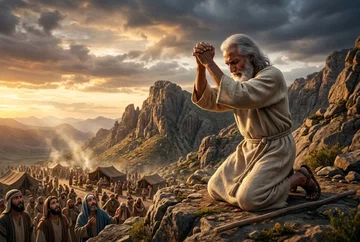
Cross-references 20 of 40
- Exodus 32:31-32
And Moses returned unto the LORD, and said, Oh, this people have sinned a great sin, and have made them gods of gold.
Moses pleads for the sinful people and offers himself on their behalf.
- Genesis 12:2-3
And I will make of thee a great nation, and I will bless thee, and make thy name great; and thou shalt be a blessing:
Moses appeals to God’s promise to make Abraham’s descendants a great nation and bless them.
- Deuteronomy 9:18-20
And I fell down before the LORD, as at the first, forty days and forty nights: I did neither eat bread, nor drink water, because of all your sins which ye sinned, in doing wickedly in the sight of the LORD, to provoke him to anger.
Moses recalls interceding as God’s wrath threatened Israel and Aaron.
- Exodus 33:13-14
Now therefore, I pray thee, if I have found grace in thy sight, shew me now thy way, that I may know thee, that I may find grace in thy sight: and consider that this nation is thy people.
Moses intercedes for Israel, and God promises his presence and rest.
- Psalms 106:23
Therefore he said that he would destroy them, had not Moses his chosen stood before him in the breach, to turn away his wrath, lest he should destroy them.
Moses stands before God to turn away destruction from Israel.
- Exodus 32:33-34
And the LORD said unto Moses, Whosoever hath sinned against me, him will I blot out of my book.
God refuses to blot out Moses and reserves punishment for those who sin.
- Exodus 32:19-20
And it came to pass, as soon as he came nigh unto the camp, that he saw the calf, and the dancing: and Moses’ anger waxed hot, and he cast the tables out of his hands, and brake them beneath the mount.
Moses’ intercession is followed by his destruction of the calf.
- Deuteronomy 7:8
But because the LORD loved you, and because he would keep the oath which he had sworn unto your fathers, hath the LORD brought you out with a mighty hand, and redeemed you out of the house of bondmen, from the hand of Pharaoh king of Egypt.
Israel’s deliverance rests on God’s love and faithfulness to his oath to the fathers.
- Exodus 32:7
And the LORD said unto Moses, Go, get thee down; for thy people, which thou broughtest out of the land of Egypt, have corrupted themselves:
God calls Israel Moses’ people, while Moses calls them God’s people.
- Ezekiel 20:13-14
But the house of Israel rebelled against me in the wilderness: they walked not in my statutes, and they despised my judgments, which if a man do, he shall even live in them; and my sabbaths they greatly polluted: then I said, I would pour out my fury upon them in the wilderness, to consume them.
God restrains his wrath after Israel’s rebellion to preserve his name among the nations.
- Genesis 18:23-33
And Abraham drew near, and said, Wilt thou also destroy the righteous with the wicked?
Abraham intercedes for others, as Moses does.
- Exodus 32:5-6
And when Aaron saw it, he built an altar before it; and Aaron made proclamation, and said, To morrow is a feast to the LORD.
Describes the calf worship that made the plea necessary.
- Psalms 106:19-20
They made a calf in Horeb, and worshipped the molten image.
Retells Israel’s making and worshiping the calf at Horeb.
- Exodus 14:11-12
And they said unto Moses, Because there were no graves in Egypt, hast thou taken us away to die in the wilderness? wherefore hast thou dealt thus with us, to carry us forth out of Egypt?
The Israelites feared being brought into the wilderness to die.
- Ezekiel 18:23
Have I any pleasure at all that the wicked should die? saith the Lord GOD: and not that he should return from his ways, and live?
God takes no pleasure in the wicked person’s death.
- Genesis 22:17
That in blessing I will bless thee, and in multiplying I will multiply thy seed as the stars of the heaven, and as the sand which is upon the sea shore; and thy seed shall possess the gate of his enemies;
Moses recalls God’s promise to multiply Abraham’s descendants.
- Exodus 34:6-7
And the LORD passed by before him, and proclaimed, The LORD, The LORD God, merciful and gracious, longsuffering, and abundant in goodness and truth,
Declares God’s merciful character.
- Exodus 32:34
Therefore now go, lead the people unto the place of which I have spoken unto thee: behold, mine Angel shall go before thee: nevertheless in the day when I visit I will visit their sin upon them.
God directs Israel toward the promised land after Moses’ intercession.
- Genesis 15:5-7
And he brought him forth abroad, and said, Look now toward heaven, and tell the stars, if thou be able to number them: and he said unto him, So shall thy seed be.
Moses recalls God’s promise of descendants and land to Abraham.
- Exodus 32:35
And the LORD plagued the people, because they made the calf, which Aaron made.
immediate punishment after the plea
Commentary
Each commentary is drawn from primary sources: the writings of Ellen G. White and Adventist pioneers and periodicals. Each commentary is separate. Its own words are not a quotation; follow the references to read the source passages.
Ellen G. White
38 sources
Moses pleaded with God to turn from fierce anger and relent from destroying His people when wrath threatened to consume them for the idolatry at Sinai.19MR 110.1Ms 2, 1904, par. 20–27Ms 66a, 1900, par. 14–19 He urged that to slay them in the mountains would let Egypt and the watching nations claim He led them out only for mischief, triumph over Israel and dishonor His name as unable to bring them to the promised land.19MR 110.1Ms 2, 1904, par. 20–27Ms 66a, 1900, par. 14–19 He set before God His own mighty deliverance and His oath sworn by Himself to Abraham, Isaac and Jacob to multiply their seed and give them the land forever.Ms 52, 1898, par. 28–30SG3 277.1–278.1ST May 13, 1880 He refused to consent to their destruction for the sake of his own advancement, valuing their preservation and God's honor above becoming father of a greater nation.Ms 66a, 1900, par. 14–19Ms 13, 1906, par. 12–14Ms 117, 1909, par. 15–22SG3 277.1–278.1SG3 276.1–2 The Lord listened to that earnest unselfish pleading, spared Israel and gave opportunity to repent, leaving a pattern for humble determined intercession that seeks God's glory and the salvation of perishing souls.Ms 66a, 1900, par. 14–19Ms 13, 1906, par. 12–14Ms 52, 1898, par. 28–30SG3 277.1–278.1ST Jan 29, 1902
Historical Setting at Sinai
The plea belongs to Israel's idolatry at Sinai while Moses was absent on the mount with Joshua in the cloud of thick darkness with lightnings of the divine presence, receiving God's written law during forty days which Israel had pledged to obey.PP 315.2–3PP 335.1–2 During that waiting time Israel was to meditate on the law of God they had heard and prepare for further revelation, but when the people saw that Moses delayed to come down they became discontented, careless, inattentive and lawless, and their unbelief began to reveal itself in a marked manner.PP 315.2–3Ms 58, 1900, par. 23–25Ms 156, 1905 The impatient mixed multitude, eager to reach the land flowing with milk and honey, had lost sight that it was promised only on condition of obedience, and led the waiting time away from meditation on the law.PP 315.2–3 It was at the very foot of Sinai, while God was writing the law, that Israel denied loyalty to Jehovah in open defiance and daring insult and blasphemy.PP 335.1–2
Feeling helpless without Moses they returned to Egyptian superstition, and at the suggestion of those who had practiced it in Egypt demanded gods of gold.PP 315.2–3PP 335.1–2 They made a calf in imitation of the Egyptian ox or calf as a symbol of deity to represent God and to go before them in the place of Moses, and bowed before a golden image.PP 315.2–3PP 335.1–2 God had given no similitude of Himself and had prohibited any material representation, and had established faith in Himself as the invisible all-powerful Helper by the miracles in Egypt and at the Red Sea, by the pillar of cloud and fire, and by the revealing of His glory on Sinai with the cloud of the Presence still before them, yet they turned back in their hearts to the idolatry of Egypt and represented the glory of the invisible God by the similitude of an ox.PP 315.2–3 Satan led them into this idolatry to overthrow God's law and to cause their ruin, expecting God to divorce Israel and devote them to destruction, and thus to secure the extinction of the seed of Abraham that was to preserve the knowledge of the living God and through whom Christ the true seed was to come and conquer Satan, thereby thwarting God's purposes.PP 335.1–2
Aaron, left in charge of the people while Moses was on the mount receiving the tables of stone written with the finger of God, proved an unfaithful leader who failed to carry them through the crisis of severe temptation to idolatry and united with them in carrying out their plans.RH Feb 4, 1909Ms 26, 1900, par. 5–8 He could have checked the evil by standing for the right irrespective of consequences, unswervingly maintaining his own allegiance to God, citing the people to the perils of Sinai, and reminding them of their solemn covenant to obey God's law.RH Feb 4, 1909 Instead his compliance with the desires of the people and the calm assurance with which he carried out their plans emboldened them to go to greater lengths in sin than had before entered their minds.RH Feb 4, 1909 His first concession to wrong desires allowed revelry and idolatry to take hold, and the resulting course could not be stopped until stern, decisive measures were taken.RP 45.1
God proved and tested Moses by calling Israel a stiff-necked thy people, disowning them, threatening wrath to consume them, and offering to release Moses from laborious, soul-trying leadership and to make a great nation of Moses instead.Ms 52, 1898, par. 28–30Ms 117, 1909, par. 15–22SG3 277.1–278.1SG3 276.1–2ST Mar 31, 1881 Leading that rebellious people through to the promised land was laborious and soul-trying work, for the children of Israel, especially the mixed multitude, were continually disposed to rebel and by their works provoke Him to destroy them, and they would murmur against Moses in difficulty and grieve him by continual rebellion.SG3 276.1–2 Moses was thus put to the proof of his perseverance, faithfulness and love for such an erring and ungrateful people, and was offered the choice of being made a great nation in their place.Ms 117, 1909, par. 15–22SG3 277.1–278.1SG3 276.1–2 He would not receive the choice proffered him and would not consent to Israel's destruction.Ms 117, 1909, par. 15–22SG3 276.1–2ST Mar 31, 1881PP 471.3–472.2
Words of Moses' Plea
Moses besought God for pardon, asking Him to turn from His fierce wrath and relent from the threatened evil, harm and disaster against His people, that they not be destroyed or blotted out.19MR 110.1Ms 2, 1904, par. 20–27Ms 66a, 1900, par. 14–19SPBC 155.5Ms 13, 1906, par. 12–14 His plea was that Israel be spared after its idolatry and given opportunity to repent rather than be consumed.19MR 110.1Ms 66a, 1900, par. 14–19SPBC 155.5Ms 13, 1906, par. 12–14Ms 16, 1896, par. 6–8
He argued that destroying Israel would give the Egyptians occasion to speak and charge that God had brought the people out of Egypt with evil intent and for mischief, only to slay them in the mountains and in the wilderness and to consume them from the face of the earth.19MR 110.1Ms 2, 1904, par. 20–27Ms 66a, 1900, par. 14–19SPBC 155.5Ms 16, 1896, par. 6–8 The Egyptians and the surrounding nations had already heard of the wonderful deliverance and were anxiously watching with fear to see what Israel's God would do for them.SG3 277.1–278.1PP 318.2–319.2 If God destroyed a people so signally honored, those nations would triumph over Israel, deride the Hebrew God as unable to lead them to sacrifice and to the promised land, and dishonor Him without considering Israel's sin, bringing reproach upon His name.SG3 277.1–278.1ST May 13, 1880PP 318.2–319.2
He further pleaded God's own mighty deliverance wrought with great power and a mighty hand, and His promise to bring the people to the promised land.Ms 52, 1898, par. 28–30SG3 277.1–278.1ST May 13, 1880PP 318.2–319.2 He set before God the oath sworn by Himself to Abraham, Isaac and Jacob, to Israel, to multiply their seed as the stars of heaven and to give them the land forever to inherit.Ms 52, 1898, par. 28–30SG3 277.1–278.1 In this he humbly disclaimed leadership, insisted that Israel are God's own people brought out of Egypt by God alone, identified them as His, and presented himself as only God's instrument.Ms 13, 1906, par. 12–14PP 318.2–319.2
Moses' Selfless Love
Moses would not consent to Israel's destruction when God disowned them as thy people, threatened to consume them for calf worship, and proved and tested him by offering to release him from the laborious, soul-trying work of leading a rebellious, murmuring people and mixed multitude continually disposed to rebel and provoke destruction.Ms 117, 1909, par. 15–22SG3 276.1–2ST Mar 31, 1881 He refused to receive the choice proffered him to be made a great nation in their place and to be called father of a greater nation than Israel, refusing to give them up and choosing to continue bearing the burden of leadership.Ms 117, 1909, par. 15–22SG3 276.1–2ST Mar 31, 1881Ms 52, 1898, par. 34–37PP 471.3–472.2 He valued the prosperity of God's chosen people more highly than a great name for himself or personal advancement from their ruin.SG3 277.1–278.1SG3 276.1–2
He put Israel's preservation and God's name, honor, glory and concern among the nations ahead of his own advancement, interceding for their salvation with disinterested devotion rather than selfish interest.Ms 66a, 1900, par. 14–19ST May 13, 188012MR 27.2–28.1 He identified Israel as God's own people brought out by God alone and presented himself as only God's instrument, appealing to God's mighty deliverance and promise to bring them to the promised land.Ms 13, 1906, par. 12–14ST May 13, 1880 His earnest plea that their destruction would be misunderstood sought their preservation and God's honor, and led to their being spared opportunity to repent.Ms 66a, 1900, par. 14–19Ms 13, 1906, par. 12–14ST May 13, 1880
His timidity was lost in deep interest and love for those for whom so much had been done, and he carried the burden of Israel with overwhelming responsibility and bore their fate as his own.SG3 277.1–278.1ST Jan 29, 1902 When the people sinned and dishonored God by worshiping the golden calf, he suffered keen remorse as if himself guilty, though their murmuring and blame weighed heavily on him, and he realized the terrible result if God gave them up to darkness and impenitence.PP 379.3–380.1ST Jan 29, 1902GW92 33.1–34.3 He would not leave the mountain until his plea was heard and his request for pardon and forgiveness was granted, praying from sincerity and unselfish purpose in intimate communion with the Most High, face to face as a man speaks to his friend, that favor would be restored and the token of His presence would continue to direct their journeyings.3T 340.2ST Jan 29, 1902 He loved them to the point of offering his own life and asking to be blotted from God's book of life rather than see them perish, and time and again through such intercession the disobedient people so wonderfully and miraculously delivered were spared.PP 379.3–380.112MR 27.2–28.1Ms 69, 1912, par. 30–33
He prayed with firm faith and determined purpose, and his perseverance, faithfulness, simplicity of heart and integrity proved his love for an erring and ungrateful people.SG3 277.1–278.1 The Lord listened to that unselfish pleading, regarded his prayer, and was pleased with his faithfulness.SG3 277.1–278.1
God's Merciful Response
The Lord heard the earnest, unselfish pleading to turn from fierce anger and not bring threatened disaster upon His people, repented of the evil He had thought to do, granted forgiveness, spared Israel from being destroyed or blotted out, and gave them opportunity to repent.Ms 66a, 1900, par. 14–19Ms 52, 1898, par. 28–30SG3 277.1–278.1RH Jul 29, 18733T 340.1 His appeal prevailed because it was offered with perseverance, faithfulness, firm faith, determined purpose, simplicity of heart and integrity, which pleased God and was regarded with favor.SG3 277.1–278.1RH Jul 29, 1873 In sparing them He committed to Moses as a faithful shepherd the charge of leading His people through to the promised land.Ms 66a, 1900, par. 14–19SG3 277.1–278.1
In that sparing both justice and mercy were shown, for God maintained His law while allowing freedom of choice and opportunity to repent.PP 335.1–2 Only those who persisted in rebellion and stubbornly ranged themselves on Satan's side were cut off, while the humbled and repentant were mercifully pardoned.PP 335.1–2 Prompt punishment restrained further corruption, protected Israel from enemies, and taught that sin must not be left unpunished.PP 335.1–2
The same intercession kept Aaron from being slain for his unfaithfulness in the crisis.Ms 92, 1900, par. 22–25Ms 26, 1900, par. 5–8Ms 13, 1906, par. 21–24 Left in charge while the tables of stone were being received, he had failed to carry the people through severe temptation and had united with them in carrying out their plans, for which God would certainly have slain him.Ms 26, 1900, par. 5–8Ms 13, 1906, par. 21–24 Moses pleaded in his behalf, Aaron was spared, and his repentance made pardon possible.Ms 92, 1900, par. 22–25Ms 26, 1900, par. 5–8Ms 13, 1906, par. 21–24
The history stands as a perpetual testimony to the guilt and punishment of idolatry and to the justice and long-suffering mercy of God.PP 335.1–2 Its consequences of displeasure, broken ranks and missing people should leave a lasting warning against ingratitude and disobedience.PP 335.1–23T 342.1
Pattern for Intercessory Prayer
Exodus 32:12 presents prayer as a humble but determined appeal grounded in faith and concern for God's glory and the people's salvation.Ms 13, 1906, par. 12–14 Moses pleaded that Israel be spared, arguing that the Egyptians might wrongly conclude God had brought the people out of Egypt only to destroy them in the mountains, identifying Israel as God's own people and asking Him to turn from fierce anger and not bring this disaster upon them.Ms 13, 1906, par. 12–14 That plea came from sincerity and unselfish purpose and entered into intimate communion with the Most High, face to face as a man speaks with his friend.ST Jan 29, 1902 He had carried the burden of Israel with overwhelming responsibility, and when the people sinned in worshiping the golden calf and dishonoring God he suffered keen remorse as if he himself were guilty, realizing the terrible result if God gave them up to darkness and impenitence.ST Jan 29, 1902 He therefore prayed that God's favor would be restored to His people and that the token of His presence would continue to direct their journeyings.ST Jan 29, 1902
It is the pattern for pleading for perishing, tempted, sinful souls in need of help and salvation.Ms 49, 1902, par. 6 Such intercession must be offered with calm, strong, unchanging trust in Jesus, with no selfish interest coming between God and the soul, since selfish interest would counterwork the effort for the tempted and sinful one.Ms 49, 1902, par. 6 God cooperates with such pleading efforts and answers prayer for perishing souls, though Satan will not give up his prey without a desperate struggle.Ms 49, 1902, par. 6
It is an example of earnest intercession for people in danger that brings their case before God rather than abandoning them.Ms 32, 1893, par. 13–14 God's people should so plead with Him for the erring despite their errors, imperfections, and sins, recalling that God brought Israel out of Egypt and asking Him not to let the Egyptians claim He brought them out in order to destroy them.Ms 95, 1893, par. 1–2 Appealing to the consequence for God's name among the Egyptians and asking God to turn from fierce wrath, it stands as a model for persistent prayer and effort to save a wayward soul.Ms 95, 1893, par. 1–2Ms 32, 1893, par. 13–14 That compassionate spirit calls for helping fellow believers in difficulty rather than adding to their burden through criticism, exemplifying mercy toward those who have done wrong.Ms 66, 1900, par. 9 After pleading for the erring people in God's presence, the intercessor returns to confront the sin and defend God's honor before them.RH Jul 29, 1873
Warning and Responsibility Today
The golden-calf apostasy stands as a direct example for God's people today, for what was pled in Exodus 32:12 after Israel worshiped the calf applies beyond Sinai.19MR 110.1Ms 52, 1898, par. 28–30 The same searching scrutiny that rested on Israel rests now on the present church in its idolatry.Ms 52, 1898, par. 28–30 That idolatry includes the danger found in pleasure seeking, especially among the youth, and the church must be weaned from its idols in order to be purified and made white and tried.19MR 110.1Ms 52, 1898, par. 28–30
The plea turns on God's honor before the watching nations, for Moses disclaims his own leadership and insists Israel are God's own people brought out of Egypt with great power and a mighty hand.PP 318.2–319.2 The Egyptians and surrounding nations had already heard of the wonderful deliverance and were watching with anxious fear to see what Israel's God would do.PP 318.2–319.2 If He destroyed Israel they would triumph over Israel and dishonor Him, charging that He led His people out not to sacrifice but with evil intent to slay them in the mountains and wilderness and consume them from the earth, without considering Israel's sin.19MR 110.1Ms 52, 1898, par. 28–30PP 318.2–319.2 To destroy a people so signally honored would thus bring reproach upon His name.PP 318.2–319.2 Hence the verse teaches the great responsibility resting on those whom God has highly honored to make His name a praise in the earth, to guard with care against the sin that calls down His judgments and causes His name to be reproached by the ungodly.PP 318.2–319.2
The sparing of Aaron belongs to the same warning, for while Moses was on the mount receiving the tables of stone written with the finger of God, Aaron was left in charge and proved an unfaithful leader in the crisis of severe temptation to idolatry.Ms 26, 1900, par. 5–8 He failed to carry the people through, united with them in carrying out their plans, and for that unfaithfulness God would certainly have slain him.Ms 26, 1900, par. 5–8 Moses interceded in his behalf and Aaron was spared, his preservation coming through intercession and opening the way for repentance and pardon.Ms 26, 1900, par. 5–8 That history warns those entrusted as guardians of youth to trust God, to fear offending Him, and to learn wisdom so as to act faithfully in emergency as true shepherds.Ms 26, 1900, par. 5–8
Sources
Pioneers and periodicals
49 sources
Moses speaks these words as mediator for Israel in the breach after the golden-calf apostasy at Sinai, when God threatened to consume the people in wrath and make a nation of Moses instead.RH Jun 28, 1864RH Aug 19, 1852RH Jan 2, 1900ST Jan 27, 1909RH Oct 8, 1872 He begs God to turn from fierce anger and relent from the destruction threatened against His own people whom He brought out of Egypt with great power.RH Jun 28, 1864RH Aug 19, 1852ST Mar 11, 1889 His plea is that the Egyptians must not be given cause to say God brought Israel out only to slay them in the mountains, appealing to God's name and honor among the nations and reminding Him that Israel belongs to Him.RH Jun 28, 1864RH Feb 7, 1854RH Aug 19, 1852 He grounds mercy in God's oath to Abraham, Isaac and Jacob to multiply their seed and give them Canaan forever, which God will not break though Israel has broken its covenant over the Ten Commandments.RH Jun 28, 1864RH Feb 7, 1854ST Jun 16, 1914RH Jul 31, 1900 God hears the importunate intercession and turns from His purpose so the nation is not destroyed, yet guilt remains individual and punished, showing mercy that forgives without setting aside justice.RH Aug 19, 1852RH Jul 31, 1900RH Nov 13, 1856ST Mar 11, 1889ST Jul 16, 1902
Sinai Apostasy and Intercession
Exodus 32:12 belongs to the account of Israel's sin in worshipping the golden calf and Moses' intercession for the people at Sinai while Moses was absent on the mountain receiving the law.RH Oct 8, 1872ST Mar 31, 1909 It stands soon after God gave the law, within forty days after the people covenanted to obey, when during Moses' first absence Israel rebelled and worshiped idols.ST Jan 27, 1909RH Jan 7, 1862ST Sep 23, 1913ST Jul 10, 1901 The chapter is a tragedy whose outcome teaches grave lessons and gives solemn warnings, recounting also God revealing Himself as merciful and righteous and the renewal and confirmation of the covenant.ST Mar 31, 1909 It was the first time the people as a nation broke their part of the old covenant, which was the agreement concerning the Ten Commandments, and it was the people, not God, who broke it.ST Sep 23, 1913 God intended to destroy them, but Moses interceded and God spared the people so that His name would not be dishonored among the nations who had seen Him bring Israel out of Egypt.RH Jan 7, 1862 The people's quick turning back shows that serving God is not produced by fear or compulsion, for God's law must be received into the heart, not merely written on stone.ST Jan 27, 1909
The calf was substituting something else for the worship of God and calling it God, deifying the lust and carnality of the human heart in place of Jehovah.ST Jul 16, 1902 At Sinai Israel longed for the old Egyptian nature-worship of the sun-god Apis, loving its sensuousness and licentiousness, and in less than forty days from the solemn promise to obey were worshiping that god.ST Jul 16, 1902ST Jul 10, 1901ST Jan 29, 1908 The people sat down to eat and drink in gluttony and rose up to wanton, naked, lewd orgies, yet called this sun-god feast a feast to Jehovah, an awful backsliding and awful blasphemy.ST Jul 16, 1902 It broke the first precept right after they came out of Egypt and before Moses came down with the tables of the covenant, and being sin against great light after hearing God's law and pledging loyalty, it was treated more severely than their earlier faults while emerging from Egypt.RH Nov 13, 1856ST Jan 10, 1906 It was an apostasy of the church in the wilderness by human religious invention, from which the Lord restored the people through Moses.RH Oct 8, 1872
The verse stands in the book of Exodus, meaning the going out referring to the departure of Israel from Egypt, in its third division concerning worship.RH Jan 20, 1916 The book tells in detail the story of Israel's great deliverance from bitter bondage and oppression after growing mighty in Egypt and shows how they became a nation with thorough organization, efficient leadership under Moses as chosen leader, a complete code of laws, and an established form of worship.RH Jan 20, 1916 It is Moses' heart-breaking plea after he came down from forty days with God and found the people in shameless idolatry, turning the glory of God into the likeness of a four-footed beast.ST Jan 31, 1911 It follows Moses' just indignation in breaking the tables of stone, which symbolized Israel's transgression of the Ten Words, and stands before the punishment of the people, Moses' return to God to ask pardon for those who remained, and God's second writing of the commandments on stone.ST Jan 31, 1911RH Apr 28, 1874
Plea to Spare Israel
Moses stands as beseecher for Israel and mediator in the middle between God and the people, throwing himself into the breach when God bids him let Him alone that wrath might consume them and offers to disinherit them and make a nation of him.RH Jun 28, 1864RH Aug 19, 1852ST Mar 11, 1889RH Jan 7, 1862ST Jun 26, 1901 He pleads for mercy despite their rebellion and the distress they caused him, as though they were his own flesh and blood.RH Jun 28, 1864ST Mar 11, 1889RH Jan 7, 1862 His intercession comes when judgment threatens them for abominable idolatry, and God hears the supplication with favor.RH Aug 19, 1852RH Jan 2, 1900ST Mar 11, 1889
He asks God to turn from fierce wrath and anger and to relent from the evil and disaster threatened against His own people whom He brought out of Egypt with great power and a mighty hand.RH Jun 28, 1864RH Aug 19, 1852ST Mar 11, 1889ST Mar 10, 1898ST Feb 11, 1903 The plea is that God not bring disaster upon Israel but spare His people.ST Mar 10, 1898ST Feb 11, 1903ST Jun 26, 1901
He argues why should the Egyptians speak and say for mischief God brought them out to slay them in the mountains and consume them from the face of the earth.RH Jun 28, 1864RH Feb 7, 1854RH Aug 19, 1852ST Mar 11, 1889ST Mar 10, 1898 He appeals to God's concern for His name and honor among the Egyptians and the nations who saw the deliverance, lest they misrepresent Him as bringing Israel out only to kill them in the wilderness and lest His name be dishonored among them.RH Feb 7, 1854RH Jan 2, 1900ST Mar 11, 1889RH Jan 7, 1862ST Jun 26, 1901 He reminds God that Israel belongs to God who alone brought them out and that Moses is only His instrument, pleading at once for their salvation and for God's glory and reputation and for the continued direction of His people toward the fulfillment of His purposes.RH Jun 28, 1864RH Jan 7, 1862ST Jun 26, 1901
Appeal to Covenant Promise
Moses grounded his plea in remembrance of the oath sworn to Abraham, Isaac, and Israel or Jacob, to multiply their seed as the stars of heaven and to give them the land of Canaan to inherit forever.RH Jun 28, 1864RH Feb 7, 1854RH Jul 31, 1900ST Feb 11, 1903ST Jun 26, 1901 He joined that remembrance to God's mighty deliverance with great power and a mighty hand and to His purpose to bring them into the promised land, making the covenant promise the ground of mercy.RH Jun 28, 1864ST Nov 4, 1897ST Feb 11, 1903ST Jun 26, 1901 For their fathers' sakes God was entreated to spare them, because of His promise to Abraham.RH Feb 7, 1854RH Nov 13, 1856ST Nov 4, 1897 The Abrahamic and everlasting covenant thus became the ground of mercy for a people who had broken the covenant of works and come under the curse of their sin.RH Feb 7, 1854RH Jul 31, 1900ST Feb 11, 1903 Israel as a nation then for the first time broke its part of the old covenant, which was the national agreement concerning the Ten Commandments, and it was the people, not God, who broke it.RH Feb 7, 1854RH Jan 12, 1911ST Sep 23, 1913 Yet God spared them and forgave them through the provisions of the new covenant, with forgiveness and righteousness by faith in Christ delivering them from destruction.ST Jun 16, 1914RH Jul 31, 1900RH Jan 12, 1911ST Feb 11, 1903 Their transgression brought added ritual services, but without altering their relation to the Abrahamic covenant or to the Ten Commandments.RH Feb 7, 1854
God's promises and threatenings to literal Israel were conditional, blessing when obedient and punishing when disobedient.RH Nov 13, 1856 Their stiff-necked rebellion broke the conditions of the promissory covenant and brought threat of destruction and disinheritance.RH Feb 7, 1854RH Nov 13, 1856 When Moses prayed, God turned from fierce wrath and saved all that repented.RH Nov 13, 1856 The plea drew on the complete system of pardon and atonement for sin and its final removal from the universe taught to Moses during the forty days in the mount.ST Jun 16, 1914 As pardon had been offered to Adam in Eden on the day of his fall, so pardon was asked to be offered to all Israel that same day of transgression through the new-covenant kingdom of grace.ST Jun 16, 1914 When granted, the kingdom of grace first established at Adam's fall was reestablished in Israel.ST Jun 16, 1914 The Sinai covenant served in this way to preserve God's people and keep His promises to the patriarchs, preserving the people and one tribe so that the promise to David concerning the Messiah could be fulfilled.RH Feb 7, 1854ST Jun 16, 1914ST Jun 16, 1898
God's Merciful Answer
God heard Moses' supplication and his importunate intercession with favor, and turned from fierce wrath and anger and relented from the evil and disaster He had thought to bring upon His own people.RH Aug 19, 1852RH Nov 13, 1856ST Mar 11, 1889ST Jul 16, 1902 He had thought to destroy them and disinherit them for stiff-necked disobedience, and to make a nation of Moses, but when Moses pleaded He repented of the evil He thought to do against them and spared the nation so the whole nation was not destroyed.RH Jul 31, 1900RH Nov 13, 1856ST Mar 11, 1889ST Jul 16, 1902RH Mar 5, 1914 The plea urged what the Egyptians would speak and say if Israel were destroyed, that God had brought them out for mischief to slay them in the mountains and consume them from the face of the earth, appealing to God's name and honor and glory and to His concern that the nations who saw the deliverance should not misrepresent Him.RH Aug 19, 1852ST Mar 11, 1889ST Jul 16, 1902 It reminded God that Israel belongs to Him who alone brought them out of Egypt with great power, Moses being only His instrument, and it pleaded for their salvation and for God's glory and for mercy despite rebellion.RH Aug 19, 1852RH Jul 31, 1900 It rested on and remembered for their fathers' sakes God's oath to Abraham, Isaac, and Jacob or Israel to multiply their seed and give them the land, grounding mercy in the Abrahamic and everlasting covenant as deliverance from the curse for a people who had broken the covenant of works, with promises and threatenings conditional to bless when obedient and punish when disobedient, so that all that repented were saved.RH Jul 31, 1900RH Nov 13, 1856ST Jul 16, 1902
Yet though the plea was granted, guilt remained individual, with the sinner to be blotted out and visited in the day of visitation.ST Mar 11, 1889ST Jul 16, 1902 Pardon did not remove consequences, and immediate punishment still fell, for three thousand leaders in the rebellion, idolaters persisting in impenitence after sin against great light, were destroyed by the avenging sword, while the penitent who ranged themselves on the Lord's side were spared and the threat to blot out sinners did not include them.ST Mar 11, 1889ST Jul 16, 1902ST Jan 10, 1906RH Mar 5, 1914 After pleading Moses returned to confront the sin and defend God's honor before the people, asked pardon for those who remained, and prepared second tables on which God wrote the law again.ST Mar 11, 1889ST Jul 16, 1902RH Apr 28, 1874 In this God maintained His law while allowing freedom of choice and opportunity to repent, cutting off only those who persisted in rebellion, with prompt punishment restraining further corruption, protecting Israel from enemies, and teaching that sin must not go unpunished.ST Jul 16, 1902ST Jan 10, 1906
The account also reveals God as merciful and righteous with renewal and confirmation of the covenant following the intercession.ST Jan 2, 1901 God's punishment of sin under the theocracy does not mean He was less merciful then than now, for His mercy and righteousness are unchanging and sin is as surely punished in every age.ST Jan 2, 1901
God's Character and Repentance
The threatened destruction, the appeal, and the divine relenting are set forth in human terms, and the repenting does not mean a change in the eternal plan but expresses deep sorrow over human sin and the apparent failure of purpose.ST May 20, 1913 Language about anger and turning from destruction is to be read in the light of enduring mercy and everlasting love and of the desire that the wicked turn and live.ST May 20, 1913 The crisis also served as a test that developed Moses' character as a tender shepherd for the people.ST May 20, 1913
It is irreverent unbelief to make the verse show God coming down in anger to swear and call for vengeance, as if He needed Moses to remind Him of His promise to save Israel.ST Sep 14, 1888
After the dishonor of calf worship Moses pleaded from sincerity and unselfish purpose, entering intimate communion face to face as a man with his friend.ST Jan 29, 1902 He had carried the burden of Israel with overwhelming responsibility, and when the people sinned he suffered keen remorse as though himself guilty.ST Jan 29, 1902 He saw the terrible result if God abandoned Israel to darkness and impenitence, and he prayed that favor would be restored and the token of the divine presence would continue to direct their journeyings.ST Jan 29, 1902 In that setting he asked God to show him His way, and after the initial refusal to go with Israel, God promised that His presence would accompany them and give them rest.ST Nov 4, 1886RH Mar 3, 1853
The account displays mercy and compassion in long-suffering kindness to the people.RH Dec 2, 1909 It is given so that none become careless or indifferent, thinking it makes no great difference whether God's requirements are exactly fulfilled.RH Dec 2, 1909 It matters whether the Sabbath day plainly specified by God is observed or a day of man's invention is substituted, for in the Judgment all will be judged by the standard of God's Word.RH Dec 2, 1909
Type and Scriptural Links
Moses stood the test as visible leader when offered destruction of defaulting Israel and the raising of a new nation from himself, throwing himself in the breach for his flock and pleading the promise to Abraham, Isaac, and Israel that the Egyptians would not misrepresent God as destroying His people in wrath.ST Jul 16, 1902 His importunate intercession was heard with favor, so the threat to blot out sinners did not include the penitent who ranged themselves on the Lord's side before the avenging sword slew the impenitent leaders.ST Jul 16, 1902 In this he was a type of the real Leader whose offering of Himself avails for everyone who comes to God by Him, yet pardon did not remove consequences of sin.ST Jul 16, 1902
Moses pleaded for Israel when judgment threatened, appealing to the dishonor their destruction would bring among the Egyptians.RH Jan 2, 1900 That pleading gave Jeremiah hope that continued prayer might save his people even after he had been told not to pray for their good.RH Jan 2, 1900 The praying of Moses for the Israelites remains an example of intercession for others and a warrant for continuing to pray for them.
Moses did not uphold the wrong, yet he pleaded for Israel when they had so provoked God to anger that He was ready to destroy them, as though they were his own flesh and blood, with reproof mingled with pity and love.ST Aug 5, 1889 That tender, faithful spirit was the same as when Samuel pleaded with and for Israel after they rejected the Lord in desiring a king.ST Aug 5, 1889
The account of the golden calf was written to teach later generations and warns against weak leadership that allows a few to lead God's people into apostasy, calling God's people to stand firmly as Moses did.RH Mar 5, 1908 Aaron could have checked the evil by standing for the right irrespective of consequences, unswervingly maintaining his own allegiance to God, citing the people to the perils of Sinai, and reminding them of their solemn covenant to obey God's law.RH Feb 4, 1909 Instead his compliance with the desires of the people and the calm assurance with which he carried out their plans emboldened them to go to greater lengths in sin than had before entered their minds.RH Feb 4, 1909 As high priest and Moses' representative he should have opposed them, and his excuse that the people led him into sin did not remove his guilt, for his failure brought sin and disaster on Israel that would have brought death had he not humbled himself before God in true penitence.ST Aug 31, 1882 While Moses as patient leader bore the people's murmurings and pleaded with God to spare Israel lest the Egyptians claim God had brought them out only to destroy them, Aaron feared blame and avoided admitting his part in making the calf.ST Nov 30, 1904 The majority, even with the high priest at its head, could not make false worship right, while Moses and a few others stood for what was right.ST Jun 25, 1912
Prayer and Faithful Leadership
The prayer is importuning and prevailing, offered on the knees by a man of faith, and by it the lives of the great multitude were saved when God had determined to destroy the whole nation and make a great nation of Moses alone.RH Mar 5, 1914 Only three thousand of the idolaters were cut off, and the nation was not destroyed, because Moses pleaded for the people and turned God from that purpose.RH Mar 5, 1914 Such prayer is the mightiest arm of power that man can wield, winning the greatest battles and victories by enlisting the help of the Almighty with all the armies of heaven and every law of the universe in the interest of his cause.RH Mar 5, 1914 It is an example of intercession for others and a warrant for continuing to pray for them.
It came from sincerity and unselfish purpose and entered intimate communion with the Most High, face to face as a man speaks to his friend.ST Jan 29, 1902 Moses had carried the burden of Israel with overwhelming responsibility, and when the people sinned he suffered keen remorse as if he himself were guilty, realizing the terrible result if God gave Israel up to darkness and impenitence.ST Jan 29, 1902 He prayed unselfishly for ungrateful Israel and prevailed for the life of the nation, one of many times his intercession saved them.ST May 19, 1914 In contrast his prayer for his own life to be spared availed nothing, leaving him to die alone with no ministering hand, not decrepit but in full strength of manhood with eye undimmed and strong, vigorous, loyal heart.ST May 19, 1914
It is self-sacrificing faithfulness that would not consent to Israel's destruction and would not accept exaltation for self when God declared He would destroy debased Israel and make a nation of Moses.ST Mar 31, 1881ST Feb 15, 1905 He threw himself in the breach for his flock and insisted God must save His people and vindicate His name and promises, resting on God's mighty deliverance and purpose to bring them to the promised land and on the promise to Abraham, Isaac, and Israel lest the Egyptians misrepresent God as bringing them out only to kill them in the wilderness.ST May 13, 1880ST Jul 16, 1902 It seeks God's glory and the salvation of the called people above self, serving God not man and laboring on though misjudged, preferring even loss of eternal life to failure to save that people.ST Feb 15, 1905 Such selfless concern lifts above selfishness to pray even for opposers and the ungrateful.ST May 19, 1914ST Feb 20, 1901
The response to the apostasy at Sinai is set forth as an example of not remaining silent when wickedness and apostasy break out, but standing firmly as Moses did.RH Mar 5, 1908RH Jun 14, 1906 It shows the need and importance of the leader God appointed for His people, while warning against weak leadership that allows a few to lead God's people into apostasy.RH Mar 5, 1908RH Mar 7, 1907 The majority, even with the high priest at its head, could not make false worship right, for Moses and a few others stood for what was right.ST Jun 25, 1912 God's people are thus called to stand firmly and to pray with faith for those who oppose them.RH Mar 5, 1908ST Feb 20, 1901
The people's turning back to idolatry soon after God gave the law at Sinai shows that serving God is not produced by fear or compulsion.ST Jan 27, 1909 God's law must be received into the heart, not merely written on stone.ST Jan 27, 1909 The golden-calf wrongdoing stands as an example of wrongdoing that brings punishment.ST Jan 2, 1907 It is invoked as a warning against a people turning to the worship of wealth and conquest.
Sources