Exodus 32:31
And Moses returned unto the LORD, and said, Oh, this people have sinned a great sin, and have made them gods of gold.
Translations
American King James Version, Webster Bible
And Moses returned to the LORD, and said, Oh, this people have sinned a great sin, and have made them gods of gold.
King James Version, Revised Version
And Moses returned unto the LORD, and said, Oh, this people have sinned a great sin, and have made them gods of gold.
And Moses returned unto the Lord, and said, Oh, this people have sinned a great sin, and have made them gods of gold.
And Moses returned unto Jehovah, and said, Oh, this people have sinned a great sin, and have made them gods of gold.
And Moses turneth back unto Jehovah, and saith, 'Oh this people hath sinned a great sin, that they make to themselves a god of gold;
And Moses returned to Jehovah, and said, Alas, this people has sinned a great sin, and they have made themselves a god of gold!
So Moses returned unto Yahweh, and said,—Oh now, this people hath sinned a great sin, and they have made for themselves—gods of gold.
Berean Standard Bible, Majority Standard Bible
So Moses returned to the LORD and said, “Oh, what a great sin these people have committed! They have made gods of gold for themselves.
Moses returned to the LORD, and said, “Oh, this people have sinned a great sin, and have made themselves gods of gold.
Then Moses went back to the Lord and said, This people has done a great sin, making themselves a god of gold;
Moses therefore went againe vnto ye Lord, and said, Oh, this people haue sinned a great sinne, and haue made them gods of golde.
Douay-Rheims (Challoner revision)
And returning to the Lord, he said: I beseech thee: this people hath sinned a heinous sin, and they have made to themselves gods of gold: either forgive them this trespass,
Pictures

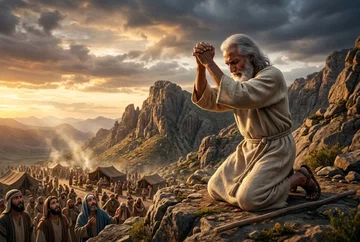
Cross-references 20 of 47
- Exodus 32:1-6
And when the people saw that Moses delayed to come down out of the mount, the people gathered themselves together unto Aaron, and said unto him, Up, make us gods, which shall go before us; for as for this Moses, the man that brought us up out of the land of Egypt, we wot not what is become of him.
Israel demands, makes, and worships the golden calf.
- Exodus 32:10-14
Now therefore let me alone, that my wrath may wax hot against them, and that I may consume them: and I will make of thee a great nation.
God threatens to destroy Israel, and Moses pleads for the people.
- Exodus 33:13-14
Now therefore, I pray thee, if I have found grace in thy sight, shew me now thy way, that I may know thee, that I may find grace in thy sight: and consider that this nation is thy people.
Moses pleads for Israel after the calf sin, and God promises his presence and rest.
- Exodus 20:3-5
Thou shalt have no other gods before me.
Forbids other gods and the making of idols.
- Exodus 32:21-24
And Moses said unto Aaron, What did this people unto thee, that thou hast brought so great a sin upon them?
Moses questions Aaron about his part in the people’s golden-calf sin.
- Romans 9:3
For I could wish that myself were accursed from Christ for my brethren, my kinsmen according to the flesh:
Both Moses and Paul express willingness to bear a cost for their sinful people.
- Exodus 32:11-13
And Moses besought the LORD his God, and said, LORD, why doth thy wrath wax hot against thy people, which thou hast brought forth out of the land of Egypt with great power, and with a mighty hand?
Moses pleads for Israel, appealing to God’s promises.
- Exodus 33:1-2
And the LORD said unto Moses, Depart, and go up hence, thou and the people which thou hast brought up out of the land of Egypt, unto the land which I sware unto Abraham, to Isaac, and to Jacob, saying, Unto thy seed will I give it:
God directs Israel onward and preserves his promise after their sin with the calf.
- Exodus 19:8
And all the people answered together, and said, All that the LORD hath spoken we will do. And Moses returned the words of the people unto the LORD.
Israel’s promise to obey at Sinai preceded its apostasy.
- 1 Corinthians 10:11
Now all these things happened unto them for ensamples: and they are written for our admonition, upon whom the ends of the world are come.
Israel’s experiences are recorded as warnings for later believers.
- Psalms 106:19-23
They made a calf in Horeb, and worshipped the molten image.
Retells the golden calf episode and Moses’ intercession to avert Israel’s destruction.
- Exodus 20:4-5
Thou shalt not make unto thee any graven image, or any likeness of any thing that is in heaven above, or that is in the earth beneath, or that is in the water under the earth:
The people make a golden idol in violation of the commandment against graven images.
- Exodus 32:35
And the LORD plagued the people, because they made the calf, which Aaron made.
The Lord plagues the people because they made the calf.
- Exodus 34:5-7
And the LORD descended in the cloud, and stood with him there, and proclaimed the name of the LORD.
God proclaims his mercy and forgiveness after Moses’s plea.
- Exodus 32:26
Then Moses stood in the gate of the camp, and said, Who is on the LORD’s side? let him come unto me. And all the sons of Levi gathered themselves together unto him.
Moses separates the loyal from the guilty before interceding for Israel.
- Exodus 33:15-16
And he said unto him, If thy presence go not with me, carry us not up hence.
Moses pleads for God's presence to continue guiding Israel.
- Hebrews 7:25
Wherefore he is able also to save them to the uttermost that come unto God by him, seeing he ever liveth to make intercession for them.
Moses’ plea illustrates Christ’s mediation for sinners.
- Hebrews 8:9
Not according to the covenant that I made with their fathers in the day when I took them by the hand to lead them out of the land of Egypt; because they continued not in my covenant, and I regarded them not, saith the Lord.
Israel’s unfaithfulness is described as breaking the covenant.
- Genesis 18:23-32
And Abraham drew near, and said, Wilt thou also destroy the righteous with the wicked?
Abraham pleads for mercy, as Moses intercedes for the sinful people.
- Exodus 33:18
And he said, I beseech thee, shew me thy glory.
Moses pleads with God to reveal his glory.
Commentary
Each commentary is drawn from primary sources: the writings of Ellen G. White and Adventist pioneers and periodicals. Each commentary is separate. Its own words are not a quotation; follow the references to read the source passages.
Ellen G. White
32 sources
Moses returned to the Lord after the worship of the golden calf and after punishment fell on the unrepentant, openly confessing that the people had sinned a great sin in making gods of gold.Ms 66a, 1900, par. 14–19Ms 166, 1898, par. 9–15Ms 2, 1904, par. 28–30PP 315.2–3Ms 92, 1900, par. 22–25 His confession did not excuse their guilt but led into earnest intercession, pleading for forgiveness and offering his own name to be blotted from God's book rather than see Israel destroyed.SG3 284.1–285.13T 303.2–3PP 326.1–3RH Jul 29, 1873Ms 58, 1900, par. 26 His burden and self-sacrificing love illustrate Christ's love and mediation for sinners, though he could not bear their guilt as Christ did.SG3 284.1–285.1PP 326.1–3Ms 52, 1896, par. 60–66Ms 166, 1898, par. 9–15 God answered that the sinner, not an innocent substitute, is blotted from the book of records in heaven, renewing the promise of His Angel to lead while warning that the sin would still be visited with punishment.SG3 284.1–285.13T 303.2–3Ms 52, 1898, par. 42–44Ms 2, 1904, par. 28–30ST May 27, 1880 That great sin is pardoned and remembered no more against those who repent and obey thereafter, but love no less than justice demanded swift judgment on persistent rebels to maintain divine government and to save the many.3T 303.2–3Ms 52, 1898, par. 42–44PP 335.1–2
The Sin at Sinai
The confession is of the worship of the golden calf while Moses was on Mount Sinai with the cloud of the divine presence still in view, receiving the stone tables from God.PP 315.2–3Ms 92, 1900, par. 22–25 Impatient to move toward Canaan and unwilling to wait for Moses, especially the mixed multitude, the people became careless, inattentive and lawless instead of meditating on the law they had heard and humbling their hearts for further revelation.PP 315.2–3 Feeling helpless without their leader they returned to Egyptian superstition and desired a visible image to represent God and to go before them in the place of Moses.PP 315.2–3 At the suggestion of those who had practiced ox or calf worship in Egypt, they made and worshiped a calf, representing the glory of the invisible God by the similitude of an ox.PP 315.2–3 God had given no likeness of himself and had prohibited any material representation, and the miracles in Egypt and at the Red Sea were meant to establish faith in him as the invisible all-powerful Helper.PP 315.2–3 Desire for a visible manifestation had already been granted in the pillar of cloud and fire and in the revealing of his glory on Sinai.PP 315.2–3
The making of gods of gold was a great, grave and aggravated sin.Ms 58, 1900, par. 26PP 335.1–21SP 248.2–249.1 It was the work of man put in place of sincere devotion to the living God, openly defying God's law and breaking the covenant the people had so recently made with him.PP 335.1–21SP 248.2–249.1SG3 279.2–281.1 The sin was treason against a King who had loaded the people with benefits and whose authority they had voluntarily pledged themselves to obey. It was an offense against the Angel who was leading Israel that brought marks of God's displeasure in broken ranks and missing numbers.3T 342.1 The deliverance from Egypt and God's power shown along the journey should have given lasting faith and closed every expression of ingratitude, and the experience of the calf should have made an impression never to be effaced to be redeemed by faithful obedience.3T 342.1 But the people overlooked blessings received in times of greatest danger, let fear of want and danger outweigh them, charged their hardships to Moses, and returned to discontent, murmuring and rebellion.3T 342.1
Aaron failed to stand firmly for what he knew to be right and yielded to the people's insubordination and idolatrous plans, giving way while Moses was on the mountain and allowing revelry and idolatry to begin.Ms 52, 1898, par. 42–44RP 45.1SG4 19.2 In contrast Moses felt his own weakness under the great work committed to him and had God ever as his counselor.SG4 19.2 Aaron could have prevented the apostasy if he had had courage to stand for the right irrespective of consequences.RH Feb 4, 1909 If he had unswervingly maintained his own allegiance, pointed the people to the perils of Sinai and reminded them of their solemn covenant to obey God's law the evil would have been checked, but his compliance with the desires of the people and the calm assurance with which he carried out their plans emboldened them to go to greater lengths in sin than had before entered their minds.RH Feb 4, 1909 Thus one concession against God's commands let idolatry spread until decisive action was taken.RP 45.1
Moses confronted Israel with their great sin and pointed to the broken tables of stone as representing that they had thus broken the covenant.SG3 279.2–281.1 He inquired of Aaron what the people had done to him that he had brought this great sin upon them.SG3 279.2–281.1 God did not reprove Moses for breaking the tables but was very angry with Aaron and would have destroyed him and would have slain him had it not been for the special intercessions of Moses in his behalf.Ms 92, 1900, par. 22–25SG3 279.2–281.1
Moses' Confession and Intercession
After the idolatry, after the slaying of the unrepentant idolaters and after the punishment of the openly rebellious, Moses told the distressed people he would go up to the Lord to make an atonement for their sin and then returned to the Lord and plainly and openly acknowledged that the people have sinned a great sin in making gods of gold.Ms 66a, 1900, par. 14–19Ms 166, 1898, par. 9–15Ms 2, 1904, par. 28–30ST May 27, 1880 His confession did not excuse or lessen their guilt but recognized the seriousness and aggravated character of idolatry and rebellion, humbly placing himself and Israel on God's mercy and relying on God's mercy as he pleaded for God to forgive and spare them.3T 303.2–3RH Jul 29, 1873Ms 58, 1900, par. 26ST May 27, 1880 The sin could not be removed by sacrifices and offerings alone; sincere repentance and humility were necessary.ST May 27, 1880 His confession led into earnest intercession in which he brought the sinful people before God and before the mercy seat, carrying their burden and refusing to separate himself from them, combining compassion for the erring with clear recognition of the offense.Lt 85, 1894, par. 8–18Ms 66a, 1900, par. 14–19Ms 52, 1896, par. 60–66
He asked God to forgive them, with a pause after asking forgiveness that showed the greatness of the request, and offered that if God would not forgive them his own name be blotted or erased from God's written book.SG3 284.1–285.13T 303.2–3PP 326.1–3Lt 197, 1902, par. 9–11Ms 166, 1898, par. 9–15 He was willing to be blotted out with erring Israel rather than endure seeing them destroyed and seeing the fullness of God's wrath come upon the people for whom he wrought such wonders.SG3 284.1–285.1Ms 66a, 1900, par. 14–19Ms 52, 1898, par. 42–44ST May 27, 1880 He stood between Israel and God's anger when God proposed destroying the people and making Moses a great nation, pleading for Israel to be forgiven and asking God to turn from his anger.SG1 40.3EW 132.2 Though naturally diffident, slow of speech, hesitating and self-distrustful, his sense of inability and his realization of inability for the work drove him to God for the people under his leadership, and he became eloquent in prayer and in beseeching God for them, with mercy ruling his leadership.Lt 197, 1902, par. 9–11RH Nov 24, 1910
His greatness came from the divine revelation and commission given to him, and his merciful, wholly unselfish leadership with no thread of selfishness is the sentiment of every soul entrusted with responsibility for souls who strives to do the will of God, with the same kindness, patience, long-suffering and gentleness with a trusting heart given to those who now move forward under Christ's command.Lt 197, 1902, par. 9–11RH Nov 24, 1910 The verse means intimate communion with the Most High in intercessory prayer, with God speaking to Moses face to face as a man speaks to a friend because He read sincerity and unselfish purpose in his servant's heart, and Moses would not cease pleading for a sight of God's glory, which God caused to pass before him.RH Nov 24, 1910ST Jan 29, 1902 Moses was speaking to the Lord Jesus Christ, who had pledged Himself for the propitiation for the sins of the world and who gave Himself as a propitiation, and his prayer unveiled the depth of his love for his people in a spirit of love and compassion that God honored.Ms 166, 1898, par. 9–15
His burden for the people is compared to Christ's sorrow and compassion for Jerusalem, and his plea shows his deep love for Israel and illustrates Christ's love and mediation for the sinful race and for sinners and for sinful humanity, though Moses could not bear the transgressors' guilt as Christ did.SG3 284.1–285.1PP 326.1–3Ms 52, 1896, par. 60–66ST May 27, 18801SP 252.1–2 Though he carried the burden of their sin he felt remorse and suffered keen remorse over their sin as if he himself were guilty, with an overwhelming weight of responsibility and a pressing realization of the terrible darkness and impenitence that would result if God gave them up, fearing the consequences if they remain hardened and impenitent.4T 531.3–532.1GW92 33.1–34.3ST Jan 29, 1902 His prayer entrusted himself and the people to God and sought His presence and help, seeking restoration of God's favor and the continuance of the token of God's presence to direct their journeyings and to separate him and Israel from all peoples on the earth.GW92 33.1–34.3ST Jan 29, 1902
God's Answer and Justice
God's book is the book of records in heaven where every name is recorded and acts, sins and obedience are faithfully written, and sins against God are recorded there.SG3 284.1–285.1Ms 2, 1904, par. 28–30ST May 27, 1880 To be blotted or erased from that book is to be unforgiven and devoted to destruction when sin is too grievous to pardon.SG3 284.1–285.1ST May 27, 1880 God answers Moses that those who sin against Him will be erased, that the sinner and not an innocent substitute is blotted from His book.SG3 284.1–285.1Ms 2, 1904, par. 28–30ST May 27, 1880
He refuses to let Moses suffer for his backsliding people, declaring that whoever has sinned against Him will be blotted out, for the righteous must not suffer for the guilt of the sinner and do not bear the guilt of the sinner.SG3 284.1–285.1ST May 27, 1880 He renews the promise that His Angel will lead the people, while warning that their sin will still bring punishment and will be visited upon them in the day of visitation, bringing a plague upon the people.3T 303.2–3Ms 52, 1898, par. 42–44Ms 2, 1904, par. 28–30ST May 27, 1880 Forgiveness after the golden calf is conditional: if the people so mercifully spared are obedient thereafter and humbled and repentant, if they repent with repentance which needeth not to be repented of and serve God and honor His name, that great sin will be remembered no more against them and pardoned and blotted from His book.3T 303.2–3Ms 52, 1898, par. 42–44PP 335.1–2
But if when tempted they pursue the same course, show no strength to resist temptation, repeat their evil work, murmur and complain and stubbornly persist in rebellion, God will visit their sin upon them and place those sins to their account as unforgiven.3T 303.2–3Ms 52, 1898, par. 42–44PP 335.1–2 The sin could not be removed by sacrifices and offerings alone; sincere repentance and humility were necessary.ST May 27, 1880 That the divine government might be maintained, justice must be visited upon the traitors, and love no less than justice demanded that judgment should be inflicted, with the history of the sin standing as a testimony to idolatry's guilt and punishment and to God's justice and long-suffering mercy.PP 335.1–2
God is guardian as well as sovereign of His people, and He cuts off those determined upon rebellion that they may not lead others to ruin, while even here mercy was displayed, for while He maintained His law He granted freedom of choice and opportunity for repentance to all, and only those who persisted in rebellion were cut off. Unless punishment had been speedily visited, the same results seen after sparing Cain and the corruption that demanded the flood would have been seen again, and the earth would have become as corrupt as in the days of Noah, and had these transgressors been spared, evils greater than resulted from sparing Cain would have followed. It was mercy that thousands should suffer to prevent the necessity of visiting judgment upon millions, and in order to save the many He must punish the few. As the people had cast off allegiance to God they had forfeited divine protection and the whole nation was exposed to enemies, and had not the evil been promptly put away they would soon have fallen a prey to their numerous and powerful foes.
It was necessary for the good of Israel and as a lesson to all succeeding generations that crime should be promptly punished, and it was also mercy to the sinners themselves to be cut short in their evil course, for had their lives been spared the same spirit that led them to rebel would have been manifested in hatred and strife until they destroyed one another, so crime was punished with swift and terrible severity in love to the world, in love to Israel, and even to the transgressors. God's promise to Israel still stands notwithstanding their perversity, and the verses mark one of the many crises that come to God's people, in which everyone must acknowledge the Lord God of hosts, and must not harden the heart against the Lord but humble it, warning God's people not to repeat Israel's transgression.Ms 2, 1904, par. 28–30Ms 117, 1909, par. 23–28
Sources
Pioneers and periodicals
58 sources
Moses returned to the Lord confessing on behalf of Israel that the people had committed a great sin in making gods of gold and pleading for pardon and atonement.ST Jun 16, 1914ST Mar 11, 1889RH Jun 28, 1864 The sin came within forty days after the law was given at Sinai while Moses was on the mount receiving the tables of stone, when the impatient people had Aaron help them invent a visible worship.RH Aug 19, 1852ST Jan 27, 1909RH Oct 8, 1872RH Jan 8, 1857ST Jan 29, 1908 That great sin was substituting a human-crafted calf for the worship of God, breaking the first commandment and the covenant just promised to be kept, which no value or zeal could make acceptable.ST Jul 16, 1902RH Aug 19, 1852RH Nov 13, 1856RH May 25, 1876ST Jun 6, 1916 Moses asked God to forgive them and offered to be blotted out of God's book if they were not forgiven, in self-sacrificing love like Christ the mediator.ST May 27, 1880ST Jun 16, 1914RH Feb 19, 1861ST Jun 19, 1884ST Oct 25, 1905 God heard so far as not to destroy all for His name and promises, though in justice about three thousand fell and a plague came, showing mercy that spares the repentant while punishing persistent rebellion.RH Aug 19, 1852RH Nov 13, 1856RH Jan 7, 1862ST Jan 2, 1901
Sinai Setting and Sequence
Exodus 32:31 belongs to the account of Israel's worship of the golden calf and Moses' intercession for the people, an apostasy in the wilderness in which Israel sinned by making gods of gold and was restored through the Lord's work through Moses.ST Jul 30, 1902 That account is followed by God's revelation of His mercy and righteousness, the renewal of the stone tablets, and the confirmation of the covenant.
The book containing the verse means the going out, the departure of Israel from Egypt.RH Jan 20, 1916 It tells how the family of Israel, comfortable and prosperous in Egypt at the close of Genesis, grew more and mightier than the Egyptians, fell into bitter bondage and oppression, and was greatly delivered to become a nation with thorough organization, efficient leadership, a complete code of laws, and an established form of worship.RH Jan 20, 1916 The verse belongs to the worship part of the book and shows Moses, rescued from Egyptian malice in his infancy and chosen as leader of Israel, returning to the LORD over the sin of the people he led.RH Jan 20, 1916
The sin happened less than forty days after the law was given at Sinai, within forty days after Israel covenanted at Horeb to obey God's voice and made solemn promise to obey God at Mount Sinai, showing how quickly apostasy can grow.RH Aug 19, 1852RH Jan 8, 1857ST Jul 10, 1901 It was grave idolatry only forty days after God spoke to them at Sinai, while the signs of His presence were still before them.ST Jan 27, 1909 It took place where God had personally descended on the mount with His angels, while Moses was on the mount receiving the law written on two tables of stone to be placed in the ark.RH Dec 24, 1861RH Apr 28, 1874 Their worship of the golden calf shows that fear or compulsion does not produce faithful service, for God is served through love, and receiving His law in the heart would have kept Israel from turning back to Egypt and worshiping the calf.ST Jan 27, 1909 By this breach within forty days the people proved the Horeb covenant was conditional and was violated by them.RH Jan 8, 1857
It happened after God had delivered them from Egypt and while Moses was away on the mountain to receive the law.RH Oct 8, 1872ST Jan 29, 1908 Despite having witnessed His power, the people invented a form of worship that departed from God's way, and their devotion, zeal, and willingness to give up their gold did not make the idolatry true worship.RH Oct 8, 1872 The impatient people were helped by Aaron in this backsliding soon after God's revelation at Sinai, making a golden calf representing Egypt's sun-god Apis.ST Jul 10, 1901ST Jan 29, 1908 As God's anger was revealed, Moses returned to the Lord and pleaded for Israel, admitting that Israel had committed a great sin by making and worshiping golden gods.ST Jul 10, 1901ST Jan 29, 1908
Meaning of Golden Calf Sin
The great sin was putting something else in the place of the worship of God and calling it God, deifying the lust and carnality of the human heart instead of holding a devout conception of God as a person.ST Jul 16, 1902RH May 25, 1876 Israel made a golden calf by human invention rather than by what God had appointed, and no value or fair appearance, no devotion or zeal, and no gifts of gold could make that substitute acceptable to take God's place in worship.RH May 25, 1876ST Jun 6, 1916 When Moses was out of sight the people proved unable to trust God and demanded a visible god, and when faith loses sight of God men turn to other gods that differ in form from Israel's idols but are just as harmful and powerless.ST Sep 17, 1902ST Sep 12, 1895 They fashioned with human hands an idol to displace their Creator and to lead them to the land they hoped to enter, while Aaron as God's representative before them yielded to the impatient demand because he was afraid to refuse.ST Sep 17, 1902ST Mar 31, 1909 Their fickleness in praising Jehovah, then turning to a calf and later to Baal, is an unstable religious life, for the law they had so lately covenanted to keep had no power over them because it was not in their hearts but was weak through the flesh, and unless the Spirit of Christ writes the law within, it cannot control action.ST Sep 17, 1902RH Apr 28, 1863 At Sinai they longed for the old nature worship of Egypt's sun-god Apis with its sensuousness and licentiousness, exalting low, lustful nature worship when they sat down to eat and drink in gluttony and rose up to wanton, naked, lewd orgies, yet calling that sun-god feast a feast to Jehovah, which was awful backsliding and awful blasphemy.ST Jul 16, 1902
That idolatry was transgression of God's law, breaking the first commandment by worshiping the work of their own hands even before Moses came down from the mount with the tables of the covenant they had just promised to keep.RH Aug 19, 1852RH Nov 13, 1856 It came less than forty days after the law was given at Sinai and within forty days after Israel covenanted at Horeb to obey God's voice, proving that the Horeb covenant was conditional and was violated by them.RH Aug 19, 1852RH Jan 8, 1857 For this great sin God thought to disinherit them, but when Moses pleaded He repented of the evil He thought to do, sparing them for their fathers' sakes and saving all who repented, dealing with literal Israel ever to bless when obedient and to punish when disobedient, a condition never removed.RH Nov 13, 1856 Moses plainly acknowledged the sin to the Lord without excusing it or lessening its guilt as he pleaded for forgiveness and for God to spare the people in mercy.RH Jul 29, 1873ST May 27, 1880 It could not be removed by sacrifices and offerings alone, but required sincere repentance and humility, an earnest seeking of pardon and restoration to favor that is more than form, under accountability and punishment for transgression.ST May 27, 1880ST Jun 3, 1880
Aaron could have checked the apostasy if he had had courage to stand for the right irrespective of consequences.RH Feb 4, 1909 If he had unswervingly maintained his own allegiance to God, pointed the people to the perils of Sinai, and reminded them of their solemn covenant to obey God's law, the evil would have been stopped.RH Feb 4, 1909 Instead his compliance with their desires and the calm assurance with which he carried out their plans emboldened them to go to greater lengths in sin than had before entered their minds.RH Feb 4, 1909
Moses Confesses and Intercedes
After the abominable idolatry Moses returned to the LORD to plead for Israel, confessing on their behalf that the people had sinned a great sin in making gods of gold.ST May 27, 1880ST Jun 16, 1914ST Mar 11, 1889RH Mar 3, 1853 He acknowledged their guilt before God without lessening it, and his plea was that God would offer pardon through the kingdom of grace on the very day of their transgression.ST May 27, 1880ST Jun 16, 1914RH Mar 3, 1853 To the distressed people he promised that he would go up to make an atonement for their sin, and after the openly rebellious were punished he undertook to plead with God to pardon the remainder.ST May 27, 1880RH Jun 28, 1864 The LORD had heard his earlier petition so far as not to destroy them all, yet He remained displeased so that about three thousand men fell that day.RH Jun 28, 1864
He asked God to forgive the people, and offered to be blotted out of God's book if they were not forgiven, even though three thousand had already died.RH Feb 19, 1861ST Jun 19, 1884ST Oct 25, 1905RH Aug 19, 1852 His words introduce his plea for forgiveness and his willingness to be blotted out rather than see them forsaken, presenting him as an advocate interceding for sinners.RH Feb 19, 1861ST Jun 19, 1884ST Oct 25, 1905 The idolatry was transgression of God's law committed less than forty days after the law was given at Sinai, and God answered that whoever had sinned against Him would be blotted out.RH Aug 19, 1852 His pleading to spare the rebellious and to have his own name blotted out of the Book of Life if that could save them illustrates a love willing to give up even the hope of eternal life for their salvation.ST Aug 22, 1911ST Nov 27, 1893 That willingness to give himself for those who had sinned, to die for and with them, was love like Christ's, and his mediation is compared with Jesus' intercession and His death as ransom and propitiation.RH Feb 19, 1861ST Nov 27, 1893
God at that time thought to disinherit the people for this great sin in breaking the first commandment even before Moses came down from the mount with the tables of the covenant they had just promised to keep, and to destroy them and make a nation from Moses.RH Nov 13, 1856RH Jan 7, 1862ST Feb 15, 1905 But when Moses pleaded for their salvation and for God's name, promises to the fathers, and kingdom of grace to be vindicated, He repented of the evil He thought to do to them.ST Jun 16, 1914RH Nov 13, 1856ST Feb 15, 1905 He spared them for their fathers' sakes and saved all that repented, proving His dealing was ever to bless when obedient and to punish when disobedient, with the condition not removed.RH Nov 13, 1856 The LORD heard so far as not to destroy all, though still displeased, and spared them after Moses interceded so that His name would not be profaned before the nations, this apostasy being part of Israel's wilderness rebellion when the people also violated the Sabbath.RH Jan 7, 1862RH Jun 28, 1864 Though the people had escaped the judgment their crime deserved, they remained weak and needed the strength that divine love gives, and God heard the mediator and changed their deadly fear to hope.
His intercession was broken-hearted after coming down from communion with God on the mount to find Israel putting the calf in God's place and dancing shamelessly before the idol.ST Jan 29, 1902ST Jan 7, 1903 His anger was not pique or vexation but righteous indignation for the LORD's sake, joined with pleading for the people who had dishonored him as well as God and with willingness to die for and with them.ST Jan 7, 1903 He suffered keen remorse over their sin as if he himself were guilty, with a pressing realization of the terrible darkness and impenitence that would result if God gave them up.ST Jan 29, 1902 God spoke with him face to face as a man speaks to a friend because He read sincerity and unselfish purpose in His servant's heart, as Moses carried Israel's burden and overwhelming weight of responsibility.RH Nov 24, 1910ST Jan 29, 1902 His prayer sought restoration of God's favor and the continuance of the token of God's presence to direct their journeyings and to separate him and Israel from all peoples on the earth.ST Jan 29, 1902 Such pleading is not overbold but is pleasing to God, is the Christ-spirit, is the real test of living connection with God and possession of Christianity as burden for souls to be saved and to know Jesus Christ, even to the utter giving of self and life itself for enemies.ST Jan 7, 1903 It reveals merciful, wholly unselfish leadership with no thread of selfishness, made great by divine revelation and commission, and though naturally diffident, slow of speech, hesitating and self-distrustful, he became eloquent in beseeching God, with the same kindness, patience, long-suffering and gentleness with trusting heart given to those who now move forward under Christ's command.RH Nov 24, 1910ST Jan 7, 1903
Divine Justice and Mercy
The great sin of making gods of gold was treason against a King who had loaded Israel with benefits and whose authority they had voluntarily pledged themselves to obey. That the divine government might be maintained, justice had to be visited upon the traitors, and love no less than justice demanded that judgment should be inflicted. God is guardian as well as sovereign of His people, and He cuts off those determined upon rebellion that they may not lead others to ruin. Yet even here mercy was displayed, for while He maintained His law He granted freedom of choice and opportunity for repentance to all, and only those who persisted in rebellion were cut off. Prompt punishment was necessary for the good of Israel and as a lesson to all succeeding generations, for unless evil was speedily put away the same results seen after sparing Cain and the corruption that demanded the flood would have been seen again until the earth became as corrupt as in the days of Noah, with evils greater than resulted from sparing Cain following had these transgressors been spared. It was mercy that thousands should suffer to prevent the necessity of visiting judgment upon millions, and in order to save the many He must punish the few. As the people had cast off allegiance to God they had forfeited divine protection and the whole nation was exposed to enemies, so that had not the evil been promptly put away they would soon have fallen a prey to their numerous and powerful foes. It was also mercy to the sinners themselves to be cut short in their evil course, for had their lives been spared the same spirit that led them to rebel would have been manifested in hatred and strife until they destroyed one another, so crime was punished with swift and terrible severity in love to the world, in love to Israel, and even to the transgressors.
The idolatry was transgression of God's law committed less than forty days after the law was given at Sinai, and when Moses asked God to forgive the people and was willing to be blotted from God's book for their sake, God answered that the one who had sinned against Him would be blotted out.ST May 27, 1880RH Aug 19, 1852RH Jun 28, 1864 Whoever has sinned is blotted out of His book, the heavenly record of names, sins, and obedience, for the righteous do not bear the guilt of the sinner, and those whose sins He will not pardon are erased and devoted to destruction.ST May 27, 1880 About three thousand men fell that day, though the Lord had heard the earlier petition so far as not to destroy all of the people, and on the morrow Moses told the people he would go up to the Lord to make an atonement for their sin before pleading for forgiveness and offering to be blotted out of God's book if they were not forgiven.RH Jun 28, 1864 A plague also came upon the people, and summary punishment was carried out under the theocracy, showing that God's dealings with sin are consistent, that His mercy has not changed, and that sin is still deserving of punishment.ST May 27, 1880ST Jan 2, 1901 The golden-calf sin stands among the acts of rebellion in the wilderness met with swift, severe punishment, yet after judgments the lesson was not lasting and Israel soon returned to murmuring and disobedience.ST Sep 9, 1880ST May 23, 1911
Their worship of the calf reflected the deep-rooted idolatry they had carried from Egypt and threatened God's purpose to dwell among them in the sanctuary.ST Aug 16, 1910 After the impenitent were punished, the people repented through the intercession of the Spirit of God and Moses, and God forgave them, making it possible for Him to dwell among them again.ST Aug 16, 1910 The great sin made God angry so that He refused to go with Moses and the people up to the land He had sworn to Abraham, Isaac, and Jacob to give to their seed while driving out the Canaanite nations by an angel.ST Nov 4, 1886 It led Moses to plead with God to show him His way that he might know Him, after which God answered that His presence would go and give rest, the rest Israel later received round about from their enemies when they possessed the land under Joshua.ST Nov 4, 1886
Covenant Christ and Sabbath
The making of gods of gold was a transgression committed before the Sinai covenant was instituted, and it was the reason ritual and judicial laws were added to preserve Israel as Abraham's natural seed.RH Feb 7, 1854 The idolatry broke the covenant the people had promised to keep and was a breach of the people's part in their covenant with God.RH Jan 12, 1911ST Sep 23, 1913 Since the covenant of the law offered no forgiveness, the great sin revealed the people's need for pardon and a Saviour through the new covenant.RH Jan 12, 1911
The apostasy belonged to Israel's wilderness rebellion, when the people also violated the Sabbath, and God intended to destroy them but spared them after Moses interceded so that His name would not be profaned before the nations.RH Jan 7, 1862 It came shortly after the Ten Commandments were proclaimed from Sinai, while Moses was in the mount receiving the law written on two tables of stone to be placed in the ark in the most holy place.RH Apr 28, 1874 In distress and under divine impulse Moses broke the tables, caused the leading idolaters to be slain, and next asked God to pardon the sin of the remainder.RH Apr 28, 1874 God then bade Moses hew a second set of tables and bring them into the mount, and at the end of the second forty days gave a second copy of the law written thereon, so that the Sabbath shares with the other precepts the honor of being publicly proclaimed by the voice of God and twice written by His finger.RH Apr 28, 1874 The account belongs to the giving of the law, the apostasy, and the intercession, showing God's mercy and compassion in long-suffering kindness, and it warns against becoming careless or indifferent and thinking it makes no great difference if God's requirements are not exactly fulfilled.RH Dec 2, 1909 That warning applies especially to thinking it matters not whether to observe as the Sabbath the day God plainly specified or to substitute a day of man's invention, because in the Judgment all will be judged by the standard of God's Word.RH Dec 2, 1909
In the surrounding verses Moses acts as mediator for the guilty people, confessing the great sin as he pleads for pardon through the kingdom of grace on the day of their transgression.ST Jun 16, 1914RH Feb 19, 1861 He asks God to forgive them and offers to be blotted from God's book if they are not forgiven, and this mediation is compared with Jesus' intercession and His death as a ransom and propitiation.RH Feb 19, 1861 His plea shows love for Israel and illustrates Christ's love and mediation for sinners, and in this confession and plea he speaks to Jesus Christ, who gave Himself as a propitiation for the sins of the world.ST May 27, 1880 God answers that those who sin against Him will be erased from His book, the heavenly record of names, sins, and obedience, the righteous do not bear the guilt of the sinner, and those whose sins God will not pardon are erased and devoted to destruction, while Israel's sin also brings a plague upon the people.ST May 27, 1880
Prayer Pattern and Present Warning
Moses returning to the Lord to confess that the people had made gods of gold is intercession for another's idolatry, and his praying to the Lord on behalf of the congregation confessing their great sin is public prayer as priestly intercession for others.RH Feb 25, 1915RH Oct 5, 1911 That pleading for Israel after the sin follows a personal encounter with God and the work of His Spirit in the heart.ST May 14, 1902 It proves that the men who have moved this world toward God were men of prayer, and that thorough preparation wrought by prayer must come before undertaking evangelistic work.RH Feb 5, 1914
Such burdened pleading is not overbold but is pleasing to God, is the Christ-spirit, and is the real test of living connection with God and possession of Christianity, which is burden for souls to be saved and to know Jesus Christ, even to give life itself in utter giving of self for enemies.ST Jan 7, 1903 He presented Israel before God after the sin, confessing the great sin and pleading for forgiveness, even asking to be blotted out of God's book if they could not be forgiven, which reveals merciful, wholly unselfish leadership with no thread of selfishness, made great by divine revelation and commission.RH Nov 24, 1910 He talked with God face to face as a man with a friend and would not cease pleading for a sight of God's glory, which God caused to pass before him, for the realization of his inability for the work drove him to God for the people under his leadership.RH Nov 24, 1910 Though naturally diffident, slow of speech, hesitating and self-distrustful, he became eloquent in beseeching God for his people, and the same kindness, patience, long-suffering and gentleness with a trusting heart is given to those who now move forward under Christ's command.RH Nov 24, 1910 His return in broken-hearted intercession came after coming down from communion with God on the mount to find Israel had put the golden calf in the place of God and was dancing shamelessly and lasciviously in nudeness before the idol, and his anger was not pique or vexation but righteous indignation for the Lord's sake, joined with pleading for the people who had dishonored him as well as God and with willingness to die for and with them.ST Jan 7, 1903
Bringing the sin before the Lord is evidence that people who had been accepted by God could later apostatize.RH Mar 13, 1879 Moses admitted to the Lord that Israel had committed a great sin by making and worshiping golden gods, and the sin followed within less than forty days of Israel's solemn promise to obey God at Mount Sinai, showing how quickly apostasy can grow.ST Jul 10, 1901 While Moses was away Israel made and worshiped the golden calf, and this disobedience demonstrates the need for the leader God had appointed.RH Mar 7, 1907 The golden-calf apostasy is a warning against following weak leadership into apostasy, and the account teaches the need to stand firmly for God.RH Mar 5, 1908 The majority cannot make false worship right, for even when all Israel, led by the high priest, worshiped the golden calf, Moses and a few others stood for what was right.ST Jun 25, 1912 Moses did not remain silent or let the apostasy go unchecked, but confronted the evil and sought to address the people's sin.RH Jun 14, 1906
The account of the sin in making gods of gold prompts readers to examine what idols they themselves worship.RH Jan 27, 1916 The great sin of turning gold into a god in the worship of the golden calf is presented as a grave sin in which the people made gods of gold, turning gold into objects of worship.RH Aug 25, 1874 That same sin is committed when people give themselves to the love of money and gain, to monopolizing trusts, to conquest and the lust for empire for profit, and to a logic that locks up the petty thief while enthroning grand larceny. It is applied to a society that prizes money above faith, self-sacrifice, and human worth.RH Aug 25, 1874 To return to that worship is to set aside God's law and make a new commandment that forbids stealing only on a small scale in order to permit stealing on a large scale.
Sources