Ezekiel 18:3
As I live, saith the Lord GOD, ye shall not have occasion any more to use this proverb in Israel.
Translations
As I live, says the Lord GOD, you shall not have occasion any more to use this proverb in Israel.
King James Version, Webster Bible, Revised Version
As I live, saith the Lord GOD, ye shall not have occasion any more to use this proverb in Israel.
As I live, saith the Lord God, ye shall not have occasion any more to use this proverb in Israel.
As I live, saith the Lord Jehovah, ye shall not have occasion any more to use this proverb in Israel.
I live — an affirmation of the Lord Jehovah, Ye have no more the use of this simile in Israel.
[ As] I live, saith the Lord Jehovah, ye shall not have any more to use this proverb in Israel.
As I live, Declareth My Lord, Yahweh, Surely ye shall have occasion no longer to use this proverb, in Israel.
Berean Standard Bible, Majority Standard Bible
As surely as I live, declares the Lord GOD, you will no longer quote this proverb in Israel.
“ As I live,” says the Lord GOD, “ you shall not use this proverb any more in Israel.
By my life, says the Lord, you will no longer have this saying in Israel.
As I liue, sayth the Lord God, ye shall vse this prouerbe no more in Israel.
Douay-Rheims (Challoner revision)
As I live, saith the Lord God, this parable shall be no more to you a proverb in Israel.
Pictures
Cross-references
- Ezekiel 18:20
The soul that sinneth, it shall die. The son shall not bear the iniquity of the father, neither shall the father bear the iniquity of the son: the righteousness of the righteous shall be upon him, and the wickedness of the wicked shall be upon him.
Each person bears their own sin, and the repentant may live.
- Jeremiah 31:29-30
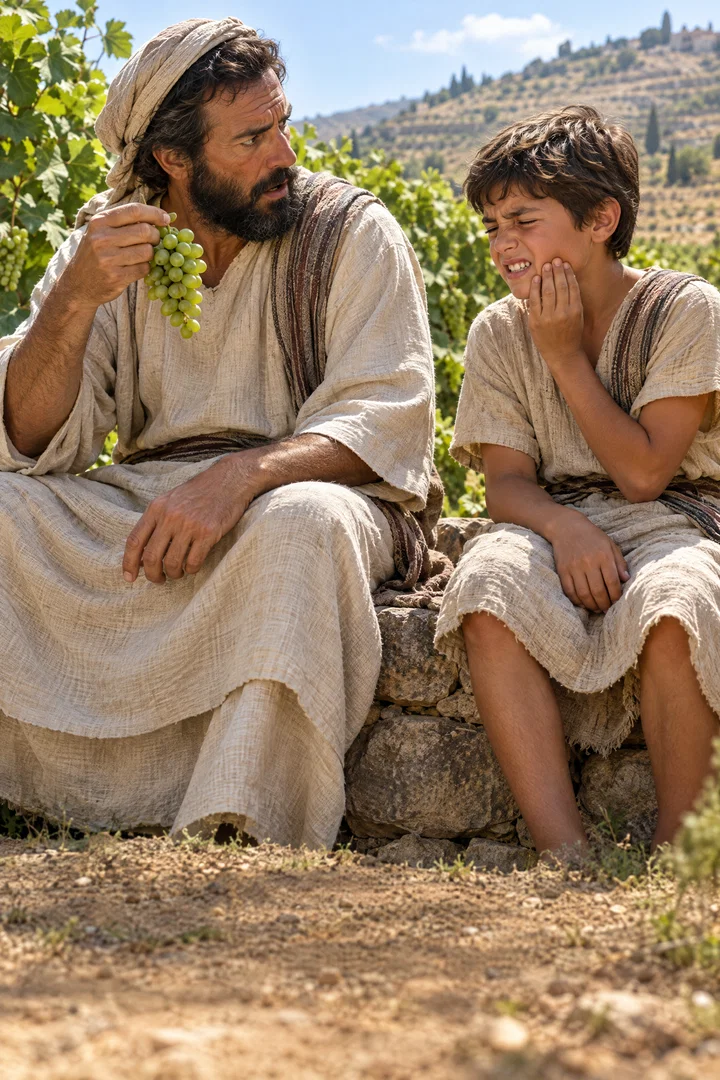
In those days they shall say no more, The fathers have eaten a sour grape, and the children’s teeth are set on edge.
The sour-grape proverb will cease; each person answers for their own sin.
- Ezekiel 33:11
Say unto them, As I live, saith the Lord GOD, I have no pleasure in the death of the wicked; but that the wicked turn from his way and live: turn ye, turn ye from your evil ways; for why will ye die, O house of Israel?
Both affirm the LORD’s declaration concerning Israel.
- Ezekiel 18:21-23
But if the wicked will turn from all his sins that he hath committed, and keep all my statutes, and do that which is lawful and right, he shall surely live, he shall not die.
The wicked who turns from sin and keeps God’s statutes shall live.
- Ezekiel 18:30-32
Therefore I will judge you, O house of Israel, every one according to his ways, saith the Lord GOD. Repent, and turn yourselves from all your transgressions; so iniquity shall not be your ruin.
God calls each person to turn from sin and live.
- Jeremiah 18:7-10
At what instant I shall speak concerning a nation, and concerning a kingdom, to pluck up, and to pull down, and to destroy it;
Judgment or blessing changes according to a nation’s response.
- Exodus 20:5-6
Thou shalt not bow down thyself to them, nor serve them: for I the LORD thy God am a jealous God, visiting the iniquity of the fathers upon the children unto the third and fourth generation of them that hate me;
God’s warning about consequences across generations contrasts with Ezekiel’s teaching about personal guilt.
- Ezekiel 18:26
When a righteous man turneth away from his righteousness, and committeth iniquity, and dieth in them; for his iniquity that he hath done shall he die.
Says the sinner dies for his iniquity.
Commentary
Each commentary is drawn from primary sources: the writings of Ellen G. White and Adventist pioneers and periodicals. Each commentary is separate. Its own words are not a quotation; follow the references to read the source passages.
Ellen G. White
5 sources
God swore by His own life that Israel would never again have occasion to use the proverb that children suffer for their fathers' sins.Ms 79, 1901, par. 24–26Lt 254, 1908, par. 9–10Ms 75, 1895, par. 6–8 Every soul belongs to Him, the soul of the father and the soul of the son alike.Ms 79, 1901, par. 24–26Lt 254, 1908, par. 9–10Ms 75, 1895, par. 6–8 Each person is accountable for his own sin, and the soul that sins shall die.Ms 79, 1901, par. 24–26Lt 254, 1908, par. 9–10Ms 75, 1895, par. 6–8 The son shall not bear the iniquity of the father nor the father the iniquity of the son, but the righteousness of the righteous and the wickedness of the wicked rests upon each one himself.Ms 75, 1895, par. 6–8 The just person who does what is lawful and right and lives by God's statutes shall surely live.Ms 79, 1901, par. 24–26Lt 254, 1908, par. 9–10Ms 75, 1895, par. 6–8
Such just living means refusing idolatry and oppression, dealing fairly, caring for the poor, and keeping God's statutes.Lt 254, 1908, par. 9–10 Children who have reached years of accountability are responsible for their own actions and must cooperate with God in working out their own salvation.Ms 75, 1895, par. 6–8 When parents command transgression of God's law, children must obey God first, yet without hating their parents.Ms 75, 1895, par. 6–8 When underage children are compelled to do what plainly breaks God's commandments, the sin is charged to the parents who caused them to transgress.Ms 75, 1895, par. 6–8
The Lord speaks just the same whether people will hear or refuse to hear, and this calls for faithful work at all times and in all places.Lt 65, 1896, par. 7–8 The verse brings messages of reproof and warning to the people of God, to mothers, to fathers, and to the children of Israel, so that they may not move blindly, and those who receive these messages with patience and a generous, teachable spirit will receive the Lord's blessing.Lt 65, 1896, par. 7–8 The chapter upholds the duty to warn people who act against the light they have received, for they remain accountable for their course, and the Lord knows unjust acts and will judge oppression rather than justify it.Lt 102a, 1896, par. 6–7
Sources
Pioneers and periodicals
7 sources
As I live, saith the Lord God, Israel will no longer have occasion to use the proverb claiming that children suffer for their fathers' sins, and no person is condemned merely for a parent's wrongdoing.RH Feb 21, 1854RH Jul 4, 1854 The proverb is also a complaint that God's ways are unequal, which God forbids while the chapter proves His equality in rewards and punishments.RH Dec 20, 1864 The passage itself does not explain the proverb named in the verse.ST Oct 1, 1896
Israel objected that a wicked person who turns from wrongdoing is placed on equal footing with the righteous with past transgressions no longer remembered.RH Dec 20, 1864 God's dealings depend on response: He gives life to the penitent even when that person's father was wicked, imposes the death penalty of His law on the impenitent sinner, withholds judgment when the wicked turn from evil, and withdraws promised good when people disobey.RH Jul 4, 1854ST Oct 1, 1896 To prove His ways equal, God declares that if a righteous person turns from righteousness to commit wrongdoing, that former righteousness will not be remembered and that person will die.RH Dec 20, 1864 The rule of inherited punishment was a temporary addition suited to Israel's particular circumstances, especially concerning the Canaanites, and is null and void under the new covenant or gospel dispensation, where each person is accountable for his or her own wrongdoing.RH Feb 21, 1854
The statement that the sinning soul dies contradicts the claim that the soul is undying.RH Feb 20, 1872 That death for sin is not fulfilled by temporal death, because temporal death comes to all through Adam and is dying in wrongdoing rather than dying for wrongdoing, so one who dies in wrongdoing must still die for the wrongdoing died in, which happens in the second death; this implies two deaths and requires a raising to life in order to die a second time.RH Dec 20, 1864 The chapter defines the just person who will surely live as one who does what is lawful and right, oppresses no one, restores a debtor's pledge, takes nothing by violence, feeds the hungry and clothes the naked, lends without usury or increase, turns from wrongdoing, judges truthfully between people, and lives by God's statutes and judgments in truth.ST May 21, 1902 Charging a poor fellow believer interest or increase on money or food therefore disobeys God's plain word, destroys true brotherliness by profiting from a brother's need, and breaks the righteousness to which life is promised.ST May 21, 1902 The verse establishes as God's order for His people under both the Jewish economy and the new covenant that difficulties be settled by counsel within the church, so young converts must be taught that they cannot be approved in going to law against brethren, that they should go to law with unbelievers only when unavoidable, and that they must consult those appointed to advise in difficulties arising in or connected with the church; such prudence avoids calamities and great losses and saves God's cause from disgrace.RH Mar 13, 1879
Sources