Exodus 20:5
Thou shalt not bow down thyself to them, nor serve them: for I the LORD thy God am a jealous God, visiting the iniquity of the fathers upon the children unto the third and fourth generation of them that hate me;
Translations
You shall not bow down yourself to them, nor serve them: for I the LORD your God am a jealous God, visiting the iniquity of the fathers on the children to the third and fourth generation of them that hate me;
Thou shalt not bow down thyself to them, nor serve them: for I the LORD thy God am a jealous God, visiting the iniquity of the fathers upon the children unto the third and fourth generation of them that hate me;
thou shalt not bow down thyself to them, nor serve them: for I the Lord thy God am a jealous God, visiting the iniquity of the fathers upon the children unto the third and fourth generation of them that hate me;
Thou shalt not bow down thyself to them, nor serve them: for I the LORD thy God am a jealous God, visiting the iniquity of the fathers upon the children to the third and fourth generation of them that hate me;
thou shalt not bow down thyself unto them, nor serve them: for I the LORD thy God am a jealous God, visiting the iniquity of the fathers upon the children, upon the third and upon the fourth generation of them that hate me;
thou shalt not bow down thyself unto them, nor serve them; for I Jehovah thy God am a jealous God, visiting the iniquity of the fathers upon the children, upon the third and upon the fourth generation of them that hate me,
Thou dost not bow thyself to them, nor serve them: for I, Jehovah thy God, [am] a zealous God, charging iniquity of fathers on sons, on the third [generation], and on the fourth, of those hating Me,
thou shalt not bow down thyself to them, nor serve them; for I, Jehovah thy God, am a jealous God, visiting the iniquity of the fathers upon the sons to the third and to the fourth [ generation] of them that hate me,
thou shalt not bow thyself down to them nor be led to serve them—For, I, Yahweh, thy God, am a jealous GOD, visiting the iniquity of fathers upon sons, unto three [generations] and, unto four, of them that hate me;
Berean Standard Bible, Majority Standard Bible
You shall not bow down to them or worship them; for I, the LORD your God, am a jealous God, visiting the iniquity of the fathers on their children to the third and fourth generations of those who hate Me,
you shall not bow yourself down to them, nor serve them, for I, the LORD your God, am a jealous God, visiting the iniquity of the fathers on the children, on the third and on the fourth generation of those who hate me,
You may not go down on your faces before them or give them worship: for I, the Lord your God, am a God who will not give his honour to another; and I will send punishment on the children for the wrongdoing of their fathers, to the third and fourth generation of my haters;
Thou shalt not bowe downe to them, neither serue them: for I am the Lord thy God, a ielous God, visiting the iniquitie of the fathers vpon the children, vpon the third generation and vpon the fourth of them that hate me:
Douay-Rheims (Challoner revision)
Thou shalt not adore them, nor serve them: I am the Lord thy God, mighty, jealous, visiting the iniquity of the fathers upon the children, unto the third and fourth generation of them that hate me:
Pictures
Cross-references 20 of 164
- Deuteronomy 5:22
These words the LORD spake unto all your assembly in the mount out of the midst of the fire, of the cloud, and of the thick darkness, with a great voice: and he added no more. And he wrote them in two tables of stone, and delivered them unto me.
God spoke the commandments and wrote them on stone tablets.
- Deuteronomy 4:12-13
And the LORD spake unto you out of the midst of the fire: ye heard the voice of the words, but saw no similitude; only ye heard a voice.
God declares his covenant as the Ten Commandments spoken from the fire.
- Exodus 19:16-19
And it came to pass on the third day in the morning, that there were thunders and lightnings, and a thick cloud upon the mount, and the voice of the trumpet exceeding loud; so that all the people that was in the camp trembled.
God’s proclamation of the law at Sinai was accompanied by awe-inspiring signs.
- Exodus 32:1-6
And when the people saw that Moses delayed to come down out of the mount, the people gathered themselves together unto Aaron, and said unto him, Up, make us gods, which shall go before us; for as for this Moses, the man that brought us up out of the land of Egypt, we wot not what is become of him.
Israel makes and worships the golden calf in violation of the commandment.
- Exodus 19:5-8
Now therefore, if ye will obey my voice indeed, and keep my covenant, then ye shall be a peculiar treasure unto me above all people: for all the earth is mine:
Israel pledges obedience to God’s covenant before the commandments are given.
- Revelation 14:9-12
And the third angel followed them, saying with a loud voice, If any man worship the beast and his image, and receive his mark in his forehead, or in his hand,
The warning against beast worship contrasts with those who keep God’s commandments.
- Matthew 5:17-19
Think not that I am come to destroy the law, or the prophets: I am not come to destroy, but to fulfil.
Christ affirms the law’s continuing authority and calls for its commandments to be kept and taught.
- Deuteronomy 5:8-10
Thou shalt not make thee any graven image, or any likeness of any thing that is in heaven above, or that is in the earth beneath, or that is in the waters beneath the earth:
Repeats the prohibition against images, with the warning and promise.
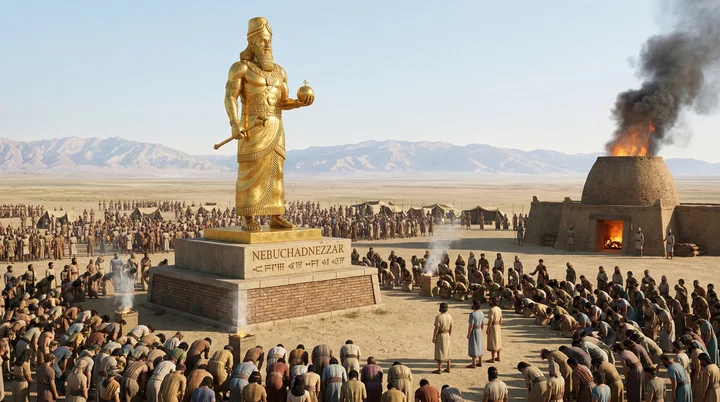
- Daniel 3:18
But if not, be it known unto thee, O king, that we will not serve thy gods, nor worship the golden image which thou hast set up.
The three Hebrews refuse to worship the king’s golden image rather than disobey God.
- Exodus 31:18
And he gave unto Moses, when he had made an end of communing with him upon mount Sinai, two tables of testimony, tables of stone, written with the finger of God.
God wrote the commandments on stone tablets with his finger.
- Deuteronomy 5:2-3
The LORD our God made a covenant with us in Horeb.
Identifies the covenant made with Israel at Horeb, not with their fathers.
- Deuteronomy 10:4
And he wrote on the tables, according to the first writing, the ten commandments, which the LORD spake unto you in the mount out of the midst of the fire in the day of the assembly: and the LORD gave them unto me.
Identifies the stone-tablet writing as the Ten Commandments spoken at the mount.
- Romans 1:25
Who changed the truth of God into a lie, and worshipped and served the creature more than the Creator, who is blessed for ever. Amen.
People exchange worship of the Creator for serving created things.
- Deuteronomy 4:19
And lest thou lift up thine eyes unto heaven, and when thou seest the sun, and the moon, and the stars, even all the host of heaven, shouldest be driven to worship them, and serve them, which the LORD thy God hath divided unto all nations under the whole heaven.
Forbids worshiping the sun, moon, and stars as idolatry.
- 2 Corinthians 3:7
But if the ministration of death, written and engraven in stones, was glorious, so that the children of Israel could not stedfastly behold the face of Moses for the glory of his countenance; which glory was to be done away:
Both refer to the law engraved on stone and its ministry of condemnation.
- Matthew 4:10
Then saith Jesus unto him, Get thee hence, Satan: for it is written, Thou shalt worship the Lord thy God, and him only shalt thou serve.
Jesus restates the command to worship and serve God alone.
- Nehemiah 9:13
Thou camest down also upon mount Sinai, and spakest with them from heaven, and gavest them right judgments, and true laws, good statutes and commandments:
God gave Israel his commandments and true laws at Sinai.
- Deuteronomy 6:4-5
Hear, O Israel: The LORD our God is one LORD:
Commands wholehearted love for God as the principle underlying the first commandments.
- Genesis 35:2-4
Then Jacob said unto his household, and to all that were with him, Put away the strange gods that are among you, and be clean, and change your garments:
Jacob’s household puts away its foreign gods before worshiping God.
- Genesis 31:19
And Laban went to shear his sheep: and Rachel had stolen the images that were her father’s.
Rachel steals Laban’s household images, illustrating image worship forbidden by the commandment.
Commentary part 1 of 3
Each commentary is drawn from primary sources: the writings of Ellen G. White and Adventist pioneers and periodicals. Each commentary is separate. Its own words are not a quotation; follow the references to read the source passages.
Ellen G. White
279 sources
God forbids bowing down to graven images and serving them, because He is a jealous God who visits the iniquity of the fathers upon the children to the third and fourth generation of those who hate Him.SG3 265.3ST May 6, 18801SP 235.2–236.8 The prohibition covers making any image or likeness of things in heaven, earth, or water to represent God or to worship in His place, and it reaches every form of idolatry where money, appetite, self, worldly vanity, false doctrine, or even a loved person absorbs the mind and takes supreme affection from God.9T 211.4Ms 146, 1906, par. 3–9Ms 93, 1908, par. 11–15Lt 145, 1899, par. 1–2Ms 103, 1908, par. 27 God remains the same jealous God now as at Sinai, requiring undivided worship with nothing sharing rivalry and accepting no divided heart or partial obedience for convenience or profit.Lt 78, 1894, par. 3–4Lt 168, 1909, par. 16–17BS 57.2Ms 126, 1901, par. 31–34Ms 126, 1901, par. 17–19 The visiting of iniquity does not mean children are arbitrarily punished for guilt they do not share, but that parental example and influence are imitated and consequences are transmitted by precept and example, in character, appetite, health, and suffering, while penitent children who serve God are rewarded.Ms 126, 1901, par. 20–22PP 305.3–4PP 305.5–306.4RH Jun 22, 1911ST Jun 3, 1880 Opposite the warning stands His pledge of mercy to thousands, even a thousand generations, of those who love Him and keep His commandments, bringing life, blessing, protection, and character formed in the divine likeness.Ms 125, 1909, par. 22–25ST Sep 1, 1881ST Jan 10, 19114T 11.3ST May 11, 1876
Wording and Sinai Setting
Thou shalt not bow down thyself to graven images nor serve them, for the Lord thy God is a jealous God visiting the iniquity of the fathers upon the children unto the third and fourth generation of them that hate Him, while showing mercy unto thousands of them that love Him and keep His commandments.SG3 265.3ST May 6, 18801SP 235.2–236.8Ms 2, 1904, par. 6–19Ms 93, 1908, par. 11–15 The prohibition belongs to idolatry and holds those who hate Him accountable across generations for disobedience bringing consequences upon children.ST May 6, 1880Ms 2, 1904, par. 6–19Ms 146, 1906, par. 3–9 It stands as part of the Ten Commandments given to be observed, covering the whole duty of man as the plain and clear law of God's kingdom and expression of the character of the Sovereign of the universe.Ms 2, 1904, par. 6–19Ms 146, 1906, par. 3–9
No image or likeness of anything in heaven above, in earth beneath, or in water under the earth is to be made to represent God, nor to be bowed to and served in place of God.Ms 146, 1906, par. 3–9Ms 93, 1908, par. 11–15Lt 145, 1899, par. 1–2 The infinite Creator is not to be likened to a creature, beast, or reptile, nor is the true God to be worshiped through any creature or image or by an image of a creature associated with worship.Ms 126, 1901, par. 15–16PP 334.4 Such worship dishonors God and degrades people made in His image, and changing only the objects to images of saints and even of Christ and Mary his mother still breaks the command and corrupts religion.EW 176.1PP 334.4 A picture becomes an idol only when loved, trusted, depended on, given supreme affection, or allowed to weaken confidence in God, yet minds are to have clearer ideas of angels, of Christ, and of all spiritual things when no pictures are made to represent heavenly things, for many pictures are grossly false, give voice to falsehoods, and fail to be true representations of Jesus Christ.Lt 145, 1899, par. 1–2
The verse was spoken by God Himself at Sinai in the third month after Israel came out of Egypt into the wilderness, after He by mighty power delivered His people from Egypt and the house of bondage notwithstanding Pharaoh's opposition.Ms 2, 1904, par. 6–19Ms 93, 1908, par. 11–158T 197.4–198.1 He came down enshrouded in glory surrounded by angels, with thick cloud, thunder, lightning, trumpet, earthquake, smoke, flame, and devouring fire, and spoke with an audible voice in the hearing of all the people, refusing to trust its teaching even to angels.CH 388.2SG3 298.1–299.28T 197.4–198.1 The Father and the Son were present on Sinai, and afterward Moses recapitulated it, so that terrified Israel asked Moses to speak lest they die.Ms 176, 1903, par. 3SG3 298.1–299.2 It was proclaimed with awful solemnity, grandeur, power, and glory to demonstrate its importance, to make known His majesty and authority as Ruler of the world, and to impress the people with the sacredness of His law and the importance of obeying it.Ms 2, 1904, par. 6–19CH 388.28T 197.4–198.1
The same law given in Eden, given to Adam after his fall, preserved in the ark by Noah, made known as a trust to Abraham and observed by him, was to a great degree lost and confused by long bondage among Egyptian idolaters given to idolatry.SG3 298.1–299.2ST Dec 15, 1881RH Jun 4, 1901 It was proclaimed anew at Sinai to make requirements unmistakable, to call His people away from idolatry into obedience, to remind them of true worship, to preserve mankind from total apostasy, and to leave them without excuse.1SP 263.1–265.1SG3 298.1–299.2ST Oct 15, 1896ST Dec 15, 1881 Because minds blinded by slavery could not grasp its far-reaching principles and Israel had confused ideas from witnessing idolatry in Egypt, additional explanatory judgments and statutes with minute directions were given privately to Moses in the mount to guard it and apply it to specific duties to one another and to the stranger, simplified into definite form to lead erring man prone to transgress to strict obedience so he need not err.SG3 298.1–299.2ST Oct 15, 1896 It remains immutable, for God rules in omnipotence and wisdom and love and changes not, an expression of God's goodness and holiness making known what the Creator expects, the only standard of character.Ms 160, 1899, par. 1–2RH Jun 4, 1901
The law was engraved by God's own finger on tablets of stone and written on solid rock to signify immutability, so the people prone to forget could not mingle tradition with holy precepts or confuse requirements with practices of men.Lt 21, 1905, par. 6–9Ms 61, 1910, par. 9ST Jun 10, 1880ST May 6, 1886SG3 298.1–299.2 Its writing preserved it from mixture with heathen tradition and human custom, so its requirements could not be forgotten or misunderstood.Lt 21, 1905, par. 6–9ST Jun 10, 1880ST May 6, 1886 It was placed in the ark of testimony as a lasting witness, kept in the ark in the most holy place in heaven revealed in 1844, and once hidden in a cave because of Israel's and Judah's sins.SG3 298.1–299.2 Its directions teach sacredness, obedience from heart and mind brings safety and healthy spiritual experience and would have prevented the wickedness seen in the world, and it is the transcript of God's character and mind made known to every nation.Lt 21, 1905, par. 6–9Ms 61, 1910, par. 9Ms 160, 1899, par. 1–2
The verse belongs to the first four commandments on the first table, distinct from the last six, defining duty to God and teaching that God is to be placed above everything and exalted as sovereign and omnipotent.Ms 17, 1906, par. 29–409T 211.4ST Mar 7, 1878HMW 30.5 The four show duty of man to God summed in supreme love to God with all heart, soul, mind, and strength, while the six on the second table show duty to fellow man in loving neighbor as self, and all the law and the prophets hang upon those two chief commandments together stating the whole duty of humanity.Lt 80, 1898, par. 16–18ST Mar 7, 1878 God requires obedience not to nine-tenths but to every one of the ten precepts, which are like links of a chain where if one is broken the chain is of no value, so violation makes a person a commandment-breaker guilty of all.ST Mar 7, 1878 Failure to keep the first four brings conviction under Christ's searching words calling for confession rather than excuse, difficulty, parrying, or vindication, and worshiping a false sabbath sets up an idol where pride can make a person a god to himself.9T 211.4Ms 103, 1908, par. 27HMW 30.5
The chapter is to be read as Scripture, studied, presented before the people, and taught plainly as Thus saith the Lord, not replaced by human arguments, and its proclamation will stand to witness against the world in judgment deciding every soul's destiny.Lt 160, 1906, par. 3–9RH Mar 26, 1908Ms 77, 1899, par. 11–12 It is included among the Scriptures to publish in support of keeping the seventh-day Sabbath, and rejecting its clear command brings condemnation.RH Mar 26, 1908 It belongs with Exodus 19-24 to be studied and presented, and with Exodus 31:12-18 to be read together, began the written Word continued to John, and is needed now just as verily as by Israel in Moses' days.Lt 160, 1906, par. 3–9Ms 142, 1906, par. 32–34 It is to be kept in plain sight in homes, made the rule of daily life, and taught diligently to children as God's law for His household governing parents and children without laxness, as obligatory unto life including what must and must not be done.19MR 86.2–5
Christ Himself, veiled in the cloudy pillar leading the hosts, spoke the verse from Sinai as Redeemer, Creator, Maker, and founder of the Jewish economy present among the people, after bondage where idolatry had nearly led them to forget God.8T 197.4–198.1ST Mar 12, 1894ST Jul 9, 1912ST Mar 3, 1881 His voice in the temple and in driving traders from it was the same voice, and He magnified the law and made it honorable, defining its principles and showing how they were to be lived out in practice.ST Dec 11, 1879ST Dec 12, 1911 He defended it against human tradition, and professed Christians who disregard it violate His proclamation, for refusal is disloyalty and those who worship the Creator do not turn from His commandments with the Sabbath as the sign of allegiance.ST Mar 7, 1878ST Mar 12, 1894
Nature and Lasting Authority
Exodus 20:5 belongs to God's law, which clearly reveals His will and the principles of His government because the law is a transcript of His holy, eternal character, mind, goodness and glory, a part of Himself holding the principles of His government in heaven and earth.Ms 117, 1908, par. 17–18Ms 61, 1910, par. 9Ms 160, 1899, par. 1–2 That law was spoken at Sinai and engraved by His own finger on tables of stone to perfectly reveal His will so none need mistake it, written on solid rock to signify immutability and to preserve it from mixture with heathen tradition and human custom, and obedience to all its commandments brings safety and a healthy spiritual experience.Ms 117, 1908, par. 17–18Ms 61, 1910, par. 9Ms 160, 1899, par. 1–2 It is the foundation of all right and enlightened civil law and the standard of righteousness in the judgment, when the hidden tables are presented before the world and the books are opened and people are judged by its righteous principles with sentence of life or of death, leaving none with excuse for sin and making obedience a prerequisite of salvation.Ms 117, 1908, par. 17–18ST Jul 4, 1905 It acts as a mirror exposing defects and sin, revealing holiness, justice and mercy, forbidding even dishonest desire for a neighbor's possessions as shown in the command against coveting, so that rejecting it removes restraint against theft and violence and leaves property and life unsafe.ST Jul 4, 1905 Its ten precepts together contain the whole duty of humanity, the first four defining duty to God and the same law given in Eden and proclaimed at Sinai to be made known to every nation and people of all nations and tongues, to be carefully studied.Ms 117, 1908, par. 17–18ST Jun 5, 1901Ms 160, 1899, par. 1–2
The law cannot be abolished and will endure forever, eternal, unchangeable, faultless and binding on all people as long as human life and moral choices continue, not to be broken, not ended by Christ's death, not repealed while heaven and earth remain, not set aside by heaven's rebellion, by human authority, or by general acceptance of nine precepts.Lt 202, 1907, par. 8–12Ms 167, 1904, par. 7–8Ms 131, 1907, par. 13–14ST Jan 19, 1882ST Mar 7, 1878 It was spoken by Christ from Sinai making known principles to govern mankind and requiring implicit obedience, so refusal is disloyalty to the God of heaven, and it reveals sin and rebellion against God where none of its precepts can be changed to excuse transgression.ST Jan 19, 1882ST Mar 7, 1878 Claiming it ended at the cross was a deception to lead people to disregard it, for God requires obedience not to nine-tenths but to every one of the ten precepts, which are like links of a chain where if one is broken the chain is of no value, so breaking even one makes the claim binding and makes a person a commandment-breaker guilty of all.ST Jan 19, 1882ST Mar 7, 1878SG1 109.2 To change it presumes to take God's place, and trampling it does not annul it for it will judge every work in the last day.ST Jan 19, 1882ST Mar 14, 1911
Its principles existed before humanity and governed heavenly beings before humanity was created, were made known to Adam and Eve in Eden to set out required conduct where obedience would preserve happiness and lead to immortality, were not changed after the fall, and were taught by Adam to descendants and preserved among the faithful through Noah and Abraham, so they are not new at Sinai.SG3 295.1–296.1Ms 160, 1899, par. 1–2ST Jul 12, 1910 The moral law defines worship due to God and remains binding through every age, distinct from sacrificial rites and ceremonies that prefigured Christ's death and ceased at type meeting antitype, while ceremonial rites were established to keep God in remembrance and guard the commandments from violation and statutes helped preserve Israel from idolatry.SG3 295.1–296.1ST Apr 15, 1875 Proclaimed amid manifestations of power and glory that showed sacredness, importance and permanence, it sets out far-reaching principles requiring additional precepts to explain and apply obligations more fully, remaining an enduring treasure of the Old Testament and an earlier teaching of Christ to be presented by teachers of His doctrine together with His teachings in the New Testament and as a schoolmaster bringing people to Christ.Lt 188, 1903, par. 21–26ST Dec 1, 1887Ms 65, 1906, par. 16 Keeping the fourth does not excuse breaking any other, whose principles are to be lived out as well.2T 449.2
The law was pronounced in awful grandeur from Sinai's Mount, from the highest, grandest court, and is the highest education that can be given to man, higher than any teaching from human, unsanctified teachers, where true higher education is obedience to all commandments and truly sanctified souls living the Word are educated and taught of God from that law.Lt 164, 1910, par. 5–7Lt 60a, 1896, par. 1–3 It carries greater value and binding force than any human customs, maxims, precepts or teachings, for in Christ's time customs and traditions handed down through rabbis, scribes and Pharisees were made all-essential and regarded as of even more force than the ten commandments, and dwelling on teachings of men above God's Word kept back His few followers and disciples from advancing in knowledge and becoming efficient workers.Lt 60a, 1896, par. 1–3 It is holy, binding and the standard for human action pointing to God's supreme authority above earthly rulers, a rule of action of His government setting an exalted standard that man must elevate himself to meet rather than bring down to meet a debased standard.9T 93.4–94.3ST Oct 17, 1878 Its restraint checks human wrongdoing and remains God's standard to condemn the guilty and justify the obedient, so disregarding it brings further disobedience and social lawlessness, trampling it as a hindrance to worldly prosperity sows disobedience to reap disobedience, and wholly removing its restraint would leave human laws disregarded, weaken moral obligation, and open flood-gates of iniquity, lawlessness, dissipation and corruption upon world, family and professedly Christian households.4SP 401.2ST Jul 17, 1907 God's people conform to every good law of land but obey God rather than men, urge obedience on rulers and subjects, hold it in Washington and in the third angel's message as present testing truth, and the safety of society and progress of reform depend on clear definition and recognition of this fundamental truth on which all enlightened civil law regulating human actions and restricting wrong under penalty is founded, bringing safety, prosperity, health and reform only in clear recognition of it, while to the inebriate whose senses are benumbed its language of Sinai is meaningless and incomprehensible.ST Jul 17, 1907ST Oct 17, 1878RH Jul 5, 1906
Its authority rests on God's Word, not human assertion, for Scripture alone is the safe guide and judgment standard requiring It is written, its meaning is plain as Thus saith the Lord and dispels error, yet far-reaching requiring earnest attention freed from worldly custom, so every person must search the Scriptures like the noble Bereans instead of accepting statements of ministers who sustain false doctrines or quoting fathers as authority, and must come as a humble learner praying for opened eyes to behold wondrous things out of the law.ST Mar 14, 1911Ms 41, 1886, par. 9 Spoken clearly from Mount Sinai it gives humanity a standard for forming character and makes clear what obedience requires and what would violate loyalty, summed in loving God wholly and neighbor as self, pointing out human duty so that when its light is seen people are responsible if they reject it.Ms 48, 1893, par. 13–14Ms 41, 1886, par. 9 Christ explained it in the Sermon on the Mount removing obscuring traditions, and obeying it sanctifies people and makes its precepts authoritative, where reverence for the commandments keeps skepticism from gaining strength and makes the foundation of faith clear and calls each to act justly, purely and truly, giving knowledge of true doctrine.3MR 99.2–3Ms 24, 1891, par. 52 It is one of the laws by which God's kingdom is controlled and of great consequence to be obeyed, for God as ruler of the universe stands as head and all should respect Him and obey His mandates, as a father's laws bring order and happiness to his family when obeyed so obedience brings order while disobedience brings confusion.3MR 99.2–3
Proclaimed with awful grandeur to impress sacredness, importance and permanence, it reveals righteousness by which people are judged and stands as Heaven's great standard of right with which lives and characters are compared, revealing the offensive character of sin and guilt before a pure and holy God, pointing out sin and declaring guilt and revealing character in moral deformity.ST Jan 24, 1911ST Jan 24, 1911GC88 639.1–2 Contempt for this law given in grandeur and trampling upon God's authority is despising and setting at naught the Lawgiver Himself, and those who set aside His commands to choose whom they will serve and worship are condemned by the requirements they despised, for its precept has binding force and unrelinquished claims upon the transgressor so transgression incurs a debt.ST Jan 24, 1911GC88 639.1–2ST Oct 21, 1886 Christ's infinite sacrifice to magnify and exalt the law testifies not one jot or tittle is set aside, for He came to pay the debt incurred by transgression and by His own keeping of His Father's commandments to teach men how to keep it, and to teach sinners are not amenable to it is a fatal delusion first devised by Satan to entice Eve that now leaves multitudes in bondage and floods earth with iniquity and crime, with judgment more tolerable for Sodom and Gomorrah than for those who know His life and death yet continue to transgress.ST Oct 21, 1886 Exposure is not to be trampled or turned from but to lead to repentance toward God and faith toward the Lord Jesus Christ, to being doers of the Word not hearers only with heart transformed and moral nature renewed by grace, where peace for the weary sin-sick soul guilty of violating it comes only from its Originator, while God's judgments mercifully warn before punishing persistent defiance when iniquity is full, meant if possible to awaken people to sinfulness of disobedience and to make known sacredness and rulership to those persistently refusing obedience, as with favored nations and wicked cities.ST Jan 24, 1911RH Jul 5, 1906LSEGW 407.2–409.2
The ten precepts were not given exclusively to the Hebrews, though God highly honored them by making them depositaries to hand down for future generations, to hedge them from idolatrous nations and make them an example, forming the hedge set round God's vineyard distinguishing the Israel of God from all other nations, calling them to be separate when proclaimed at Sinai where obeyed they would be life.ST Jan 24, 1911Ms 166, 1898, par. 1–3Ms 57, 1909, par. 4–5 God spoke them to Israel at Sinai and wrote them with His own finger on stone, choosing them because He loved them and kept His oath to their fathers not because they were numerous, and their history stands as admonition.2T 108.1Ms 57, 1909, par. 4–5 Israel largely lost knowledge, mixed precepts with heathen custom, depended on added ceremonies through forgetfulness, and disregard hindered blessing, for plain precepts were for their good yet disregard contributed to indifference among returned Israelites and descendants, and flagrant violations left unrebuked hindered receiving heaven's rich blessing, discouraged those recognizing its claims and turned others from truth.4T 58.2RH Feb 20, 1908 Their disregard brought displeasure and punishment, and had the commandments been obeyed with obedience of heart and mind the wickedness now seen would never have existed, so the law is to be vindicated and printed in plain letters in a prominent place because hardly anyone knows what the Bible says about the Sabbath.HMW 20.4–5Ms 57, 1909, par. 4–5
Idolatry the Verse Forbids
The verse forbids idolatry in every form, not only bowing to wood or stone but anything that absorbs the mind, draws affection from God, and takes wholehearted service that belongs to Him alone.4T 632.1–2Ms 126, 1901, par. 31–341T 289.1 It belongs to the first four commandments that define duty to God and require undivided affection, supreme love, and supreme delight with nothing withheld and nothing allowed to share rivalry.9T 211.44T 632.1–2CT 329.21T 289.1 Anything that draws the heart away becomes an idol and must be put away, including selfish pride and natural self-idolatry, money and supreme love for riches, appetite made a god of the belly, the attractions and vanities of the world, and even care of a child or a romantic choice when it consumes supreme devotion.4T 632.1–2Ms 126, 1901, par. 31–341T 289.1 It likewise includes false doctrines and theories, a false character of God, a philosophical idol enthroned in place of Jehovah, deified nature, and a false sabbath set up as an idol, while pride can make a person a god to himself from whom only the gospel expels self-love.9T 211.4Ms 103, 1908, par. 27 Needless display in dress violates these commandments because it diverts worship from God, and it also violates duty to neighbor when it fails to love one's neighbor as oneself.4T 632.1–2
Making golden calves and other visible representations of the invisible God violates the command not to bow down to graven images nor serve them, and placing them in shrines for worship invites peril especially to those familiar with such images from Egypt.PK 100.1PK 100.2 Israel had heard the command and covenanted to obey, yet soon afterward made and worshiped a golden calf, calling it the god that brought them from Egypt, in direct breach of what had just been heard at Sinai.3T 296.1–3 The same breach occurred in Egypt by joining worship of sun, moon, stars, animals, and lifeless images, and again after entering Canaan until protection was withdrawn and captivity permitted.ST Feb 27, 1879SG3 62.1 Before the Flood the violation took the form of worshiping nature, human skill, and carved images made by hands, teaching children to treat them as gods, denying the Creator, and turning groves He created into places of idol worship instead of thanksgiving.ST Feb 27, 1879SG3 62.1
Merely changing the object from pagan idols to images of saints, and even of Christ and Mary his mother, still breaks the command, for offering prayers to images and burning candles before them is bowing and serving forbidden by the verse.SG1 103.1EW 176.1GC88 43.1GC 57.1 Bringing such worship into the church after professing conversion corrupts religion, brings unsound doctrines, superstitious rites, and idolatrous ceremonies into faith and worship, and causes loss of purity and power.EW 176.1GC88 43.1GC 42.2–43.1 Keeping the command preserves purity and power by worshiping God alone, refusing to unite with bringers of such worship, refusing compromise, and holding fast truth without yielding.EW 176.1GC88 43.1GC 42.2–43.1
Idolatry corrupts and debases the mind, dishonors God by reducing the infinite One in the mind to something common like a graven image, beast, or reptile, and degrades people made in His image who forget their divine relationship.Ms 126, 1901, par. 31–34PP 334.4 It leads to sensuality and sin, unrestrained evil passions, rebellion against His government, and even human sacrifice with altars and abominations detestable to God, and it opens the way to Satan's influence.ST May 6, 1880Ms 126, 1901, par. 31–341SP 236.9–237.1PP 334.4 Therefore the command guards against even the least approach to the sin, and in the Flood the destruction of idols, altars, and human sacrifices led survivors to recognize the power of the living Maker of heaven and earth.1SP 236.9–237.1ST May 6, 18801SP 74.1
Keeping the commandment means worshiping God alone in spirit and truth and in holiness and beauty by living faith, not imagination, holding fast distinctive truth without compromise and without yielding one iota.GC88 43.1ST Jun 25, 18855T 591.3 Idolatry is disloyalty and rebellion against the higher law of His government, and God is jealous for the worship and loyalty due Him.5T 591.3 Refusing to bow was treated in the Netherlands as a capital offense, while the Waldenses rejected image worship as idolatry despite persecution, and later faithful likewise rejected Rome's image worship and supremacy and kept God's Word, law, honor, and true Sabbath unadulterated even when obedience brought special hatred, long persecution, and death.GC 239.3–240.34SP 70.1ST Jun 25, 1885
The prohibition is not unnecessary nor merely contained in the first commandment, so removing it from the law is a deliberate alteration to complete the introduction of image and relic adoration.GC 445.2–446.2GC88 51.4 The command does not forbid every picture or likeness, since God used visual symbols to teach prophets and people and ordered prophetic symbols made plain so readers could understand.HSFM 211.5–212.4 It must not be turned into an extreme rule condemning all pictures, even clocks with figures or likenesses of friends, nor used to impose one person's conscience on others.HSFM 211.5–212.4 A picture becomes an idol only when loved, trusted, depended on for help or good, given the affections and supreme love due God, allowed to weaken full confidence in Him, or kept with magazines in the home to idolize humanity and distract from Him, and burning pictures alone does not prove consecration which is known by fruits such as devotion to God and spiritual growth.8MR 78.1–79.1Ms 187, 1907, par. 6 Keeping requires more than acknowledging authority, for the standard of righteousness expressing His character, including reverence toward God, must be treasured in the heart and its requirements fulfilled, with children taught to keep minds on God and serve Him.Ms 187, 1907, par. 6Lt 9, 1892, par. 48–57
Jealous God Requires Loyalty
God is the same jealous God now as when the law was given at Sinai, jealous for the purity and loyalty of His people and for the claims of His worship and His law.BS 57.2RH Jun 12, 1855 His jealousy is joined with justice and holiness, rejecting idolatry and every divided, deceptive, lukewarm service, and He will not be trifled with or treated lightly.ST May 19, 1881ST Jun 10, 18805T 300.2 He will not change His precepts to suit ambition, covetousness, convenience, or profit, and to disbelieve His revealed power is a grave offense bordering on the sin against the Holy Spirit.ST Aug 26, 1913ST Jun 3, 1886 Disregarding the first and second commandments is contempt for His authority and for Himself as Lawgiver, and uncleanness provokes His displeasure so that He will not acknowledge the unclean as His child unless there is reform.ST Jun 10, 1880RH Jun 12, 1855
The verse requires undivided worship, affection, and supreme delight, with God first and nothing allowed to share rivalry with Him.Lt 78, 1894, par. 3–4STB 841.4 Love for another person, human devotion, or any worldly attraction and vanity becomes selfish idolatry when it takes God's place and divides the affections from Him.Lt 78, 1894, par. 3–4ST May 19, 1881 God will not accept a divided heart, for His jealousy is incompatible with divided loyalty, as light has no communion with darkness.Lt 78, 1894, par. 3–43T 248.2 Spiritual growth and advancement in Christian experience depend on sacrificing every idol and putting away whatever separates the heart from Him.STB 841.4MYP 377.3 His people are to obey His Word rather than turn from truth and righteousness, for His commandments draw them to Himself and separate them from the world.Lt 168, 1909, par. 16–17
As jealous, God accepts no partial obedience, divided interest, or compromise for petty temporal advantage, but requires willing, wholehearted sacrifice.ST Aug 26, 1913ST Jun 3, 1886ST May 11, 1876 Treating His commandments as a matter of convenience is hatred of Him, while loving Him is shown by keeping them.ST Sep 1, 1881ST May 11, 1876 Tampering with His commandments and replacing them with human traditions makes men haters of Him whatever love they profess, and claiming sanctification while trampling His holy law and substituting self-made standards proves spurious.Ms 126, 1901, par. 20–22BS 57.2Ms 126, 1901, par. 17–19 He does not pledge blessing to parents and children who transgress His plainly written requirements, and disobedience sown by teaching and example reproduces itself unto the third and fourth generation, as Pharaoh resisting light grew stubborn unto destruction.Ms 84, 1910, par. 9–11Ms 126, 1901, par. 20–22Ms 126, 1901, par. 17–19 Opposite this warning stands His promise of mercy to thousands who love Him and keep His commandments.ST Jun 3, 1886ST Sep 1, 1881ST May 11, 1876
As jealous, God searches the heart and knows thoughts and intentions, distinguishing true service from idolatry and from deceptive, divided service.Ms 126, 1901, par. 31–34ST May 19, 18813T 238.1–2 True worship is in spirit and truth and is governed by living faith, not imagination, for making an image of God dishonors Him by reducing Him to something common, while serving selfish pride or money or giving anything absorbing thought that takes His place is idolatry that corrupts and debases the mind unto sensuality and sin.Ms 126, 1901, par. 31–34 He faithfully scrutinizes human work, especially of the self-sufficient and self-esteemed, sifting motives to the bottom in the moral mirror of His holy law, weighing actions and testing quality of character even when a person appears honest before men.Lt 12a, 1888, par. 15 Therefore the heart must be humbled before Him without separating from Jesus, exalting Him in deeds as well as words, living as in His presence, choosing only pure and righteous counselors and helpers, refusing to uphold unrighteousness or selfishness or to oppress fellow men, and showing meekness and lowliness instead of harsh judgment.STB 316.3–317.2YGBCOEP 37.3–38.2Lt 12a, 1888, par. 15 Cherishing iniquity in the heart prevents prayer from being heard.3T 238.1–2
Reverence and love for Him lead to willing obedience, which brings harmony with heaven and serves the highest good.Lt 178, 1903, par. 23 Those who love God delight in keeping His commandments, while the natural heart hates the law and resists its claims, turning from its light for selfish pleasure or worldly gain; obedience brings life and transgression brings fitting punishment.ST Jan 10, 1911 He has arranged circumstances and assigned duties and observances suited to times and conditions, and valuing given light enlarges and ennobles understanding and opens broader views of truth, including His grace in redemption which is spiritually discerned.5T 300.2 The heart's inclinations are true only when restrained by His holy precepts, and bringing heart and mind into harmony with Him is necessary to understand His eternal, unchangeable requirements.Lt 15, 1895, par. 23–26CT 248.1
Keeping the first four precepts, which define duty to God and state His claims upon the heart, makes people one with Christ who gave His life to free them from sin and makes them co-workers in freeing humanity.3SP 52.2Ms 5, 1885, par. 13–143T 524.1 The commandments are joined together so that breaking one brings guilt of the law and obedience cannot be partial, and the first commandments must be faithfully kept for the last six governing duty to fellow men to be kept, since love to God and love to those made in His image are inseparable.3SP 52.2ST Jul 16, 1894 Hearts defiled by sin fail to keep these precepts, and when idols claim the heart God is not honored as supreme.5T 613.13T 524.1 Failing supreme love closes the heart to the neighbor, disobeying denies the Saviour and joins the prince of darkness, and neglecting the needs and sufferings of others shows a heart closed to God's claims.3SP 52.23T 524.1 Maintaining covenant relationship with God through these precepts is therefore essential to standing in favor with Him.PK 428.3Ms 5, 1885, par. 13–14
Iniquity Visited on Generations
The warning does not mean that children are arbitrarily compelled to suffer for sins of parents or are punished for guilt they do not share.PP 305.3–4PP 305.5–306.4ST Jun 3, 1880 If children of wicked parents serve God and do righteousness, He rewards their right doing.PP 305.3–4PP 305.5–306.4ST Jun 3, 1880 Suffering that reaches them is caused by parental conduct, not authored by God as affliction, and they are not held responsible for their parents' actions.PP 305.3–4HTL2 34.1MH 234.1–2 Children commonly follow parental example, and inheritance and example can pass sinful tendencies, appetites, morals, disease and physical decline to the third and fourth generation, and this consequence warns against sin.PP 305.3–4PP 305.5–306.4
The visiting means parental example is imitated and influence passes from father to son to the third and fourth generation.Ms 126, 1901, par. 20–22ST Jun 3, 1880Ms 126, 1901, par. 23–26 What is sown bears its own harvest: disobedience sown by teaching and example reproduces itself, and those who resist God become increasingly hardened in unbelief.Ms 126, 1901, par. 20–22Ms 126, 1901, par. 17–19Ms 126, 1901, par. 23–26 Pharaoh illustrates this, for he resisted the light God gave, repeatedly returned to unbelief, grew more stubborn, and brought destruction on himself and his people.Ms 126, 1901, par. 20–22Ms 126, 1901, par. 17–19 Those who resist sufficient light and reject the Spirit sow disobedience, reap the harvest of their own choices, and by example can lead others to resist.RH Jun 22, 1911Ms 126, 1901, par. 17–19Ms 126, 1901, par. 23–26 Persistent hatred and disobedience are thus held accountable, for sin opposes both God's government and the good of His creatures.Ms 126, 1901, par. 20–22RH Jun 22, 1911
God forgives penitent believing people who hang their helpless souls upon Him, but He does not deliver them from the consequence of transgression.19MR 265.1Lt 30, 1900, par. 9 That consequence is transmitted by precept and example to children and children's children to the third and fourth generation.19MR 265.1Lt 30, 1900, par. 9 It is felt in proportion to indulgence, as seen in perverted appetite for liquor and tobacco.ST Feb 11, 1886ST Mar 2, 188219MR 265.1Lt 30, 1900, par. 9 Hereditary evils from violating the laws of life may thus affect offspring, harming mental and physical powers and bringing disease and mental and physical decline upon descendants.ST Feb 11, 1886ST Mar 2, 1882CH 49.2
Parents who transgress teach their children disrespect for the law and rebellion against its Lawgiver, inclining them to repeat parental wrongdoing.Ms 126, 1901, par. 27–28ST Nov 10, 1881 When parents neglect duty, indulge wrongdoing, and fail to train children faithfully, evil traits are passed on and spread through descendants, bringing misery to themselves and their children's children.ST Nov 10, 1881Ms 126, 1897, par. 20 Such children are cut off from blessings of the covenant and brought under judgments, and when disobedience is full God holds both parents and children accountable for idolatry and punishes iniquity, though He bears long with resistance.Ms 126, 1901, par. 27–28Lt 35, 1896, par. 18–19 A father whose sins lay stumbling blocks in the path of wife and children toward perdition faces God's controversy unless he repents, becomes Christlike, redeems the past, clears the track, and makes restitution as far as in his power.Lt 35, 1896, par. 18–19
Neglecting children's character training allows harmful traits to take root and pass down through the family, bringing unhappiness to those who bear them.FE 66.2ST Sep 17, 1894 When parents permit children to cherish wrongdoing and fail to correct evil tendencies, that neglect may contribute to ruin of families through the third and fourth generation, with responsibility resting on parents who allow it.FE 66.2Ms 75, 1901, par. 6–8ST Dec 11, 1901 Harsh, coarse and discourteous words and tempers, harsh arbitrary discipline, withholding of tithes and offerings, and failure to guard minds and teach faithfully imprint defects on children and grandchildren, foster rebellion against parents and then against God, harden children against teaching, and pass on pain and misery.ST Sep 17, 1894Lt 86, 1899, par. 9 What seems burdensome in divine prohibition becomes through the Spirit a blessing protecting families from sin's consequences.Lt 86, 1899, par. 9
Undisciplined, uncontrolled children manifesting passion and willfulness and acting from impulse bear the stamp of parental faults of temper and passionate government to the third and fourth generation.RH Oct 9, 1900 The impress made in childhood is most difficult to remove, for as the twig is bent the tree is inclined, and even after accepting Christ such carry results of early lax discipline through their entire religious life in a hard battle affecting their whole religious experience.RH Oct 9, 1900 Defective training is then perpetuated in rude traits in their own children, while words and actions mold character for this life and the life to come, transmitting character for good or evil and preparing curses for future generations when evil is done.RH Oct 9, 1900Ms 33, 1900, par. 37 When the way of the Lord is not diligently taught, the enemy occupies thoughts, God is forgotten, the deceiver takes control of the heart, and his image and principles are stamped on hearts not taught to obey, with all receiving according to works.Ms 33, 1900, par. 37
Effects extend as hereditary harm from violating laws of life, with perverted appetites and passions worsened by neglected training transmitting intensified appetites, weakened mental, moral and physical powers, disease and suffering across generations.ST Jan 3, 1884FE 140.2–3ST Feb 11, 1886 Intemperance and sensual indulgence can thus ruin a family, leaving youth weaker, without redemptive influence, and unable to discern right from wrong.ST Jan 3, 1884FE 140.2–3 Parents are responsible before God for this influence and will answer for it at the final reckoning.FE 140.2–3 Tobacco and liquor are examples whose effects do not stop with the user but harm offspring.ST Feb 11, 1886ST Mar 2, 1882CH 49.2
Consequences include inherited weakness and disease from harmful eating, dressing and living passed from parents to children, leaving some afflicted from birth.STSE 9.2CH 19.1–2 Iniquity is visited through transmission of disease and weakened constitution generation after generation, so even infants suffer afflictions from parental violation of natural and physical law.CH 19.1–2 This inherited result produces a continual downward tendency in human endurance and vitality since the fall from original perfect organization and form.CH 19.1–2 Corrupting the body by dissolute habits debases intellect, destroys fine sensibilities of soul, and leaves to offspring taints of physical debility and depraved morals, so gratification of animal passions and gross sensuality becomes the marked characteristic descending generation to generation, increasing misery and hastening deterioration of the race.Ms 69, 1897, par. 32–33SA 65.2
Impure practices impair constitution and transmit diseased organs and evil passions, making conversion a hard struggle, though grace can make vessels unto honor.2T 390.2–391.1Ms 69, 1897, par. 32–33 Lustful passions stamp animal impulses, so children may be born with strong propensities and take naturally to secret vice.2T 390.2–391.1 Diseased and sickly marriages for selfish happiness without regard to health, posterity and noble principles perpetuate disease, as when a diseased husband lives upon a healthy wife's vitality, improves while she fails, shortens her days while prolonging his own, and compels offspring to suffer transmitted disease, throwing an enfeebled race upon society.HTL2 28.3 Drunken fathers visit inherited evil tendencies reducing children to pauperism and degradation and perpetuating evil in their own children, demanding prohibition, while appetite for tobacco, liquor, stimulants and narcotics poisons blood, transmits vitiated appetite intensified and feeble moral powers, and renders youth less susceptible to instruction.STMs 58, 1899, par. 5–6 Neglect to train for self-denial and usefulness completes this visiting, and parents who made children what they are will meet them face to face at the final reckoning.CTBH 76.2–3CE 177.1–2Ms 58, 1899, par. 5–6
Mercy to Obedient Thousands
Opposite the threat to visit iniquity to the third and fourth generation stands God's pledge to every living person, showing mercy to thousands, even to a thousand generations, of those who love Him and keep His commandments, while He repays those who hate Him to their face to destroy them.Ms 125, 1909, par. 22–25ST Sep 1, 1881ST May 11, 1876RH Jul 29, 1873Ms 33, 1900, par. 48–50 Divided or partial obedience is not love but hatred, for He requires willing sacrifice and accepts no divided interest or compromise that treats His commandments as convenience, even in occasionally stealing His sanctified day for selfish secular business, which will be visited with the rod.ST Sep 1, 1881ST May 11, 1876Ms 33, 1900, par. 48–50 Therefore the commandments with their statutes and judgments must be kept from love to do His will, for obedience brings blessing and prosperity and clear spiritual perception, while walking contrary brings darkness, loss of grace, and judgment, and disobedience cannot be treated as trifling.Ms 33, 1900, par. 48–50Ms 43a, 1894, par. 33–35 Only those who respect His commandments are counted righteous for Christ's sake, and those who obey through faith in Christ, including keeping the seventh-day Sabbath because He commanded it, are assured they are sons and daughters of the heavenly King, returned to loyalty as a peculiar, sanctified, holy people.Ms 33, 1900, par. 48–50
Obedience brings life, while transgression defies divine authority and brings fitting punishment, with definite penalty and retributive justice that does not fail and requires strict regard.ST Jan 10, 19114T 11.3Ms 119, 1903, par. 19 Every “Thou shalt not” in the moral law contains or implies a promise, so that obedience brings blessings, health, truth, happiness, peace, joy, prosperity, freedom, and protection, while disobedience brings danger and unhappiness.HL 17.4–5LC1 181.2–3Ms 119, 1903, par. 19 The prohibitions are safeguards for happiness and not mere restrictions, revealing goodness and immutable righteousness, shielding from evils that follow transgression, working purity of character and joy through eternity when received in Christ, and standing as a wall of protection and hedge drawing closer to God.HL 17.4–51MR 130.3 Moses urged making these principles the rule of daily life even at inconvenience, as the only safety securing divine favor, and those who love God delight in keeping them while the natural heart hates the law and turns from its light for selfish pleasure or worldly gain.ST Jan 10, 1911
Obedience must be from the heart and not mere theory, for the law can be taught and assented to without its principles being cherished, and outward Sabbath observance or profession alone does not save.STM2 9.1STBk 80.16MR 396.2–3 It calls for purity and for loving God supremely and neighbor as self, obeyed in daily life in spirit and letter, in thought and disposition, with the law written on the soul, opening the mind to truth and surrendering every habit that closes it.STM2 9.16MR 396.2–3ST Mar 1, 18834T 58.1 Outward displays of devotion do not fulfill duty when actions contradict the law, and true obedience shows itself in practical benevolence.ST Mar 1, 18834T 58.1 Continual violation in daily living is violation of God's law, and had its principles been obeyed the curse of disease would not have flooded the world.CH 21.2–22.1
Keeping the commandments lays the laws of the kingdom as a wall of protection, and keeping free from defilement of appetite and passion makes partakers of the divine nature, escaping corruption through lust, giving clear perceptions, teaching how to preserve every faculty in health for service, and making a person usable by God.ST Apr 4, 1900Lt 58, 1906, par. 6–9 It fashions character in accordance with the divine likeness, pure, holy and undefiled with Christ formed within, giving a true revelation of God's character to unbelievers so they see what members of the Lord's family will be, sanctifying humanity, checking skepticism, manifesting the foundation of faith, and enforcing every precept with individual responsibility to be just, pure, and true.Lt 58, 1906, par. 6–919MR 249.1 Obedience restores the access forfeited by disobedience, for the words spoken from Sinai are the conditions of life opening the way to eat of the tree of life, and those saved must here have character cleansed from every spot and wrinkle after Christ's example of ministry and self-sacrifice in order to enter the gates into the city.SG4 150.1Lt 58, 1906, par. 6–9 It forms a barricade enabling to withstand principalities and to stand in the evil day, and calls the churches to reform in practical godliness.19MR 249.1
Keeping the first four commandments, which require loving the Lord with all the heart, leads to keeping the last six, which require loving neighbor as self, making manifest tender, pitying love toward everyone for whom Christ died in consecration as missionaries and laborers together with God, with zeal and energy drawn from Christ the Chief Missionary and wisdom that is pure, peaceable, gentle, merciful and fruitful.Lt 31, 1894, par. 392MR 36.1Ms 87, 1894, par. 8–10 Such obedience makes people co-workers with God and one with Christ in freeing humanity from sin, becoming one with God in character and forming character in harmony with Him.Ms 87, 1894, par. 8–10Ms 126, 1905, par. 18–19 Parents must teach the ten holy precepts diligently when they rise up and sit down, go out and come in, for neglect of home teaching makes drunkards and criminals, while had the world obeyed instead of hearing that God has no law, thefts, robberies, murders, and filled jails and prisons would not exist, since to love God and keep His commandments is the whole duty of man.Ms 43a, 1894, par. 33–35
Sources