Ezra 3:13
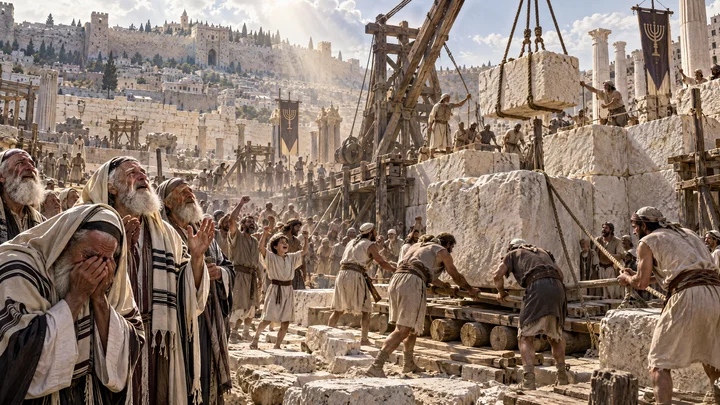
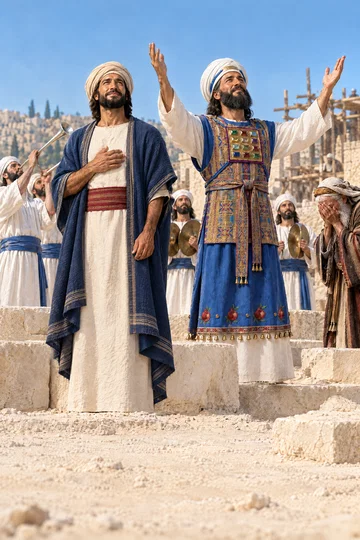
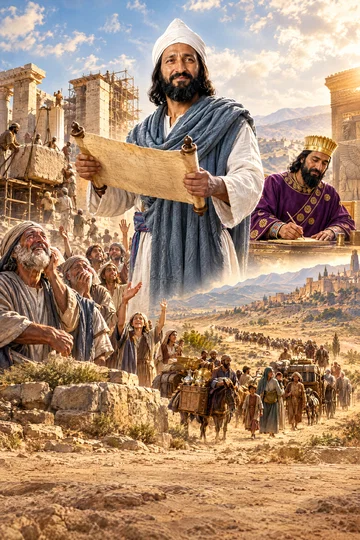
So that the people could not discern the noise of the shout of joy from the noise of the weeping of the people: for the people shouted with a loud shout, and the noise was heard afar off.
Translations
American King James Version, King James Version
So that the people could not discern the noise of the shout of joy from the noise of the weeping of the people: for the people shouted with a loud shout, and the noise was heard afar off.
KJV Cambridge Paragraph Bible, Revised Version
so that the people could not discern the noise of the shout of joy from the noise of the weeping of the people: for the people shouted with a loud shout, and the noise was heard afar off.
So that the people could not discern the noise of the shout of the joy from the noise of the weeping of the people: for the people shouted with a loud shout, and the noise was heard afar off.
so that the people could not discern the noise of the shout of joy from the noise of the weeping of the people; for the people shouted with a loud shout, and the noise was heard afar off.
and the people are not discerning the noise of the shout of joy from the noise of the weeping of the people, for the people are shouting — a great shout — and the noise hath been heard unto a distance.
And the people could not discern the noise of the shout of joy from the noise of the weeping of the people; for the people shouted with a great shout, and the noise was heard afar off.
so that the people could not distinguish the noise of the shout of joy, from the noise of the weeping of the people,—for, the people, did shout with a great shout, and, the noise, was heard afar off.
Berean Standard Bible, Majority Standard Bible
The people could not distinguish the shouts of joy from the sound of weeping, because the people were making so much noise. And the sound was heard from afar.
so that the people could not discern the noise of the shout of joy from the noise of the weeping of the people; for the people shouted with a loud shout, and the noise was heard far away.
So that in the ears of the people the cry of joy was mixed with the sound of weeping; for the cries of the people were loud and came to the ears of those who were a long way off.
So that the people coulde not discerne the sound of the shoute for ioy, from the noyse of the weeping of the people: for the people shouted with a loude crie, and the noyse was heard farre off.
Douay-Rheims (Challoner revision)
So that one could not distinguish the voice of the shout of joy, from the noise of the weeping of the people: for one with another the people shouted with a loud shout, and the voice was heard afar off.
Pictures
Cross-references
- Haggai 2:3
Who is left among you that saw this house in her first glory? and how do ye see it now? is it not in your eyes in comparison of it as nothing?
Older people mourn the new temple’s lesser glory compared with the former temple.
- Ezra 3:2-3
Then stood up Jeshua the son of Jozadak, and his brethren the priests, and Zerubbabel the son of Shealtiel, and his brethren, and builded the altar of the God of Israel, to offer burnt offerings thereon, as it is written in the law of Moses the man of God.
Altar worship preceded the temple foundation laying.
- Ezra 1:1-4
Now in the first year of Cyrus king of Persia, that the word of the LORD by the mouth of Jeremiah might be fulfilled, the LORD stirred up the spirit of Cyrus king of Persia, that he made a proclamation throughout all his kingdom, and put it also in writing, saying,
Cyrus’s decree led to the temple’s foundation being laid.
- Haggai 2:9
The glory of this latter house shall be greater than of the former, saith the LORD of hosts: and in this place will I give peace, saith the LORD of hosts.
The promise of greater glory for the latter house follows the temple’s rebuilding.
Commentary
Each commentary is drawn from primary sources: the writings of Ellen G. White and Adventist pioneers and periodicals. Each commentary is separate. Its own words are not a quotation; follow the references to read the source passages.
Ellen G. White
9 sources
The mingled sound was heard at the laying of the foundation, or cornerstone, of the second house of God after the exile.Ms 116, 1897, par. 12–16PK 572.1–2 Only a remnant of nearly fifty thousand under Zerubbabel and Joshua had returned to Canaan about two years after Medo-Persia succeeded Babylon under Cyrus's decree for restoration, while many scattered Israelites chose to remain in captivity rather than help restore the temple services.RH Jan 23, 1908 At that laying many shouted aloud for joy while others wept, all praising with a loud voice, so that the shout of joy could not be told apart from the weeping and the loud combined noise was heard far away.Ms 116, 1897, par. 12–16PK 564.4PK 565.1PK 564.2–3RH Apr 11, 1907
The joyful shouting was right and fitting praise and thanksgiving to God.Ms 116, 1897, par. 12–16 It reflected faith and broader vision that welcomed the rebuilding without dissatisfaction over its lesser glory.PK 564.4RH Apr 11, 1907 That joy was due because God had visited His people in tender mercy after scattering them for ingratitude and disloyalty, opening providence for return to their own land and moving Cyrus to aid the rebuilding.Ms 116, 1897, par. 12–16PK 564.2–3
The weeping came from aged priests, Levites, and fathers who had seen Solomon's house and judged the new building outwardly inferior and less glorious, lamenting the inferiority of the building now to be erected.Ms 116, 1897, par. 12–16PK 564.2–3 That lamentation expressed lack of faith and lack of confidence in the rebuilding enterprise.Ms 116, 1897, par. 12–16PK 565.1PK 564.2–3PK 572.1–2 It was failure to discern God's providences and to let sadness over past mistakes give way to great joy and profound gratitude, instead cherishing discontent, dissatisfaction, murmuring, complaining, unfavorable comparison, doubt, and discouragement rather than walking by faith.Ms 116, 1897, par. 12–16PK 564.2–3
That complaining spirit was inharmonious beside music, singing, and praise, and the words of disappointment from those who failed to rejoice showed a lack of faith.Ms 116, 1897, par. 12–16PK 565.1 Their murmuring, complaining, and unfavorable comparisons had a depressing influence on many minds.Ms 116, 1897, par. 12–16PK 564.2–3 They weakened the hands of the builders and workers, made them doubt whether to go on with a building so freely criticized and lamented from its foundation, and delayed completion of the Lord's house.Ms 116, 1897, par. 12–16PK 565.1PK 564.2–3 The memory of that weeping scene remained with the builders and helped discourage them afterward, so that when opposition grew strong they lost heart, questioned whether the time had come to rebuild, and many discouraged workmen returned to their homes to ordinary pursuits.PK 572.1–2
The mingled shouting and weeping also denotes a triumphant time when God's power comes like a mighty rushing wind, all arise to praise God with a loud voice mingled with weeping, and all are strengthened and refreshed.5MR 226.1–2 So it was when a powerful meeting at Topsham praised God aloud with weeping blended with shouting.Lt 28, 1850, par. 3–4
Sources
Pioneers and periodicals
26 sources
The verse records the laying of the foundation of the house of the Lord, when the priests stood in apparel with trumpets and the Levites with cymbals to praise the Lord by course because He is good and His mercy endures forever, and all the people shouted with a great shout because the foundation was laid.ST Mar 26, 1902 At that laying many shouted aloud for joy while many ancient men wept with a loud voice, and the two noises mingled so they could not be discerned from each other, yet the loud combined shout was heard afar off.ST Dec 26, 1892ST Aug 23, 1899ST Dec 26, 1892 The younger people rejoiced at the new beginning while the older men who had seen Solomon's temple wept because the new work seemed small beside its former glory.RH Sep 18, 1856RH Mar 4, 1902ST Sep 24, 1902 The shouts expressed gratitude for God's goodness and the privilege of rebuilding a house to His glory, while the weeping was over past sins and the lost glory associated with the ark of God and the Urim and Thummim.ST Dec 26, 1892ST Dec 26, 1892 Their mingled weeping and joy fulfilled the promise that Israel and Judah together would come from captivity going and weeping to seek the Lord their God, and the same mingling of grief over what was lost and joy in what was rising was repeated when Christ began to build the spiritual temple.RH Jul 21, 1910ST Apr 30, 1896
Foundation Ceremony and Setting
The foundation of the house of the Lord was laid in the second month of the second year of the coming of the returned exiles unto the house of God at Jerusalem.ST Mar 26, 1902 When the builders laid it, the priests stood in their apparel with trumpets and the Levites the sons of Asaph with cymbals to praise the Lord after the ordinance of David king of Israel.ST Mar 26, 1902 They sang together by course in praising and giving thanks unto the Lord because He is good, for His mercy endureth forever toward Israel.ST Mar 26, 1902 And all the people shouted with a great shout in praising the Lord because the foundation was laid.ST Mar 26, 1902
At that laying many shouted aloud for joy while many ancient men wept with a loud voice.ST Dec 26, 1892ST Dec 26, 1892ST May 23, 1911ST Mar 13, 1893ST May 7, 1912 The noise of joy and the noise of weeping were mingled so that they could not be discerned from each other.ST Dec 26, 1892ST Aug 23, 1899ST Dec 26, 1892ST May 23, 1911ST Mar 13, 1893 The loud combined shout was heard afar off.ST Dec 26, 1892ST Aug 23, 1899ST Dec 26, 1892ST May 23, 1911ST May 7, 1912 The shout of joy drowned out the voice of weeping, so that enemies outside the borders of Jerusalem heard only one loud, glad acclaim for the providence of God.ST May 17, 1910 The foundation-laying was a joyous service and a cause for both rejoicing and grief, with different emotions felt as the foundation was witnessed.ST Mar 13, 1893ST Feb 20, 1893
It belongs to the record after the seventy years captivity ended by the decree of Cyrus in his first year.ST Feb 25, 1886 Nearly fifty thousand Jews had returned to their own land under that decree, which provided only for rebuilding the temple and necessary provision for the workers.ST Feb 25, 1886 It came before adversaries troubled the builders and later caused the work to cease.ST Feb 25, 1886 Only a remnant of nearly fifty thousand under Zerubbabel and Joshua returned to Canaan about two years after Medo-Persia succeeded Babylon under the decree of Cyrus for the restoration of the children of the captivity.RH Jan 23, 1908 Many Israelites scattered throughout the provinces chose to remain in the land of their captivity rather than accompany their brethren and assist in restoring the temple services.RH Jan 23, 1908
It is part of Ezra 3, which comes after the laying waste of Jerusalem, the despoiling of the temple, the captivity at Babylon, and the beginning of the return, and stands in sequence with Ezra 4 and Ezra 5.ST Jun 10, 1913 The establishment of religious services and the laying of the temple's foundations in Ezra 3 was part of the work advancing the decree to restore Jerusalem.RH Feb 7, 1907 The laying of the foundation of the second temple in Ezra 3:8-13, when Judah and Benjamin went up to Jerusalem under the decree of Cyrus to rebuild the sanctuary long in ruins, belongs to the history of Judah and Benjamin distinct from the sanctuary promised to the twelve tribes.RH Nov 3, 1863 It belongs to the account of the Israelites' return from captivity and the rebuilding of the temple in Jerusalem, led by Ezra and Zerubbabel.ST Aug 16, 1910 It records the rebuilding of the temple by Zerubbabel.RH Nov 3, 1863 It describes the laying of the temple's foundation and is part of the historical setting for Haggai's message about rebuilding the temple.ST Aug 23, 1899
Reasons for Joy and Weeping
The older people wept over past sins and the departed glory represented by the Urim and Thummim and the ark of God.ST Dec 26, 1892ST Dec 26, 1892 Their shouts expressed gratitude for God's goodness, for His prospering them, and for the privilege of rebuilding a house to His glory.ST Dec 26, 1892ST Dec 26, 1892 That loud rejoicing at the laying of the foundation was fitting because they had given freely and according to their ability for the work.ST Feb 11, 1886 It reflects those who welcomed the rebuilding without dissatisfaction over the new temple's lesser glory.RH Apr 11, 1907
The ancient men who had seen the first temple wept loudly when they saw the foundation of the second laid.RH Sep 18, 1856 The sanctuary was being restored, but its glory was diminished; the immediate harm sin had brought on the nation was healed, yet a deep scar remained.RH Sep 18, 1856 The younger people rejoiced at the new foundation, while the older people who remembered Solomon's temple wept because they saw the new one as small beside it and falling short of its former glory.RH Mar 4, 1902ST Sep 24, 1902 The gray-haired men who had seen the first house wept with a loud voice because it had been a glorious temple covered with gold and counted among the grandest buildings and wonders of the world, and the small and humble beginning contrasted with its former glory and saddened their hearts.ST May 17, 1910
The foundation of the second temple was laid upon the original foundation stones of Solomon's temple, and the weeping came from changed conditions and contrast.ST May 17, 1910 Israel no longer had a king ruling from the Euphrates to the Mediterranean, the treasures once poured through Red Sea ports and by great caravans and in trade between Hiram and Solomon were gone, and the timber, stone and artisans now furnished by Tyre for corn, wine and oil was small by comparison.ST May 17, 1910 Even the gold and silver brought from Babylon by Cyrus, the Babylonians and willing Jews was little beside the treasures gathered by David and Solomon that had covered the first temple with gold, and the ark, the prophetic Urim and Thummim, the divine presence, and the heavenly fire upon the altar were missing.ST May 17, 1910 The sight reminded the old men of that former wonderful work and broke their hearts in remembrance of the sufferings and humiliations of God's erring people, so their tears of sorrow fell while the loud shouts of joy made their sobs inconspicuous within the far-carrying noise.ST May 17, 1910 Their mixed response reflected both joy at deliverance from Babylon and grief that the temple's former glory had diminished, yet its greater glory was still to come with the presence of the Desire of all nations.ST May 23, 1911ST Oct 15, 1896
Prophecy and Spiritual Parallel
The mingled weeping and shouting at the laying of the foundation fulfills the promise that the children of Israel and the children of Judah together would come out of captivity going and weeping to seek the Lord their God.RH Jul 21, 1910 The weeping was that of the ancient priests and Levites and fathers who had seen the first house, weeping when the foundation of the second house was laid before their eyes while shouts of joy rose around them.RH Jul 21, 1910 The two noises could not be discerned from each other, for joy and weeping sounded together as one loud cry.RH Jul 21, 1910 This weeping return belongs with asking the way to Zion and with joining themselves to the Lord in a perpetual covenant.RH Jul 21, 1910 That covenant joining was afterward made sure and sealed by princes and Levites and priests after the return.RH Jul 21, 1910
The laying of the foundation brought both joy and sorrow, since some mourned as they remembered the former glory while others rejoiced at the new beginning.ST Apr 30, 1896 That same pattern was repeated when Christ began to build the spiritual temple.ST Apr 30, 1896 Then too some grieved over what had been lost while others rejoiced in its rise.ST Apr 30, 1896
Sources