Ezra 4:1
Now when the adversaries of Judah and Benjamin heard that the children of the captivity builded the temple unto the LORD God of Israel;
Translations
Now when the adversaries of Judah and Benjamin heard that the children of the captivity built the temple to the LORD God of Israel;
Now when the adversaries of Judah and Benjamin heard that the children of the captivity builded the temple unto the LORD God of Israel;
Now when the adversaries of Judah and Benjamin heard that the children of the captivity builded the temple unto the Lord God of Israel;
Now when the adversaries of Judah and Benjamin heard that the children of the captivity were building the temple to the LORD God of Israel;
Now when the adversaries of Judah and Benjamin heard that the children of the captivity builded a temple unto the LORD, the God of Israel;
Now when the adversaries of Judah and Benjamin heard that the children of the captivity were building a temple unto Jehovah, the God of Israel;
And adversaries of Judah and Benjamin hear that the sons of the captivity are building a temple to Jehovah, God of Israel,
And the adversaries of Judah and Benjamin heard that the children of the captivity were building the temple to Jehovah the God of Israel;
Now, when the adversaries of Judah and Benjamin heard—that, the Sons of the Exile, were building the temple, unto Yahweh, God of Israel,
Berean Standard Bible, Majority Standard Bible
When the enemies of Judah and Benjamin heard that the exiles were building a temple for the LORD, the God of Israel,
Now when the adversaries of Judah and Benjamin heard that the children of the captivity were building a temple to the LORD, the God of Israel,
Now news came to the haters of Judah and Benjamin that the people who had come back were building a Temple to the Lord, the God of Israel;
Bvt the aduersaries of Iudah and Beniamin heard, that the children of the captiuitie builded the Temple vnto the Lord God of Israel.
Douay-Rheims (Challoner revision)
Now the enemies of Juda and Benjamin heard that the children of the captivity were building a temple to the Lord the God of Israel.
Pictures
Cross-references 20 of 22
- 2 Kings 17:24-41
And the king of Assyria brought men from Babylon, and from Cuthah, and from Ava, and from Hamath, and from Sepharvaim, and placed them in the cities of Samaria instead of the children of Israel: and they possessed Samaria, and dwelt in the cities thereof.
Describes Samaria’s resettlement and the mixed worship from which the Samaritans arose.
- Ezra 5:1-2
Then the prophets, Haggai the prophet, and Zechariah the son of Iddo, prophesied unto the Jews that were in Judah and Jerusalem in the name of the God of Israel, even unto them.
Haggai and Zechariah urge the Jews to resume building the temple.
- Ezra 1:1-4
Now in the first year of Cyrus king of Persia, that the word of the LORD by the mouth of Jeremiah might be fulfilled, the LORD stirred up the spirit of Cyrus king of Persia, that he made a proclamation throughout all his kingdom, and put it also in writing, saying,
Cyrus’s decree permits the return and temple rebuilding later opposed.
- Ezra 4:24
Then ceased the work of the house of God which is at Jerusalem. So it ceased unto the second year of the reign of Darius king of Persia.
Opposition brings the temple work to a halt until Darius’s reign.
- Ezra 3:11-12
And they sang together by course in praising and giving thanks unto the LORD; because he is good, for his mercy endureth for ever toward Israel. And all the people shouted with a great shout, when they praised the LORD, because the foundation of the house of the LORD was laid.
The returned exiles lay the temple’s foundation before opposition arises.
- Ezra 1:5
Then rose up the chief of the fathers of Judah and Benjamin, and the priests, and the Levites, with all them whose spirit God had raised, to go up to build the house of the LORD which is in Jerusalem.
Judah and Benjamin returned to rebuild the temple after God stirred their spirits.
- Nehemiah 4:1-3
But it came to pass, that when Sanballat heard that we builded the wall, he was wroth, and took great indignation, and mocked the Jews.
Opponents mock the Jews as they rebuild.
- Ezra 6:7-9
Let the work of this house of God alone; let the governor of the Jews and the elders of the Jews build this house of God in his place.
Darius orders the temple work to continue and provides funds and offerings.
- Ezra 6:15-16
And this house was finished on the third day of the month Adar, which was in the sixth year of the reign of Darius the king.
Records the temple’s completion and dedication.
- Ezra 6:14
And the elders of the Jews builded, and they prospered through the prophesying of Haggai the prophet and Zechariah the son of Iddo. And they builded, and finished it, according to the commandment of the God of Israel, and according to the commandment of Cyrus, and Darius, and Artaxerxes king of Persia.
The elders completed the temple through prophetic encouragement and royal decrees.
- Ezra 3:1
And when the seventh month was come, and the children of Israel were in the cities, the people gathered themselves together as one man to Jerusalem.
The returned people gather together as one in Jerusalem.
- Haggai 1:1
In the second year of Darius the king, in the sixth month, in the first day of the month, came the word of the LORD by Haggai the prophet unto Zerubbabel the son of Shealtiel, governor of Judah, and to Joshua the son of Josedech, the high priest, saying,
Haggai’s prophecy came as the people were urged to resume building the temple.
- Ezra 5:17
Now therefore, if it seem good to the king, let there be search made in the king’s treasure house, which is there at Babylon, whether it be so, that a decree was made of Cyrus the king to build this house of God at Jerusalem, and let the king send his pleasure to us concerning this matter.
A search is requested for Cyrus’s decree to rebuild the temple.
- Ezra 5:5
But the eye of their God was upon the elders of the Jews, that they could not cause them to cease, till the matter came to Darius: and then they returned answer by letter concerning this matter.
God watched over the builders so their enemies could not stop them.
- Nehemiah 2:19-20
But when Sanballat the Horonite, and Tobiah the servant, the Ammonite, and Geshem the Arabian, heard it, they laughed us to scorn, and despised us, and said, What is this thing that ye do? will ye rebel against the king?
Enemies mock the rebuilding, but Nehemiah trusts God to prosper the work.
- Zechariah 4:8-10
Moreover the word of the LORD came unto me, saying,
Connects Zerubbabel with completing the temple despite the work’s apparent smallness.
- Haggai 2:2-3
Speak now to Zerubbabel the son of Shealtiel, governor of Judah, and to Joshua the son of Josedech, the high priest, and to the residue of the people, saying,
Describes the people and the rebuilding under Zerubbabel.
- Ezra 6:11
Also I have made a decree, that whosoever shall alter this word, let timber be pulled down from his house, and being set up, let him be hanged thereon; and let his house be made a dunghill for this.
Darius’s decree protects the rebuilding work.
- Zechariah 4:6
Then he answered and spake unto me, saying, This is the word of the LORD unto Zerubbabel, saying, Not by might, nor by power, but by my spirit, saith the LORD of hosts.
Promises that the work would be accomplished by God’s Spirit, not human might.
- 2 Chronicles 36:17-20
Therefore he brought upon them the king of the Chaldees, who slew their young men with the sword in the house of their sanctuary, and had no compassion upon young man or maiden, old man, or him that stooped for age: he gave them all into his hand.
The Babylonian king destroyed Jerusalem and carried the Jews away.
Commentary
Each commentary is drawn from primary sources: the writings of Ellen G. White and Adventist pioneers and periodicals. Each commentary is separate. Its own words are not a quotation; follow the references to read the source passages.
Ellen G. White
14 sources
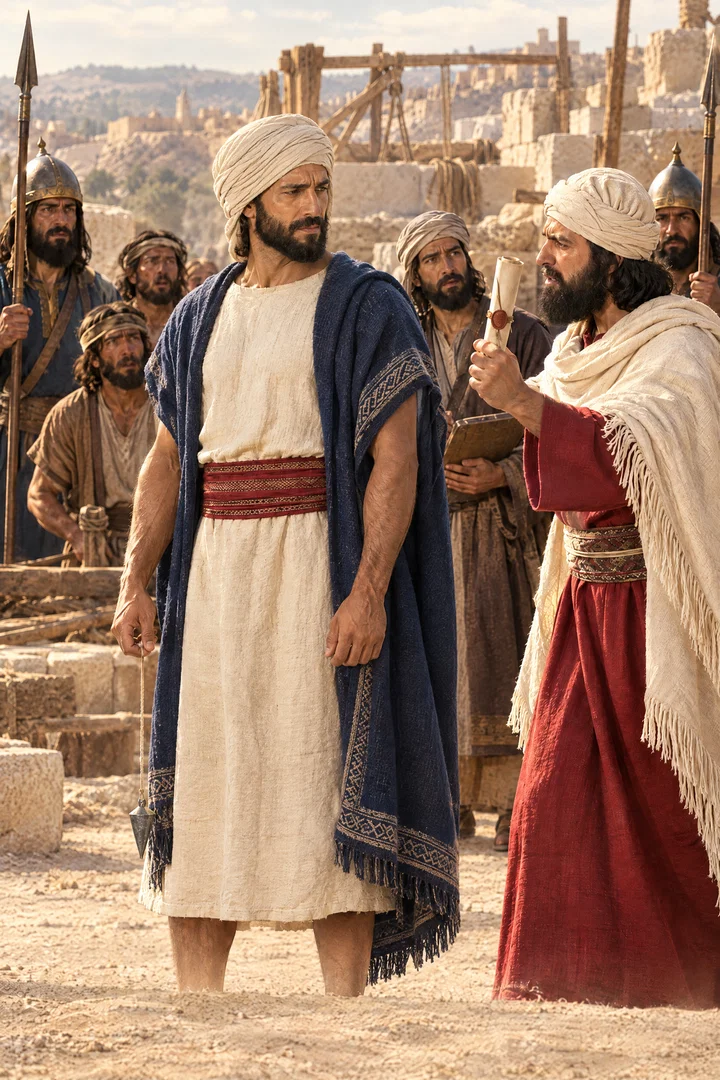
The adversaries of Judah and Benjamin were the Samaritans, who heard that the returned exiles, the children of the captivity, were building the temple in Jerusalem unto the Lord God of Israel.RH Jun 25, 1861PK 567.2–568.1RH Apr 25, 1907 They were a mixed people settled in Samaria after Assyria carried Israel away, who claimed to seek the same God and to have sacrificed to Him since Esar-haddon brought them up, yet they were idolaters who put other gods before the Lord.RH Jun 25, 1861PK 567.2–568.1RH Apr 25, 1907RH Apr 25, 1907 On hearing of the work they came to Zerubbabel and Joshua and the chief of the fathers with promises of friendship, offering to build together with Israel and join in the work.RH Jun 25, 1861PK 567.2–568.1RH Apr 25, 1907 Zerubbabel and the leaders refused, answering that they had nothing to do with them in building a house unto God but would build alone as Cyrus king of Persia had commanded, holding that obedience matters more than help gained by cooperation and that God's people must trust in Him alone and accept no help in worship from those who do not serve Him.RH Jun 25, 1861PK 567.2–568.1SG4 228.1RH Apr 25, 1907SG4 228.3 Their friendly offer disguised opposition as alliance, and that smooth, advantageous approach is more to be feared than open enmity, warning Christians to give such alluring inducements no heed and not to be drawn by conformity with the world away from allegiance to God.RH Apr 25, 1907RH Apr 25, 1907PK 570.2–4
Adversaries Hearing the Work
The adversaries of Judah and Benjamin named in the verse are the Samaritans, who heard that the children of the captivity, the returned exiles, were building the temple in Jerusalem unto the Lord God of Israel.RH Jun 25, 1861PK 567.2–568.1RH Apr 25, 1907RH Apr 25, 19072SP 142.3–143.2 Their hearing of the rebuilding of the temple to the Lord by the returned captives led directly to their coming to seek a part in the work.RH Jun 25, 1861PK 567.2–568.1RH Apr 25, 1907RH Apr 25, 1907 The Samaritans were a mixed people formed after Assyria deported many Israelites and settled foreign peoples in Samaria.RH Apr 25, 1907
Although they claimed to seek the same God and to have sacrificed to Him since Esar-haddon king of Assur brought them up, they were not worshipers of the true God.RH Jun 25, 1861PK 567.2–568.1RH Apr 25, 1907RH Apr 25, 1907SG4 228.3 They were idolaters who put other gods before the Lord and revered graven images.PK 567.2–568.1RH Apr 25, 1907RH Apr 25, 1907SG4 228.3RH Jun 25, 1861 Their profession of worshiping Israel's God did not make them true worshipers.PK 567.2–568.1RH Apr 25, 1907RH Apr 25, 1907SG4 228.3RH Jun 25, 1861
On hearing of the work they came to Zerubbabel and Joshua and the chief of the fathers, the family leaders of the returned Israelites.RH Jun 25, 1861PK 567.2–568.1RH Apr 25, 1907 They promised friendship and offered to build together with them and join in the work of the temple.RH Jun 25, 1861PK 567.2–568.1RH Jun 25, 18614RED 26.2–27.22SP 142.3–143.2 That request to help build was the response of Judah and Benjamin's adversaries to learning that the returned captives were rebuilding the temple to the Lord.RH Jun 25, 1861PK 567.2–568.1RH Apr 25, 19072SP 142.3–143.2RH Apr 25, 1907
Refusing Help in Worship
Zerubbabel and Joshua and the chief of the fathers answered the adversaries that they had nothing to do with them in building a house unto God, but that the returned Israelites themselves together would build as Cyrus king of Persia had commanded.RH Jun 25, 1861 They refused the offer and chose instead to build as the Lord had commanded.PK 567.2–568.1RH Apr 25, 1907 The builders would not unite with those who professed friendship and offered help because they were not worshipers of the true God, and would not unite with them in anything relating to worship.SG4 228.1SG4 228.3RH Jun 25, 1861
Obedience to God mattered more than help gained through cooperation, and God's people were to trust in him alone and not accept help from those who did not serve him.SG4 228.1RH Apr 25, 1907 They relied on God for help rather than seeking support from the king or accepting aid from those opposed to him.SG4 228.3 Accepting such help would have opened the way for idolatry.PK 567.2–568.1RH Apr 25, 1907 The Creator of all things needs not the help of his enemies to establish his worship, asks not the sacrifice of wickedness, and accepts not the offerings of those who serve other gods before him and put other gods before the Lord.SG4 228.3RH Jun 25, 1861
He will defend and prosper his servants in their efforts to serve him when they trust him alone.RH Jun 25, 1861 Those who made the offer to help are presented as adversaries of Judah and Benjamin, and their offer stands against their opposition to the work of restoring worship to the Lord God of Israel.1T 281.2–282.2SG4 228.1 After the refusal the people of the land weakened the hands of the people of Judah and troubled them in building, and hired counsellors against them to frustrate their purpose.RH Jun 25, 1861
Subtle Opposition and Warning
The adversaries did not come as open and avowed enemies but with smooth words and fair speeches, disguising opposition as friendly help and apparent alliance with the builders.RH Apr 25, 1907PK 570.2–4 Their offer to help appeared advantageous, yet it was an insincere and flattering attempt to gain influence and draw God's people into compromise.RH Apr 25, 1907PK 570.2–4 It worked by flattering inducements, ingenious subterfuges, and alluring inducements meant to tempt from allegiance through alliance and conformity with those who do not fear God.RH Apr 25, 1907PK 570.2–4
That friendly approach has greater power to deceive and is more to be feared than open opposition.PK 570.2–4 Satan uses concealed snares and deceptive offers to draw God's people away from faithfulness, and the setting warns Christians not to conform to the world or accept subtle inducements that lead away from allegiance to God.RH Apr 25, 1907RH Apr 25, 1907PK 570.2–4 Such offers must be given no heed but strictly guarded against, with every subtle influence that seeks entrance resisted by a vigilance that knows no relaxation, especially as earth's history is closing, lest some carefully concealed and masterly snare take God's people unaware.PK 570.2–4
True prosperity depends on continuance of covenant relationship with God.PK 570.2–4 Those who walk humbly before Him and draw near to Him for protection from evil are not left to struggle alone, for angels help and protect them.PK 570.2–4 The Lord never betrays one who trusts in Him, and in pity and love He lifts up a standard against the enemy, claiming them as His own whom none may touch.PK 570.2–4
The refusal began a bitter hostility and animosity between the two peoples, and that rejection deepened the hostility.4RED 26.2–27.22SP 142.3–143.2DA 187.5–188.3 It formed the background to their later dispute over where to worship.DA 187.5–188.3 The Samaritans' separation from Israel had followed disobedience and the gradual contamination of their religion by idolatry, and after their rival temple on Mount Gerizim was destroyed they sought instruction in the true religion, though they continued to cling to some idolatry and rejected Jerusalem as the true place of worship.4RED 26.2–27.2 The rejection in the temple-building account led the Samaritans to build that rival temple on Mount Gerizim.2SP 142.3–143.2
Sources
Pioneers and periodicals
38 sources
The adversaries were the Samaritans, the mixed foreign peoples settled in Samaria, who heard that the returned exiles of Judah and Benjamin were rebuilding the temple in Jerusalem unto the Lord God of Israel just after its foundation was laid.ST Jul 14, 1887ST Jan 2, 1893RH Mar 2, 1876ST Aug 23, 1899ST Jul 25, 1878 They came to Zerubbabel and Joshua and the chief of the fathers offering to build together with them, claiming to seek the same God since Esar-haddon had brought them up, while mixing His worship with idolatry.RH Jun 25, 1861ST Jul 14, 1887ST Aug 29, 1911ST Sep 3, 1894ST Apr 12, 1883 The leaders refused, answering that the adversaries had nothing to do with them in building, but Israel alone would build as Cyrus had commanded.RH Jun 25, 1861ST Jul 14, 1887 The refusal was from principle rather than policy, because obedience mattered more than help gained by compromise, and God needs not the help of His enemies nor accepts the offerings of those who serve other gods.RH Apr 25, 1907RH Jun 25, 1861ST Jan 2, 1893 Afterward the people of the land weakened and troubled the builders and hired counsel against them, stopping the work for a time until Darius reaffirmed it, and the enmity thus begun was never quenched but warns against uniting with the world through flattering offers that draw away from allegiance to God.RH Jun 25, 1861RH Apr 25, 1907ST Jul 14, 1887ST Mar 26, 1902ST Aug 29, 1911
Adversaries and Builders Identified
The adversaries of Judah and Benjamin were the Samaritans, the mixed peoples and races settled in Samaria and Palestine.ST Jul 14, 1887ST Jan 2, 1893RH Mar 2, 1876ST May 7, 1912ST Aug 29, 1911 They were the mixed people who opposed the work when the returned captives began rebuilding the temple.ST May 7, 1912ST May 7, 1912 They had been formed after Assyria deported many Israelites and settled foreign nations in Samaria, brought up by Esar-haddon king of Assur, whose descendants they were.RH Jun 25, 1861RH Apr 25, 1907ST Sep 3, 1894ST Sep 3, 1894 They were descendants of nations brought into Palestine by Assyria after Israel's captivity, and they opposed the Jews when they rebuilt the temple under Zerubbabel and Ezra.ST Sep 3, 1894ST Sep 3, 1894
Their religion mixed worship of the true God with idolatry and reverence for graven images.RH Apr 25, 1907ST Sep 3, 1894ST Aug 14, 1901 They claimed to seek the same God and to have sacrificed to him since Esar-haddon king of Assur brought them up, and both groups professed to keep the same law.RH Jun 25, 1861ST Aug 29, 1911 The builders called the children of the captivity are the returned exiles of Judah and Benjamin who returned from Babylon in B.C. 535 and were rebuilding the temple in Jerusalem unto the LORD God of Israel.ST Jul 14, 1887ST Jul 25, 1878ST Sep 24, 1902ST Aug 2, 1910 The rebuilding in Jerusalem belongs among the events recorded in Ezra 1-6, when the returned people had begun building but the work was still languishing when Haggai spoke, about 520 B.C.ST Aug 23, 1899
The verse's use of children of the captivity, Judah and Benjamin, and Israel for the returned people presents them as a united nation rather than treating the ten tribes as a separate lost people.ST Sep 24, 1902 The adversaries heard of the work immediately after the foundation of the temple was laid in 535 B.C.ST Jan 2, 1893 That hearing marks the beginning of opposition to the returned exiles' rebuilding of the temple to the Lord, the God of Israel.ST Jan 2, 1893RH Sep 18, 1856ST Jun 10, 1913
Offer of Help Refused
On hearing that the returned exiles were building the temple, the adversaries came to Zerubbabel and Joshua and the chief of the fathers with an offer to build together with them.RH Jun 25, 1861ST Jul 14, 1887ST Apr 12, 1883 They proposed to join in rebuilding the temple and re-establishing the worship of God, claiming to seek the same God and to have sacrificed to him since Esar-haddon king of Assur brought them up.RH Jun 25, 1861ST Jul 14, 1887 Their offer was pretended and insincere, for they were really adversaries to the work of God, as their subsequent course of opposition proved.RH Apr 25, 1907ST Jan 2, 1893ST Mar 26, 1902 Its real aim was to gain influence in Judah and Jerusalem, to foster revolt and establish their own rule, and by flattering and seemingly advantageous inducements to draw God's people into compromise.RH Apr 25, 1907RH Apr 25, 1907ST Mar 26, 1902
The leaders answered that the adversaries had nothing to do with them in building a house unto God, but that the returned Israelites themselves together would build as Cyrus king of Persia had commanded, and they were given no part in it.RH Jun 25, 1861ST Jul 14, 1887 The refusal was not from shortsighted policy but from principle, a noble refusal to compromise.ST Jan 2, 1893 Obedience to God mattered more than help gained through such cooperation, because God could not have wrought with such allies.RH Apr 25, 1907ST Jan 2, 1893 To accept the alliance would have opened the way for idolatry.RH Apr 25, 1907 God's people dare not unite in anything relating to His worship with those regarded as enemies who have other gods before the Lord, for the Creator needs not the help of His enemies to establish His worship, asks not the sacrifice of wickedness, and accepts not the offerings of those who serve other gods.RH Jun 25, 1861
By rejecting the proposal, Zerubbabel and Joshua kept the people faithful to God.ST May 7, 1902 After those leaders died, weaker leadership allowed alliance with the mixed peoples to succeed.ST May 7, 1902
Opposition Hindered Temple Work
Once the offer of joint building was refused, the people of the land set themselves to weaken the hands of the people of Judah and to trouble them in building, hindering the work in every way possible by hiring counselors against them and bribing officials at the Persian court to frustrate their purpose.RH Jun 25, 1861ST Jul 14, 1887ST Mar 26, 1902 This hired opposition continued through the reign of Cyrus and through Cambyses and into Darius, a period of fourteen years.RH Jun 25, 1861ST Jul 14, 1887ST Mar 26, 1902 Their efforts failed under Cyrus and Cambyses but succeeded under the impostor Smerdis, the Artaxerxes the Magian of 522 B.C.ST Jul 14, 1887ST May 7, 1912ST May 17, 1877 By misrepresentations they obtained a royal order, and he decreed that the work at Jerusalem should stop, so that building ceased for about two years.ST Jul 14, 1887RH Sep 18, 1856ST May 7, 1912RH Sep 4, 1856RH Apr 25, 1854
The work languished until the second year of Darius Hystaspes in B.C. 520, when Haggai and Zechariah stirred the Jews to build again.ST Jul 14, 1887RH Sep 18, 1856 After further interference an honest report by the new governor led Darius to search out and reaffirm the decree of Cyrus, decreeing that the work should go on and be speedily helped.ST Jul 14, 1887RH Sep 4, 1856RH Feb 21, 1907 Darius ordered help from the king's tribute in money, and provision of bullocks and rams and lambs with wheat and salt and wine and oil.ST Jul 14, 1887 Rebuilding thus resumed in Darius's second year and the temple was completed in his sixth year, twenty-one years after the work began.ST Jul 14, 1887RH Sep 18, 1856
This resistance acted in the name of the king of Persia and is reckoned among the powers that scattered Judah and Jerusalem.ST Apr 12, 1883 Together with the poverty of the people it made the rebuilding seem impossible to complete, and it formed part of the troubles the Jews suffered while restoring the temple.ST Apr 12, 1883ST May 10, 1883ST Jun 21, 1883 During the stoppage the people turned from God's work to their own interests until the prophets roused them to resume it. Opposition to the later rebuilding in Jerusalem followed the same pattern and extended from the temple to the walls, with the Samaritans mocking the workers and questioning their right to build, while Nehemiah answered that God would prosper His servants and that the opponents had no portion or right in Jerusalem.ST May 14, 1902ST Jun 4, 1902
Prophecy Chronology and Scripture
The hearing of the adversaries marks the beginning of the troublous times foretold for the rebuilding of Jerusalem.ST Mar 26, 1902 When the returned Jews began rebuilding the temple, the mixed peoples of Samaria heard of it and came with a pretended offer to help, claiming to worship Israel's God.ST Mar 26, 1902 Their real aim was to gain influence in Judah and Jerusalem, to foster revolt, and to establish their own rule, and after their help was refused they hindered the work and bribed officials of the Persian court to frustrate it throughout the reign of Cyrus and into that of Darius, a period of fourteen years.ST Mar 26, 1902
That resistance, carried on in the name of the king of Persia when the returned Jews began rebuilding the temple, is one of the powers that scattered Judah and Jerusalem.ST Apr 12, 1883 The adversaries of Judah and Benjamin who opposed the rebuilding by Zerubbabel and Joshua are the enemies threatened in Zechariah's prophecy for seeking to hinder that work.ST Apr 12, 1883ST Apr 19, 1883 While the returning Israelites were rebuilding the temple in Jerusalem amid harassment by the Samaritans and fear of Persia, God's promise to overcome the powers opposing His work was a source of hope and comfort.ST Aug 2, 1910 That hostile opposition of neighboring peoples was stirred by Satan to hinder or destroy the remnant, but God mercifully watched over and protected His afflicted and wayward people.ST Oct 8, 1902
The chapter belongs to the decrees of Cyrus and Darius and supplies the historical setting of the returned people of Judah and Benjamin rebuilding the temple unto the Lord while their adversaries heard of the work.ST Jul 25, 1878RH Dec 8, 1874 It provides context for the decrees discussed in Ezra 7, yet those decrees of Cyrus and Darius are not the true date for the beginning of the seventy weeks of Daniel 9:24.ST Jul 25, 1878RH Dec 8, 1874 The true date is the decree of Artaxerxes in Ezra 7.RH Dec 8, 1874 The chapter also belongs to the biblical account of life in the days of Ezra and Nehemiah, a period that archaeological discoveries in lands connected with Israel may help illuminate, while the Bible's account is clearer and more consistent than fragmentary archaeological evidence.ST Mar 10, 1909
Lasting Enmity and Faithfulness
The refusal to give the Samaritans any part in rebuilding the temple and re-establishing worship began an enmity that was never quenched but grew more bitter.ST Jul 14, 1887ST Aug 29, 1911ST Jun 4, 1902 The adversaries were the mixed peoples settled in Samaria and Palestine after Israel's captivity, descendants of nations brought in by the king of Assyria, who heard that the exiles returned from Babylon in B.C. 535 were building the temple unto the Lord God of Israel under Zerubbabel and Jeshua and their companions.ST Jul 14, 1887ST Sep 3, 1894ST Sep 3, 1894 Their religion mixed worship of the true God with idolatry even while both groups professed to keep the same law, and their opposition after being refused helped foster and stir the religious enmity and hatred between the Samaritans and the Jews.ST Aug 29, 1911ST Sep 3, 1894ST Sep 3, 1894 They set out to hinder the work in every way possible, hiring counselors against the Jews at the court of the kings of Persia through the time of Cyrus and Cambyses, and their efforts failed under Cyrus and Cambyses but succeeded under the impostor Smerdis, who decreed the work at Jerusalem stop so that it ceased about two years.ST Jul 14, 1887 The work stood still until the second year of Darius Hystaspes in B.C. 520, when Haggai and Zechariah stirred the Jews to build again, and after further interference over both the temple and the repairing of Jerusalem's walls, an honest report by the new governor led Darius to decree that the work go on and be speedily helped with money from the king's tribute and with bullocks, rams, lambs, wheat, salt, wine, and oil.ST Jul 14, 1887ST Jun 4, 1902 That conflict helped begin the Jews' hatred of the Samaritans, which later grew through apostasy and the building of a rival altar and temple, particularly through Manasseh's apostasy, and through the reception of Jews who fled Jerusalem after violating the law.ST Jun 4, 1902
The setting warns Christians not to conform to the world or accept seemingly advantageous, flattering inducements that lead them away from allegiance to God.RH Apr 25, 1907 What appeared to be an advantageous offer to help was a flattering attempt to gain influence and draw God's people into compromise.RH Apr 25, 1907 The adversaries could approach not only as open enemies but with smooth words and fair speeches, disguising opposition as friendly help.RH Apr 25, 1907 Their example warns that Satan uses concealed snares and deceptive offers to draw God's people away from faithfulness.RH Apr 25, 1907 The offer, though promising friendship and help, was refused because they were not regarded as worshipers of the true God but as enemies who had other gods before the Lord, with whom God's people dare not unite in anything relating to His worship.RH Jun 25, 1861 The Creator of all things needs not the help of His enemies to establish His worship, asks not the sacrifice of wickedness, and accepts not the offerings of those who serve other gods, but He will defend and prosper His servants in their efforts to serve Him when they trust Him alone.RH Jun 25, 1861
The passage stands as an example of adversaries opposing God's work in Ezra's and Nehemiah's times as in apostolic times, when there were many opponents, yet the work continued with encouragement.RH Dec 11, 1900
Sources