Ezra 3:12
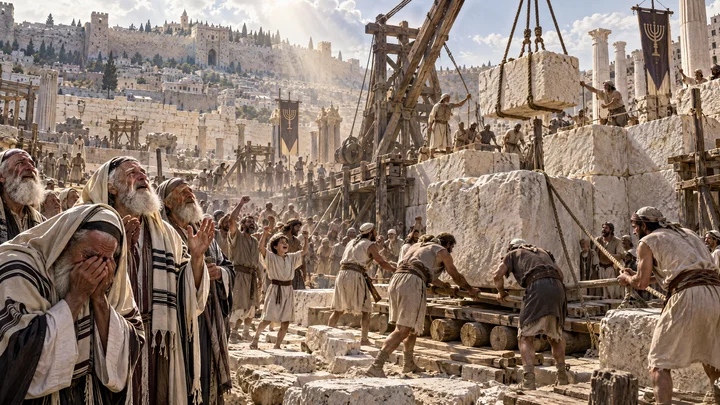
But many of the priests and Levites and chief of the fathers, who were ancient men, that had seen the first house, when the foundation of this house was laid before their eyes, wept with a loud voice; and many shouted aloud for joy:
Translations
American King James Version, King James Version
But many of the priests and Levites and chief of the fathers, who were ancient men, that had seen the first house, when the foundation of this house was laid before their eyes, wept with a loud voice; and many shouted aloud for joy:
But many of the priests and Levites and chief of the fathers, who were ancient men that had seen the first house, when the foundation of this house was laid before their eyes, wept with a loud voice; and many shouted aloud for joy:
But many of the priests and Levites and chief of the fathers, old men, that had seen the first house, when the foundation of this house was laid before their eyes, wept with a loud voice; and many shouted aloud for joy:
Revised Version, American Standard Version
But many of the priests and Levites and heads of fathers’ houses, the old men that had seen the first house, when the foundation of this house was laid before their eyes, wept with a loud voice; and many shouted aloud for joy:
And many of the priests, and the Levites, and the heads of the fathers, the aged men who had seen the first house — in this house being founded before their eyes — are weeping with a loud voice, and many with a shout, in joy, lifting up the voice;
But many of the priests and Levites and chief fathers, the ancient men that had seen the first house, wept with a loud voice, [ when] the foundation of this house was laid in their sight; and many shouted aloud for joy.
But, many of the priests and the Levites and the ancestral chiefs, who were old men, that had seen the first house, when the foundation of this house was laid before their eyes, were weeping with a loud voice,—many, however, shouting and rejoicing, with voice raised on high;
Berean Standard Bible, Majority Standard Bible
But many of the older priests, Levites, and family heads who had seen the first temple wept loudly when they saw the foundation of this temple. Still, many others shouted joyfully.
But many of the priests and Levites and heads of fathers’ households, the old men who had seen the first house, when the foundation of this house was laid before their eyes, wept with a loud voice. Many also shouted aloud for joy,
But a number of the priests and Levites and the heads of families, old men who had seen the first house, when the base of this house was put down before their eyes, were overcome with weeping; and a number were crying out with joy:
Many also of the Priests and the Leuites and the chiefe of the fathers, ancient men which had seene the first house, (when the foundation of this house was layed before their eyes) wept with a loud voyce, and many shouted aloud for ioy,
Douay-Rheims (Challoner revision)
But many of the priests and the Levites, and the chief of the fathers and the ancients that had seen the former temple; when they had the foundation of this temple before their eyes, wept with a loud voice: and many shouting for joy, lifted up their voice.
Pictures
Cross-references 20 of 23
- Haggai 2:3
Who is left among you that saw this house in her first glory? and how do ye see it now? is it not in your eyes in comparison of it as nothing?
Haggai compares the new temple with the former one remembered by the older witnesses.
- Ezra 1:2-4
Thus saith Cyrus king of Persia, The LORD God of heaven hath given me all the kingdoms of the earth; and he hath charged me to build him an house at Jerusalem, which is in Judah.
Cyrus’s decree authorized the exiles’ return and the temple’s rebuilding.
- Haggai 2:9
The glory of this latter house shall be greater than of the former, saith the LORD of hosts: and in this place will I give peace, saith the LORD of hosts.
Promises that the latter temple’s glory would surpass the former’s.
- Ezra 6:14-15
And the elders of the Jews builded, and they prospered through the prophesying of Haggai the prophet and Zechariah the son of Iddo. And they builded, and finished it, according to the commandment of the God of Israel, and according to the commandment of Cyrus, and Darius, and Artaxerxes king of Persia.
The temple’s completion follows the rebuilding that began amid both weeping and rejoicing.
- Haggai 1:12-14
Then Zerubbabel the son of Shealtiel, and Joshua the son of Josedech, the high priest, with all the remnant of the people, obeyed the voice of the LORD their God, and the words of Haggai the prophet, as the LORD their God had sent him, and the people did fear before the LORD.
The people obey God’s message and resume work on the Temple.
- Ezra 4:23-24
Now when the copy of king Artaxerxes’ letter was read before Rehum, and Shimshai the scribe, and their companions, they went up in haste to Jerusalem unto the Jews, and made them to cease by force and power.
The royal order halted the temple work until Darius’s second year.
- Ezra 2:1-2
Now these are the children of the province that went up out of the captivity, of those which had been carried away, whom Nebuchadnezzar the king of Babylon had carried away unto Babylon, and came again unto Jerusalem and Judah, every one unto his city;
Names Zerubbabel and the exiles who returned to Jerusalem before the foundation was laid.
- Isaiah 44:28
That saith of Cyrus, He is my shepherd, and shall perform all my pleasure: even saying to Jerusalem, Thou shalt be built; and to the temple, Thy foundation shall be laid.
Foretells Cyrus’s role in rebuilding Jerusalem and laying the temple’s foundation.
- 2 Chronicles 36:19-21
And they burnt the house of God, and brake down the wall of Jerusalem, and burnt all the palaces thereof with fire, and destroyed all the goodly vessels thereof.
The first temple’s destruction and Judah’s exile explain the elders’ sorrow.
- Ezra 3:2-3
Then stood up Jeshua the son of Jozadak, and his brethren the priests, and Zerubbabel the son of Shealtiel, and his brethren, and builded the altar of the God of Israel, to offer burnt offerings thereon, as it is written in the law of Moses the man of God.
Altar worship precedes the temple foundation laying.
- Ezra 5:16
Then came the same Sheshbazzar, and laid the foundation of the house of God which is in Jerusalem: and since that time even until now hath it been in building, and yet it is not finished.
The verse’s temple foundation is compared with the later completion of the building work.
- Isaiah 45:13
I have raised him up in righteousness, and I will direct all his ways: he shall build my city, and he shall let go my captives, not for price nor reward, saith the LORD of hosts.
Cyrus releases the captives and rebuilds Jerusalem.
- Ezra 4:1-3
Now when the adversaries of Judah and Benjamin heard that the children of the captivity builded the temple unto the LORD God of Israel;
The temple-building work was the work opposed and stopped.
- Ezra 3:4-6
They kept also the feast of tabernacles, as it is written, and offered the daily burnt offerings by number, according to the custom, as the duty of every day required;
Feasts and offerings were observed before the temple foundation was laid.
- Ezra 6:1-12
Then Darius the king made a decree, and search was made in the house of the rolls, where the treasures were laid up in Babylon.
Darius confirmed Cyrus decree to resume building
- Ezra 1:1
Now in the first year of Cyrus king of Persia, that the word of the LORD by the mouth of Jeremiah might be fulfilled, the LORD stirred up the spirit of Cyrus king of Persia, that he made a proclamation throughout all his kingdom, and put it also in writing, saying,
Cyrus’s proclamation leads to the temple’s foundation being laid.
- Ezra 1:5
Then rose up the chief of the fathers of Judah and Benjamin, and the priests, and the Levites, with all them whose spirit God had raised, to go up to build the house of the LORD which is in Jerusalem.
Levites returned to rebuild the house of the LORD.
- 1 Corinthians 3:11
For other foundation can no man lay than that is laid, which is Jesus Christ.
Christ is identified as the foundation of God’s spiritual temple.
- Ephesians 2:19-22
Now therefore ye are no more strangers and foreigners, but fellowcitizens with the saints, and of the household of God;
Believers are built together as God’s temple.
- Ezra 4:4-5
Then the people of the land weakened the hands of the people of Judah, and troubled them in building,
Enemies troubled the builders after the foundation was laid.
Commentary
Each commentary is drawn from primary sources: the writings of Ellen G. White and Adventist pioneers and periodicals. Each commentary is separate. Its own words are not a quotation; follow the references to read the source passages.
Ellen G. White
16 sources
When the foundation of the rebuilt house was laid before their eyes, the aged priests and Levites and fathers who had seen Solomon's temple wept aloud while many others shouted aloud for joy, so that grief and gladness rose together and could not be told apart.GC 23.2–24.1PK 563.2PK 564.4RH Apr 11, 1907 They wept because the new work seemed inferior to the former in outward glory and magnificence.GC 23.2–24.1Ms 116, 1897, par. 12–16RH Apr 11, 1907 Their weeping was unbelief and dissatisfaction rather than praise, a failure to rejoice in what God had enabled.Ms 116, 1897, par. 12–16PK 564.4PK 565.1 Such sorrow over the past should have given way to gratitude, for God had mercifully spared them and restored them to Jerusalem, whereas the loss of the first house had come through long disobedience and disloyalty that made the captivity necessary.PK 563.2RH Apr 11, 1907PK 564.1PK 564.2–3 Their comparisons and complaints did harm beyond what they knew, discouraging the builders, weakening the people, and delaying the completion of the Lord's house.Ms 116, 1897, par. 12–16PK 565.1RH Apr 11, 1907PK 564.2–3
Historical Setting and Scene
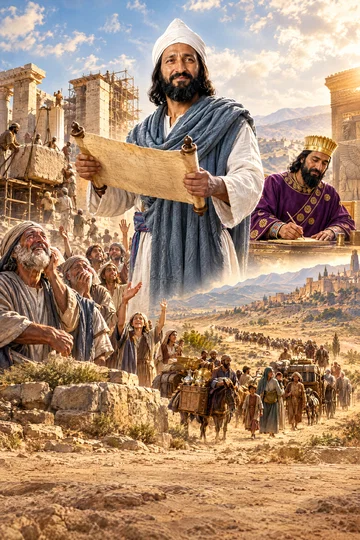
The verse belongs to the return from exile, when about fifty thousand Israelites came back to Canaan under Zerubbabel and Joshua to restore the temple and its services.RH Jan 23, 1908 They were only a remnant, for many chose to remain in Medo-Persia rather than take part in the work of restoration.RH Jan 23, 1908 They came from lifelong captivity to a wasted, nearly deserted country.GC 23.2–24.1
When the foundation of the new house was laid before their eyes, many of the ancient men wept with a loud voice.GC 23.2–24.1Ms 116, 1897, par. 12–16PK 563.2PK 565.1PK 564.1 They were the priests and Levites and chief of the fathers who had seen the first house, Solomon's temple.Ms 116, 1897, par. 12–16PK 563.2PK 565.1PK 564.1RH Dec 5, 1907
At that same laying of the foundation many others shouted aloud for joy.PK 564.4RH Apr 11, 1907PK 572.1–2 They were of larger faith and broader vision and were not dissatisfied with the new work.PK 564.4 Thus grief among those who remembered the first temple and joy over the new foundation rose together.PK 564.4RH Apr 11, 190716MR 206.3–4PK 572.1–2
The sound of joy and the sound of weeping mingled so loudly that one could not be distinguished from the other or told apart.PK 564.4RH Apr 11, 1907Lt 28, 1850, par. 3–416MR 206.3–45MR 226.1–2 The mingled loud crying and loud shouting for joy stood as one triumphant outpouring of praise with a loud voice.Lt 28, 1850, par. 3–45MR 226.1–2 And the joyful shouting was heard afar off.PK 564.4RH Apr 11, 1907
Reason and Rebuke of Weeping
The aged priests and Levites and chief fathers who had seen Solomon's house wept loudly when the foundation of the new house was laid before their eyes because the coming building seemed inferior to the former in magnificence and outward glory.GC 23.2–24.1Ms 116, 1897, par. 12–16RH Apr 11, 1907PK 564.2–3RH Dec 5, 1907 They viewed its lesser glory and the seeming inferiority of its plans with sadness and unfavorable comparison to the first temple.Ms 116, 1897, par. 12–16PK 564.4PK 564.2–3RH Dec 5, 1907PK 572.1–2
Their loud weeping was a failure to rejoice springing from lack of faith and lack of confidence in the enterprise.Ms 116, 1897, par. 12–16PK 564.4PK 565.1RH Dec 5, 1907PK 572.1–2 It expressed disapproval, disappointment, dissatisfaction, discontent, and mourning rather than praise for what God had enabled.Ms 116, 1897, par. 12–16PK 564.4PK 565.1PK 564.2–3RH Dec 5, 1907
Their sadness also held grief over the loss of the former house and over the consequences of Israel's disobedience that had brought that loss.PK 563.2RH Apr 11, 1907PK 564.1 Sadness filled their hearts as they thought of the results of long-continued impenitence, ingratitude, and disloyalty that led to the destruction of the temple built by Solomon, the captivity, the exile, and the scattering among the heathen.PK 563.2RH Apr 11, 1907PK 564.1 Had they and their generation obeyed God and carried out His purpose for Israel, Solomon's temple would not have been destroyed and the captivity would not have been necessary.PK 564.1
Since God had mercifully spared them, brought them back to Jerusalem, restored them, and enabled the rebuilding as a mark of favor toward Zion, their grief over the past should have given way to gratitude and joy rather than discontent.PK 563.2RH Apr 11, 1907PK 564.2–3
Harmful Influence and Application
The mourning and unfavorable comparisons of the older leaders carried a weight they did not realize, and their expressions of discouragement weakened those who were building.Ms 116, 1897, par. 12–16PK 565.1RH Apr 11, 1907PK 564.2–3PK 572.1–2 Their complaints and lament over seeming inferiority expressed dissatisfaction rather than praise and lack of confidence in the enterprise, and they discouraged the workers and the people and lessened their willingness to continue.Ms 116, 1897, par. 12–16RH Apr 11, 1907PK 564.2–3RH Dec 5, 1907PK 572.1–2 Under that influence some lost heart and became disheartened and discouraged, questioning whether to continue the work and whether the time had come to rebuild.RH Apr 11, 1907PK 564.2–3RH Dec 5, 1907PK 572.1–2 Many therefore turned back to their homes and ordinary pursuits instead of pressing forward with the temple.RH Dec 5, 1907
Their expressed disapproval, disappointment, and dissatisfaction with the lesser glory sprang from failure to rejoice through lack of faith.PK 565.1 That dissatisfaction delayed the completion of the Lord's house.PK 565.1 Had they foreseen that result on the day the foundation was laid, they would have been appalled.PK 565.1
The record of laying the foundation calls God's people to honor God at once by rising up without delay to prepare, build, and dedicate a place of worship.Ms 175, 1897, par. 67–69 There they are to worship in humbleness of mind, to kneel down, and to serve Him becomingly and in order.Ms 175, 1897, par. 67–69 Such a house stands as a witness to the truth where the Lord directs, and the work requires faith of the right quality.Ms 175, 1897, par. 67–69
The celebration when the foundation was laid, with loud crying mingled with loud shouting for joy so that one sound could not be distinguished from the other, is a fitting picture of powerful, triumphant worship gatherings.Lt 28, 1850, par. 3–45MR 226.1–2 There the people praise God with a loud voice in deep emotion and joy.Lt 28, 1850, par. 3–45MR 226.1–2 Such an outpouring strengthens and refreshes all who share in it, as when divine power falls like a mighty rushing wind.5MR 226.1–2
Sources
Pioneers and periodicals
33 sources
When the returned exiles laid the foundation of the house of the Lord at Jerusalem under Cyrus, the priests stood in apparel with trumpets and the Levites with cymbals praising the Lord for His enduring mercy, while the aged priests, Levites and chief fathers who had seen Solomon's house wept aloud and many others shouted for joy until joy and weeping could not be told apart and the noise was heard afar off.ST Dec 26, 1892RH Oct 21, 1858RH Aug 26, 1902ST May 17, 1910ST Mar 26, 1902 The work belonged to Judah and Benjamin returned from Babylon to rebuild the sanctuary long in ruins, led by Zerubbabel and Joshua about fifteen years before the messages of Haggai and Zechariah to go on.ST Aug 23, 1899ST Mar 13, 1893ST Feb 25, 1886RH Nov 3, 1863 The ancient men wept because the new beginning seemed small and vastly inferior to Solomon's temple in all its grandeur as one of the grandest buildings ever erected and covered with gold.RH Nov 10, 1863ST May 17, 1910ST May 17, 1910 Their sorrow also bore the loss of the ark, the Urim and Thummim, the Shekinah presence and the heavenly fire, and the poverty and scars left by disobedience, exile and seventy years of captivity.RH Apr 11, 1907ST Dec 26, 1892ST Dec 26, 1892ST May 17, 1910 The rejoicing expressed gratitude for God's goodness in sparing them and bringing them back to rebuild for His glory, yet the expressions of discouragement weakened the builders and turned them back to their homes, teaching that grief over the past should not obscure present opportunity nor judge by outward appearance, since the true glory of the latter house came when Christ Himself, the Desire of all nations, entered it.RH Apr 11, 1907ST Dec 26, 1892ST May 23, 1911ST May 17, 1910
Foundation Laying in Context
The laying of the foundation belongs to the return from Babylon to Jerusalem under the proclamation and decree of Cyrus for the return of the Jews and the rebuilding of the temple, coming after the list of those who went up and before the stopping of the work by adversaries under Artaxerxes and before the messages by Haggai and Zechariah to go on under Darius.ST Jun 2, 1909ST Feb 25, 1886 It was the work of Judah and Benjamin who went up under Cyrus to rebuild the sanctuary that had long lain in ruins, leaving behind the sanctuary promised to the twelve tribes, a building work whose beginning at the foundation occupied a period of time until its completion.RH Nov 3, 1863 It was led by Zerubbabel and Joshua with Ezra and encouraged by the prophets Haggai and Zechariah.ST Aug 16, 1910 It is counted as one of the principal historical events of the Bible from creation down to the time of the apostles studied consecutively in order.RH Jan 6, 1910
The foundation was laid from May to October 536 B.C., in the second month of the second year after the returned exiles reached their own country.ST Mar 13, 1893ST Mar 26, 1902 The rebuilding was taking place in Jerusalem about fifteen years before Haggai's message, and fifteen years later the temple work was still much as it had been when the foundation was laid.ST Aug 23, 1899ST Feb 20, 1893 About fifty thousand Israelites returned to Canaan under Zerubbabel and Joshua, but they were only a remnant, because many chose to remain in Medo-Persia rather than help restore the temple services.RH Jan 23, 1908
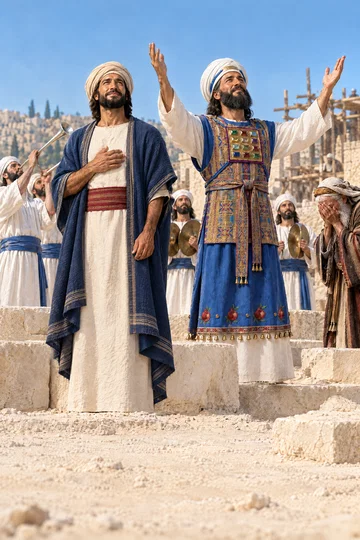
The laying followed preparations with masons and carpenters and cedar from Lebanon brought through Tyre and Zidon by way of Joppa according to the grant of Cyrus king of Persia.ST Mar 26, 1902 When the builders laid the foundation, the priests stood in their apparel with trumpets and the Levites the sons of Asaph with cymbals to praise the Lord after the ordinance of David king of Israel.RH Aug 26, 1902ST Mar 26, 1902 They sang together in praising and giving thanks because He is good, for His mercy endures forever toward Israel, and all the people shouted with a great shout because the foundation of the house of the Lord was laid.ST Mar 26, 1902
Many elderly priests, Levites, and chief of the fathers, ancient men who had seen the first house, wept with a loud voice when the foundation was laid before their eyes, while many others shouted aloud for joy in praise and thanksgiving to God.ST Dec 26, 1892RH Oct 21, 1858ST May 17, 1910 The people's response held grief and gladness together, so that the people could not discern the noise of the shout of joy from the noise of the weeping.RH Apr 11, 1907ST Dec 26, 1892ST Mar 26, 1902 The shout of joy drowned out the voice of weeping, so that outsiders and enemies beyond Jerusalem heard it as one loud, glad acclaim for God's providence, and the noise was heard afar off.RH Apr 11, 1907ST May 17, 1910ST Mar 26, 1902
The rebuilding by Zerubbabel gives the time when that work was done, coming after the building of Solomon's temple and God's forsaking of it and before the final forsaking when the house was left desolate.RH Nov 3, 1863 It belongs to the days of Ezra and Nehemiah, a time whose Babylonian life is known from discoveries in ancient lands adjoining Israel that had dealings with that people, and those discoveries confirm the Bible narrative.ST Mar 10, 1909
Why They Wept and Rejoiced
The ancient men wept because the new house seemed insignificant beside the first house in all its grandeur, vastly inferior and diminished in glory as they remembered it.RH Nov 10, 1863ST May 17, 1910RH Mar 4, 1902 They remembered Solomon's temple as covered with gold, one of the grandest buildings ever erected and counted in its time as one of the wonders of the world, and they could not forget it when they saw the small, more humble beginning of the new edifice.ST May 17, 1910ST May 17, 1910 The very digging down to Solomon's original foundation stones reminded them of the former wonderful work, and the contrast with its former glory saddened their hearts.ST May 17, 1910
Their sorrow was sorrow for past sins and for the nation's decline from Israel's former glory.ST Dec 26, 1892ST Dec 26, 1892 It reflected the consequences of Israel's disobedience, which had led to the destruction of the first temple and to exile and seventy years of captivity.RH Apr 11, 1907RH Mar 4, 1902 The people were now poor, and though returned from captivity Israel still bore weakness and scars from its sins. Israel no longer had a king ruling from the Euphrates to the Mediterranean, the Red Sea ports no longer poured in the treasures of India and Africa, and the great caravans passed far beyond Jerusalem.ST May 17, 1910
The weeping was for specific lost glory, for the ark of God and the prophetic Urim and Thummim were gone.ST Dec 26, 1892ST Dec 26, 1892 Gone also were the Shekinah or divine presence and the celestial fire upon the altar.ST May 17, 1910 The exchange of corn, wine and oil for Tyrian timber, stone and artisans was small beside the wealth that had passed between Hiram and Solomon.ST May 17, 1910 The gold and silver brought from Babylon by Cyrus and the wealthy Babylonians and willing-hearted Jews was little beside the almost incalculable treasures accumulated through David and Solomon over two generations and more that had sheeted Solomon's temple with gold.ST May 17, 1910 Solomon's temple had been built in a time of peace and great wealth at a cost of about $150 million in gold and silver.
The temple built after the return fell far short of Solomon's glory and of the pattern God showed to Ezekiel, because Israel would not yield fully to God so He could dwell among them and build His house among them.ST Sep 3, 1902ST Sep 24, 1902 Its former glory had departed, and its only true glory came when Jesus Christ Himself, the Desire of all nations, entered it in person.ST May 23, 1911ST Oct 15, 1896ST Sep 3, 1902 That coming would bring Israel greater liberty and glory, though the keepers of the temple rejected Him when He came.ST Oct 15, 1896ST Sep 3, 1902
The shouting aloud for joy expressed gratitude for God's goodness and mercy in sparing them and bringing them back to Jerusalem.RH Apr 11, 1907ST Dec 26, 1892ST May 17, 1910 It was gratitude for the privilege of rebuilding a house for His glory, because God had enabled them to build again.ST Dec 26, 1892ST Dec 26, 1892 The people had reason to rejoice because they had given freely and according to their ability for God's work, since willing, cheerful giving belongs with genuine joy in God and His truth.ST Feb 11, 1886
Prophecy Doctrine and Application
The loud weeping of the aged priests and Levites and chief fathers who had seen the first house, when the foundation of the new house was laid before them, mingled with shouts of joy so that the two noises could not be told apart, is the fulfillment of the promise that the children of Israel and Judah would come together out of captivity going and weeping to seek the Lord with their faces toward Zion.RH Jul 21, 1910 The remaining part of that same promise, that they would join themselves to the Lord in a perpetual covenant that would not be forgotten, was fulfilled in the sure written covenant sealed by princes and Levites and priests after the return.RH Jul 21, 1910
The standing of the priests in their apparel with trumpets and the Levites the sons of Asaph with cymbals to praise the Lord at the laying of the foundation proves that Levites returned from Babylon and that the sanctuary services were re-established.RH Aug 26, 1902 Since only Levites could serve in those services, their presence proves that the tribes continued and were not lost.RH Aug 26, 1902 The weeping aloud of the priests and Levites and family heads who had seen the first temple when they saw the foundation of the new temple laid, while others shouted for joy, identifies the work later stopped by the command in Ezra 4 as the rebuilding of the temple, not the rebuilding of Jerusalem's city and wall.RH Apr 25, 1854
The grief of the old men who remembered Solomon's magnificent temple in its former glory and wept over the nation's decline, while many others shouted for joy, teaches that grief over sin should not obscure present opportunities. The people were poor, and Israel still bore weakness and scars from its sins despite returning from captivity, for disobedience had led to the destruction of the first temple and to exile.RH Apr 11, 1907 Yet because God had mercifully spared them and brought them back to Jerusalem, their sorrow over the past should have given way to gratitude and joy.RH Apr 11, 1907 Their lament over the seeming inferiority of the plans, built no longer in a time of peace and great wealth with about $150 million spent in gold and silver, was an expression of discouragement and lack of faith in the enterprise.RH Dec 5, 1907 Their example weakened the builders, made them question whether the time had come to rebuild and whether to continue, disheartened and discouraged them, and led them to return to their homes and ordinary pursuits.RH Apr 11, 1907RH Dec 5, 1907
Judging by outward appearance can make a new beginning seem inferior, even when God promises greater glory.RH Sep 3, 1903 The weeping of the elderly who saw that the new house lacked what they remembered from the former one illustrates this, while the greater glory promised to the second temple was fulfilled when the Messiah, the Lord's glory, stood in it in person.RH Sep 3, 1903 The mixed response at the laying of the foundation, with sorrow from those remembering former glory and joy from others, is compared with the beginning of Christ's spiritual temple, when some looked back to former glory with sorrow and others rejoiced.ST Apr 30, 1896
Sources