Galatians 3:25
But after that faith is come, we are no longer under a schoolmaster.
Translations
American King James Version, King James Version, KJV Cambridge Paragraph Bible
But after that faith is come, we are no longer under a schoolmaster.
But after faith is come, we are no longer under a school-master.
Revised Version, American Standard Version
But now that faith is come, we are no longer under a tutor.
and the faith having come, no more under a child-conductor are we,
But, faith having come, we are no longer under a tutor;
But, the faith having come, no longer, are we, under a tutor;—
Berean Standard Bible, Majority Standard Bible
Now that faith has come, we are no longer under a guardian.
But now that faith has come, we are no longer under a tutor.
But now that faith is come, we are no longer under a servant.
But after that faith is come, we are no longer vnder a scholemaster.
Douay-Rheims (Challoner revision)
But after the faith is come, we are no longer under a pedagogue.
Pictures
Cross-references 20 of 77
- Romans 6:14-15
For sin shall not have dominion over you: for ye are not under the law, but under grace.
Being under grace parallels no longer being under the schoolmaster, but does not permit sin.
- Galatians 3:19
Wherefore then serveth the law? It was added because of transgressions, till the seed should come to whom the promise was made; and it was ordained by angels in the hand of a mediator.
The law was added because of transgressions until the promised Seed came.
- Romans 3:31
Do we then make void the law through faith? God forbid: yea, we establish the law.
Faith establishes the law rather than making it void.
- Romans 3:20
Therefore by the deeds of the law there shall no flesh be justified in his sight: for by the law is the knowledge of sin.
law gives knowledge of sin before Christ
- Galatians 5:1
Stand fast therefore in the liberty wherewith Christ hath made us free, and be not entangled again with the yoke of bondage.
calls to stand fast in freedom from bondage
- Romans 7:1-6
Know ye not, brethren, ( for I speak to them that know the law,) how that the law hath dominion over a man as long as he liveth?
The same change in relation to the law is described.
- Romans 8:4
That the righteousness of the law might be fulfilled in us, who walk not after the flesh, but after the Spirit.
The law’s righteousness is fulfilled in those who walk by the Spirit.
- Galatians 4:4-5
But when the fulness of the time was come, God sent forth his Son, made of a woman, made under the law,
Christ was made under the law to redeem those under it.
- Colossians 2:14
Blotting out the handwriting of ordinances that was against us, which was contrary to us, and took it out of the way, nailing it to his cross;
Christ took the ordinances out of the way at the cross.
- Galatians 3:13
Christ hath redeemed us from the curse of the law, being made a curse for us: for it is written, Cursed is every one that hangeth on a tree:
Christ redeems people from the law’s curse, distinguishing redemption from release from its obligation.
- Ephesians 2:15
Having abolished in his flesh the enmity, even the law of commandments contained in ordinances; for to make in himself of twain one new man, so making peace;
Christ abolished the law of commandments contained in ordinances.
- Romans 4:13
For the promise, that he should be the heir of the world, was not to Abraham, or to his seed, through the law, but through the righteousness of faith.
Abraham’s inheritance promise came through faith, not the law.
- Romans 10:4
For Christ is the end of the law for righteousness to every one that believeth.
Christ is the law’s end and aim for righteousness to everyone who believes.
- Galatians 5:18
But if ye be led of the Spirit, ye are not under the law.
Those led by the Spirit are not under the law.
- Romans 7:7
What shall we say then? Is the law sin? God forbid. Nay, I had not known sin, but by the law: for I had not known lust, except the law had said, Thou shalt not covet.
shows how law teaches as schoolmaster
- Galatians 5:4
Christ is become of no effect unto you, whosoever of you are justified by the law; ye are fallen from grace.
Seeking justification by law separates people from Christ and grace.
- Galatians 3:21
Is the law then against the promises of God? God forbid: for if there had been a law given which could have given life, verily righteousness should have been by the law.
The law cannot give life or righteousness, so it does not replace God’s promise.
- Galatians 2:16
Knowing that a man is not justified by the works of the law, but by the faith of Jesus Christ, even we have believed in Jesus Christ, that we might be justified by the faith of Christ, and not by the works of the law: for by the works of the law shall no flesh be justified.
Justification comes through faith in Christ, not works of the law.
- Hebrews 10:1
For the law having a shadow of good things to come, and not the very image of the things, can never with those sacrifices which they offered year by year continually make the comers thereunto perfect.
The law’s repeated sacrifices were shadows that could not perfect worshipers.
- Hebrews 8:10
For this is the covenant that I will make with the house of Israel after those days, saith the Lord; I will put my laws into their mind, and write them in their hearts: and I will be to them a God, and they shall be to me a people:
The new covenant writes God’s law in believers’ hearts.
Commentary
Each commentary is drawn from primary sources: the writings of Ellen G. White and Adventist pioneers and periodicals. Each commentary is separate. Its own words are not a quotation; follow the references to read the source passages.
Ellen G. White
3 sources
Galatians 3:25 belongs to the larger question about the law in Galatians, which gives plain light on that subject.9MR 331.3Lt 59, 1890, par. 18–198MR 312.2 Many took a position on that question without fully understanding it beforehand.9MR 331.3 Its teaching was resisted because accepting its light might require accepting a position the readers did not want to receive.Lt 59, 1890, par. 18–19 It was turned from for fear of having to accept it, though that plain light is to be accepted and not turned from.8MR 312.2 Taking a wrong position on it without cherishing the Spirit of Christ contributed to a loss for the church.9MR 331.3
Sources
Pioneers and periodicals
91 sources
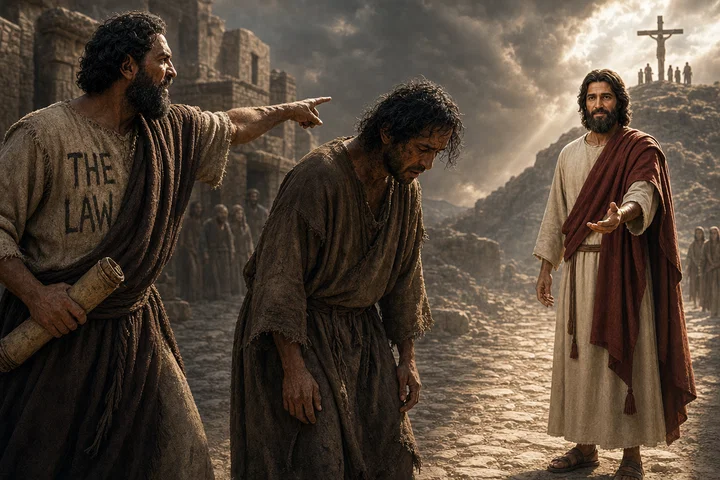
The guardian named here is a child-keeper who holds minors in custody and leads them to school, so being under him is being shut up under sin under the law's condemnation and dominion.RH Apr 24, 1900ST Mar 20, 1901ST Sep 16, 1913ST Mar 20, 1901 After faith comes means attaining faith in Christ and being justified by faith to receive the promise, for Christ is the aim and substance of the law for righteousness.RH Apr 17, 1900RH Apr 17, 1900 The law does this work by exposing sin and helplessness and shutting every mouth under guilt, that sinners may be brought to Christ to be justified by faith.RH Apr 24, 1900RH Apr 24, 1900ST Oct 3, 1906RH Apr 17, 1900 Once that faith has come believers are no longer kept as prisoners under condemnation and curse but are freed into sonship under grace, which changes their relation to the law without changing the law or freeing them to disobey it.RH Apr 24, 1900ST Mar 1, 1899RH Feb 1851RH Mar 7, 1907 The schoolmaster is the moral law of the Ten Commandments, while it is also taught as the ceremonial law fulfilled at Christ's coming and as the whole added Sinaitic system.RH Apr 24, 1900RH Apr 24, 1900RH Apr 26, 1864RH Sep 15, 1863ST May 27, 1875
Words and Context
The word rendered schoolmaster does not mean teacher in the ordinary sense but a child-guardian and guide.RH Apr 24, 1900ST Mar 20, 1901 It denotes the paidagogos, an officer whose duty was to lead children to and from school and to keep them in custody.RH Apr 24, 1900ST Mar 20, 1901 In that office he acts as tutor and guardian, even as jailer and prison guard, watching, correcting, confining under sin and conducting to Christ.RH Apr 24, 1900 Release from him is therefore like an adult no longer under the authority that governed childhood.RH Apr 24, 1900RH Jan 15, 1867
To be under the schoolmaster is to be under the law.ST Sep 16, 1913RH Apr 17, 1900 To be under the law is to be under sin, under its condemnation and dominion, shut up under sin.RH Apr 17, 1900 Under itself means subject to or in the power of the law.ST Mar 20, 1901 When the sinner exercises faith in Christ and is justified, that condition of being under the law as condemnation ends, and the believer stands under the grace of the Lawgiver while the law still instructs in righteousness and liberty.ST Mar 20, 1901
After faith is come means after attaining faith in Christ, being justified by faith, and receiving the promise by faith of Jesus Christ.RH Apr 17, 1900 Christ is the end, the object, the aim and the purpose of the law for righteousness to everyone that believes, so that having attained Christ, the very thing the law aims to bring men to, believers are no longer under the law, no longer under the dominion of sin, no longer shut up.RH Apr 17, 1900 Faith is Christ, for He is its author and finisher and the substance of all faith.RH Apr 17, 1900
Wherefore joins the verse to what came before in consequence of it, that the law is not against the promises of God but aids men in attaining the promises, and since all the promises are in Christ it aids men in attaining Christ.RH Apr 17, 1900 Scripture shutting all under sin that the promise by faith of Jesus Christ might be given to believers means the law brings men to Christ and to the promises by faith in Him.RH Apr 17, 1900 Being kept under the law, shut up unto the faith to be revealed, means the law shut men up and shut them up unto faith, thus bringing men to faith that they might be justified by faith.RH Apr 17, 1900 The supplied words to bring us are not in the original, which says schoolmaster unto Christ.
When Faith Comes
Faith did not begin at a fixed point in world history, for by faith the elders obtained a good report and without it pleasing God was as impossible for them as now.ST Mar 1, 1899RH Apr 1, 1875 Their faith was not different from gospel faith, being the substance of things hoped for and the evidence of things not seen, the faith by which the just live, grasping the provisions and promises of the gospel as shown by Abel's more excellent sacrifice and Moses' choice.RH Apr 1, 1875 Faith has therefore brought people freedom since the days of Abel.ST Mar 1, 1899
The coming of faith is the time in the development of redemption when its opening steps became matters of fact rather than purely prospective, so that faith no longer rested only on what was prospective but rested partly on what is tangible and could be asserted with greater confidence.RH Apr 1, 1875 It is a new era that began at the fullness of time, bringing a flood of light compared to the sun and the time of reformation, although those in the old dispensation had faith, some knowledge of Christ, and prophesied of Him without fully understanding His work. The transition from the old to the new began with John's preaching and ended with Christ's preaching, when His announcement that the time was fulfilled marked the coming of the promised Seed and the end of the schoolmaster's role. The supplied words to bring us are not in the original, which describes the schoolmaster as unto Christ.
Faith comes to each person individually when that person receives God's word of promise, yields to it, and exercises faith in Christ.ST Mar 1, 1899ST Mar 20, 1901ST Nov 14, 1900 Then the person is no longer under the law as gaoler and guardian holding the sinner in bondage to sin, but is released from that guardianship and from condemnation.ST Mar 1, 1899ST Mar 20, 1901ST Nov 14, 1900 The believer comes of age from slavery to sonship and from death to life, from servant to son and ruler, while God's love remains unchanged.ST Nov 14, 1900 In that freedom believers become God's children, receive the Spirit, and find the law's righteousness fulfilled in Christ and in them.ST Mar 1, 1899
Those who held otherwise taught that there was no faith of Jesus before Christ came the first time.RH Jul 12, 1864 They defined the faith of Jesus as all the precepts and teachings of Christ given in the New Testament, standing distinct from the commandments of God as the Ten Commandments brought over from the Old Testament, all of them with the Sabbath, not New Testament commandments alone.RH Jul 12, 1864
The schoolmaster holds a temporary office in relation to the promises made to Abraham and his Seed, holding all shut up under sin and bondage and emphatically reminding them of that bondage so they will seek hope and freedom in Christ.ST Dec 19, 1900 That office lasts only until faith comes, until Christ comes and establishes the inheritance, and then it no longer has that work to do.RH May 23, 1854ST Dec 19, 1900RH Apr 13, 1876 The law did not grant the promised inheritance, which was given to Abraham and to Christ by promise.RH May 23, 1854 When freedom is obtained by faith, believers put on Christ in baptism, all become sons of God, obtain Christ's freedom, and stand related to Abraham as his seed and heirs of the inheritance.ST Dec 19, 1900 This ending refers to the ceremonial law abolished in Christ, not to making void the spiritual law as the rule for human conduct.RH Apr 13, 1876
Law's Work Before Faith
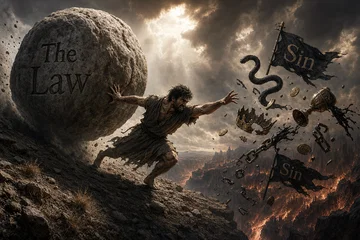
As schoolmaster the law gives knowledge of sin, saying Thou shalt not covet, reveals the righteousness required and God's perfect character, exposes sin and past failures, convicts and condemns, and holds transgressors shut up under sin as prisoners under bondage and the ministration of death.RH Apr 24, 1900ST Oct 3, 1906ST Sep 5, 1895 It watches, corrects and confines as a child-guardian and jailer in order to conduct sinners to Christ where they may be justified by faith, and to be under it is to be kept under it shut up under sin awaiting justification.RH Apr 24, 1900ST Oct 3, 1906 It serves as God's monitor revealing sin and leading the penitent to Christ, and while sinful people live in the world its work as revealer and condemner lasts while sin remains.ST Oct 3, 1906ST Sep 5, 1895ST Oct 24, 1900 Through justification the believer receives pardon and power to live in harmony with its righteousness, with Christ's righteousness covering unrighteousness so that those complete in Him stand free from condemnation and sin's dominion to live under grace guided by the Spirit in whom its righteousness is fulfilled.ST Oct 3, 1906ST Sep 5, 1895
Its instruction shows guilt and just condemnation with every mouth stopped, shows inability to obey perfectly, and shows need of a Saviour, so that recognizing themselves as lost sinners flee to Jesus Christ for refuge.RH Apr 24, 1900RH Aug 27, 1857 It makes sin appear exceedingly sinful and convinces of need for a Saviour, but it is not justifier or sanctifier, for it cannot justify the transgressor already condemned by it, cannot give life to fallen people, and could give life only through perfect obedience.RH Apr 24, 1900RH Aug 27, 1857ST Sep 11, 1884 Its inability to justify does not make it an imperfect law, and it is not opposed to God's promises but reveals sin and shows need of the promise received through faith in Christ so that the promise by faith of Jesus Christ might be given to believers.RH Apr 24, 1900RH Aug 27, 1857ST Sep 11, 1884
The law aids the promises by bringing men to Christ that they might be justified by faith and attain the righteousness God gives in Christ, since all the promises of God are in Christ.ST Feb 22, 1899RH Apr 17, 1900 Scripture shutting all under sin that the promise might be given means the law shuts men up unto faith and thus brings them to faith, and since faith is Christ as its author and finisher and substance, bringing men to faith is bringing men to Christ.RH Apr 17, 1900 This tutoring work continues until the promised Seed comes, lasts while sin remains, and brings willing sinners to Him for as long as probation lasts, serving still as schoolmaster for those not yet in Christ.ST Feb 22, 1899ST Sep 2, 1886ST Oct 24, 1900 The faithful patriarchs already had faith and yet continued to offer ceremonial sacrifices which their faith led them to offer, showing this work concerns the moral law.ST Sep 2, 1886
The verse does not mean the Decalogue was given to utterly destroy hope and hold people hopeless for fifteen hundred years with generation after generation left in despair with no deliverer until Christ came.ST Sep 24, 1902ST Sep 24, 1902 It does not mean His coming was delayed until the whole nation had become given up to dead formalism and satisfied self-righteousness that led the great mass to reject Him, for such a meaning gives a false conception of God.ST Sep 24, 1902 The law serves as tutor for each person in every age by exposing sin and directing the sinner to Christ where pardon and salvation are found.ST Sep 24, 1902
Freedom When Faith Comes
After faith in Christ has come, believers are no longer kept under the moral law as guilty and shut up under sin awaiting justification, for the guardian work that watched, corrected, confined and conducted them to Christ has ended.RH Apr 24, 1900RH Apr 24, 1900ST Oct 31, 1900 The word for schoolmaster denotes a child-guardian or guide rather than primarily a teacher, a tutor, jailer and prison guard holding transgressors imprisoned, and to be no longer under him is to be no longer under the law as gaoler holding the sinner in bondage.RH Apr 24, 1900ST Mar 1, 1899ST Oct 31, 1900 Those who have come to faith are no longer under the law as a jailer that exposes sin and holds sinners condemned, but are freed from condemnation, from the curse, from sin's dominion and bondage, and live under grace.ST Mar 1, 1899ST Oct 31, 1900 In Christ the righteousness of the law is fulfilled in believers, who become children of God through faith, receive the Spirit, and are taught in Him where justification by faith is found.RH Apr 24, 1900ST Mar 1, 1899 The moral law as guardian and disciplinarian brings sinners to Christ that they may be justified by faith, yet it does not itself justify them, since the law gives knowledge of sin but cannot justify, while God justifies sinners by grace through redemption and remission in Christ's sacrifice.ST Mar 1, 1899RH Apr 24, 1900
Faith changes the believer's relation to the law and not the law itself, for outside Christ the law holds sinners under sin, but in Christ they are freed from sin's power and keep God's law.RH Mar 7, 1907 This freedom is not permission to sin nor release from obedience, but life guided by the Spirit in which the righteousness of the law is fulfilled and liberty is liberty to live in harmony with God's law as children of God through faith.RH Mar 7, 1907 Deliverance from the law's curse or condemnation is not deliverance from the law itself, for faith does not make the law void or give a right to break its commands.RH Mar 7, 1907ST Sep 29, 1881
The law's tutoring role was to bring sinners to Christ so they might be justified by faith, and once that faith has come they are released from that guardianship and are all sons of God by faith in Christ Jesus.ST Oct 24, 1900RH Apr 13, 1876 When faith comes believers are freed from sin's bondage and become sons of God, no longer under the law as tutor or guardian.ST Oct 24, 1900ST Oct 31, 1900 Having in baptism put on Christ, those belonging to Christ are Abraham's seed and heirs according to the promise, for Christ is the promised Seed and all who belong to Him by faith share the inheritance, which is the world made new and not limited to literal descendants or to brief possession of Canaan.RH Mar 3, 1853 Scripture concluded all under sin so that the promise by faith of Jesus Christ might be given to believers, and the law still defines sin, showing lust by the command against coveting and converting the soul, while the gospel brings the remedy by slaying the carnal mind and enthroning the mind of Christ.RH Mar 3, 1853
This freedom in Christ is an accomplished fact that faith receives rather than creates, already given to all to grasp and walk in at liberty, with God's word declaring them free and keeping them free as they hold fast to it.ST Apr 5, 1899 The law of God ceases to be a hard master only when a person through faith in Jesus Christ is justified by the great atonement, is at peace with God, and has received the spirit of adoption.ST Jan 28, 1889ST Apr 5, 1899 At that point the terrors of Sinai are exchanged for the glories of the gospel.ST Jan 28, 1889
Which Law Is Schoolmaster
The schoolmaster is the moral law, the royal law of the Ten Commandments, which watches, corrects, confines under sin and conducts to Christ to be justified by faith, so that being no longer under the guardian is no longer kept under the law shut up under sin as guilty awaiting justification but being children of God through faith in Christ.RH Apr 24, 1900RH Apr 24, 1900 Release from the schoolmaster is release from the condemnation incurred by sin, not abolition of the law or release from obligation, for the moral law is necessarily perpetual because life and death turn on the obedience of its doers.RH Sep 15, 1863 It holds transgressors including Gentiles under its curse until redeemed by Christ, with its curse standing between the sinner and the blessing of Abraham which is the gospel blessing, so that no transgressor is entitled to gospel blessing except as Christ redeems through faith, while faith does not make the law void and Christ does not minister sin.RH Sep 15, 1863RH May 27, 1875 It brings sinners to Christ by converting the soul, convincing of wrong by the rule of right and giving knowledge of sin, so all must be instructed by the law before coming to Christ to any purpose, and its inability to justify does not make it faulty in itself nor on account of transgressors.RH Sep 15, 1863 When faith in Christ has come and a person is brought to Christ and justified by faith, that person is no longer under the moral law as condemning schoolmaster, while the law still serves as schoolmaster for those not yet in Christ, bringing willing sinners to Him for as long as probation lasts.ST Sep 2, 1886 The faithful patriarchs already had faith and yet continued to offer ceremonial sacrifices, which their faith led them to offer, showing the verse concerns the moral law and not the ceremonial law.ST Sep 2, 1886 The liberty of no longer being under the schoolmaster is freedom from sin, not freedom from the moral law, and faith's coming does not release Gentiles from the law, who stand in the same relation to it as Jews and are condemned by it when they violate it.RH May 27, 1875RH Jul 25, 1854
Those who held otherwise taught that the schoolmaster is the ceremonial or typical law, the law of Moses written in a book regulating sacrifices, priests, altar, temple and ordinances, added because of transgression and in force only until Christ came.ST May 27, 1875RH Apr 15, 1873 Its types and shadows pointed forward to Christ's sacrifice and priestly work to lead people to Him that they might be justified by faith rather than by works of that law, and being fulfilled by Him they were superseded and came to their end.RH Apr 26, 1864ST May 27, 1875RH Mar 14, 1854 That system foreshadowed the coming Saviour and His priestly work, while the Ten Commandments reveal sin but do not themselves lead sinners to a way of escape or to a Saviour, so believers are now in the dispensation in which Christ Himself serves as great High Priest above.RH Apr 26, 1864 The moral law does not end, for it was given by God on stone tablets whereas the typical law that ended at Christ's coming was given through Moses, and the moral precepts in Moses' law that were not typical of Christ remain binding.ST May 27, 1875RH Mar 14, 1854 The schoolmaster role of sacrifices and types leading to Christ and justification by faith ended in Christ, including circumcision and the ordinances of Moses no longer binding on disciples, without abolishing the Ten Commandments.RH Apr 15, 1873RH Aug 19, 1852RH Jun 10, 1875
Others taught that the law means the whole law system or dispensation, not the Ten Commandments alone or the ceremonial law alone, with moral and ceremonial as parts of a larger whole added as a whole.RH Oct 8, 1857 The law serving as schoolmaster belonged to the former dispensation and led to Christ through its ministration, types and shadows, and when faith in Jesus and the gospel dispensation came that role ended so believers were no longer under it, referring to the dispensation of law and not to the moral law abolished but brought nearer and written on the heart under the new covenant.RH Oct 8, 1857 The law proclaimed at Sinai was confirmed to Israel as the condition of another covenant to continue for a limited time to serve as schoolmaster to bring them to Christ, while the violated law on which the Abrahamic covenant was founded leaves all under the curse which Christ the Mediator redeems that the promise and blessing of Abraham may be inherited by faith.RH Jul 18, 1854 Since fallen man unaided by Christ cannot keep that law in letter and spirit, the Sinaitic law exposes inability and need for the Saviour, for if it could be kept it would fail to bring sinners to Christ and would lead them to trust in themselves and seek justification by personal obedience instead of by faith in Christ.RH Jul 18, 1854
A related teaching holds that being no longer under a schoolmaster ends the added covenant arrangement made 430 years after Abraham, which made perfect obedience the condition and works the ground of heirship and excluded apparent heirship of the natural seed except those walking in Abraham's faith until the Seed came.RH Jan 1851 That arrangement contrasted the covenant with Abraham based on righteousness of faith securing inheritance of the earth with what was added because of transgressions, whose principles existed from creation and which is not against God's promise, for the law embodying God's requirements and man's duty cannot be contrary to His promise, yet making works the ground of heirship would make justification by faith void and leave fallen guilty man condemned without hope, so Scripture concluded all under sin that the promise by faith of Jesus Christ might be given to believers.RH Jan 1851 Beside the royal law another law of commandments contained in ordinances in sacrifices pointed forward to Christ's offering, and God so ordered the added covenant until the coming of the Seed who is Jesus Christ, made under the law, who kept the covenant requiring perfect obedience, died for transgressions and bequeathed His inheritance.RH Jan 1851 After faith and the Seed have come, the end is of that added covenant arrangement lasting till Christ, not abolition or expiration by limitation of the law of God itself, which is perfect, spiritual, holy, just, good, unchangeable and immutable, still convicts of sin and is established by faith.RH Jan 1851
The term law must be understood from context and parallel passages, since it could refer to the law as a whole or to a part of it, and schoolmaster translates paidagogos, a leader of children whose duty was to guide them to and from school.ST Mar 20, 1901 The law serving as schoolmaster to bring people to Christ with its role ending when faith came is distinguished from the law in which Paul delighted and which is spiritual, holy, just and good, being applied to the law of carnal commandments and ordinances.ST Sep 21, 1876 The law added as an appendage because of transgression and in force until Christ came could not make people perfect or provide salvation, and principles underlying the law may remain even when its application or particular enactments are abolished.RH Mar 4, 1873
Sabbathkeepers do not cling to the abolished typical system, for the schoolmaster is the Jewish system of worship with its ordinances of divine service, regulations of the priesthood and typical services of the former dispensation, not the Ten Commandments, and after faith is come believers are no longer under those typical ordinances.RH Jun 14, 1864 Clinging to the old dead schoolmaster instead of the living Jesus means clinging to that abolished typical system, which they do not do.RH Jun 14, 1864 The change from typical to antitypical worship does not by itself establish that the Sabbath or other moral duties governed also by the Decalogue have changed, for if old regulations ended and a new law replaced them the new regulations concerning duties would have to differ.RH Jun 28, 1864 To apply the verse to the Ten Commandments to call them the old dead schoolmaster abolished at the cross with the yoke of bondage, the letter that kills, a curse and the old law of works, and then to set up the same law exactly identical except transferring Sabbath obligation to another day as the law of faith, the law of liberty and the Spirit that gives life, more glorious, shows inconsistency, condemning as bondage and death what is then praised as liberty and life.RH Jul 12, 1864
Promise Justification and Heirship
Sinners are justified by faith in Christ, not by doing the works of any law, for when faith in Jesus Christ comes believers are no longer under the law as a schoolmaster because salvation is through faith and not human works.ST Jul 25, 1911ST Nov 21, 1911 The law cannot give life or justify fallen people already condemned by it, but when it has been transgressed it condemns the sinner, and Scripture therefore concluded all under sin so that the promise through faith in Jesus Christ might be given to believers whose heirs share Abraham's faith.ST Jul 25, 1911RH Apr 24, 1900 To think justification comes by works of the law is ceremonialism, for the ceremonial law of circumcision and sacrifices was given for a good purpose but never to give righteousness by its observance, and to use it to earn righteousness loses its true import and becomes a dry round of outward forms, dead works and a Christless life that chooses another way of salvation than Christ, falls from grace and falls under the curse.RH Jun 26, 1900 The same is true of the law of love to God and man and of the law of the Spirit of life in Christ Jesus, since to attempt by own effort to live out love or by copying the acts of Christ to make oneself like Christ in order to earn righteousness is also ceremonialism, dead works and Christlessness, because Christ is the Way and there is no other name under heaven by which men must be saved.RH Jun 26, 1900
The covenant promise made to Abraham and his Seed, which is Christ, was confirmed in Christ before the law and was not disannulled by the law given 430 years afterward, so the inheritance is by promise and not by law.RH Jan 19, 1864 The law embodying God's requirements cannot be against His promise, and the promised covenant mercies in Christ were not fulfilled and enjoyed under the dispensation of the law when Israel entered and possessed Canaan for a little while, for that was not the rest that remains for the people of God.RH Jan 19, 1864 The promise remains in reversion to be fulfilled in the future world of glory to all the heirs of promise.RH Jan 19, 1864
The promise is not limited to Abraham's literal descendants or to possession of Canaan, for Christ is the promised Seed and all who belong to Christ by faith share the inheritance, which is the world made new.RH Mar 3, 1853 The promise of the world's restored dominion was given to Abraham and his Seed, Christ, and those who belong to Christ are Abraham's heirs, the restored kingdom being the first dominion lost through Adam's disobedience, regained through Christ's life and sacrifice, and given to God's people as an everlasting inheritance.RH Feb 4, 1915 Jew and Gentile made all one in Christ with no Jew nor Greek, bond nor free, male nor female, who being Christ's are Abraham's seed and heirs according to the promise, constitute the true Israel of God and the whole redeemed church in resurrection beauty and blessedness when God sends Jesus Christ in the times of restitution.RH Jan 19, 1864 There is therefore no restoration of the nation of the Jews with peculiar national political or ecclesiastical blessings above other nations in this world or in an age to come, but the final triumph and glory of the whole redeemed church of God.RH Jan 19, 1864
Believers in every age are made children of Abraham through faith in Christ, and the faithful who lived under the former dispensations died trusting in Christ and rest in hope of the resurrection, their sins redeemed through Christ's death and mediation under the new covenant.ST Jul 2, 1885 After the law served as guardian until faith came, believers are no longer under that guardian but are children of God through faith in Christ and heirs of the promise.RH Mar 3, 1853 This freedom in Christ must not be traded for another means of justification, which would repudiate Christ and turn back toward idolatry, and the letter addresses Christians in Galatia including converts from Judaism and heathenism.ST Sep 15, 1909 Its argument concerns Judaizing teachers who urged Gentile believers to observe the Jewish ritual, with the point that Gentiles who had never observed that ritual could not be returning to it.RH Aug 27, 1857
Law Still Binding
After faith has come believers are no longer under the schoolmaster in the sense of being under condemnation, not in the sense of being freed from obligation to obey God's law.RH Feb 1851RH Sep 15, 1863ST Mar 27, 1901ST Apr 24, 1901 The law as schoolmaster shows guilt and just condemnation, gives knowledge of sin, and shuts sinners up as lost without a Saviour, bringing them to Christ to be justified by faith.RH Feb 1851RH Sep 15, 1863ST Apr 24, 1901RH May 6, 1858 Christ does not save by abolishing or relaxing the holy, just, good law, but by giving His life a ransom and bearing sins so that pardon can be given without dishonoring the law.RH Feb 1851RH Sep 15, 1863 Those under the law are condemned and guilty before God with every mouth stopped, while those under grace are pardoned through faith in Jesus, yet the pardoned are not at liberty to violate any precept, for faith does not make the law void but establishes it and makes its keeper a doer of it so as not to fall again under condemnation.RH Feb 1851RH Sep 15, 1863ST Mar 27, 1901ST Apr 24, 1901 The schoolmaster is the moral law, necessarily perpetual because life and death turn on obedience, holding even Gentiles under its curse until redeemed, with its curse standing between the sinner and the blessing of Abraham which is the gospel blessing, so that no transgressor is entitled to that blessing except as Christ redeems through faith, and Christ does not minister sin.RH Sep 15, 1863RH May 6, 1858
After justification the law still has its proper work of turning people from sin to God and instructing in righteousness and liberty.ST Mar 27, 1901ST Mar 20, 1901ST Mar 20, 1901 It continues to keep believers close to Christ, expose the danger of unbelief, and prepare them for a fuller experience of God's life, with law and Christ directing to one another.ST Sep 2, 1886ST Mar 20, 1901 For a soul in Christ the law is no longer the arbiter of doom but remains God's appointed teacher of His will in which that soul delights, witnessing to righteousness and teaching principles the justified receive with Christ's righteousness fulfilled in a life freed from sin's dominion.ST Mar 20, 1901ST Mar 20, 1901RH Dec 10, 1872 The law and the justified person are in agreement through Christ's blood with the law's approval, yet when a person neglects spiritual duty the law reproves and condemns the violation of love to God or love to others, and that agreement continues while loyalty to Christ continues.
The verse does not abolish the Ten Commandments, nor only the fourth.RH Aug 20, 1872STRH Jul 8, 1852 The law brought Paul and the Galatians to Christ where they found pardon through His blood and were brought under grace while the commandments still stand.RH Jul 8, 1852 The Levitical law was abolished by Christ in contrast with the law of God which remains holy, just and good, for ceremonies and object-lessons ended when their symbols met fulfillment in Christ while the Decalogue remained eternal.RH Aug 20, 1872ST Legal ceremonies added to the Sabbath by the schoolmaster and tradition can cease without ending the seventh-day Sabbath's original authority and importance, since it began at creation before and independently of the law and can be kept without subjection to ordinances.RH May 6, 1852
The claim that Christians are not under the law but under grace and therefore need not keep the Sabbath, and the claim that the Sabbath as a positive institution was abolished with other such institutions leaving only moral principles, are rejected.ST Oct 21, 1897RH May 6, 1873 So also is the teaching that the old schoolmaster law is dead and buried to be followed no more under Jesus, with following it instead of Christ described as seeking justification by law and falling from grace, a charge having no application to those who do not seek justification through law in any sense.RH Apr 26, 1864 The use of the verse to call remaining shut up without coming to faith right, or to identify the schoolmaster with visions of women and with taking away sins on the head of a live goat instead of beholding the Lamb of God, is error leading into blindness.RH Jul 12, 1864 To apply the verse to the Ten Commandments as an old dead schoolmaster abolished at the cross with the yoke of bondage, the letter that kills and a curse, and then to set up the same law exactly identical except transferring Sabbath obligation to another day as the law of faith, liberty and life, shows inconsistency in condemning as bondage and death what is then praised as liberty and life.RH Mar 4, 1862RH Jul 12, 1864 The attempt to make civil law force Sunday observance as schoolmaster truth is likewise rejected.ST Oct 21, 1897RH May 6, 1873RH Apr 26, 1864RH Jul 12, 1864RH Jul 12, 1864 If release from the schoolmaster meant no obligation, those under grace could swear, steal and kill with impunity, and if Christ abolished the moral law as imperfect its giver Jehovah would be imperfect, while any alleged replacement law must state its number, requirements, enactment and replacement.RH Feb 1851RH Sep 15, 1863ST Mar 27, 1901ST Apr 24, 1901
The dispute over abolition is answered by distinguishing two laws.RH Mar 14, 1854RH Feb 20, 1872ST Jan 3, 1878ST Mar 20, 1879RH Jun 17, 1862 The typical law that served as schoolmaster by pointing to Christ and to justification by faith rather than by works of that law, regulating sacrifices, priests, altar, temple and ordinances as types and shadows concerning Jesus, was fulfilled by Him and then superseded and ceased to have significance after the cross.RH Mar 14, 1854ST Jan 3, 1878ST Mar 20, 1879STRH Jun 17, 1862 The moral precepts in Moses' law that were not typical of Christ, namely the Ten Commandments, remain binding and in force and are kept with the faith of Jesus.RH Mar 14, 1854ST Mar 20, 1879RH Jun 17, 1862 The verse was read in public dispute over whether freedom from the schoolmaster means abolition of God's law, and is therefore involved in that dispute but does not prove abolition of God's law.RH Feb 20, 1872ST
Life Under Grace
The law works as a mirror holding sins before the sinner until terror of its penalty compels seeking Christ to be justified by faith.ST Oct 7, 1880 Upon seeking pardon through faith in Jesus and hearing the pardoning voice, the Holy Spirit enters the heart and makes a new creature with old desires passed away and the desire to sin gone, renewed from crown of head to sole of feet.ST Oct 7, 1880 God then seems like a loving Father whose glory is the one desire, and light-hearted and freed from the burden of sin and the penalty of violated law the person is no longer under the schoolmaster but stands as a free child of God through faith in Christ.ST Oct 7, 1880 That freedom leads to hastening to obey the ordinance by which Christ is outwardly put on.ST Oct 7, 1880
Those brought to Christ to be justified are brought into harmony with the law by having the law written within the heart.ST Feb 20, 1912ST Oct 24, 1900ST Sep 24, 1902 When the law is within, condemnation ends and the relation to the law becomes inward love and delight, loving the law and meditating on it all the day.ST Oct 24, 1900ST Sep 24, 1902 The law's claims do not change, but those who seek its precepts and walk in them are no longer held by it as condemned prisoners; they walk at liberty because the law is in them.ST Oct 24, 1900STST Sep 29, 1898 By faith they become God's children with the Spirit bearing witness, and as they walk by the Spirit rather than the flesh the righteousness of the law is fulfilled in them.ST Oct 24, 1900ST Sep 4, 1901 This is deliverance from sin's service and release from the law's condemnation, not release from serving God, showing love to God by keeping His commandments which are not grievous and becoming free, willing and loving subjects bearing the fruits of the Spirit.ST Sep 24, 1902STST Sep 29, 1898
People divide into the righteous to whom faith has come and the wicked to whom faith has not come.ST Sep 16, 1913 To remain without faith and under the schoolmaster is to remain under the law, for the schoolmaster is the law and no longer being under a schoolmaster means no longer being under the law.ST Sep 16, 1913 Those who are in Christ and walk by the Spirit are not under condemnation, because faith in Christ is in harmony with God's law and enables obedience.ST Sep 4, 1901 The law therefore still shows sin and leads to Christ and is not abolished nor without continuing purpose, and this applies in every age, since the faithful before Christ's advent were brought to Christ through faith just as believers are today.ST Sep 4, 1901
The tutoring role of the law is to lead people to Christ so they may be justified by faith and become sons of God, and those who accept Christ by faith are no longer under that guardian role.ST Feb 22, 1899ST Nov 7, 1900ST Oct 24, 1900RH Mar 8, 1864 Through accepting God's pardoning grace the person is no longer under the law's condemnation, which does not permit sin, for grace aims to bring obedience by writing the law in the heart so the law is cherished and life is in harmony with it.ST Feb 20, 1912 The surrounding teaching connects this faith with receiving the Spirit and righteousness, with Abraham as the example of salvation by faith for all people, and with all children of God by faith in Christ Jesus having in baptism put on Christ and as belonging to Christ being Abraham's seed and heirs according to the promise.ST Feb 22, 1899 Even after that release the law still defines sin, showing lust by Thou shalt not covet, and is perfect for converting the soul, while the gospel brings the remedy in Christ by slaying the carnal mind and enthroning the mind of Christ in its place.
Sources