Colossians 2:14
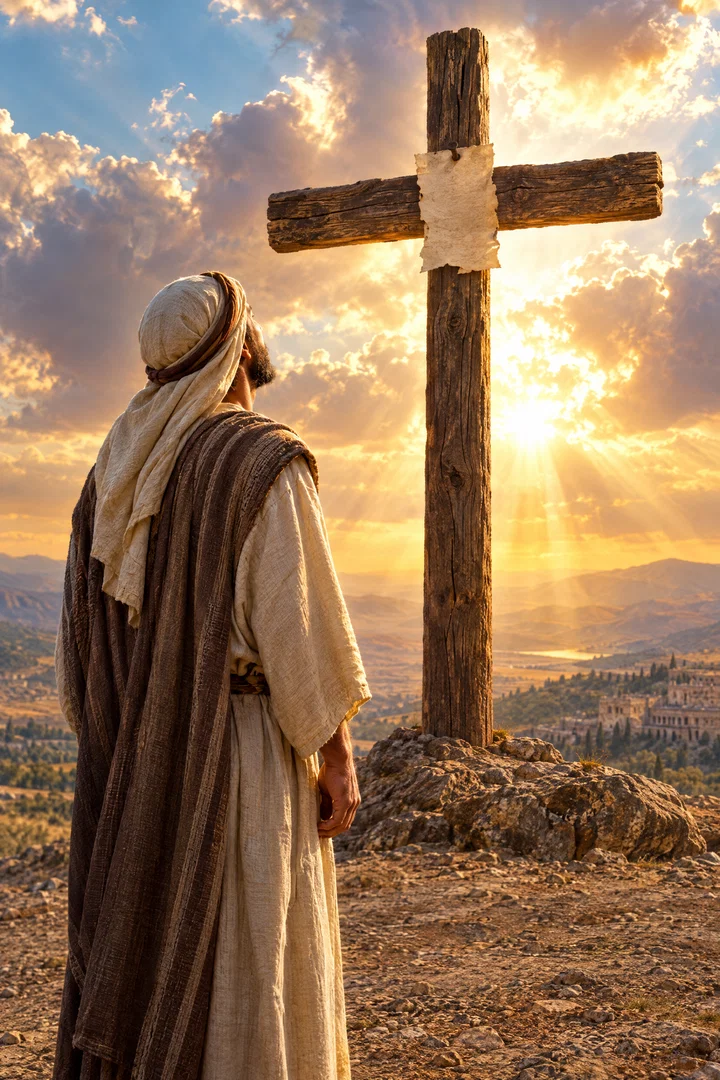
Blotting out the handwriting of ordinances that was against us, which was contrary to us, and took it out of the way, nailing it to his cross;
Translations
American King James Version, King James Version
Blotting out the handwriting of ordinances that was against us, which was contrary to us, and took it out of the way, nailing it to his cross;
blotting out the handwriting of ordinances that was against us, which was contrary to us, and took it out of the way, nailing it to his cross;
Blotting out the hand-writing of ordinances that was against us, which was contrary to us, and took it out of the way, nailing it to his cross;
Revised Version, American Standard Version
having blotted out the bond written in ordinances that was against us, which was contrary to us: and he hath taken it out of the way, nailing it to the cross;
having blotted out the handwriting in the ordinances that is against us, that was contrary to us, and he hath taken it out of the way, having nailed it to the cross;
having effaced the handwriting in ordinances which [stood out] against us, which was contrary to us, he has taken it also out of the way, having nailed it to the cross;
Having blotted out the handwriting against us by the decrees, which was hostile to us,—and hath taken away, the same, out of the midst, nailing it up to the cross:
Berean Standard Bible, Majority Standard Bible
having canceled the debt ascribed to us in the decrees that stood against us. He took it away, nailing it to the cross!
wiping out the handwriting in ordinances which was against us. He has taken it out of the way, nailing it to the cross.
Having put an end to the handwriting of the law which was against us, taking it out of the way by nailing it to his cross;
And putting out the hand writing of ordinances that was against vs, which was contrarie to vs, hee euen tooke it out of the way, and fastened it vpon the crosse,
Douay-Rheims (Challoner revision)
Blotting out the handwriting of the decree that was against us, which was contrary to us. And he hath taken the same out of the way, fastening it to the cross:
Pictures
Cross-references 20 of 133
- Ephesians 2:15
Having abolished in his flesh the enmity, even the law of commandments contained in ordinances; for to make in himself of twain one new man, so making peace;
Christ abolishes the law of commandments contained in ordinances.
- Matthew 5:17-18
Think not that I am come to destroy the law, or the prophets: I am not come to destroy, but to fulfil.
Christ says he fulfills the law rather than abolishing it, while ordinances are nailed to the cross.
- Hebrews 10:1-4
For the law having a shadow of good things to come, and not the very image of the things, can never with those sacrifices which they offered year by year continually make the comers thereunto perfect.
The law’s repeated sacrifices were shadows and could not take away sins.
- Hebrews 9:10
Which stood only in meats and drinks, and divers washings, and carnal ordinances, imposed on them until the time of reformation.
Carnal ordinances governed the old system only until the time of reformation.
- Leviticus 23
And the LORD spake unto Moses, saying,
Lists the yearly Sabbaths described as shadows fulfilled in Christ.
- Romans 3:31
Do we then make void the law through faith? God forbid: yea, we establish the law.
Faith establishes the law rather than making it void.
- 2 Corinthians 3:7-11
But if the ministration of death, written and engraven in stones, was glorious, so that the children of Israel could not stedfastly behold the face of Moses for the glory of his countenance; which glory was to be done away:
Contrasts the passing ministry of condemnation engraved on stone with the greater glory of the new ministry.
- Romans 7:12
Wherefore the law is holy, and the commandment holy, and just, and good.
The law is holy, just, and good, though it exposes sin.
- Acts 15:10
Now therefore why tempt ye God, to put a yoke upon the neck of the disciples, which neither our fathers nor we were able to bear?
same code as unbearable yoke
- Galatians 3:19
Wherefore then serveth the law? It was added because of transgressions, till the seed should come to whom the promise was made; and it was ordained by angels in the hand of a mediator.
The law was added because of transgressions and lasted until the promised Seed came.
- Exodus 20:1-17
And God spake all these words, saying,
The Ten Commandments proclaimed at Sinai are contrasted with the law nailed to the cross.
- Galatians 5:4
Christ is become of no effect unto you, whosoever of you are justified by the law; ye are fallen from grace.
Connects keeping ordinances with falling from grace.
- Hebrews 7:18-19
For there is verily a disannulling of the commandment going before for the weakness and unprofitableness thereof.
The former commandment is disannulled for its weakness and unprofitableness.
- Exodus 31:18
And he gave unto Moses, when he had made an end of communing with him upon mount Sinai, two tables of testimony, tables of stone, written with the finger of God.
God wrote the covenant commandments on stone, contrasting with ordinances blotted out at the cross.
- Acts 15:5
But there rose up certain of the sect of the Pharisees which believed, saying, That it was needful to circumcise them, and to command them to keep the law of Moses.
Names the law of Moses urged on Gentile believers as a requirement.
- Galatians 5:1
Stand fast therefore in the liberty wherewith Christ hath made us free, and be not entangled again with the yoke of bondage.
The abolished ordinances are associated with a yoke of bondage.
- Acts 15:24
Forasmuch as we have heard, that certain which went out from us have troubled you with words, subverting your souls, saying, Ye must be circumcised, and keep the law: to whom we gave no such commandment:
The apostles reject imposing circumcision and observance of the Mosaic law on believers.
- Hebrews 8:10
For this is the covenant that I will make with the house of Israel after those days, saith the Lord; I will put my laws into their mind, and write them in their hearts: and I will be to them a God, and they shall be to me a people:
The new covenant puts God’s law in the hearts and minds of his people.
- Romans 3:20
Therefore by the deeds of the law there shall no flesh be justified in his sight: for by the law is the knowledge of sin.
The law gives knowledge of sin and shows that no one is justified by its deeds.
- Romans 7:4
Wherefore, my brethren, ye also are become dead to the law by the body of Christ; that ye should be married to another, even to him who is raised from the dead, that we should bring forth fruit unto God.
Believers die through Christ and enter a new relationship to the law.
Commentary part 1 of 2
Each commentary is drawn from primary sources: the writings of Ellen G. White and Adventist pioneers and periodicals. Each commentary is separate. Its own words are not a quotation; follow the references to read the source passages.
Ellen G. White
24 sources
The verse speaks of canceling the ceremonial system of rules with its sacrifices, offerings and temple services that stood against people.PP 365.1–3SG1 109.2Ms 43, 1887, par. 1 Those rites were symbols pointing to Christ as the sacrificial Lamb and priest, and they remained in force only until they met their fulfillment in His death.PP 365.1–3Lt 51, 1901, par. 8–9Ms 43, 1887, par. 1 At the cross they were taken away and lost their force, so the old Jewish ceremonies ended and must no longer control Christianity.PP 365.1–3SG1 109.2ST May 1, 18843SP 370.1–2 It does not speak of wiping out the moral law of the Ten Commandments written in stone, which was never against humanity and remains binding and perpetual.PP 365.1–3Lt 51, 1901, par. 8–9SG1 109.2 In particular the Sabbath was not nailed to the cross but remains unchanged as the seventh day, and the cross itself proves that God's law is unchangeable because Christ died to meet the demands of the broken law in order to save the sinner.CET 91.4–93.1ExVEGW 15.3–17.1DA 630.2–3Ms 163, 1897, par. 11–13ST Mar 12, 1896
What Was Nailed
The handwriting of ordinances that was against us and contrary to us is the ceremonial, ritual law of ordinances, with its sacrifices and offerings and temple services and customs regulating Jewish sacrifices and offerings.PP 365.1–3SG1 109.2Ms 43, 1887, par. 1Ms 43, 1887, par. 3RH Apr 22, 1902 That law was made up of symbols and types pointing to Christ, to His sacrifice as the Lamb of God that takes away sin and the Lamb without blemish, and to His priesthood, with Him as its foundation.PP 365.1–3Lt 51, 1901, par. 8–9Ms 43, 1887, par. 1 Every ceremony and sacrifice in that system prefigured His death.Lt 51, 1901, par. 8–9
It was in force only until type met antitype and shadow reached substance in Christ's death.PP 365.1–3Lt 51, 1901, par. 8–9Ms 43, 1887, par. 13SP 370.1–2Ms 43, 1887, par. 3 With that greater and wholly perfect sacrifice all sacrificial offerings were to cease, being blotted out, taken out of the way, nailed to the cross, abolished, made null and void and losing their force.PP 365.1–3Lt 51, 1901, par. 8–9Ms 43, 1887, par. 1Ms 43, 1887, par. 3ST Jun 26, 1879 This fulfills the law and does not destroy it.Ms 43, 1887, par. 1
At the cross the divinely appointed ceremonies and sacrifices of the Jewish religion were rendered valueless, the old customs and ceremonies passed away, and the Jewish laws and ceremonies ended so they must no longer mould Christianity or control how the gospel is preached.SG1 109.2ST May 1, 18843SP 370.1–2RH Apr 22, 1902 Christ's death canceled the ordinances that stood against humanity, tore the veil, removed the partition between God and people, opened the way into God's presence through His blood, and abolished the enmity so both Jew and Gentile may come to God through faith and share in the living bread.Lt 230, 1907, par. 17–20 The yoke that Gentile converts were not to be made to bear was this ceremonial law, not the Ten Commandments.ST Jun 26, 1879 Though the Jews were slow to discern its end and insisted Christianity stay connected with Jewish laws, ceremonies, restrictions and national peculiarities, providence was opening the way beyond them.3SP 370.1–2
What Was Not Nailed
The handwriting blotted out is not the moral law of the Ten Commandments engraved in stone with the finger of God, for that law could never be blotted out and was never against men but remains binding and perpetual, and Christ's mission was to uphold it.PP 365.1–3Lt 51, 1901, par. 8–9SG1 109.2RH Apr 22, 1902 The ritual law of sacrifices and ordinances was made up of symbols pointing to Christ, His sacrifice as the Lamb of God that takes away sin, and His priesthood, to be performed until type met antitype in His death when all sacrificial offerings were to cease.PP 365.1–3Lt 51, 1901, par. 8–9 The ceremonial law regulating Jewish sacrifices and offerings ended at Christ's death when what stood against us was removed, but this is no declaration that God's moral law was abolished.SG1 109.2RH Apr 22, 1902
In particular the Sabbath commandment was not nailed to the cross, for if it had been abolished there the other nine commandments would have been abolished as well and could also be broken, so the verse does not authorize breaking any of the Ten Commandments.CET 91.4–93.1ExVEGW 15.3–17.1LSEGW 100.4–101.1RH Jul 21, 1851EW 26.1–2 The Sabbath remains unchanged as the seventh day, with the unchanged fourth commandment forever holding its claim upon men as a perpetual covenant to be obeyed.Lt 51, 1901, par. 8–9ExVEGW 15.3–17.1LSEGW 100.4–101.1 It stands written on the stone tablets in the heavenly sanctuary and ark as given to Moses, and was not changed by God from the seventh day to the first.CET 91.4–93.1ExVEGW 15.3–17.1LSEGW 100.4–101.1RH Jul 21, 1851EW 26.1–2 This contrasts with the pope's change of the Sabbath from the seventh day to the first and with replacing it by a humanly instituted day, which leaves the law violated rather than canceled.LSEGW 100.4–101.1RH Jul 21, 1851ST Jan 9, 1896
Christ made the Sabbath and left it in force at His death, and it remained sacred after His death.DA 630.2–3ST Feb 20, 1901Ms 78, 1897, par. 47–48 The disciples were still to keep it sacred forty years after the crucifixion, praying that their flight from Jerusalem would not fall on the Sabbath.DA 630.2–3ST Feb 20, 1901 The fourth commandment was not made null and void by the cross but holds its claim on the human family as long as the heavens and the earth remain, and the cross confirms the unchanging authority of every precept including the seventh-day Sabbath.ST Feb 20, 1901Ms 78, 1897, par. 47–48
To use the verse to prove the moral law abolished or crucified with Christ and no longer valid blends two broad and clearly distinct systems and perverts Scripture.PP 365.1–3Ms 163, 1897, par. 11–13ST Jan 9, 1896 That claim is a fatal error and a lie of Satan to destroy the force of the Ten Commandments and make the whole law of no effect.Ms 163, 1897, par. 11–13ST Mar 12, 1896 Satan, who began rebellion in heaven against God's law and continues that warfare, seeks to subvert and void God's law by blinding minds to put the moral law in the place of the ceremonial law, making the moral law engraven on stone appear to be the law abolished at the cross.Ms 43, 1887, par. 3ST Mar 12, 1896 The cross proves the opposite, that God's law is unchangeable and immutable as the foundation of His government in heaven and on earth.Ms 163, 1897, par. 11–13ST Mar 12, 1896 Christ died not to abolish it but to provide a way to save the sinner by meeting the demands of the broken law, God's justice remains active, and the curse pronounced on transgressors will rebound on those who teach or practice lawlessness.Ms 163, 1897, par. 11–13ST Mar 12, 1896
Encouragement and Christian Living
Colossians 2:14 belongs to a treasure house of encouragement to the believer, holding one of the rich, full, abundant and assuring promises of God to be received.17MR 39.3–40.2 It shows what Christ is to believers, calling them not to turn from Christ to humanity for help but to appreciate Jesus so that the salvation of God is seen.17MR 39.3–40.2 It also calls them to know what they may be to Him as His helping hand.17MR 39.3–40.2 The wider passage of Colossians 2:12-17 holds up the true moral standard of the gospel and must not be perverted.Lt 48a, 1900, par. 16 It calls for knowing what kind of crop is sown, whether tares or wheat, because what is sown is reaped.Lt 48a, 1900, par. 16 Only in the deepest sense of ruin is sincere love for Christ learned and proper gratitude cherished to Him who gave His life.Lt 48a, 1900, par. 16
There is decided danger to any soul in pursuing a wrong course and harming the flock of God by precept or example.Lt 48a, 1900, par. 16 Living most closely to the example given in the life of Christ means walking in greatest humility and humbleness of mind.Lt 48a, 1900, par. 16 Christ's death brought the Jewish ceremonial observances spoken of in Colossians 2:14-17 to their end, for when type met antitype at the cross those ceremonies lost their force and no longer applied to God's people.3MR 55.1–56.1 Restoring them as religious requirements replaces inward cleansing and heart religion with outward performances and confuses the mind.3MR 55.1–56.1
Sources
Pioneers and periodicals
260 sources
The handwriting blotted out and nailed to the cross is the Mosaic book-law of ceremonial and civil ordinances kept beside the ark, not the Ten Commandments spoken by God and written by His finger on stone inside the ark.ST Sep 21, 1876RH May 5, 1851ST Dec 13, 1905ST Feb 4, 1886ST Jul 29, 1875 It was wiped away on the day of Christ's crucifixion, when type met antitype and the shadowy sacrifices, priesthood, and earthly sanctuary service ended because their substance had come.RH May 5, 1851RH Oct 1, 1901RH Aug 28, 1853RH Oct 11, 1915 What was taken out of the way was the burdensome yoke imposed until the reformation, including animal offerings, circumcision, washings, distinctions of foods and drinks, yearly feasts, new moons, and annual sabbaths that pointed forward to Christ.RH May 5, 1851ST Jul 29, 1875ST Jun 12, 1879ST Sep 24, 1894 Those sabbaths are distinct from the weekly seventh-day Sabbath, which was made at creation before sin as a memorial of God's finished work, not a shadow of redemption to come.ST Sep 21, 1876ST Aug 10, 1882ST Sep 24, 1894ST Jul 7, 1909RH Feb 21, 1854 The moral law of ten commandments was not abolished but remains holy, just, good and binding, establishing righteousness, exposing sin, and kept by faith through Christ who magnified it by His life and death.RH Nov 7, 1854RH May 6, 1852RH Feb 1851RH Jul 21, 1868RH Jun 10, 1852
Meaning of Handwriting
The handwriting of ordinances is the writing of Moses in a book on parchment kept in or beside the ark, given through Moses as mediator after angelic instruction and commanded to him at Sinai at Horeb to present to the people, while the Ten Commandments were spoken by God directly in the hearing of the people and written by God's finger on tables of stone graven on both sides, first on the first tables and again on the second tables after Moses hewed them, and placed inside the ark.RH May 5, 1851ST Feb 4, 1886ST Jul 29, 1875RH Apr 29, 1873 The handwritten ordinances belonged to a temporary, faulty covenant imposed until Christ's first advent, not to the perpetual covenant of the Ten Commandments, and the contrast is between ordinances recorded by Moses and moral precepts written by God on stone.RH May 5, 1851ST Feb 4, 1886 The code blotted out was a shadow extending only to the death of Christ, while the moral law was not a shadow but the very code whose violation made a Saviour's death necessary. The weekly Sabbath was made for humanity's need and was not against humanity, and commands against murder and theft burden only violators so are not ordinances abolished at the cross.RH May 5, 1851ST Feb 4, 1886
Blotting out properly describes wiping ink writing from handwritten books on parchment as the ceremonial law was written, and nailing properly describes fastening parchment or paper laws to wood in a public place to show an expired law had ceased, which fits the book of Moses and is out of place for engraving in stone, since engraving in stone cannot be blotted out and tables of stone by nature could not be nailed up to wood.ST Jul 29, 1875RH Apr 29, 1873RH Mar 25, 1873 Of ordinances identifies the law of ceremonial ordinances of meats, drinks, washings, carnal ordinances and festivals, and the items listed of meat, drink, holy day meaning a feast or yearly festival day, new moon, and sabbath days which are a shadow of things to come are all found in the ceremonial law and not one of them is in the Decalogue.ST Jul 29, 1875RH Apr 29, 1873 Handwriting means the writing of Moses, while the Decalogue was finger-writing of God.ST Jul 29, 1875RH Apr 29, 1873RH Mar 25, 1873
Ordinance means decree or statute, and divine law is distinguished into divine natural law comprehending moral duties founded in the nature of things toward God, self and fellow creatures, comprehended in the Decalogue as its foundation and most excellent compendium and most essential part, and divine positive law comprehending ceremonies and civil polity regulating outward observance, binding when commanded and applying to Jews only until Christ's death.RH Mar 4, 1873RH Jul 30, 1861RH Aug 9, 1864RH Dec 25, 1856ST Oct 23, 1884 The handwriting belongs to the secondary, second-class, special, local, ceremonial and civil regulations resting only on Israel's national circumstances and connection with the earthly sanctuary, specifically the sanctuary services with feasts, new moons, ceremonial sabbaths and related ordinances, which ceased to be obligatory when those circumstances ceased, unlike the first-class moral commandments inseparably related to primary law.RH Jul 30, 1861ST Jun 12, 1879RH Dec 25, 1856ST Oct 23, 1884 The moral law remains in force because it defines sin and governs moral relations with God whether of Israel or other nations, was in force before those special laws were given, and was not essentially affected by this abrogation.RH Jul 30, 1861ST Jun 12, 1879ST Oct 23, 1884 Those who held the opposing reading taught that the commandments were the only divine handwriting and that canceling it removed the whole law leaving only moral principles, and because the Sabbath was said to have no moral basis and to be purely positive it was therefore wholly abolished.RH Mar 4, 1873
Against us and contrary to us means the ceremonial system was a burdensome yoke of innumerable rites, an imperfect yoke of bondage that neither ancestors nor people could bear and that could not make comers perfect, imposed to keep Israel separate as a distinct people until Christ came.ST Jul 29, 1875ST Jun 12, 1879RH Jul 30, 1857RH Apr 29, 1873RH Mar 25, 1873 Continuing to require circumcision, animal sacrifices with the innocent lamb bleeding in man's stead, and yearly journeys to Jerusalem would conflict with salvation through Christ's blood and hinder the gospel and the believer's liberty and peace, whereas none of the Ten Commandments is against human good but all are good and for best interest.ST Jul 29, 1875RH Jul 30, 1857RH Apr 29, 1873 The Sabbath was made for man and so cannot be against him but was always for him and promotive of his highest good, and Christ showed in his death that the binding power of the burdensome law was dead.ST Jul 29, 1875RH Jul 30, 1857RH Apr 29, 1873 The weekly Sabbath originated in Eden before man fell and before a Saviour was needed or promised, and is commemorative carrying the mind back to creation and the rest of Jehovah rather than forward to the crucifixion, so it cannot be a shadow or type of Christ.RH Mar 25, 1873
The word days in sabbath days is supplied and the original says sabbaths in plural form, which can stand for the singular for emphasis as in the Septuagint.ST Jul 7, 1909RH Feb 21, 1854 Those shadow sabbaths pointed forward to Christ and to redemption to come, including feast days, monthly festivals, yearly and annual feast sabbaths and septennial sabbaths associated with food and drink, unlike the seventh-day Sabbath which commemorates creation and remains a memorial of the past and constant present evidence of power to create and recreate.ST Jul 7, 1909RH Feb 21, 1854RH May 5, 1851 Leviticus 23 distinguishes the two kinds by listing four convocation sabbaths on the first, tenth, fifteenth and twenty-second days of the seventh month to be kept besides the Sabbaths of the Lord, with some nine days apart and some only four days apart while the Sabbaths of the Lord come every seventh day.RH May 5, 1851 The weekly Sabbath was instituted at creation before the fall for the entire human race to commemorate rest after six days and remains binding with the nine other moral precepts, while the convocation sabbath-days placed in the midst of meat-offerings, sacrifices and drink-offerings were given at Sinai twenty-five hundred years later, of the same nature and origin as the offerings and ending with them as foretold in Hosea 2:11.RH Feb 21, 1854RH May 5, 1851
Time and Manner of Removal
The blotting out took place on the very day of Christ's crucifixion, not spread over a period of years and not at Pentecost.RH May 5, 1851RH Oct 1, 1901 That crucifixion came in the spring of A.D. 31 in the midst of the seventieth week, after Christ began his ministry in the fall of A.D. 27 at the end of sixty-nine weeks and preached three and a half years.RH May 5, 1851RH Oct 1, 1901 The cross is the dividing line between dispensations and between shadow and substance.RH May 5, 1851RH Aug 28, 1853RH Jul 7, 1853 It marks the fulfillment and end of the old dispensation's shadowy typical offerings, whose binding power died when their substance came, so that sacrifice and oblation ceased forever when Christ the great sacrifice was nailed to the cross.RH May 5, 1851ST Jul 30, 1912 The yearly round of service in the two apartments of the earthly sanctuary was the shadow of good things to come and continued until the death of Jesus, which is the dividing point where the shadow expired in the presence of the substance and the antitypical ministry in the greater and more perfect tabernacle began.RH Aug 28, 1853RH Jul 7, 1853
A law abolished at the cross remained in force until the crucifixion.RH Oct 21, 1851ST Dec 6, 1883RH May 19, 1851RH Nov 25, 1852 Jesus therefore still recognized the ceremonial law as authoritative during his life, kept his Father's commandments without breaking the Sabbath, and abolished the law at the cross three and a half years after John's ministry.ST Dec 6, 1883RH Apr 3, 1855RH Nov 25, 1852 The Jewish age closed with the death of Christ when the handwriting was blotted out, at least forty-two days before Christ gave the gospel commission just before his ascension, so the end of the world in the commission means the end of the Christian age.ST Nov 20, 1879RH Feb 4, 1862ST Mar 18, 1875 The removal of the distinctive requirements of the Jewish age by Christ's death marks the opening of the gospel dispensation, which began with apostolic preaching at Pentecost and later extension to the Gentiles and did not wait until Jerusalem's destruction.ST Nov 20, 1879RH Feb 4, 1862ST Mar 18, 1875
The nailing occurred several years before Paul's conversion and about twenty-nine years before Romans was written in A.D. 60.RH Mar 18, 1862RH Nov 25, 1852 It was at least twenty-five years before Paul wrote Romans, where the moral law was still active in convicting of sin, and about 500 years before the antichristian power matured.ST Nov 4, 1880RH Jan 29, 1861RH Feb 21, 1871 All ordinances under Moses were nailed twenty-three years before Paul kept seventy-eight successive Sabbaths among Gentiles in Corinth.RH Jan 29, 1861RH Nov 25, 1852 Therefore the law that convicted Paul, that he served, delighted in, and called holy, just, good, spiritual and good afterward, must be a law still in force and distinct from the code against and contrary to people that Christ removed by nailing it to his cross.RH Mar 18, 1862ST Nov 4, 1880RH Jan 29, 1861RH Nov 25, 1852
The verse marks the end of the worldly sanctuary of the first covenant with its carnal ordinances, example and shadow of heavenly things, taken out of the way at Christ's death.RH Jul 7, 1853RH Mar 1, 1870RH Jan 20, 1853 That point is the transfer from the tabernacle made with hands to the true tabernacle which the Lord pitched and not man, when the heavenly sanctuary with its anointing, its sacrifice and its minister took the place of the pattern at the termination of the seventy weeks cut off upon the earthly sanctuary within the vision of the 2300 days.RH Mar 1, 1870RH Jan 20, 1853 At that point the offering of bulls and goats gave place to the great sacrifice, the Levitical and Aaronic priesthood was superseded by Christ's priesthood after the order of Melchizedek, the example and shadow of heavenly things was terminated by the more excellent ministry it shadowed forth, and the holy places which were the figures of the true were succeeded by the true holy places in heaven.RH Mar 1, 1870RH Jan 20, 1853ST Dec 9, 1889 The shedding of blood that could take away sin laid the foundation for a better ministration in the greater and more perfect heavenly tabernacle, where Christ then serves as minister.RH Oct 11, 1915RH Jul 7, 1853
At his first advent Christ removed the handwriting, ending the typical sacrificial service which had been restored after the temple's destruction but had become formalism.RH Oct 11, 1915ST May 28, 1896 Its removal ended the Jewish festivals and the ceremonial rites attached to the Sabbath, with feasts and jubilees nailed to the cross and no longer in force since the first advent, but it did not abolish the Sabbath's original institution.RH Jan 21, 1862RH Feb 21, 1871RH Jan 20, 1853 When the veil between the holy and the most holy was rent and left open to common gaze, God's presence forever left the earthly sanctuary, there is no more efficacy in the blood of animals as an expression of faith, and type reached antitype in the sacrificial system.ST May 28, 1896RH Apr 15, 1875 That ceremonial system of types and shadows was removed when Christ died because its ceremonies pointed forward to his death, having been instituted in view of his coming sacrifice.RH Oct 11, 1915RH Apr 15, 1875
Ceremonies Taken Out of Way
The handwriting blotted out, taken out of the way and nailed to the cross is the ceremonial, Mosaic, Levitical, typical, Jewish law of ordinances and law of types and shadows whose substance and reality is Christ, distinct from the moral law of the Ten Commandments.ST Sep 21, 1876RH May 5, 1851ST Dec 13, 1905ST Aug 10, 1882ST Sep 9, 1880 It was imposed only until the time of reformation, disannulled for weakness and unprofitableness, carnal, shadowy and burdensome, and was abolished, broken down and changed at Christ's death when its types were fulfilled in him.RH Jan 10, 1916RH Mar 14, 1854RH Apr 29, 1862ST Mar 20, 1879RH Feb 17, 1852 It does not refer to the Ten Commandments or the seventh-day Sabbath, which was established at creation and memorializes it and was not against humanity.ST Sep 21, 1876RH May 5, 1851ST Dec 13, 1905ST Aug 10, 1882ST Sep 9, 1880
The system so removed included sacrifices, burnt offerings, meat-offerings, drink-offerings, oblations, distinctions of clean and unclean foods and drinks, washings, circumcision and other rites, retaliation of an eye for an eye, the law of divorce, the Levitical priesthood and sanctuary and temple service with its regulations, and the three yearly journeys of males to Jerusalem.RH May 5, 1851RH Mar 14, 1854RH Apr 29, 1862ST Jun 30, 1914RH Apr 9, 1872 Sacrifice and oblation ceased forever when Christ the great sacrifice was nailed to the cross and the temple veil was rent, belonging to the first covenant with its ordinances of divine service and worldly sanctuary whose shadow reached to the better covenant with its greater and more perfect tabernacle and priesthood of Jesus Christ.RH May 5, 1851RH Mar 14, 1854RH Apr 29, 1862ST Jun 30, 1914 Passover was fulfilled in his death, Pentecost in the pouring out of the Spirit and ingathering of first fruits, and tabernacles still future.RH May 5, 1851ST Sep 24, 1894ST Jun 30, 1914 The ordinances removed include the yearly, annual feast sabbaths and festivals with food, drink, holy day and new moon observances, the eight-day feast, jubilees, Passover, wave-offering sabbaths, seventh-year and septennial land sabbaths, sabbaths of weeks, months and years, and the Jubilee, which were shadows pointing forward to Christ and to things to come.RH Oct 31, 1854RH Apr 9, 1872RH Jun 24, 1852 Their abolition was accomplished at the cross before the destruction of the Jewish nation by the Romans and fulfills the prediction that the annual sabbaths would cease.RH Oct 31, 1854RH Apr 9, 1872ST Mar 23, 1915
Animal sacrifices could not atone and ceremonies were not the substance, but the ceremonial system pointed forward to Christ's sacrifice and mediatorial work, taught under figures, types and shadows how a holy God would justify the rebellious, showed violation of the higher moral law made a divine sacrifice necessary, and provided a typical way to approach the broken law for pardon taking sin away in figure while Christ takes it away in fact.ST Jan 3, 1878RH Feb 17, 1852RH Apr 24, 1866RH Jul 4, 1854 When the substance came the shadows ended at the appointed time and were not revised into a new form, with the Lord's Supper and baptism instead pointing back to Christ's death and resurrection without changing relation to God's law.ST Jan 3, 1878ST Mar 20, 1879RH Feb 17, 1852RH Apr 24, 1866 Not everything in the books of Moses was abolished, since those books also repeat stone-table commandments and contain other principles for human benefit that remain applicable.RH Feb 17, 1852RH Jun 9, 1853ST Feb 15, 1905RH Feb 17, 1852 Only the typical ceremonies that had served their purpose when Christ came, the appendages of the law and Levitical ministration, were done away, and what did not foreshadow Christ's death, such as Israel's second tithe, was not taken away at his death.RH Feb 17, 1852ST Jun 3, 1880RH Jun 9, 1853ST Feb 15, 1905
Weekly and Annual Sabbaths
The meat, drink, holy day, new moon and sabbaths are ceremonial foods and drinks and washings, feast days, monthly festivals and plural annual or yearly sabbaths, shadows of things to come whose substance is Christ, not the one weekly Sabbath.ST Sep 21, 1876ST Dec 13, 1905ST Aug 10, 1882ST Jul 29, 1875RH Jan 28, 1902 Leviticus 23 distinguishes the Lord's Sabbaths every seventh day from convocation sabbaths beside them, and Scripture distinguishes my Sabbaths, my holy day and the Sabbath of the Lord from her sabbaths and your sabbaths.ST Sep 9, 1880ST Jul 29, 1875RH Dec 13, 1853 The related mention of food and drink, feast days, new moons and plural sabbaths concerns those ceremonial observances, including annual sabbaths, and not one of them is in the Decalogue.ST Aug 10, 1882ST Sep 9, 1880ST Jul 29, 1875
The ceremonial sabbaths are seven annual sabbaths in Leviticus 23 falling on specified dates of the month rather than on a fixed weekday, besides the Sabbaths of the Lord.ST Sep 9, 1880RH Mar 25, 1873 They are namely the first day of unleavened bread, the seventh day of that feast, the day of Pentecost, the first day of the seventh month, the tenth day of that month, the fifteenth day and the twenty-second day.RH Mar 25, 1873 They include the four convocation sabbaths on the first, tenth, fifteenth and twenty-second days of the seventh month, some nine days apart and some only four days apart unlike the Lord's Sabbaths every seventh day.ST Sep 9, 1880RH Mar 25, 1873 They include also the national year sabbaths, sabbaths of the land, jubilee sabbaths and sabbaths of weeks, months and years, and the ritual Passover and wave-offering sabbaths with the seventh-year land sabbath and feast-day sabbaths that marked Israel as distinct.RH Dec 13, 1853ST Jun 30, 1914RH Aug 31, 1905RH Feb 21, 1854RH Apr 9, 1872
The weekly Sabbath was instituted at creation in Eden before sin and the fall when humanity was innocent and no Saviour had been promised.ST Sep 24, 1894STRH Mar 25, 1873 It was made for all humanity to meet natural and spiritual need for rest and worship, sanctified at creation as a memorial pointing backward to God's completed work and rest and six-day creation rather than foreshadowing redemption.ST Sep 21, 1876ST Aug 10, 1882RH Mar 25, 1873 All types came in because of sin under a remedial plan and point forward to Christ, so the creation Sabbath is in no sense a type or shadow.ST Sep 24, 1894STRH Mar 25, 1873 It will continue in the new earth where all flesh keep it and no sinners await a Saviour, and God's Sabbath is eternal.ST Sep 24, 1894
The seventh-day Sabbath was established separately, spoken by God at Sinai amid cloud, thunderings and lightnings and engraved by his finger on stone among the Ten Commandments and placed in the ark.RH Mar 25, 1873 It was kept by Adam, Enoch, Noah and his sons before the Jewish people existed and before Sinai.RH Nov 15, 1853RH Dec 23, 1851 It was taught by Christ as made for humanity, and binds all people in all ages while humanity remains; only fulfilled ceremonial laws like the Passover were nailed, never any law that binds all men in all ages.RH Nov 15, 1853RH Feb 23, 1860 Its rules for a particular people in a particular country such as kindling a fire connected with the death penalty and the tabernacle and the offerings made that day are distinct from the royal law itself and do not limit it to Israel or Palestine.RH May 27, 1852RH Feb 3, 1852
Annual and land sabbaths could typify the seventh millennium when the earth rests from the curse, while the seventh-day Sabbath cannot be a shadow or type.RH Apr 9, 1872 The typical law's gospel antitypes unfolded through the gospel age, with Passover fulfilled in Christ's sacrifice, Pentecost in the outpouring of the Spirit and ingathering of first fruits, and tabernacles still future, and with the Lord's Supper taking the place of the old memorials.RH Feb 19, 1857RH Jul 15, 1873RH Feb 19, 1857 The weekly Sabbath has no gospel-age antitype and continues to point back to creation.RH Feb 19, 1857 The removal cleared the way for worship not confined to Jerusalem or one nation. One view raises whether the Sabbath as a type of the rest awaiting God's people after judgment continues until its antitype and notes an eighteen-hundred-year blank before a supposed seventh-millennium antitype.RH Apr 9, 1872RH Feb 19, 1857
Moral Law Still Binding
The royal law of the Ten Commandments, God's great constitution of holy principles, remains in force and was not abolished at the cross, for the handwriting blotted out and nailed to the cross is the handwritten Mosaic ceremonial law and not God's finger writing on stone.RH Nov 7, 1854RH May 6, 1852RH Feb 1851ST Nov 18, 1897RH Jul 8, 1852 The Ten Commandments are holy, spiritual, just, good, perfect and unchangeable, distinct from the carnal temporal ordinances that stood against sinners and were in their way, and the yearly shadow sabbaths taken away with meats and drinks, new moons and holy days are not the weekly Sabbath of the Lord but annual sabbaths beside the Sabbaths of the Lord.RH Nov 7, 1854RH May 6, 1852RH Feb 1851RH Jul 28, 1868ST Nov 18, 1897 Gospel liberty is freedom from sin and restoration to obedience, not freedom from obligation, and the abiding law defines love to God and neighbor, defines moral duty, gives knowledge of sin, and is the standard by which those who knew it will be judged.RH Feb 1851RH Jul 28, 1868
Christ's life, teaching and death established the moral law rather than destroying it, for he fulfilled its precepts and bore its penalties and curse to redeem transgressors.RH Jul 21, 1868RH Jun 10, 1852ST Aug 30, 1877ST Aug 10, 1882RH May 27, 1873 His death vindicates the law's sacredness, value and enduring claims and shows how exceedingly sinful sin is, since the moral law made the Saviour's death necessary and its curse fell upon Him who died for human transgressions.RH Jul 21, 1868ST Aug 30, 1877ST Aug 10, 1882RH May 27, 1873 The law He magnified and made honorable is not the carnal commandment nailed to the cross, and He enables people to love and obey it in newness of spirit with it written in hearts by the Spirit, as the redeemed will obey it in heaven.RH Jul 21, 1868RH Jun 10, 1852ST Aug 30, 1877
The verse does not abolish the weekly seventh-day Sabbath of the fourth commandment, which was established at creation for humanity's need and highest good, memorializes God's completed six-day work, and remains perpetually binding for Jews and Gentiles for delight, honor and spiritual service in this age, in the world to come and in the new earth.ST Sep 21, 1876RH Aug 10, 1876RH May 5, 1851ST Dec 13, 1905ST Aug 10, 1882 The code removed included shadow ceremonies pointing forward to Christ's death, with sacrifices and offerings, foods and drinks, feast days, new moons and plural annual sabbaths numbering seven in Leviticus 23 falling on specified dates of the month rather than on a fixed weekday, and it needed no new commandment or re-enactment to keep the creation Sabbath sacred forty years after Christ's death as long as heaven and earth remain.ST Sep 21, 1876RH May 5, 1851ST Dec 13, 1905ST Aug 10, 1882ST Sep 9, 1880
The moral law no longer serves as a means of justification but still exposes sin and guides believers to Christ, condemning transgressors without being able to save them, while salvation comes through repentance toward God and faith in Jesus Christ.ST Jul 29, 1875RH Oct 27, 1868 Pardon for transgression and abolition of law are distinct, for through faith sinners are freed from its condemnation and penalty, not from its claims, its penalties stand with it, and faith establishes rather than sets aside the eternal law whose Sabbath commandment identifies God as Creator.ST Aug 30, 1877ST Jul 29, 1875 Without law there is no transgression or sin and no judgment by which a judge condemns wrongdoers, so to use the verse to teach that the whole law was nailed to the cross, that keeping the commandments is wrong, that Gentile Christians are not under law but under gospel or under love only, or that the seventh-day Sabbath as part of the law of works ended at the crucifixion, is an argument to be answered and rejected.RH Oct 27, 1868RH Jan 1851RH Jun 24, 1852RH May 27, 1852RH Oct 5, 1869
The first covenant consisted of mutual promises in which the people promised obedience and God promised to care for them as His people on that condition, while the Ten Commandments themselves existed 2500 years before that covenant, formed its foundation, and expressed God's will.ST Jan 3, 1878ST Jul 29, 1875RH Jun 25, 1872ST Sep 17, 1885 The people broke their promise so the covenant grew old and was ready to vanish, and the ordinances and written form connected with it, including ritual services and subsidiary ceremonial statutes added after transgression as types and shadows pointing forward to the promised Saviour, were taken out of the way at the cross without affecting the commandments spoken by God and written on stone.ST Jun 24, 1886ST Jan 3, 1878ST Mar 7, 1906RH Jun 25, 1872ST Sep 17, 1885 Israel's disobedience forfeited blessings but did not cancel God's claim or end obligation to obey His voice, and under the new covenant the same commandments are put in mind and heart, since Christ's death concerned violations of an already broken law rather than abolishing the law itself.RH Jun 25, 1872ST Sep 17, 1885
What was removed was the judicial, death-dealing ministration connected with breaking the Sabbath or any other commandment, ending human authority to inflict temporal death for disobedience.ST Nov 16, 1876RH Feb 21, 1854 The Ten Commandments themselves were not abolished, since sin remains transgression of that law and its wages remain death, with punishment now carried out by God rather than entrusted to sinful people, and that judicial part cannot be restored or incorporated into the gospel dispensation.ST Nov 16, 1876RH Feb 21, 1854
Covenant Jews and Gentiles
The handwriting removed was the code of circumcision and ceremonial law that created a national distinction between Jews and Gentiles, standing as a middle wall of partition and a law of enmity that marked off Jews and kept Hebrews separate.ST Dec 26, 1892RH Sep 2, 1851ST Jan 30, 1879RH Mar 4, 1862 Its removal abolished that enmity and barrier so the two could become one people of God with equal access to the blessings of God's covenant, equal claim in Christ as Abraham's seed and heirs according to the promise, and peace.RH Sep 2, 1851ST Sep 16, 1889ST Jan 30, 1879RH Mar 4, 1862 What was against and contrary was to be circumcised, to go to Jerusalem three times a year with sacrifices, to keep the three yearly feasts with seven annual sabbaths falling on certain days of certain months, and the sabbaths of the land, which would consume time and be a yoke Gentiles could not bear.RH Apr 9, 1872 The Ten Commandments including the seventh-day Sabbath are not against man, contrary to man, or a shadow, for the first four have God for subject and the last six teach honor to parents and regard for life, chastity, reputation, property and interests, inculcating supreme love to God and equal love to man, and the Sabbath was made at creation before the fall for man.RH Apr 9, 1872RH Sep 2, 1851 The annual sabbaths and land sabbaths could typify the seventh millennium in which the earth shall rest from the curse, but the seventh-day Sabbath cannot be a shadow or type.RH Apr 9, 1872
Because the handwritten ordinances of the Mosaic ceremonial law were abolished and nailed to the cross, Christians are not to be judged by festivals or ritual requirements about food and drink, holy days, new moons, or annual sabbaths, whether for observing or not observing them.RH Feb 1851RH Jan 5, 1864 The sabbaths there are the yearly sabbaths, the shadow of things to come, not the weekly Sabbath, and the Decalogue Sabbath is not a shadow of things to come but a memorial of the past and a constant present evidence of God's power to create and recreate.ST May 8, 1907ST Jul 7, 1909ST Nov 10, 1914 Gentile Christians were not to be judged for eating meats Jewish converts regarded as unclean, and the law of Moses was not to be imposed on them as a requirement for salvation, since no mere observance of outward forms brings justification unto life.ST May 8, 1907RH Feb 1851 The verse is spoken to those redeemed and re-created in Christ, rooted and built up in Him and established in faith, justified with sins cleansed and holding fast the Head, who keep the commandments not to earn salvation but because of His life within.ST Jul 7, 1909ST Nov 10, 1914 Keeping the Sabbath, holy day, or new moon is not wrong, and those who keep them must let no man judge or condemn them in the keeping, but let them go forward looking to Christ alone.ST May 8, 1907ST Jul 7, 1909
The verse applied directly to the early church when teachers required keeping the law of Moses with circumcision and observance of days, months, times, years and seasons belonging to the world's rudiments in order to be saved.RH Oct 21, 1851 It blotted out Jewish sabbaths of meats, drinks, holy days and new moons as a typical law and a shadow of good things to come reaching to the gospel with all the good things of the better covenant.RH Oct 21, 1851 The Galatians had been deceived into observing those ceremonies, thinking this was required to be right, but the cross took them out of the way so believers were no longer under obedience to them. It is wrong to apply it against those who now keep the seventh-day Sabbath, who judge no one in those meats, drinks, holy days and new moons.RH Oct 21, 1851
The Jewish ceremonial system of sacrifices, priesthood, and sanctuary with its shadow-like observances passed away when Christ's sacrifice and heavenly priesthood brought the realities they foreshadowed.RH Jun 23, 1868 The law Christ's blood answers for remains in force, because Christ now intercedes in heaven for sins committed against it, His death at Calvary being the sacrifice that makes this priestly work possible as He presents His blood in the heavenly sanctuary.RH Jun 23, 1868 The verse does not mean that the moral principles and duties of order, purity, the Creator's Sabbath, and support for God's work were abolished. Their removal does not abolish the present duty to bathe and keep the body clean.RH Apr 23, 1867
Sources