Genesis 12:7
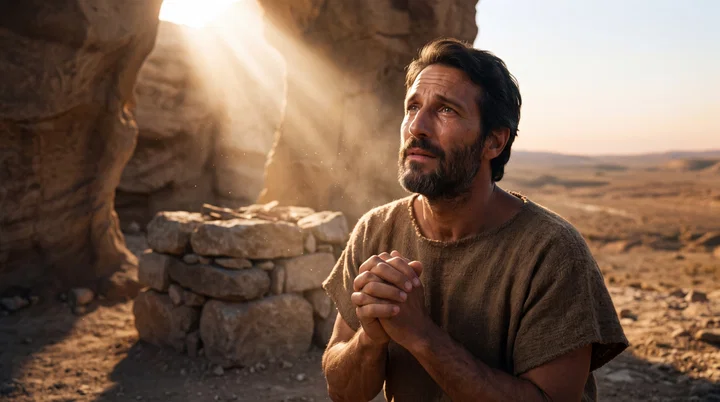
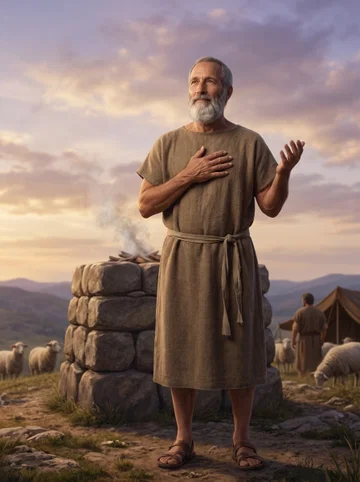
And the LORD appeared unto Abram, and said, Unto thy seed will I give this land: and there builded he an altar unto the LORD, who appeared unto him.
Translations
And the LORD appeared to Abram, and said, To your seed will I give this land: and there built he an altar to the LORD, who appeared to him.
King James Version, Revised Version
And the LORD appeared unto Abram, and said, Unto thy seed will I give this land: and there builded he an altar unto the LORD, who appeared unto him.
And the Lord appeared unto Abram, and said, Unto thy seed will I give this land: and there builded he an altar unto the Lord, who appeared unto him.
And the LORD appeared to Abram, and said, To thy seed will I give this land: and there he erected an altar to the LORD, who appeared to him.
And Jehovah appeared unto Abram, and said, Unto thy seed will I give this land: and there builded he an altar unto Jehovah, who appeared unto him.
And Jehovah appeareth unto Abram, and saith, 'To thy seed I give this land;' and he buildeth there an altar to Jehovah, who hath appeared unto him.
And Jehovah appeared to Abram, and said, Unto thy seed will I give this land. And there he built an altar to Jehovah who had appeared to him.
And Yahweh appeared unto Abram, and said: To thy seed, will I give this land,—And he built there an altar, unto Yahweh who appeared unto him.
Berean Standard Bible, Majority Standard Bible
Then the LORD appeared to Abram and said, “ I will give this land to your offspring.” So Abram built an altar there to the LORD, who had appeared to him.
The LORD appeared to Abram and said, “ I will give this land to your offspring.”He built an altar there to the LORD, who had appeared to him.
And the Lord came to Abram, and said, I will give all this land to your seed; then Abram made an altar there to the Lord who had let himself be seen by him.
And the Lord appeared vnto Abram, and said, Vnto thy seede will I giue this land. And there builded he an altar vnto the Lord, which appeared vnto him.
Douay-Rheims (Challoner revision)
And the Lord appeared to Abram, and said to him: To thy seed will I give this land. And he built there an altar to the Lord, who had appeared to him.
Pictures
Cross-references 20 of 67
- Genesis 13:14-15
And the LORD said unto Abram, after that Lot was separated from him, Lift up now thine eyes, and look from the place where thou art northward, and southward, and eastward, and westward:
God renews the promise of the land to Abram and his seed forever.
- Galatians 3:16
Now to Abraham and his seed were the promises made. He saith not, And to seeds, as of many; but as of one, And to thy seed, which is Christ.
Identifies Abraham’s promised Seed as Christ.
- Romans 4:13
For the promise, that he should be the heir of the world, was not to Abraham, or to his seed, through the law, but through the righteousness of faith.
Paul explains Abraham’s land promise as an inheritance of the world through faith.
- Genesis 12:3
And I will bless them that bless thee, and curse him that curseth thee: and in thee shall all families of the earth be blessed.
The promise that all nations would be blessed through Abram precedes the land promise.
- Genesis 17:7-8
And I will establish my covenant between me and thee and thy seed after thee in their generations for an everlasting covenant, to be a God unto thee, and to thy seed after thee.
The land promise is extended to Abraham’s seed as an everlasting possession.
- Hebrews 11:8-10
By faith Abraham, when he was called to go out into a place which he should after receive for an inheritance, obeyed; and he went out, not knowing whither he went.
Abraham journeyed by faith and lived as a stranger in the promised land.
- Galatians 3:29
And if ye be Christ’s, then are ye Abraham’s seed, and heirs according to the promise.
Those who belong to Christ are Abraham’s seed and heirs according to the promise.
- Genesis 15:7
And he said unto him, I am the LORD that brought thee out of Ur of the Chaldees, to give thee this land to inherit it.
God restates the promise to give Abraham’s seed the land as an inheritance.
- Acts 7:5
And he gave him none inheritance in it, no, not so much as to set his foot on: yet he promised that he would give it to him for a possession, and to his seed after him, when as yet he had no child.
Abraham received no inheritance in the land during his life, though it was promised to his seed.
- Genesis 26:3-4
Sojourn in this land, and I will be with thee, and will bless thee; for unto thee, and unto thy seed, I will give all these countries, and I will perform the oath which I sware unto Abraham thy father;
God renews to Isaac the land and blessing promises made to Abraham.
- Galatians 3:8
And the scripture, foreseeing that God would justify the heathen through faith, preached before the gospel unto Abraham, saying, In thee shall all nations be blessed.
Connects God’s promise to Abraham with the gospel preached beforehand.
- Genesis 3:15
And I will put enmity between thee and the woman, and between thy seed and her seed; it shall bruise thy head, and thou shalt bruise his heel.
The promise of the coming Seed is renewed to Abraham.
- Genesis 15:18
In the same day the LORD made a covenant with Abram, saying, Unto thy seed have I given this land, from the river of Egypt unto the great river, the river Euphrates:
The LORD confirms the land promise to Abram’s seed in a covenant.
- Genesis 28:13
And, behold, the LORD stood above it, and said, I am the LORD God of Abraham thy father, and the God of Isaac: the land whereon thou liest, to thee will I give it, and to thy seed;
Renews the land promise to Jacob and his seed.
- Genesis 13:4
Unto the place of the altar, which he had made there at the first: and there Abram called on the name of the LORD.
Abram returns to the altar and calls on the Lord.
- John 8:56
Your father Abraham rejoiced to see my day: and he saw it, and was glad.
Abraham saw Christ’s day and rejoiced.
- Genesis 22:17-18
That in blessing I will bless thee, and in multiplying I will multiply thy seed as the stars of the heaven, and as the sand which is upon the sea shore; and thy seed shall possess the gate of his enemies;
The promise to Abraham’s seed expands to include the land and blessing for all nations.
- Hebrews 11:9
By faith he sojourned in the land of promise, as in a strange country, dwelling in tabernacles with Isaac and Jacob, the heirs with him of the same promise:
Abraham sojourns in the promised land as a stranger.
- Genesis 12:1
Now the LORD had said unto Abram, Get thee out of thy country, and from thy kindred, and from thy father’s house, unto a land that I will shew thee:
God calls Abram toward the land where he later builds an altar.
- Galatians 3:14
That the blessing of Abraham might come on the Gentiles through Jesus Christ; that we might receive the promise of the Spirit through faith.
Abraham’s blessing comes to the nations through Christ.
Commentary
Each commentary is drawn from primary sources: the writings of Ellen G. White and Adventist pioneers and periodicals. Each commentary is separate. Its own words are not a quotation; follow the references to read the source passages.
Ellen G. White
18 sources
The Lord appeared to Abram at his first encampment in the promised land at Shechem and promised to give the land to his descendants, and in response Abram built there his first altar in Canaan to the Lord who had appeared to him.PP 127.2Lt 56, 1897, par. 713MR 357.1PP 143.3–144.1PP 204.1 The promise came with no outward evidence that his seed would possess it, yet he met it with unquestioning obedience and confident trust that God would guide and protect him among idolatrous nations.GW92 24.1–24T 524.1–2 Wherever he pitched his tent he set up the altar beside it as his first work, and when he moved on he left it standing as a witness where others learned of God and came to worship Him.7T 44.2ST Aug 7, 1884Lt 56, 1897, par. 7ED 187.2–313MR 357.1 By that altar he gathered his household for morning and evening sacrifice and prayer, establishing the pattern for all who love God to set up worship wherever they make their home.ST Aug 7, 1884CE 234.1–235.3Lt 56, 1897, par. 7Ms 19, 1886, par. 3Ms 26, 1894, par. 13 The promise was not fully met when Israel occupied Canaan, since Abraham himself owned no land there but a burial place, for it embraces the whole earth to be inherited by Abraham and his seed through Christ freed from the curse of sin.PP 169.3
Appearance, Promise and Setting
The Lord appeared to Abram at Shechem, at his first encampment in the land of promise, and promised to give the land to his descendants.PP 127.2PP 204.1 There he built his first altar in the land in response to the appearance.PP 127.2PP 204.1 The appearance strengthened his faith that God was with him, despite the presence of the Canaanites and their idolatry.PP 127.2
The promise that his descendants would possess Canaan was a naked promise, given with no outward evidence to support it.GW92 24.1–24T 524.1–2 Abraham met it with unquestioning obedience and striking faith and reliance on God, fully and sincerely complying with the conditions on his part and confident the Lord would faithfully perform His word.4T 524.1–2 He trusted that God would keep His word wherever He led, and went wherever God indicated duty.GW92 24.1–24T 524.1–2 He passed through wildernesses without terror and among idolatrous nations with the one thought that God had spoken and would guide and protect him in obeying His voice.4T 524.1–2 That same faith and confidence in hearing and obeying the one Voice above all others is what God's messengers need today to move onward.4T 524.1–2
Abraham raised his first altar to Jehovah in Canaan at Shechem, in the valley between Mount Ebal and Mount Gerizim.PP 499.4–500.1 That act made the spot sacred through its link with the fathers, so it was later chosen for Israel's solemn covenant service.PP 499.4–500.1 It is a beautiful valley of green fields dotted with olive groves, watered by brooks from living fountains and gemmed with wild flowers, lying between barren hills.PP 499.4–500.1 There the lower spurs of Ebal and Gerizim form a natural pulpit, with every word audible from one mountain to the other and room for a vast assemblage.PP 499.4–500.1
The promise did not reach its full fulfillment when Israel occupied Canaan.PP 169.3 Abraham himself owned no land there beyond a purchased burial place, and he, Isaac, and Jacob did not receive the promised inheritance.PP 169.3 The promise includes the whole earth, which Abraham and his seed will inherit through Christ as an inheritance freed from sin's curse.PP 169.3
Altar, Worship and Witness
In response to the appearance, Abraham built an altar to the Lord who had appeared to him, and building an altar for worship was his first work wherever he pitched his tent and settled as a pilgrim and stranger in a strange land.Lt 56, 1897, par. 713MR 357.1PP 143.3–144.1 Wherever he camped he set the altar beside his tent for sacrifice and worship, and when his tent was removed he left the altar standing, then repaired it and worshiped again when pitching his tent anew.7T 44.2ST Aug 7, 1884ED 187.2–3 The altars that remained marked the places where he had worshiped and stood as a witness and living testimony, so that the roving Canaanites who came to them knew who had been there.7T 44.2ST Aug 7, 1884ED 187.2–3Ms 26, 1894, par. 14–15 Those who had learned of God through his life came to the altar to offer sacrifice to Jehovah and to worship the living God.ST Aug 7, 1884ED 187.2–3
By the altar he called his household to worship with morning and evening sacrifice and prayer, training his family to love and fear God.ST Aug 7, 1884Ms 19, 1886, par. 3 His altar is the example of offering God morning and evening prayers.ST Aug 7, 1884Ms 26, 1894, par. 13 The altar is the pattern for all who profess to love God to take Jesus with them wherever they go and to establish worship wherever they make their home.CE 234.1–235.35T 320.3PP 143.3–144.1HM Jun 1889 Parents and ministers need God in their households, and this requires a reformation that is deep and broad.CE 234.1–235.3 Providing a place to meet and worship God must be made first of everything to show respect for His holiness.Lt 56, 1897, par. 7
Every house should now, in this time of fearful peril, be a house of prayer with its own family altar erected.Ms 26, 1894, par. 14–15HM Jun 1889 Honoring the Creator of heaven and earth includes obeying the fourth commandment by finishing business before sunset Friday, preparing Sabbath school lessons from the beginning of the week, and giving Sabbath time to Bible reading, Scripture explanation, and prayer.Ms 26, 1894, par. 14–15 Children are to pray for the guardianship of angels through the night.Ms 26, 1894, par. 14–15 Parents should make a hedge about their children by prayer, praying with full faith that God will abide with them and that holy angels will guard them and their children from Satan's cruel power.HM Jun 1889 Where God is worshiped and truest love reigns, morning and evening prayer ascends as sweet incense and His mercies and blessings descend like the evening dew, with earnest seeking bringing mighty working for the conversion of children, while a prayerless home brings sadness and its children show the neglect because the fear of God is not before them.HM Jun 1889
Sources
Pioneers and periodicals
91 sources
After Abram entered Canaan and came to Shechem at Moreh, the Lord visibly appeared to him and promised that land to his seed, and Abram built an altar there to the Lord who had appeared to him.ST Jan 22, 1894ST Jul 24, 1901ST Jul 24, 1901ST Jun 2, 1881 The seed in view is a chosen line fulfilled in one person, Christ the son of Abraham and son of David, to whom the land was given and in whom all nations are blessed through righteousness by faith.ST Feb 1, 1877RH Sep 9, 1902ST Jul 9, 1874RH Dec 24, 1903ST Mar 31, 1887 That gift was not Canaan alone but the first intimation that God would restore the whole earth as the everlasting inheritance of His people, to be fully realized in the new heaven and new earth.ST Apr 24, 1893RH Nov 13, 1856ST Oct 11, 1899RH Apr 12, 1860 Abraham himself did not receive it in his lifetime but sojourned in tabernacles as in a strange country, so the promise to him personally awaits the resurrection, the coming of the Lord, and the redemption of the earth.RH Apr 16, 1857ST Apr 17, 1884RH Nov 13, 1856ST Oct 25, 1877 In response Abram obeyed by faith and worshiped openly, calling on the name of Jehovah and leaving his altar as a public witness to the true God among an idolatrous people.ST Aug 7, 1893ST Sep 25, 1901ST Jan 22, 1894RH Jan 4, 1912ST Jul 22, 1908
Place Appearance and Wording
Genesis 12:7 belongs to the call of Abram recorded in Genesis 12:1-9, in the chapter that begins the account of his call.ST Jan 13, 1887ST Aug 9, 1905 It stands within the record of his sojourn and trials of faith with the repeated evidences of God's providence.ST Jan 2, 1912 It belongs to God's progressive dealings with Abram including the promise concerning the Promised Seed.ST Dec 20, 1910 It is part of God's providential dealings with Abraham's family, chosen as the line through which the promised Seed would come.ST
The Lord appeared to Abram after he entered Canaan and came to Shechem, promising to give that land to his seed, and Abram built an altar there to the Lord who appeared to him.ST Jan 22, 1894ST Jul 24, 1901ST Jul 24, 1901 The appearing was at Shechem or Sichem, at Moreh, the oak or plain of Moreh.ST Jun 2, 1881ST Aug 7, 1893RH Jan 27, 1910 It was the first place he visited in Canaan, between the mountains later known as Samaria, and there he built his first altar in Canaan in recognition of the Lord's presence.ST Jan 22, 1894ST Jul 24, 1901ST Jul 24, 1901 Abram was a native of Ur of the Chaldees, not far from the mouth of the Euphrates, whose ruins are now about 125 miles from the Persian Gulf and about six miles from the Euphrates through the river deposits of ages.ST Jan 13, 1887 The oldest temples of Ur bear the name of Urukh, who calls himself King of Ur and Accad, and the signet cylinder of Urukh's son Ilgi is preserved in the British Museum.ST Jan 13, 1887 Urukh lived about a hundred years, or perhaps a little more, before Abram left Ur.ST Jan 13, 1887
The appearing was a literal visible manifestation, giving the normal literal common sense of the Hebrew verb to appear.ST Apr 22, 1875RH Jan 20, 1874 Therefore the promised appearing in glory, when the Lord builds up Zion to favor her at the set time before the millennium, is a real visible appearing and must not be spiritualized away.ST Apr 22, 1875RH Jan 20, 1874 The word translated land is also translated earth elsewhere, including Genesis 1:1.RH Sep 16, 1873 This wording allows the promise to be understood as heirship of the whole world without doing violence to it, though the word alone does not establish or decide the full extent of the inheritance.RH Sep 16, 1873 The saints' inheritance will thus embrace the land of Palestine but will not be confined to it.RH Sep 16, 1873
The account is given as fact, not as conjectures about Abram's use of the word Elohim or his beliefs about the gods of Chaldea.ST Mar 10, 1887 Its history in the first fourteen chapters of Genesis is inspired by the Creator of the universe, not copied from Babylonian sources.ST Dec 7, 1915 It is the purest, the least colored by extravagances, and the nearest to the original form of the primeval traditions common to all civilized nations of antiquity, which point to a time when the human race occupied a common home and held a common faith.ST Dec 7, 1915 Ancient literature and traditions from around the world and the voice out of the tombs of thirty centuries confirm its historical accuracy against the claim that it is impossible of truth and pure imagination.ST Dec 7, 1915 Abram's worship of the one holy and merciful Creator stands contrasted with the polytheism of the surrounding nations.ST Nov 27, 1884
The Lord promised that Abram's seed would receive the land even though the Canaanites were then in the land, the descendants of cursed Canaan son of Ham, which made fulfillment look impossible.ST Jan 22, 1894ST Jan 22, 1894 The promise was renewed and enlarged after his first stop at Shechem at the oak of Moreh to encourage Abram's faith to keep growing through testing.ST Jan 22, 1894ST Jan 22, 1894 It was given to encourage Abram's faith to believe God would do it, so he went on from faith to faith, since faith grows by being tested.ST Jan 22, 1894 This first land promise after arrival in Canaan gave the land to his seed without naming Abraham himself, while later promises name both Abraham and his seed as receivers of the land forever and for an everlasting possession.RH Jan 9, 1900RH Dec 17, 1903 It was given while Abram was still childless and while Lot remained with him so that the first condition of separation from his kindred was not yet complete and the land was not yet shown to him, and being a promise of land to a seed while childless it was itself a promise that a seed would be given, with the seed as the chief part.RH Jan 9, 1900RH Dec 24, 1903RH Dec 17, 1903
Land Promise to Descendants
The Lord appeared to Abram at Sichem after leading him into Canaan and promised to give this land, the land of Canaan, to his seed and descendants, and Abram built an altar there to the Lord who appeared to him.ST Jun 2, 1881ST Nov 4, 1886RH Jan 9, 1900ST May 27, 1889 From this time that gift of the land to the seed becomes largely the burden of every message of blessing to the fathers.ST Jun 2, 1881 The promise belonged to the covenant with Abram and was extended to his descendants, and through the singular Seed it carries blessing and salvation to all nations.RH Jan 9, 1900ST Jul 9, 1874ST May 27, 1889 Although Abram was already in Canaan, the land had not yet been fully shown him, since the first condition of separation from his kindred was not yet complete while Lot remained with him.RH Jan 9, 1900
The promise of the land to the seed is not separate from the promise of a seed, since without an heir from his own body the gift to his seed could not be fulfilled. Abram's later complaint that he was childless looks directly to this promise. The seed in view is a particular chosen line of descent, not all descendants through Hagar, Keturah, or Esau.ST May 20, 1889 Abraham's descendants are identified as God's people by being called the seed of Abraham, a name expressing their relationship to God and His promise of the land.RH Jun 12, 1879
The promises beginning here are exceeding broad and comprehensive, pointing to the coming Messiah and embracing all nations.RH Nov 13, 1856 They will not be fully realized until the great multitude of all nations and kindreds and people and tongues inherit the city Abraham looked for in the new heaven and new earth, where there is no more death, neither sorrow nor crying, nor any more pain.RH Nov 13, 1856 The call out to a better country involved the descendants spending four hundred years as pilgrims and wanderers in the promised land as in a strange country and in Egyptian bondage and slavery, with God judging the slave-owners and bringing them into the land.ST Oct 11, 1899ST Nov 4, 1886RH Mar 3, 1853 The same promise was given to Isaac and Jacob, and Israel's deliverance from Egypt and journey toward Palestine under God's guidance were part of its fulfillment.RH Mar 3, 1853ST Jun 26, 1901
The promise concerning possession of the land of Canaan had a typical fulfillment in the temporary possession of literal Canaan, and will have its emphatic fulfillment when the saints possess the new earth.RH Sep 17, 1872 Joshua testified that the Lord gave Israel all the land sworn to their fathers and that every good thing promised had come to pass. Later decrees opened the way for return from captivity, and the restoration to the literal land was complete by 445 B.C., forty-two years after the latest prophecy about that return. The verse marks the beginning or starting point for counting the 430 years of sojourning until Israel's departure from Egypt.ST Aug 12, 1913RH Oct 8, 1857ST Jan 21, 1913 Those years are dated to 1921 B.C. as 215 years in Canaan and 215 years in Egypt, and they identify the beginning of the dispensation of law compared with Exodus 20.ST Aug 12, 1913RH Oct 8, 1857
Possession of the land is the burden and an essential element of the covenant of promise made to Abraham, Isaac, and Jacob. God's promise to give the land to Abraham's seed is part of the covenant, which also embraces the heavenly inheritance, belonging to the Abrahamic and new covenant.RH May 26, 1853 Leaving out what refers to the gift of the land robs the covenant, and rejecting the land from its fulfillment does violence to the covenant and to the faithfulness of God.
Christ the Promised Seed
The promised Seed is one person, which is Christ, to descend from Abraham as son of Abraham and son of David, born in his family in the flesh.RH Sep 9, 1902RH Dec 24, 1903RH May 6, 1902 This was fulfilled in Jesus Christ at His first advent, when He came as Abraham's seed to take possession of the land.RH Sep 9, 1902ST Mar 31, 1887 The promise was spoken while Abraham was still childless, so it included both the giving of the Seed and the giving of the land to that Seed.RH Dec 24, 1903
The original promise of the land was made not to Abraham primarily but to his Seed, and the land was given to that Seed.RH Dec 24, 1903RH May 6, 1902 The promise belongs to Christ and is shared by those who are in Him. All promises of salvation and blessing are made to humanity in Christ the Seed, so humanity has nothing and can receive nothing apart from Him, and the land promised includes the whole earth.RH May 6, 1902 It is part of the gospel blessing of righteousness by faith, not a promise made through the law.
The verse proclaims the joyful news of redemption through Jesus Christ to be extended to the nations of the earth.ST Feb 1, 1877ST Feb 22, 1877 In Abraham all nations and families of the earth shall be blessed, for in this promise God justifies the heathen through faith, so that the blessing of Abraham comes on the Gentiles through Jesus Christ.ST Feb 22, 1877RH Aug 5, 1873RH Mar 18, 1875 The promise is really a promise of Christ, for the one Seed is Christ, the only hope of salvation for men from all nations.ST Feb 22, 1877RH Aug 5, 1873RH Mar 18, 1875 Abraham's faith embraced Christ as its glorious object, rejoicing to see His day and seeing it with gladness, and reaching forward to the great plan of salvation and restitution by the Son of God.ST Feb 22, 1877RH Aug 5, 1873RH Mar 18, 1875 The promise is extended to Abraham's descendants and belongs to the promise of Christ, through whom blessing and salvation come to all nations.ST Jul 9, 1874ST May 27, 1889
The verse renews to Abraham the gospel promise first given earlier.ST Apr 9, 1902ST Apr 9, 1902 The promised Seed, the coming Messiah, is central to hope.ST Apr 9, 1902ST Apr 9, 1902 Its deepest significance depends on Christ, Abraham's Seed, through whom the promises to Abraham reach their purpose.RH Apr 22, 1902 The promise is fulfilled in Christ, who reveals the Father and unites divinity with humanity.ST Apr 9, 1902
Christ is the Seed to whom the promises were made, and the inheritance is received by joint heirship with Him, so they that are Christ's by faith are Abraham's seed and heirs according to the promise.RH Nov 8, 1853ST Jun 23, 1881ST Aug 15, 1916 The promise extends in the gospel to Abraham and his seed as heirs of the world through the righteousness of faith under God's everlasting kingdom, including the earth.ST Jun 23, 1881ST Aug 15, 1916 Abraham himself did not receive that inheritance in his lifetime but sojourned as in a strange country, so fulfillment looks to after the resurrection in the new earth.RH Nov 8, 1853ST Jun 23, 1881 The land belongs to this true seed — those made Abraham's heirs by faith — so the promise is fulfilled in people belonging to Christ, not through Jewish descent or residence in Palestine, with Canaan understood as a land of divine joy and peace giving hope amid persecution and pointing to Christ's return.ST Feb 15, 1910RH Mar 6, 1900
Faith in the promise laid hold on the coming Seed, for only through Him, born in Abraham's family, could the redeemed inheritance be gained and kept.RH Jan 14, 1904 On Him depended restoration of humanity to rulership of the world, redemption of the earth, resurrection of the dead, end of evil, and eternal reign of righteousness, with the land meaning the world made new after the resurrection.RH Jan 14, 1904 Its essential meaning was not fulfilled merely by descendants possessing Canaan, but was bound to the coming of Christ through whom the promises would be fulfilled.RH Jan 14, 1904 Abraham trusted God's word by faith, but his descendants later lost sight of that faith when they relied on visible possession and human effort instead of God's power, taking the promise as assurance of national and political prosperity and resting faith on that expectation rather than the Messiah.RH Jan 14, 1904RH Jul 13, 1911 Abraham's attempt to bring about the promise through Hagar was likewise human scheming, not God's plan.ST Sep 28, 1915
Future Worldwide Inheritance
This was the first intimation that God would carry out His purpose for the earth by restoring it as the inheritance of His people.ST Apr 24, 1893ST Oct 11, 1899RH Apr 12, 1860ST Feb 1, 1877ST Oct 25, 1877 The land promised to the seed means the dominion of the earth, embracing all that was lost in the fall of Adam, the whole earth and world restored to Eden beauty by the power of God, not Canaan alone though embracing Palestine.ST Oct 11, 1899RH Apr 12, 1860ST Feb 1, 1877ST Oct 25, 1877RH Mar 3, 1853 It was part of the call of faithful Abraham out from the world to a better country, and part of the joyful news of redemption through Jesus Christ to be extended to the nations, by which God would justify the heathen through faith and bless all nations in Abraham.ST Oct 11, 1899ST Feb 1, 1877 The promise was not received by Abraham and his seed according to the flesh, and it is repeated to Abram after Lot separated, in the everlasting covenant, and to Isaac and to Jacob.ST Feb 1, 1877 Its complete and ultimate fulfillment is future, in the immortal state, when the dominion taken from Adam is restored in the future inheritance and reign of the saints with Christ in the world to come as the eternal inheritance of all the redeemed.ST Feb 1, 1877ST Oct 25, 1877RH Mar 3, 1853
God promised the land to Abraham and his seed for an everlasting possession, not a temporary possession.RH Nov 8, 1853RH Nov 13, 1856RH Mar 3, 1853 Abraham himself did not receive that inheritance in his lifetime but died in faith, sojourning in Canaan as in a strange country in tabernacles with Isaac and Jacob.ST Apr 17, 1884RH Nov 8, 1853ST Jun 23, 1881RH Mar 3, 1853 He and his descendants died in faith that God would fulfill it, and the promise to him personally awaits the resurrection when the renewed earth becomes the inheritance of the raised and glorified.ST Apr 17, 1884ST Jun 23, 1881RH Mar 3, 1853 The promise belongs to the faithful as fellow heirs with him and embraces the whole earth and the new or heavenly Jerusalem.RH Apr 16, 1857ST Oct 25, 1877 Christ is the Seed to whom the promises were made, and the inheritance is received by joint heirship with Him, so they that are Christ's by faith are Abraham's seed and heirs according to the promise and heirs of the world.RH Nov 8, 1853ST Jun 23, 1881
Because fulfillment would not occur within Abraham's natural lifetime, the promise involved the coming of the Seed, the Messiah, the resurrection of the dead, the coming of the Lord, the redemption of the earth, the end of evil, and the new earth as the eternal home of the saints as fellow heirs with him.RH Nov 13, 1856ST Jun 23, 1881ST Oct 25, 1877ST Apr 30, 1902 It looks to the immortal state, the eternal city with foundations whose builder is God, and the reign of saints with Christ in the world to come.RH Nov 13, 1856ST Feb 1, 1877 The promises are exceeding broad and comprehensive and point to the coming Messiah, embracing all nations, and therefore will not be fully realized until the great multitude of all nations and kindreds and people and tongues shall inherit the city which Abraham looked for in the new heaven and new earth, where there will be no more death, neither sorrow nor crying, nor any more pain.RH Nov 13, 1856 The land promised after they spend four hundred years as pilgrims and wanderers in the promised land as in a strange country and in Egyptian bondage and slavery, with God judging the slave-owners and bringing them into the land, extends in the gospel to Abraham and his seed as heirs of the world.ST Jun 23, 1881ST Oct 11, 1899
The fulfillment comes through redemption of the earth cursed for sin, after the second advent when the wicked are destroyed and the saints are caught up to heaven, followed by 1000 years in the city above and desolation of the earth before it is made new.RH Apr 16, 1857ST Oct 25, 1877 The promised land embraces the whole earth, which though cursed for sin will be redeemed and made new after Christ's second coming, the taking of the saints to heaven, the desolation of the earth, and the thousand years, as the saints' eternal home.RH Apr 16, 1857ST Oct 25, 1877 The land of Canaan promised to the descendants identifies Palestine, or Judea, as the ancestral Promised Land, while modern American Jews looked more to America than to Judea.ST Nov 24, 1914 Abraham's altar in the land promised to his descendants, with Jacob's worship, was claimed by the Samaritans as establishing Mount Gerizim as the place God had chosen for worship, supporting their assertion that their temple and worship were true, but Jesus rejected their worship as corrupt and affirmed that salvation was of the Jews.ST Jul 14, 1887
Faith Obedience and Testing
Abram's greatness lay in obeying God by faith, trusting Him enough to leave his homeland and go to Canaan into an unknown future.ST Sep 25, 1901ST Jul 22, 1908RH Nov 17, 1910 The promise that his descendants would inherit the land strengthened his faith as he followed onward.ST Jul 22, 1908 The Lord's presence and promise gave him confidence while he lived among a strange, formidable, idolatrous people, and as long as the Lord appeared to him he believed all was well.RH Jan 4, 1912
God's appearing to Abram, showing him the land he was to possess, and blessing him followed his obedience and separation from his kindred.RH Aug 5, 1909 The land thus shown points to the world to come.RH Aug 5, 1909 His dwelling in tents expressed his hope for the city of God and the heavenly Canaan as his lasting possession.RH Nov 17, 1910
Though the whole country had been given to him by God, Abram afterward waived his rights and let Lot choose first where to go.ST Jan 20, 1887 His wandering among the tribes of ancient Canaan demonstrated that people can obey God and live out the truth even in difficult circumstances.RH May 30, 1912
He was called to go to a land he did not know, with opportunity to return if he desired, but he voluntarily laid aside the blessings return would have brought in order to make known the true God. What God regards is not what costs nothing but what costs a sacrifice of feelings, convenience, and worldly interests, and by maintaining his consecration he became precious in God's sight.
Altar Worship and Witness
In response to the Lord's appearing at Shechem, at Moreh, Abram built an altar there to the Lord who had appeared to him, marking the encounter in recognition of His presence.ST Jul 24, 1901ST Jul 24, 1901ST Jun 2, 1881RH Jan 27, 1910ST Jul 26, 1910 The promise of the land to his seed given at that appearing becomes from this time largely the burden of messages of blessing to the fathers.ST Jun 2, 1881 This was part of a pattern in which Abram worshiped God wherever he sojourned, and the account does not specify what offerings he made at this altar.ST Aug 7, 1893RH Jan 27, 1910 The altar was itself an offering made to the Lord, showing Abram had knowledge of God whose favor he sought and showing knowledge of sin, since no offerings or sacrifices would be made without knowledge of sin.RH Oct 18, 1853 He built altars and offered burnt offerings as Noah did, and he himself attended to the offerings at the altars he erected without a priest officiating, showing the father served as priest of his family and as the family's patriarchal priest in calling on the Lord's name.ST May 6, 1875RH Aug 3, 1916RH Sep 12, 1871RH Feb 3, 1910
The altar is an early example of sacrificial worship associated with the ceremonial law, which was needed after sin alongside the moral law.ST May 6, 1875ST Mar 20, 1879 This proves directions concerning sacrifices, altars, priests, and their maintenance had already been given to the patriarchs in the earliest ages, even though Genesis gives no direct record of the command because no books were written at that time, the ceremonial law already existing then and only being written out fully later when books began to be written.ST May 6, 1875 Offerings to the Lord were already part of early worship years before the offering recorded in Genesis 15, and the building of an altar several years before that divinely directed offering shows offerings were common in early history even where no divine direction is recorded.ST Apr 27, 1882RH Jan 15, 1875 Wherever Abram went he worshiped God and preached in the Lord's name, calling upon the name of Jehovah, which means preaching in the name of Jehovah and proclaiming the gospel and the true God.ST Aug 7, 1893 He showed his faith in the promise by building the altar at Shechem as he also did at Bethel, building altars and offering sacrifices wherever he pitched his tent as the father of the faithful, and some of his company were converts, the souls gotten in Haran.ST Aug 3, 1904
His tent-dwelling expressed his hope for the city of God and the heavenly Canaan as lasting possession, and he trusted God and built altars to worship Him and proclaim His name despite dangers in Canaan.RH Nov 17, 1910 The altar and his holy life proclaimed the gospel, for wherever he settled he drew people away from idolatry to worship the true God.ST Jul 26, 1910 There at the oak of Moreh he acknowledged the Lord by building an altar and offering sacrifice to God as a witness to the people around that he worshiped a different God from the gods of the land, leaving the altar as a witness and memorial of God's mercy, for God wants His mercies remembered.ST Jan 22, 1894ST Jan 22, 1894 Wherever he pitched his tent he set up an altar, and after he moved on it remained as a place where Canaanites could worship and learn of God through his example, and as reminders of his teachings and witnesses to his God.RH Jun 22, 1916RH Jun 10, 1902 The altars he erected continued his witness after his death, so that long years afterward when the idolatrous inhabitants came to those altars they worshiped the God of Abraham because of exalted ideas of His greatness and goodness handed down from his teaching and example, and the grove at Shechem where tents were pitched and altars built is thus a fitting place for worship and for a school where God may meet with His people.RH Jul 23, 1901
God's purpose in calling Abraham out from the nations was to make him a missionary to the heathen and the father of a race of missionaries to preach the gospel of the kingdom in all the world as a witness to all nations, in fulfillment of the promise that in him and in his seed all families of the earth would be blessed.RH Jun 10, 1902 Abraham built an altar to the Lord who appeared to him and proclaimed the name of the Lord wherever he went in his journeyings.RH Jun 10, 1902
Family Worship and Law
Abraham practiced family worship wherever he pitched his tent, building an altar to the Lord and calling upon His name when he arrived at a new place, which means he prayed with his family as well as instructed them in daily secret prayer and family devotion.ST Aug 7, 1884RH Jul 29, 1858RH Aug 21, 1856RH Feb 13, 1879RH May 8, 1856 His altars marked the places where he worshiped God and called his household to morning and evening worship, and they remained after he moved on as a witness where others who found them could worship the living God.ST Aug 7, 1884RH Jul 29, 1858RH Aug 21, 1856 This was the pious duty exemplified in his wanderings, standing with Noah as a conspicuous example and followed also by Isaac and Jacob whenever they removed from one place to another.RH Aug 21, 1856RH May 8, 1856 All Christians as Abraham's seed are therefore obligated to do the works of Abraham by gathering their families daily for prayer and praise, not merely to be thought religious but to be religious.RH Jul 29, 1858RH Aug 21, 1856 Family prayer was thus already practiced in the patriarchal age, with Abraham building altars and offering sacrifices wherever he pitched his tent.RH Feb 13, 1879
Those who love God take Jesus with them wherever they go and erect an altar to the Lord wherever they pitch their tent.HM Jun 1889 Every house should be a house of prayer with its own family altar, especially now in this time of fearful peril.HM Jun 1889 Where God is worshiped and truest love reigns, morning and evening prayer ascends to God as sweet incense and His mercies and blessings descend on those who pray like the evening dew.HM Jun 1889 Parents should make a hedge about their children by prayer, praying with full faith that God will abide with them and that holy angels will guard them and their children from Satan's cruel power, with earnest seeking bringing mighty working for the conversion of children.HM Jun 1889 A prayerless home brings sadness and its children show the neglect because the fear of God is not before them.HM Jun 1889
This piety, strengthened daily by devotion, enabled Abraham to command his household after him, to train the youthful Isaac, to pray earnestly for Ishmael, and to teach his steward Eliezer to know and pray to the only true God in his service.RH Aug 21, 1856 Genesis 12 records God's call, command, and promise to Abraham, including the promise to his seed concerning the land, before the statement in Genesis 26 that Abraham kept God's commandments and laws.RH Nov 8, 1853RH Mar 25, 1858 Comparing the two chapters proves the commandments and laws he kept were already in force and already obeyed at the time of Genesis 12.RH Mar 25, 1858 That obedience cannot be reduced to three acts — coming out from his people, walking through the land, and offering Isaac — for that reduction reverses cause and effect by making prior obedience into its result, and falsely sets those three acts against the ten commandments given on Sinai as a better rule for developing character under the covenant of grace.RH Mar 25, 1858 Abraham kept God's holy covenant of ten commandments, they who are faithful are blessed with him, and if they are Abraham's children they will do the works of Abraham; faith in Christ does not release from obligation to keep God's holy law any more than it did Abraham.RH Nov 8, 1853
Sources