Hebrews 11:9
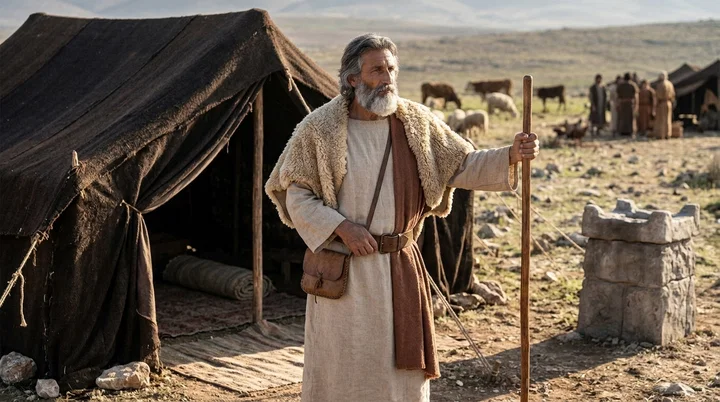
By faith he sojourned in the land of promise, as in a strange country, dwelling in tabernacles with Isaac and Jacob, the heirs with him of the same promise:
Translations
American King James Version, King James Version, KJV Cambridge Paragraph Bible
By faith he sojourned in the land of promise, as in a strange country, dwelling in tabernacles with Isaac and Jacob, the heirs with him of the same promise:
By faith he sojourned in the land of promise, as in a foreign country, dwelling in tabernacles with Isaac and Jacob, the heirs with him of the same promise:
Revised Version, American Standard Version
By faith he became a sojourner in the land of promise, as in a land not his own, dwelling in tents, with Isaac and Jacob, the heirs with him of the same promise:
by faith he did sojourn in the land of the promise as a strange country, in tabernacles having dwelt with Isaac and Jacob, fellow-heirs of the same promise,
By faith he sojourned as a stranger in the land of promise as a foreign country, having dwelt in tents with Isaac and Jacob, the heirs with [ him] of the same promise;
By faith, he sojourned in the land of promise, as a foreign land, in tents, dwelling, along with Isaac and Jacob, the joint-heirs of the same promise;
Berean Standard Bible, Majority Standard Bible
By faith he dwelt in the promised land as a stranger in a foreign country. He lived in tents, as did Isaac and Jacob, who were heirs with him of the same promise.
By faith he lived as an alien in the land of promise, as in a land not his own, dwelling in tents with Isaac and Jacob, the heirs with him of the same promise.
By faith he was a wanderer in the land of the agreement, as in a strange land, living in tents with Isaac and Jacob, who had a part with him in the same heritage:
By faith he abode in the land of promise, as in a strange countrey, as one that dwelt in tents with Isaac and Iacob heires with him of the same promise.
Douay-Rheims (Challoner revision)
By faith he abode in the land, dwelling in cottages, with Isaac and Jacob, the co-heirs of the same promise.
Pictures
Cross-references 20 of 95
- Hebrews 11:13-16
These all died in faith, not having received the promises, but having seen them afar off, and were persuaded of them, and embraced them, and confessed that they were strangers and pilgrims on the earth.
The patriarchs lived as strangers by faith, seeking the heavenly country God prepared.
- Romans 4:13
For the promise, that he should be the heir of the world, was not to Abraham, or to his seed, through the law, but through the righteousness of faith.
Abraham and his seed inherit the promised world through faith.
- Acts 7:5
And he gave him none inheritance in it, no, not so much as to set his foot on: yet he promised that he would give it to him for a possession, and to his seed after him, when as yet he had no child.
Abraham lived in the promised land without receiving an inheritance there.
- Galatians 3:29
And if ye be Christ’s, then are ye Abraham’s seed, and heirs according to the promise.
Those who belong to Christ are Abraham’s seed and heirs according to the promise.
- Galatians 3:16
Now to Abraham and his seed were the promises made. He saith not, And to seeds, as of many; but as of one, And to thy seed, which is Christ.
Identifies Christ as the promised Seed of Abraham and heir of the promise.
- Genesis 12:1-4
Now the LORD had said unto Abram, Get thee out of thy country, and from thy kindred, and from thy father’s house, unto a land that I will shew thee:
Abraham obeys God’s call, leaving his homeland to journey toward the promised land.
- Genesis 13:14-15
And the LORD said unto Abram, after that Lot was separated from him, Lift up now thine eyes, and look from the place where thou art northward, and southward, and eastward, and westward:
God promises Abraham and his descendants the land.
- Hebrews 11:16
But now they desire a better country, that is, an heavenly: wherefore God is not ashamed to be called their God: for he hath prepared for them a city.
Abraham’s sojourning pointed to the better, heavenly country God prepared.
- Genesis 17:8
And I will give unto thee, and to thy seed after thee, the land wherein thou art a stranger, all the land of Canaan, for an everlasting possession; and I will be their God.
God promised Abraham and his seed the land as an everlasting possession.
- Hebrews 11:39-40
And these all, having obtained a good report through faith, received not the promise:
The faithful died without receiving the promise, awaiting shared fulfillment.
- Genesis 26:3-4
Sojourn in this land, and I will be with thee, and will bless thee; for unto thee, and unto thy seed, I will give all these countries, and I will perform the oath which I sware unto Abraham thy father;
God renews the land and blessing promise to Isaac.
- Galatians 3:8
And the scripture, foreseeing that God would justify the heathen through faith, preached before the gospel unto Abraham, saying, In thee shall all nations be blessed.
Identifies the promise to Abraham as anticipating blessing through faith.
- Genesis 12:7
And the LORD appeared unto Abram, and said, Unto thy seed will I give this land: and there builded he an altar unto the LORD, who appeared unto him.
God promises Abraham the land that he sojourned in while awaiting its inheritance.
- John 8:56
Your father Abraham rejoiced to see my day: and he saw it, and was glad.
Abraham saw Christ’s day by faith and rejoiced.
- Hebrews 11:1
Now faith is the substance of things hoped for, the evidence of things not seen.
Defines the faith Abraham’s sojourn illustrates.
- Genesis 28:13
And, behold, the LORD stood above it, and said, I am the LORD God of Abraham thy father, and the God of Isaac: the land whereon thou liest, to thee will I give it, and to thy seed;
God confirms to Jacob the land promise made to Abraham.
- Genesis 15:13
And he said unto Abram, Know of a surety that thy seed shall be a stranger in a land that is not theirs, and shall serve them; and they shall afflict them four hundred years;
The promised descendants’ sojourn as strangers includes the patriarchs’ time in Canaan.
- Revelation 21:2-3
And I John saw the holy city, new Jerusalem, coming down from God out of heaven, prepared as a bride adorned for her husband.
The holy city Abraham looked for descends, and God dwells with his people.
- Genesis 22:1-18
And it came to pass after these things, that God did tempt Abraham, and said unto him, Abraham: and he said, Behold, here I am.
Abraham’s faith is shown in the test involving Isaac.
- Genesis 23:4
I am a stranger and a sojourner with you: give me a possession of a buryingplace with you, that I may bury my dead out of my sight.
Abraham calls himself a stranger and sojourner while seeking a burial place.
Commentary
Each commentary is drawn from primary sources: the writings of Ellen G. White and Adventist pioneers and periodicals. Each commentary is separate. Its own words are not a quotation; follow the references to read the source passages.
Ellen G. White
28 sources
By faith Abraham lived in the promised land as a foreigner and stranger, making his home in tents together with Isaac and Jacob as fellow heirs of the same promise.Ms 6, 1902, par. 16–18Ms 63, 1893, par. 26–2720MR 125.2–4 He owned nothing there he could claim as his own except the burial cave he bought, trusting God's word with no outward assurance that it would be fulfilled.Ms 19, 1886, par. 1–2PP 126.2–3PP 169.3 He had left home and kindred without asking about comfort or gain, and because he saw the promises from afar he confessed himself a pilgrim with no desire to go back.Ms 6, 1902, par. 16–18Ms 106, 1902, par. 9–10PP 126.2–3SCE 13.1–213MR 357.1 What he looked for beyond a settled earthly home was the city with foundations built by God, for the promise reaches beyond Canaan to the whole earth freed from sin when Christ gives Abraham and all who are his a share in the new earth.Ms 6, 1902, par. 16–18Ms 63, 1893, par. 26–27Lt 131, 1904, par. 11–13PP 169.4–170.2MYP 105.2 His life stands as the pattern for all his children to live as pilgrims here, loosening hold on earth and living by a faith that lays hold on unseen things.RH Sep 30, 1902Lt 131, 1904, par. 11–13PP 169.4–170.21T 118.1SG2 212.2–214.1
Sojourn in Promised Land
By faith he lived in the land of promise as in a strange country, as a foreigner and stranger, dwelling in tents or tabernacles with Isaac and Jacob as fellow heirs with him of the same promise.Ms 6, 1902, par. 16–18Ms 63, 1893, par. 26–2720MR 125.2–4Ms 106, 1902, par. 9–10Lt 131, 1904, par. 11–13 He remained a stranger there because he had not yet fully possessed what was promised, and his tent-life looked beyond present circumstances and a settled earthly home.Ms 63, 1893, par. 26–27Ms 106, 1902, par. 9–10PP 169.4–170.2 He lived there without any possession he could claim as his own among the idolatrous Canaanites, relying on the divine promise with no outward assurance of its fulfillment.Ms 19, 1886, par. 1–2PP 126.2–3 His only possession in the land was the rock-hewn tomb in the cave of Machpelah which he had to buy from the Canaanites for a burial place.PP 169.3
He obeyed without hesitation, abandoning home and kindred and native land and his father's house to sojourn alone in a strange land to follow where God leads.PP 126.2–3SCE 13.1–213MR 357.1 It was no light test and no small sacrifice, breaking strong ties to country and kindred and home.PP 126.2–3 He did not ask whether the soil was fertile and the climate healthful, whether the surroundings were agreeable, or whether wealth could be gained there, because God had spoken and the happiest place was where God would have him to be.PP 126.2–3
The separation was necessary to successfully introduce a new order in his household.SCE 13.1–2 Cultivating home religion, obeying God's laws and commandments, and preserving the knowledge of the true God from generation to generation could not be done while surrounded by idolatrous kinsfolk and friends.SCE 13.1–2 By going out at God's command he placed himself where he could listen to Christ's voice and take full responsibility to instruct, command, and rule his children and household in justice and judgment without betrayal of sacred trust.SCE 13.1–2
Wherever he pitched his tent his first work was to build an altar for God and worship Him together with those accompanying him.13MR 357.1 By this he showed his faith by his works, his respect for God's holiness, and his sense of God's greatness and glory and his obligation to Him.13MR 357.1 In this he made God first in everything and exalted His service.13MR 357.1
Heavenly Inheritance Promised
Abraham died in faith without having received the promised inheritance, yet he saw the promises afar off and was persuaded of them and embraced them.Ms 6, 1902, par. 16–18Ms 106, 1902, par. 9–10Lt 131, 1904, par. 11–13 In that faith he confessed that he was a stranger and pilgrim on earth, with no desire to return to the country he had left.Ms 6, 1902, par. 16–18Lt 131, 1904, par. 11–13 His dwelling in tents with Isaac and Jacob as fellow heirs of the same promise showed that he had not yet entered into full possession but lived looking beyond his present circumstances.Ms 6, 1902, par. 16–18Ms 63, 1893, par. 26–27Ms 106, 1902, par. 9–10
That tent-life was a confession that this world was not his home, for he looked beyond a settled earthly home to a city which hath foundations, whose builder and maker is God.Ms 6, 1902, par. 16–18Lt 131, 1904, par. 11–13PP 9 What he sought was a better, heavenly country and the city God has prepared and will build.Ms 6, 1902, par. 16–18Lt 131, 1904, par. 11–13 God showed him that the promise pointed to an eternal and immortal inheritance, and with that hope he was content.Ms 63, 1893, par. 26–27Ms 19, 1886, par. 1–2PP 169.4–170.2
The promise to him was not finally met in the occupation of Canaan by the Jewish people.PP 169.4–170.2 It includes the whole earth freed from the curse of sin, to be fulfilled through Christ at the appointed time.PP 169.4–170.2 Then Abraham himself will share the inheritance with all who are Christ's as Abraham's seed, so that having a title to Abraham's farm means sharing in the promised inheritance in the new earth.PP 169.4–170.2MYP 105.2Ms 2, 1893, par. 16
The verse stands in the teaching that faith gives substance to what is hoped for and evidence of what is unseen.RH Sep 30, 1902 That faith gives strength to trust God and please Him even amid weakness and fear.Ms 76, 1893, par. 10–11 It calls for faith in the Saviour, for believing, watching, and praying, with faith stripped of human elements to lay hold of invisible things.Lt 131, 1904, par. 11–13Ms 76, 1893, par. 10–11
Example for Believers Today
Abraham stands in the verse among faithful examples and ancient people commended for firm principles of faith, held up for Christians to imitate.CTBH 238.1CTBH 238.2 He belongs to the cloud of witnesses who breasted the evils and difficulties in the way and in the Lord's name braced successfully against opposing forces of evil, sustained and strengthened with the Lord holding him by the hand.Ms 61, 1907, par. 1–3 His defining mark is fidelity to God, and his sojourning life in the promised land was placed conspicuously before the world so that his light would shine to those in darkness.18MR 138.1
The record of faith is written so that the faith shown by God's servants of old may work in believers now and make them channels of God's power.PK 175.2 The same faith can work in people now, and God will work through hearts of faith as He did through them.ED 256.1 Their experience teaches workers for God to go forward in faith and do their best, for faith gives substance to what is hoped for and evidence of what is unseen.RH Sep 30, 1902 Abraham's life in the promised land as a foreigner in tents, together with Isaac and Jacob who shared the same promise, is part of that instruction, encouraging workers to act in faith and trust God as they labor.20MR 125.2–4
These heroes of faith are brought into view as faithful to God so their example could shine for people in darkness.Ms 53, 1902, par. 318MR 138.1 Their fidelity made their lives a light to others, and their obedience led people to glorify God.20MR 41.4–5
His tent-life confessed that this world was not his home, for he looked for a city which has foundations, whose builder and maker is God.PP 169.4–170.2 God had given him a view of the immortal inheritance and with that hope he was content, and the promise was not finally met in the occupation of Canaan by the Jewish people but includes the whole earth freed from the curse of sin, to be fulfilled through Christ at the appointed time, when Abraham himself will share the inheritance with all who are Christ's as Abraham's seed.PP 169.4–170.2 Though he had great wealth which he used for God and others, he did not count this world his home, and neither he nor Isaac nor Jacob received the promised heritage in their lifetimes, his only possession in the land being the rock-hewn tomb in the cave of Machpelah which he had to buy for a burial place.PP 169.3 Those who are children of Abraham must likewise dwell here as pilgrims and strangers seeking that city and a better, heavenly country, treating this world as a temporary home and not their chief concern or lasting inheritance.PP 169.4–170.2SG2 212.2–214.1 Believers are heirs of an immortal inheritance, so they should loosen affections for earth, avoid being absorbed by its cares, and set thoughts on heavenly things rather than temporary riches and pleasures, not making earthly wealth their aim.1T 118.1SG4 163.3ST Sep 15, 1887
His life declares that he sought a better, heavenly country, confessing himself a stranger and pilgrim on earth, dying in faith without receiving the promises but seeing them afar off and being persuaded of them and embracing them, with no desire to return to the country he left, for whom God has prepared a city.Lt 131, 1904, par. 11–13 This is the pattern for living by faith now, with faith stripped of human elements to lay hold of invisible things in a deeper religious experience.Lt 131, 1904, par. 11–13 Having a title to Abraham's farm means sharing in the promised inheritance in the new earth, and entering God's kingdom requires a perfected character rather than returning to a life of sin.MYP 105.2 Having a place there and a part in Abraham's farm rests with each person, depending on refusing Satan a place in the mind and standing as a faithful soldier under the banner of Prince Immanuel, for without Christ nothing can be done.Ms 2, 1893, par. 16
Sources
Pioneers and periodicals
102 sources
By faith Abraham lived in the land that had been promised him as though it were a foreign country, dwelling in tents together with Isaac and Jacob as joint heirs of the same promise.ST Mar 4, 1875RH Oct 15, 1857ST Jan 13, 1887 He died without receiving the inheritance, confessing himself a stranger and pilgrim because he was looking for the city with foundations whose builder and maker is God.ST Mar 4, 1875ST Jan 13, 1887ST Mar 26, 1912 That promise was not exhausted by possession of Canaan, for it makes him heir of the whole world, the earth renewed and restored to Eden beauty to be possessed forever through Christ.RH Mar 3, 1853RH Apr 18, 1865ST Oct 16, 1901 He with Isaac and Jacob will receive it together with all who belong to Christ at the better resurrection beyond the second coming, when the righteous inherit the cleansed earth as their home.ST Mar 26, 1912RH Apr 17, 1900RH Jul 30, 1857RH Jan 19, 1864 His faith took God at His word, trusting the promised Seed and Redeemer, and calls all believers to live as strangers in this world pressing toward the better heavenly country.ST Mar 4, 1875ST May 13, 1903ST Jul 9, 1874ST May 10, 1905
Living as Strangers There
By faith Abraham sojourned in the land of promise as in a strange or foreign country, dwelling in tents or tabernacles with Isaac and Jacob as joint heirs with him of the same promise.ST Mar 4, 1875RH Oct 15, 1857ST Jan 13, 1887RH Jun 2, 1859 His presence there was that of a temporary resident and foreigner rather than a settled possessor, and their shared tent-dwelling marked them as strangers and pilgrims on earth.ST Mar 4, 1875RH Oct 15, 1857ST Jan 13, 1887ST Sep 17, 1874 He obeyed the call to go out to a place he would afterward receive for an inheritance, yet in his lifetime he never received the land as a possession.RH Jun 2, 1859ST Sep 17, 1874 By that same faith he looked beyond the temporary dwelling to the eternal city with foundations built by God and the immortal kingdom where Christ will reign on the new earth, seeing the promises afar off, being persuaded of them, embracing them, and dying in faith awaiting their future fulfillment.ST Mar 4, 1875ST Jan 13, 1887RH Jun 2, 1859ST Sep 17, 1874
He was given no inheritance in it, not even enough to set his foot on, which proves the promise was not fulfilled by present possession and would have utterly failed if limited to literal Canaan in its present condition.RH Mar 3, 1853RH Apr 18, 1865ST Oct 16, 1901ST Jun 29, 1882 He therefore owned no burial place and had to buy the cave of Machpelah, having only a tent and an altar and a tomb.RH Mar 3, 1853RH Apr 18, 1865ST Aug 19, 1897 Though wealthy and able to build after Lot separated from him and after the promise of a numerous seed and great inheritance in the earth was repeated, his wealth did not turn him from his sojourn to exemplify truth before the heathen.ST Jul 31, 1901 He did not seek a home in any of the cities corrupted by worldly customs and heathen practices, but remained few in number among idolaters because he looked for the city built by God.RH Mar 3, 1853ST Jul 31, 1901
His residence in Canaan began the 430-year sojourning that ended with deliverance from Egypt and included time in both Canaan and Egypt, about half in each from the first promise until the law was given at Sinai.RH Jan 2, 1913ST Oct 11, 1899ST Feb 4, 1889ST Sep 29, 1898 The 400 years of affliction and the word that his seed would be a stranger in a land not theirs began about thirty years after the promise when Isaac was about five and Ishmael mocked him.ST Feb 4, 1889ST Apr 20, 1888 That affliction did not happen in Egypt alone but continued about 185 years in Canaan and adjoining countries before going down into Egypt, with his seed to live four hundred years as pilgrims and wanderers in the promised land and in Egyptian bondage and slavery.ST Oct 11, 1899ST Feb 4, 1889ST Apr 20, 1888 The promise of land and increase would not be fulfilled immediately, for his descendants would sojourn centuries in another land and he would die in old age before entering, looking beyond his lifetime to resurrection and the new earth.RH May 28, 1908
His tent marks him as having no lasting home or possessions on earth, while his altar marks him as a worshiper to whom God was enough though he had little on earth.ST Feb 1, 1899 That tent life involved labor and showed active trust in the promise while living as a sojourner.ST Aug 30, 1877ST Aug 30, 1877 By that unsettled life he diffused the light and knowledge of truth among the nations, and this course proved the salvation of himself and his household in contrast to Lot whose self-centered interest almost proved his ruin.ST Oct 25, 1899 The Lord gave him sojourn in another country better suited to his secular calling and to closer fellowship with his heavenly Friend, promising him even the whole earth because of obedience, so that he counted himself only a sojourner looking for a better, heavenly country.ST Jul 24, 1901 Faith in this way makes God's people hold worldly goods loosely and support God's work rather than clinging to wealth.RH May 20, 1858
He was called from Ur of the Chaldees at Urfah to leave home and live as a pilgrim and stranger in the earth.RH Mar 2, 1852RH Jan 16, 1913 That call required leaving country, kindred, and idolatrous father's house for a land God would show, going without knowing where he went.ST Nov 18, 1889ST Apr 20, 1882RH Mar 2, 1852 The outward prospect was dark with apparently no object, and he endured opposition and ridicule from relatives and made great sacrifice rather than draw back.ST Nov 18, 1889ST Apr 20, 1882 By valuing God's approval above men's applause and being willing to be regarded as peculiar, he became the father of all the faithful and heir of the better world, his case as a man subject to weakness and temptation recorded for the encouragement of all who stand alone for unpopular truth.ST Nov 18, 1889ST Apr 20, 1882RH Mar 2, 1852
Fellow Heirs of Promise
By faith Abraham lived in the land of promise as a temporary resident and foreigner, dwelling in tents with Isaac and Jacob as joint heirs with him of the same promise, sharing his temporary life and pilgrimage as strangers and pilgrims looking beyond present possession to the eternal city and immortal kingdom.ST Mar 4, 1875RH Oct 15, 1857ST Jan 13, 1887ST Mar 26, 1912 He never received Canaan as his inheritance in his lifetime, but sojourned there seeing the promises afar off, persuaded of them and embracing them, confessing himself a stranger and pilgrim on earth who died in faith awaiting future fulfillment when all Israel is gathered and made perfect together.ST Mar 26, 1912RH Apr 17, 1900 His tent life revealed that he looked for a lasting city with foundations built by God, the capital and metropolis of the kingdom where Christ will reign in glory with His angels to give His people the kingdom prepared from the foundation of the world.ST Mar 4, 1875ST Jan 13, 1887ST Mar 26, 1912
The same promise was renewed to Isaac in the same terms when told not to go down into Egypt but to sojourn in the land, with promise to be with him and bless him, to give all these countries to him and to his seed, to perform the oath sworn to Abraham, to multiply his seed as the stars of heaven and to bless all nations in his seed.ST Jun 2, 1881 It was given to Jacob in the dream of the ladder reaching to heaven, promising the land where he lay to him and to his seed, seed as the dust of the earth spreading west and east and north and south, and blessing to all families of the earth in him and in his seed, which Jacob afterward recalled as God Almighty appearing to him at Luz in Canaan promising fruitfulness and multitude and the land to his seed after him for an everlasting possession. This is the promise made to the fathers for which Paul stood judged and to which the twelve tribes hoped to come, the covenant made with Abraham containing the hope of God's people and the substance of the plan of restitution by Christ to restore what was lost and carry out God's original purpose for man to dwell upon and rule the earth, including that Abraham with Isaac and Jacob would inherit the world.ST Feb 28, 1911
Their life together in tents gave Abraham opportunity to teach Isaac and Jacob the truths he had learned about Christ's second advent and the day of judgment, and they shared his hope and understanding that God would fulfill the promise at that coming.ST Oct 4, 1883ST Oct 4, 1883RH Jan 21, 1862 By faith they remained separated from every earthly state and country as strangers and pilgrims looking for the heavenly country and the city God had prepared and for restoration of dominion, though free to return to their former country they chose instead to desire a better, heavenly one.ST Jul 26, 1899ST Feb 1, 1905 Jacob lived in the promised land as a stranger dwelling in tents with Isaac and sharing the promise, and died in a foreign land without receiving the land as an everlasting possession in his life, trusting he would inherit it in the future and share in the resurrection of the just, for the promise to him reaches beyond an earthly inheritance to the new earth.ST Oct 11, 1883RH Jan 21, 1862
Inheritance Still Future
Abraham's living in the promised land did not mean he had received the promised inheritance, for he dwelt there only as a temporary resident and foreigner in tents with Isaac and Jacob who shared the same promise with him as joint heirs.ST Mar 4, 1875RH Jun 2, 1859ST Sep 17, 1874RH Jul 30, 1857 With them he died in faith not having received the promises, still an heir awaiting fulfillment, confessing himself a stranger and pilgrim on earth who saw the promises afar off, was persuaded of them and embraced them.ST Mar 4, 1875RH Apr 17, 1900RH Jun 2, 1859RH Jul 30, 1857 By that sojourning faith he looked beyond present possession and beyond his temporary dwelling to the future, to the eternal city founded and made by God where Christ will reign and to the immortal kingdom, embracing Christ and the plan of salvation reaching forward to restoration through the Son of God.ST Mar 4, 1875RH Apr 17, 1900RH Jun 2, 1859ST Sep 17, 1874 The promise will be fulfilled when the just are raised and receive the inheritance together with the other heirs, when all Israel is gathered and made perfect together.RH Apr 17, 1900ST Sep 17, 1874RH Jul 30, 1857
This proves the promise was not fulfilled by present possession of Canaan and was not limited to literal Canaan in its present condition, for Abraham was given no inheritance in it, not so much as to set his foot on.RH Mar 3, 1853ST Oct 16, 1901RH Jan 9, 1900ST Jun 23, 1881ST Jun 29, 1882 If it meant only that temporal possession, God's promise utterly failed, since it was not received in his lifetime and cannot be fulfilled in this present state.RH Mar 3, 1853RH Jan 9, 1900ST Jun 23, 1881ST Jun 29, 1882 Canaan as occupied by the natural seed was only a type and earnest and preliminary possession, and neither Israel's settlement nor Joshua gave the rest contemplated.ST Feb 23, 1882ST Jun 23, 1881ST Jun 29, 1882 That rest contemplated is far superior, no longer surrounded by foes, to be received after Abraham's resurrection in the new earth wherein dwells righteousness, when all the faithful in Christ as Abraham's seed inherit the renewed earth and delight in abundance of peace.RH Jan 9, 1900ST Jun 23, 1881ST Jun 29, 1882
The promise truly embraces the literal land yet is not confined to Palestine, since the word rendered land can mean earth.ST Oct 16, 1901ST Feb 23, 1882 Abraham is heir of the world through faith, and the inheritance is the whole earth and the world to come.ST Oct 16, 1901RH Jan 9, 1900ST Feb 23, 1882ST Jun 29, 1882 It is the redeemed earth, though cursed because of sin to be redeemed, restored to Eden beauty, the kingdom under the whole heaven, the better heavenly country and prepared city with foundations whose builder and maker is God, the New Jerusalem.RH Mar 3, 1853RH Apr 18, 1865ST Oct 16, 1901ST Feb 25, 1913 It was promised to Abraham and his seed together, neither without the other, and that seed is Christ, so all who belong to Christ are Abraham's seed and heirs according to the same promise, to receive it eternally through Christ beyond the second coming, placed back in his own land on the earth made new with all Christians.RH Apr 18, 1865ST Oct 16, 1901ST Feb 25, 1913RH Jan 9, 1900 The heritage promised to Jacob is the new earth.ST Jun 1, 1904
City and Heavenly Country
By faith he lived in the promised land as a foreigner, dwelling in tents with Isaac and Jacob who shared the same promise, and their temporary dwelling showed they were strangers and pilgrims on earth looking beyond it for a lasting city built by God.ST Jan 13, 1887RH Jun 2, 1859ST Sep 17, 1874 He never received the land as a possession in his lifetime but obeyed the call to go out to a place he would afterward receive for an inheritance, and while sojourning he looked for a city with foundations whose builder and maker is God.ST Mar 26, 1912RH Jun 2, 1859RH May 27, 1915 He was content to wait for God's time and did not expect fulfillment during his earthly life, but saw the promises afar off, was persuaded of them, embraced them, confessed himself a stranger and pilgrim, died in faith awaiting future fulfillment, and looked beyond his tent to the eternal state and the city God would build.ST Sep 17, 1874RH May 27, 1915 Although Genesis says nothing about a city, Hebrews reveals God promised Abraham such a city together with the earth.ST Mar 26, 1912
That city is literal, prepared by God, not the church represented as a city.RH Mar 5, 1857ST Jun 10, 1886 It is the New Jerusalem, the capital and metropolis of the kingdom over which Christ will reign when He comes in glory with His angels to give His people the kingdom prepared from the foundation of the world, coming down from heaven to the new earth and to the earth made new as the eternal inheritance beyond the sinful present earth.ST Mar 26, 1912ST Sep 17, 1874ST Oct 16, 1901RH Jun 15, 1916 It has twelve foundations, its subjects do His commandments and are written in the Lamb's book, it is also called Zion and mother of the righteous, and God has prepared it for them and is not ashamed to be called their God.ST Jun 10, 1886 The apparent contradiction between the promise that Abraham and his seed should inherit the land he could see and the whole world and the fact that he died without receiving enough land to set his foot on is explained by his sojourning by faith looking forward to this heavenly country and city, so the inheritance was still future at his death and he must be resurrected and placed back in his own land on the earth made new to receive it with all Christians who are Abraham's seed.ST Oct 16, 1901
With that city he desired a better, heavenly country as his true fatherland, more desirable than any earthly country.RH Apr 17, 1900ST May 13, 1903RH Jul 30, 1857RH May 29, 1855 His temporary residence in Canaan with Isaac and Jacob pointed to the renewed earth, for faith looked beyond present possession to the promise, to God's lasting city and restoration of dominion and the purchased eternal home of immortal saints.RH Apr 17, 1900RH Feb 7, 1854 The patriarchs lived as pilgrims and strangers because they trusted God's promises and looked toward that country and a future resurrection rather than relying on what they could see, regarding themselves as strangers on earth while their hope remained the same hope held now, though they saw the promises far off.RH Apr 17, 1900RH Jul 30, 1857RH May 29, 1855 If the promise meant only literal Canaan it was already received in his presence there, but since he with the other heirs died in faith not having received the promises, the promise did not relate to literal Canaan in its present condition or it utterly failed, and it relates instead to a different, heavenly inheritance, the new earth where the meek shall inherit the earth, which the faithful will receive together through resurrection when all Israel is gathered and made perfect together.RH Apr 17, 1900RH Feb 7, 1854RH Mar 3, 1853
Resurrection and Renewed Earth
The tent life in the land shows trust that life comes through death and resurrection through the grave, for care for burial and for bones looked beyond death to rising again.RH Jan 19, 1864RH Feb 7, 1854 The birth of Isaac when fulfillment was naturally impossible stands as pledge that the promise is sure and will be made good by divine power.RH Jul 30, 1857RH Feb 7, 1854 Those who sojourned without receiving the promises will be made perfect together with all Israel and all who belong to Christ, receiving the promise together and not apart.RH Apr 17, 1900RH Jul 30, 1857RH Feb 7, 1854 Their hope is the better resurrection, when hades gives up the righteous dead at the last trumpet.RH Apr 14, 1874ST Feb 24, 1881ST Jun 23, 1881
That resurrection is future life, not going to heaven at death, and not an inherently immortal soul living apart from the body.RH Apr 14, 1874ST Feb 24, 1881RH Oct 5, 1869 The faithful dead are now dead and unconscious, with no portion in anything done under the sun, and the witnesses of Hebrews 11 are not conscious onlookers watching the living.ST Feb 15, 1883ST They sleep in Jesus and rest in hope with Lazarus and with Abraham, until angels bear them through the air to meet the triumphant Redeemer.ST Jun 23, 1881 Repeated divine assurances with partial fulfillments strengthen faith to trust God for that final release.RH Jul 30, 1857RH Feb 7, 1854
The accomplishment remains future beyond the second coming of Christ, when He comes in glory with angels to give the kingdom prepared from the foundation of the world.ST Mar 26, 1912ST Feb 25, 1913 Abraham will then be placed back in his own land on the earth made new and receive it with all Christians as Abraham's seed, for the promise that he should be heir of the world was not fulfilled in his lifetime and must yet be given because God's promises are sure.ST Jun 23, 1881ST Nov 8, 1905ST This cannot be fulfilled in the present state but comes after Satan, sin and sinners are banished and the earth is renewed and restored to righteousness.ST Jun 23, 1881RH Sep 2, 1862 Then the faithful in Christ inherit the cleansed and renewed earth as home and delight themselves in abundance of peace.ST Jun 23, 1881ST Nov 8, 1905
Those who place fulfillment beyond the millennium teach that the promise cannot be fulfilled until sinners are destroyed out of the earth, when the whole land will be desolate with no other nations or peoples remaining in it. Those who hold the other order teach that the land promised was the land Abraham saw, not a distant unknown sphere, and that the millennial period will precede the heavenly and eternal state in which the Seed and fellow heirs receive it.ST Jul 21, 1881
Faith Obedient and Enduring
By faith Abraham's sojourn in tents with Isaac and Jacob belongs to Paul's roll of faith's heroes from Abel onward, an arch of triumph raised to their memory where Abraham stands out in capitals of light with Enoch and Noah and with Moses, Rahab, Gideon, Barak, Samson, Jephthah, David, Samuel and the prophets.RH Oct 15, 1857ST Oct 16, 1884 The chapter records what faith accomplished in the ancient faithful, including subduing kingdoms, stopping the mouths of lions and quenching the violence of fire, pausing only because time fails and not because matter fails, and shows that saving faith remains effective for believers now.RH Oct 15, 1857ST Oct 16, 1884RH Jan 29, 1861 Faith is there shown as a great worker, with men of strong conviction fashioning the world, confidence girding a man's loins and nerving him to put forth all his energy, giving substance to what is hoped for and evidence of what is unseen.RH Sep 30, 1902ST Oct 16, 1884RH Feb 27, 1900 His tent life involved labor and proved trust in God's promise while living as a sojourner, for faith is proved by practical action, labor, obedience and works rather than mere profession or feeling.ST Aug 30, 1877RH Feb 27, 1900
Faith is not believing a thing so strongly that it happens because it is believed, but taking God at His word where He has promised and commanded and then obeying, trusting Him for the final result.RH Feb 27, 1900RH Feb 6, 1900 That obedient doing is together the substance of things hoped for and the evidence of things not seen, making the hoped-for future and the unseen as real and influential as present visible things.RH Feb 27, 1900RH Feb 6, 1900 It grasps the future as substance and reality as certain as accomplished facts because God cannot lie, rests on His word and acts on duty revealed by present truth, looking to what God is doing and promises ahead and not backward, and submits to His will through trial and death.RH Feb 27, 1900ST Apr 30, 1894 Faith is the one righteous quality in man that God commends, not wisdom, and Abraham and the other faithful accepted by faith the gospel promise of restored rest while the unbelieving did not.ST Sep 24, 1902ST Dec 19, 1900 Its triumphs, as in the birth of Isaac and the offering on Moriah, depend on those being real events, since faith's beauty lies in enabling people to do what they could not do by ordinary human power.
The commendation in the verse is for faith, not for freedom from faults or sin, so recorded sins do not cancel the commendation of faith.ST Apr 11, 1906ST Apr 11, 1906 Jacob likewise stands presented as a hero of faith though his character also included scheming and earthly wisdom.RH Aug 26, 1902 Faith is needed not only to be delivered from suffering but also to endure it, so believers may need grace to bear trouble rather than escape it.ST Jan 16, 1907 The ancient faithful as pilgrims and strangers show that those who serve God may face persecution from the world, and their trust was proved amid opposition and great difficulties as they relied on His sure promises.ST Jun 20, 1906
Living faith gives moral courage and enables endurance, as seen in the history of the faithful including martyrs, who were afflicted and tormented rather than guaranteed wealth.ST Jan 16, 1907RH Apr 5, 1870 The faithful of earlier ages saw Jesus by faith and endured trials and persecution for that faith, receiving a good report and looking forward to seeing their Lord in the everlasting kingdom, with Abraham's faith looking beyond earthly life toward God's city and Christ's day.ST Oct 17, 1895 Their victories came through Jesus the leader and perfecter of faith giving His own life of faith to dwell within by gift of Himself to the flesh, for dwelling on their lives and trying to copy them cannot impart the same experience.RH Apr 29, 1902
Their lives testify to the power of firm, abiding faith and form the great cloud of witnesses to what faith really is in men subject to like passions as others, given to encourage running the race successfully.RH Apr 29, 1902ST Feb 15, 1883ST Those recorded manifestations of God's power and mercy in deliverances from fire, sword, lions and other perils call the living to lay aside every weight and the sin of unbelief and to run with patience the race set before them.ST The witnesses are not watching the living, because the dead know nothing and now dead and unconscious have no portion in anything now done under the sun, including Abel, Noah, Joseph, Moses, Gideon, Barak, Samson, Jephthae, Samuel, David and a multitude innumerable as the stars or the sand.ST Feb 15, 1883ST They benefit the church as examples of faith present before Christ's advent, and lives transformed by Christ demonstrate the truth of Christianity in a way human criticism cannot explain or overthrow, but they are not to be idolized or made leaders, for the church looks to Jesus, and faith remains the crowning virtue whether prosperous or afflicted and the first stone built on Christ.ST Oct 16, 1884RH Apr 29, 1902RH Jun 2, 1904ST Mar 7, 1906
By faith Abraham, Isaac and Jacob are examples of true faith shown in lives regulated by God's moral precepts, the same precepts later proclaimed at Sinai, and are an example for Christians to imitate.ST Aug 13, 1885
Christ and Gospel Hope
By faith Abraham dwelling in tents with Isaac and Jacob looked beyond Canaan to the eternal city and immortal kingdom where Christ will reign on the new earth, embracing Christ and the plan of salvation and reaching forward to the restoration accomplished through the Son of God.ST Mar 4, 1875ST Jul 9, 1874ST Oct 4, 1883 His faith trusted the promised Seed and Redeemer foreshadowed by offerings and prophecy, becoming acquainted with Jesus and accepting him as Saviour from sin and sinning in covenant relationship.ST Mar 4, 1875ST Jun 3, 1908 In will the Lamb slain from the foundation was effectual from Abel onward, so the patriarchs were justified, reconciled through atonement, purified by faith and saved through the blood of the Lamb just as believers are today, under one unchanging purpose to gather all in Christ in the same religion practiced by God's people in every age.ST Mar 4, 1875ST Jul 9, 1874 Their life together gave opportunity to teach what had been learned about Christ's second advent and the day of judgment, for the faithful of earlier ages saw Jesus by faith and endured trials and persecution for that faith, receiving a good report and looking forward to seeing their Lord in the everlasting kingdom and to Christ's day and God's city.ST Oct 4, 1883ST Oct 17, 1895
God's promises embrace the whole plan of salvation and the substance of the plan of restitution by Christ to restore what man lost by transgression and to carry out His original purpose in creating man to dwell upon and rule over the earth.RH Dec 18, 1900 That same promise is the covenant made with Abraham in which the hope of God's people is contained, identifying the fathers to whom God made the promise of hope for which Paul stood judged and to which the twelve tribes hoped to come. Abraham's sojourning in the land of promise as in a strange country belongs to that Abrahamic covenant and its promises, which contain Christ, the inheritance or heavenly country, the city of God, and the redemption of those who died in the faith of Abraham.RH May 26, 1853 Placed among the faithful who looked forward to God's promises, his hope was not in vain, because the mission of Jesus is true.ST Jul 8, 1913
The promise was made to Abraham and his seed, which is Christ, heir of the same promise who likewise had nowhere to lay His head, so all who belong to Christ are Abraham's seed and heirs according to the same promise.RH Apr 18, 1865ST Apr 17, 1884RH Jan 19, 1860 The promised inheritance was a possession of land, not only the promised seed, and because Abraham with Isaac and Jacob lived by faith in the promised land but dwelt there in tents as strangers and died still trusting without receiving it in lifetime, God giving him no inheritance in it not even enough to set his foot on, the promise remains future to be fulfilled to him and to all who belong to Christ.RH Apr 18, 1865ST Apr 17, 1884RH Apr 9, 1857 The land promised was not Canaan only but the world, for Abraham is heir of the world through faith and the inheritance is the redeemed earth, the new earth and the world to come with a lasting city built by God which hath foundations, a better heavenly country prepared for him and his children, received eternally through Christ and only with eternal life and God's righteousness grounded in righteousness by faith.RH Jan 19, 1860RH Jan 9, 1900RH Aug 28, 1900 That inheritance was promised to Abraham and his seed together, neither without the other, and is shared by Christ and through faith in him the saints made heirs with him, Jew or Gentile belonging to Christ by faith with His Spirit as joint-heirs, through whom the Gentiles share the earthly object lesson become reality blessing all nations.RH Apr 18, 1865RH Jan 9, 1900RH Apr 9, 1857
Those who held the other account disputed this likeness to Christian faith and presented his journey only as a move to new territory, where he could live with a purer idea of God and provide for himself and his descendants.ST Aug 31, 1882
Pilgrim Pattern for Believers
Those who are reconciled are no longer foreigners to God, yet they remain strangers and pilgrims in this world with Abraham, Isaac and Jacob, traveling as through a strange country toward a better country and heavenly mansions.ST May 13, 1903RH May 30, 1865RH Feb 10, 1903 By faith Abraham lived in the promised land without possessing it as his lasting home, dwelling in tents with Isaac and Jacob as heirs together of the same promise in a temporary earthly life.ST May 13, 1903ST May 10, 1905ST Jun 7, 1905RH Feb 10, 1903 This world is a place of preparation, and the faithful are content with tents pitched for the night while pressing forward without lingering over comforts, suffering and laboring as examples whose perfection is joined to the completion of God's people together.RH May 30, 1865RH Feb 10, 1903 As children of Abraham they belong to heaven rather than to this world's political order, and even in the promised land they are not at home as citizens but look to heaven as their true country.ST May 10, 1905ST Jun 7, 1905
That pilgrim status calls believers to hold goods loosely, support God's cause, accept sacrifice, leave home, move as the work advances, endure hardship one day at a time, deny pride and lust, meet temptation with courage because Jesus subdues foes, and seek only God's will.ST Nov 18, 1889ST Apr 20, 1882ST May 10, 1905ST Jun 7, 1905ST Jul 31, 1901 Abraham obeyed the command to leave country, kindred and idolatrous father's house for a land to be shown, going without knowing where, with dark outward prospect and no apparent object, enduring opposition and ridicule from relatives rather than drawing back.ST Nov 18, 1889ST Apr 20, 1882 He valued God's approval above men's applause and was willing to be regarded as peculiar, becoming father of all the faithful and honored of God, a man subject to weakness and temptation like men today, living in the world and doing business with others for the encouragement of all who will do the same.ST Nov 18, 1889ST Apr 20, 1882 His wealth after Lot's separation and the repeated promise of numerous seed and great inheritance did not turn him from exemplifying truth before the heathen, for he would not seek a home in cities corrupted by worldly customs and heathen practices but looked for the city built by God, and by unselfish use of entrusted means was protected in possession all his life and passed it on to his son.ST Jul 31, 1901 Mere outward profession, putting on clothes and coming to the mission, or merely listening to warnings does not save, for the word heard must be mixed with faith and obeyed, as Noah entered the ark seven days before rain while those who believed only when they saw the storm were lost too late, and as of all that left Egypt only two entered the Promised Land while even Moses only saw it from the mountaintop.RH Jun 22, 1916 Faithful devotion does not depend on laws enforcing worship, and only true pilgrims prepared for the shaking will enter.RH Jun 22, 1916ST May 10, 1905ST Jun 7, 1905
The history of the trials and persecutions of the Waldenses furnishes a living illustration and commentary on the faith of God's faithful people enduring as strangers. Their migration to southern Italy, which seemed to offer a land of promise, echoes Abraham's temporary residence in tents with Isaac and Jacob who shared the same promise.ST Oct 18, 1883 Their migration to Calabria is a historical parallel, for they left home to settle in a country they regarded as a land of promise, carrying Bibles and seeking freedom to worship.ST Oct 18, 1883 The wandering Lapp people without a country of their own are compared to Abraham as wanderer and stranger in the land of promise without settled home living in tents.ST Jul 31, 1893 Abraham stands among the people who were peculiar in their day, and his peculiar life marks God's people.RH Mar 21, 1854 He was a real person, not a myth, and treating him as mythical empties the promise of force and removes the strong consolation grounded in God's truthful, unchangeable oath.ST Apr 2, 1896 His story helps children form character.ST Jul 31, 1893RH Mar 21, 1854ST Apr 2, 1896
Speaking well of the promised land as destination can encourage others to begin the journey.RH Jun 12, 1855 Those who in the last days are like Abraham, sojourners rather than dwellers on earth, will be immortalized when Christ comes, while earth's dwellers will be caught unprepared.RH Jan 31, 1856
Sources