Genesis 12:8
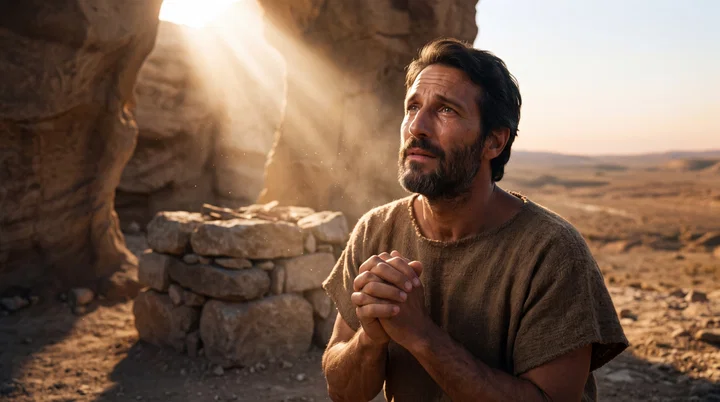
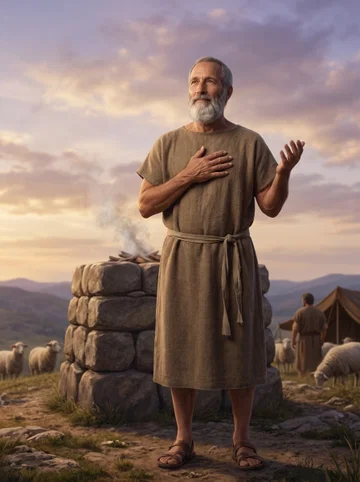
And he removed from thence unto a mountain on the east of Beth-el, and pitched his tent, having Beth-el on the west, and Hai on the east: and there he builded an altar unto the LORD, and called upon the name of the LORD.
Translations
And he removed from there to a mountain on the east of Bethel, and pitched his tent, having Bethel on the west, and Hai on the east: and there he built an altar to the LORD, and called on the name of the LORD.
And he removed from thence unto a mountain on the east of Beth-el, and pitched his tent, having Beth-el on the west, and Hai on the east: and there he builded an altar unto the LORD, and called upon the name of the LORD.
And he removed from thence unto a mountain on the east of Beth-el, and pitched his tent, having Beth-el on the west, and Hai on the east: and there he builded an altar unto the Lord, and called upon the name of the Lord.
And he removed from thence to a mountain on the east of Beth-el, and pitched his tent, having Beth-el on the west, and Hai on the east: and there he erected an altar to the LORD, and called upon the name of the LORD.
And he removed from thence unto the mountain on the east of Beth-el, and pitched his tent, having Beth-el on the west, and Ai on the east: and there he builded an altar unto the LORD, and called upon the name of the LORD.
And he removed from thence unto the mountain on the east of Beth-el, and pitched his tent, having Beth-el on the west, and Ai on the east: and there he builded an altar unto Jehovah, and called upon the name of Jehovah.
And he removeth from thence towards a mountain at the east of Beth-El, and stretcheth out the tent (Beth-El at the west, and Hai at the east), and he buildeth there an altar to Jehovah, and preacheth in the name of Jehovah.
And he removed thence towards the mountain on the east of Bethel, and pitched his tent, [having] Bethel toward the west, and Ai toward the east; and there he built an altar to Jehovah, and called on the name of Jehovah.
And he moved on from thence towards the hill country, on the east of Bethel and pitched his tent,—with Bethel on the west, and Ai on the east, and built there an altar to Yahweh, and called on the name of Yahweh.
Berean Standard Bible, Majority Standard Bible
From there Abram moved on to the hill country east of Bethel and pitched his tent, with Bethel to the west and Ai to the east. There he built an altar to the LORD, and he called on the name of the LORD.
He left from there to go to the mountain on the east of Bethel and pitched his tent, having Bethel on the west, and Ai on the east. There he built an altar to the LORD and called on the LORD’s name.
And moving on from there to the mountain on the east of Beth-el, he put up his tent, having Beth-el on the west and Ai on the east: and there he made an altar and gave worship to the name of the Lord.
Afterward remouing thence vnto a moutaine Eastward from Beth-el, he pitched his tent hauing Beth-el on the Westside, and Haai on the East: and there he built an altar vnto the Lord, and called on the Name of the Lord.
Douay-Rheims (Challoner revision)
And passing on from thence to a mountain, that was on the east side of Bethel, he there pitched his tent, having Bethel on the west, and Hai on the east; he built there also an altar to the Lord, and called upon his name.
Pictures
Cross-references 20 of 29
- Genesis 13:4
Unto the place of the altar, which he had made there at the first: and there Abram called on the name of the LORD.
Abram returns to the altar and again calls on the Lord’s name.
- Hebrews 11:8-9
By faith Abraham, when he was called to go out into a place which he should after receive for an inheritance, obeyed; and he went out, not knowing whither he went.
Abraham obeyed God’s call and lived by faith as a tent-dweller in Canaan.
- Genesis 28:19
And he called the name of that place Beth-el: but the name of that city was called Luz at the first.
Jacob named the place Bethel, explaining the name used for it earlier.
- Genesis 8:20
And Noah builded an altar unto the LORD; and took of every clean beast, and of every clean fowl, and offered burnt offerings on the altar.
Noah also built an altar and offered sacrifices.
- Genesis 26:25
And he builded an altar there, and called upon the name of the LORD, and pitched his tent there: and there Isaac’s servants digged a well.
Isaac also builds an altar and calls upon the Lord where he pitches his tent.
- Genesis 35:7
And he built there an altar, and called the place El-beth-el: because there God appeared unto him, when he fled from the face of his brother.
Jacob built an altar at Bethel, where God appeared to him.
- Genesis 13:18
Then Abram removed his tent, and came and dwelt in the plain of Mamre, which is in Hebron, and built there an altar unto the LORD.
Abram builds another altar to the Lord where he settles.
- Genesis 12:1
Now the LORD had said unto Abram, Get thee out of thy country, and from thy kindred, and from thy father’s house, unto a land that I will shew thee:
The verse continues the narrative of Abram’s call.
- Joshua 7:2-5
And Joshua sent men from Jericho to Ai, which is beside Beth-aven, on the east side of Beth-el, and spake unto them, saying, Go up and view the country. And the men went up and viewed Ai.
identifies Ai east of Bethel
- Genesis 4:26
And to Seth, to him also there was born a son; and he called his name Enos: then began men to call upon the name of the LORD.
Both describe people calling upon the name of the Lord.
- Genesis 13:12-13
Abram dwelled in the land of Canaan, and Lot dwelled in the cities of the plain, and pitched his tent toward Sodom.
Lot settles near Sodom, departing from Abram’s tent-and-altar life.
- Genesis 18:19
For I know him, that he will command his children and his household after him, and they shall keep the way of the LORD, to do justice and judgment; that the LORD may bring upon Abraham that which he hath spoken of him.
God knew Abraham would lead his household to keep the way of the Lord.
- John 8:39
They answered and said unto him, Abraham is our father. Jesus saith unto them, If ye were Abraham’s children, ye would do the works of Abraham.
Those who claim Abraham as father are expected to do his works.
- Genesis 28:11
And he lighted upon a certain place, and tarried there all night, because the sun was set; and he took of the stones of that place, and put them for his pillows, and lay down in that place to sleep.
same 'the place' of Abraham's altar
- Acts 7:5
And he gave him none inheritance in it, no, not so much as to set his foot on: yet he promised that he would give it to him for a possession, and to his seed after him, when as yet he had no child.
both show Abraham owned no land
- Genesis 22:9-13
And they came to the place which God had told him of; and Abraham built an altar there, and laid the wood in order, and bound Isaac his son, and laid him on the altar upon the wood.
Abraham builds an altar and offers a ram in place of his son.
- Galatians 3:29
And if ye be Christ’s, then are ye Abraham’s seed, and heirs according to the promise.
Believers are called Abraham’s seed and urged to follow his example.
- Exodus 3:6
Moreover he said, I am the God of thy father, the God of Abraham, the God of Isaac, and the God of Jacob. And Moses hid his face; for he was afraid to look upon God.
God identifies himself as the God of Abraham.
- Judges 20:26-28
Then all the children of Israel, and all the people, went up, and came unto the house of God, and wept, and sat there before the LORD, and fasted that day until even, and offered burnt offerings and peace offerings before the LORD.
Israel worships and inquires of the Lord at Bethel, where the ark was.
- Isaiah 41:8
But thou, Israel, art my servant, Jacob whom I have chosen, the seed of Abraham my friend.
Abraham is called God’s friend.
Commentary
Each commentary is drawn from primary sources: the writings of Ellen G. White and Adventist pioneers and periodicals. Each commentary is separate. Its own words are not a quotation; follow the references to read the source passages.
Ellen G. White
17 sources
After leaving Shechem Abraham settled by Bethel and built an altar there and called on the name of the Lord.PP 127.2 Wherever he pitched his tent his first work was to build an altar close beside it for sacrifice and to worship there together with all who accompanied him.7T 44.2CE 234.1–235.3Lt 56, 1897, par. 7 It was a place of regular morning and evening sacrifice, prayer and praise, where he gathered his household to worship and trained them to love and fear God.ST Aug 7, 1884MYP 325.1–3PP 128.1 When his tent was removed the altar remained as a visible mark of his presence, and roving Canaanites who had learned of God from his life tarried at it, repaired it, and offered sacrifice to the living God.7T 44.2ST Aug 7, 1884ED 187.2–3PP 128.1 Those who love God are therefore to worship Him wherever they make their home, making it sacred by God's presence through father-led morning and evening prayer and praise with the whole household.ST Aug 7, 1884MYP 325.1–3CE 234.1–235.35T 320.3Ms 199, 1903, par. 2
Worship Where He Pitched
After leaving Shechem, Abraham settled near Bethel and there built an altar and called on the name of the Lord, and the altar marked his worship of God wherever he pitched his tent.PP 127.2 In obedience to the call to leave his kindred he journeyed into a strange land as a sojourner, a pilgrim and a stranger.Lt 56, 1897, par. 713MR 357.1 He moved from place to place to obtain support for his household, which was not small but included more than 400 trained servants.Ms 19, 1886, par. 3
Wherever he pitched his tent his first and immediate work was to build an altar close beside his tent for sacrifice, where he worshiped together with those accompanying him and called on the Lord's name.7T 44.2Lt 56, 1897, par. 7ST Nov 6, 187913MR 357.1Ms 19, 1886, par. 3 His worship accompanied his tent, and the altar marked his presence and witness to the living God.7T 44.2 The verse provides the model for taking worship into the home and honoring God wherever a family settles, the patriarchal example of worshiping God wherever one goes, with devotion brought into the home.CE 234.1–235.35T 320.3 His action showed faith and reverence for God and that God's worship came first, making prompt provision for worship the first duty in a new place, showing respect for the holiness of God and faith by works by putting God first with a house of worship.Lt 56, 1897, par. 713MR 357.1
The altar was a place of regular morning and evening sacrifice, prayer and praise, where he called every member of his household to worship.ST Aug 7, 1884MYP 325.1–3PP 128.1Ms 199, 1903, par. 2PP 143.3–144.1 By worshiping God in every place he lived he was training his household to love and fear God, living a life of prayer and humble obedience that made him a light in the world.ST Aug 7, 1884Ms 19, 1886, par. 3 In a Christian household this means the father leading humble morning and evening devotion for himself and his family, with prayer and praise rising to God and worship made sacred wherever they live.MYP 325.1–3Ms 199, 1903, par. 2PP 143.3–144.1
Lasting Witness and Household Pattern
When his tent was removed, the altar remained standing as a visible mark of his presence and a living testimony to who had been there.7T 44.2ST Aug 7, 1884ED 187.2–3PP 128.1Ms 26, 1894, par. 14–15 Roving Canaanites who came upon the altar knew that Abraham had camped there.ST Aug 7, 1884ED 187.2–3PP 128.1Ms 26, 1894, par. 14–15 When they pitched their own tent they tarried at it, repaired it, and offered sacrifice there to Jehovah, the living God.ST Aug 7, 1884ED 187.2–3PP 128.1 Their knowledge of God had been gained from Abraham's life, proving that teaching of God's word is made effective when faithfully reflected in the teacher's life and that such influence extends beyond the household.ST Aug 7, 1884ED 187.2–3
The verse establishes the pattern that those who love God should worship Him wherever they make their home.MYP 325.1–3CE 234.1–235.35T 320.3PP 143.3–144.1HM Jun 1889 Worship is to be taken into the home and the home made sacred by establishing God's presence there, with Jesus and devotion to God brought into the household.CE 234.1–235.35T 320.3Ms 199, 1903, par. 2 In a Christian household this means regular family prayer and praise, with morning and evening devotion offered for the whole family.ST Aug 7, 1884MYP 325.1–3Ms 199, 1903, par. 2PP 143.3–144.1 The father is to lead in humble morning and evening prayer and praise for himself and his family, with petitions rising to God and love revealed in thoughtful kindness and gentle, unselfish courtesy.ST Aug 7, 1884MYP 325.1–3PP 143.3–144.1 The altar was also a place of regular morning and evening sacrifice, teaching believers to offer morning and evening petitions to God.Ms 26, 1894, par. 13
Prompt provision for worship in a new place is the first duty.Lt 56, 1897, par. 713MR 357.1 Wherever he pitched his tent as pilgrim and stranger his first work was to build an altar so he could worship together with those accompanying him, putting God and His worship first.Lt 56, 1897, par. 713MR 357.1 This shows respect for the holiness of God and faith by works.Lt 56, 1897, par. 713MR 357.1 Parents and ministers are urged to make bringing devotion into the home a deep and broad reform.5T 320.3
Sources
Pioneers and periodicals
55 sources
After Shechem Abram removed to a high mountain east of Bethel, pitching his great encampment with Bethel, then called Luz, on the west and Hai or Ai on the east, and there he built an altar and prayed to the Lord.RH Jan 27, 1910ST Mar 10, 1887RH Jan 6, 1916ST Jan 22, 1894ST Feb 26, 1894
The altar marks him as a worshiper of the one true God and the tent marks him as a stranger in the world who had nothing on earth but looked in faith to a lasting inheritance in God's heavenly city.ST Mar 10, 1887ST Feb 1, 1899ST Oct 7, 1880RH Nov 17, 1910ST Nov 27, 1884
Calling upon the name of the Lord means praying and praising God and also preaching in the name of Jehovah wherever he went.ST Jan 22, 1894
Wherever he pitched his tent he built an altar close beside it, making worship part of settled household life and calling every member of his house to morning and evening prayer, a uniform custom shared by Isaac and Jacob and a model for family worship.RH Jul 29, 1858RH Jan 28, 1862RH Dec 4, 1856RH Oct 30, 1866RH Mar 18, 1902
That worship was joined with labor for God, for as he sacrificed and prayed the Canaanites gathered to learn its meaning and he proclaimed the gospel to them, and those altars remained standing as witnesses to his God and kept alive faith in the coming Redeemer.ST Aug 7, 1884ST Aug 7, 1893ST Aug 2, 1910ST Jan 22, 1894RH Jun 22, 1916
Journey and Geography
Genesis 12:8 belongs to the call of Abram in Genesis 12:1-9, which opens with the Lord speaking to Abram.ST Jan 13, 1887 It is part of the record of his sojourn and trials of faith, during which God gave constant and remarkable evidence of His overruling providence.ST Jan 2, 1912 His greatness lay in obeying God by faith.ST Sep 25, 1901
Abram was a native of Ur of the Chaldees near the mouth of the Euphrates.ST Jan 13, 1887 Its ruins now lie about 125 miles from the Persian Gulf and about six miles from the Euphrates because of river deposits.ST Jan 13, 1887 Its oldest temples bear the name of Urukh, king of Ur and Accad, who lived about a hundred years before Abram left Ur.ST Jan 13, 1887
After Shechem he removed to a mountain east of Bethel.RH Jan 27, 1910ST Mar 10, 1887RH Jan 6, 1916 That mountain was a high place set apart from the influence of the Canaanite plains.RH Jan 27, 1910 There he pitched his tent with Bethel on the west and Hai or Ai on the east.ST Mar 10, 1887RH Jan 6, 1916 He traveled with a great encampment of flocks and herds, laden animals, tents, goods, and people, with widespread flocks of sheep and camels and long lines of asses and bullocks laden with black tents, caldrons, carpets and household furniture, accompanied by aged men and women, infants, mothers with children, boys driving lambs, and armed men, like a great moving Bedouin crowd filling the plain as far as the eye could reach.ST Jan 20, 1887
Bethel was then called Luz.ST Jan 22, 1894ST Feb 26, 1894 It was afterward named Bethel by Jacob after his vision, meaning house of God, or the house of God.ST Jan 22, 1894ST Feb 26, 1894 It was a town about twelve miles north of Jerusalem.ST Jan 22, 1894 Ai was the town afterward noted for the first defeat of Israel under Joshua.ST Jan 22, 1894
The call in Genesis 12 marks the beginning of the 430-year sojourn of Abraham and his descendants in Canaan and Egypt.ST Aug 12, 1913ST Jan 21, 1913 It is dated here to 1921 B.C.ST Aug 12, 1913 Genesis 12 gives the chronological year from which Paul's 430 years are counted, and adding those 430 years reaches the date of Exodus 20.RH Oct 8, 1857
Abraham's worship at Bethel gave the place a sacred history that later made it a persuasive place for worship and a site that held other events in Israel's history.ST Jul 2, 1885ST Feb 14, 1884 That altar made the ground already familiar to Jacob as "the place," which he afterward rebuilt and reconsecrated, changing its name from Luz, meaning separation, to Bethel, meaning house of God, and setting up his stone pillow as a mark of God's favored presence.ST Feb 26, 1894 Bethel was therefore sacred to Jacob also because of Abraham's earlier altar and presence there.ST Feb 26, 1894ST Sep 29, 1898 After returning from Egypt with Lot, Abraham dwelt again at the place between Bethel and Ai where he had built it.ST Jan 29, 1894
Altar Tent and Prayer
Abram's move to the mountain east of Bethel displays two great features of his character, for the altar marks him as a worshiper of God and the tent marks him as a stranger in the world.ST Feb 1, 1899ST Oct 7, 1880RH Nov 17, 1910 He had nothing on earth and had his all in God, not having so much as to set his foot upon, yet having God to enjoy, and that was enough.ST Feb 1, 1899 Living in a tent near Bethel between Bethel and Ai, he built an altar to the Lord and called upon His name, and the tent and altar together mark a life of worship.ST Oct 7, 1880RH Nov 17, 1910 That tent-dwelling expressed faith in a lasting inheritance in God's heavenly city rather than in an earthly town, and his worship and proclamation of God there took place in Canaan despite its dangers.RH Nov 17, 1910 It stands in contrast to Lot, who should have continued to worship Abraham's God rather than settling in Sodom for business.ST Oct 7, 1880
His worship on the mountain, a high place set apart from the influence of the Canaanite plains, established a sanctuary, or consecrated place of worship.RH Jan 27, 1910 He personally attended to the offerings made there, for building the altar meant offering sacrifice as its necessary accompaniment.ST Jan 22, 1894RH Feb 3, 1910 The purpose of such altars is illustrated by his later offering of a ram in place of his son.ST Jul 30, 1912
Calling upon the name of the Lord means praying and praising God as well as preaching in the name of Jehovah, so that wherever Abram went he proclaimed the gospel.ST Jan 22, 1894 Some of his company were converts won in Haran. As he built his altar and offered sacrifice and prayed, the Canaanites naturally gathered to learn its meaning, and he used the opportunity to be a blessing to them by preaching to them the truth that had called him out of his own country into theirs.ST Jan 22, 1894
Raising an altar wherever he pitched his tent shows that communion with God is not tied to one time or place but can be kept up amid any work and surroundings, even by those whose time is not their own.RH Sep 26, 1871 The altar stands for an acceptable altar of the Christian heart, from which the incense of prayer and praise may ascend to God anywhere.RH Sep 26, 1871 This presents worship as part of life outside the city, in contrast to Lot's life in Sodom, where he had no altar and was not calling on the God of Abraham.ST Jul 1, 1880
Faith Obedience and Worship
The altar east of Bethel shows Abram worshiping the one God in contrast to the polytheism of the surrounding nations.ST Mar 10, 1887ST Nov 27, 1884 The account does not present him invoking many gods or as uncertain whether God existed.ST Mar 10, 1887 The word Elohim is Moses' wording in the record, not evidence that Abram had Chaldean gods in mind.ST Mar 10, 1887
Building the altar and calling on the name of the Lord proves he had knowledge of God whose favor he sought by the act.RH Oct 18, 1853 It also proves knowledge of sin, since no offering or sacrifice would have been made without a knowledge of sin.RH Oct 18, 1853 The patriarchs had directions concerning altars and worship even though those directions were not directly recorded.ST May 6, 1875
His worship wherever he sojourned expressed the true faith he was chosen to keep alive after the world had returned to idolatry.ST Oct 25, 1905 His wandering among the tribes of ancient Canaan demonstrated that a person can obey God and live out the truth even in difficult circumstances.RH May 30, 1912
This worshipful obedience stands early in Abraham's life in response to God's call and promise, before the testimony that he kept God's commandments and laws.RH Mar 25, 1858 Those commandments and laws therefore cannot be reduced to coming out from his people, walking through the land, and offering Isaac, since that reverses cause and effect.RH Mar 25, 1858 Keeping those three under the covenant of grace would not develop better character than keeping the ten given on Sinai.RH Mar 25, 1858 The account belongs to the patriarchal history recorded in Genesis, which presents God's dealings with the human family before the Exodus.ST Aug 11, 1914
When Abraham pitched his tent he immediately built an altar for sacrifice and called on the Lord, making worship and welcome to God part of his settled life.ST Nov 6, 1879RH Jul 27, 1916 The altar was one of his first acts in the new country after arriving in Canaan.RH Jul 27, 1916 His practice of building an altar to the Lord and calling on His name wherever he settled presents regular prayer and worship as central to a faithful life.ST Nov 6, 1879ST Aug 3, 1904
Witness to the Nations
Abraham's worship was joined with labor for God, for wherever he went he built an altar to the Lord and preached in the name of Jehovah.ST Aug 7, 1893ST Jan 22, 1894 As he built his altar between Bethel and Ai and offered sacrifice and prayed, the Canaanites naturally gathered to learn its meaning.ST Jan 22, 1894 He used the opportunity to be a blessing to them by preaching to them the truth that had called him out of his own country into theirs.ST Jan 22, 1894 Calling upon the name of the Lord means praying and praising God as well as preaching, so wherever Abram went he proclaimed the gospel, and some of his company were converts won in Haran.ST Jan 22, 1894
By establishing altars throughout the land he proclaimed the Lord from Dan to Beersheba and became a missionary to its people.RH Nov 12, 1914 His worship and proclamation of God took place in Canaan despite its dangers, while his tent-dwelling expressed faith in a lasting inheritance in God's heavenly city rather than in an earthly town.RH Nov 12, 1914RH Nov 17, 1910 Wherever Abraham went in his journeyings he built an altar and proclaimed the name of the Lord to fulfill God's purpose in calling him out from the nations.RH Jun 10, 1902 That purpose was to make him a missionary to the heathen and the father of a race of missionaries to preach the gospel of the kingdom in all the world, by whom all families of the earth would be blessed.RH Jun 10, 1902
When his tent was removed the altar remained standing as a witness to who had been there and as a reminder of his teachings and a witness to his God.ST Aug 7, 1884RH Jun 22, 1916RH Jun 10, 1902 Roving Canaanites who came upon the altar knew Abraham had camped there, and when they pitched their own tent they repaired the altar and worshiped the living God.ST Aug 7, 1884 Its presence and Abraham's example led Canaanites to come there and worship Jehovah.RH Jun 22, 1916 The altars he built endured long after his death, so that idolatrous inhabitants who later came to them worshiped the God of Abraham because his teaching and example had handed down exalted ideas of God's greatness and goodness.RH Jun 10, 1902
His repeated worship through sacrifice wherever he pitched his tent and called on the Lord's name kept alive faith in the coming Redeemer during the patriarchal age.ST Aug 2, 1910 His altars marked his witness to the true God and his preaching of the gospel wherever he went while sojourning in the land.ST Aug 2, 1910ST
Household Worship Pattern
Wherever Abraham pitched his tent he built an altar to the Lord and worshiped him there, so that the place where he lived became a place of worship and prayer.RH Jan 28, 1862RH Oct 30, 1866RH Mar 18, 1902 God is to have an altar wherever a household has a home, and those who love God are to worship him wherever they make their home, with each household serving as a place of prayer.HM Jun 1889RH Jan 28, 1862RH Oct 30, 1866 His habit on every removal was to build an altar close beside his tent wherever he moved in his pilgrimages, making household religion his uniform custom.ST Aug 7, 1884RH Aug 21, 1856RH May 8, 1856 That practice was shared by Isaac and Jacob, and his travels and frequent moves did not interrupt his worship, and the Lord blessed him.RH Mar 18, 1902RH Aug 21, 1856RH May 8, 1856
The altar means daily secret prayer and family devotion that kept true religion strong, to be religious and not merely to be thought religious.RH Aug 21, 1856 Abraham prayed as well as instructed his household, erecting an altar for worship with his household and praying to God together with his family, and his example is the model for family worship.RH Jul 29, 1858RH Dec 4, 1856RH Sep 12, 1871RH Feb 13, 1879 It illustrates the patriarchal father as priest for his family, with the head of the family offering worship and sacrifices on their behalf wherever he settled, and it upholds the practice of fathers bringing their families' needs before God in prayer.RH Jul 29, 1858RH Sep 12, 1871 The altar called every member of his household to morning and evening worship, as a life of prayer and humble obedience that made him a light in the world.ST Aug 7, 1884
That devotion enabled Abraham to command his household after him, to train the youthful Isaac in piety, to pray earnestly for Ishmael to live before God, and to teach his whole house so that even his steward Eliezer learned to know and pray to the only true God.RH Aug 21, 1856 The patriarchs' ardent love to God and true concern for their children under the starlight dispensation rebukes professed Christians under full gospel light who feel no grief over ungodly marriages, and requires Christians now to maintain household prayer continually and not at a lower grade.RH Aug 21, 1856 Christian homes must follow the same example, with morning and evening prayer rising to God and love revealed in thoughtful kindness and gentle, unselfish courtesy.ST Aug 7, 1884
The patriarchs setting up an altar to the Lord wherever they pitched their tents calls families to take God with them and make worship part of household life.ST Feb 7, 1911 This altar on the family's journey is presented as a light whose influence continues through faithful families.ST Feb 7, 1911
Law Sacrifice and Promise
Genesis 12 begins the account of God's covenant with Abraham continued through Genesis 26, in which Abraham, the father of the faithful, was chosen because he was righteous.ST Dec 20, 1910RH Nov 13, 1856 God promised him innumerable descendants, that through them all nations would be blessed, and that they would inherit the land forever.RH Nov 13, 1856 The move to the mountain east of Bethel, camping with Bethel to the west and Ai to the east, building an altar to the Lord and calling on the Lord's name, belongs to that call and covenant and to progressive lessons leading him toward full trust in God.ST Dec 20, 1910RH Jan 6, 1916 Its message is highlighted by the promise, Thou shalt be a blessing, and is to be read with the Promised Seed in mind.ST Dec 20, 1910RH Jan 6, 1916
The building of an altar to the Lord and calling upon His name is an early example of worship involving an altar and the invocation of God.ST Mar 20, 1879 It came several years before the offering in Genesis 15 that was given by explicit divine direction, proving that offerings to the Lord were already common in the early history of mankind and were made without a newly recorded command.RH Jan 15, 1875
Genesis 12 gives the chronological year from which Paul's 430 years are counted, and adding those 430 years reaches the date of Exodus 20.RH Oct 8, 1857 This proves the dispensation of law began at Sinai, long after Genesis 12.RH Oct 8, 1857 Since the moral law existed before Moses and exists after Christ, the law that began at Sinai cannot be the moral law but must be some other law.RH Oct 8, 1857 This worshipful obedience at Bethel stands early in Abraham's life in response to God's call and promise, before the testimony that he kept God's commandments and laws.RH Mar 25, 1858 It proves those commandments and laws cannot be reduced to coming out from his people, walking through the land, and offering Isaac, which reverses cause and effect, and it proves that keeping those three under the covenant of grace would not develop better character than keeping the ten given on Sinai.RH Mar 25, 1858
Sources