Genesis 21:23
Now therefore swear unto me here by God that thou wilt not deal falsely with me, nor with my son, nor with my son’s son: but according to the kindness that I have done unto thee, thou shalt do unto me, and to the land wherein thou hast sojourned.
Translations
Now therefore swear to me here by God that you will not deal falsely with me, nor with my son, nor with my son’s son: but according to the kindness that I have done to you, you shall do to me, and to the land wherein you have sojourned.
Now therefore swear unto me here by God that thou wilt not deal falsely with me, nor with my son, nor with my son’s son: but according to the kindness that I have done unto thee, thou shalt do unto me, and to the land wherein thou hast sojourned.
KJV Cambridge Paragraph Bible, Revised Version, American Standard Version
now therefore swear unto me here by God that thou wilt not deal falsely with me, nor with my son, nor with my son’s son: but according to the kindness that I have done unto thee, thou shalt do unto me, and to the land wherein thou hast sojourned.
Now therefore swear to me here by God, that thou wilt not deal falsely with me, nor with my son, nor with my son's son: but according to the kindness that I have done to thee, thou shalt do to me, and to the land in which thou hast sojourned.
and now, swear to me by God here: thou dost not lie to me, or to my continuator, or to my successor; according to the kindness which I have done with thee thou dost with me, and with the land in which thou hast sojourned.'
And now swear to me here by God that thou wilt not deal deceitfully with me, nor with my son, nor with my grandson. According to the kindness that I have done to thee, thou shalt do to me, and to the land in which thou sojournest.
Now, therefore, swear to me by God, here, that thou wilt not deal falsely by me, nor by mine offspring, nor by my descendants,—according to the lovingkindness wherewith I have dealt with thee, shalt thou deal with me, and with the land wherein thou hast sojourned.
Berean Standard Bible, Majority Standard Bible
Now, therefore, swear to me here before God that you will not deal falsely with me or my children or descendants. Show to me and to the country in which you reside the same kindness that I have shown to you.”
Now, therefore, swear to me here by God that you will not deal falsely with me, nor with my son, nor with my son’s son. But according to the kindness that I have done to you, you shall do to me, and to the land in which you have lived as a foreigner.”
Now, then, give me your oath, in the name of God, that you will not be false to me or to my sons after me, but that as I have been good to you, so you will be to me and to this land where you have been living.
Nowe therefore sweare vnto me here by God, that thou wilt not hurt me, nor my children, nor my childrens children: thou shalt deale with me, and with the countrey, where thou hast bene a stranger, according vnto the kindnesse that I haue shewed thee.
Douay-Rheims (Challoner revision)
Swear therefore by God, that thou wilt not hurt me, nor my posterity, nor my stock: but according to the kindness that I have done to thee, thou shalt do to me, and to the land wherein thou hast lived a stranger.
Pictures
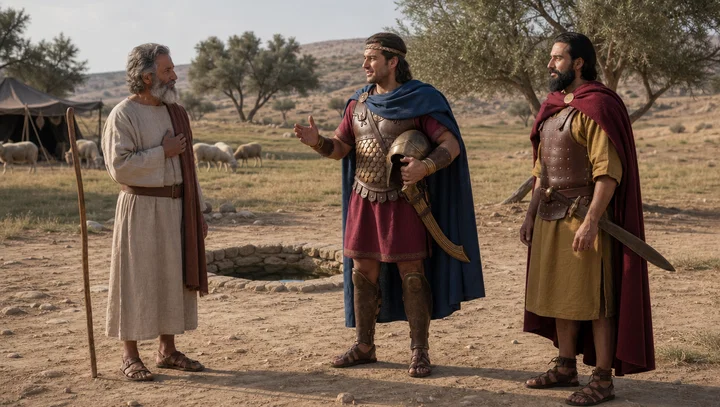
Cross-references
- Genesis 20:9-16
Then Abimelech called Abraham, and said unto him, What hast thou done unto us? and what have I offended thee, that thou hast brought on me and on my kingdom a great sin? thou hast done deeds unto me that ought not to be done.
Abraham and Abimelech recount their dealings and agree on terms of kindness.
- Genesis 21:31-32
Wherefore he called that place Beer-sheba; because there they sware both of them.
The place’s name commemorates their oath and covenant.
- Genesis 26:1
And there was a famine in the land, beside the first famine that was in the days of Abraham. And Isaac went unto Abimelech king of the Philistines unto Gerar.
Isaac sojourned in Gerar during a famine.
- Genesis 26:28-29
And they said, We saw certainly that the LORD was with thee: and we said, Let there be now an oath betwixt us, even betwixt us and thee, and let us make a covenant with thee;
Abimelech seeks an oath of peace from Isaac, echoing his earlier covenant with Abraham.
- Genesis 15:18
In the same day the LORD made a covenant with Abram, saying, Unto thy seed have I given this land, from the river of Egypt unto the great river, the river Euphrates:
Read alongside Genesis 21 as part of the covenant question.
Commentary
Each commentary is drawn from primary sources: the writings of Ellen G. White and Adventist pioneers and periodicals. Each commentary is separate. Its own words are not a quotation; follow the references to read the source passages.
Pioneers and periodicals
12 sources
Genesis 12 to 26 records God's providential dealings with the family of Abraham as the chosen progenitor of the promised Seed, belonging to the history of beginnings and to the story of God's dealing with the Seed.ST In Genesis 21 Isaac stands as the miraculous child of promise through whom the promised Seed would come, rather than through Ishmael.RH Jul 5, 1915 The verse belongs to the account of Abraham's separation from Abimelech, king of the Philistines.ST Feb 12, 1894
Abimelech sought the covenant because he recognized that God was with Abraham, which shows that knowledge of the Lord was known beyond Abraham's family.RH Oct 18, 1853 Abimelech asked Abraham to swear by God to deal honestly and faithfully with him, with his son and his grandson, and with the land where Abraham had sojourned, in return for the kindness Abimelech had shown him and for his continued presence in the land.ST Dec 20, 1910RH Oct 1, 1901 By a different reading held by fewer, it was Abraham who asked Abimelech to deal faithfully with him, his descendants, and the land where he had lived as a sojourner, in return for the kindness Abraham had shown.ST Aug 28, 1901
Covenant here means a mutual agreement in which Abraham and Abimelech made mutual promises about how they would treat one another, including not to deal falsely and to show reciprocal kindness.ST Mar 4, 1886ST Sep 27, 1883 The agreement concerned the well at Beer-sheba, whose name means well of the oath and commemorated their agreement.ST Aug 28, 1901 Abraham first made the covenant of friendship confirmed by an oath and then raised the wrong done by Abimelech's servants concerning a well of water without breaking friendship, showing that meekness allows a wrong to be addressed and disagreements to be fairly discussed and settled while preserving friendship.RH Apr 10, 1866
The covenant was respected while Abraham lived, but after his death the Philistines stopped up the wells he had dug.ST Aug 28, 1901 The verse is connected with the everlasting life of the redeemed, pictured as a day with no setting sun or following night.RH Nov 9, 1911
Sources