Genesis 31:51
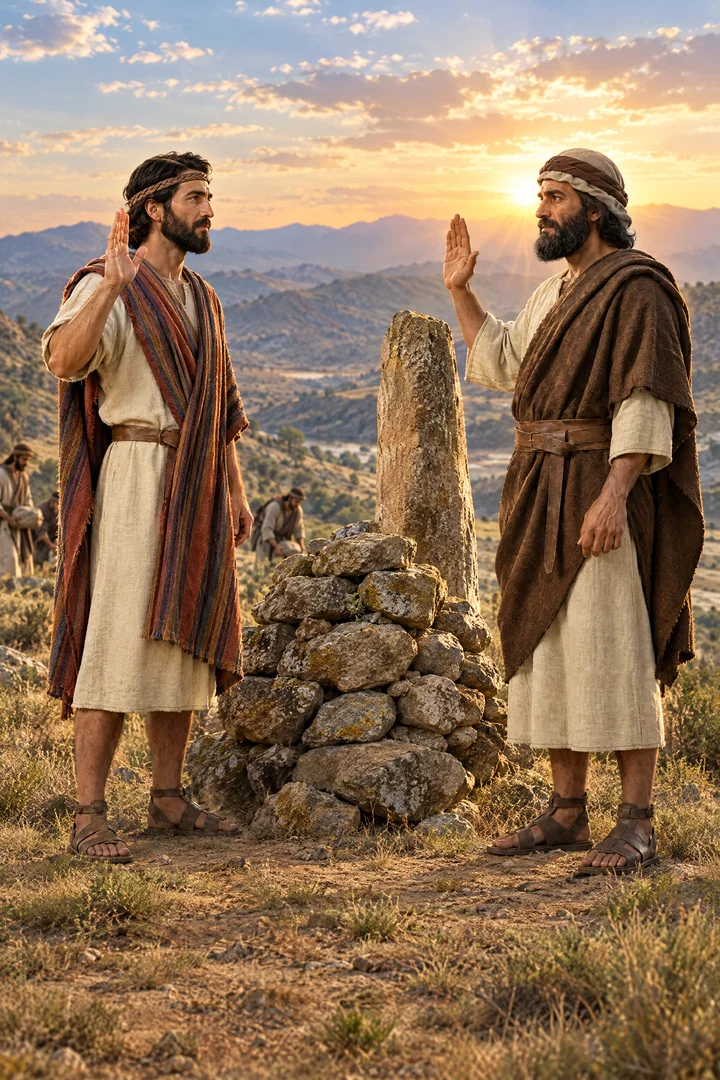
And Laban said to Jacob, Behold this heap, and behold this pillar, which I have cast betwixt me and thee;
Translations
And Laban said to Jacob, Behold this heap, and behold this pillar, which I have cast between me and you:
King James Version, KJV Cambridge Paragraph Bible, Webster Bible
And Laban said to Jacob, Behold this heap, and behold this pillar, which I have cast betwixt me and thee;
Revised Version, American Standard Version
And Laban said to Jacob, Behold this heap, and behold the pillar, which I have set betwixt me and thee.
And Laban saith to Jacob, 'Lo, this heap, and lo, the standing pillar which I have cast between me and thee;
And Laban said to Jacob, Behold this heap, and behold the pillar which I have set up between me and thee:
And Laban said to Jacob—Behold this heap, and behold this pillar, which I have set betwixt me, and thee:
Berean Standard Bible, Majority Standard Bible
Laban also said to Jacob, “ Here is the mound, and here is the pillar I have set up between you and me.
Laban said to Jacob, “ See this heap, and see the pillar, which I have set between me and you.
And Laban said, See these stones and this pillar which I have put between you and me;
Moreouer Laban sayd to Iaakob, Beholde this heape, and behold the pillar, which I haue set betweene me and thee,
Douay-Rheims (Challoner revision)
And he said again to Jacob: Behold, this heap, and the stone which I have set up between me and thee,
Pictures
Cross-references
- Genesis 31:44-46
Now therefore come thou, let us make a covenant, I and thou; and let it be for a witness between me and thee.
Jacob and Laban make a covenant and raise a heap of stones as witness.
- Genesis 31:1-2
And he heard the words of Laban’s sons, saying, Jacob hath taken away all that was our father’s; and of that which was our father’s hath he gotten all this glory.
Jealousy turns Laban against Jacob.
- Genesis 26:28-31
And they said, We saw certainly that the LORD was with thee: and we said, Let there be now an oath betwixt us, even betwixt us and thee, and let us make a covenant with thee;
Isaac and Abimelech make a covenant, feast together, and depart in peace.
Commentary
Each commentary is drawn from primary sources: the writings of Ellen G. White and Adventist pioneers and periodicals. Each commentary is separate. Its own words are not a quotation; follow the references to read the source passages.
Ellen G. White
5 sources
The verse belongs to Jacob's break with Laban after Jacob had increased exceedingly with cattle and servants, when Laban's sons charged him with taking all their father's wealth and glory and Laban's countenance was no longer toward him as before, and fearing violence from Laban's sons Jacob remembered the Bethel promise, prayed for direction, and was answered in a dream to return to the land of his fathers and kindred with God with him.PP 192.3–193.1 It is Laban himself who cast and set the heap and the pillar between himself and Jacob and who points to them in the verse.1SP 117.1PP 193.6–194.1
The heap of stones and the pillar serve as visible witnesses to the solemn covenant of peace between Laban and Jacob made before God.1SP 117.1ST May 1, 1879PP 193.6–194.1SG3 126.1–127.1 They mark a boundary between the two men that neither would pass over to the other for harm.1SP 117.1ST May 1, 1879PP 193.6–194.1SG3 126.1–127.1
They seal Jacob's promise not to afflict Laban's daughters or take other wives besides them, guarding the welfare of Leah and Rachel.1SP 117.1SG3 126.1–127.1 The covenant was made before the Lord, with God as witness and judge between them.1SP 117.1SG3 126.1–127.1 Jacob confirmed the covenant by swearing by the fear of his father Isaac.1SP 117.1SG3 126.1–127.1
Sources
Pioneers and periodicals
9 sources
The verse belongs to the covenant Jacob and Laban made when they met at Mount Gilead after Jacob departed from Haran and Laban pursued him.ST Oct 6, 1898ST Mar 19, 1894 The heap and the pillar are the boundary marker Laban placed between himself and Jacob as a visible witness to their agreement.ST May 1, 1879ST Jan 3, 1911RH Mar 7, 1912 Their treaty was concluded with a feast, illustrating the custom of sealing engagements, treaties, and oaths with a meal, just as the Lord's Supper renews a covenant.RH Mar 7, 1912
The verse stands in the account of Jacob's visit to Laban, his mother's brother, covering his marriage to Leah and Rachel, his sojourn with Laban, and his leaving Syria for Palestine.ST Jan 3, 1911 It belongs to the continuing account of the family through which the Seed was to come, with the promises extending from Abraham to Isaac and from Isaac to Jacob.ST Jan 14, 1913 Genesis 31 is an instance of the unhappiness that polygamy brought into Jacob's family.RH Mar 1, 1870
The verse falls in the story of Jacob's selfish plotting and troubled dealings with Laban, where the deceiver is deceived.ST Jan 3, 1911ST Jan 9, 1912 As Jacob had deceived his father he was himself deceived in marriage, and one who overreached others met overreaching as God's providence brought retribution in time.ST Jan 3, 1911ST Jan 9, 1912 The account including the verse shows God's care over Jacob as promised, notwithstanding his selfishness and unfaithfulness.ST Oct 6, 1898ST Jan 3, 1911
Jacob's unsatisfactory experience, in which lack of better earlier experience brought much later trouble, was shaped by division in the family from his aged father's overfond affection for Esau and his mother's stronger sympathy and favoritism for him.ST Jan 14, 1913 That shaping included her knowledge of God's promise that it would come through Jacob, and her keeping the material importance of the Seed before him without full appreciation of the spiritual blessings.ST Jan 14, 1913 Material overreaching ran all the way through that experience and showed the fitness of his name Jacob, meaning supplanter, before God in mercy brings a change.ST Jan 14, 1913
Jacob's faithfulness to God was reflected in his faithfulness to Laban, he remembered God by offering sacrifice, and in setting his face homeward he teaches readiness to obey God's leading.ST Oct 6, 1898 The account warns against Jacob's rash declaration concerning whoever had taken Laban's images.ST Oct 6, 1898
Sources