Genesis 33:3
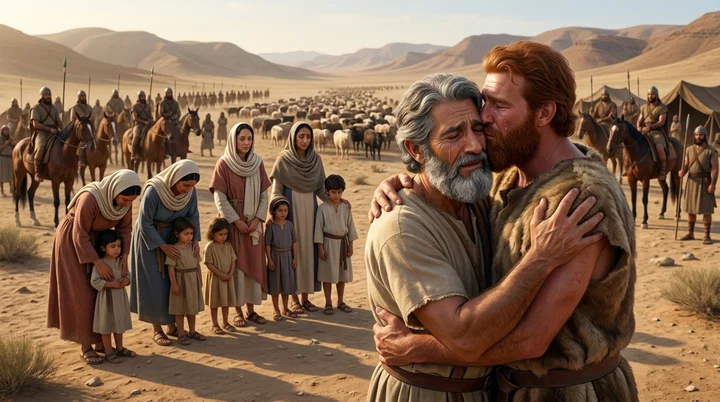
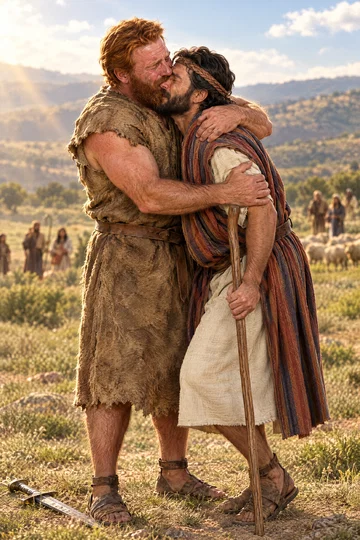
And he passed over before them, and bowed himself to the ground seven times, until he came near to his brother.
Translations
American King James Version, King James Version, KJV Cambridge Paragraph Bible
And he passed over before them, and bowed himself to the ground seven times, until he came near to his brother.
And he passed on before them, and bowed himself to the ground seven times, till he came near to his brother.
Revised Version, American Standard Version
And he himself passed over before them, and bowed himself to the ground seven times, until he came near to his brother.
And he himself passed over before them, and boweth himself to the earth seven times, until his drawing nigh unto his brother,
And he passed on before them, and bowed to the earth seven times, until he came near to his brother.
but he himself, passed over before them, and bowed himself to the earth seven times, until he had come near unto his brother.
Berean Standard Bible, Majority Standard Bible
But Jacob himself went on ahead and bowed to the ground seven times as he approached his brother.
He himself passed over in front of them, and bowed himself to the ground seven times, until he came near to his brother.
And he himself, going before them, went down on his face to the earth seven times till he came near his brother.
So he went before them and bowed him selfe to the ground seuen times, vntill he came neere to his brother.
Douay-Rheims (Challoner revision)
And he went forward and bowed down with his face to the ground seven times until his brother came near.
Pictures
Cross-references
- Genesis 32:24-30
And Jacob was left alone; and there wrestled a man with him until the breaking of the day.
Jacob’s all-night struggle prepared him to meet Esau.
- Genesis 27:1-40
And it came to pass, that when Isaac was old, and his eyes were dim, so that he could not see, he called Esau his eldest son, and said unto him, My son: and he said unto him, Behold, here am I.
Jacob’s taking of Isaac’s blessing through deception caused Esau’s resentment.
- Genesis 25:29-34
And Jacob sod pottage: and Esau came from the field, and he was faint:
Esau had sold his birthright to Jacob for food.
- Genesis 32:6
And the messengers returned to Jacob, saying, We came to thy brother Esau, and also he cometh to meet thee, and four hundred men with him.
Esau approaches Jacob with four hundred men.
- Genesis 33:11
Take, I pray thee, my blessing that is brought to thee; because God hath dealt graciously with me, and because I have enough. And he urged him, and he took it.
Jacob’s gift follows his bowing as an offering of peace.
- Genesis 32:1-2
And Jacob went on his way, and the angels of God met him.
Jacob sees God’s angelic host as he approaches Esau.
- Genesis 32:30
And Jacob called the name of the place Peniel: for I have seen God face to face, and my life is preserved.
The blessing at Peniel precedes Jacob’s meeting with Esau.
- Genesis 32:26
And he said, Let me go, for the day breaketh. And he said, I will not let thee go, except thou bless me.
Jacob’s struggle and plea for a blessing precede his meeting Esau.
Commentary
Each commentary is drawn from primary sources: the writings of Ellen G. White and Adventist pioneers and periodicals. Each commentary is separate. Its own words are not a quotation; follow the references to read the source passages.
Ellen G. White
3 sources
Jacob went ahead of his family and company to meet his brother, bowing himself to the ground seven times until he came near to him, approaching him with humility.1SP 120.3SG3 130.4 He came thus just after wrestling through the night and receiving God's blessing, with that blessing shining in his countenance.Ms 190, 1905, par. 19–20 He came bowing and halting upon his thigh, having fallen crippled and helpless upon the breast of the covenant Angel and having received the victory of conquering faith and the title of prince with God.
Esau had been marching against Jacob with an armed band of four hundred men to kill him.SG3 130.4Ms 190, 1905, par. 19–20 While Jacob wrestled that night, God moved upon Esau's heart in his sleeping hours so that he could not harm him.SG3 130.4Ms 190, 1905, par. 19–20 Esau dreamed that he saw angels of God around Jacob, and saw him as an exile from his father's house for twenty years from fear for his life, sorrowing to find his mother dead, and humble, and dreamed that he had no mind to harm him when they met.SG3 130.4 When he awoke he told his men his dream, recognized that Jacob was with God's angel, and commanded that not one of them should injure Jacob because the God of his father was with him.SG3 130.4Ms 190, 1905, par. 19–20
Jacob's humble approach was therefore met in peace, and the armed bands were stilled before him.SG3 130.4 Esau ran to meet him, embraced him, fell on his neck, kissed him, and they wept.SG3 130.4 Jacob then urged Esau to take his blessing as a peace-offering, because God had dealt graciously with him and he had enough.SG3 130.4 Surrendered weakness thus becomes strength that disarms enemies. The yielding of the will to God is profitable because the will is received back purified and refined and linked with the divine, exchanging the lower for the higher, the earthly for the spiritual, and the perishable for the eternal.
Sources
Pioneers and periodicals
14 sources
Jacob passes ahead of his waiting family alone, unarmed and halting yet peaceful, to meet his offended brother Esau the warrior chieftain with his soldiers, bowing repeatedly to the ground as a token of respect.ST Nov 20, 1879ST Jan 3, 1911ST Oct 20, 1898 His sevenfold bowing uses seven as a sacred and complete number meaning many and fullness.RH Dec 11, 1856RH Feb 25, 1875 The humble approach follows his all-night struggle in repentant prayer and tears at Peniel, where he gained victory with God, received a changed heart and the name Israel, and sought to make amends by gift.ST Jan 16, 1912ST Mar 26, 1894 The Lord turns Esau's long-threatened vengeance with four hundred men into brotherly love and embrace, so the brothers are no longer divided by enmity and hatred.ST Mar 26, 1894RH Jan 7, 1915 That peace is made in answer to the prayer of Genesis 32, for by obtaining power with God Jacob has power with men, winning his angry brother not by talking over the birthright but by surrender to God, humility, and being broken.ST Nov 20, 1879RH Nov 21, 1912RH Jan 7, 1915
Context and Details
The verse belongs to Jacob's anxious return from Syria to Palestine after long separation to meet Esau, the brother he had offended, seeking to make amends by offering property, humbling himself before God and asking only for mercy as part of reconciliation.ST Dec 4, 1879ST Jan 16, 1912ST Jan 3, 1911 It stands in the account of the crisis in which he becomes Israel, of God's intervention changing Esau's purpose, and of the dedication of Jacob and his household to God.ST Jan 3, 1911 After a night of prayer in which he gained victory with God, with the gift sent ahead and God's Spirit softening Esau's heart, he met him as a friend rather than an enemy, no longer divided by enmity, jealousy and hatred.ST Dec 4, 1879
He passed over before his family and bowed to the ground seven times until he came near to his brother, the meeting of a humble shepherd with a warrior chief.ST Nov 20, 1879ST Oct 20, 1898 He went forward alone before his unarmed company of men, women and children with flocks and herds to meet the sturdy chieftain Esau and his soldiers, pale and halting at every step from his recent conflict yet with benignity and peaceful light on his countenance and supported by his staff.ST Nov 20, 1879 He bowed repeatedly to the ground as a token of respect while his little retinue waited behind with deepest anxiety over the issue.ST Nov 20, 1879
The approach came after he was met by angels and after rejoicing under God's blessing at Peniel.ST Mar 26, 1894 It followed an all-night struggle for personal blessing in repentant prayer and tears, in which he gained victory with God, received a changed heart and the changed name Israel, humbled himself before God asking only for mercy, and sought to make amends by offering property and sending a gift ahead.ST Jan 16, 1912RH Jan 7, 1915ST May 4, 1904 By that surrender he obtained power with God and therefore had power with men, with murderous hate removed from Esau's heart so that one coming with four hundred men to destroy him and his family met him as a brother.RH Jan 7, 1915ST May 4, 1904
Bowing seven times uses seven as a sacred, symbolic, perfect number meaning many and a full, complete number.RH Dec 11, 1856RH Feb 25, 1875 It is an early pre-Mosaic example of that significance, rooted in a word for seven meaning to be full, complete, and entirely made up.RH Dec 11, 1856RH Feb 25, 1875 The constant use of seven carries an allusion founded on creation occupying seven days with its Sabbath rest, shadowing out a sevenfold division of time to the end of the world.RH Feb 25, 1875
It is part of the affecting meeting showing the Lord's power to change men's hearts.ST Mar 26, 1894 It leads to Jacob coming in peace to the city of Shechem ten or eleven years before Joseph at seventeen reported his brothers and dreamed his dreams.ST Mar 26, 1894
Lessons and Application
The bowing belongs to an affecting meeting after rejoicing under God's blessing at Peniel, showing the Lord's power to change men's hearts.ST Mar 26, 1894 After returning from Syria and a night of prayer in which victory with God was gained, the gift sent ahead together with God's Spirit softening Esau's heart meant meeting as a friend rather than an enemy. God had prepared Jacob's heart through an all-night struggle for personal blessing and had removed murderous hate from Esau's heart.ST May 4, 1904 The meeting after long separation reflects the change from former desire for revenge to a reconciliation in which the brothers were no longer divided by enmity, jealousy, and hatred.ST Dec 4, 1879 Approaching after prayer with humility and bowing repeatedly as he came near, Esau's intended revenge was changed into brotherly love.RH Aug 1, 1871
The one coming with four hundred men to destroy Jacob and his family was won by surrender to God and falling on the Rock and being broken, so that he met Jacob as a brother with kindness, embrace and tears.RH Jan 7, 1915 The bowing issues in throwing arms about Jacob's neck and pressing him to the bosom with tears of joy and softest endearments of love and tenderness instead of long-threatened vengeance.ST Nov 20, 1879 The meeting leads on to coming in peace to the city of Shechem ten or eleven years before Joseph at seventeen reported his brothers and dreamed his dreams.ST Mar 26, 1894
Deliverance from Esau shows being brought safely through danger without using the sword, with protection coming through God rather than force.RH Oct 2, 1900
Peace between the two brothers was made in answer to the prayer recorded in Genesis 32, which brings the reconciled meeting where Jacob humbly approaches his brother.RH Nov 21, 1912 The night of weeping and prayer and connection with God gained the heart of Esau from Him who has all hearts in His hand.ST Nov 20, 1879 By obtaining power with God Jacob therefore had power with men.RH Jan 7, 1915 God answers prayer by turning estrangement into peace and gives encouragement to trust prayer.RH Nov 21, 1912RH Aug 1, 1871
The posture in humility and submission teaches the spirit of forgiveness in the heart, coming after being met by angels and receiving a changed heart and a changed name. It signifies a changed attitude toward the former course concerning the birthright, coming not to press claim by deceit but in submission to the brother.ST Oct 20, 1898
The reconciliation did not come by talking over the trouble of the pottage and birthright, which would have kept them divided, but by prayer first and then the humble meeting.RH Jan 7, 1915 By surrendering to God and falling on the Rock and being broken the angry brother was won, and falling on the Rock and being broken is the way to settle all trouble among brethren.RH Jan 7, 1915
Esau's soldiers see only the feelings of a husband and father for family and possessions and cannot see connection with God and victory, showing that worldlings cannot discern the secret of the Christian's strength and inner life.ST Nov 20, 1879
Sources