Genesis 27:1
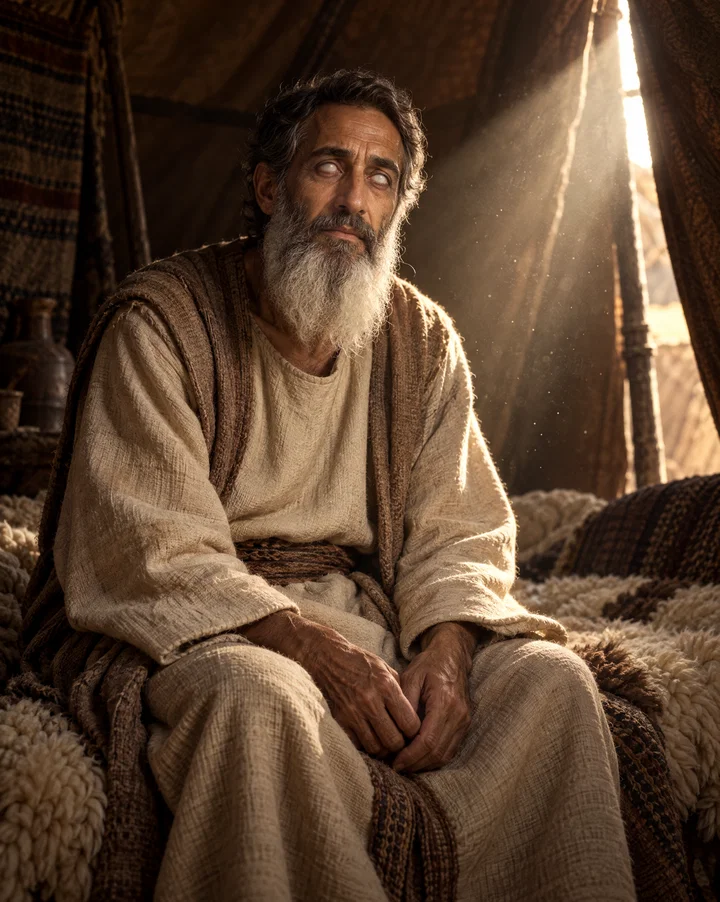
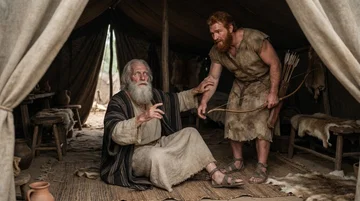
And it came to pass, that when Isaac was old, and his eyes were dim, so that he could not see, he called Esau his eldest son, and said unto him, My son: and he said unto him, Behold, here am I.
Translations
And it came to pass, that when Isaac was old, and his eyes were dim, so that he could not see, he called Esau his oldest son, and said to him, My son: and he said to him, Behold, here am I.
King James Version, KJV Cambridge Paragraph Bible
And it came to pass, that when Isaac was old, and his eyes were dim, so that he could not see, he called Esau his eldest son, and said unto him, My son: and he said unto him, Behold, here am I.
And it came to pass, that when Isaac was old, and his eyes were dim, so that he could not see, he called Esau his eldest son, and said to him, My son: and he said to him, Behold, here am I.
Revised Version, American Standard Version
And it came to pass, that when Isaac was old, and his eyes were dim, so that he could not see, he called Esau his elder son, and said unto him, My son: and he said unto him, Here am I.
And it cometh to pass that Isaac [is] aged, and his eyes are too dim for seeing, and he calleth Esau his elder son, and saith unto him, 'My son;' and he saith unto him, 'Here [am] I.'
And it came to pass when Isaac had become old, and his eyes were dim so that he could not see, that he called Esau his elder son, and said to him, My son! And he said to him, Here am I.
And it came to pass that Isaac, was old, and his eyes became too dim to see, so he called Esau his elder son and said unto him My son! And he said unto him, Behold me!
Berean Standard Bible, Majority Standard Bible
When Isaac was old and his eyes were so weak that he could no longer see, he called his older son Esau and said to him, “ My son.”“ Here I am,” Esau replied.
When Isaac was old, and his eyes were dim, so that he could not see, he called Esau his elder son, and said to him, “ My son?”He said to him, “ Here I am.”
Now when Isaac was old and his eyes had become clouded so that he was not able to see, he sent for Esau, his first son, and said to him, My son: and he said, Here am I.
And when Izhak was olde, and his eyes were dimme (so that he coulde not see) he called Esau his eldest sonne, and sayde vnto him, My sonne. And he answered him, I am here.
Douay-Rheims (Challoner revision)
Now Isaac was old, and his eyes were dim, and he could not see: and he called Esau, his elder son, and said to him: My son? And he answered: Here I am.
Pictures
Cross-references
- Genesis 25:29-34
And Jacob sod pottage: and Esau came from the field, and he was faint:
Esau sold his birthright to Jacob, then sought Isaac’s blessing.
- Genesis 25:23
And the LORD said unto her, Two nations are in thy womb, and two manner of people shall be separated from thy bowels; and the one people shall be stronger than the other people; and the elder shall serve the younger.
God foretold that the elder would serve the younger, shaping the conflict over Isaac’s blessing.
- Hebrews 12:16-17
Lest there be any fornicator, or profane person, as Esau, who for one morsel of meat sold his birthright.
Esau sold his birthright and was later rejected when he sought the blessing.
- Genesis 27:5-29
And Rebekah heard when Isaac spake to Esau his son. And Esau went to the field to hunt for venison, and to bring it.
Rebekah arranges for Jacob to deceive Isaac and obtain his blessing.
- Genesis 25:28
And Isaac loved Esau, because he did eat of his venison: but Rebekah loved Jacob.
Describes Isaac’s and Rebekah’s different affections for their sons.
- Romans 9:13
As it is written, Jacob have I loved, but Esau have I hated.
God’s statement about Jacob and Esau connects with the brothers’ story.
- Genesis 27:41-42
And Esau hated Jacob because of the blessing wherewith his father blessed him: and Esau said in his heart, The days of mourning for my father are at hand; then will I slay my brother Jacob.
Esau’s anger over the stolen blessing led him to plan Jacob’s death.
- Hebrews 12:16
Lest there be any fornicator, or profane person, as Esau, who for one morsel of meat sold his birthright.
Esau sold his birthright for a meal.
- Genesis 27:27-29
And he came near, and kissed him: and he smelled the smell of his raiment, and blessed him, and said, See, the smell of my son is as the smell of a field which the LORD hath blessed:
Isaac gives Jacob the blessing through deception.
- Malachi 1:2-3
I have loved you, saith the LORD. Yet ye say, Wherein hast thou loved us? Was not Esau Jacob’s brother? saith the LORD: yet I loved Jacob,
God declares his love for Jacob and hatred of Esau.
- Hebrews 11:20
By faith Isaac blessed Jacob and Esau concerning things to come.
Isaac’s blessings of Jacob and Esau were acts of faith concerning things to come.
- Genesis 25:26
And after that came his brother out, and his hand took hold on Esau’s heel; and his name was called Jacob: and Isaac was threescore years old when she bare them.
Gives the brothers’ birth order and Isaac’s age at their birth.
- Genesis 28:1-5
And Isaac called Jacob, and blessed him, and charged him, and said unto him, Thou shalt not take a wife of the daughters of Canaan.
Isaac sent Jacob to Padan-aram to find a wife among his relatives.
- Genesis 26:3-4
Sojourn in this land, and I will be with thee, and will bless thee; for unto thee, and unto thy seed, I will give all these countries, and I will perform the oath which I sware unto Abraham thy father;
God’s promise to Isaac forms the inheritance at issue in the blessing.
- Genesis 25:27
And the boys grew: and Esau was a cunning hunter, a man of the field; and Jacob was a plain man, dwelling in tents.
Contrasts Esau’s and Jacob’s ways of life.
- Genesis 27:43-44
Now therefore, my son, obey my voice; and arise, flee thou to Laban my brother to Haran;
mother sent Jacob to Padan-aram
- 2 Samuel 8:14
And he put garrisons in Edom; throughout all Edom put he garrisons, and all they of Edom became David’s servants. And the LORD preserved David whithersoever he went.
Edom’s subjection follows the family breach between Jacob and Esau.
- Matthew 1:2
Abraham begat Isaac; and Isaac begat Jacob; and Jacob begat Judas and his brethren;
Jacob is named in Christ’s lineage.
Commentary
Each commentary is drawn from primary sources: the writings of Ellen G. White and Adventist pioneers and periodicals. Each commentary is separate. Its own words are not a quotation; follow the references to read the source passages.
Ellen G. White
13 sources
Isaac was old and weakened by age, more than a hundred years old, with eyes dim and failing until he was nearly or completely blind and could not see.1SP 106.2ST Apr 17, 1879SG3 115.1 Believing himself near death, he privately and secretly called Esau his eldest and favorite son to prepare food including venison so he could give him the blessing before he died.1SP 106.2ST Apr 17, 1879SG3 114.1 He favored Esau and meant to give him the firstborn's blessing even though he knew God's revealed purpose that the elder would serve the younger, even though Esau had sold his birthright, showed indifference to its obligations, and had married women who worshiped false gods.1SP 106.2ST Apr 17, 1879SG3 115.1 The verse opens and sets the scene for Jacob, with Rebekah, to obtain the birthright and blessing from his old, blind father by fraud, hypocrisy and underhand dealing, which God did not prompt.SG3 115.1SG3 133.24SP 437.2 That deception showed lack of faith and unwillingness to wait for and trust God to fulfill His promise, and it required prior repentance with earnest agonizing cries until he prevailed, warning God's commandment-keeping people not to seek advantage over brethren by unfair methods and conniving, for God measures every act and weighs every motive and will not connive at selfishness to carry out His plans.SG3 115.1SG3 133.24SP 437.2Lt 7, 1896, par. 1–4Ms 139, 1899, par. 17–21
Isaac's Age and Intent
Isaac was old and weakened by age, more than a hundred years old, with eyes dim and failing so that he was nearly or completely blind and could not see.1SP 106.2ST Apr 17, 1879SG3 115.14SP 437.2GC88 616.1–2 His failing eyesight and blindness set the scene as he called his eldest son.1SP 106.2SG3 115.1ST Jan 29, 1880PP 179.3ST Feb 13, 1901
Believing he was near death, he called Esau privately and secretly to give him the blessing before he died.1SP 106.2ST Apr 17, 1879SG3 114.1ST Jan 29, 1880PP 179.3 Esau was his eldest and favorite son, and Isaac asked him to prepare food for him, including venison.1SP 106.2ST Apr 17, 1879SG3 114.1ST Jan 29, 1880ST Feb 13, 1901
He favored Esau and intended to give him the firstborn's and father's blessing.ST Apr 17, 1879SG3 115.1SG3 114.1ST Jan 29, 1880PP 179.3 He did so even though he knew God's revealed and foretold purpose that the elder would serve the younger and that the younger was to receive the blessing.ST Apr 17, 1879SG3 115.1PP 179.3 Esau had sold his birthright to Jacob without disclosing it, yet Isaac still preferred him.1SP 106.2SG3 114.1 Esau also showed indifference to the blessing's obligations and had married women who worshiped false gods.PP 179.3
Deception, Repentance, and Warning
This moment opens and sets the scene for Jacob, acting with Rebekah, to deceive his old, blind father and obtain the birthright and blessing by fraud, hypocrisy, and underhand dealing, which God did not prompt.SG3 115.1SG3 133.2GC88 616.1–2Lt 7, 1896, par. 1–4Ms 139, 1899, par. 17–21 That deception was a wrong requiring repentance, not a method God approves or will work with, for He was fully able to provide for Jacob by His own methods and will not work with any devising or planning after that example.SG3 133.24SP 437.2Ms 139, 1899, par. 17–21 The same kind of deception is practiced by men standing in high places of trust who pervert right principles and turn away from obeying God's word.Lt 7, 1896, par. 1–4
The fraud showed lack of faith and unwillingness to wait for and trust God to fulfill His promise despite discouraging circumstances, even though Jacob knew God had promised him the blessing.SG3 115.1ST Jan 29, 1880 Receiving the blessing did not itself determine prosperity, since God would bless or reject each son according to whether he loved and obeyed God.SG3 115.1 The fraud caused Jacob to flee for his life from Esau's anger and deadly threats, knowing he had sinned.GC88 616.1–2ST Jan 29, 1880ST Feb 13, 1901 His guilt gave Satan ground to accuse him before the angels of God and claim the right to destroy him as Esau marched against him in anger threatening death.PP 201.3–202.2
That wrong had to be repented of beforehand, in which Jacob learned God is merciful, reviewed his life, cast himself on mercy, pointed back to repentance, and held fast with earnest agonizing cries until he prevailed.PP 201.3–202.2 Had he not previously repented of obtaining the blessing by fraud, God could not have heard his later prayer for deliverance from Esau and mercifully saved his life and preserved it.SG3 133.24SP 437.2PP 201.3–202.2 His experience teaches that concealed, unconfessed sins left on the books destroy confidence in God in a time of fear and anguish and overwhelm with fear and despair, cutting off faith to plead for deliverance.4SP 437.2PP 201.3–202.2 By contrast, sins confessed and forgiven are blotted out by Christ's atoning blood and cannot be brought back to remembrance, leaving no concealed wrongs to remember.4SP 437.2PP 201.3–202.2
The verse warns God's commandment-keeping people not to depart into covetousness, selfishness, ambitious pride and rivalry, or to seek advantage over brethren by unfair methods, conniving and underhand dealing.Ms 139, 1899, par. 17–21 God measures every act and weighs every motive, will not connive at selfishness to carry out His plans, and such unholy work hurts and finally ruins every soul who engages in it.Ms 139, 1899, par. 17–21
Sources
Pioneers and periodicals
42 sources
Isaac was old, more than a hundred years old and weakened with eyes so dim he could not see, and believing death was near he privately called Esau his eldest son as high priest of his household to prepare venison such as he loved so he could give him the firstborn's blessing before dying.ST Apr 17, 1879ST Jul 31, 1901ST Jan 3, 1911ST Mar 31, 1881 He specially loved Esau because his venison pleased his appetite, and he designed the blessing for him although he knew God's purpose and prior word that the elder would serve the younger and that the blessing was promised to Jacob.ST Jul 31, 1901ST Jan 14, 1913ST Apr 1, 1897ST Rebekah overheard the call and, knowing reasoning would not change Isaac's purpose, had Jacob kill kids, prepared the meal and put skins on his hands and neck to imitate his hairy brother and deceive his nearly blind father, and Jacob followed her counsel in fraud and lying instead of trusting God to fulfill His promise in His own time and honorable way.ST Jul 31, 1901STSTRH Nov 16, 1916ST Feb 17, 1914 God did not approve the deceit, for coveting the birthright broke the tenth commandment and the end does not justify the means, yet He meant the birthright and blessing for Jacob because of superior faith and character, so Jacob obtained it through deception and not because of it.ST Feb 24, 1887ST Feb 28, 1906ST Apr 1, 1897ST Mar 31, 1881RH Aug 17, 1869 The apparent success brought only brief triumph, for Esau found no place for repentance and threatened Jacob's life, so Jacob fled in guilt to exile with lasting separation from his mother and long afflictions including Laban's deception, until chastisement worked deep repentance and he only really obtained the spiritual part of the blessing on the night he prevailed with God and won the name Israel.STST Mar 30, 1888ST Jan 6, 1909ST Feb 23, 1915
Isaac's Age and Blindness
Isaac was old, and his eyes were dim so that he could not see clearly, and in that condition he called Esau his eldest son, who answered him.ST Jul 31, 1901ST Jan 3, 1911ST Jan 14, 1913ST Sep 22, 1898 The call sets the scene for his attempt to give the blessing, introducing the account of Jacob obtaining his father's blessing by fraud while Esau the firstborn is given a secondary place, and of Jacob having to flee because of his brother's hatred.ST Jul 31, 1901ST Jan 3, 1911RH Mar 30, 1869 It belongs to the account of the family through which the promised Seed was to come, as the promise passed from Abraham to Isaac and then to Jacob.ST Jan 14, 1913
He was more than a hundred years old and weakened by age, so blind that he could not see.ST Apr 17, 1879ST Mar 31, 1881RH Nov 30, 1916 Believing death was near and expecting that he might soon die, he was arranging the duties of his household before he died.ST Apr 17, 1879ST Mar 31, 1881RH Nov 30, 1916
As high priest of his household he privately called Esau to speak with him, intending to consecrate him as firstborn and heir of the sacred covenant and to give him the firstborn's blessing before dying.ST Apr 17, 1879ST Feb 24, 1887ST Sep 22, 1898ST Mar 31, 1881 He asked him first to prepare venison or food such as he liked, a dinner of venison, because he loved Esau especially for bringing him venison.ST Apr 17, 1879ST Feb 24, 1887ST Sep 22, 1898ST Oct 1, 1902ST Sep 22, 1898
Favoritism and Intended Blessing
Isaac loved Esau specially because his venison pleased his appetite, not for merit, while Rebekah favored Jacob who stayed by her side, and that excessive affection divided the family and did neither son good.ST Jan 14, 1913ST Esau knew his father's weakness, and though he had foolishly sold his birthright without valuing it, he hoped as firstborn and favorite to secure the blessing by bringing venison.ST Feb 24, 1887ST Isaac's preference for flesh meat dulled his spiritual discernment, even as he thought himself near death and planned to bless Esau before dying.ST Feb 24, 1887ST Sep 22, 1898 Rebekah knew reasoning would not change Isaac's purpose, which set the stage for her scheming to have Jacob obtain the blessing through deceit at great cost.ST Feb 24, 1887ST
Isaac designed the birthright blessing for Esau although he knew God's purpose and prior word that the elder would serve the younger and that the blessing was promised to Jacob.ST Apr 17, 1879ST Jul 31, 1901RH Nov 30, 1916 He was old, believed he would soon die, and his failing eyesight led him to call his eldest son privately to prepare venison before giving the firstborn's blessing.ST Apr 17, 1879ST Jul 31, 1901 God meant the birthright and blessing for Jacob because of superior character and intended to give them in His own way, and God could bless either son for loving and revering Him or withhold blessing for disregard of Him and His commandments.ST Feb 24, 1887ST Feb 26, 1894 Jacob obtained the blessing that God intended for him, but he obtained it through deception and reliance on his own wisdom, not because of it.ST Apr 1, 1897ST Feb 26, 1894
The birthright and blessing at stake included a double share of property, rulership in the family, the family priesthood and pre-eminence, and in that family the line through whom Christ would come and in a measure the salvation of the race.ST May 17, 1910 The blessing sought also joined manifold temporal prosperity in the labors of this life with spiritual blessings including a home in the kingdom of God, involving obedience, denial of sinful worldly pleasures, and wrestling until scheming is confessed and forgiven.RH Dec 30, 1915 Jacob from ambition for its spiritual blessings joined his mother in fraud to obtain it, yet he only really obtained the spiritual part later on the night he prevailed with God and won the name Israel.RH Dec 30, 1915
Esau represents the worldly person without faith who lives to gratify the flesh and sells lasting privileges for temporary gratification and for what perishes, even trading his birthright for a meal.ST May 17, 1910ST Nov 18, 1897ST Oct 4, 1905 Jacob, though still unconverted, selfish and sinful, valued God's promise and the birthright and longed to know and do God's will, and his desire for the promise was sincere though God did not approve his method.ST May 17, 1910ST Oct 4, 1905ST Jul 27, 1904 God regarded Jacob's repentance, for Jacob was greatly superior to Esau in morality, integrity and faith in God and better in principle, even though he had taken advantage of Esau's hunger to buy the birthright for pottage and then deceived his father to steal the blessing.ST Feb 26, 1894ST Jul 27, 1904ST Feb 26, 1894 Jacob's deceitful effort to secure the blessing in that way represents religious people who seek God's favor for temporal place or gain while sacrificing principle.ST Nov 18, 1897
Deception from Lack of Faith
Rebekah overheard the call to Esau and, knowing reasoning would not change Isaac's purpose, schemed from motherly attachment for Jacob to personate his brother and get the blessing instead.ST Feb 24, 1887STST Feb 17, 1914 While Esau was out hunting she had Jacob kill two kids, she prepared the meal for Isaac, put the skins on Jacob's hands and neck to imitate his hairy brother's skin, and sent him to deceive his nearly blind father.ST Oct 1, 1902 Jacob, though still unconverted and having scruples, desired the birthright above everything else yet relied on worldly means and followed his mother's counsel to join in fraud and lying.RH Nov 16, 1916ST Oct 1, 1902ST Oct 6, 1914
The act was trickery and fraud, duplicity, deception, guile and dissimulation within the household of God's chosen people.ST Feb 28, 1906RH Aug 17, 1869 It revealed a supplanting, overreaching, mercenary and covetous character in Jacob.ST Apr 1, 1897 Coveting the birthright and blessing broke the tenth commandment, and because covetousness is idolatry it also broke the first and second, proving the law was in force before Moses. It stands as a good man's sin, not permission for others to imitate it.RH Aug 17, 1869
The scheming showed lack of faith and human interference in God's plans, taking the case into their own hands instead of trusting God to fulfill his promise to Jacob in his own time and in his own more honorable way.STRH Nov 16, 1916ST Feb 26, 1894 Rebekah supposed she must do something lest the promise that the elder should serve the younger be frustrated, and joined Jacob in trying to make sure by craft and human works what God had promised.ST Jul 31, 1901ST Oct 1, 1902 The foretold order did not justify deception, for the end does not justify the means, and supplementing the promise proved disastrous to the happiness of the whole family.ST Feb 24, 1887RH Nov 30, 1916ST Oct 1, 1902
God did not approve the deceit, though he approved Jacob's consecration, since his rightful claim purchased earlier could have been presented honestly.ST Mar 31, 1881 He meant the birthright and blessing for Jacob because of superior character, and could bless either son for loving and revering him or withhold blessing for disregard of him and his commandments.ST Feb 24, 1887ST Feb 26, 1894 Jacob obtained the blessing through deception, not because of it, and had to flee from Esau and leave his mother.ST Feb 26, 1894RH Nov 30, 1916 Esau lacked faith while Jacob had a faith that was crude and uninstructed, yet that faith enabled God to work toward his complete moral reformation through great suffering.ST Mar 30, 1888
Flight Suffering and Repentance
The seeming success was only a brief triumph, for Esau after deliberately selling his birthright could not reverse the bargain, and when he afterward sought to inherit the blessing he was rejected and found no place for repentance.ST Mar 30, 1888ST Feb 23, 1915 His anger turned to a vow of revenge and a threat to kill, so Jacob in fear and remorse and guilt fled from his loved home to a strange country and for his life.ST Oct 4, 1905ST Jul 27, 1904 He took leave with a heavy despairing heart, lay down on the bare ground, and felt utterly forsaken of God and man, his sins standing like a great gulf between him and heaven, yet God had not left him.ST Oct 4, 1905ST Jul 27, 1904 His selfish course, taken for temporal rather than spiritual ends and gained through duplicity, thus issued in exile and loneliness and sorrow.ST Oct 4, 1905ST Oct 4, 1905
That fraud brought lasting separation between mother and son and years of sorrow and hardship in heavy-hearted exile.STSTST Oct 4, 1905 Rebekah lost the comfort of her son's companionship in her old age, never saw her favorite again, and died before he returned.RH Nov 16, 1916RH Nov 30, 1916ST Oct 1, 1902 Jacob himself recognized his sorrowful journey as the consequence of abandoning strict honesty.ST Nov 20, 1879 The blessing was obtained at great cost, showing the bitter fruit of human interference with God's promise.STST
God's providence may seem slow but brings retribution sooner or later, and Jacob's selfish scheming was followed by long-continued afflictions as a chastening rod traced directly to that sin.ST Jan 9, 1912ST Jul 21, 1881 He suffered in kind through Laban's deception and through his sons' falsehood about Joseph, with many perplexing trials to develop thorough repentance and perfect trust.RH Mar 30, 1869RH Apr 8, 1875ST Jul 21, 1881 Though forgiven and granted life in the world to come, he still suffered in this life, showing God's abhorrence of deception.RH Mar 30, 1869 Formal reconciliation with Esau was delayed over twenty years, and the family animosity was perpetuated in Esau's descendants for hundreds of years, so they refused Israel passage from Egypt to Canaan, were later subjugated by warfare under David and Amaziah, and Israel was never able to wield any moral influence upon them.ST Oct 1, 1902
That chastisement worked deep and thorough repentance and penitence and humility in him.RH Apr 8, 1875ST Jul 21, 1881 God regarded Jacob's repentance, for though his method was not approved his desire for the promise was sincere and valued more than Esau's willingness to trade it for a meal.ST Oct 4, 1905 He only really obtained the spiritual part of the birthright blessing, with its prosperity in this life and home in the kingdom of God, later on the night he prevailed with God through faith and prayer in wrestling with the angel and won the name Israel, a prevailer with God.ST Jan 6, 1909RH Dec 30, 1915RH Apr 8, 1875 Then the rod was withdrawn and closed up forever when he went down into Egypt, and his sojourn there was the period assigned for his ripening for the kingdom, so his life ended in heavenly brightness and his faith moved toward praise and honor and glory.RH Apr 8, 1875ST Jul 21, 1881
Prophecy Type and Warning
Isaac's old age and failing sight set the stage for words that were prophetic, and the blessing given to Jacob in God's name contrasted with the blessing given to Esau in his own name, each matching the spiritual desire of the one and the carnal desire of the other.ST Sep 22, 1898 Jacob and Esau stand for two different classes, with Esau standing for the worldly person without faith who lives to gratify the flesh and sells lasting privilege for temporary gratification and for what perishes, while Jacob at this point stands for the still unconverted person who longs to know and do God's will and values the birthright with its double portion of property, rulership in the family, and priesthood, which in that family also carried the line through whom Christ would come and in a measure the salvation of the race.ST May 17, 1910ST Nov 18, 1897 His obtaining of the blessing by fraud and deceit, taking selfish advantage of his brother, stands for religious people who seek God's favor and blessing for temporal advantage, place, or gain while sacrificing principle and relying on worldly means.ST Nov 18, 1897ST Sep 1, 1909 When Jacob was converted his name was changed to Israel.ST May 17, 1910
Jacob's fraud against Esau, followed by repentance and then by a night of anguish and prayer for deliverance from Esau, prefigures the experience of God's people in the coming time of trouble.RH Nov 14, 1912 Their sins must therefore be confessed beforehand and blotted out in judgment, so that no concealed wrong remains to undermine faith and confidence in pleading for deliverance.RH Nov 14, 1912 The blessing then sought embraced both spiritual blessings and manifold temporal blessings, including prosperity in the labors of this life and a home in the kingdom of God, and it involved choosing obedience to God, denying sinful worldly pleasures, and wrestling with God until sinful scheming and supplanting are humbly confessed and forgiven, which Jacob only really obtained in its spiritual part later on the night he prevailed through faith and prayer in wrestling with the angel and won the name Israel.RH Dec 30, 1915 The same sterling principles of acting from principle rather than impulse, making sacrifice, abandoning worldly associations and customs, and obeying God are involved in keeping God's holy Sabbath day today, and those who keep it in faith receive the same certain spiritual and temporal blessing from the Infinite One under the promise to feed with the heritage of Jacob.RH Dec 30, 1915 The unrighteous course taken to secure the birthright and blessing was coveting that broke the tenth commandment, and since covetousness is idolatry it also broke the first and second commandments, proving the law was in force before Moses.
The account warns concerning influence, for Jacob was led into error and exile through his mother's influence and by siding with her in sympathy on the wrong side in deceiving his nearly blind father.ST Apr 12, 1883RH Jan 7, 1873 Though better in principle than Esau, he was still selfish and sinful, having already taken advantage of Esau's hunger to buy the birthright for a mess of pottage and now through his mother's connivance deceiving his father and taking Esau's blessing.ST Jul 27, 1904 That wrong act scattered abroad with an influence that did not end, proving that people are accountable for the influence they exert upon the conduct of others, that many will be lost through the negligence or misconduct of others, and that such influence can destroy precious souls until the Judgment makes manifest eternal loss, even leaving, when pardoned, the loss of what might have been eternal gain.ST Apr 12, 1883RH Jan 7, 1873 Guilt brought fear when Esau meant to kill him, so his mother sent him away to distant Padan-aram to his uncle's house, and he took leave with heavy despairing heart never to see her again, fled for his life to a stranger's land, lay down on the bare ground feeling utterly forsaken of God and man with his sins like a great gulf separating him from heaven, yet God had not left him, and in after years the deception nearly proved his ruin and the ruin of his family and substance.ST Jul 27, 1904RH Jan 7, 1873ST Sep 6, 1883 The account thus leads directly into Jacob's journey to Padan-aram and his vow to God.ST Sep 6, 1883
Sources