Genesis 37:14
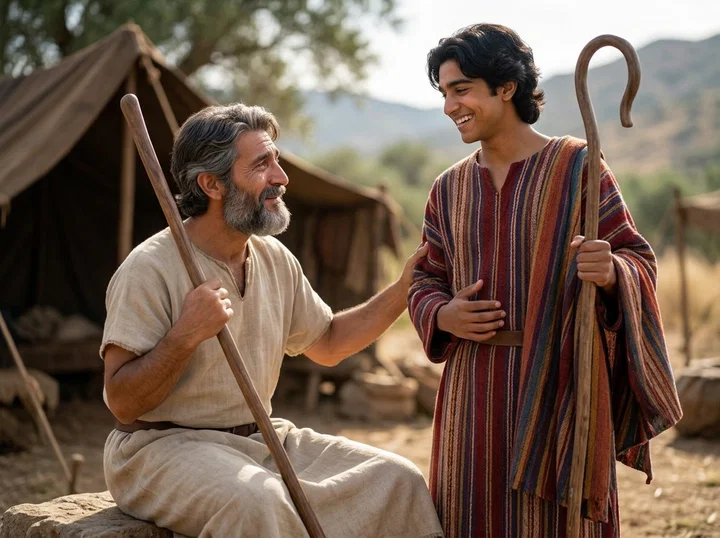
And he said to him, Go, I pray thee, see whether it be well with thy brethren, and well with the flocks; and bring me word again. So he sent him out of the vale of Hebron, and he came to Shechem.
Translations
And he said to him, Go, I pray you, see whether it be well with your brothers, and well with the flocks; and bring me word again. So he sent him out of the vale of Hebron, and he came to Shechem.
King James Version, KJV Cambridge Paragraph Bible
And he said to him, Go, I pray thee, see whether it be well with thy brethren, and well with the flocks; and bring me word again. So he sent him out of the vale of Hebron, and he came to Shechem.
And he said to him, Go, I pray thee, see whether it is well with thy brethren, and well with the flocks; and bring me word again. So he sent him from the vale of Hebron, and he came to Shechem.
And he said to him, Go now, see whether it be well with thy brethren, and well with the flock; and bring me word again. So he sent him out of the vale of Hebron, and he came to Shechem.
And he said to him, Go now, see whether it is well with thy brethren, and well with the flock; and bring me word again. So he sent him out of the vale of Hebron, and he came to Shechem.
and he saith to him, 'Go, I pray thee, see the peace of thy brethren, and the peace of the flock, and bring me back word;' and he sendeth him from the valley of Hebron, and he cometh to Shechem.
And he said to him, Go, I pray thee, see after the welfare of thy brethren, and after the welfare of the flock; and bring me word again. And he sent him out of the vale of Hebron; and he came towards Shechem.
So he said to him—Go, I pray thee, look after the welfare of thy brethren, and the welfare of the flock, and bring me back word. And he sent him from the vale of Hebron, and he came in towards Shechem.
Berean Standard Bible, Majority Standard Bible
Then Israel told him, “ Go now and see how your brothers and the flocks are faring, and bring word back to me.”So he sent him off from the Valley of Hebron. And when Joseph arrived in Shechem,
He said to him, “ Go now, see whether it is well with your brothers, and well with the flock; and bring me word again.” So he sent him out of the valley of Hebron, and he came to Shechem.
And he said to him, Go now, and see if your brothers are well and how the flock is; then come back and give me word. So he sent him out of the valley of Hebron, and he came to Shechem.
And he answered him, I am here. Then he saide vnto him, Goe now, see whether it bee well with thy brethren, and how the flocks prosper, and bring me word againe. so hee sent him from the vale of Hebron, and he came to Shechem.
Douay-Rheims (Challoner revision)
I am ready: he said to him: Go, and see if all things be well with thy brethren, and the cattle: and bring me word again what is doing. So being sent from the vale of Hebron, he came to Sichem:
Pictures
Cross-references
- Genesis 34:25-29
And it came to pass on the third day, when they were sore, that two of the sons of Jacob, Simeon and Levi, Dinah’s brethren, took each man his sword, and came upon the city boldly, and slew all the males.
Jacob feared for his sons near the place where they had attacked the Shechemites.
- Genesis 37:18-20
And when they saw him afar off, even before he came near unto them, they conspired against him to slay him.
Joseph’s brothers plot to kill him as he arrives on his errand.
- Genesis 42:6
And Joseph was the governor over the land, and he it was that sold to all the people of the land: and Joseph’s brethren came, and bowed down themselves before him with their faces to the earth.
brothers bowing fulfills the dreams
- Acts 7:9
And the patriarchs, moved with envy, sold Joseph into Egypt: but God was with him,
Joseph’s brothers’ envy led to his persecution and sale into Egypt.
- Genesis 37:21-22
And Reuben heard it, and he delivered him out of their hands; and said, Let us not kill him.
Reuben tries to prevent Joseph’s death and return him to his father.
- Genesis 37:26-28
And Judah said unto his brethren, What profit is it if we slay our brother, and conceal his blood?
Joseph’s brothers sell him to passing merchants.
- Genesis 42:24
And he turned himself about from them, and wept; and returned to them again, and communed with them, and took from them Simeon, and bound him before their eyes.
identifies chief instigator in crime
Commentary
Each commentary is drawn from primary sources: the writings of Ellen G. White and Adventist pioneers and periodicals. Each commentary is separate. Its own words are not a quotation; follow the references to read the source passages.
Ellen G. White
7 sources
Jacob sent Joseph out of the vale of Hebron to Shechem to see whether his brothers and the flocks were well and safe and to bring back word to him.PP 209.1ST Dec 18, 18791SP 127.4SG3 139.3ST Dec 18, 1879 The errand expressed Jacob's concern for his sons and his trust in Joseph to carry it out.PP 209.1ST Dec 18, 1879 He was anxious because his shepherd sons had been away from home for months without word, for shepherds often traveled far from home, and he feared for their safety near the place where they had been cruel to the Shechemites.1SP 127.4SG3 139.3ST Dec 18, 1879PP 210.4–5 He did not know that his sons had concealed their hatred, hostility, and plans against Joseph.ST Dec 18, 1879PP 210.4–5
Joseph came to Shechem where he was expected to find them but did not find them there.ST Dec 18, 18791SP 127.4SG3 139.3PP 210.4–5 He searched from field to field where Jacob expected them to be, then hurried on to Dothan after a man told him they had gone there.ST Dec 18, 18791SP 127.4SG3 139.3PP 210.4–5 Though the journey was long, he made it willingly and cheerfully, eager to ease his father's worry and anxiety and to see the brothers he loved.ST Dec 18, 18791SP 127.4SG3 139.3PP 210.4–5
His love, obedience, and affection were repaid with harm and hostility.ST Dec 18, 18791SP 127.4SG3 139.3 This errand led to his being seized at Dothan and sold away from home.PP 213.1–2 The brothers' cruelty behind that outcome followed their father's unwise partiality and indulgence, which had angered them and had also encouraged faults in Joseph including self-sufficiency and demandingness.PP 213.1–2
Sources
Pioneers and periodicals
23 sources
Jacob sent his seventeen-year-old son Joseph out of the vale of Hebron to Shechem to see whether his brothers and the flocks were well and to bring word back to him.ST Dec 18, 1879ST Dec 18, 1879ST Oct 2, 1901 Joseph went alone and on foot in cheerful, willing obedience and brotherly love to relieve his father's anxious care, though his conspicuous favor as the petted child of old age had already stirred his brothers' envy.ST Mar 17, 1887ST Dec 18, 1879ST Jan 3, 1911ST Oct 2, 1901 When he reached Shechem he did not find them but searched from field to field until he learned they had gone on to Dothan, and he followed them there weary and footsore only to be hated, seized, and sold into Egypt.ST Dec 18, 1879ST Jan 3, 1911ST Oct 2, 1901ST Feb 18, 1913 That errand was the beginning of the roundabout way God overruled human envy, hatred, and murderous scheming for good to bring Joseph to the position and work He had destined for him in preserving His people.ST Jan 16, 1912ST Jan 21, 1913RH Jan 19, 1860RH Nov 19, 1908ST Nov 29, 1905 Whatever God has intended a person for, He can be safely trusted to bring him to it, for He may lead round but He will guide right.RH Jan 19, 1860
The Errand and Setting
Jacob sent Joseph out of the vale of Hebron to Shechem to see whether his brothers and the flocks were well and to bring word back to him.ST Dec 18, 1879ST Dec 18, 1879ST Oct 2, 1901ST Oct 2, 1901RH Jun 22, 1911 Joseph went to Shechem but did not find them there, and after searching from field to field he learned they had gone to Dothan and continued on after them.ST Dec 18, 1879ST Oct 2, 1901ST Oct 2, 1901 His errand to bring news of their welfare led him directly into the danger of their plot against him.ST Oct 2, 1901
Jacob was settled in the vale of Hebron as a wanderer like his fathers, while his sons fed the flocks where pasture was best and wandered far from home for months at a time.ST Mar 17, 1887ST Oct 27, 1898 He sent because he was anxious after hearing nothing for months and feared that harm had happened to them.ST Mar 17, 1887ST Dec 18, 1879 That fear was sharpened by knowing they were near the place where they had been cruel to the Shechemites, while he did not know that his sons had concealed hatred and plans against Joseph.ST Dec 18, 1879
Joseph made the journey alone and on foot, about fifty-five miles to Shechem.ST Oct 2, 1901ST Feb 18, 1913 There he did not find them but searched from field to field and became lost, then learned they had gone to Dothan and hastened on though already weary, footsore, and lonely.ST Dec 18, 1879ST Oct 2, 1901ST Feb 18, 1913 He followed them to Dothan, whose valley was suitable for grazing and lay on the caravan route from Gilead to Egypt, where he was sold and taken to Egypt.ST Aug 25, 1898
Joseph was seventeen, the son of his father's favorite wife and the petted child of his old age.ST Jan 3, 1911ST Oct 2, 1901 His conspicuous coat and his dreams, understood to foretell his pre-eminence, had stirred his brothers' envy alongside Jacob's preference for him.ST Oct 2, 1901 The verse belongs to the Hebrew history moving from Mesopotamia to Egypt that leads to the oppression, whose color agrees with Egypt at that time.ST Nov 20, 1884ST Jul 30, 1885 Egyptian inscriptions corroborate the Pentateuch's record of Joseph and the exodus and support its historical reliability.ST Nov 20, 1884ST Jul 30, 1885 Egyptian pictures and accounts show slaves with Hebrew features working at brick-making as the Hebrews worked, and exploration in the region where the Hebrews lived uncovered Pithom, one of the two store cities built by the children of Israel, bearing its name on an inscription with great brick store-houses without windows or doors for preserving grain for war or famine.ST Nov 20, 1884
Jealousy Overruled by Providence
The sending belongs to the sad fruits of Jacob's mistake in having more than one wife, producing partiality, jealousy, envy, low morality, and crime between the wives and between their families.ST Jan 3, 1911ST His loving but unwise favoritism lavished too little affection on his other sons in comparison with Joseph, the son of his favorite wife and the petted child of his old age, and from that unwisdom and marital mistakes hatred developed so that when Joseph went to them they first attempted to slay him but finally sold him as a slave into Egypt.ST Jan 3, 1911 The brethren went downward from envy to hatred to a scheme of murder to deceit to fearful expectation of wrath, and their hatred turned into persecution that caused their father to mourn days, weeks, months, and years, part of the bitter fruits of hatred.ST Oct 27, 1898 The account demonstrates that Joseph, who feared God, was persecuted by his wayward and envious brothers, showing that he that was born after the flesh persecutes him that was born after the Spirit, because the wicked persecute the righteous whose works are righteous while their own are evil.RH Jun 8, 1916
The story is a revelation of God's providence overruling human anger, ambition, and jealousy for good, and the errand is the start of the roundabout way God led Joseph to what He intended for him.ST Jan 16, 1912RH Jan 19, 1860 The Lord was preparing Joseph to preserve the holy Seed, and from envied boy to prisoner to ruler in Egypt he preserved the lives of God's people, as part of the developing divine plan concerning the children of Israel toward the affliction foretold.ST Jan 21, 1913RH Nov 19, 1908ST Oct 27, 1898
God had already destined Joseph for a future position and work in Egypt and led him there by painful and slow degrees, using even wicked persons as steps to bring His chosen servant there and give him free transportation to the field of his future greatness.ST Nov 29, 1905 His duty was to do with his might whatever his hands found to do every day just where he was, and by doing this he was promoted in due time until he reached his appointed place.ST Nov 29, 1905 The verse shows Joseph guided and saved by God in his youth, showing that the God of Israel is the friend of children and youth who seek Him early and find Him and that His angels guard them in trouble.RH Nov 24, 1874
Character and Present Application
Joseph went on his father's errand with true brotherly interest and cheerful, willing obedience, for he loved his brothers and wished to relieve his father's anxiety after months without word, and he pressed on from field to field at Shechem all the way to Dothan in hope of affection, yet his love and obedience were ill repaid with harm, hatred, envy, and sale into slavery.ST Mar 17, 1887ST Dec 18, 1879 Though he was the petted child of old age under a loving but unwise favoritism that lavished too little affection on the other sons, he had not been spoiled, for principles of integrity, purity, and righteousness had been instilled within him and had become living character.ST Jan 3, 1911ST Jan 16, 1912 He is to be understood as truthful, obedient, noble, spirited, and willing to do right.RH Oct 9, 1900
He accepted the errand without complaint and carried through an important duty alone and on foot, though footsore and lonely and lost for a time, persisting until he found his brothers.ST Apr 29, 1908ST Feb 18, 1913 That willing service as a child helped prepare him for later responsibility as a trusted manager in Egypt and as prime minister.ST Apr 29, 1908 His duty was to do with his might whatever his hands found to do every day just where he was until promotion came in due time, and by that course he was led by painful and slow degrees to his appointed place and work.ST Nov 29, 1905
His experience warns families not to withhold the love and appreciation their own are entitled to. His errand is an example of useful service that children can begin by helping at home.RH Nov 11, 1915 Whatever God has intended a person for, He can be safely trusted to bring him to it, for He may lead round but He will guide right, and this sending was the start of the roundabout way by which Joseph was led to what was intended for him.RH Jan 19, 1860
The sending is also a divine call to go visit fellow ministers and inspect their congregations even at one's own expense in obedience to the Lord's leading.RH Jun 22, 1911 In that application the brethren are few fellow workers and the flocks are very great multitudes of lost sheep with too few shepherds to preach to them.RH Jun 22, 1911
Sources