Genesis 37:13
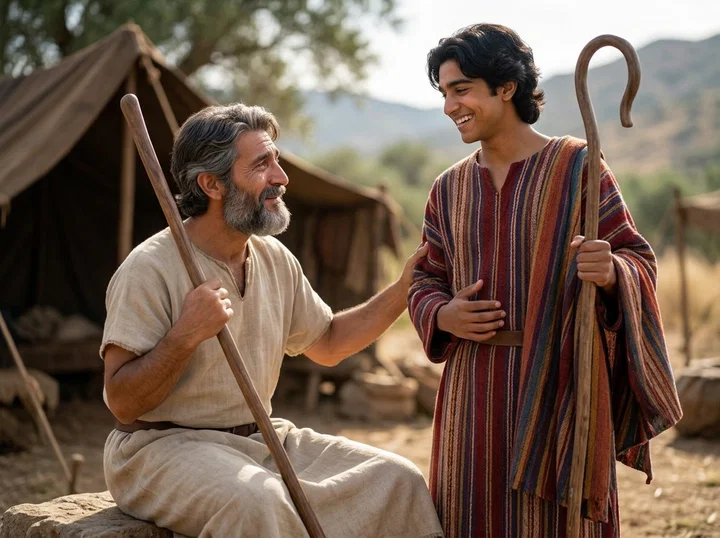
And Israel said unto Joseph, Do not thy brethren feed the flock in Shechem? come, and I will send thee unto them. And he said to him, Here am I.
Translations
And Israel said to Joseph, Do not your brothers feed the flock in Shechem? come, and I will send you to them. And he said to him, Here am I.
King James Version, KJV Cambridge Paragraph Bible, Revised Version
And Israel said unto Joseph, Do not thy brethren feed the flock in Shechem? come, and I will send thee unto them. And he said to him, Here am I.
And Israel said to Joseph, Do not thy brethren feed the flock in Shechem? Come, and I will send thee to them. And he said to him, Here am I.
And Israel said unto Joseph, Are not thy brethren feeding the flock in Shechem? come, and I will send thee unto them. And he said to him, Here am I.
and Israel saith unto Joseph, 'Are not thy brethren feeding in Shechem? come, and I send thee unto them;' and he saith to him, 'Here [am] I;'
And Israel said to Joseph, Do not thy brethren feed [ the flock] at Shechem? Come, that I may send thee to them. And he said to him, Here am I.
So Israel said unto Joseph Are not, thy brethren, feeding the flock in Shechem? Come on! and let me send thee unto them. And he said to him Behold me!
Berean Standard Bible, Majority Standard Bible
Israel said to him, “ Are not your brothers pasturing the flocks at Shechem? Get ready; I am sending you to them.”“ I am ready,” Joseph replied.
Israel said to Joseph, “Aren’t your brothers feeding the flock in Shechem? Come, and I will send you to them.” He said to him, “ Here I am.”
And Israel said to Joseph, Are not your brothers with the flock in Shechem? come, I will send you to them. And he said to him, Here am I.
And Israel said vnto Ioseph, Doe not thy brethren keepe in Shechem? come and I will send thee to them.
Douay-Rheims (Challoner revision)
Israel said to him: Thy brethren feed the sheep in Sichem: come, I will send thee to them. And when he answered:
Pictures
Cross-references
- Genesis 37:18-20
And when they saw him afar off, even before he came near unto them, they conspired against him to slay him.
what brothers did when Joseph came on errand
- Genesis 42:6
And Joseph was the governor over the land, and he it was that sold to all the people of the land: and Joseph’s brethren came, and bowed down themselves before him with their faces to the earth.
Joseph’s brothers unknowingly bow before him, fulfilling his dreams.
- Genesis 34:25-31
And it came to pass on the third day, when they were sore, that two of the sons of Jacob, Simeon and Levi, Dinah’s brethren, took each man his sword, and came upon the city boldly, and slew all the males.
The brothers’ violence at Shechem makes Jacob fear for their safety.
- Genesis 44:18-34
Then Judah came near unto him, and said, Oh my lord, let thy servant, I pray thee, speak a word in my lord’s ears, and let not thine anger burn against thy servant: for thou art even as Pharaoh.
Judah pleads for Benjamin in the story of Joseph and his brothers.
- Acts 7:9
And the patriarchs, moved with envy, sold Joseph into Egypt: but God was with him,
Joseph’s brothers’ envy led to his persecution and sale into Egypt.
- 1 Samuel 3:4
That the LORD called Samuel: and he answered, Here am I.
Samuel and Joseph both guided in youth
- Genesis 37:3-4
Now Israel loved Joseph more than all his children, because he was the son of his old age: and he made him a coat of many colours.
Jacob’s preference for Joseph angered his brothers.
- Genesis 37:28
Then there passed by Midianites merchantmen; and they drew and lifted up Joseph out of the pit, and sold Joseph to the Ishmeelites for twenty pieces of silver: and they brought Joseph into Egypt.
Brotherly hatred ends in Joseph’s sale into slavery in Egypt.
- Genesis 42:24
And he turned himself about from them, and wept; and returned to them again, and communed with them, and took from them Simeon, and bound him before their eyes.
identifies chief instigator in crime against Joseph
- Genesis 39
And Joseph was brought down to Egypt; and Potiphar, an officer of Pharaoh, captain of the guard, an Egyptian, bought him of the hands of the Ishmeelites, which had brought him down thither.
The passage identifies these chapters as the account of Joseph’s experiences and work.
- Genesis 43
And the famine was sore in the land.
The passage identifies these chapters as the account of Joseph’s experiences and work.
- Genesis 42:36
And Jacob their father said unto them, Me have ye bereaved of my children: Joseph is not, and Simeon is not, and ye will take Benjamin away: all these things are against me.
identifies chief instigator in crime against Joseph
- Genesis 45
Then Joseph could not refrain himself before all them that stood by him; and he cried, Cause every man to go out from me. And there stood no man with him, while Joseph made himself known unto his brethren.
The passage identifies these chapters as the account of Joseph’s experiences and work.
- Genesis 46
And Israel took his journey with all that he had, and came to Beer-sheba, and offered sacrifices unto the God of his father Isaac.
The passage identifies these chapters as the account of Joseph’s experiences and work.
- Genesis 41
And it came to pass at the end of two full years, that Pharaoh dreamed: and, behold, he stood by the river.
The passage identifies these chapters as the account of Joseph’s experiences and work.
- Genesis 47
Then Joseph came and told Pharaoh, and said, My father and my brethren, and their flocks, and their herds, and all that they have, are come out of the land of Canaan; and, behold, they are in the land of Goshen.
The passage identifies these chapters as the account of Joseph’s experiences and work.
Commentary
Each commentary is drawn from primary sources: the writings of Ellen G. White and Adventist pioneers and periodicals. Each commentary is separate. Its own words are not a quotation; follow the references to read the source passages.
Ellen G. White
6 sources
Jacob sent Joseph from home to Shechem, where his brothers were tending the flock, to check on their welfare and bring back word about them and the flock.SG3 139.31SP 127.4ST Dec 18, 1879PP 210.4–5PP 213.1–2 He was anxious because he had heard nothing from his sons, and he feared for their safety near the place where they had earlier attacked the Shechemites in violence.SG3 139.31SP 127.4ST Dec 18, 1879PP 210.4–5 Their shepherding had taken them far from home, and when they were not where he expected, Joseph kept searching with loving concern until the search led him on to Dothan.SG3 139.31SP 127.4
Joseph answered, Here am I, and willingly and cheerfully made the long journey out of obedience to his father and love for his brothers.SG3 139.31SP 127.4ST Dec 18, 1879PP 210.4–5PP 213.1–2 He was eager to ease his father's worry and to meet them despite their unkindness.ST Dec 18, 1879PP 210.4–5 In this early part of his life he already loved to obey God, and gentleness, fidelity, and truthfulness were evident in his daily life.PP 209.1
Jacob did not know that his sons were concealing their hostility toward Joseph from him.ST Dec 18, 1879PP 210.4–5 They repaid Joseph's care badly.1SP 127.4 His partiality and indulgence toward Joseph had angered the brothers and helped provoke the cruel deed that separated Joseph from home, and that upbringing had also encouraged faults in Joseph that hardship would correct.PP 213.1–2
Sources
Pioneers and periodicals
24 sources
Israel sends seventeen-year-old Joseph out of the vale of Hebron to his brothers feeding the flock in Shechem to see whether it is well with them and with the flocks and to bring word back, and Joseph answers with willing readiness to go where his father sends him.ST Apr 20, 1888RH Jun 8, 1916ST Nov 29, 1905ST Oct 2, 1901 He travels alone on the long journey from Hebron to Shechem, wanders lost in the fields searching for his brothers, learns they have moved on to Dothan, and follows them there.ST Oct 2, 1901ST Aug 25, 1898 The sending is part of the divine plan toward the sojourn in Egypt, as God guides Joseph and overrules human wrath, envy and jealousy for good to preserve the lives of His people and keep open the channels through which the Promised Seed should come.ST Jan 16, 1912STST Jan 21, 1913ST Jan 16, 1912RH Nov 19, 1908 Envy in the brothers bears fruit in hatred that first moves them to attempt to slay him and then to sell him as a slave to the Ishmaelites into Egypt into bondage and prison.ST Jan 3, 1911 Yet Joseph obeys at once without complaint even though he knows his brothers' hatred, and this faithful willingness to do useful work at home fits him to grow into a trustworthy manager and finally prime minister, while God remains with him in danger and loneliness and does not forsake him.ST Apr 29, 1908ST Feb 18, 1913RH Nov 11, 1915RH Nov 24, 1874
The Errand to Shechem
Israel sends Joseph out of the vale of Hebron to his brothers feeding the flock in Shechem, to see whether it is well with them and well with the flocks and to bring word back to his father Jacob.ST Dec 18, 1879ST Apr 20, 1888ST Nov 29, 1905ST Oct 2, 1901RH Nov 15, 1906 Joseph answers, Here am I, with willing readiness to go where his father sends him, ready to obey and serve without complaint.ST Apr 20, 1888ST Nov 29, 1905ST Oct 2, 1901ST Feb 18, 1913RH Nov 15, 1906 He agrees to go even though his brothers' envy, ill feeling, jealousy and hostility make the errand dangerous.RH Jun 8, 1916ST Apr 29, 1908ST Oct 2, 1901
Seventeen-year-old Joseph undertakes the long journey alone from Hebron to Shechem.ST Feb 18, 1913ST Oct 2, 1901 He wanders lost and bewildered in the fields searching for his brothers.ST Oct 2, 1901 When he learns they have moved on to Dothan he continues the journey and follows them there.ST Oct 2, 1901ST Aug 25, 1898
Jacob sends out of loving concern for his family, yet with unwise favoritism toward Joseph as the petted child of his old age by his favorite wife, while lavishing too little affection on his other sons.ST Jan 3, 1911RH Nov 15, 1906 He sends unthinkingly and unsuspectingly on an errand that becomes never to be forgotten.ST Apr 29, 1908 He is worried because he has heard nothing from them near dangerous Shechem where they had attacked the Shechemites, while the brothers conceal their hostility toward Joseph from their father.ST Dec 18, 1879
The setting fits the sequel, since the broad grazing valley at Dothan explains how the brothers could see Joseph from far off, and its position on the caravan route from Gilead to Egypt fits the passing traders who carry him away to Egypt where he is sold.ST Aug 25, 1898 The verse belongs to true history in the Pentateuch record of Hebrew history from Mesopotamia to Egypt whose whole color matches Egypt at that time.ST Jul 30, 1885ST Nov 20, 1884 That record is corroborated as trustworthy by Egyptian monuments, tombs, pictures and inscriptions, including pictures of slaves with Hebrew features working at brick-making as the Hebrews worked, and Pithom as one of the store cities built by the children of Israel, found bearing the name Pithom with great brick storehouses without windows or doors for preserving grain for use in war or famine.ST Jul 30, 1885ST Nov 20, 1884 Egyptian monuments give no record of Bible miracles because kings do not record their disasters but give only clues to history, while their pictures and stories and pious books illustrate the habits and customs of the land and people of the Nile behind the account.ST Nov 20, 1884
God's Overruling Providence
God guides Joseph in this sending, overruling human wrath, ambition, envy and jealousy for good and to His own praise, working out His providence for the true and the faithful.ST Jan 16, 1912ST Jan 16, 1912RH Jan 19, 1860 Whatever He intends a person for, He may be safely trusted to bring them to it, even when He leads round, because He guides right.RH Jan 19, 1860 The errand belongs to the divine plan concerning the children of Israel toward the sojourn in Egypt.ST Oct 27, 1898 It is to be read with the Promised Seed ever in mind and the channels through which that Seed should come, with the Lord fitting Joseph to preserve the holy Seed.STST Jan 21, 1913 The boy sent to his brothers is a child used of God, for the sending leads to his being envied and sold into Egypt, where from prisoner he becomes ruler and preserves the lives of God's people.RH Nov 19, 1908
The favoritism in the sending exposes the evils of plurality of wives in jealousies between wives and between their families, with a loving but unwise father making Joseph, son of his favorite wife, the petted child of his old age while lavishing too little affection on his other sons.ST Jan 3, 1911 With the mistakes of Jacob and of Joseph and of his brethren, this unwisdom produces envy that bears fruit in hatred, persecution, long sorrow to the father, and misery.ST Jan 3, 1911ST Oct 27, 1898 The chapter traces the brothers' downward steps from envy to hatred to a scheme of murder to deceit to fearful expectation of wrath.ST Oct 27, 1898 Their hatred first moves them to attempt to slay Joseph and then to sell him as a slave to the Ishmaelites into Egypt into bondage and prison.ST Jan 3, 1911
Jacob understands and believes Joseph's dreams, and the dreams that aroused envy are fulfilled when the brothers unknowingly come to Egypt and humbly bow before him.ST Jan 3, 1911ST Oct 27, 1898 Though nearly spoiled by petting, Joseph has received from his father principles of integrity and purity that appear soon after he reaches Egypt.ST Jan 3, 1911 Though innocent of crime he needs and receives discipline through two years in prison before God calls him to the throne of Egypt.ST Jan 3, 1911 The God-fearing one sent to his wayward and envious brothers and persecuted by them proves that he that is born after the flesh persecutes him that is born after the Spirit, and that from the beginning good people are persecuted because they are good, with the wicked persecuting the righteous until the conflict between good and evil is ended.RH Jun 8, 1916
Character and Example
Joseph was a willing and helpful child at home who obeyed his father at once without a word of complaint when sent to his brothers at Shechem, even though he knew their hatred, ill feeling and jealousy toward him, and the errand became one never to be forgotten.ST Apr 29, 1908 That faithful helpfulness fitted him to grow into the trustworthy business manager for a great man of Egypt and finally prime minister of the kingdom, and stands as an example of helpfulness at home to be studied and imitated.ST Apr 29, 1908 Willingness to do useful work at home in this way prepares children for service in other places.RH Nov 11, 1915 The loving father's concern for his family in sending to see how it was with them, and the son's willing readiness to obey and serve, present an example for those called to care about the spiritual welfare of others.RH Nov 15, 1906
His obedience in undertaking the long journey alone led him into danger and deep loneliness, yet God remained with him and did not forsake him.ST Feb 18, 1913 He was guided and saved by God in his youth, showing that every child and youth should take the God of Israel for a friend so that angels will guard them in time of trouble.RH Nov 24, 1874 As a young, homesick lad, envied and hated by his brothers and granted love in boyhood only by his aged father, he made the long journey from home to visit his brothers and bring them a message, wandering lost and bewildered in the fields in search of those whose superior age and strength should have made them his guardians. He hoped their stony hearts might be melted and hungered for the brotherly love that was his by right, only to be given a cruel welcome and sold by his own blood into years of bondage and imprisonment, which condemns cruel, loveless brothers and presses whether love and appreciation rightfully due to one's own family are always shown.
His life illustrates how principles of righteousness become living character, as the flattered and petted boy developed into an example for young men.ST Jan 16, 1912ST Jan 16, 1912 The early story never loses beauty, freshness and charm, bringing new inspiration to those advanced in years and read with pleasure and eager delight by youth and children.RH Oct 9, 1900 It should be read by every fireside, and mothers should read it to their children, for Joseph was truthful, obedient, noble, spirited, and dared to do right.RH Oct 9, 1900 His life sets before children a high ideal worthy of imitation and helps in forming strong character, showing one of the mighty men of old who accomplished wonderful things for God through faith in Him.RH Dec 14, 1911 The principles revealed in his life, if instilled into the minds of the young, make an indelible impression for good that neither time nor later associations can erase.RH Oct 9, 1900
Sources