Genesis 37:26
And Judah said unto his brethren, What profit is it if we slay our brother, and conceal his blood?
Translations
And Judah said to his brothers, What profit is it if we slay our brother, and conceal his blood?
King James Version, KJV Cambridge Paragraph Bible
And Judah said unto his brethren, What profit is it if we slay our brother, and conceal his blood?
And Judah said to his brethren, What profit is it if we slay our brother, and conceal his blood.
Revised Version, American Standard Version
And Judah said unto his brethren, What profit is it if we slay our brother and conceal his blood?
And Judah saith unto his brethren, 'What gain when we slay our brother, and have concealed his blood?
And Judah said to his brethren, What profit is it that we kill our brother and secrete his blood?
So Judah said unto his brethren,—What profit that we slay our brother, and conceal his blood?
Berean Standard Bible, Majority Standard Bible
Then Judah said to his brothers, “ What profit will we gain if we kill our brother and cover up his blood?
Judah said to his brothers, “ What profit is it if we kill our brother and conceal his blood?
And Judah said to his brothers, What profit is there in putting our brother to death and covering up his blood?
Then Iudah said vnto his brethren, What auaileth it, if we slay our brother, though wee keepe his blood secret?
Douay-Rheims (Challoner revision)
And Juda said to his brethren: What will it profit us to kill our brother, and conceal his blood?
Pictures
Cross-references
- Genesis 50:20
But as for you, ye thought evil against me; but God meant it unto good, to bring to pass, as it is this day, to save much people alive.
God turned Joseph’s brothers’ evil intent toward good.
- Acts 7:9
And the patriarchs, moved with envy, sold Joseph into Egypt: but God was with him,
Envy moved Joseph’s brothers to sell him into Egypt, though God was with him.
- Genesis 44:18-34
Then Judah came near unto him, and said, Oh my lord, let thy servant, I pray thee, speak a word in my lord’s ears, and let not thine anger burn against thy servant: for thou art even as Pharaoh.
Judah later pleads with Joseph for Benjamin to be spared.
- Genesis 42:21-22
And they said one to another, We are verily guilty concerning our brother, in that we saw the anguish of his soul, when he besought us, and we would not hear; therefore is this distress come upon us.
The brothers later confessed their guilt over Joseph’s suffering.
- Genesis 45:5-8
Now therefore be not grieved, nor angry with yourselves, that ye sold me hither: for God did send me before you to preserve life.
Joseph’s sale brings him to Egypt to preserve his family.
- Genesis 42:6
And Joseph was the governor over the land, and he it was that sold to all the people of the land: and Joseph’s brethren came, and bowed down themselves before him with their faces to the earth.
brothers bow fulfills dreams after sale
- Genesis 37:5-11
And Joseph dreamed a dream, and he told it his brethren: and they hated him yet the more.
Joseph’s dreams aroused his brothers’ envy, leading them to sell him.
- Matthew 26:15
And said unto them, What will ye give me, and I will deliver him unto you? And they covenanted with him for thirty pieces of silver.
Joseph was sold by his brothers for money, as Christ was sold by a disciple.
- Genesis 42:24
And he turned himself about from them, and wept; and returned to them again, and communed with them, and took from them Simeon, and bound him before their eyes.
traces chief instigator of the crime
- 1 John 3:15
Whosoever hateth his brother is a murderer: and ye know that no murderer hath eternal life abiding in him.
Hatred of a brother is counted as murder.
- John 19:24
They said therefore among themselves, Let us not rend it, but cast lots for it, whose it shall be: that the scripture might be fulfilled, which saith, They parted my raiment among them, and for my vesture they did cast lots. These things therefore the soldiers did.
Joseph’s coat was stripped from him, as Christ’s garment was gambled for at the cross.
- Genesis 4:8
And Cain talked with Abel his brother: and it came to pass, when they were in the field, that Cain rose up against Abel his brother, and slew him.
Envy of a righteous brother leads to murderous intent.
- 1 John 3:11-12
For this is the message that ye heard from the beginning, that we should love one another.
explains the wicked persecute the righteous
Commentary
Each commentary is drawn from primary sources: the writings of Ellen G. White and Adventist pioneers and periodicals. Each commentary is separate. Its own words are not a quotation; follow the references to read the source passages.
Ellen G. White
9 sources
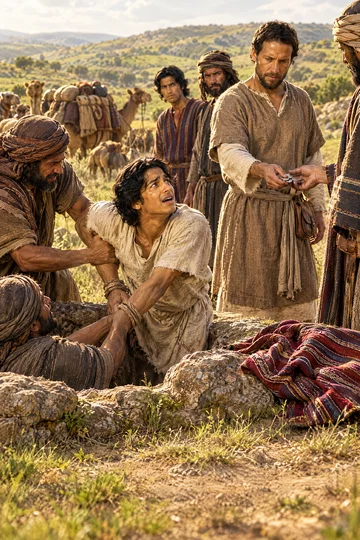
After stripping Joseph of his hated coat, his brothers thrust him into the dark, empty pit to perish slowly and then sat down to eat, and while they were eating they saw a company of Ishmaelites approaching.ST Dec 18, 1879 Judah then opposed killing Joseph and concealing his blood as bringing no profit or gain, and proposed selling him instead because he was their brother and their own flesh.1SP 129.1SG3 141.1–2ST Feb 5, 18801SP 129.2 His proposal was moved by beginning regret at leaving Joseph to die in the pit, by desire for money as better than letting him die, by wish to avoid bearing responsibility for his blood, and by intent to get rid of him entirely by removing him from them and getting him out of their way.SG3 141.1–2ST Dec 18, 1879PP 211.3–4 Troubled by the thought of Joseph dying slowly in the empty pit, Judah asked what they would gain by killing their brother and concealing his blood and hiding the evidence of his death.SG3 141.1–2
All the brothers agreed to Judah's proposal, drew Joseph up out of the pit, and heartlessly handed him over to the traders and sold him as a slave for a small sum despite his terrified pleas for life and compassion.ST Dec 18, 1879PP 211.3–41SP 129.2SG3 174.2–176.1 He was thus spared immediate death yet still enslaved as a slave.SG3 141.1–2ST Dec 18, 1879 In settling on killing and then on sale, the brothers meant to keep Joseph from becoming greater than themselves and rising above them, to be no more troubled by his dreams, and to make their fulfillment impossible.ST Feb 5, 1880SG3 174.2–176.1 God overruled the very course meant to prevent Joseph's exaltation so that by being sold into Egypt Joseph gained dominion over his brothers and became a savior to his father's family, yet this overruling did not lessen the brothers' guilt.ST Feb 5, 1880SG3 174.2–176.1
In the same way the chief priests and elders condemned Christ and put him to death, crying for his crucifixion, to keep him from becoming higher in authority and king, but by murdering the Son of God they brought about his becoming the Redeemer of mankind, the Savior of the fallen race, and ruler over the whole world, while their crime remained just as heinous.SG3 174.2–176.1 The episode belongs to Joseph's experience of being persecuted and treated as a criminal despite his virtue and strong character, showing that his suffering did not mean God had forsaken him, for God ultimately gave him victories.Lt 10, 1879, par. 4–9 Simeon and Levi were among the most guilty in the sale, linking the act to the prophecy that they would be divided and scattered in Israel.PP 235.5–6 Simeon became the smallest tribe holding only a small portion within Judah's territory, while Levi's curse was turned to blessing when the tribe stayed faithful to God and was appointed to sanctuary service.PP 235.5–6
Sources
Pioneers and periodicals
42 sources
Judah asked what gain there would be in killing their brother and hiding his death, and proposed selling Joseph to the passing Ishmaelite traders instead of slaying him or leaving him to die in the empty pit.ST Dec 18, 1879ST Apr 2, 1894ST Oct 27, 1898ST Aug 25, 1898ST Oct 2, 1901 His plea turned the brothers from murder to sale because he was their brother, their flesh, which eased their conscience of bloodguilt in their own imagination but did not cleanse their hearts, since it still sprang from envy to be rid of him and prevent his rise.ST Apr 2, 1894ST Oct 27, 1898ST Oct 2, 1901ST Dec 25, 1901ST Oct 2, 1901 God overruled their evil intent and human jealousy for good, making their casting him into the pit the first step toward his becoming ruler in Egypt and preserver of life for his family.ST Feb 5, 1880ST Jun 11, 1894ST Jan 16, 1912ST Nov 29, 1905 His being sold through envy is a type of Christ, whom His brethren delivered to death through envy, yet who was afterward entrusted with a divine mission to save and bless humanity.ST Dec 25, 1901ST Nov 22, 1899 The conduct of the brethren stands as a warning against envy, hatred, and malice, which grow by imperceptible degrees until they engulf in passion, and must be suppressed while God is trusted to turn ill designs to the other's good.ST Nov 29, 1905RH Jan 9, 1855
Setting and Sale
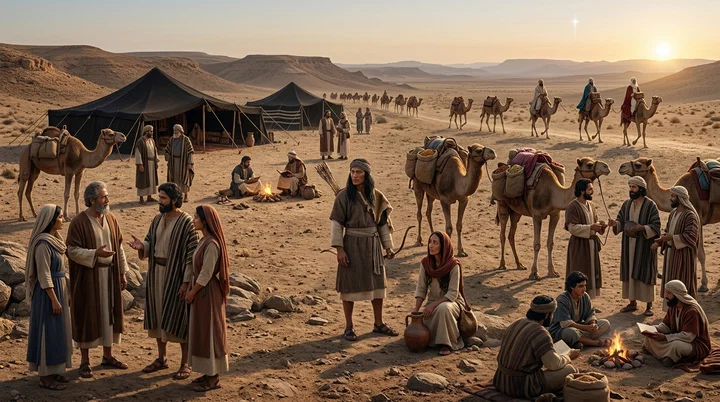
After stripping Joseph of his coat of many colors and thrusting him into an empty pit without water, the brothers sat down to eat bread and lifted their eyes to see a traveling company of Ishmaelites from Gilead approaching with camels bearing spicery and balm and myrrh on the way to Egypt.ST Dec 18, 1879ST Apr 2, 1894ST Apr 2, 1894 The sight of the travelers while they ate suggested gain instead of murder to Judah, who was beginning to regret leaving Joseph to perish in the dark pit.ST Dec 18, 1879ST Apr 2, 1894
At Dothan, where Joseph had come visiting his brothers, Judah spoke to his brethren and proposed selling Joseph to the passing Ishmaelite merchantmen or Midianite traders instead of killing him or leaving him to die in the pit.ST Aug 25, 1898ST Oct 2, 1901ST Oct 19, 1904 Joseph was drawn up out of the pit and heartlessly sold as a slave despite his terrified pleas for his life, against which the brothers had hardened their hearts.ST Dec 18, 1879ST Jun 11, 1894 He was stripped half-nude, bound, and taken along a parched, lean, bone-strewn path to Pharaoh's land and Egypt while his coat was left splashed with ruby blood.ST Dec 18, 1879
The brothers disposed of him by selling him into Egypt to the traders for twenty pieces of silver, a paltry, money-chinking price, each taking his base, perfidious share into his own hand.ST Apr 20, 1888 The traders brought him into Egypt more than nine hundred years before Elisha's encounter with the Syrian army at Dothan.ST Apr 20, 1888
Judah's Plea Explained
Judah asked what profit or gain there is in slaying their brother and concealing his blood, arguing that killing him would bring no profit and would leave them responsible for hiding his death and its evidence.ST Mar 17, 1887ST Apr 2, 1894ST Oct 27, 1898ST Oct 2, 1901ST Nov 29, 1905 The question came after they had stripped Joseph of his coat of many colors and cast him into an empty pit without water, and while they sat down to eat bread they saw a traveling company of Ishmaelites from Gilead approaching with camels bearing spicery and balm and myrrh on the way to Egypt.ST Dec 18, 1879ST Apr 2, 1894 The sight of the travelers while they ate suggested gain instead of murder to Judah, who was beginning to regret leaving Joseph to perish in the dark pit.ST Dec 18, 1879ST Apr 2, 1894
His question introduced his proposal to make a profit by selling Joseph to the Ishmaelites and to the passing Midianite traders, and to lay no hand upon him because he is their brother, their flesh.ST Mar 17, 1887ST Dec 18, 1879ST Apr 2, 1894ST Oct 27, 1898ST Oct 27, 1898 He urged selling Joseph for money as better than letting him die in the pit, appealing to brotherhood while intending to get rid of him by removing him entirely from them.ST Dec 18, 1879ST Jan 22, 1880 The proposal turned them from murder toward sale, and all the brothers agreed to it.ST Dec 18, 1879ST Jan 22, 1880ST Apr 2, 1894ST Oct 27, 1898ST Nov 29, 1905 Joseph was then drawn up out of the pit and heartlessly sold as a slave despite his terrified pleas for his life.ST Dec 18, 1879
The proposal to spare his life by selling him was acceptable because of reluctance to kill outright or let him starve.ST Dec 25, 1901ST Oct 2, 1901ST Oct 2, 1901 It left the brothers' hands free of murder in their own imagination, for they imagined themselves innocent of his blood.ST Oct 2, 1901ST Oct 2, 1901 But selling him did not cleanse their hearts of the sin of murder, with envy remaining the cruel motive behind their betrayal.ST Dec 25, 1901ST Oct 2, 1901
Judah's appeal to spare their brother disguised the same envy-driven desire to get rid of Joseph entirely and prevent his rise, expressing the desire to remove him while appearing innocent of his blood.ST Dec 18, 1879ST Oct 2, 1901ST Oct 2, 1901ST Oct 2, 1901 His reasoning eased a guilty conscience, presenting sale as leniency toward one marked for death.ST Oct 2, 1901ST Oct 2, 1901ST Oct 2, 1901
Roots of Brothers' Hatred
The envy and hatred of Joseph's brothers had ripened into murderous intent, so that killing their brother and hiding his death lay before them as a deliberate course.ST Mar 17, 1887ST That intent marks the scheme-of-murder stage in their downward steps from envy to hatred to scheme of murder to deceit to fearful expectation of wrath to be visited upon them, a crime against Joseph whose chief instigator is to be found and which stands within the divine plan concerning the children of Israel being developed in the chapter.ST Oct 27, 1898
That murderous hatred grew from Jacob's loving but unwise favoritism that made Joseph, the son of his favorite wife Rachel, the petted child of his old age with too little affection shown to the other sons.ST Jan 3, 1911 It grew also from the jealousies between wives and between families developed by plurality of wives amid low moral standards and the family's jealousy in which the crime took shape.ST Jan 3, 1911ST
They first hated Joseph and then persecuted him, and one fruit of that hatred was the grief they brought upon their father. Their envy grew out of their own wicked, corrupt hearts, not from anything Joseph did by reporting their faults, for Joseph had done no wrong and was more worthy of his father's greater love than they were.ST Apr 20, 1888 Their works were evil while his were righteous, the same contrast that moved Cain to kill Abel.ST Apr 20, 1888 At about eighteen years old Joseph had begun to make plans for his future life, and after the dreams of the sheaves and the sun, moon, and stars he conjectured how their fulfillment would take place and laid plans to exalt himself so that father, mother, and brothers would bow to him as to a king or governor.RH Jan 27, 1916
Those long years of sorrow in which their father mourned days, weeks, months, and years were only part of the fruits of their hatred. The episode of envy and betrayal ending in sale into slavery shows how far the brothers were from the love and care they owed him. The older brothers' jealousy of Joseph led to serious family conflict and made home unhappy for his sons.ST Aug 1, 1916
Providence and Outcome
The brothers acted from hatred to get rid of Joseph and prevent his rise, yet their deed in casting him into the pit and disposing of him became the first stone of the steps that led him upward until he became ruler in Egypt.ST Nov 29, 1905ST Nov 29, 1905ST Nov 29, 1905 What they plotted to prevent became the stepping-stone to that very thing, laying the path to the place prepared for him and turning their hateful act to his best good.ST Nov 29, 1905ST Nov 29, 1905ST Nov 29, 1905 Anyone harboring ill feelings or wicked designs against another should pause and reflect that what is planned in hatred is turned to the other's good.ST Nov 29, 1905
Their plot against providence grew from envy, with hearts hardened against his pleas for life, yet God overruled their evil intentions for good.ST Jun 11, 1894ST Nov 29, 1905 Human wrath, ambition, and jealousy were overruled to accomplish His purposes, guiding Joseph by a roundabout way to what was intended for him.ST Jan 16, 1912ST Nov 29, 1905RH Jan 19, 1860 Whatever God intends a person for, He can be safely trusted to bring him to it, leading him right even by that roundabout way.RH Jan 19, 1860
The sale carried Joseph to Egypt, breaking up his own plans for his future life.ST Jan 3, 1911RH Jan 27, 1916 At about eighteen he had begun to make plans from the dreams of the sheaves and of the sun, moon, and stars, conjecturing how they would be fulfilled and laying plans to exalt himself so that father, mother, and brothers would bow to him as to a king or governor.RH Jan 27, 1916 Being sold changed those plans, and being later cast into prison brought his plans to exalt himself to pieces so that the greater and better plan for him could be realized.RH Jan 27, 1916 There in Egypt the principles of integrity and purity instilled by his father were proved, and there he needed and received discipline through two years in prison though innocent of crime, until God called him to the throne of Egypt.ST Jan 3, 1911 Then his brethren unknowingly came and humbly bowed before him, fulfilling the dreams that had aroused their envy, with his later conduct displaying righteousness as living character and an example for young men.ST Jan 3, 1911ST Jan 16, 1912
They wanted to prevent him from rising above them, yet God overruled their act so that he gained dominion over them and became a savior to his family.ST Feb 5, 1880 The betrayed brother, stripped and bound as a slave and taken to Pharaoh's land for a paltry price, would one day furnish them food and save their famished lives, though they were unaware of it when they sold him.RH Nov 19, 1908ST Jul 21, 1909 Though sold and made a prisoner he became ruler and preserved the lives of God's people, made a ruler and a means of preserving life, becoming a means of help to the children of Israel during the seven lean years.RH Nov 19, 1908RH Jul 30, 1908ST Jul 21, 1909
This overruling did not lessen their guilt.ST Feb 5, 1880 They later remembered their cruelty toward Joseph with guilt and feared that their own enslavement was punishment for what they had done.ST Jan 22, 1880 His experience was lonely, frightened, and heartbroken as they cast him into the pit and sold him to passing merchants, forsaken by family yet not forsaken by God, who later brought deliverance from his affliction.ST Feb 18, 1913
Type and Scriptural Connections
Joseph's betrayal from envy stands as a type of Christ, whose own brethren delivered Him to death through envy.ST Dec 25, 1901 Like Joseph, the rejected and unpopular man put out of the way was afterward entrusted with a divine mission to save, bless, and benefit humanity.ST Dec 25, 1901ST Nov 22, 1899 The account demonstrates the principle that he that is born after the flesh persecutes him that is born after the Spirit.RH Jun 8, 1916 The wayward and envious sons of Jacob persecuted Joseph, who feared God, because the wicked persecute the righteous when their own works are evil and their brother's are righteous.RH Jun 8, 1916ST Apr 20, 1888
That envy grew out of their own wicked, corrupt hearts, not from anything Joseph did by reporting their faults, for Joseph had done no wrong and was more worthy of his father's greater love than they were.ST Apr 20, 1888 Their works were evil while his were righteous, the same contrast that moved Cain to kill Abel.RH Jun 8, 1916ST Apr 20, 1888 Judah's proposal to seek gain instead of killing Joseph and concealing his blood led them to dispose of him by selling him into Egypt to Ishmaelite merchantmen for twenty pieces of silver, who brought him into Egypt.ST Apr 20, 1888 That act of the wicked plotting against the just verifies that where envying and strife is there is confusion and every evil work, with envy standing among the works of the flesh that keep those who do them from inheriting the kingdom of God, while God was with Joseph.ST Apr 20, 1888
The whole color of the Genesis story agrees admirably with Egypt at this time.ST Nov 20, 1884 Pictures and accounts of slaves with Hebrew features working at brick-making as the Hebrews worked, and great brick store-houses without windows or doors like those at Pithom for preserving grain for use in war or famine, illustrate the habits and customs of the land and people of the Nile.ST Nov 20, 1884 No record of Bible miracles on Egyptian monuments is to be expected, because kings do not report their disasters.ST Nov 20, 1884 The story of Joseph is also told in the Koran as an expanded story different from the simple Scripture narrative.RH Jan 11, 1912 His sale became a means of help to the children of Israel during the seven lean years, just as the exile of Roger Williams became consequential for the New England settlements.RH Jul 30, 1908RH Jan 11, 1912
Warning and Moral Example
The conduct of the brethren toward Joseph, who was beloved by his father but hated by them and sold into bondage, stands as a striking example and warning to all against envy, hatred, and malice.RH Jan 9, 1855 Envy is pain felt at the sight of superior excellence or happiness, hatred is the offspring of envy, and malice is the offspring of hatred.RH Jan 9, 1855 Every rising of these malignant dispositions must be suppressed, lest they increase by imperceptible degrees until the soul is engulfed in a maelstrom of passion with no ability to extricate itself.RH Jan 9, 1855 Instead righteousness and meekness must be sought, that one may be hid in the day of the Lord's anger.RH Jan 9, 1855 What was plotted and planned in hatred against another God turns to that person's best good, so anyone harboring ill feelings or wicked designs against another should pause and reflect that the deed meant to prevent his rise may become the stepping-stone and first stone of the steps that lift him up.ST Nov 29, 1905RH Jan 9, 1855
In that crisis Reuben failed firmly to take his stand for right when opportunity offered and failed to protest firmly against the cruel treatment of Joseph.ST Nov 29, 1905 He shows what happens to those who let such an opportunity pass.ST Nov 29, 1905 If he had stood firm he might have shared Joseph's fate and also shared in the glorious vindication of right and principle that afterward came to Joseph.ST Nov 29, 1905 For Joseph's cruel treatment was not fortune or misfortune but part of God's great plan for his life.ST Nov 29, 1905 Through it Joseph kept faith in God and knew all would come out right in the end in God's own good time.ST Nov 29, 1905 His later conduct displays righteousness as living character and offers an example for young men, revealing how God overrules human wrath, ambition, and jealousy to accomplish His purposes.ST Jan 16, 1912ST Nov 29, 1905
The account shows Joseph guided and saved in his youth, proving that the God of Israel befriends children and youth and guards them by angels in the time of trouble.RH Nov 24, 1874 He is seen as truthful, obedient, noble, spirited, and one who dared to do right.RH Oct 9, 1900 Therefore every child and youth should want Him for friend and come to Jesus, with the promise that those who seek Him early shall find Him.RH Nov 24, 1874 The story should be read by every fireside.RH Oct 9, 1900
Sources