Genesis 39:13
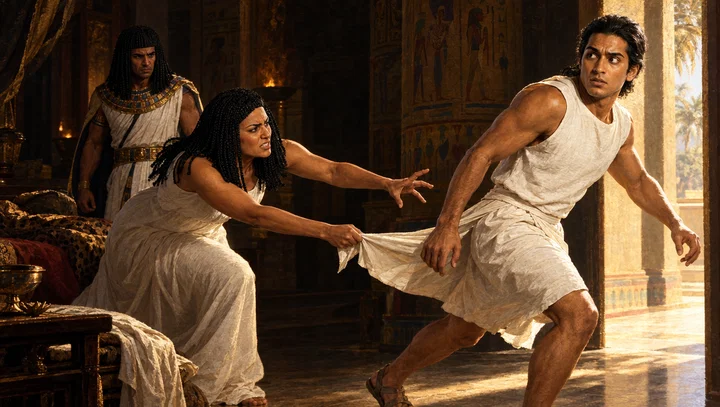
And it came to pass, when she saw that he had left his garment in her hand, and was fled forth,
Translations
American King James Version, King James Version, KJV Cambridge Paragraph Bible, Revised Version, American Standard Version
And it came to pass, when she saw that he had left his garment in her hand, and was fled forth,
And it came to pass, when she saw that he had left his garment in her hand, and had fled forth,
And it cometh to pass when she seeth that he hath left his garment in her hand, and fleeth without,
And it came to pass, when she saw that he had left his garment in her hand and had fled forth,
And it came to pass when she saw that he had left his garment in her hand,—and fled forth outside,
Berean Standard Bible, Majority Standard Bible
When she saw that he had left his cloak in her hand and had run out of the house,
When she saw that he had left his garment in her hand, and had run outside,
And when she saw that he had got away, letting her keep his coat,
Nowe when she sawe that he had left his garment in her hand, and was fled out,
Douay-Rheims (Challoner revision)
And when the woman saw the garment in her hands, and herself disregarded,
Pictures
Cross-references
- Genesis 39:19-20
And it came to pass, when his master heard the words of his wife, which she spake unto him, saying, After this manner did thy servant to me; that his wrath was kindled.
Joseph’s false accusation leads to imprisonment.
- Genesis 39:9
There is none greater in this house than I; neither hath he kept back any thing from me but thee, because thou art his wife: how then can I do this great wickedness, and sin against God?
Joseph refuses the temptation, calling it wickedness and sin against God.
- Genesis 39:2-3
And the LORD was with Joseph, and he was a prosperous man; and he was in the house of his master the Egyptian.
God’s presence and favor accompany Joseph and make him prosper.
- Genesis 39:8
But he refused, and said unto his master’s wife, Behold, my master wotteth not what is with me in the house, and he hath committed all that he hath to my hand;
His master’s trust grounds his refusal to sin.
- Genesis 40
And it came to pass after these things, that the butler of the king of Egypt and his baker had offended their lord the king of Egypt.
same continuous Joseph story
- Genesis 39:6
And he left all that he had in Joseph’s hand; and he knew not ought he had, save the bread which he did eat. And Joseph was a goodly person, and well favoured.
Joseph was entrusted with full control of his master’s possessions.
- Genesis 41
And it came to pass at the end of two full years, that Pharaoh dreamed: and, behold, he stood by the river.
same continuous Joseph story
- Genesis 39:21-22
But the LORD was with Joseph, and shewed him mercy, and gave him favour in the sight of the keeper of the prison.
God’s presence brings Joseph favor with the prison keeper and charge of the prisoners.
- Genesis 37
And Jacob dwelt in the land wherein his father was a stranger, in the land of Canaan.
same continuous Joseph story
- Genesis 50:20
But as for you, ye thought evil against me; but God meant it unto good, to bring to pass, as it is this day, to save much people alive.
God turns others’ evil purposes toward good.
- Matthew 26:59-60
Now the chief priests, and elders, and all the council, sought false witness against Jesus, to put him to death;
False testimony is brought against innocent Joseph and Jesus.
Commentary
Each commentary is drawn from primary sources: the writings of Ellen G. White and Adventist pioneers and periodicals. Each commentary is separate. Its own words are not a quotation; follow the references to read the source passages.
Ellen G. White
17 sources
The verse marks the moment when Joseph fled from Potiphar's wife under fierce assault upon his morals, leaving his garment in her hand rather than compromise his faith and transgress God's law.ST Jan 8, 1880CH 205.1–2FE 245.1 His flight was firm resistance by one of influence, refusing by any inducement or threat to deviate from righteousness, prove untrue to his master, or allow his virtue and integrity to be corrupted.SG3 143.3Lt 14, 1897, par. 6–81SP 157.2–158.2 When she could not subvert his virtue, her hatred turned to revenge, and she used the garment left in her hand to testify falsely and lay a base crime to his charge.SG3 143.3Lt 14, 1897, par. 6–8ST Jan 8, 1880 Because he preserved his virtue and had done no wrong he was maligned and cast bound into a gloomy prison, yet God did not forget him but guarded his blackened reputation, gave him favor with the keepers, turned the misfortune into blessing, and in time raised him from prison to great responsibility in Egypt.SG3 143.35T 321.1–2ST Jan 8, 1880 It stands as an example to all generations that amid severest temptation there is defense at hand in God's present help, and Joseph's unjust suffering for righteousness illustrates Christ, who though guilty of no wrong was hated for His righteous life that rebuked corruption and had false witnesses hired against Him.SG3 143.31SP 157.2–158.2SG3 174.2–176.1
Setting and Faithful Flight
The moment came during ten years of service to Potiphar, captain of the king's guard.PP 214.2–4 Amid idolatry, royal pomp, wealth, culture, and surrounding vice, Joseph preserved simplicity and fidelity to God and refused to conceal that he was a worshiper of Jehovah.PP 214.2–4 He prospered not by direct miracle but by industry, care, and energy crowned with divine blessing, so that even his idolatrous master recognized him as favored by God.PP 214.2–4 On that ground he was promoted to steward with full control over all possessions.PP 214.2–4
It was then that Potiphar's wife seized his garment, and he left it in her hand and fled forth rather than compromise his faith.ST Jan 8, 1880CH 205.1–21SP 133.1RH Sep 12, 1912Lt 10, 1879, par. 4–9 That flight from temptation left the garment behind in her sight.FE 245.1RH Sep 12, 1912Lt 10, 1879, par. 4–9 The flight and the abandoned garment became part of the circumstances that brought false accusation and disgrace upon him.ST Jan 8, 18801SP 133.1 Yet the same course shows how God's people, even when taken captive, are to honor Him in adversity and remain faithful among idolaters, and how standing firm to principle marks integrity under trial.CH 205.1–2FE 245.1
His flight was firm resistance to a fierce assault upon his morals by one of influence.SG3 143.3 No inducement or threat could move him to deviate from righteousness, to transgress God's law, to prove untrue to his master, or to let his virtue and integrity be corrupted.SG3 143.3SG3 174.2–176.1 He preserved his integrity in the fear of God, and his virtue could not be corrupted.Lt 14, 1897, par. 6–81SP 157.2–158.2SG3 174.2–176.1 For that preserving of virtue and integrity he was maligned and persecuted.RH Sep 12, 1912
When she could not subvert his virtue, her hatred grew against the virtue and integrity she could not corrupt.SG3 143.3SG3 174.2–176.1 In revenge she used the garment left in her hand to testify falsely and to lay a base crime to his charge.SG3 143.3Lt 14, 1897, par. 6–81SP 157.2–158.21SP 133.1SG3 174.2–176.1 By that false testimony and by her influence she brought disgrace upon him.Lt 14, 1897, par. 6–8ST Jan 8, 18801SP 133.1 The garment in her hand thus became the instrument of the false charges that followed his flight.Lt 14, 1897, par. 6–8ST Jan 8, 18801SP 157.2–158.2
Unjust Suffering and Vindication
Because he would not yield his virtue, integrity and righteousness and had done no wrong, Joseph was maligned and persecuted and treated as a criminal.SG3 143.35T 321.1–24T 525.1RH Sep 12, 1912Lt 10, 1879, par. 4–9 The garment left in the woman's hand was used in revenge to lay a base crime falsely to his charge, and by her influence he was bound with fetters and cast into a gloomy prison to suffer disgrace.SG3 143.3Lt 14, 1897, par. 6–81SP 133.1SG3 174.2–176.1 The innocent thus suffered because of his righteousness and was imprisoned because of his virtue.SG3 174.2–176.14T 525.1
In consciousness of innocence and right he did not sink in despair but still trusted in God and placed his reputation and interest in God's hands.SG3 143.35T 321.1–2 He bore his suffering meekly without murmuring, with self-control and patience in adversity and unwavering fidelity.SG3 143.3SG3 174.2–176.1 His purity of motive and trust sustained him through unjust treatment, and God watched over his conduct through the accusation while he preserved his integrity in the fear of God.5T 321.1–2Lt 14, 1897, par. 6–8
God who had hitherto supported him did not forget or forsake him while he lived among idolaters in danger and trial.SG3 143.34SP 445.2–446.1 He turned even this misfortune into a blessing and made the prison the way to his elevation, overruling the false charges and harm and the enemy's schemes.SG3 143.3ST Jan 8, 18801SP 133.1 He safely guarded the reputation blackened by the wicked accuser until in his own good time he caused it to shine, giving Joseph favor with the keepers of the prison and committing to him the charge of all the prisoners.SG3 143.3 His suffering for doing right did not prevent God from giving him signal victories, and in time God's providential leading raised him from prison to a position of great responsibility in Egypt.5T 321.1–2ST Jan 8, 18801SP 133.1Lt 10, 1879, par. 4–9
Witness and Gospel Lessons
Even when taken captive, God's people are to represent God among idolaters and carry the blessings of knowing Him to other nations, honoring Him in adversity and remaining faithful where He is not known.PP 214.2–4CH 205.1–2 In purity and uprightness the believer is to stand in marked contrast to idol worshipers and let heavenly light shine amid heathen darkness.PP 214.2–4 Joseph's flight rather than compromise his faith belongs to that witness in Egypt.PP 214.2–4CH 205.1–2 His being maligned and persecuted after he fled and left his garment came because he preserved his virtue and integrity.4T 525.1AA 575.1ST Feb 5, 1902
Close connection with God does not bring prosperity in the things of this life but brings sore trial and affliction.4T 525.1ST Feb 5, 1902 Joseph stands as one of God's appointed witnesses in all ages who for truth's sake expose themselves to reproach and persecution.AA 575.1 Followers of Christ will often be sorely tried and afflicted, and God leads His children through trial to perfect trust, since it is through much tribulation that the kingdom of God is entered.ST Feb 5, 1902
Although exposed to the severest temptations, there is a defense at hand and a source of strength to apply and resist them in God's present help, His Spirit as a shield, and the fear of God covering the heart.SG3 143.3 The garment left in the hand of the accuser became the instrument of revenge when virtue could not be subverted, used to lay a base crime falsely to his charge and to bring fetters and a gloomy prison upon innocence.SG3 143.3 Joseph suffered because he would not yield his integrity, yet in consciousness of innocence and right he did not sink in despair but trusted in God and placed his reputation and interest in God's hands.SG3 143.3 God did not forsake him but turned even this misfortune into a blessing and made the prison the way to his elevation, safely guarding the reputation blackened by the wicked accuser until in His own good time He caused it to shine, giving Joseph favor with the keepers of the prison and committing to him the charge of all the prisoners.SG3 143.3 The verse therefore stands as an example to all generations, and it will be their own fault if they are not preserved.SG3 143.3
In this test Joseph stood firm to principle and was tried and proved, making him a representative man and a pattern of integrity worthy of imitation by youth forming characters that will stand the test of the judgment.SCE 23.1FE 245.1 Each person is responsible for the character built and decides eternal destiny in this probationary time, with no second probation to stand the test and proving of God.SCE 23.1 His innocent suffering for righteousness illustrates Christ's innocence and the false accusations made against Him.1SP 157.2–158.2SG3 174.2–176.1 Christ came to His own and was not received, and was rejected and despised because His righteous, consistent, self-denying life was a continual rebuke to corrupt profession, and was hated because He faithfully reproved sin and corruption.SG3 174.2–176.1 Though guilty of no wrong He had false witnesses hired to testify against Him, and while suffering cruel torture He meekly forgave His murderers, even as Joseph bore unjust imprisonment meekly without murmuring, with self-control and patience in adversity and unwavering fidelity.1SP 157.2–158.2SG3 174.2–176.1
Sources
Pioneers and periodicals
31 sources
The verse marks the moment when Potiphar's wife saw that Joseph had fled and left his garment in her hand, and seized on his flight and the garment as proof and occasion to accuse him falsely of assaulting her.RH Mar 19, 1857ST Apr 20, 1888 Joseph had been bought by Potiphar in Egypt and resisted her with integrity, yet for that resistance he was wickedly and unjustly imprisoned though innocent, his mistress bearing false witness against him.RH Oct 18, 1853ST Apr 9, 1894ST May 4, 1882 His flight was resistance to adultery showing the principle of the seventh commandment was known before Sinai, and her false use of the garment with his imprisonment for it shows the principle of the ninth commandment against false witness was already in force in his time.RH Oct 18, 1853ST May 4, 1882RH Dec 25, 1860RH Mar 1, 1864 His abandoning his garment and running is the admirable example of fleeing fornication and youthful lusts, wisely retreating from an unequal contest to preserve virtue and integrity for the honor of God though it cost a long imprisonment.RH Sep 12, 1912ST Oct 16, 1901 God knew he was innocent and did not forsake him in prison but cared for him, gave him favor until the charge of the prisoners was committed to him, and overruled the false charge to raise the faithful sufferer in time from prison discipline to great responsibility in Egypt.ST Jan 3, 1911ST Mar 24, 1887
Flight and False Charge
The moment came when she saw that he had left his garment in her hand and had fled forth, and she recognized his flight.ST Nov 3, 1898RH Jan 20, 1916 Holding the garment after he fled from her temptation, she seized on it as proof and occasion to accuse him falsely, using it as evidence that he had assaulted her.RH Mar 19, 1857ST Apr 20, 1888ST Nov 3, 1898RH Jan 20, 1916 That turning point made the abandoned garment the support of a lying charge, the immediate result of his upright refusal to sin.ST Jun 3, 1875ST Apr 20, 1888
The setting is Joseph in Egypt after he was bought by Potiphar, an officer of Pharaoh, when Satan tried to destroy him through Potiphar's wife.RH Oct 18, 1853ST Apr 9, 1894ST May 4, 1882 He resisted the temptation with integrity and refused her request, and because he resisted he was cast into prison.ST Apr 9, 1894ST May 4, 1882RH Mar 1, 1864 His mistress bore false witness against him, holding his garment after he fled and using it to accuse him, and by that false witness he was wickedly and unjustly imprisoned though innocent of any crime and punished for no wrong.RH Oct 18, 1853ST May 4, 1882ST Jun 3, 1875RH Jan 15, 1875RH Mar 1, 1864
The verse belongs to the story of Joseph in Genesis 39-40, part of the longer account in Genesis 37-41.ST Jan 21, 1913ST That story shows faithfulness, conscientiousness and integrity and moves toward the fulfilment of the dreams for which his brothers hated him.ST Jan 21, 1913ST By it the Lord was fitting Joseph to be a preserver of the holy Seed, and the affliction served God's purpose.ST Jan 21, 1913 The account of his life in Egypt and service in Potiphar's house presents details of Egyptian customs and history as remarkably accurate, and records have been found of a story strikingly parallel to his experience in Potiphar's house.RH Nov 9, 1916
Law Known Before Sinai
Joseph's running away and leaving his garment behind was refusal to commit adultery, showing that the rule of the seventh commandment was already known before the law was spoken at Sinai.RH Dec 25, 1860RH Mar 1, 1864 The moment when the woman saw the garment left in her hand after he fled belongs to the same refusal and to the false accusation that put him in prison.RH Mar 1, 1864 His turning from her request and her testifying falsely against him together show that the law against adultery and against false testimony was already in existence before Sinai.RH Mar 1, 1864
The holding of the abandoned garment was turned into supposed proof for a lying charge, and because of that false testimony he was wickedly shut up in prison in breach of the command not to bear false witness against a neighbor.RH Oct 18, 1853ST May 4, 1882ST Jun 3, 1875RH Jan 15, 1875 That use of the garment to accuse him proves the principle of the ninth commandment against bearing false witness was known before the giving of the law at Sinai.RH Mar 19, 1857 False witnessing was therefore counted as sin in Joseph's day and the law against lying was already binding upon men. Knowledge of the principles of the Ten Commandments has thus existed from Creation, even where Genesis gives no direct statement of the command itself.RH Oct 18, 1853RH Mar 19, 1857
Faithfulness Providence and Example
Leaving his garment behind and running from entrapment is the admirable pattern of fleeing fornication and youthful lusts.RH Sep 12, 1912ST Oct 16, 1901 Even one who fights the good fight of faith must wisely retreat at such a moment and refuse to stop for an unequal contest when the ambush has been prepared with consummate skill, lest he be disarmed and taken in the snare before he has fought at all. In contrast to David, who did not flee when he ought, this flight is wise retreat until he can fight with chance of success and refusal to rashly enter the temptation he would pray not to be led into. His running preserved virtue and integrity for the honor of God and fidelity to the law of God, though the righteous course cost a long imprisonment in which it was made manifest that God was with him.RH Sep 12, 1912ST Oct 16, 1901
The incident belongs to a record of faithfulness, conscientiousness, integrity and purity formed despite a father's excessive favoritism.ST Jan 3, 1911ST It displays righteousness formed into living character and offers a strong example for young men.ST Jan 16, 1912 It shows he did not yield even in an adverse environment under temptation and false accusation.RH Jan 9, 1913 That integrity and faithfulness to duty held whether he served as bondman, in prison, or as prime minister, moving toward the fulfilment of the dreams for which his brothers hated him.STST May 11, 1904
Refusal to sin against God led directly to a lying charge.ST Apr 20, 1888 The same woman was used first to lead him to sin and, when he refused and ran, to falsely accuse him so that men believed her.RH Feb 3, 1910 Holding his garment after he fled, she turned it into seeming proof that he had assaulted her, and his master put him in prison.ST Apr 20, 1888 Though he had done no wrong he was maligned and persecuted, accused of a base crime and cast into prison after firmly resisting inducements and threats to deviate from the path of right, transgress the law of God, and prove untrue to his master.RH Sep 12, 1912ST Mar 24, 1887RH Feb 8, 1912
God knew he was innocent and did not forsake him when bound with fetters and kept in gloomy prison, but cared for him with tender care.RH Feb 3, 1910ST Mar 24, 1887 He turned even this misfortune into a blessing by giving him favor with the keeper of the prison until the charge of all the prisoners was committed to him.ST Mar 24, 1887 He overruled the false charges and the enemy's schemes and guided and saved him in his youth, so that the affliction served His purpose.ST Jan 8, 1880 Through humility and giving God glory the faithful sufferer was led from prison discipline to great responsibility and exaltation in Egypt, coming out of the furnace of affliction bright as purified gold, which proves He in time raises up those who remain faithful through temptation and hardship.ST Jan 8, 1880ST Jan 3, 1911RH Feb 3, 1910ST Oct 16, 1901
The history proves that whatever God has intended a person for, God can be safely trusted to bring him to it, leading roundabout yet guiding right.RH Jan 19, 1860 It bears witness to the faithfulness of His promises, His abiding presence and sustaining grace, and to the power of faith to withstand the powers of the world, to rest in God in the darkest hour and trust the Father at the helm beyond the things of time to the worth of eternal riches.ST May 19, 1914 It proves followers of Christ will often be sorely tried and afflicted, and that God leads His children through much tribulation and trial to perfect trust, since it is through much tribulation that we enter the kingdom of God.ST Feb 5, 1902 It records human experience that has its counterpart in experiences people still go through, whose practical lesson should be as familiar as one's own name for personal good and for counseling others in similar difficulties, with the Bible as a trustworthy daily guidebook to the very end.ST Nov 29, 1905
Set alone in Egypt as a herald of light, his course proves it is possible even under forbidding temporal circumstances, in the face of temptation and trial, and in spite of mockery and ridicule, to obey God and live out the truth for that day and generation.RH May 30, 1912 Through him was demonstrated the power of the gospel to keep a lonely believer loyal, and he is presented as the kind of worker wanted in the world's closing period.RH May 30, 1912RH Dec 20, 1906 Abandoned by relatives and imprisoned at the instigation of an unscrupulous woman, his later success as financier and provider for a nation shows adversity did not prevent serving God and prospering through God's favor.ST Dec 12, 1916 Remaining true under temptation and false accusation, he did not yield even in an adverse environment.RH Jan 9, 1913
Sources