Genesis 39:8
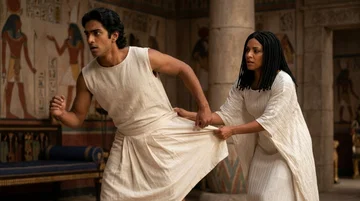
But he refused, and said unto his master’s wife, Behold, my master wotteth not what is with me in the house, and he hath committed all that he hath to my hand;
Translations
But he refused, and said to his master’s wife, Behold, my master wotteth not what is with me in the house, and he has committed all that he has to my hand;
King James Version, KJV Cambridge Paragraph Bible
But he refused, and said unto his master’s wife, Behold, my master wotteth not what is with me in the house, and he hath committed all that he hath to my hand;
But he refused, and said to his master's wife, Behold, my master knoweth not what is with me in the house, and he hath committed all that he hath to my hand:
But he refused, and said unto his master’s wife, Behold, my master knoweth not what is with me in the house, and he hath put all that he hath into my hand;
But he refused, and said unto his master’s wife, Behold, my master knoweth not what is with me in the house, and he hath put all that he hath into my hand:
and he refuseth, and saith unto his lord's wife, 'Lo, my lord hath not known what [is] with me in the house, and all that he hath he hath given into my hand;
But he refused, and said to his master's wife, Behold, my master takes cognizance of nothing with me: what is in the house, and all that he has, he has given into my hand.
And he refused and said unto his lord’s wife, Lo! my lord, taketh no note with me as to what is in the house,—but, all that pertaineth to him, hath he delivered into my hand:
Berean Standard Bible, Majority Standard Bible
But he refused. “ Look,” he said to his master’s wife, “ with me here, my master does not concern himself with anything in his house, and he has entrusted everything he owns to my care.
But he refused, and said to his master’s wife, “ Behold, my master doesn’t know what is with me in the house, and he has put all that he has into my hand.
But he would not, and said to her, You see that my master keeps no account of what I do in his house, and has put all his property in my control;
But he refused and said to his masters wife, Beholde, my master knoweth not what he hath in the house with me, but hath committed all that he hath to mine hande.
Douay-Rheims (Challoner revision)
But he, in no wise consenting to that wicked act, said to her: Behold, my master hath delivered all things to me, and knoweth not what he hath in his own house:
Pictures




Cross-references
- Daniel 1:8
But Daniel purposed in his heart that he would not defile himself with the portion of the king’s meat, nor with the wine which he drank: therefore he requested of the prince of the eunuchs that he might not defile himself.
Both remained faithful to God and resisted compromise in a foreign court.
- Genesis 39:20
And Joseph’s master took him, and put him into the prison, a place where the king’s prisoners were bound: and he was there in the prison.
Joseph is imprisoned despite his upright refusal.
- Exodus 20:14
Thou shalt not commit adultery.
Joseph refuses his master’s wife, illustrating the commandment against adultery.
- Genesis 41:40-41
Thou shalt be over my house, and according unto thy word shall all my people be ruled: only in the throne will I be greater than thou.
Joseph is entrusted with authority in Egypt.
- 1 Corinthians 6:18
Flee fornication. Every sin that a man doeth is without the body; but he that committeth fornication sinneth against his own body.
Joseph refuses sexual sin, illustrating the command to flee fornication.
- Genesis 39:3
And his master saw that the LORD was with him, and that the LORD made all that he did to prosper in his hand.
The Lord’s presence made Joseph prosper.
- Genesis 39:21-22
But the LORD was with Joseph, and shewed him mercy, and gave him favour in the sight of the keeper of the prison.
God shows Joseph favor and entrusts him with responsibility in prison.
- Genesis 50:20
But as for you, ye thought evil against me; but God meant it unto good, to bring to pass, as it is this day, to save much people alive.
Joseph says God turned intended harm toward good.
- Genesis 39:23
The keeper of the prison looked not to any thing that was under his hand; because the LORD was with him, and that which he did, the LORD made it to prosper.
The LORD’s presence prospered Joseph in prison after his refusal.
- Psalms 105:21-22
He made him lord of his house, and ruler of all his substance:
Describes Joseph’s authority and wise administration in Egypt.
- Genesis 42:6
And Joseph was the governor over the land, and he it was that sold to all the people of the land: and Joseph’s brethren came, and bowed down themselves before him with their faces to the earth.
Joseph’s brothers bow before him, fulfilling the dreams that stirred their envy.
- Genesis 26:10
And Abimelech said, What is this thou hast done unto us? one of the people might lightly have lien with thy wife, and thou shouldest have brought guiltiness upon us.
Both describe guilt brought upon others through adultery.
- Genesis 37:2
These are the generations of Jacob. Joseph, being seventeen years old, was feeding the flock with his brethren; and the lad was with the sons of Bilhah, and with the sons of Zilpah, his father’s wives: and Joseph brought unto his father their evil report.
Both texts describe Joseph as a youth.
Commentary
Each commentary is drawn from primary sources: the writings of Ellen G. White and Adventist pioneers and periodicals. Each commentary is separate. Its own words are not a quotation; follow the references to read the source passages.
Ellen G. White
47 sources
Joseph refused his master's wife by pointing to the complete trust his master had placed in him, having committed all in the house to his hand and left himself to know nothing except the bread he ate.PP 214.2–41SP 131.2ST Jan 8, 1880 His refusal was prompt and firm, turning from the first step of transgression without parleying, from gratitude that scorned to betray such confidence and from loyalty to God that valued divine favor above all human power.SG3 143.31SP 131.24T 544.1–2ST Jan 8, 1880STB 643.5–644.1 That integrity was not created in the moment but was the fruit of earlier faithfulness in small duties, communion with God, and a resolve made on the road to bondage to ever act as a subject of the King of heaven.5T 321.1–2CE 225.3–226.2SCE 23.1ED 52.3–45T 42.2–43.2 Though his stand brought false accusation, prison and suffering, God did not forsake him but guarded his reputation, gave him favor, and in due time raised him to honor.SG3 143.3ST Jan 8, 18801SP 133.1 His victory stands as proof to all generations that those surrounded by evil can resist and remain untainted through present divine help.SG3 143.35T 321.1–2ST Jan 8, 1880
Trust and Setting
Potiphar's confidence in Joseph increased daily until he promoted him to steward with full control over all in the house, committing all that he had to his hand and knowing nothing of what was with him except the bread he ate.PP 214.2–41SP 131.2ST Jan 8, 18801SP 133.1GW 69.1 Joseph met the approach of his master's wife by pointing to that great confidence entrusted to him, treating yielding as betrayal of trust and abuse of his place.1SP 131.2ST Jan 8, 18801SP 133.15T 129.1GW 69.1 His refusal was gratitude and faithfulness to his master, despising the ingratitude of breaking that confidence even though his master might never learn the fact.1SP 131.2ST Jan 8, 18801SP 133.1 That integrity is held up as a model of character for the young and for those preparing to serve God.5T 129.1GW 69.1
The trust was won because the Lord was with Joseph and made all that he did to prosper.PP 214.2–4 The prosperity came not by direct miracle but by crowning his industry, care, and energy with divine blessing, which he attributed to God's favor.PP 214.2–4 Even his idolatrous master accepted that divine favor as the secret of his success.PP 214.2–4
He gained and held this place as a stranger and slave in Egypt, serving amid idolatry and vice, the sights and sounds of vice and the allurements of heathen worship surrounded with wealth and culture and royal pomp, in a corrupt heathen court and a position of danger.PP 214.2–4ED 52.3–4STSE 113.2–3Lt 65, 1896, par. 1–3Lt 40, 1895, par. 1 He preserved simplicity and fidelity, refusing to linger on forbidden subjects or to hide that he was a worshiper of Jehovah to gain favor, remaining true to religious commitment without compromise with idolatry or abandoning duty for worldly advantage.PP 214.2–4STSE 113.2–3Lt 40, 1895, par. 1 In purity and uprightness he stood in marked contrast to idol worshipers, and by God's grace and not his own strength he glorified God, honored the Lord, and represented Him to a heathen nation.PP 214.2–4CH 205.1–2STSE 113.2–3Lt 65, 1896, par. 1–3Lt 40, 1895, par. 1
Motives for Refusal
He refused promptly and firmly, turning away from the first step of transgression without stopping for a moment to reason or argue with conscience.SG3 143.3ST Jan 8, 1880STB 643.5–644.1 He scorned the thought of yielding for fear of sullying purity, and met unlawful love and undue attachment with stern integrity, remaining upright and true to duty.CT 496.3SLP 33.31MR 321.2 He prayerfully and fully studied what God required, laid hold upon the help God promised, and exercised his free moral agency to wrench himself from a hurtful and dangerous association instead of cherishing evil and tamely giving himself to an evil way as though he could not break away.STB 643.5–644.1SLP 33.3
He refused from gratitude and faithfulness to his master, pointing to the great confidence entrusted to him in committing all in the house to his hand.SG3 143.31SP 131.2ST Jan 8, 18801SP 133.1GW 69.1 To abuse that trust would be ingratitude and betrayal, and he despised such ingratitude even though his master might never learn the fact.SG3 143.31SP 131.2ST Jan 8, 1880 His integrity in honoring the trust placed in him makes him a model for the young and for those preparing to serve God.5T 129.1GW 69.1
He refused from the elevating power of the love and fear of God, which covered his heart as a shield and made him faithful and just to his master and true to God.SG3 143.34T 544.1–2ST Jan 8, 1880 From loyalty to God and sacred regard for His will and law he would not deviate from the path of righteousness nor transgress by any inducement or threat, calling the grace of God to his aid to fight the tempter and coming off conqueror.SG3 143.31SP 131.25T 124.1–2 Aware that God saw him, unwilling to incur His displeasure, and reverencing and loving Him with unwavering trust, he carried his religion everywhere with the same regard in every circumstance.4MR 220.3–222.4ST Jan 8, 18805T 124.1–218MR 260.2–3 He valued the favor of God above the favor and praise of princes and every human power.SG3 143.3ST Jan 8, 1880
He refused by strictly guarding and governing the lower passions, appetites, and unlawful love rather than letting them govern him, standing firm in principle under strong pressure and preserving chastity, moral purity, and self-control under sexual temptation.CH 634.1–2STB 643.5–644.1SG3 174.2–176.15T 601.31SP 159.1 A wise man claiming wisdom and competence for the duties of life draws nigh to God to prepare mind and body to discharge them aright.CH 634.1–2STB 643.5–644.1 Indulging the passions abuses the perceptive faculties and injures health, calling blood in undue amount to the internal organs instead of circulating to all parts of the body to relieve the heart and clear the mind, so that disease comes until the evil is seen and remedied.STB 643.5–644.1 His self-control and patience in adversity and unwavering fidelity, enduring innocent suffering without yielding or breaking God's law, were left on record for the benefit of all who should afterward live.SG3 174.2–176.11SP 159.1
He refused from settled uprightness of heart, firm principle, and a will placed on the side of the Lord's will.ST Jan 8, 18801SP 133.1CT 496.3Ms 44, 1886, par. 8–10 Bible study, counsel with God, and reliance on Christ received as the basis of character produce steadfastness of purpose that the allurements of pleasure, custom, contempt, and self-indulgence cannot move, with God's word as law and the Lord with him.5T 42.2–43.218MR 260.2–3 He loved truth and loved righteousness with undebased moral taste, lived with constant realization of God's presence and help, and drew from a living root and wellspring of godliness that shaped his surroundings instead of being molded by circumstances.5T 42.2–43.218MR 260.2–3 This establishment in principle came by giving the heart to God and doing the personal heart work no one else can do, meeting crosses, letting nothing stand in the way of duty even at loss, and determining to obey God so that Christ's death would not be in vain on his behalf.1SP 133.13MR 95.2Ms 44, 1886, par. 8–10
Formation of Integrity
His refusal was the fruit of character formed before Egypt by choosing duty over inclination, by integrity, simple trust, and nobility, and by careful training in early years that made uprightness firm when tested.5T 321.1–2CE 225.3–226.2 That early formation came through a pure and simple life that strengthened physical and intellectual powers, through communion with God in His works and contemplation of the grand truths given to the inheritors of faith which elevated the spiritual nature and broadened the mind, and through living in accordance with the Creator's will as the security of truest and noblest development.CE 225.3–226.2 Faithfulness in every station from lowliest to most exalted trained every power for highest service, for adherence to principle in the small transactions of ordinary life accustomed the mind to hold the claims of duty above pleasure and inclination and trained habits of fidelity and truth, so that loyalty to duty did not waver between right and wrong and faithfulness in that which is least gave strength to be faithful in greater matters.CE 225.3–226.2 Such upright character is of greater worth than the gold of Ophir, not inherited nor bought nor accidental but formed by lifetime diligence, persevering effort, and right use of God-given opportunities.CE 225.3–226.2 His standing firm to principle under trial makes him a representative man and pattern of integrity for students and youth who must themselves build characters able to stand the test of the judgment, since present probationary time is the only opportunity to stand the proving of God with no second probation to come.SCE 23.1FE 245.1
He carried out in Egypt a resolve made in the crisis of the journey from his childhood home in Canaan to bondage, when looking for the last time on the hills hiding his kindred's tents he remembered his father's God and the lessons of childhood and determined to prove true and ever act as a subject of the King of heaven.ED 52.3–4 That obedience to duty and faithfulness in lowly station as stranger and slave amid the sights and sounds of vice and the allurements of heathen worship surrounded with wealth and culture and royal pomp trained every power for highest service.ED 52.3–4
His steadfastness came from Bible study, counsel with God, and reliance on Christ received as the basis of character, producing steadfastness of purpose that allurements of pleasure, custom, contempt, and self-indulgence cannot move.5T 42.2–43.2 Because the Lord was with him and God's word was law to him, he endured the test at every point with the same lofty, unbending principle, illustrating good principles in actual life and a character Heaven can approve, in contrast with vacillating youth who sacrifice conscience for indulgence and give way when firmness is most required.5T 42.2–43.2 He loved truth and loved righteousness, his moral taste was not depraved, and the deep work of truth wrought in his heart kept him true and steadfast even while surrounded by evil.18MR 260.2–3Lt 36, 1887, par. 17–18 He lived with a constant realization of God's presence and help and with a constant dread of incurring the displeasure of the God whom he reverenced and loved, and his godliness had a living root to sustain it and a wellspring from which it drew nourishment, so it could stand the test by shaping his surroundings instead of bending and being molded in character by circumstances.18MR 260.2–3Lt 36, 1887, par. 17–18 Safety in such temptation comes from cultivating real faith in God, in His gracious goodness and His presence, and from earnest prayer.18MR 260.2–3
He bore alike the test of adversity and of prosperity, success, and honor, with the same fidelity in the house of Potiphar as in the prisoner's cell and in the palace of the Pharaohs.4T 544.1–2ED 51.3–4Ms 59, 1897, par. 11–14 His refusal met the test of prosperity and success and honor, which assails those who stand in high places as a tempest uproots the tree on the mountaintop while leaving the flower of the valley unharmed.ED 51.3–4 The same sacred regard for God's will and love and fear of God that kept him pure and untarnished in refusal must stand undimmed on sudden and great elevation to wealth and honor next to the throne as in a prisoner's cell, because a lofty height brings danger and prosperity ruins those who forget to be humble and forget that God is their strength and become independent and self-sufficient.4T 544.1–2Ms 59, 1897, par. 11–14 The more difficult the position the more Jesus is needed, requiring complete consecration, hiding in Jesus and holding the hand of Christ, guarding against presumption, and cherishing the spirit that would suffer rather than sin, for no victory is so precious as victory over self.4T 544.1–2
Suffering and Vindication
The refusal met a fierce assault upon morals from one of influence most likely to lead astray, yet it could not corrupt virtue and integrity.SG3 143.3ST Jan 8, 1880SG3 174.2–176.1 Because she could not corrupt him she hated him and testified falsely against him.SG3 174.2–176.11SP 157.2–158.2 Innocence therefore suffered for righteousness and virtue was cast into prison, with integrity bringing calumny and false accusation of a base crime on a foul charge.SG3 143.3ST Jan 8, 1880SG3 174.2–176.11SP 157.2–158.21SP 159.1 That refusal brought maligning and persecution, fetters and gloomy prison through revenge against virtue that could not be subverted.SG3 143.34T 525.11SP 159.1 He meekly bore it without murmuring and did not sink in despair, but in consciousness of innocence and right still trusted God and placed reputation and interest in God's hands.SG3 143.3SG3 174.2–176.1
God who supported him did not forsake him or forget him in Egypt.SG3 143.34SP 445.2–446.1 He guarded the reputation blackened by a wicked accuser and in His own good time caused it and his character to shine.SG3 143.3ST Jan 8, 1880 He gave him favor with the keepers and committed to him the charge of all the prisoners, turning misfortune into blessing and making the prison the way to elevation.SG3 143.3 He overruled the enemy's devices for good and used temptation, adversity, and hardship in the gloomy prison to prepare him.ST Jan 8, 18801SP 133.1 In His own time He raised him to prosperity, honor, and an exalted position far above his debasement, for virtue will in time bring its own reward.SG3 143.3ST Jan 8, 1880Lt 10, 1879, par. 4–9 Even when maligned and treated like a criminal for doing right, God ultimately gave him victory.Lt 10, 1879, par. 4–9
Close connection with God does not bring prosperity in the things of this life, but may bring sore trial and affliction.4T 525.1GW92 25.2–26.2 Followers of Christ will often be sorely tried and afflicted, for it is through much tribulation that they enter the kingdom of God.ST Feb 5, 1902 Yet in Christ they have peace amid tribulation in the world, and God leads His children through trial to perfect trust.ST Feb 5, 1902 He will not forget His people in their trying hour when they flee to desolate places, are cast into cruel bondage, bound in chains, shut in prison, sentenced to death, and suffer privation and want of food.4SP 445.2–446.1 Christ cannot forsake those who are as the apple of His eye, the purchase of His precious blood, but while judgments fall and the wicked die from hunger and thirst, angels provide the righteous with food and water.4SP 445.2–446.1
His self-control and patience in adversity and unwavering fidelity are left on record for the benefit of all who should afterward live.SG3 174.2–176.1 His refusal stands in contrast with those who yielded to sexual temptation and lost their integrity.PP 457.2 His righteous character reflected Christ, with its source and strength coming from God.Lt 14, 1897, par. 6–8 His righteous, self-denying, holy and meek life illustrates Christ, whose life was a continual rebuke to sin and was for that reason rejected and despised.SG3 174.2–176.1
Pattern for Believers
His prompt, firm refusal under fierce assault from one of influence most likely to lead astray stands as an example to all generations that defense is at hand for those exposed to the severest temptations and to evil influences and corrupting surroundings.SG3 143.3ST Jan 8, 1880 God is a present help and His Spirit a shield covering the heart, so that the tempted can resist and remain unconquered and untainted and come off conqueror with grace called to aid, and if they are not preserved it will be their own fault.SG3 143.3ST Jan 8, 1880 No inducement or threat persuaded him to deviate from righteousness, transgress God's law, and prove untrue to his master by abusing great confidence although his master might never learn the fact.SG3 143.3ST Jan 8, 1880
Youth and students are to imitate him as a representative man and a pattern of integrity worthy of imitation, tried and proved and standing firm to principle by refusing wrong.5T 321.1–2SCE 23.1FE 245.1 They are to carry religion everywhere, with his regard for God's will unchanged by circumstances, cultivating Joseph-like firmness against temptation, holding propriety and earnest piety, keeping unspotted from the world, and unfurling their colors in choice words and consistent action.5T 124.1–25T 601.3CT 496.3 Present probationary time is the only opportunity to stand the test and proving of God before the judgment, with no second probation to come, and they are themselves responsible for building characters that will stand that test.SCE 23.1FE 245.1 His uprightness under test reflected purity and trust formed through careful early training and choice of duty over inclination.5T 321.1–2
Those preparing for service are to copy his chastity and moral purity under sexual temptation, holding firm refusal rather than yielding to opportunity and trust.GW 69.1MC 14.3–15.1GW92 343.2 Canvassers must be chaste like him, cultivating self-culture, agreeable manners, and thoughtful habits of industry and discretion from kindness of heart and desire to copy Christ, making of themselves all that it is possible to become through divine aid combined with human effort, and then a power will attend them wherever they go.MC 14.3–15.1GW92 343.2 Gospel workers should copy that same chastity, and his integrity and faithfulness in refusing because his master had trusted him with everything make him a model of character for those preparing to serve God.GW 69.1GW92 343.2 Physicians and nurses and all claiming wisdom and competence for life's duties are to govern the lower passions, appetites, and unlawful love rather than letting them govern, turning away from the first step of transgression without stopping to reason with conscience, and drawing nigh to God to prepare mind and body to discharge duty aright.CH 634.1–2STB 643.5–644.1 Indulging the passions abuses the perceptive faculties and injures health by calling blood in undue amount to the internal organs instead of circulating to all parts to relieve the heart and clear the mind, so that disease comes until the evil is seen and remedied.STB 643.5–644.1
He was faithful in the post where Providence had placed him, remaining at duty in a position of danger rather than abandoning it for worldly advantage or deserting the only post for which he was fitted.STSE 113.2–3TBC1882 68.2–35T 86.2 With Daniel he was called to withstand there the temptations of worldly honor and high station, developing and appreciating talent where it is most needed, and young people should not force themselves into positions of danger or leave the duty suited to them.TBC1882 68.2–35T 86.2 His special position did not lead him to compromise, for God kept him from contamination and from being molded by surroundings, showing that those who love God can remain faithful when placed among people who do not, and his awareness that God saw him strengthened his resolve to flee rather than yield.4MR 220.3–222.4Ms 49, 1893, par. 27–29 Complete and entire consecration like his in a difficult position requires the all-pervading power of true godliness, hiding in Jesus and holding the hand of Christ, guarding against presumption, and cherishing the spirit that would suffer rather than sin, for no victory is so precious as victory over self.4T 544.1–2
Sources
Pioneers and periodicals
60 sources
Joseph refused his master's wife by pointing to his master's complete trust, that he had been given charge of all in the house with nothing kept back except her because she was his wife.ST Nov 3, 1898ST Apr 20, 1888ST Nov 3, 1898 His refusal was because the act would be great wickedness and sin against God, showing that adultery was known to be sinful and the principle of the seventh commandment, Thou shalt not commit adultery, was binding from Creation long before Sinai.RH Oct 18, 1853ST May 4, 1882ST Jun 3, 1875RH Apr 2, 1867RH Mar 19, 1857 He chose duty and gratitude over inclination, refusing to abuse confidence and betray that trust even though his master might never learn of it.RH Mar 5, 1914ST Mar 24, 1887 Like a true soldier he fled fornication rather than linger with temptation, and by the fear of God, firm principle, and grace he remained unconquered where yielding would have been sin.ST Jan 8, 1880ST Mar 24, 1887ST Mar 24, 1887 Though his faithfulness brought false accusation and prison, God overruled the enemy's devices for good to raise him to honor, making his purity in corrupt surroundings an example to all generations and especially to young people under temptation.ST Jan 8, 1880ST Jan 16, 1912ST Mar 24, 1887ST Oct 16, 1901
Words and Historical Setting
Joseph refused his master's wife by appealing to his master's complete trust, pointing out that his master did not concern himself with what was in the house but had committed all that he had into his hand.ST Nov 3, 1898ST Apr 20, 1888ST Nov 3, 1898RH Jan 19, 1860ST Aug 21, 1884 Nothing had been kept back from him except the wife herself, because she was his wife, so to take her would violate that trust.ST Apr 20, 1888 That refusal was a noble stand under strong temptation, recognizing the act as great wickedness and sin against God.ST Nov 3, 1898ST Apr 20, 1888
The refusal came soon after his arrival in Egypt, where he was living as a slave in a foreign land.ST Jan 3, 1911RH May 25, 1916 He had been bought there by Potiphar, an officer of Pharaoh, and was serving in Potiphar's house when the temptation came.ST Apr 9, 1894ST Oct 16, 1901 His integrity and purity in that early position held firm even though faithfulness under trial led to his being cast into prison.ST Jan 3, 1911ST Apr 9, 1894
The account in Potiphar's house stands in a credible Egyptian setting whose customs are supported by historical and archaeological parallels.RH Nov 9, 1916 The story of Joseph's temptation also appears in ancient Egyptian literature, supporting the historical setting of the biblical account.
After his refusal his mistress bore false witness against him with false testimony and a false accusation.RH Oct 18, 1853ST May 4, 1882RH Jan 15, 1875 By that false charge he was wickedly imprisoned, though he had committed no crime.ST Jan 3, 1911RH Oct 18, 1853ST May 4, 1882RH Jan 15, 1875RH Mar 1, 1864 The episode thus shows the transgression of the command not to bear false witness against a neighbor, even though Genesis gives no direct statement of that command.RH Oct 18, 1853RH Jan 15, 1875
Integrity and Faithful Character
The verse shows Joseph acting with integrity, purity, conscientiousness, honesty, virtue and uprightness under severe trial, using wisdom to resist sexual sin and remain pure by refusing his master's wife because his master trusted him with everything in the household.STRH May 2, 1865RH Feb 6, 1908ST Sep 5, 1900RH Sep 20, 1853 That refusal reflected the purity of soul he possessed, and his faithfulness, conscientiousness and integrity belong to the part of his story that leads to the fulfilment of his dreams, the dreams for which his brothers hated him.STRH Feb 6, 1908 He remained faithful, honest and virtuous under fierce temptation, and his purity is to be desired, imparted and pursued in life and conduct through grace as part of imitating godly examples and Jesus.ST Sep 5, 1900RH Sep 20, 1853
He chose duty over inclination in an act of gratitude and faithfulness to his master, firmly refusing to deviate from the path of right, to transgress the law of God and prove untrue to his master.RH Mar 5, 1914ST Mar 24, 1887 He pointed to the great confidence of his master in entrusting all that he had to him and committing everything in the house to his hand, and he would not abuse that trust and betray it even though his master might never learn of it.ST Jan 8, 1880RH Mar 5, 1914ST Mar 24, 1887 He called the tempted act great wickedness and sin against God, and his answer gives evidence of the elevating power of the fear of God, for he would not be persuaded to deviate from righteousness and trample upon God's law by any inducements or threats.ST Mar 24, 1887 His refusal was driven by the fear of God, firm principle, unwavering trust in God, and the grace of God called to his aid as a shield against fierce temptation from one of influence most likely to lead astray, showing that those exposed to evil influences and corrupting surroundings have a present defense at hand in God and his Spirit and can resist and remain unconquered and untainted.ST Jan 8, 1880 His integrity and virtue brought him persecution and reproach, yet his conduct stands as an example to all generations.ST Jan 8, 1880RH Feb 8, 1912
His firm principle and purity reflected careful early home training in faithfulness to every duty, which helped him let duty rather than inclination guide his choice when trusted with great responsibility in his master's house.RH Mar 5, 1914 His experience is given as an example of how early home training helps shape a person's character and later conduct.RH Jan 20, 1916 His principles were present soon after arriving in Egypt despite his father's excessive spoiling, when he refused his master's wife and later suffered imprisonment even though he had committed no crime, and he still needed that prison discipline before God raised him to Egypt's throne.ST Jan 3, 1911
His honesty and faithfulness in household responsibility, in refusing his master's wife because his master had entrusted the household and all its possessions to him, were part of a life in which God prospered his work.ST Dec 12, 1916 The account presents the same integrity as a bondman and later as a ruler, showing faithful service in both lowly and exalted place.ST May 11, 1904 Despite being betrayed and imprisoned after the woman's accusation, he later used his business skill and foresight to provide food for a nation.ST Dec 12, 1916 His conduct as a faithful worker in Egypt who points to his master's complete trust exemplifies the kind of integrity God wants his workers to show in the world.RH Dec 20, 1906
Law Known Before Sinai
Joseph refused his master's wife because to yield would be great wickedness and sin against God, and his refusal is clear evidence that people in his time knew such conduct was sinful.RH Oct 18, 1853ST May 4, 1882RH Jan 15, 1875 His answer called the immodest request by its true moral name, treating adultery as known by mankind in general to be sinful rather than as a matter of indifference.RH Oct 18, 1853ST May 4, 1882RH Jan 15, 1875 The command against adultery was therefore already known before the law was given to Moses.ST May 4, 1882
The episode proves that the seventh commandment, Thou shalt not commit adultery, and its principle were known from Creation and binding in the patriarchal age long before the law was spoken on Sinai.RH Jan 15, 1875ST Jun 3, 1875RH Apr 2, 1867RH Mar 19, 1857 Joseph refused both because his master had entrusted everything in the household to his hand and, above all, because the act would betray that trust and be sin against God.ST Jun 3, 1875RH Apr 2, 1867RH Dec 25, 1860 His refusal on the ground that the act was wrong shows the patriarchs knew the principle of the seventh commandment before its proclamation at Sinai.RH Mar 19, 1857RH Dec 25, 1860 The record of a violation of the seventh precept before Sinai shows that precept was already known and binding before God spoke the Ten Commandments from the mountain, since sin was in the world and sin is not charged where there is no law.ST Mar 30, 1915
God's moral law in general was already known and in force before Sinai, as Joseph's refusal while recognizing his master's complete household trust demonstrates.ST Mar 30, 1915ST Apr 18, 1911RH Mar 1, 1864 The same reasoning that establishes the seventh precept establishes the law itself, for the charge of sin implies the existence of law.ST Mar 30, 1915 His faithfulness under false imprisonment, followed by God's blessing, belongs to this same witness to a law already in force.RH Mar 1, 1864
The same incident shows the principle of the ninth commandment against bearing false witness was also known before Sinai, shown by its violation when Joseph's mistress falsely accused him.RH Oct 18, 1853RH Mar 19, 1857RH Jan 15, 1875 Genesis gives no direct statement of that command at this point but shows it by this transgression, in which she bore false witness against her neighbor and caused him to be wickedly imprisoned though he had committed no crime.RH Oct 18, 1853RH Mar 19, 1857RH Jan 15, 1875
Joseph resisted from fidelity to the law of God and for the honor of God, recognizing both his master's trust and the greatness of the wickedness against God.ST Oct 17, 1895ST Oct 16, 1901RH Jul 19, 1864 A person governed by love for God and others does not refrain from sin merely from fear of civil punishment, but inward devotion makes him unwilling to do wrong even without civil laws.ST Oct 17, 1895 His obedience under temptation illustrates the holiness of God's law, whose transgression carries a terrible penalty, and his fidelity cost him long imprisonment.ST Oct 17, 1895ST Oct 16, 1901RH Jul 19, 1864 Through humility ascribing honor to God, his conduct made it evident that the Lord was with him and brought glory to God before men.ST Oct 16, 1901
Providence in Suffering Exaltation
Refusing to yield his integrity brought Joseph calumny, false accusation, revenge, and prison, yet this did not destroy him, for placing reputation and interest in God's hands meant God guarded a reputation blackened by a wicked accuser, overruled the enemy's devices for good, turned affliction into preparation for an important position, used temptation, adversity, and hardship in the gloomy prison to prepare him, made even prison the way to elevation, and in his own good time raised him far above his debasement to prosperity, honor, and an exalted position on Egypt's throne, exalting as much higher as he had been debased by wicked revenge and in time rewarding virtue.ST Jan 8, 1880ST Mar 24, 1887ST Oct 16, 1901 The assault was fierce, coming from one of influence most likely to lead astray amid snares and corrupting influences, and he promptly and firmly resisted it by the fear of God covering his heart, faithfulness and justice to his master, loyalty to God, hatred of the ingratitude of abusing his master's confidence even if his master would never learn it, gratitude and faithfulness to his master and to God, firm principle and unwavering trust in God, and the grace of God called to aid.ST Jan 8, 1880ST Mar 24, 1887 God is a present help and his Spirit a shield and source of strength to resist the severest temptations, so all exposed to temptation and to evil influences and corrupting surroundings have a defense at hand and can resist and remain unconquered, untainted, with virtue and nobleness of character shining without taint, and it is their own fault if they are not preserved when they fight the tempter and hold firm.ST Jan 8, 1880ST Mar 24, 1887 His refusal was fidelity to the law of God for the honor of God even though it cost him long imprisonment on a foul charge, yet his conduct made it evident that the Lord was with him, and through his humility in ascribing honor to God the Lord received glory before men, so he was promoted through the providence of God, which is evidence of a contrite and humble heart, and his case stands as an example to all generations.ST Jan 8, 1880ST Mar 24, 1887ST Oct 16, 1901
Joseph could not see at the time that his suffering and imprisonment were part of God's providence to raise him to rule in Egypt, preserve his family through famine, make the true God known to an idolatrous nation, fit him to be a preserver of the holy Seed, and lead to the fulfilment of the dreams for which his brothers hated him.ST Jan 21, 1913ST His faithfulness, conscientiousness, and integrity in Egypt belonged to the part of his story that leads to that fulfilment.ST
Satan tried to destroy him through Potiphar's wife, an officer of Pharaoh who had bought Joseph in Egypt, working through her to lead him to sin against God, and his refusal was faithfulness under trial that brought his casting into prison.ST Apr 9, 1894RH Feb 3, 1910 When temptation failed Satan used the same woman as an accuser, and the false charge was believed by men, yet God knew Joseph was innocent and had tender care for him, bringing him forth from the furnace of affliction bright as purified gold.RH Feb 3, 1910 Whether an accusation is true or false, the child of God is benefited by placing himself in God's hands by faith and drawing near to God in humility and repentance to learn the needed lesson in the bitter experience, while the Lord will reward the accuser according to his works and bring him to an inglorious end, with the human agents who aided him perishing with him.RH Feb 3, 1910
His experience shows that God's appointed witnesses expose themselves to reproach and persecution for truth's sake by preserving virtue and integrity, for his determination to preserve them brought maligning, false accusation, and persecution upon him.RH Sep 12, 1912ST May 19, 1914ST Feb 5, 1902 Although a slave in a foreign land he refused to sin against his master and betray the trust placed in him, and his adversity did not turn him from God, so what seemed to be against him became a blessing.RH May 25, 1916 God does not prevent the plottings of wicked men but causes their devices to work for good to those who maintain faith and loyalty in trial and conflict, and such steadfastness bears witness to the faithfulness of God's promises, his abiding presence and sustaining grace, and the power of faith to rest in God and withstand the powers of the world.ST May 19, 1914 Followers of Christ will often be sorely tried and afflicted, yet in Christ they have peace amid tribulation in the world, for it is through much tribulation that they enter the kingdom of God, God leading his children through trial to perfect trust.ST May 19, 1914ST Feb 5, 1902
Victory Over Temptation
Like a true soldier, Joseph both stood his ground when he should stand and fled when he should flee, refusing an unequal contest with fornication and youthful lusts rather than remaining where skillful ambush had been laid. He fled from seductive inducement without delay, leaving part of his clothing behind in his escape, for it is far better to leave the scene of temptation with a marred garment than to stay and keep the coat whole. Whatever must be left behind should be willingly abandoned in order to escape the tempter's snares, and no delay should be allowed, because the longer one stays near temptation the less grows the probability of escape.
Temptation itself is not sin, but yielding to it is, so evil suggestions are to be promptly and firmly rejected rather than welcomed or cherished.RH Oct 12, 1916 Refusing them does not make a person guilty of the sin suggested.RH Oct 12, 1916
His victory came because God is a present help and His Spirit a shield and source of strength to resist the severest temptations and remain unconquered amid snares and corrupting influences.ST Jan 8, 1880ST Mar 24, 1887 By the fear of God covering the heart, faithfulness and justice to his master, loyalty to God, hatred of abusing confidence, firm principle, unwavering trust, and grace called to aid, virtue and nobleness of character can shine without taint even under fierce assault from one of influence most likely to lead astray.ST Jan 8, 1880ST Mar 24, 1887ST Mar 24, 1887 That moral strength comes from God and not from human ability alone, and no inducement or threat can persuade one so guarded to deviate from righteousness and trample upon God's law.ST Jan 8, 1880ST Mar 24, 1887ST Mar 9, 1882 The sharper the temptation, the more divine grace is granted to conquer.RH Jan 23, 1908
As a youth in very adverse circumstances in heathen Egypt, Joseph refused to sin and lived a glorious life for God, proving that faithfulness does not depend on a favorable environment.RH Jan 9, 1913ST Jul 22, 1886RH Jan 23, 1908 No environment of trial or hardship prevents living a patient, gentle, unspotted life of Christian fidelity and approved conduct through God's grace, whether in sheltered love or under forbidding temporal circumstances with temptation, trial, mockery, and ridicule.RH Jan 23, 1908RH May 30, 1912 No one need sin, but can either live obediently or die a Christian's death, since repentance, godliness, and obedience are never impossible.ST Jul 22, 1886RH May 30, 1912
Unlike those who yield to sin, Joseph bears no scar of wrongdoing on his character, remaining faithful to conscience and to God.ST Jul 24, 1879 His integrity was developed amid temptation and difficulty, showing that character is formed when people rely on God and resist disobedience.ST Jun 20, 1906
Example for God's People
Joseph's faithful conduct shows righteousness made part of character and stands as an example to all generations.ST Jan 16, 1912 He is set forth especially for young men and for young people facing temptation, for though young and tested he fought and won.ST Jan 16, 1912 His refusal and integrity displayed purity, brotherly kindness and filial affection, and he stood firm and true to principle despite the strength of the temptation, demonstrating strong spiritual character in refusing to yield to seduction.ST Oct 15, 1885RH Jan 20, 1916RH May 20, 1915
His life holds principles designed to guide in dealing with the contingencies of life.ST Nov 29, 1905 The underlying principle recognized in his case can help and guide anyone called to pass through a similar experience.ST Nov 29, 1905 It is a practical lesson to be as familiar as one's own name, for personal good and for giving counsel to others in similar difficulties, as part of the Bible as a trustworthy guidebook to the very end.ST Nov 29, 1905
His example is one of faithful spirit and moral courage amid the luxury and corruption of ancient Egypt and in a corrupt king's court.RH Dec 29, 1904RH Aug 14, 1913 That faithfulness shows that enthusiasm for God's cause is not new.RH Dec 29, 1904 He resisted wiles for the honor of God from fidelity to the law of God even though it cost him long imprisonment, and his conduct in service made it evident that the Lord was with him, so that through his humility in ascribing honor to God the Lord received glory before men and he was promoted through providence, which is evidence of a contrite and humble heart.ST Oct 16, 1901
Alone in Egypt he obeyed God under temptation and trial, proving that even under forbidding temporal circumstances and in the face of temptation, trial, mockery and ridicule it is possible to obey God and live out the truth.RH May 30, 1912 God set him in that lonely place as a herald of light to demonstrate that obedience to those around him, and the same gospel power works in lonely believers today.RH May 30, 1912 By contrast, earthly rulers who yielded to pressure are unlike Joseph in his faithfulness to his master, with the church acting like his mistress in using flattery and threats to draw rulers into corrupt alliances and violations of their official oaths.ST Nov 12, 1894
Sources