Hebrews 11:26
Esteeming the reproach of Christ greater riches than the treasures in Egypt: for he had respect unto the recompence of the reward.
Translations
Esteeming the reproach of Christ greater riches than the treasures in Egypt: for he had respect to the recompense of the reward.
Esteeming the reproach of Christ greater riches than the treasures in Egypt: for he had respect unto the recompence of the reward.
esteeming the reproach of Christ greater riches than the treasures in Egypt: for he had respect unto the recompence of the reward.
Esteeming the reproach of Christ greater riches than the treasures of Egypt: for he had respect to the recompense of the reward.
Revised Version, American Standard Version
accounting the reproach of Christ greater riches than the treasures of Egypt: for he looked unto the recompense of reward.
greater wealth having reckoned the reproach of the Christ than the treasures in Egypt, for he did look to the recompense of reward;
esteeming the reproach of the Christ greater riches than the treasures of Egypt, for he had respect to the recompense.
Accounting—as greater riches than Egypt’s treasures, the reproach of the Anointed One; for he was looking away unto the recompense.
Berean Standard Bible, Majority Standard Bible
He valued disgrace for Christ above the treasures of Egypt, for he was looking ahead to his reward.
considering the reproach of Christ greater riches than the treasures of Egypt; for he looked to the reward.
Judging a part in the shame of Christ to be better than all the wealth of Egypt; for he was looking forward to his reward.
Esteeming the rebuke of Christ greater riches then the treasures of Egypt: for he had respect vnto the recompence of the reward.
Douay-Rheims (Challoner revision)
Esteeming the reproach of Christ greater riches than the treasure of the Egyptians. For he looked unto the reward.
Pictures
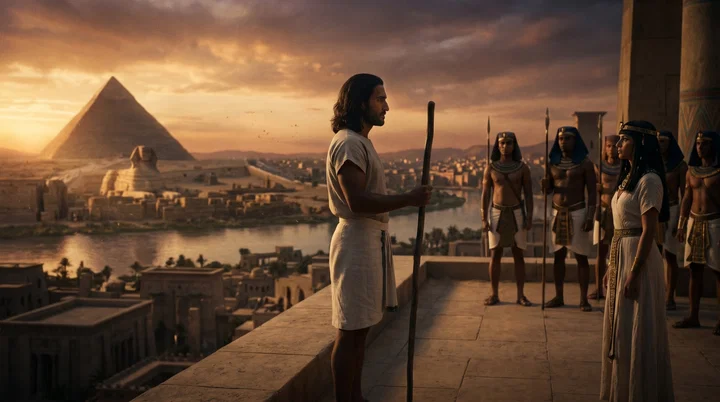
Cross-references 20 of 83
- Exodus 2:11-15
And it came to pass in those days, when Moses was grown, that he went out unto his brethren, and looked on their burdens: and he spied an Egyptian smiting an Hebrew, one of his brethren.
The account of Moses’ choice to leave Egypt underlies the verse.
- Hebrews 12:2
Looking unto Jesus the author and finisher of our faith; who for the joy that was set before him endured the cross, despising the shame, and is set down at the right hand of the throne of God.
Jesus endured shame for the joy set before him, paralleling Moses’ choice.
- Acts 7:22
And Moses was learned in all the wisdom of the Egyptians, and was mighty in words and in deeds.
Moses’ Egyptian wisdom and standing frame his choice to value God’s reward above Egypt’s riches.
- Hebrews 11:6
But without faith it is impossible to please him: for he that cometh to God must believe that he is, and that he is a rewarder of them that diligently seek him.
Faith pleases God and trusts him to reward those who diligently seek him.
- Matthew 5:11-12
Blessed are ye, when men shall revile you, and persecute you, and shall say all manner of evil against you falsely, for my sake.
Reproach for Christ is joined to the promise of a great reward in heaven.
- Hebrews 11:13-16
These all died in faith, not having received the promises, but having seen them afar off, and were persuaded of them, and embraced them, and confessed that they were strangers and pilgrims on the earth.
The faithful saw the promises afar off and sought a better, heavenly country.
- 2 Corinthians 4:17
For our light affliction, which is but for a moment, worketh for us a far more exceeding and eternal weight of glory;
Present affliction is weighed against lasting glory.
- Hebrews 11:1
Now faith is the substance of things hoped for, the evidence of things not seen.
Defines the faith Moses exercised as confidence in hoped-for and unseen things.
- 2 Corinthians 4:18
While we look not at the things which are seen, but at the things which are not seen: for the things which are seen are temporal; but the things which are not seen are eternal.
Looking to unseen eternal realities enables Moses to esteem reproach above earthly wealth.
- Romans 8:17
And if children, then heirs; heirs of God, and joint-heirs with Christ; if so be that we suffer with him, that we may be also glorified together.
Suffering with Christ is joined to sharing his glory.
- Exodus 2:1-10
And there went a man of the house of Levi, and took to wife a daughter of Levi.
Tells how Moses was raised in Pharaoh’s household.
- Philippians 3:7-8
But what things were gain to me, those I counted loss for Christ.
Paul counted worldly gains as loss compared with Christ.
- Matthew 6:19-21
Lay not up for yourselves treasures upon earth, where moth and rust doth corrupt, and where thieves break through and steal:
Contrasts earthly riches with lasting treasure in heaven.
- Hebrews 11:8
By faith Abraham, when he was called to go out into a place which he should after receive for an inheritance, obeyed; and he went out, not knowing whither he went.
Abraham’s obedient departure by faith parallels Moses forsaking Egypt.
- 2 Timothy 2:12
If we suffer, we shall also reign with him: if we deny him, he also will deny us:
Those who suffer with Christ are promised that they will reign with him.
- Acts 5:41
And they departed from the presence of the council, rejoicing that they were counted worthy to suffer shame for his name.
They rejoice to be counted worthy to suffer shame for Christ’s name.
- Hebrews 11:36-38
And others had trial of cruel mockings and scourgings, yea, moreover of bonds and imprisonment:
Faithful witnesses endured mockings, imprisonment, and wandering for the reward.
- John 8:56
Your father Abraham rejoiced to see my day: and he saw it, and was glad.
Abraham and Moses both saw Christ’s day by faith.
- 1 Peter 5:4
And when the chief Shepherd shall appear, ye shall receive a crown of glory that fadeth not away.
The faithful choose eternal glory over Egypt’s treasures and receive an unfading crown.
- Mark 10:29-30
And Jesus answered and said, Verily I say unto you, There is no man that hath left house, or brethren, or sisters, or father, or mother, or wife, or children, or lands, for my sake, and the gospel’s,
Giving things up for Christ brings reward in this life and eternal life to come.
Commentary part 1 of 2
Each commentary is drawn from primary sources: the writings of Ellen G. White and Adventist pioneers and periodicals. Each commentary is separate. Its own words are not a quotation; follow the references to read the source passages.
Ellen G. White
99 sources
When grown to forty years of age Moses refused to be called the son of Pharaoh's daughter and refused Egypt's highest honor to stand with his enslaved brethren.Ms 150, 1898, par. 10–11Ms 106, 1902, par. 9–10PP 246.2–247.1 The treasures he left were Egypt's wealth, honors, royal life, prospect of the crown and command of its armies, while the reproach he chose was hardship, disgrace, suffering and affliction borne for faithfulness to God and His oppressed people.Lt 116, 1896, par. 7–10Lt 38, 1891, par. 13–15LSEGW 180.1GW92 68.2RH Feb 18, 1902 By faith he weighed unseen eternal realities and valued sharing that reproach more than earthly ease and the temporary pleasures of sin, choosing affliction with God's people and the heavenly inheritance.Lt 116, 1896, par. 7–10Lt 38, 1891, par. 13–15Ms 36, 1885, par. 1–2RH Feb 18, 1902Lt 21a, 1892, par. 2–4 He did this having respect to the recompense, looking beyond palace and crown to the better heavenly country, the imperishable crown of immortality and life of peace and joy without sorrow, pain or death.Ms 150, 1898, par. 10–11Ms 63, 1893, par. 26–27PP 245.4–246.1 That choice was truly greater riches, for God's favor and eternal glory outweigh all worldly treasure, and losing heaven to gain the world profits nothing.ED 68.3–4PP 471.3–472.2Lt 29, 1880, par. 32–342T 687.2–688.3ST Apr 21, 1909
Moses's Words and Setting
The reproach of Christ is hardship, disgrace, suffering, insult and affliction borne for faithfulness to God and for standing with His oppressed people.LSEGW 180.1RH Feb 18, 1902SG3 182.2–184.15T 651.2 It is suffering and disgrace endured with God's people, accepted in taking up their cause, involving affliction, self-denial and sacrifice rather than worldly honor and temporary pleasure.Lt 116, 1896, par. 7–10RH Feb 18, 1902SG3 182.2–184.1 It was valued as greater wealth than Egypt's treasures because faith looked by faith to the reward God promised.LSEGW 180.1RH Feb 18, 190214MR 14.2–3 Moses endured misunderstanding, danger and insult without retaliation because he trusted God as personally present and as the help he needed.5T 651.2
The treasures in Egypt were its wealth, riches, honors, grandeur, royal life and court luxury, high-sounding titles, glory, learning and qualifications.Lt 116, 1896, par. 7–10Lt 38, 1891, par. 13–15GW92 68.214MR 14.2–3OEWP 14.1–16.2 They included the position of the king's grandson in the then greatest kingdom of the world, the highest position of honor and Egypt's highest honor.Ms 150, 1898, par. 10–11Lt 21a, 1893, par. 14–1814MR 14.2–3 They included the prospect of an earthly kingly crown, a prospective crown, a royal life and crown lying before him, the palace and the throne and the monarch's crown.Lt 116, 1896, par. 7–10Lt 38, 1891, par. 13–15GW92 68.2PP 245.4–246.11T 656.3–658.2 They included leadership as general of the Egyptian armies, though Moses was learned in all the wisdom of the Egyptians and mighty in words and deeds.Ms 150, 1898, par. 10–11Lt 21a, 1893, par. 14–18
When Moses was come to years and grown, remaining at court until forty years of age, he refused to be called the son of Pharaoh's daughter and refused Egypt's highest honor.Ms 150, 1898, par. 10–11Ms 106, 1902, par. 9–10PP 246.2–247.11T 656.3–658.2 He turned to his brethren in servitude to encourage them that God would work for their deliverance, standing ready to maintain their cause and hoping they would rise to recover liberty.PP 246.2–247.1 He chose to suffer affliction with the people of God rather than enjoy the pleasures of sin for a season, counting reproach borne for Christ as greater riches than the treasures of Egypt because he looked ahead to the recompense of the reward.Ms 150, 1898, par. 10–11Ms 106, 1902, par. 9–101T 656.3–658.2ST Mar 31, 1881 His eye of faith was fixed on the glorious future, and he regarded the reward as so valuable that the richest things earth can offer appeared valueless.1T 656.3–658.2
He was fitted to take first place among the great of the earth, to shine in the courts of its most glorious kingdom and to sway its scepter.PP 245.4–246.1 He was learned in all the wisdom of the Egyptians and mighty in words and deeds, and his intellectual greatness as historian, poet, philosopher, general of armies and legislator stood without peer.Lt 21a, 1893, par. 14–18PP 245.4–246.1 He had the moral strength to refuse wealth and greatness and fame in Egypt despite that fitness and greatness.PP 245.4–246.1
His ability to choose came from early training by God-fearing parents, and especially his mother patiently and perseveringly planted principles of truth and loyalty to God in his soul.1SP 165.2–166.1ED 61.3ST Jun 9, 1881 She taught him of the final reward to be given to the humble and obedient servants of God, and that teaching rooted faith that afterward grew as he studied the laws of God's government.Lt 21a, 1893, par. 14–18PP 245.4–246.114MR 15.1 Therefore court corruption, flattery, idolatry, association with evil, great temptations, Egyptian self-sufficiency, egotism and pride, and education in the Egyptian school did not pervert his sense of the evil of transgression or bring his standard down to the standard of the world instead of the true moral standard.Ms 150, 1898, par. 10–111SP 165.2–166.1ST Jun 9, 188114MR 15.1 Parents by family government lay the foundation of character with both worlds in view, so that children so trained may be a blessing to the church and to the world here and shine forever in the courts of the Lord hereafter.ST Jun 9, 1881
He would not forget his despised, enslaved Hebrew brethren for the splendor and pride of the Egyptian court, for flattery, for being a favorite with the king and the influential, for the honor of being known as heir of the royal family, or even for the promise of wearing the crown of Egypt.1SP 165.2–166.1 He openly owned his parentage rather than conceal it for royal honor, holding firm to the Hebrew faith and to worship of God the maker of heaven and earth alone out of love for his brethren as God's chosen people and respect for the Hebrew faith.1SP 165.2–166.1 He would not identify himself with the Egyptians in their idolatrous worship of senseless objects, but reasoned with priests and idol worshipers.1SP 165.2–166.1 He refused to yield to threats of losing the crown and being disowned by Pharaoh's daughter or to promises of reward.1SP 165.2–166.1
He knew the palace and the throne offered sinful pleasures that make men forget God, so worldly gain sank to its proper insignificance in comparison.PP 245.4–246.1 In the very height of human glory he learned the foolishness of man's wisdom and the weakness of human strength, placed a very low estimate on his own abilities and Egyptian education, and lost self-confidence.OEWP 14.1–16.2Ms 10a, 1895, par. 33–35 He realized his utter helplessness and inefficiency without being upheld by the Lord Jesus, and refused to use his learning to show the unreasonableness of God's commands or the impossibility of obeying them.OEWP 14.1–16.2Ms 10a, 1895, par. 33–35 The wisdom of Egypt could not give him the humility, meekness and steady trust in God needed for his life's work, which came through God's training in the wilderness.CT 406.2
He hoped his brethren would understand that God would deliver them by his hand, and he struck down an Egyptian who was smiting an Israelite.PP 246.2–247.1 When his reproof of quarreling Hebrews was thrown back with accusation, the deed was made known and exaggerated to Pharaoh as a plot to overthrow the government and take the throne, Pharaoh sought his death and Moses fled toward Arabia.PP 246.2–247.1 The slaying of the Egyptian was not faith but rashness prompted by a presumptuous spirit.Ms 10a, 1895, par. 33–35 By faith he forsook Egypt not fearing the wrath of the king and endured as seeing Him who is invisible, as one who confessed himself a stranger and pilgrim on earth seeking a better heavenly country for which God has prepared a city.Ms 150, 1898, par. 10–11RH Mar 29, 1870 His strength was connection with the Source of all power, and by simple, implicit, ever-abiding, unflinching faith in the power and loving intentions of his Deliverer he obeyed all the Lord commanded whether it seemed proper to human reason or not, did what God commanded without stopping to consider consequences, changed his way for the Lord's way even into strange untried paths, advanced when there was nothing ahead for his feet to tread upon, and led more than a million people forward step by step day by day, triumphing over enemies not by the teachings of the schools of Egypt but by faith, acting as seeing the Invisible and confiding in Him with whom all things are possible.Lt 21a, 1893, par. 14–18OEWP 14.1–16.2ST Jul 12, 1905
Faith's Deliberate Choice
By faith Moses weighed eternal realities beyond what sight could show and fixed his attention on unseen things.Lt 38, 1891, par. 13–154T 345.1–2 Valuing a share in Christ's reproach with God's oppressed people more than Egypt's wealth, riches and grandeur, he gave up the prospect of an earthly crown and chose the heavenly inheritance.Lt 116, 1896, par. 7–10Lt 38, 1891, par. 13–15Ms 36, 1885, par. 1–2 He accepted the scorn, persecution, suffering and disgrace involved in taking up their cause because he looked toward the future reward and the recompense God promised.Lt 116, 1896, par. 7–10Ms 6, 1902, par. 14–15Lt 21a, 1892, par. 2–4 His faith trusted God's word and would not let the world's reproach turn him from integrity, giving up the apparent good of court life rather than be drawn into sin, because the reward of faithfulness made the hard and perilous path worthwhile.Ms 6, 1902, par. 14–15Lt 21a, 1892, par. 2–44T 345.1–2
That choice meant present affliction, self-denial, hardship and sacrifice with God's people rather than worldly honor, ease, luxury and the temporary pleasures of sin.RH Feb 18, 1902Lt 21a, 1892, par. 2–4Lt 368, 1905, par. 9–10 He counted reproach suffered for Christ as greater wealth than all Egypt's treasures because he looked by faith beyond present loss to the reward to come.RH Feb 18, 1902Lt 368, 1905, par. 9–10Lt 106, 1896, par. 23 He gave up a prospective kingdom and life in kingly courts to suffer affliction with the people of God rather than enjoy sin for a season, turning from the world's attractions for the enduring crown of immortality and eternal glory.Lt 106, 1896, par. 23Ms 3, 1871, par. 5–7Ms 2, 1868, par. 41–42 The same faithfulness chooses active labor in God's cause with privation and exposure over a life of ease, freedom from labor and care, and indolence, living not for self but to please and glorify God.Ms 3, 1871, par. 5–7
This faith was grounded in the Promised One and grew until it could endure as seeing Him who is invisible.Lt 21a, 1893, par. 14–18ST Dec 10, 1894ST Mar 31, 1881 Moses understood Christ's mission, expecting the reality foreshadowed by Israel's religious system to be revealed and that system to be completed in perfect fulfillment of God's instructions in types and shadows.ST Dec 10, 1894 He studied the laws of God's government until faith rooted in his earliest teaching grew, and his strength was connection with the Source of all power.Lt 21a, 1893, par. 14–18 So grounded, his faith led him to turn away from the lordly ones of earth and join the humble, poor, despised nation that had chosen to obey God rather than to serve sin.PP 245.4–246.1ST Mar 31, 1881
Trials and temptations are sent so that faith may learn the lessons needed in preparation for the future immortal life.Ms 111, 1903, par. 14 Fellowship with God that makes the world hostile refines believers, and they can accept persecution with joy knowing each conflict contributes to final triumph.Ms 111, 1903, par. 14DA 306.1–2 Remembering the eternal reward gives resolve to choose truth and obey God at any cost.Ms 26, 1886, par. 20–21 Respect for the promised reward is proper, and God wants people to trust Him and value His promised blessings, but it must not be the chief motive for service.Ms 26, 1886, par. 20–21COL 397.2–398.1 Love for God and for other people, not eagerness for compensation, is to move the work, doing what is right regardless of gain.COL 397.2–398.1
Nature of Promised Reward
To have respect unto the recompense is to look by faith beyond the gorgeous palace and the monarch's crown to the high honors to be bestowed on the saints of the Most High in a kingdom untainted by sin.Ms 150, 1898, par. 10–11PP 245.4–246.1 It is to seek the better heavenly country and the city whose builder and maker is God, confessing oneself a stranger and pilgrim on earth.Ms 150, 1898, par. 10–11Ms 63, 1893, par. 26–27 It is to look to the imperishable crown the King of heaven will place on the brow of the overcomer, the unfading crown of immortality, and the far more exceeding and eternal weight of glory.PP 245.4–246.12T 100.1 It is to prize a life of peace, happiness and joy unspeakable without sorrow, sadness, pain or death, a life as enduring as the throne of God, above glittering worldly tinsel that eclipses the glory of heaven.2T 100.11T 656.3–658.2 The eye of faith fixed on that glorious future regards the reward as so valuable that the richest things earth can offer, even worldly riches and honor, high-sounding titles, a prospective crown and the glory of a kingdom, appear valueless.2T 100.11T 656.3–658.2
Moses saw by faith the redeemed people crowned with glory, honor and everlasting life, and the riches of the coming kingdom outweighed the riches of Egypt.RH Apr 19, 1870ST Jun 26, 1893 The unseen imperishable treasure, made vivid to the soul through the Holy Spirit and made to appear in attractive beauty, keeps worldly things from ruling affections bought with an infinite price by the Redeemer.ST Jun 26, 1893ST Jun 10, 1913 That vision of the world to come balances the mind so that the things which are seen do not obtain control.ST Jun 26, 1893ST Jun 10, 1913
The reproach connected with Christ and God's service was truly greater riches than Egypt's treasures because it truly was so.ED 68.3–4ST Apr 21, 1909 What looks like renunciation and sacrifice in giving up a prospective kingdom, the palace of the Pharaohs and the monarch's throne with its sinful pleasures that make men forget God, was not really so.ED 68.3–4ST Apr 21, 1909 Moses chose God's purpose and durable riches and righteousness, binding his life with God's purpose instead of the greatness of Egypt, and he was satisfied with his choice, judging he had made a wise decision in choosing to suffer affliction with the people of God rather than to enjoy the pleasures of sin for a season.PP 471.3–472.2ST Apr 21, 1909
Instead of giving laws to Egypt he by divine direction enacted laws for the world, becoming God's instrument to give principles that safeguard home and society, the cornerstone of the prosperity of nations and the foundation of all that is best in human governments.ST Apr 21, 1909 The greatness, power and civilization of Egypt are in the dust and have passed away, but his work and the great principles of righteousness he lived to establish can never perish and are eternal.ST Apr 21, 1909 His life of toil and heart-burdening care was irradiated with the presence of Christ, with Christ in the wilderness wandering, with Christ on the mount of transfiguration, with Christ in the heavenly courts, a life on earth blessing and blessed and in heaven honored.ST Apr 21, 1909 Though his trials were great, he enjoyed special tokens of God's favor, a rich experience in witnessing the manifestations of God's power and glory, and communion of His love, knowing his mission and work were of God's own appointing and not regretting the burdens he bore.PP 471.3–472.2ST Apr 21, 1909
Those who accept humiliation and affliction with God's people rather than temporary sinful pleasure will share Christ's glory and reign with Him.ST Nov 14, 1900Lt 79, 1900, par. 20–21 In willingly sharing His humiliation before the world by choosing hardship with God's people over short-lived sinful pleasure, they become members of the royal family, children of the heavenly King.ST Nov 14, 1900Lt 79, 1900, par. 20–21 They receive the dignity of His name.Lt 79, 1900, par. 20–21
The reward is to war the good warfare and come off victorious so as to rest together in the city of God and appreciate that rest.Lt 29, 1880, par. 32–3421MR 211.3–6 It is to see Jesus and live in His presence, to see Him and praise Him and be crowned together, and for those who have suffered and labored together to enjoy the reward together and rejoice together, including rejoicing with souls helped to lead to Christ.Lt 29, 1880, par. 32–3421MR 211.3–67MR 34.2–35.1 Heaven is worth more than anything lost or suffered in this life, so believers can afford to toil in this life and afford to be pilgrims and strangers while seeking the crown of life and the joy of entering God's kingdom with most earnest efforts and with as many others brought into glory as possible.Lt 29, 1880, par. 32–3421MR 211.3–67MR 34.2–35.1
Confidence that God rewards those who seek and obey Him gave Moses strength to remain faithful under temptation and difficulty and to carry out his work faithfully, relying on God's help.Ms 36, 1885, par. 345T 651.3Lt 42, 1886, par. 2–3 Attention to God's promised reward leads the faithful to accept reproach and remain humble before God, and God will honor His faithful children with eternal glory and honor.Ms 36, 1885, par. 345T 651.3
Choosing the reproach and cross of Christ over worldly honor and treasure leads to the true riches kept in heaven and the reward of eternal glory, for the favor of God is worth more than the treasures of the world.2T 687.2–688.3Lt 186, 1899, par. 12–13ST Dec 18, 1901 To lose heaven is to lose everything, while gaining the whole world profits nothing if the soul is lost.Lt 29, 1880, par. 32–34ST Dec 18, 1901Lt 2, 1861, par. 17–18 Respect for that lasting reward means choosing life with Christ and acting with eternity in view, with the nobler world brought back into sight and the threshold of eternity flooded with the glory of God.Lt 186, 1899, par. 12–13ST Dec 18, 1901Lt 2, 1861, par. 17–18
Pattern for Later Believers
Moses stands among the heroes of faith whose lives are patterns for the church, and their record is given as instruction for those working for God to go forward in faith.CTBH 238.1RH Sep 30, 1902 Their example calls believers to lay aside every weight and besetting sin and to run with patience the race set before them.CTBH 238.1 It calls them to turn the mind from discouraging seen things toward unseen things and to seek the better country, the heavenly city whose builder and maker is God.Ms 63, 1893, par. 26–27 His fidelity shines as an example to those in darkness, and as one of the great cloud of witnesses he met evils and difficulties and stood firm against opposing evil in the Lord's name while the Lord held him by the hand.Ms 53, 1902, par. 3Ms 61, 1907, par. 1–3 The faith recorded in sacred history can work in believers today, sustaining servants through trials, preparing them for service, helping them go forward when providences are hard to understand, and becoming channels of divine power.PK 175.2
True followers in reform do not wait for truth to become popular but, when convinced of duty, deliberately accept the cross, inconvenience, disgrace and reproach.GC88 460.1–2GC 460.1–3 They count disgrace suffered for Christ as greater wealth than worldly advantage, comfort, ease, popularity or riches, holding faithfulness to duty more valuable than all of these.GC88 460.1–2GC 460.1–3 They choose the right because it is right and leave consequences with God, so that inconvenience and reproach standing in the way of accepting and spreading truth do not deter them, and by such principle, faith and daring the work of reform is carried forward.GC88 460.1–2
The Waldenses made the same choice, prizing the love and favor of God far above earthly ease, comfort and riches, and esteeming reproach for Christ as greater riches than earthly treasure because of respect to the future reward.SG4 273.1GW92 57.1 They endured persecution, being driven from homes, loss of possessions gained by hard labor, burned houses, flight to the mountains, homelessness, hunger, fatigue, cold, nakedness with only skins of animals for clothing, and sickness and death of children from cold and hunger, without yielding faith.GW92 57.11T 371.1 They assembled to sing and praise God for being accounted worthy to suffer for Christ's name, encouraging and cheering one another, grateful even for a miserable retreat, receiving consolation from God.GW92 57.1 Their hopeful expectation of the reward gave them consolation, and they looked forward with pleasing anticipation to the recompense of reward as light affliction compared with eternal life.SG4 273.1GW92 57.1
The seventh-month movement shows the same faith that acts on what God has spoken even when obedience costs worldly attractions, valuing the promised reward above worldly pleasures and possessions.LS 104.1–105.1 Its believers devoted themselves to preparing for Christ's coming because they expected soon to stand in His presence and face to face with the Redeemer.LS 104.1–105.1GC88 401.2–403.1 At the cry of the Bridegroom the most humble and devoted heard and obeyed first, studying the Word with intensity of interest, leaving crops and tools with tears and rejoicing to give the warning.GC88 401.2–403.1 They prayed much with and for one another and met in secluded places for communion with God, seeking each morning the evidence of acceptance and counting assurance of the Saviour's approval more necessary than daily food, feeling unutterable solemn joy as the softening, subduing power of the Holy Spirit melted the heart.GC88 401.2–403.1 Moses himself endured in this same way because he saw Christ accompanying Israel in their travels and looked ahead to Christ's coming in the flesh, trusting God as personally present and as the help he needed to bear misunderstanding, danger and insult without retaliation.5T 651.2
Call to Christian Living
God's owned and approved people must live by faith looking into the great beyond, choosing divine honor and God's future reward above every earthly gain or preferment, for approval by God brings no recognition and honor from the world.4SP 310.2 The very names owned as sons and daughters and joint-heirs and honored among angels are often spoken with contempt and mockery by the ungodly, and steadfast souls delighted in are for His sake defamed, imprisoned, mobbed, hunted and slain, so that while probation continues God's people must expect the world to know them not.4SP 310.2 Choosing with Moses is to suffer affliction with God's people rather than seek a life free from hardship, counting shame and suffering borne for Christ as greater riches than Egypt's treasures because the eye looks toward the reward, for suffering for faithfulness belongs to the path to the promised reward.1T 77.1–78.1Ms 2, 1868, par. 41–42 That choice turns from the world's attractions and sin's brief pleasures for the enduring crown of immortality and eternal glory.Ms 2, 1868, par. 41–42
It is the ambition of those professing present truth to be written in heaven as rich in spiritual graces rather than written poor while appearing successful on earth, to have lives hid with Christ in God, and to be those whom gold cannot buy, valuing reproach for Christ above all Egypt's treasures though tempted.Lt 41, 1890, par. 56–59 Faith values loyalty to Christ and future heavenly riches more than worldly success, wealth, honor and security, even when following Christ brings hardship and loss, prizing spiritual riches and the eternal kingdom and choosing self-denial rather than gaining earthly advantages at cost of spiritual life.1MR 97.1–31MR 220.1 Worldly success gained at loss of spiritual life is disaster and death, while poverty, the cross, self-denial, self-sacrifice and shattered worldly hopes are far better than sitting with princes on earth and forfeiting the kingdom of God.Lt 41, 1890, par. 56–59 For God's people this means staying distinct from the world instead of aping it by cherishing selfishness and covetousness, refusing unfair dealing and sharp practice in order to be successful, using talents for the spiritual ends for which they were given, vindicating God as owner of all in the earth, and testifying to the reality of Bible religion, because copying the world puts Christ to open shame.Ms 41, 1901, par. 9
It means choosing to suffer reproach for Jesus and showing that choice before a disobedient and crooked generation rather than conforming to the world, to its customs, vanities and fashions.Lt 82, 1895, par. 33 For Christ's sake and for the soul's sake it requires shunning human commandments that obscure God's holy commandments and shunning pleasure-seeking that is ever unsatisfied, such as excitement of the ballroom, the theater and the party of pleasure, and spending time granted to prepare for eternity poring over fictitious stories.Lt 82, 1895, par. 33 Such practices pervert God-given intellect, neglect the Word of God, and rob mind and soul of moral power needed to wrestle against faults and errors, habits and practices that disqualify the soul for enjoying Christ's presence here and immortal life hereafter.Lt 82, 1895, par. 33 Each must therefore ask seriously and with intense interest how it is with his soul, whether by habits and practices he works against his Redeemer, whether he brings glory to Christ, and whether he proves he chooses reproach for Jesus.Lt 82, 1895, par. 33
Moses gave up prospective kingdom and life of worldly honor and luxury in kingly courts, choosing hardship with God's people instead, counting reproach connected with Christ greater wealth than Egypt's treasures because he looked toward the reward.3T 89.1–90.1TCBMP 105.1–106.1Ms 3, 1871, par. 5–7 The same faithfulness means choosing active labor in God's cause with hardship, privation and exposure over a life of ease, freedom from labor and care, and indolence, living not for self but to please and glorify God.Ms 3, 1871, par. 5–7 It is applied to choosing active difficult service for God over an easy life, and investing time, effort, influence and money in His cause as treasure kept in heaven beyond reach of loss, presenting service as choice of lasting reward over worldly ease, wealth and honor rather than living for self or storing earthly treasure.3T 89.1–90.1TCBMP 105.1–106.1 His choice is an example of sacrifice and obedience, valuing faithfulness and suffering and disgrace of belonging to God's people above wealth and status because he looked ahead to the reward.3T 406.1–2 Choosing God means yielding the will to Him and obeying His requirements, for obedience brings happiness and joy while disobedience brings sorrow, and like Moses God's children choose to serve Him rather than enjoy worldly pleasures.RH Feb 18, 1902
Seeing Jesus rightly turns love from earth and earthly things to heaven and heavenly things, makes the short hours of probation precious, keeps believers watchful so surfeiting and cares of life do not leave them unready for the day of God, keeps Christ living within as hope of glory and His soon coming always in view, and lets the infinite sacrifice made move them to look steadily to the eternal reward.ST Oct 28, 1889 Christians must count reproach suffered for Christ as greater riches than all treasures of earth, breaking the spell of earthliness resting on human beings in a busy world full of clamor and confusion, learning that gaining the whole world profits nothing if the soul is lost, with the nobler world lost from sight and the threshold of eternity flooded with God's glory as true wealth to seek.ST Dec 18, 1901 Keeping the second coming and eternal realities continually before the mind makes the world's attractions, vanities, praises, riches, honors and enjoyments appear altogether profitless vanity.Ms 39, 1893, par. 16 It means living as pilgrims and strangers waiting, hoping and praying for the blessed hope, the glorious appearing of Jesus Christ, bringing that belief into practical life with vigorous faith and hope, fervent love for one another, careful holy living for God's glory and distinct separation from the world, pressing on toward Canaan the land of promise rather than turning back toward Egypt.3MR 361.2–4Ms 39, 1893, par. 16
Respect for the promised reward should guide choices and work and be shared with others through faithful influence and Christlike example, leading to value faithfulness to God above worldly gain.Lt 96, 1899, par. 6–7Ms 82, 1896, par. 10–12 The reward is eternal, and neglecting opportunities to serve, choosing self-pleasing ways and refusing Christ's conditions for heavenly life show it has not been valued, for choices and character during probation determine eternal destiny.Ms 82, 1896, par. 10–12 Having respect to the recompense means being diligent in doing the Master's work to the uttermost, continuing while compassed with infirmities and pain, seeking strength and wisdom from God to do the work according to His will, and doing double work for those who will not work in Christ's service.Lt 116, 1893, par. 1 It means carrying forward a large work in entire trust in the Redeemer, in which trust believers are perfectly safe, keeping Christ uplifted as author and finisher of faith and following His example to do His will irrespective of consequences, with willing mind receiving light and help from the source of all power while the Lord leads everyone who places the hand in His and never lets go unless withdrawn, letting the heart repose in confidence in God as present help in every time of need without needing to work through other minds to lead His chosen ones, and using every God-given faculty so others through influence and Christlike example gain the same respect.7MR 159.2–160.2Ms 77, 1907, par. 9–10 Looking toward the reward is reason to labor zealously for Christ's glory in bringing people to the Master, for each person saved adds to the praise of the redeemed and every person is precious as purchased by Christ's blood, with His interests bound up with souls He ransomed.Ms 8a, 1888, par. 25
Having respect to the reward means living to be fitted without fault or wrinkle for the mansions God prepares, knowing time is very short and death may come at any moment, calling sin wrongdoing and sin and accepting reprove, rebuke and exhort instead of sympathizing to take off sharpness of reproof, working to save the sinner as lost while refusing to treat faults as of no account or excuse them with trifling sentimentalism about the way learned at home.Ms 14, 1894, par. 10–11 It illustrates faithfulness through choosing God's service over worldly fame and ambition, with will submitted to God and highest aim to do good and save souls.20MR 41.4–5 Hope of future reward outweighing worldly wealth and family approval gives courage to keep preaching Christ and sharing light given even when called disgrace, for heaven's reward is greater.ST Jun 24, 1889 Choosing Christ and accepting reproach is worth more than worldly wealth, rank or recognition, and victory comes through meekness and lowliness, not through worldly splendor.Lt 128, 1902, par. 7–8
Sharing Christ's reproach is worth more than worldly honor and riches because God's promised reward outweighs them, and the choice is between honor the world offers and faithfulness to God looking toward the reward.ST Feb 16, 1882 Christ Himself endured shame, agony and death for the joy of accomplishing salvation, and the value of the redeemed makes earthly treasure seem insignificant.ST Feb 16, 1882 Defending God's honor and remaining true to right may bring trials, conflict and reproach, but faith gives strength to resist wrong and wins rich reward, and like Moses those who stand firm may have to stand almost alone, their integrity and moral strength kept pure through dependence on God.RH Jul 29, 1873 Respect for the promised reward gives reason to pursue obedience and the heights God makes possible, oneness with God through Jesus Christ, for through God's power and divine working human nature need not remain corrupted by sin but through Christ becomes allied to angels and even to God.Ms 43, 1891, par. 27–28
The eye of faith is not to fix on things seen but on eternal unseen realities, and this applies especially to those bound up with afflictions and necessities of humanity in work for blessing and relief of sufferers, that they may grow more intelligent in God's great plan to bring suffering ones to discern the value of the human soul by counting identification with Christ's reproach as greater wealth than earthly treasure.Lt 86a, 1893, par. 48 Believers at Corinth were enabled while Paul was with them to gladly choose to suffer affliction for Christ rather than enjoy pleasures of sin, by his firm faith, fervent prayers, words of instruction, and above all his own example to inspire and encourage them.SLP 149.1 Those called to God's service should be ready, as Moses willingly valued reproach associated with Christ above Egypt's treasures because he looked to God's reward, to accept reproach and give up worldly advantages for God's favor at Christ's call.Lt 12, 1897, par. 19–20
Sources