Acts 7:59
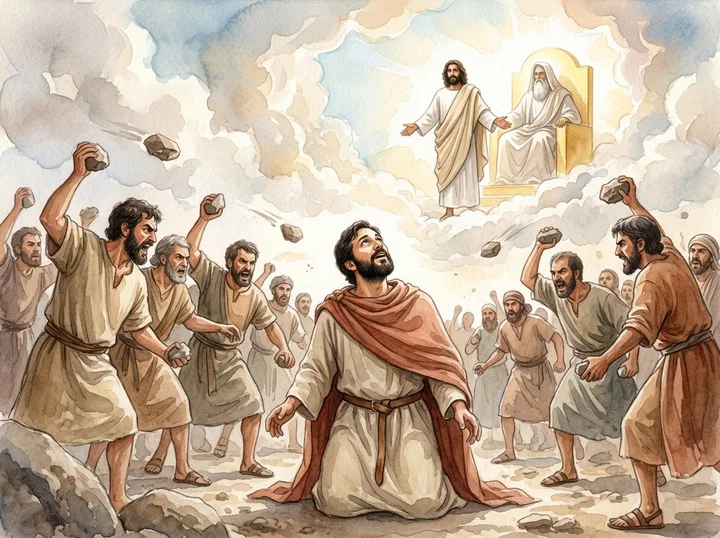
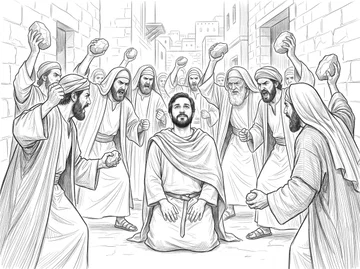
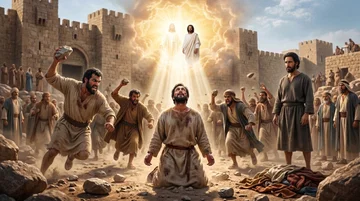
And they stoned Stephen, calling upon God, and saying, Lord Jesus, receive my spirit.
Translations
And they stoned Stephen, calling on God, and saying, Lord Jesus, receive my spirit.
King James Version, KJV Cambridge Paragraph Bible, Webster Bible
And they stoned Stephen, calling upon God, and saying, Lord Jesus, receive my spirit.
Revised Version, American Standard Version
And they stoned Stephen, calling upon the Lord, and saying, Lord Jesus, receive my spirit.
and they were stoning Stephen, calling and saying, 'Lord Jesus, receive my spirit;'
And they stoned Stephen, praying, and saying, Lord Jesus, receive my spirit.
And they stoned Stephen, as he was invoking and saying—Lord Jesus! give welcome unto my spirit.
Berean Standard Bible, Majority Standard Bible
While they were stoning him, Stephen appealed, “ Lord Jesus, receive my spirit.”
They stoned Stephen as he called out, saying, “ Lord Jesus, receive my spirit!”
And Stephen, while he was being stoned, made prayer to God, saying, Lord Jesus, take my spirit.
And they stoned Steuen, who called on God, and said, Lord Iesus, receiue my spirit.
Douay-Rheims (Challoner revision)
And they stoned Stephen, invoking, and saying: Lord Jesus, receive my spirit.
Pictures
Cross-references 20 of 48
- Acts 8:1
And Saul was consenting unto his death. And at that time there was a great persecution against the church which was at Jerusalem; and they were all scattered abroad throughout the regions of Judæa and Samaria, except the apostles.
Saul approved Stephen’s death, and persecution followed.
- Luke 23:46
And when Jesus had cried with a loud voice, he said, Father, into thy hands I commend my spirit: and having said thus, he gave up the ghost.
Both entrust the spirit to God at death.
- Acts 9:1-18
And Saul, yet breathing out threatenings and slaughter against the disciples of the Lord, went unto the high priest,
Records Saul’s conversion in the year after Stephen’s martyrdom.
- Psalms 31:5
Into thine hand I commit my spirit: thou hast redeemed me, O LORD God of truth.
David entrusts his spirit and life to God, as Stephen does.
- Luke 23:34
Then said Jesus, Father, forgive them; for they know not what they do. And they parted his raiment, and cast lots.
Stephen’s prayer for his killers echoes Jesus’ prayer for his executioners.
- Acts 6:15
And all that sat in the council, looking stedfastly on him, saw his face as it had been the face of an angel.
Stephen’s face reflects heavenly glory before his testimony and martyrdom.
- Acts 22:20
And when the blood of thy martyr Stephen was shed, I also was standing by, and consenting unto his death, and kept the raiment of them that slew him.
Paul recalls standing by and consenting when Stephen was killed.
- Acts 8:4
Therefore they that were scattered abroad went every where preaching the word.
After Stephen’s stoning, scattered believers preached the word wherever they went.
- Acts 14:19
And there came thither certain Jews from Antioch and Iconium, who persuaded the people, and, having stoned Paul, drew him out of the city, supposing he had been dead.
Paul’s stoning at Lystra recalls Stephen’s stoning.
- Ecclesiastes 12:7
Then shall the dust return to the earth as it was: and the spirit shall return unto God who gave it.
Stephen entrusts his spirit to God, to whom the spirit returns.
- Matthew 10:28
And fear not them which kill the body, but are not able to kill the soul: but rather fear him which is able to destroy both soul and body in hell.
Both distinguish bodily death from the soul’s fate.
- Acts 8:3
As for Saul, he made havock of the church, entering into every house, and haling men and women committed them to prison.
Saul continues the persecution after Stephen’s stoning.
- Acts 6:5
And the saying pleased the whole multitude: and they chose Stephen, a man full of faith and of the Holy Ghost, and Philip, and Prochorus, and Nicanor, and Timon, and Parmenas, and Nicolas a proselyte of Antioch:
Stephen was chosen among the seven appointed to serve the church.
- Acts 11:19-20
Now they which were scattered abroad upon the persecution that arose about Stephen travelled as far as Phenice, and Cyprus, and Antioch, preaching the word to none but unto the Jews only.
Persecution scattered believers, whose preaching helped establish the church at Antioch.
- Hebrews 11:37
They were stoned, they were sawn asunder, were tempted, were slain with the sword: they wandered about in sheepskins and goat skins; being destitute, afflicted, tormented;
Both describe believers enduring persecution, including being stoned.
- Acts 6:8
And Stephen, full of faith and power, did great wonders and miracles among the people.
Stephen is described as full of faith and power before his martyrdom.
- Revelation 2:10
Fear none of those things which thou shalt suffer: behold, the devil shall cast some of you into prison, that ye may be tried; and ye shall have tribulation ten days: be thou faithful unto death, and I will give thee a crown of life.
Stephen’s death exemplifies faithfulness unto death.
- 1 Thessalonians 4:14
For if we believe that Jesus died and rose again, even so them also which sleep in Jesus will God bring with him.
Both speak of believers who die in the Lord.
- Acts 9:4
And he fell to the earth, and heard a voice saying unto him, Saul, Saul, why persecutest thou me?
stoning Stephen was persecuting Christ himself
- Matthew 27:50
Jesus, when he had cried again with a loud voice, yielded up the ghost.
Both texts speak of Jesus yielding his spirit in death.
Commentary
Each commentary is drawn from primary sources: the writings of Ellen G. White and Adventist pioneers and periodicals. Each commentary is separate. Its own words are not a quotation; follow the references to read the source passages.
Ellen G. White
88 sources
As he is cast outside the city and crushed by stones, Stephen calls upon God in prayer to Jesus, entrusting his spirit and soul to Him to receive.3SP 298.2–3Ms 22, 1900, par. 31–32RH Feb 23, 1911ST Dec 5, 18787RED 37.2 Just before, heaven is opened to him and he sees the glory of God with Jesus standing at the right hand of God as if risen to sustain His servant in martyrdom.RH Feb 23, 19113SP 298.2–37RED 35.1 Amid the agonies he kneels and prays even for those killing him that the sin not be laid to their charge, and then dies as one falling asleep with his face calm and shining.3SP 298.2–3ST Dec 5, 1878Ms 22, 1900, par. 31–32SLP 19.1 Jesus alone can keep and care for the soul, which is too precious to entrust to angels or any other power, and is to be committed to Him in faith every day.Ms 73, 1893, par. 11–1315MR 100.4–101.1 His steadfast faith, prayer, and glorified face leave a lasting witness that remains in Saul's mind, shakes prejudice, and helps prepare and lead to his conversion.3SP 299.27RED 35.3AA 101.3AC1 35.3SLP 19.2
Setting of the Stoning
Stephen is cast out of the city and stoned, while priests, rulers and mob stop their ears, cry out loudly, rush upon him with one accord gnashing their teeth like wild beasts, and the accusing witnesses cast the first stones after laying their clothes at the feet of Saul.ST Dec 5, 1878Ms 22, 1900, par. 31–32SLP 19.1AA 101.1 While being killed his face stays calm and shines with angelic light, he shows no fear, the earthly scene fades from him, and he expects this death.ST Dec 5, 1878SLP 19.1 Just before, heaven is opened to him and he sees the glory of God and Jesus standing at the right hand of God, as if just risen from His throne and ready to sustain His servant about to suffer martyrdom for His name.RH Feb 23, 19113SP 298.2–3ST Dec 5, 18787RED 35.1SLP 19.1 Christ appears to him in heaven standing ready to sustain him as he faces death for Christ and for his faith.RH Feb 23, 19113SP 298.2–37RED 35.1AC1 35.1–2 His vision of God's glory and testimony that he sees the Son of man standing at God's right hand is rejected by the crowd, who will not endure his description and turn to stone him rather than turning from his witness to Christ.AA 101.1SG1 88.2EW 165.1
Amid the agonies of the cruel death he calls upon God in prayer to Jesus, commending his spirit to Him even as his divine Master prayed for those killing Him.3SP 298.2–3ST Dec 5, 18787RED 35.1AC1 35.1–2 His murderers mock his words as they kill him.Ms 11, 1900, par. 1–5 Immediately after commending his spirit he kneels and prays aloud for those killing him, asking that the sin not be laid to their charge, and then he dies, described as falling asleep.3SP 298.2–3Ms 22, 1900, par. 31–32AA 101.1 His killing is unlawful, with no legal sentence passed, because Roman authorities are bribed with large sums to make no investigation of the case.7RED 36.1SLP 20.1AC1 36.1RH Feb 23, 1911AA 101.2 They make no special effort to stop the stoning and the cruel work that follows, but secretly aid it in order to conciliate the Jews and secure their favor.SLP 20.1
He is the first Christian martyr, stoned to death after his opponents fail to overcome his arguments and choose to silence his witness by killing him.SLP 206.2–207.1Ms 17, 1885, par. 12–13 He is condemned to stoning by the Jewish Sanhedrin.SLP 221.2–223.1 He is stoned at a definite spot in Jerusalem where his blood is shed.SLP 206.2–207.1 The time and setting of his address before the people who condemn him matter for its full significance.3SP 297.2
Saul is present at the trial and death, a young man who has disputed with Stephen, consents to his death, and keeps and guards the garments of those who stone him.SLP 19.1SG1 98.1 At that time Saul is educated by Gamaliel, a rabbi and statesman and member of the Sanhedrin, and is very zealous for the suppression of Christianity.Ms 95, 1899, par. 3–5
Prayer Commending His Spirit
While being stoned he calls upon God, entrusting his spirit and soul to the Lord Jesus and asking Jesus to receive him.RH Feb 23, 1911ST Dec 5, 18787RED 37.2AA 100.1ST Dec 12, 1878 As he yields up his life amid the stoning he commits himself to Jesus in prayer.Ms 73, 1893, par. 11–13RH Feb 23, 1911ST Dec 5, 18787RED 37.215MR 100.4–101.1
Jesus alone is able to keep and care for the soul, which is too precious to entrust to anyone else, not to angels or any other power.Ms 73, 1893, par. 11–1315MR 100.4–101.1 Believers are therefore to commit their souls to Him in faith and trust every day.Ms 73, 1893, par. 11–1315MR 100.4–101.1
He offers this prayer on his knees while being stoned, calling upon God for the Lord Jesus to receive his spirit.21MR 59.1–60.1Ms 84b, 1897, par. 1–8 His kneeling is an example proving that kneeling is the proper position always when offering prayer to God, in both public and private worship.21MR 59.1–60.1Ms 84b, 1897, par. 1–8 This act of bowing down shows dependence upon God.Ms 84b, 1897, par. 1–8
Faithfulness in Martyrdom Death
Stephen remained faithful through death, steadfast in divine power and sustained by a power higher than any earthly power.3SP 311.2GW 18.1ST Dec 12, 18787RED 43.1–3RH Sep 12, 1912 His steadfastness witnesses to God's faithfulness, abiding presence, and sustaining grace in trial.GW 18.1RH Sep 12, 1912 The sign of God's favor on his face and the glory and light of heaven resting on him remained in the minds of all who witnessed it.AA 101.3AA 118.2–3SLP 19.2 His face was radiant with heaven's glory as he was killed, and his prayer, his soul-piercing words, and the signet of God upon him made a deep impression that stayed in memory as testimony to the truth he proclaimed.AA 118.2–3SLP 19.2
His death was triumphant, in faith, constancy, and glorification.SLP 21.13SP 305.27RED 37.2SLP 19.2AC1 37.2 He won the first martyr's crown in the kingdom of glory amid the persecution and killing faced by those who believed Jesus was the Anointed One.Lt 45, 1896, par. 3–4 His enemies could kill his body, but they could not take away his hope or eternal life.Ms 16, 1895, par. 18 He was stoned because he faithfully preached Christ and Him crucified.4T 525.1GW 18.1AA 575.1 He testified in the Spirit's power that Jesus is the Son of God, but his hearers rejected the testimony of the Holy Spirit through him and continued in rebellion against God.SG1 101.1EW 173.3
The priests and elders could not answer his words of truth, so they silenced his witness with stones rather than arguments from Scripture. His death sealed that testimony.EW 173.3 He vindicated from prophecy that the crucified Jesus is the Son of God and the promised Messiah foretold in rejection, crucifixion, resurrection, and ascension.AC1 54.1AC1 53.2SLP 36.3–4SLP 37.13SP 321.2 His testimony that the priests had condemned as blasphemy was truth and verity, confirmed by his sight of the heavens opened and the Son of man standing at the right hand of God.
Witness to Saul and Others
Stephen's faith and constancy to the end, his prayer as he was stoned, his piercing words, and the glory resting on his face left a deep and lasting impression on all who watched and remained in their memory as testimony to the truth he had proclaimed.3SP 299.2ST Dec 5, 1878SLP 19.2 His dying testimony bore on priests and rulers as well, for they recognized that their treatment of him had damaged their cause in the eyes of the people.7RED 36.23SP 300.2AC1 36.2 For a time on that account they refrained from arresting the apostles.3SP 300.2AC1 36.2
That witness stirred doubt in Saul about the rightness of opposing the followers of Jesus, shook his prejudice, and stayed in his mind to help prepare him to recognize Jesus as the Messiah.AA 101.3SLP 21.13SP 305.2AA 112.2–113.1 The faith and steadfastness seen in the martyrdom, with the sign of God's favor on Stephen's face, helped bring Saul the persecutor to Jesus and to conversion.7RED 35.3AA 101.3AC1 35.3ST Dec 5, 1878SLP 204.1 What looked like a triumph for evil God overruled to advance the gospel.SLP 19.2
At first Saul was persuaded by the priests and rulers to regard Stephen as a blasphemer and Jesus whom Stephen preached as an impostor.SLP 21.13SP 305.27RED 37.2AC1 37.2 As a man of decided mind and strong purpose he then became bitter in opposition to Christianity and voluntarily engaged in its persecution.SLP 21.13SP 305.2 That persecution was fierce and cruel, seizing believers even in their houses, dragging holy men before councils, and handing them over for imprisonment and death for no offense except faith in Jesus.SLP 21.17RED 36.1SLP 20.1 The killing itself was without legal sentence, because the Roman authorities were bribed to make no investigation of the case and made no special effort to stop the work, secretly aiding it to conciliate the Jews and secure their favor.7RED 36.1SLP 20.1
Afterward Saul remembered his part with horror, anguish, shame, and remorse, recognizing his guilt in allowing the persecution, consenting to and approving the martyrdom, and persecuting followers of Christ who were sustained by a power higher than any earthly power.AA 118.2–3SLP 23.13SP 311.2ST Dec 12, 18787RED 43.1–3 Light clear but terrible broke upon his soul when Christ was revealed to him as come to earth, rejected, abused, condemned and crucified by those He came to save, then risen and ascended, and he recalled how through his instrumentality Stephen had been sacrificed and many worthy saints had met death.SLP 23.1 He remembered in particular the radiant face and heavenly glory amid the killing, that he had let malice and prejudice control him, and that he had guarded the executioners' garments.AA 118.2–33SP 322.2
Feeling accountable for Stephen's blood as a fearful stain resting upon him, Paul sought to vindicate the truth for which Stephen died by proclaiming to his Jewish brethren that the crucified Jesus is the Son of God, vindicated from prophecy.ST Dec 19, 18783SP 322.1AC1 54.17RED 54.1 He was deeply anxious to wipe out the stain by remaining in Jerusalem to labor longer for them, boldly upholding the same truth that had cost Stephen his life, willing even to yield his own life rather than flee what looked to him like cowardice.AC1 54.1 The light on Stephen's face and his dying prayer of divine compassion had brought sharp conviction to the watching members of the Sanhedrin, including Saul, who later became a chosen messenger of Christ to Gentiles, kings, and Israel. Jesus chose Saul to preach and strengthen the church, more than filling the place Stephen had held.SG1 89.1
The scene rose vividly before Paul in later years when he stood at the definite spot in Jerusalem where Stephen's blood was shed, bringing anxiety and remorse as it recalled his former life and bitter prejudice, filling him with sadness and with the question whether he was going forward to a similar fate.SLP 206.2–207.1 It came to mind again with special vividness when he himself was stoned at Lystra for his witness to Christ.AA 183.1–3SLP 60.2–38RED 23.2–25.1 There, bruised, battered, fainting, feeling his end had come, falling apparently dead and dragged insensible outside the city, the martyrdom of Stephen in which he had acted so cruel a part was brought vividly to his mind.AA 183.1–3SLP 60.2–38RED 23.2–25.1
Gospel History and Mission
Stephen's stoning in A.D. 34 marks the Jewish nation's final rejection of the gospel and closes the prophetic seven-year period especially devoted to preaching to them.GC88 328.1PK 699.1–2 After Christ's crucifixion the gospel was carried to the nation in the Holy Spirit's power as a renewed call to repentance, salvation, and pardon for rejecting the Lord of glory, even for those who had taunted Him on the cross and abused Him in the judgment hall.COL 308.2–3Ms 29, 1898, par. 14–15ST Jan 6, 1909 That offer was the renewed invitation to come to the marriage supper because all things were ready, and it showed that even Christ's murderers could have been forgiven had they repented as Saul afterward did when Christ arrested him.Ms 29, 1898, par. 14–15 Instead, enraged hearers scornfully and exasperatedly rejected that mercy, turning upon the bearers of the message with persecution, imprisonment, and murder, with Stephen put to death and other Christians suffering and being killed for their faith.COL 308.2–3DA 629.1–630.1Ms 29, 1898, par. 14–15
The persecution following his death drove and scattered Christ's followers from Jerusalem, and wherever they went they preached Christ, many believed and turned to the Lord, and the message of salvation went beyond the chosen people to the wider world and to new places.GC88 328.17MR 362.1PK 699.1–28RED 3.1 His death, together with the later death of James and the violence inflicted upon the witnesses God sent to call the people to repent, sealed the rejection of mercy and brought the foretold judgment in the destruction of Jerusalem and the scattering of the nation.COL 308.2–3DA 629.1–630.1 He fell at his work as one of the noble builders of Christ's church, a skillful architect building on the true foundation Christ Jesus while tearing down strongholds of bigotry, prejudice, and violence built on a false foundation.8RED 79.1–3SLP 157.1 His death did not stop the building, for stone after stone was still added, the church increased amid terrible persecution, new workers on the wall took the place of the fallen, and what appeared a triumph for evil God used to advance the gospel.Lt 10, 1879, par. 4–98RED 79.1–3SLP 157.1
He was stoned for preaching Christ and Him crucified in the face of opposition to the work of building God's church, while calling upon the Lord Jesus to receive his spirit.AA 596.3–597.2ST Feb 5, 1902 His martyrdom proves that followers of Christ will often be sorely tried and afflicted, that entrance into the kingdom of God is through much tribulation, and that God leads His children through such trial to perfect trust, giving peace in Christ amid tribulation in the world.ST Feb 5, 1902
Example for Later Believers
Entrusting the spirit to Jesus at death is an act of faith, for as he is stoned he calls on the Lord Jesus to receive his spirit.GC88 108.3–109.1GC 108.4–109.1 That same trust is echoed when John Huss faces martyrdom, commending his spirit to Jesus because Jesus has redeemed him.GC88 108.3–109.1GC 108.4–109.1 His death by stoning at the hands of a Jewish mob became the pattern for murder intended years later, when the mob seized Paul in the Jerusalem temple and dragged him from the sacred enclosure into the court of the Gentiles to stone him to death.SLP 215.1–216.3SLP 218.1–219.2 Those who stoned Stephen flung off their garments in excitement, and the mob against Paul repeated the action when they cried that he was not fit to live and threw dust into the air.SLP 215.1–216.3SLP 218.1–219.2
He was stoned because he would preach Christ and Him crucified, showing that those who connect closely with God may be sorely tried and afflicted rather than prosperous in the things of this life.GW92 25.2–26.2 His steadfastness in the might of divine power witnesses to the world of the faithfulness of God's promises and of His abiding presence and sustaining grace.GW92 25.2–26.2 Though the world cannot discern his moral value with God, he calmly reposes in God in the darkest hour, feeling that his Father is at the helm, and by the eye of faith looks beyond the things of time and sense to estimate the worth of eternal riches.GW92 25.2–26.2 Though unknown and unacknowledged by the world, he is enrolled as a citizen in the record books of heaven, with promise of an inheritance of greater value than any earthly riches, an inheritance that will satisfy the longings of the soul.GW92 25.2–26.2 An exalted greatness, an enduring eternal weight of glory, will be his final reward as one whom God has made heir of all things.GW92 25.2–26.2
He is stoned to death at the instigation of the Sanhedrin while praying with divine compassion as he dies. The light of heaven on his face together with his dying prayer brings sharp conviction to the members of the Sanhedrin who watch. Among them is Saul, who later becomes a chosen messenger of Christ to Gentiles, kings, and Israel.
Sources
Pioneers and periodicals
83 sources
Stephen himself was calling upon God as he was stoned, committing his life and breath to Jesus to keep safe until restored to him.RH Sep 15, 1859ST Mar 27, 1879RH Apr 29, 1862RH Oct 30, 1855 He then fell asleep, for death is an unconscious break with no thought or sense of time, and what he committed remains hidden with Christ in God to be bestowed again when the dead are raised at the last day.RH Sep 15, 1859RH Apr 29, 1862RH Oct 30, 1855ST Aug 29, 1878 Those who held the differing reading taught that his spirit survives the death of the body and cannot be destroyed with it.RH Jun 26, 1866RH Jul 4, 1865RH Sep 20, 1864RH Nov 7, 1865 His martyrdom in autumn A.D. 34 closed the seventy weeks cut off upon the Jews, ending their exclusive time and special standing after their second rejection of Christ in His servant.STST Sep 20, 1910RH Apr 29, 1909RH Oct 11, 1915ST Jun 26, 1907 His appeal to the Lord Jesus to receive him honors the Son as God to whom prayer may be addressed, following the example of Jesus on the cross, and with his prayer for his murderers it helped convict Saul who consented to his death.RH Sep 15, 1859ST Dec 1, 1887RH Aug 27, 1901ST Sep 8, 1909ST Sep 18, 1901
Words and Stoning Setting
The one calling upon God as the stones fell was Stephen himself as he died, not his persecutors, for the grammar joins the calling to Stephen.RH Apr 29, 1862 The wording in the common version was at one time read as if the persecutors mockingly called on God, but the participle identifies Stephen as the one asking the Lord Jesus to receive his spirit.RH Apr 29, 1862RH Oct 30, 1855
Spirit here is pneuma, the vital spirit and principle of life residing in the breath, breathed into man from God and returning to God.RH Sep 15, 1859 Stephen committed his pneuma into the keeping of Jesus with his last breath, entrusting his life to his Saviour to be kept safe until restored to him.RH Sep 15, 1859ST Mar 27, 1879RH Apr 29, 1862 He fell asleep, died and was buried, and what he gave up at death is hidden with Christ in God to be bestowed again when Christ appears and those who lose life for Christ's sake find it unto eternal life.RH Sep 15, 1859RH Apr 29, 1862ST Aug 29, 1878 In another reading, what was committed was not a separated deathless part leaving the body but the whole person, spirit, soul and body, entrusted to Christ and reserved and kept until the Lord appears.RH Nov 18, 1858RH Aug 12, 1862 Those who held the differing reading taught that the verse treats the spirit as something distinct from a few inches of air or a dead vital essence, surviving when the body is killed and returns to dust.RH Jun 26, 1866RH Sep 20, 1864RH Nov 7, 1865RH Jul 12, 1864 In that teaching Stephen expected his spirit to exist after his body died, followed Jesus' example at His own death, and showed confidence that men can kill the body but cannot kill the soul, rejecting that the soul dies or sleeps with the body.RH Jul 4, 1865RH Sep 20, 1864RH Nov 7, 1865RH Jul 12, 1864RH Jul 12, 1864
The wording is compared with Luke 23:46 for the New Testament use of pneuma for spirit entrusted at death.ST Feb 13, 1912 A Mandarin rendering under discussion added both ling for spirit and huen for soul, whereas Greek, Hebrew and English refer only to spirit leaving the body, so that the added term can suggest both soul and body depart at death.ST Jun 23, 1909
Stephen was seized and brought before the council on suborned charges supported by false witnesses that he spoke blasphemous words against Moses and against God, against the holy place and the law, and that Jesus of Nazareth would destroy the place and change the customs Moses delivered.ST Feb 4, 1897 He was cast out of the city nearly a mile from it and stoned to death by the Jewish method, rushed upon with gnashing of teeth by enraged priests, rulers and mob.ST Dec 5, 1878ST Mar 3, 1914ST Mar 11, 1897 It was mob law and an unlawful brutal murder without legal sentence, because the Roman authorities had been bribed to make no investigation into the case.ST Mar 3, 1914ST Dec 5, 1878RH Feb 23, 1911 He was dishonored by people but honored by God, and his faithfulness unto death meets the promise of a crown of life.ST Dec 5, 1878ST Mar 11, 1897
Just before and amid the stoning heaven was opened to him and he saw the glory of God and Jesus standing at the right hand of God as if just risen from His throne ready to sustain His servant about to suffer martyrdom for His name.RH Feb 23, 1911ST Dec 5, 1878ST Mar 3, 1914 His face stayed calm and shone with angelic light and he showed no fear, the earthly scene fading before him and the fear of death gone.ST Dec 5, 1878ST Mar 3, 1914 In that moment God gave him a revelation of the saints' reward and the glories awaiting those who overcome, and of the kingdom of glory with the Son of man standing on the right hand of God.RH Mar 19, 1914 Jesus was thus revealed to Stephen in heaven, not coming to him on earth at death.RH Feb 23, 1911ST Aug 12, 1886
Saul was present at the stoning, consenting to the death and taking part in the persecution of Jesus' followers.ST Mar 10, 1914RH Mar 16, 1911RH Aug 27, 1901ST Jun 16, 1914 While others stoned Stephen, Saul cared for and guarded their garments at his feet and held the garments of those who killed him.RH Aug 27, 1901ST Jun 16, 1914 Paul had been a member of that council and had worked to secure Stephen's condemnation, allowing the priests' malice and prejudice to lead him, and he later recalled with anguish his guilt in that cruel persecution.ST Mar 10, 1914RH Mar 16, 1911ST May 8, 1884RH Jul 6, 1868
Death as Unconscious Sleep
Stephen's dying appeal does not prove that the dead remain conscious or that a conscious immortal soul lives on apart from the body.RH Sep 15, 1859ST Mar 27, 1879RH Oct 30, 1855ST Aug 29, 1878 Committing what was about to pass out of his possession into keeping for safekeeping while falling back from the plane of life into unconsciousness would have no point if conscious life continued in one uninterrupted course.RH Sep 15, 1859 Here spirit means pneuma, the vital principle of life residing in the breath, breathed into man from God and returning to God, his life entrusted to the Saviour with his last breath.RH Sep 15, 1859ST Mar 27, 1879ST Nov 14, 1892 The words do not say that he went to heaven or remained conscious after death, but that he fell asleep, died, and was buried.ST Mar 27, 1879RH Oct 30, 1855ST Aug 29, 1878 His seeing Jesus in heaven before he died does not establish continued existence after death, for the account says he fell asleep.RH Oct 30, 1855ST Aug 29, 1878RH Aug 12, 1862
He fell asleep in death while gazing on heaven's glory.RH Oct 30, 1855ST Aug 29, 1878RH Aug 12, 1862ST Jun 5, 1879RH Dec 22, 1868 Death is a break in conscious life into unconsciousness and inactivity with no thoughts or awareness of time.RH Sep 15, 1859RH Dec 22, 1868 What he committed was his whole person entrusted to Christ and not a spirit separated from his body, reserved until the Lord's appearing.RH Aug 12, 1862 Because the dead have no awareness of time, the ages in the grave seem like no delay, no more than a wink of the eye, and awakening will seem immediate, as though he had immediately entered heaven.ST Jun 5, 1879RH Dec 22, 1868
What he committed is hidden with Christ in God and kept by Him for safekeeping while he sleeps, to be bestowed again and revealed in glory when Christ appears.RH Sep 15, 1859RH Apr 29, 1862ST Aug 29, 1878 The one calling upon God is Stephen himself, not those stoning him, as the grammar identifies the calling with Stephen as he dies.RH Apr 29, 1862 He followed the same expression used by Christ on the cross and taken from David's trust when men sought his life, committing his life as Jesus committed His to the Father.RH Sep 15, 1859RH Apr 29, 1862RH Jul 4, 1865 That life principle returns to God when life ends and is restored at the resurrection, not a conscious being with separate existence, to be bestowed again when those who lose life for Christ find it unto life eternal at the raising of the dead at the last day.RH Sep 15, 1859RH Apr 29, 1862ST Nov 14, 1892
Those who held the differing position taught that the verse expresses confidence that death cannot destroy the soul and rejects that the soul dies or sleeps with the body.RH Jul 12, 1864RH Jul 12, 1864RH Feb 14, 1865 In that teaching Stephen expected his spirit to exist after his body died and entrusted it to Jesus, following Jesus' example at His own death.RH Jul 4, 1865RH Sep 20, 1864RH Nov 7, 1865 The spirit is distinguished from the mortal body that dies and returns to dust, while the spirit returns to God who gave it.RH Sep 20, 1864RH Nov 7, 1865 It was not his animal life, which had ceased, but the spirit that would await the advent of the spiritual body as its eternal abode.RH Nov 7, 1865RH Feb 14, 1865 His act demonstrates that men can kill the body but cannot kill the soul, presenting trust in Jesus' teaching and example as assurance and triumph in persecution.RH Jul 12, 1864RH Jul 12, 1864
Prophetic Close of Seventy Weeks
The stoning closed the seventy weeks, the 490 years cut off upon the Jews, in A.D. 34, in autumn, in the very last part and final year of the seventieth week.ST Sep 20, 1910RH Oct 11, 1915ST Jun 26, 1907ST Oct 25, 1905ST Mar 18, 1889 It came three and one-half years after Christ's crucifixion in spring A.D. 31 and seven years after His baptism in autumn A.D. 27, reckoned A.D. 27 to A.D. 34.RH Oct 11, 1915RH May 23, 1912ST Mar 18, 1889 With the seventy weeks thus ended in A.D. 34, 1810 years of the 2300 remained to reach to the fall of 1844.RH Oct 11, 1915ST Jun 26, 1907ST Mar 18, 1889
The death was a second rejection of Christ, for as the Jews had rejected Christ at the crucifixion they now rejected Him through His servant and rejected the Holy Spirit's appeal shining on Stephen's face.STST Sep 20, 1910ST Oct 25, 1905STRH May 23, 1912 It partially fulfills Jesus' prediction that disciples would be persecuted and killed, and fills up Jerusalem's cup of iniquity for killing prophets and stoning those sent to it.STRH Apr 29, 1909ST It ends the exclusive work and special offer to the Jews and their status as God's specially chosen people, gives them over to unbelief and blindness toward Jerusalem's desolation, and closes the time when the gospel was preached especially to them beginning at Jerusalem.STST Sep 20, 1910RH Oct 11, 1915ST Oct 25, 1905ST
After the martyrdom bitter persecution scattered believers from Jerusalem through Judea and Samaria, who went everywhere preaching the word to Samaritans, the Ethiopian and onward, breaking down the middle wall between Jews and the world.STST Sep 20, 1910RH Oct 11, 1915ST Jun 20, 1906ST Oct 25, 1905 The next year began a new era with Saul's conversion and Paul raised up as apostle to the Gentiles, whose deep impression from Stephen's undaunted defense, trial before the Sanhedrin, and death with Saul caring for garments at his feet could not be effaced.RH Aug 27, 1901RH Oct 11, 1915STST Mar 18, 1889 So Jews and Gentiles have the same privileges in Christ though salvation remains for the Jewish people as well.RH Oct 11, 1915STST Mar 18, 1889
The testimony to which the stoning belongs also argues that God's promise that Abraham would inherit the world remained unfulfilled in Abraham's lifetime.ST Jul 22, 1886 Therefore Abraham and all who share the promise and die must be raised.ST Jul 22, 1886 This resurrection hope supports the Messiahship of Christ.ST Jul 22, 1886
Christ Honored in Prayer
Stephen's appeal proves that prayer may be addressed to the Son as well as to the Father in Jesus' name.ST Sep 18, 1901 A dying believer may entrust his spirit to the Lord Jesus in a prayer of trust at the moment of death.ST Apr 7, 1881ST Dec 8, 1887 Stephen prayed to Jesus as he faced death, having caught a glimpse of heaven's glories, and his example makes heaven worth praying for while waiting for the Savior to appear.RH Dec 11, 1866 His dying appeal is the last account of prayer in a believer's life, satisfactory evidence of having received saving grace and the breath of spiritual life in the soul, so that as prayer marks its beginning so prayer marks its end, continuing even in death.RH Mar 18, 1862 His calling on the Lord Jesus to receive his spirit is an example of Jesus receiving a departing saint, echoed in later dying prayers of trust.ST Apr 7, 1881ST Dec 8, 1887ST Aug 28, 1898
Calling upon the Lord Jesus to receive his spirit is an act of divine worship honoring Jesus as God.ST Dec 1, 1887ST Nov 3, 1881 It presents Jesus as Lord and as worthy of prayer and as God.ST Dec 1, 1887ST Nov 3, 1881 It supports that the Jesus seen standing at God's right hand was still Jesus after His ascension and could be called upon after His ascension.ST Sep 8, 1909
Jesus was revealed to Stephen in heaven, not coming to him on earth at death.ST Aug 12, 1886 Stephen died while beholding Christ exalted in heaven, and because death is absolute unconsciousness with no perception of time, the ages in the grave are to the dead no more than a wink of the eye, so that when he awakes it will seem to him that he entered Christ's glorious presence without a moment's interruption.RH Oct 29, 1872 Christ does not come again whenever a saint dies, for if His appearing to Stephen at death were the second advent, each later saint's death would require another coming, contrary to the promise that Christ appears once more the second time.RH Nov 17, 1863
Stephen in doing so followed Jesus' example at His own death.RH Jul 4, 1865 He committed his pneuma, the vital spirit and principle of life residing in the breath, into the keeping of Jesus, following the same expression used by Christ on the cross and taken from David's trust in the Lord when men devised to take away his life.RH Sep 15, 1859 What he committed is kept to be bestowed upon him again, when those who lose their life for Christ's sake find it unto life eternal.RH Sep 15, 1859RH Mar 10, 1868RH Mar 10, 1868 To ask Jesus to receive his spirit means to offer his life as a sacrifice in Christ's cause and to appeal to the Lord's promise, asking Christ to accept the offering and keep it for life eternal.RH Mar 10, 1868RH Mar 10, 1868 Kneeling on the ground at the place of execution, first committing his life to Jesus while stones struck his body, he followed the same path as Christ, who was taken outside the city to die, committing his life into God's hands as Christ committed His spirit to the Father on the cross and testifying under torture that he had the same spirit as his Master.ST Feb 19, 1902ST Feb 4, 1897
The verse belongs with Colossians 3:3 on the nature of man.RH Jun 17, 1873 Its wording is compared with Luke 23:46 and supports the New Testament use of the Greek word pneuma for spirit.ST Feb 13, 1912 It uses spirit for what is substantially the same as life, showing that the New Testament words for soul and spirit can share some meanings without being used interchangeably for the same thing in the same context.RH Jun 11, 1872 The sermon closed by the stoning says nothing about a change of the Sabbath to the first day of the week, and had Christ changed the Sabbath at His resurrection Stephen would have known it by then and would have mentioned it, while the Jews brought no charge against Stephen, Paul, James and the other apostles for violating the Jewish Sabbath or for teaching men to honor the first day as the Sabbath.RH Apr 3, 1879
Witness and Christian Example
Stephen was the first Christian martyr, the protomartyr, one of the seven chosen to serve the church, who sealed his testimony to Christ and His teachings with his blood and death by stoning.ST Mar 11, 1897ST Nov 5, 1896ST Feb 14, 1884RH Dec 22, 1863 Full of grace and power he took a bold stand for Christ and wrought great signs and wonders among the people, and his suffering for Jesus was an honor and a privilege with divine approval shown before his persecutors testifying to his character and work.ST Mar 11, 1897ST Feb 14, 1884ST Sep 19, 1900 The Jews gnashed on him with their teeth, cast him out of the city and stoned him to death, while he faced death committing himself to his Saviour, praying for his murderers with a prayer like that of Christ upon the cross, and then died, his faithfulness unto death meeting the promise of a crown of life.ST Mar 11, 1897ST Sep 19, 1900 One condemned to be stoned for the faith becomes his associate, sharing his lot and following his zeal and steadfastness under persecution.RH Dec 22, 1863
Full of grace, power, faith and the Holy Ghost, which is the power and mind of Jehovah, he wrought great wonders and signs, disputed with men of the synagogues who could not withstand the wisdom and the Spirit by which he spoke, and preached with consecration and simple trust in the power of God's word.ST Sep 23, 1908ST Mar 11, 1897ST Feb 4, 1897 That trust gives boldness to speak for God despite threatened persecution, and such preaching brings persecution and also brings saved souls into the church, teaching that souls are saved to serve.ST Sep 23, 1908 Preaching with God's power either leads to conversion or provokes to anger, and his final moments reveal a pure and unselfish Christian character showing the divine power of Christ's religion.RH Apr 7, 1868 Prejudice, mistaken conscience, hardness of heart and rejection of the Spirit's evidence led to silencing him with stones rather than Scripture, a work wrongly attributed to the enemy, yet though his death appeared a calamity it shed heavenly light on the Christian path, encouraged believers, and stands as a sure sign of final victory.ST Feb 14, 1884
He remained faithful, confident, submissive and triumphant while being stoned, kneeling and first committing his life to Jesus as the stones struck him, remaining faithful unto death.ST Dec 5, 1878ST Mar 3, 1914ST Feb 4, 1897 Enraged priests, rulers and mob rushed upon him gnashing their teeth, stopping their ears, crying out loudly and rushing furiously with one accord in an unlawful killing with no legal sentence passed, yet his face stayed calm and shone with angelic light and he showed no fear and did not waver.ST Dec 5, 1878ST Mar 3, 1914 Just before and amid the agonies of that cruel death heaven was opened to him and he saw the glory of God and Jesus standing at the right hand of God as if just risen from His throne ready to sustain His servant about to suffer martyrdom, because the earthly scene had faded from before him.ST Dec 5, 1878ST Mar 3, 1914 In the moment of persecution God gave him a revelation of the saints' reward and the glories awaiting those who overcome and of coming glory, and he was sustained by a power higher than earthly strength, dishonored by people but honored by God.ST Dec 12, 1878ST Dec 5, 1878RH Mar 19, 1914 His suffering shows God as a shield by comfort and courage rather than by shielding from harm, and proves that followers enter the kingdom through much tribulation unto perfect trust.ST Dec 5, 1878ST Mar 3, 1914
While dying he expressed love even while his enemies killed him, entrusting his spirit to Jesus and asking that the sin not be laid to their charge, that it might not hinder forgiveness if they repented nor be counted unpardonable though done against the Spirit's protest.ST Feb 14, 1906RH Nov 27, 1913 His gentle dying love failed at the time to move Saul's cruel heart, yet it illustrates that God's law requires love in dealings with enemies and patient forbearance under abuse.ST Feb 14, 1906ST Jan 22, 1885RH Mar 18, 1858 His prayer became an example and inspiration to Christ's followers and helped spread the truths of the gospel, echoed even in a boy's prayer asking Jesus to receive him and forgive his mate, and it teaches Christians to bear offenses patiently rather than answer them with anger, hatred or malice.RH Nov 27, 1913RH Mar 18, 1858 His death contrasts with Saul's role as persecutor, yet they will meet in the heavenly kingdom reconciled through the same saving love.ST May 25, 1915
His faith, steadfastness, glory and words left a lasting impression that helped convict Saul and contributed to his conversion, though its precise part is not stated and its effect was not apparent at the time.RH Feb 23, 1911ST Dec 5, 1878ST Jun 27, 1900 After his undaunted, masterly defense of the faith of Jesus before the Sanhedrin, as he pleaded he read his fate in their faces, and while others stoned him Saul cared for their garments at his feet, present and consenting to his death.RH Aug 27, 1901ST Feb 4, 1897 He heard Stephen with rage and remained unmoved at the time, yet became his successor, for the death appeared to produce no immediate converts but profoundly influenced Saul though not apparent then.ST Dec 5, 1878ST Jun 27, 1900 His martyrdom bore fruit in Saul afterward becoming a staunch defender of the same truths Stephen preached and being moved to vindicate the truth for which Stephen died, committing his life into God's hands as Christ committed His spirit to the Father on the cross.RH Aug 27, 1901ST Feb 4, 1897 Saul's prominent part and guilt in consenting stayed perplexing his mind, came vividly to Paul when stoned at Lystra, caused shame and sorrow and a sense of responsibility for Stephen's blood, and remembering Stephen's testimony helped him recognize his guilt in persecuting believers, so that out of Stephen's death came Paul and martyr and persecutor will meet reconciled in glory.RH Feb 23, 1911ST Dec 12, 1878ST May 25, 1915
His death exemplifies severe suffering without miraculous deliverance, Christian liberty that persecution cannot take, and courage in that new workers replace fallen builders so the church grows.ST Sep 23, 1908RH Sep 7, 1911 His rejection after declaring the people had broken God's law is an example of rejecting the testimony of God's Spirit and choosing spiritual darkness, and of the persecution faced by those who uphold the law.ST Feb 21, 1906RH Mar 22, 1864 His stoning marks an early act of bitter persecution against the Jerusalem church followed by believers being scattered through Judea and Samaria, and as a deacon who preached the gospel he is an example that deacons may preach when the Lord leads and opens the way.ST Jun 20, 1906CO 34.2 The spirit that drove the mob against him is the same spirit that stirred the crowd to demand Jesus' crucifixion, with satanic passions which God's restraining power holds in check.RH Sep 7, 1911 It warns that majority rule can trample conscience as in putting Jesus to death and persecuting Paul and Peter, that mob law is unreasonable passion taking God's place, that religious intolerance and church power over civil law produce persecution now and in a future Sunday decree, and that blessing rests on the persecuted for righteousness' sake, not on sincere persecutors who are only indirect instruments.ST Sep 23, 1908RH Mar 22, 1864RH Sep 7, 1911
Sources