Hebrews 13:3
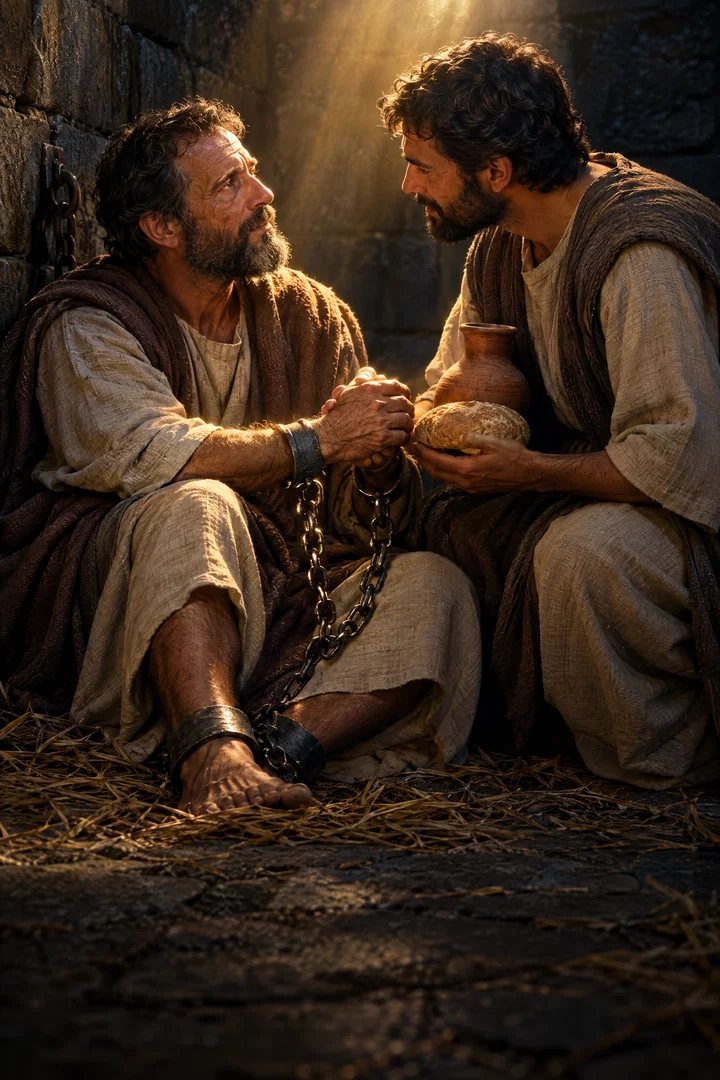
Remember them that are in bonds, as bound with them; and them which suffer adversity, as being yourselves also in the body.
Translations
American King James Version, King James Version, KJV Cambridge Paragraph Bible
Remember them that are in bonds, as bound with them; and them which suffer adversity, as being yourselves also in the body.
Remember them that are in bonds, as bound with them; and them who suffer adversity, as being yourselves also in the body.
Remember them that are in bonds, as bound with them; them that are evil entreated, as being yourselves also in the body.
Remember them that are in bonds, as bound with them; them that are ill-treated, as being yourselves also in the body.
be mindful of those in bonds, as having been bound with them, of those maltreated, as also yourselves being in the body;
Remember prisoners, as bound with [ them]; those that are evil-treated, as being yourselves also in [ the] body.
Bear in mind them who are in bonds, as having become jointly bound,—them who are suffering ill-treatment, as being yourselves also in the body.
Berean Standard Bible, Majority Standard Bible
Remember those in prison as if you were bound with them, and those who are mistreated as if you were suffering with them.
Remember those who are in bonds, as bound with them, and those who are ill-treated, since you are also in the body.
Keep in mind those who are in chains, as if you were chained with them, and those who are in trouble, as being yourselves in the body.
Remember them that are in bondes, as though ye were bounde with them: and them that are in affliction, as if ye were also afflicted in the body.
Douay-Rheims (Challoner revision)
Remember them that are in bands, as if you were bound with them; and them that labour, as being yourselves also in the body.
Pictures
Cross-references
- Matthew 25:36
Naked, and ye clothed me: I was sick, and ye visited me: I was in prison, and ye came unto me.
Visiting those in prison expresses care for Christ’s brothers in distress.
- 1 Corinthians 12:26
And whether one member suffer, all the members suffer with it; or one member be honoured, all the members rejoice with it.
Both teach sharing in the suffering of fellow believers.
- Isaiah 61:1
The Spirit of the Lord GOD is upon me; because the LORD hath anointed me to preach good tidings unto the meek; he hath sent me to bind up the brokenhearted, to proclaim liberty to the captives, and the opening of the prison to them that are bound;
Proclaims liberty and release for those in bonds.
- Matthew 25:44
Then shall they also answer him, saying, Lord, when saw we thee an hungred, or athirst, or a stranger, or naked, or sick, or in prison, and did not minister unto thee?
Failing to minister to those in prison is failing to minister to Christ.
- Hebrews 10:34
For ye had compassion of me in my bonds, and took joyfully the spoiling of your goods, knowing in yourselves that ye have in heaven a better and an enduring substance.
Both describe compassion for people in bonds and loss endured for faith.
- Matthew 25:40
And the King shall answer and say unto them, Verily I say unto you, Inasmuch as ye have done it unto one of the least of these my brethren, ye have done it unto me.
Treatment of the oppressed is treated as treatment of Christ.
- Galatians 6:2
Bear ye one another’s burdens, and so fulfil the law of Christ.
Both express the duty to share one another’s burdens and losses.
- Romans 12:15
Rejoice with them that do rejoice, and weep with them that weep.
Both call believers to share in others’ suffering.
- Psalms 107:10
Such as sit in darkness and in the shadow of death, being bound in affliction and iron;
Both describe people bound in affliction.
- Isaiah 58:6
Is not this the fast that I have chosen? to loose the bands of wickedness, to undo the heavy burdens, and to let the oppressed go free, and that ye break every yoke?
Remembering the bound echoes breaking yokes and freeing the oppressed.
- Matthew 7:12
Therefore all things whatsoever ye would that men should do to you, do ye even so to them: for this is the law and the prophets.
Treat those in bonds as you would wish others to treat you.
- Luke 4:18
The Spirit of the Lord is upon me, because he hath anointed me to preach the gospel to the poor; he hath sent me to heal the brokenhearted, to preach deliverance to the captives, and recovering of sight to the blind, to set at liberty them that are bruised,
Christ’s work includes deliverance and setting captives free.
- Acts 5:41
And they departed from the presence of the council, rejoicing that they were counted worthy to suffer shame for his name.
Believers endure suffering for Christ’s name and rejoice in it.
Commentary
Each commentary is drawn from primary sources: the writings of Ellen G. White and Adventist pioneers and periodicals. Each commentary is separate. Its own words are not a quotation; follow the references to read the source passages.
Ellen G. White
2 sources
Hebrews 13:3 commands compassionate solidarity, remembering those in bonds as if bound with them and those suffering adversity as if sharing their hardship in the body.Ms 4, 1902, par. 17–22RH Jul 22, 1902 Those to be remembered are the imprisoned and the oppressed, and more broadly the discouraged, tempted, sick, sorrowful, needy and brokenhearted.Ms 4, 1902, par. 17–22RH Jul 22, 1902 They include those bound by sin, remorse, weariness, sorrow and discouragement, who feel stunned, staggering, sinking, tired, tempted and confused.
Such remembrance means entering into their condition with fellowship, encouragement and practical help that restores and lifts up.Ms 4, 1902, par. 17–22RH Jul 22, 1902 It heals the brokenhearted and works to free the oppressed, helping the fallen to stand again and binding up the wounds made by sin.RH Jul 22, 1902 Strength already gained is to be used to benefit and bless struggling fellow beings, and there is sustaining power in the deed done for them.
Helping includes inspiring hope, showing the erring what he may become, telling him that Christ died for him so that he may be accepted in the Beloved, pointing him to One who saves completely, and helping him take hold of mercy and trust in forgiving power. The verse forbids the opposite course of exploiting hope, destroying hope, adding to burdens, casting down and destroying.Ms 4, 1902, par. 17–22RH Jul 22, 1902 Specifically forbidden are words that deepen shame, hasty angry words spoken under provocation, denunciation and recrimination, neglect and exalting of self, which cut influence and may put the soul on the road to destruction.
Sources
Pioneers and periodicals
38 sources
Remembering those in bonds means putting oneself in the prisoners’ place and feeling and acting as sharing their confinement, doing for them as one would wish to be done by in the same condition.RH Feb 13, 1900ST Jul 7, 1914RH Jul 8, 1862 It rests on shared bodily life and common vulnerability to hardship, like a human body in which all members suffer with the suffering member and rally to its relief, and it calls for identifying with the afflicted as if undergoing their trial in order to share their glory afterward.RH Feb 13, 1900ST Jul 7, 1914ST Jan 13, 1887RH Aug 27, 1914 Above all it requires remembering Christians imprisoned for their faith, whether for declaring the whole counsel of God, for keeping the Sabbath, for refusing military service, or for enduring war, persecution and internment, with prayer, encouragement, material help and prayer even for their persecutors.RH Feb 13, 1900RH Aug 27, 1914ST Sep 9, 1886RH Apr 26, 1870ST Dec 11, 1893 It also teaches identification with people held in enslavement and oppression, with compassion, intercession for their freedom, shelter and practical aid, protest against their wrongs, and labor to break their yoke and make them free.RH Jul 8, 1862RH Oct 14, 1858ST Jul 8, 1880ST Jan 23, 1907RH Feb 21, 1854 This remembrance is lived out toward the sick, the bereaved, the poor, those in prison, and those still bound by sin and discouragement, by sympathy, prayer, offerings, letters, visits, preaching and restoring help that lifts up and does not cast down.ST Apr 22, 1903ST Jan 13, 1887
Setting and Wording
The letter belongs to Hebrew Christians in Palestine who stood in danger of apostasy through unbelief in Christ and doubt of his claims. That danger came through the influence of the elaborate temple ritual with its sanctuary ministered by priests called of God, through the taunts that they were renegades and traitors to the law given by prophets and angels, and through persecution. Against this it sets forth the supremacy of Christ over prophets, angels, Moses and the old covenant, and the superiority of Christianity to Judaism in every particular. The law was the divinely appointed preparation for the gospel that made nothing perfect, being the shadow and symbol of which Christ is the reality. It holds up for imitation in trials the faith of Old Testament worthies who believed in God and walked by faith and not by sight, with Christ passed into the heavens as high priest above all high priests, the Son of God and Heir of all things, ready to save with an everlasting salvation.
The terms for prisoners and for those evil entreated or suffering adversity point to oppression that falls on believers on account of their faith in Christ.RH Feb 13, 1900 The command to remember them as bound with them requires putting oneself in the prisoners' place, feeling and acting as sharing their bonds.RH Feb 13, 1900ST Jul 7, 1914RH Jul 8, 1862 It requires doing to them as one would wish to be done by in like circumstances, with sympathy and material help.RH Feb 13, 1900ST Jul 7, 1914 The same fellow-feeling is owed to enslaved people in their oppression and deprivation, calling for compassion and practical aid rather than returning escapees to masters, and for prayer for their freedom as intercession for the oppressed.RH Jul 8, 1862RH Oct 14, 1858 Indifference forgets brothers in bonds, and those who uphold leaders that protect slavery bear responsibility for that oppression.RH Jul 21, 1863RH Sep 23, 1862
The added phrase about being also in the body grounds this compassion in shared bodily life.ST Jul 7, 1914ST Jan 13, 1887 It recognizes the common human condition and bodily vulnerability to hardship and suffering.ST Jul 7, 1914ST Sep 9, 1886 Because of that shared life, believers are to remember people in prison as though sharing their confinement, and to feel the suffering of those in adversity as fellow members of the same body.ST Jan 13, 1887ST Sep 9, 1886RH Apr 1, 1858 The same identification extends to sick and confined people separated from their work like prisoners, sharing their distress as though suffering in the same body, with appreciation, practical help, and provision for their needs so they do not have to worry about support.RH Apr 1, 1858RH Nov 28, 1865
Fellowship of Suffering Taught
The verse teaches that the church of Christ is like the human body, where if one member suffers all the members suffer with it and the resources of the whole body rally to relieve a diseased arm or foot, and the same sympathetic relationship must exist between members of the body of Christ.RH Feb 13, 1900RH Aug 27, 1914 This mutual suffering reflects how the heart of God is touched by every experience of His children, joying in their joys and grieving in their sorrows.RH Aug 27, 1914 To remember prisoners and those evil entreated is to put oneself in their place as bound with them and to do to them as one would wish to be done by in like circumstances, with sympathy and material help.RH Feb 13, 1900
The gospel does not leave a brother to bear temporal loss alone but calls others to help carry his burden with free-will offerings, as when fifty believers gave three dollars each to make up one hundred and fifty dollars to replace the horse a fellow laborer lost while traveling to carry the message.RH Apr 1, 1858 Holiness includes remembering and caring for people in bonds as though sharing their confinement and extending concern to the afflicted, and this compassion and practical care for the oppressed is the test of whether a profession of holiness is lived out. The command is to weep with those who weep by suffering with those who suffer and identifying with those under extreme persecution as if undergoing it, so that sharing their suffering now leads to sharing their glory afterward.RH Nov 11, 1858
That such a command was given shows God knew what His people were to meet.RH Feb 13, 1900 The human heart unenlightened by God's word and unrestrained by His grace is the same in all ages, and education and so-called culture are no bar against religious bigotry, tyranny and oppression.RH Feb 13, 1900
Prisoners Suffering for Faith
The verse applies to Christians in bonds for conscience' sake even in the present day and in a land boasting political and religious liberty, liberality and enlightenment.RH Feb 13, 1900 This shows God knew what His people were to meet, that the human heart unenlightened by God's word and unrestrained by His grace is the same in all ages, and that education and so-called culture are no bar against religious bigotry, tyranny and oppression.RH Feb 13, 1900 The words for prisoners and those evil entreated show the oppression comes upon believers on account of their faith in Christ.RH Feb 13, 1900 It commands putting oneself in their place as bound with them and doing to them as one would wish to be done by in like circumstances, with sympathy and material help.RH Feb 13, 1900
It applies to Christians jailed for declaring God's whole counsel, whose confinement and harsh treatment call for sympathy and concern.ST Sep 9, 1886 It applies to Christians jailed for keeping the Sabbath, whom fellow believers should identify with, encourage, and support in prayer and concern.ST Dec 11, 1893 It applies to believers in Tennessee under trial and imprisonment, who call for prayer and whatever material assistance they need. Believers imprisoned for their faith are brothers and sisters to be remembered and supported in prayer with fellow feeling as though bound with them, and prayer is also to be offered for their persecutors.ST Oct 3, 1895ST Aug 6, 1896
It applies to supporting people facing religious-liberty troubles where Sunday laws are enforced, especially by helping distribute religious-liberty literature. It applies to one imprisoned for refusing military service because he believed it contrary to the Bible, whose banishment and his family's distress are to be brought to the church for prayer, and to young men suffering for their faith and prisoners for the truth throughout the world.RH Apr 26, 1870RH Sep 26, 1907 The church is like the human body where if one member suffers all suffer with it and the resources of the whole body rally to relieve it, so the same sympathetic relationship must exist between members of the body of Christ, reflecting how God is touched by every experience of His children, joying in their joys and grieving in their sorrows.RH Feb 13, 1900RH Aug 27, 1914
It particularly requires remembering brethren in adversity in war in Europe, some forced into active military service with lives constantly menaced and exposed to hardship and danger, families broken up, those at home anxious with fear for those at the front, and conference and church officers compelled to forsake their charges to join the national colors, by feeling bound with them and by earnest prayer that God will save His cause of truth and safeguard His children.RH Aug 27, 1914 This includes prayer that the Holy Spirit will teach them in the same hour what to say and give wisdom for the right decision, since each one alone in prayer must decide what to do and no one can determine beforehand by human logic what position he will take until brought to the supreme test.RH Aug 27, 1914 In the setting of war it calls for remembering imprisoned fellow Christians, praying for their deliverance, and praying that God will restrain conflict and strife.RH Sep 17, 1914 It applies to a Christian held six months in a prisoner-of-war camp, for whom others should pray as though bound with him, and to the wartime internment of missionaries and the dangers and deaths faced by mission workers.RH Jul 1, 1915RH Dec 28, 1916
It applies to a young Christian imprisoned for refusing to renounce Christ, whom readers who are free are urged to remember in solidarity.RH Aug 14, 1868 It warns those who bring prisoners the encouragement of the gospel that defenders of truth may themselves one day be imprisoned, calling for remembering people in prison with the sympathy of sharing their confinement and for caring about those who suffer as fellow human beings who may also face hardship.RH Feb 20, 1900
Enslaved and Oppressed People
The verse teaches identification with people held in bondage, remembering their suffering as if bound with them, and it applies directly to enslaved people whose oppression and deprivation of the gospel call for compassion and practical aid, including sheltering those who escape rather than returning them to their masters.RH Jul 8, 1862 It requires treating people in bonds with the care and compassion one would want for oneself, and doing good to a brother in bonds remains a duty even when condemned by unjust laws.RH Feb 21, 1854
It calls for remembering people in bonds and suffering with the fellow-feeling of one who shares their condition, and this duty to enslaved people is fulfilled through prayer for their freedom as intercession for the oppressed.RH Oct 14, 1858 It calls for remembering people in bonds and sharing in the suffering of the oppressed as fellow human beings, applied to praying for enslaved people including mothers separated from their children, and refusing such prayer out of caste prejudice is a failure of Christian mercy.RH Dec 8, 1859 It calls people to feel and act in solidarity with those held in bondage as though sharing their bonds, condemns indifference to enslaved people, and asks whether anyone has persistently protested the evils done to them.RH Jul 21, 1863 It teaches that people must remember those held in bondage and share their suffering as though themselves imprisoned, so that voters who supported leaders protecting slavery had forgotten their brothers in bonds and bore responsibility for their oppression.RH Sep 23, 1862
The duty to remember people in bondage with fellow-feeling remains, and the expectation that bondmen will still exist when Christ comes does not excuse efforts to free enslaved people.RH Mar 10, 1859 Remembering those in bonds can require standing with efforts to break their yoke and free the oppressed as a moral duty rather than merely a political choice.ST Jul 8, 1880 It calls for solidarity with people in bonds and adversity by sharing their chains in sympathy and working to make them free, and also supports speaking for the fallen and weak and standing by the truth even when doing so brings hatred, ridicule, or abuse.ST Jan 23, 1907ST Jul 17, 1907 True freedom includes standing with the weak and working earnestly to make others free while sharing in the suffering of the imprisoned or oppressed and feeling their pain as if bound with them.ST Jul 17, 1907
The condition of enslaved people enduring oppression is evidence of the injustice of the last days, and fellow believers should look with them to the Lord's coming for deliverance. Their consolation is to be patient and steady-hearted, trusting the coming of the great Deliverer rather than relying on delayed human help.
Sick Afflicted and Sin-Bound
Remembering those in bonds means remembering those suffering hardship with kindness and sympathy as though sharing their hardship, reaching the sick, the poor, the bereaved and others needing comfort with a helpful deed, a kind word or another message of care.ST Apr 22, 1903 It calls for practical compassion that restores and lifts people up, heals the brokenhearted, and helps free the oppressed rather than adding to their burdens.RH Jul 22, 1902
Sickness and debility themselves are a kind of bonds, for those laid aside by illness are confined and separated from their work like prisoners.RH Nov 28, 1865 They are to receive sympathy as though others shared their affliction in the same body, with appreciation shown through practical help and provision for their needs so they do not have to worry about their support.RH Nov 28, 1865RH Nov 28, 1865 The imprisoned child, the martyr, and the friendless dying person are brothers who need such care.ST The same compassion extends to those still captive to sin, whom those freed from sin must not forget but must pray for, share the gospel with, and welcome every chance to help release from spiritual bondage.RH Jul 28, 1904
Those bound in sin, remorse, weariness, sorrow and discouragement are to be remembered as if bound with them, by entering into their condition as one stunned, staggering, sinking, tired, tempted and confused. This means helping the fallen to his feet again and binding up the wounds sin has made, lifting up and not casting down, restoring and not destroying, healing the broken-hearted, and using strength already gained to benefit and bless struggling fellow beings. It means inspiring hope, showing what the erring may become, telling him Christ died for him that he might be accepted, pointing him to Him who saves to the uttermost, and helping him take hold of mercy and trust forgiving power, with sustaining power in the deed done. It forbids words that cause deeper shame, hasty passionate words under provocation, denunciation and recrimination, neglect and exaltation of self, which cut influence and may set the soul on the road to destruction. Those behind prison bars can still receive peace from heaven even when temptation comes and deliverance does not appear, for temptation can bring Jesus near, God hears even a faint sigh and sees every tear and His love dispels fear, and looking to Him is not in vain even if His people are still imprisoned when Jesus appears.ST Jan 1, 1894
Active Ways to Remember
To remember those in hardship is to pray for fellow believers, with prayerful Christian fellowship expressing shared concern across every barrier.RH Nov 30, 1916 Keeping the afflicted in mind means responding with sympathy and practical help, since absorption in business or in self can harden the heart against the needs of others.RH Nov 28, 1865 The same remembrance becomes a motive for offerings to support people in bonds.ST Jan 13, 1887
Prisoners are remembered by writing to them and sending religious reading, which may encourage them toward a better life and lead them to Christ.RH Jul 3, 1900 The care is also put into practice by visiting prisoners, speaking with them, praying and singing with them, and encouraging them with fellow-feeling as sharing their confinement and hardship.ST Aug 14, 1893
Remembering those in bonds means ministering to those in prison as a grand work and privilege to thank God for. It means going to penitentiaries to preach, hold testimony meetings, shake hands with the men, pray for them, distribute Christian papers to them every month, and invite men whose terms expire to come to a mission to get on their feet again and live different lives. Prisoners are poor and lonesome men, yet hopeful cases who can find Christ in prison, become changed men and free men in Christ, desire baptism in order to do all enjoined upon followers, and show the Spirit present in power. The work for them should therefore go on with increased zeal, with help that sends papers and support.
Sources