Matthew 25:36
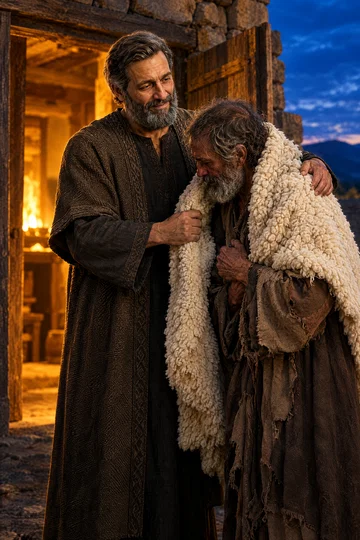
Naked, and ye clothed me: I was sick, and ye visited me: I was in prison, and ye came unto me.
Translations
Naked, and you clothed me: I was sick, and you visited me: I was in prison, and you came to me.
Naked, and ye clothed me: I was sick, and ye visited me: I was in prison, and ye came unto me.
KJV Cambridge Paragraph Bible, Revised Version
naked, and ye clothed me: I was sick, and ye visited me: I was in prison, and ye came unto me.
Naked, and ye clothed me: I was sick, and ye visited me: I was in prison, and ye came to me.
naked, and ye clothed me; I was sick, and ye visited me; I was in prison, and ye came unto me.
naked, and ye put around me; I was infirm, and ye looked after me; in prison I was, and ye came unto me.
naked, and ye clothed me; I was ill, and ye visited me; I was in prison, and ye came to me.
Naked, and ye clothed me, sick, and ye visited me, in prison, was I, and ye came unto me.
Berean Standard Bible, Majority Standard Bible
I was naked and you clothed Me, I was sick and you looked after Me, I was in prison and you visited Me.’
I was naked and you clothed me. I was sick and you visited me. I was in prison and you came to me.’
I had no clothing, and you gave it to me: when I was ill, or in prison, you came to me.
I was naked, and ye clothed me: I was sicke, and ye visited me: I was in prison, and ye came vnto me.
Douay-Rheims (Challoner revision)
Naked, and you covered me: sick, and you visited me: I was in prison, and you came to me.
Pictures

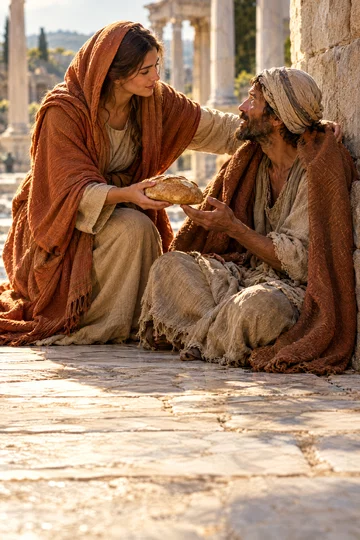
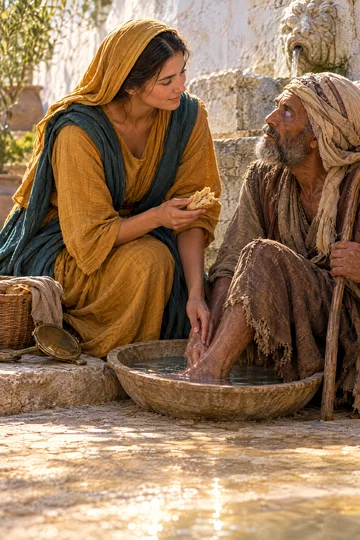
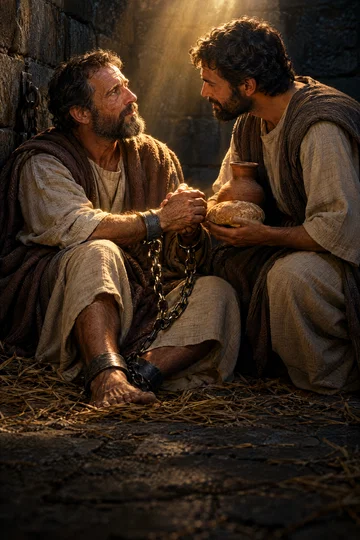

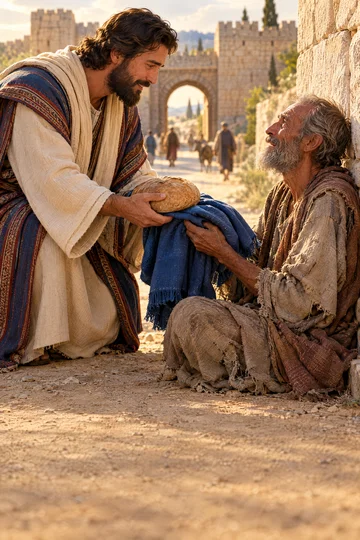

Cross-references 20 of 29
- Matthew 25:40
And the King shall answer and say unto them, Verily I say unto you, Inasmuch as ye have done it unto one of the least of these my brethren, ye have done it unto me.
Service to the least is counted as service to Christ.
- Matthew 25:41-46
Then shall he say also unto them on the left hand, Depart from me, ye cursed, into everlasting fire, prepared for the devil and his angels:
The judgment condemns those who neglect people in need and contrasts their fate with the righteous.
- Isaiah 58:7
Is it not to deal thy bread to the hungry, and that thou bring the poor that are cast out to thy house? when thou seest the naked, that thou cover him; and that thou hide not thyself from thine own flesh?
Both call for feeding the hungry and clothing the naked.
- James 1:27
Pure religion and undefiled before God and the Father is this, To visit the fatherless and widows in their affliction, and to keep himself unspotted from the world.
Pure religion includes caring for people in distress.
- James 2:15-16
If a brother or sister be naked, and destitute of daily food,
Faith is living when practical help meets the bodily needs of people lacking food and clothing.
- Matthew 25:45
Then shall he answer them, saying, Verily I say unto you, Inasmuch as ye did it not to one of the least of these, ye did it not to me.
Neglect of the least is counted as neglect of Christ.
- Matthew 25:43
I was a stranger, and ye took me not in: naked, and ye clothed me not: sick, and in prison, and ye visited me not.
It lists the neglected care for strangers, the naked, the sick, and prisoners.
- Luke 10:30-37
And Jesus answering said, A certain man went down from Jerusalem to Jericho, and fell among thieves, which stripped him of his raiment, and wounded him, and departed, leaving him half dead.
The Samaritan shows practical compassion by caring for a suffering stranger.
- Matthew 25:31-32
When the Son of man shall come in his glory, and all the holy angels with him, then shall he sit upon the throne of his glory:
Sets the commendation at Christ’s coming, when all nations are gathered before him.
- 1 John 3:17
But whoso hath this world’s good, and seeth his brother have need, and shutteth up his bowels of compassion from him, how dwelleth the love of God in him?
Withholding material help from a needy brother contradicts love.
- James 2:17
Even so faith, if it hath not works, is dead, being alone.
Works of love demonstrate genuine faith.
- Matthew 25:46
And these shall go away into everlasting punishment: but the righteous into life eternal.
It contrasts the righteous’ eternal life with punishment for neglecting benevolence.
- Leviticus 19:18
Thou shalt not avenge, nor bear any grudge against the children of thy people, but thou shalt love thy neighbour as thyself: I am the LORD.
Practical acts of help fulfill the command to love one’s neighbor.
- Proverbs 19:17
He that hath pity upon the poor lendeth unto the LORD; and that which he hath given will he pay him again.
Kindness to the poor is treated as service rendered to the Lord.
- Hebrews 13:3
Remember them that are in bonds, as bound with them; and them which suffer adversity, as being yourselves also in the body.
Both call believers to remember and care for those in prison.
- Matthew 10:40-42
He that receiveth you receiveth me, and he that receiveth me receiveth him that sent me.
Helping Christ’s followers is treated as service rendered to Christ.
- Luke 14:13-14
But when thou makest a feast, call the poor, the maimed, the lame, the blind:
Care for the needy is linked with recompense at the resurrection of the just.
- Deuteronomy 15:7-11
If there be among you a poor man of one of thy brethren within any of thy gates in thy land which the LORD thy God giveth thee, thou shalt not harden thine heart, nor shut thine hand from thy poor brother:
Commands generosity toward people in need.
- Matthew 25:44
Then shall they also answer him, saying, Lord, when saw we thee an hungred, or athirst, or a stranger, or naked, or sick, or in prison, and did not minister unto thee?
The condemned ask when they failed to minister to him.
- Matthew 25:32
And before him shall be gathered all nations: and he shall separate them one from another, as a shepherd divideth his sheep from the goats:
All nations are gathered before Christ for judgment.
Commentary part 1 of 3
Each commentary is drawn from primary sources: the writings of Ellen G. White and Adventist pioneers and periodicals. Each commentary is separate. Its own words are not a quotation; follow the references to read the source passages.
Ellen G. White
122 sources
At the final judgment the Son of man comes in glory with angels and gathers all nations to separate them as sheep on the right and goats on the left, and to those on the right the King gives welcome to inherit the kingdom prepared from the foundation of the world for clothing the naked, visiting the sick, and coming to those in prison.Ms 25, 1908, par. 16Ms 137, 1897, par. 9–11Ms 16, 1886, par. 19–20Ms 99, 1899, par. 14–17Ms 58, 1896, par. 1–3 What is done for people in need is counted as done to Himself, for He is present in the sick, the destitute and the prisoner, and what is neglected toward them is counted as neglected toward Him.ST Nov 28, 1878Lt 30, 1884, par. 8–9Ms 9, 1898, par. 14–16DA 639.3–640.1DA 638.1–639.2 His brethren in a special sense are the humble poor, His saints and followers born into the heavenly family, yet as brother to every son and daughter of Adam His love is not restricted to class, so kindness even to the fallen, the unbelieving, and the ignorant who follow conscience is accepted as done to Him.DA 637.1–23T 173.3–174.1Ms 43, 1894, par. 28–294T 620.1–3RH Aug 25, 1874 Those commended are often surprised and unconscious of having served Him, serving humbly according to ability because His love dwells in them through the Spirit, and their works do not earn eternal life by themselves but as fruit of holiness testify that they are worthy to inherit it.DA 637.1–2Ms 131, 1899, par. 24–27Ms 9, 1898, par. 14–16Ms 16, 1886, par. 19–20Ms 99, 1899, par. 14–17 Failing to minister to the needy is failing to minister to Him and brings condemnation to depart into everlasting fire, for people are held accountable not only for sins committed but for good neglected through self-absorption and selfish love of gain.ST Nov 28, 1878Ms 131, 1899, par. 24–27Lt 30, 1884, par. 8–9Ms 82, 1896, par. 10–12Ms 26a, 1892, par. 21–23
Judgment Words and Setting
The words belong to the King at the final judgment, spoken to those on His right hand in commendation for clothing the naked, visiting the sick, and coming to those in prison, welcoming them to inherit the kingdom prepared from the foundation of the world.DA 637.1–2Ms 25, 1908, par. 16Ms 137, 1897, par. 9–11ST Nov 25, 1903Ms 99, 1899, par. 14–17 Care shown in this way to sufferers — to those driven from home, made poor, sick, or imprisoned — is counted as care shown to Him, and He will commend such compassion and relief of the afflicted when He returns.DA 637.1–2Ms 25, 1908, par. 16Ms 137, 1897, par. 9–11ST Nov 25, 1903RH Apr 9, 1908 Those addressed include people who did not realize their service was service to Him, yet their kindness marks them as His disciples and identifies those who receive the blessing.DA 637.1–2Ms 137, 1897, par. 9–11Ms 99, 1899, par. 14–17 The chapter sets this commendation within its larger account of the final judgment, where God-given abilities and opportunities are to be used faithfully for the salvation of others.Ms 25, 1908, par. 16Lt 108, 1896, par. 13–15
The setting is the coming of the Son of man in His glory with all the holy angels, sitting on the throne of His glory with all nations gathered before Him to be separated as sheep on the right and goats on the left.Ms 16, 1886, par. 19–20Ms 83, 1891, par. 5 In that day the whole world is represented by only two classes and two parties, the just and the unjust, the righteous and the unrighteous, one on the right and one on the left.Ms 16, 1886, par. 19–20Ms 99, 1899, par. 14–17Ms 58, 1896, par. 1–3Ms 83, 1891, par. 5 Those on the right receive the benediction to come as blessed of the Father and inherit the kingdom prepared from the foundation of the world, while those on the left are told to depart as cursed into everlasting fire prepared for the devil and his angels, the righteous going into life eternal and the others into everlasting punishment.Ms 16, 1886, par. 19–20Ms 99, 1899, par. 14–17 Caring for Him in the person of the poor and suffering, even without realizing it is ministry to Him, stands central to the decision between the two classes, and practice rather than mere profession separates those approved from those pronounced workers of iniquity.Ms 58, 1896, par. 1–313MR 86.1–87.215MR 112.1–3
The division of sheep and goats is given as a parabolical representation that engages attention and subdues the heart.Ms 137, 1897, par. 9–11 The whole chapter teaches faithful use of abilities and opportunities for others, warning that merely having a name on a church roll does not secure entrance into heaven.Ms 25, 1908, par. 16Lt 12, 1893, par. 4–7 Goods entrusted embrace more than earthly employments and worldly goods, being a loan from the Master and a stewardship of grace to be invested for Him and not buried in worldly enterprise, with eternity kept in the reckoning where eternal interests are involved.Lt 108, 1896, par. 13–15 Those who have done no work for Christ, carried no responsibility, and lived to please themselves are placed with those who did evil and receive the same condemnation, for works of mercy are the criterion separating the two classes as the fruit of genuine faith and justification by faith rather than a means of earning it.COL 365.1Ms 129, 1906, par. 10
Day by day in the common incidents of life, what is done or left undone determines eternal destiny, with reward or punishment meted out according to what was done or not done.Ms 82, 1896, par. 10–12Ms 26a, 1892, par. 21–23ST Jun 25, 1894 Probationary time is graciously given to form character for eternal life after the pattern given in Christ, and the whole tendency of life, the disposition, and the actions are examined in the courts of heaven to see whether that pattern or the pattern of the enemy of all righteousness was followed.Ms 82, 1896, par. 10–12 When the judgment sits and the books are opened and the decisions of eternal justice are revealed, the question is the character of the works and whether transforming grace has been accepted to fit the transgressor for the kingdom as a member of the royal family.Lt 12, 1893, par. 4–7 Condemnation there is not confined to revolting crimes and outbreaking sins and does not especially concern actual transgressions, but concerns neglecting to do what might and ought to have been done, including good that could have been done and abilities and opportunities Christ made available but left unused.18MR 140.2–4Lt 12, 1893, par. 4–7 Works covered by Christ's merit do not earn eternal life by themselves, yet they make evident the character of the one receiving grace and testify that the doer is worthy to inherit it.Ms 26a, 1892, par. 21–23
Every person must study this instruction and compare it with his own life record, putting away all boasting and self-sufficiency, because self-sufficiency makes the words of no effect.Ms 166, 1905, par. 9–10 From His throne He stoops to catch every sound from the human race and approves or condemns every action according to its good or evil nature.Ms 90, 1894, par. 2–3 The test is regard for human brotherhood, especially the poor, ignorant, afflicted, fallen, and oppressed.Ms 90, 1894, par. 2–3 Angels are commissioned to go through the length and breadth of the earth to witness the struggle of every suffering mortal against evil and to lend divine aid, and they look with astonishment and horror on neglect to contemplate God's character, obey His will, encourage virtue, and support means by which the poor might receive consolation and substantial help.Ms 90, 1894, par. 2–3 In the final judgment no position in this life and no riches gained by clever schemes or sharp dealing will praise or justify anyone, for money, tact, skill, and worldly treasure are entrusted talents to relieve suffering and advance the gospel, and every act of oppression, double dealing, and fraud is registered.21MR 351.4–352.1
Christ Identified with Sufferers
Clothing those without clothes, looking after the sick, and going to those in prison when done for people in need is counted as care given to Christ himself, while failing to help them is counted as failing him and is considered in the judgment to reveal character and distinguish those who belong to him.ST Nov 28, 1878Lt 30, 1884, par. 8–9Ms 9, 1898, par. 14–16Ms 34, 1894, par. 11Ms 20, 1894, par. 31–34 These deeds spring from his love dwelling in people through the Spirit, and his interest is identified with suffering humanity so that deeds of love and charity to sufferers are as though done to him, even toward the least of his brethren.ST Nov 28, 1878Ms 9, 1898, par. 14–161T 635.2–637.2Ms 34, 1894, par. 11Ms 20, 1894, par. 31–34 Those who have abundance from a liberal Providence must use it to supply the wants of the hungry with suitable food and comfortable clothing in towns and cities and to sacrifice worldly possessions for afflicted believers, instead of spending on extravagant display, superfluous clothing, jewels, gold chains, necklaces, rings, feathers, ribbons, expensive trimmings and needless ornaments.ST Nov 28, 18781T 635.2–637.2 Neglecting the worthy poor, the afflicted, widows, fatherless, women and children in pinching want brings the vengeance of Heaven and confrontation in the day of God, when he will condemn those who gave no help and commend those who helped.ST Nov 28, 1878
He himself is sick in the sick, destitute in the naked, and languishing in prison in the prisoner, present every day in the person of the afflicted, so that to fail to clothe, visit, and come to them is to fail to seek him and enter fellowship with him and brings final rejection.DA 639.3–640.1DA 638.1–639.2Ms 145, 1899, par. 5–7 When his people lack life's necessities he is left to suffer in them, and he is present in the poor and suffering who plead for help and in those who bear poverty, toil, or reproach for a righteous cause, so that receiving him means responding to their need.DA 56.1–2Ms 145, 1899, par. 5–7 He visits the poor and needy through his children, who relieve distress and ease suffering and who are to carry on his work by seeking out suffering and giving practical help for bodily needs of the hungry, naked, sick, or oppressed.7T 226.1–2Ms 145, 1899, par. 5–7 Religious people can acknowledge him in history yet fail to recognize and receive him in those who suffer, from Satan-blinded self-absorption, unconsciousness of guilt and of what is owed to brethren, and lack of mercy.DA 639.3–640.1DA 56.1–2 That neglect is seen especially when those given wealth to relieve and comfort suffering children shut themselves away in costly dwellings and splendid churches, spend on pride, luxury, apparel and pleasure while others famish, lack shelter, shiver, and lie in prison, misunderstand and despise the poor, rob them of comfort and knowledge of tender mercy, and at best give only a pittance of bread and flimsy garments without remembering the gift is given to the Lord of glory.DA 639.3–640.1
In a special sense his brethren are those born into the heavenly family, where love binds members together and reveals the divine relationship, including those who suffer for his name, people driven from home, made poor, sick, or imprisoned, humble worthy poor who need care but cannot afford it, his saints and followers.DA 637.1–23T 173.3–174.1DA 638.1–639.2 Such care is evidence of discipleship even when workers do not realize their service to these people is service to him, for his Spirit works through them and their kindness shows they have been with him and learned from him.DA 637.1–2ST Jan 16, 1893 His love is not restricted to any class or to those who share faith, because as Son of man become a member of the earthly family he is brother to every son and daughter of Adam, and heaven regards his followers as brothers to sinners as well as to saints and as part of the great web of humanity around the perishing world.Ms 43, 1894, par. 28–29DA 638.1–639.2 Every deed of kindness to uplift a fallen soul and every act of mercy to the needy and suffering, including the fallen, the erring, and the sinful, is accepted as done to him, using resources entrusted for them, since his blood purchased them and neglecting them is neglecting him.Ms 43, 1894, par. 28–29DA 638.1–639.2 Even among the heathen are those who cherished kindness, befriended missionaries at peril of life before hearing words of life, worshiped ignorantly, heard his voice in nature without human instrumentality or the written law, followed conscience and nature, and did the things the law required, and they will not perish but will hear with surprise and gladness that what they did to the least they did to him, their hearts softened and changed by grace to show mercy and protect his servants.ST Apr 21, 1898DA 638.1–639.2
The poor and suffering are his representatives on earth, placed among people to call forth sympathy, love, and character, and pity and benevolence shown to them are accepted as if shown directly to him, while neglecting, slighting, or abusing them is neglecting him and brings his judgment.4T 620.1–3RH Aug 25, 1874 Every person is to be respected and cared for as made in God's image and belonging to him by creation and redemption, and those who oppress others will answer to God, for how sufferers including the naked and imprisoned are treated is treated as done to him.Ms 55, 1894, par. 11–12 His plan makes no distinction between racial groups and he binds himself to people of every nationality, having bought even the lowliest at infinite cost, so leaving the naked unclothed, the poor unfed, the destitute without relief, and the despised forsaken is a duty left undone for which people are accountable.SW 92.2 He keeps a record of every action done to relieve the necessities of the afflicted, both colored and white, when brethren are helped in close and trying places.Lt 286, 1908, par. 3–5
The prison includes imprisonment for debt.Ms 34, 1894, par. 11 Caring for a needy aged mother as one of his saints is caring for him himself, and what is done to her is registered in heaven as done unto him, while casting her out and treating her with heartlessness is putting him away in the person of his saint, and the treatment of one's mother as a child of God is likewise recorded as treatment of him.13MR 86.1–87.2Lt 18b, 1891, par. 38–39 Welcoming a needy elderly stranger into the home would have been welcoming him in her person, and refusing her because she was elderly, might be a burden, or was not personally known failed this duty.1T 674.3 Visiting people in prison is counted as service done to him in the person of his saints, and such acts are recorded and considered in the judgment, where no deed or neglected duty is insignificant and where practice not mere profession separates the two classes, the doers approved and neglecters pronounced workers of iniquity.13MR 86.1–87.2Lt 18b, 1891, par. 38–39Lt 29, 1897, par. 19–22 He requires visiting and caring for the sick without selfish partiality, including a wife in sickness, so that keeping help near for fear of one's own sickness while depriving a true and forbearing wife of that same help, bringing children into the world then forsaking them, leaving the wife to bear support and labor alone, robbing her of means rightfully hers, and failing to bring earnings into the house violates that standard and, proclaimed in the ears of the assembled universe, bars entrance to the kingdom without thorough conversion, confession, and payment of honest debts for wife and children.Lt 35, 1896, par. 15–17 Neglecting a neighbor's spiritual need to open Scripture and pray also matters at the judgment.Lt 18b, 1891, par. 38–39
Righteous Character and Reward
Those welcomed at the final division are often surprised to learn that their care for the naked, the sick, and the imprisoned was care for Christ Himself, for they served humbly according to ability without realizing their service was remarkable or worthy of commendation.DA 637.1–2Ms 99, 1899, par. 14–17ST Aug 7, 1893Ms 43a, 1894, par. 31–32ST Aug 7, 1893 Their hearts were filled with Jesus and His principles even when they knew little of theology, and their unconscious ministry proved them His disciples.DA 637.1–2ST Aug 7, 1893Ms 43a, 1894, par. 31–32 Both the faithful and the neglectful are unconscious at that reckoning, the one because Christ was interwoven into character through everyday ministry to the least and not only the greatest, the other because training in self-indulgence blinded them to neglected duty that forfeits heaven and eternal bliss.Ms 16, 1886, par. 19–20Ms 99, 1899, par. 14–17 In that day only two parties stand revealed, those on the right who receive the benediction and those on the left who depart, and the humble among the nations discover their kindness to the least of His brethren was kindness to Him.Ms 16, 1886, par. 19–20Ms 99, 1899, par. 14–17ST Aug 7, 1893
Such deeds are marks of the character God accepts, revealing the righteous and distinguishing them from those whose neglect brings condemnation.Ms 131, 1899, par. 24–27Ms 9, 1898, par. 14–16Ms 82, 1896, par. 10–12 They spring from the love of Christ dwelling in the heart through God's Spirit, done willingly and gladly because He abides within, and they show that the Holy Spirit has touched the heart and made the doers children of God.Ms 16, 1886, par. 19–20Ms 20, 1894, par. 31–34Ms 18, 1887, par. 26–27 Having Christ thus interwoven into character proves they have been with Jesus and belong to Him, for day by day in common incidents what is done or left undone forms character after the pattern of Christ or after the pattern of the enemy and determines eternal destiny as the whole tendency of life, disposition, and actions is examined.Ms 16, 1886, par. 19–20Ms 20, 1894, par. 31–34Ms 82, 1896, par. 10–12
The reward spoken to those on the right is the blessing of the Father and inheritance of the kingdom prepared from the foundation of the world, a parabolical representation that engages attention and subdues the heart while specifying exactly who receives it.Ms 137, 1897, par. 9–11ST Nov 25, 1903ST Aug 26, 1897 Every act of kindness to one of the least is counted as done to Christ Himself, and those who humbly and faithfully feed, clothe, welcome, visit, and relieve the afflicted are commended and welcomed into the prepared place where Christ is.Ms 137, 1897, par. 9–11RH Apr 9, 1908Lt 33, 1894, par. 3–4Lt 30, 1887, par. 21–25 He remembers every good work, especially self-sacrificing acts, blesses those who help the poor, and in the heavenly courts the redeemed will thank those who aided them.ST Nov 25, 1903Lt 33, 1894, par. 3–4Lt 30, 1887, par. 21–25 Those with no sense of the blessing of such ministry neglect God's will in this life and will not appreciate heaven, but go where inclination leads.ST Aug 26, 1897
These works do not earn eternal life by themselves, yet covered by Christ's merit they testify that the doer is worthy to inherit it and make evident the character formed by receiving God's grace.Ms 26a, 1892, par. 21–23Ms 129, 1906, par. 10 They are the fruit of holiness of heart and of justification by faith, for genuine faith joins the believer to Christ and works through love to feed the destitute, clothe the naked, and visit the sick.Ms 129, 1906, par. 10ST Mar 20, 18932T 445.1 The separation of the two classes rests on this inward faith in Christ, by which every person may be saved through believing, though not all will be saved because His drawing compels no one to receive Him.Ms 129, 1906, par. 10Ms 83, 1891, par. 5
Even small everyday acts of love that are often overlooked are accepted and rewarded beyond the worker's estimate, and the commendation is not given for eloquence, intellectual ability, or large donations.MYP 144.3–145.1GC88 487.2–317MR 69.3–70.2 A cup of cold water given or a timely word spoken for Christ without seeking credit is precious to heaven, for profession alone does not count as genuine faith but love shown through works does.GC88 487.2–3GC 487.217MR 69.3–70.2 Practical care for the poor, afflicted, orphaned, and widowed, however small in human estimation, is counted as service to Christ and will be recognized at the last day.MYP 144.3–145.1GC88 487.2–3GC 487.2
Neglect and Final Condemnation
To refuse food, clothing, visitation, and personal coming to the needy is to refuse them to Christ himself, and at the final judgment that refusal brings the sentence to depart as cursed into everlasting fire prepared for the devil and his angels, even everlasting punishment for refusing to help His saints.Ms 131, 1899, par. 24–27Lt 30, 1884, par. 8–9Ms 9, 1898, par. 14–16Ms 16, 1886, par. 19–20Lt 33, 1894, par. 3–4 Clothing those without clothes, looking after the sick, and going to those in prison are marks of the character God accepts, counted as done to Him, and they help distinguish the righteous from those whose neglect brings condemnation.ST Nov 28, 1878Ms 131, 1899, par. 24–27Lt 30, 1884, par. 8–9Ms 9, 1898, par. 14–16Ms 16, 1886, par. 19–20 Those who ministered in this way had Christ interwoven into character and were often unconscious of what they had done, while those who failed to feed the hungry, clothe the naked, and visit the sick were likewise unconscious of their neglect because they had trained themselves in self-indulgence, and by that neglect they lose heaven and eternal bliss.Ms 16, 1886, par. 19–20Lt 33, 1894, par. 3–4 Disrespect or oppression toward Christ's people is treated as done to Christ and is recorded in heaven.ST Nov 28, 1878Lt 33, 1894, par. 3–4 Neglecting the worthy poor, the afflicted, widows, fatherless, women and children in pinching want brings the vengeance of Heaven and confrontation in the day of God, when He will condemn those who gave no help and commend those who helped.ST Nov 28, 1878
That neglect comes from Satan-blinded self-absorption, unconsciousness of guilt and of what is owed to brethren, selfish love of gain, and lack of mercy.Ms 16, 1886, par. 19–20DA 639.3–640.1Lt 3, 1878, par. 11 It is seen especially when those given wealth and abundance from a liberal Providence to relieve and comfort suffering children shut themselves away in costly dwellings and splendid churches, and spend on pride, luxury, apparel, pleasure, extravagant display, superfluous clothing, jewels, gold chains, necklaces, rings, feathers, ribbons, expensive trimmings and needless ornaments, while others famish, lack shelter, shiver, and lie in prison.ST Nov 28, 18781T 635.2–637.2DA 639.3–640.1 They misunderstand and despise the poor, rob them of comfort and knowledge of tender mercy, and at best give only a pittance of bread and flimsy garments without remembering the gift is given to the Lord of glory.ST Nov 28, 1878DA 639.3–640.1 The verse therefore calls those who have means to sacrifice worldly possessions for afflicted believers instead of spending lavishly to satisfy pride, for such practical kindness is the opposite of selfish love of gain and belongs to Christian life.1T 635.2–637.2Lt 3, 1878, par. 11ST Jun 25, 1894
The rich who gained wealth by breaking God's law and used it to exalt themselves instead of dealing justly, loving mercy, feeding the hungry, clothing the naked, and helping others face the loss of their riches and the consequences of that neglect.GC 654.14SP 470.2GC88 653.4–654.121MR 351.4–352.1 They are left destitute when earthly wealth is taken away, and no position in this life and no riches gained by clever schemes or sharp dealing will praise or justify anyone.GC 654.14SP 470.221MR 351.4–352.1 Their later terror and regret concern their loss and defeat, not repentance for neglecting God and their fellow people.GC88 653.4–654.1 By seeking to become rich in this world's goods while living in luxury and withholding help, they lose heavenly treasure and their own souls.21MR 351.4–352.1
The poor will rise in judgment and condemn those who squandered means while others lacked clothing and food.ST Jun 25, 1894 The neglected people of the South will testify against those who left them in degradation, and those who fail to help will answer for that neglect when each person is judged according to works.4MR 20.4Ms 90, 1894, par. 2–3 Such ungenerous or oppressive treatment of the poor, strangers, and those in distress is contrary to His way, is recorded in heaven, and will be faced at the final judgment.Ms 90, 1894, par. 2–321MR 351.4–352.1Lt 34a, 1886, par. 32 Every act of oppression, double dealing, and fraud is registered, and hoarded riches gained by withholding from the poor make their owners the poorest.21MR 351.4–352.1
Those who show no mercy will receive no mercy.RH Mar 18, 1902 Those who fail wear religion as a mask, will not take trouble to contemplate the character of God or to understand and obey His will, do as they please following imaginations of their own evil hearts, suppose God is like themselves to honor the rich and esteem those in high positions of trust, have little regard for the suffering, give no special encouragement to virtue, and give no sanction to methods and institutions by which the poor might receive consolation and substantial help.Ms 90, 1894, par. 2–3 Angels commissioned to go through the earth to witness the struggle of every suffering mortal and lend divine aid look with astonishment and horror on such neglect, and it is registered that they lived and died with no regard for brethren.Ms 90, 1894, par. 2–3 People who reject mercy and choose service to Satan and who aid evil as if there were no God, no heaven, no hell will ultimately find themselves outside God's kingdom and receive according to evil works unless they repent and reform, and their recognition of what they refused will come too late.RH Mar 18, 1902Ms 90, 1894, par. 2–3Lt 131, 1902, par. 22–23
Stewardship of Entrusted Means
All goods in human hands are not owned but held as a loan and trust from the Master to be invested for Him and for the salvation of others. Lt 108, 1896, par. 13–15ST Jun 3, 1889ST Nov 20, 1884STMW10 32.3Lt 8, 1896, par. 21–22 The talents committed embrace more than earthly employments and worldly goods, including time, pen, voice, money, influence, intellect, and the light and knowledge of truth heralding the second coming, all endowed as a sacred stewardship of grace to be used to God's glory and to make men wise unto salvation. Lt 108, 1896, par. 13–15ST Jun 3, 1889COL 351.3ST Nov 20, 1884 They are not to be buried in worldly enterprise, rested in as power to accumulate, wasted on selfish indulgence, or squandered by a farthing, for eternity must be kept in the reckoning where no mistake on eternal interests can be afforded. Lt 108, 1896, par. 13–15ST Jun 3, 1889STMW10 32.3Lt 8, 1896, par. 21–22 At His reckoning He will not ask about success in gathering money but what was done with what was lent to relieve the sick, the poor, the hungry, the naked, the afflicted, the orphan and fatherless, since clothing the destitute and helping the sick is service done to Himself and the decisions of the last day turn upon such practical benevolence. ST Jun 3, 1889COL 351.3ST Nov 20, 1884STMW10 32.3Lt 8, 1896, par. 21–22 Even the humblest service becomes a consecrated gift when done in obedience to promote His glory, secured at the cost of His own blood and sufferings, and money has its true value only when used to meet need and bless others. Lt 108, 1896, par. 13–15COL 351.3
Abundance from a liberal Providence must supply suitable food and comfortable clothing to the hungry and naked in towns and cities, with drink and care for the sick, instead of being spent on extravagant display. ST Nov 28, 1878MYP 360.19T 53.2MYP 310.1–2 Superfluous clothing, jewels, gold chains, necklaces, rings, feathers, ribbons, expensive trimmings, needless ornaments, and costly tables must give place to mercy, for money spent unnecessarily on display, pride, fashion and self-indulgence leaves less to feed the hungry and clothe the naked and forfeits the opportunity to honor God with entrusted talents. ST Nov 28, 1878ED 248.2COL 352.3MYP 313.2MYP 360.1 Each such expenditure takes what belongs in God's treasury and what should go to the poor, withholding clothing from the naked and food from the hungry, which is robbery toward God and calls for self-sacrificing giving. COL 352.3MYP 313.29T 53.2CH 648.3RH Jul 13, 1916 Neglect of the worthy poor, the afflicted, widows, fatherless, women and children in pinching want brings confrontation in the day of God, when those who gave no help are condemned and those who helped are commended as having done it to Christ who identifies His interest with suffering humanity. ST Nov 28, 1878
Faithful stewards practice economy and self-denial, limit personal expense, dress simply in true adornment of meekness, humility, modesty and prudence, and provide durable washable clothing even if out of fashion. Ms 1, 1877, par. 14RH Jul 13, 19164T 571.1 Buying at clearance sales and saving pennies from needless dress, homes and indulgence frees means to feed the hungry, clothe those without clothing, sustain mission workers who meet poverty and distress, and advance the cause of God. Ms 1, 1877, par. 14SSP 19.24T 571.1STB 794.25MR 311.3–5 Money saved through self-denial rather than spent thoughtlessly on self-gratification becomes a means of serving Christ in the hungry and thirsty and naked, and visiting the afflicted prepares the visitor to pray with and for them. Ms 1, 1877, par. 144T 571.15MR 311.3–5
Christ's direction to remember the poor and supply their necessities would make the world different if followed, requiring food and drink, clothing for the naked, warming, teaching, personal help, care for the oppressed and sick, and giving the Bread of Life from the Word to poor families. FE 323.1–2MYP 310.1–27T 227.4Ms 89, 1900, par. 13–14SPBC 198.1–4 This care embraces widow, fatherless, aged and dependent through sanitariums, schools, orphan asylums and homes for the aged, and through carrying the Word to all parts of the world for the uplifting of fellow beings and the upbuilding of the kingdom. Ms 142, 1903, par. 138–139Ms 16, 1902, par. 26–28 Merchants are to act as His agents, ministers are to provide food and clothing to the very poor, and laborers in neglected fields are to help where help is needed in deed and word, since such love and benevolence influence for good more strongly than sermons. 7T 227.4GW 449.4–450.1 Taking money for the cause by methods that leave people hungry or without clothing, or exacting from the poor service or money they have no power to bestow, violates His lesson and brings God's judgment and censure on the doer and on all who allow it. Ms 34, 1894, par. 9
Gathering to self all the money that can be obtained and spending it on self robs God of means He designed for this work and will bring a terrible account to be settled with Him. Ms 142, 1903, par. 138–139Ms 16, 1902, par. 26–2821MR 351.4–352.1 Spreading the table with needless costly food while neglecting to feed the hungry, and putting useless or extravagant clothing on self while withholding clothing from the naked, spends on foolish and hurtful indulgence and pride of heart what should relieve suffering, draw near in love to His family, and advance the gospel. CH 648.321MR 351.4–352.1 Letting the cry of the widow and fatherless go up to heaven and letting souls perish leaves the blood of souls upon garments, instead of being clothed with good works and redeeming precious probationary time by visiting the poor, reading to dim eyes, and comforting and praying for the desponding. CH 648.3 Hoarded riches gained by withholding from the poor, by clever schemes, sharp dealing, oppression, double dealing and fraud, all registered above, make their owners the poorest, for receivers who do not produce lose heavenly treasure and their own souls, and no position or riches will praise or justify anyone in the final judgment. 21MR 351.4–352.1
Personal Service and Mission
Money given at a distance does not satisfy what is meant by clothing the naked, visiting the sick, and coming to those in prison, for personal service is required of each according to strength and opportunity.6T 275.2–276.1Ms 6, 1897, par. 14–16 That service includes visiting different families, taking the sick into the home and into rooms to nurse them day and night, going miles at night through difficult country, and visiting more than a hundred gathered in retreat to speak comfort.6T 275.2–276.14T 510.1 Warm words and religious profession without such practical help, feeding, warming, teaching and personal aid, do not fulfill the gospel, which must be acted on and lived through unselfish service.COL 417.3–418.2Ms 6, 1897, par. 14–16 Missionaries in other lands fulfill the same command by taking personal interest that breaks down opposition, as by showing interest in children, offering treatment to the sick, helping anxious mothers relieve suffering children, joining people in their work, sharing household burdens, keeping the water bucket filled, helping with chores, and working in simplicity, consideration and humility.RH Nov 11, 1902
Clothing the naked means meeting physical and spiritual necessities together, not bodily relief alone but also meeting wants of the soul that only the love of Christ can satisfy.Ms 25, 1896, par. 32–35COL 417.3–418.2 It is done with cheerful countenance, hopeful words, kindly hand-clasp and close touch, as Christ laid His hands on the sick when He healed them.COL 417.3–418.2 It includes bringing food, opening the Word of God, reading the precious promises to those who need spiritual bread, praying for them, treating the person as a brother, sympathizing with sorrows, comforting mourners, teaching the ignorant patiently that they have a heavenly Father who cares, restoring the bruised and wounded soul, and bringing to Jesus those with soul-sickness no earthly balm or physician can heal.Ms 105, 1898, par. 36–38Ms 25, 1896, par. 32–35COL 417.3–418.2 Such work softens, subdues and breaks the heart as the despairing soul in unbelief sees that Christ gave His life, is led to grasp the hand of Christ reached out to save, to hunger for the Word of life, to hold truth precious, and to be saved eternally to live in God's presence, and in the heavenly courts those thus saved will thank their helpers for bringing them to Christ.Ms 25, 1896, par. 32–35RH Jan 5, 1905 Feeding, cleansing and clothing outcasts prepares them to know someone cares for their souls, relieves suffering while teaching righteousness, and those rescued from degradation can through divine power help restore others.8T 73.2–74.1RH Jan 4, 1912
Relieving physical need is the pioneer work of the gospel carried into homes to reach those who do not listen to preaching or attend religious service.ST Mar 31, 1887MH 144.4–145.1 Missionary nurses caring for the sick and relieving the distress of the poor, feeding the hungry, clothing the naked and comforting the sad, make the human worker a messenger of the love and pity of Christ.CH 418.4MH 144.4–145.1 Done with unselfish love asking no earthly praise or compensation, this brings a ray of hope to the defeated and disheartened and to those who have lost faith in God and confidence in man, touches hearts, springs up gratitude, kindles faith, shows that God cares, and prepares sufferers to pray, to hear God's word read, to hear of the Saviour, and to believe in the love of Christ.CH 418.4MH 144.4–145.1CH 583.1 Caring for bodily suffering thus prepares the way for receiving spiritual truth and for sharing Christ's words, and makes the gospel visible so that even hardened hearts are opened to understand Christ's mission and seek saving grace and eternal life.HL 278.1–3ST Mar 31, 1887CH 583.1 Meeting physical needs with tender sympathy, including feeding the hungry and bringing the homeless into homes, provides the opportunity to present Christ.6T 275.2–276.1
Churches are entrusted to gather and care for the needy, oppressed, suffering and destitute, to entertain strangers without waiting to prove worth, and to care for their own worthy poor and sick, including providing funds for treatment.6T 275.2–276.13T 173.3–174.14T 510.1 This includes making judicious arrangements for medical missionary work inside the church, establishing sanitariums, helping new believers until employed, relieving the necessities of the destitute after Christ's example of comforting the suffering and healing the sick, and extending the work to the sick, blind, lame, widowed and fatherless.COS 186.4–53T 517.1STMW11 14.1 Neglecting those who need help disregards plain teaching, and those who refuse care and sympathy may be allowed to experience affliction and need themselves so they learn the hardship of those they neglected.3T 517.1
The work applies especially to the despised colored people of the South who lacked clothing, food and relief under bodily ailments and were left forsaken and in degradation.SW 92.2SBAWP 59.1–60.2Ms 37, 1901, par. 14–15 Christ's plan of salvation makes no distinction between racial groups, for He bought even the lowliest at infinite cost and binds Himself to people of every nationality, and neglect of these neighbors is a duty left undone for which account must be given.SW 92.24MR 4.1 This Christian help work is to be done by truly converted medical missionaries and Christlike workers with sympathy touched by suffering, who must have means and a fund so they can help those in poverty and distress, including literal relief with donated money and personal effort.SBAWP 59.1–60.2Ms 37, 1901, par. 14–15 Such deeds of sympathy do more than the preaching of sermons, exert an elevating influence by precept and example, touch the heart, open hearts to respond to truth when joined with the simplest lessons from Christ's life, sufferings, sacrifice, righteousness, grace, purity and holiness, and sow seed for time and eternity.SBAWP 59.1–60.2SW 63.1 Those who withhold money raised for this work are accountable to God, and the neglected of the South will testify against those who left them in degradation.Ms 37, 1901, par. 14–154MR 20.4
Clothing the naked and visiting the sick is walking in the steps of Jesus, whose footprints are found not by going to Nazareth, Capernaum or Bethany, to the lake where He taught or the hills and valleys He looked upon, but beside the sickbed, in the hovels of poverty, in the crowded alleys of the great cities, and in every place where human hearts need consolation.MH 105.5–106.1 His own joy and work was helping those in need, seeking the lost, rescuing the perishing, lifting the bowed down, healing the sick, and speaking sympathy and consolation to the sorrowing and distressed.RH Jan 27, 1903 Servants must therefore have hearts of tender affection and sincere love, exercising the same compassion and gentleness and the same tender, pitying love He exercised, with the deep interest of a shepherd for a lost sheep.GW92 91.1TBC1872 11.23T 186.2 Those fully imbued with His Spirit will work earnestly in the same way, and the more they do for others the greater their love for the work and delight in following the Master, filling the heart with the love of God and giving earnestness and convincing power in speaking of the crucified Saviour, while those who meet pitiful cases by denying themselves food and clothing labor in His lines.COS 186.4–5RH Jan 27, 1903
Sources