Luke 4:18
The Spirit of the Lord is upon me, because he hath anointed me to preach the gospel to the poor; he hath sent me to heal the brokenhearted, to preach deliverance to the captives, and recovering of sight to the blind, to set at liberty them that are bruised,
Translations
The Spirit of the Lord is on me, because he has anointed me to preach the gospel to the poor; he has sent me to heal the brokenhearted, to preach deliverance to the captives, and recovering of sight to the blind, to set at liberty them that are bruised,
The Spirit of the Lord is upon me, because he hath anointed me to preach the gospel to the poor; he hath sent me to heal the brokenhearted, to preach deliverance to the captives, and recovering of sight to the blind, to set at liberty them that are bruised,
The Spirit of the Lord is upon me, because he hath anointed me to preach the gospel to the poor; he hath sent me to heal the broken-hearted, to preach deliverance to the captives, and recovering of sight to the blind, to set at liberty them that are bruised,
The spirit of the Lord is upon me, because he hath anointed me to preach the gospel to the poor; he hath sent me to heal the broken-hearted, to preach deliverance to the captives, and recovering of sight to the blind, to set at liberty them that are bruised,
Revised Version, American Standard Version
The Spirit of the Lord is upon me, Because he anointed me to preach good tidings to the poor: He hath sent me to proclaim release to the captives, And recovering of sight to the blind, To set at liberty them that are bruised,
'The Spirit of the Lord [is] upon me, Because He did anoint me; To proclaim good news to the poor, Sent me to heal the broken of heart, To proclaim to captives deliverance, And to blind receiving of sight, To send away the bruised with deliverance,
[ The] Spirit of [ the] Lord is upon me, because he has anointed me to preach glad tidings to [ the] poor; he has sent me to preach to captives deliverance, and to [ the] blind sight, to send forth [ the] crushed delivered,
The Spirit of the Lord, is upon me, because he hath anointed me—to tell glad tidings unto the destitute; He hath sent me forth,—To proclaim, to captives, a release, and, to the blind, a recovering of sight,—to send away the crushed, with a release;
“ The Spirit of the Lord is on Me,
because He has anointed Me
to preach good news to the poor.
He has sent Me to proclaim liberty to the captives
and recovery of sight to the blind,
to release the oppressed,“ The Spirit of the Lord is on Me, because He has anointed Me to preach good news to the poor. He has sent Me to heal the brokenhearted, to proclaim liberty to the captives and recovery of sight to the blind, to release the oppressed,
“ The Spirit of the Lord is on me,
because he has anointed me to preach good news to the poor.
He has sent me to heal the broken hearted,
to proclaim release to the captives,
recovering of sight to the blind,
to deliver those who are crushed,The Spirit of the Lord is on me, because I am marked out by him to give good news to the poor; he has sent me to make well those who are broken-hearted; to say that the prisoners will be let go, and the blind will see, and to make the wounded free from their chains,
The Spirit of the Lord is vpon mee, because he hath anoynted me, that I should preach the Gospel to the poore: he hath sent mee, that I should heale the broken hearted, that I should preach deliuerance to the captiues, and recouering of sight to the blinde, that I should set at libertie them that are bruised:
Douay-Rheims (Challoner revision)
The Spirit of the Lord is upon me. Wherefore he hath anointed me to preach the gospel to the poor, he hath sent me to heal the contrite of heart,
Pictures

Cross-references 20 of 94
- Isaiah 61:1-2
The Spirit of the Lord GOD is upon me; because the LORD hath anointed me to preach good tidings unto the meek; he hath sent me to bind up the brokenhearted, to proclaim liberty to the captives, and the opening of the prison to them that are bound;
Jesus identifies himself as the Anointed One fulfilling the prophecy of preaching, healing, and liberty.
- Acts 10:38
How God anointed Jesus of Nazareth with the Holy Ghost and with power: who went about doing good, and healing all that were oppressed of the devil; for God was with him.
Jesus is anointed with the Spirit and power to do good, heal, and free the oppressed.
- Isaiah 58:6
Is not this the fast that I have chosen? to loose the bands of wickedness, to undo the heavy burdens, and to let the oppressed go free, and that ye break every yoke?
Both describe loosening burdens and freeing the oppressed.
- Luke 3:21-22
Now when all the people were baptized, it came to pass, that Jesus also being baptized, and praying, the heaven was opened,
Jesus’ baptism and the Spirit’s descent mark his anointing for ministry.
- John 8:34-36
Jesus answered them, Verily, verily, I say unto you, Whosoever committeth sin is the servant of sin.
Sin enslaves, but the Son makes people truly free.
- Daniel 9:25
Know therefore and understand, that from the going forth of the commandment to restore and to build Jerusalem unto the Messiah the Prince shall be seven weeks, and threescore and two weeks: the street shall be built again, and the wall, even in troublous times.
The sixty-nine weeks reach the Messiah’s anointing and the start of his ministry.
- Matthew 11:5
The blind receive their sight, and the lame walk, the lepers are cleansed, and the deaf hear, the dead are raised up, and the poor have the gospel preached to them.
Jesus points to healing works and the gospel preached to the poor as evidence of his mission.
- Luke 4:22
And all bare him witness, and wondered at the gracious words which proceeded out of his mouth. And they said, Is not this Joseph’s son?
The people marvel at Jesus’ gracious words, then question his identity.
- Isaiah 58:7
Is it not to deal thy bread to the hungry, and that thou bring the poor that are cast out to thy house? when thou seest the naked, that thou cover him; and that thou hide not thyself from thine own flesh?
Both connect the gospel’s concern for the poor with practical care for people in need.
- Isaiah 42:7
To open the blind eyes, to bring out the prisoners from the prison, and them that sit in darkness out of the prison house.
Both describe opening blind eyes and freeing prisoners from darkness.
- Isaiah 61:2
To proclaim the acceptable year of the LORD, and the day of vengeance of our God; to comfort all that mourn;
Adds the proclamation of the Lord’s favor, vengeance, and comfort for mourners.
- Matthew 3:16
And Jesus, when he was baptized, went up straightway out of the water: and, lo, the heavens were opened unto him, and he saw the Spirit of God descending like a dove, and lighting upon him:
The Spirit descends upon Jesus at his baptism, marking his anointing.
- Mark 1:14-15
Now after that John was put in prison, Jesus came into Galilee, preaching the gospel of the kingdom of God,
After his anointing, Jesus begins preaching and declares the appointed time fulfilled.
- Luke 4:33-36
And in the synagogue there was a man, which had a spirit of an unclean devil, and cried out with a loud voice,
Jesus demonstrates his power over Satan by freeing a man in the synagogue.
- John 1:41
He first findeth his own brother Simon, and saith unto him, We have found the Messias, which is, being interpreted, the Christ.
Messiah means the Anointed One.
- 2 Corinthians 3:17
Now the Lord is that Spirit: and where the Spirit of the Lord is, there is liberty.
Both connect the Spirit of the Lord with liberty.
- Luke 4:28-30
And all they in the synagogue, when they heard these things, were filled with wrath,
Nazareth’s people reject Jesus after His sermon and try to kill Him, but He passes safely through them.
- John 1:32
And John bare record, saying, I saw the Spirit descending from heaven like a dove, and it abode upon him.
John testifies that the Spirit descended and remained on Jesus, the Anointed.
- John 3:34
For he whom God hath sent speaketh the words of God: for God giveth not the Spirit by measure unto him.
Jesus speaks God’s words and receives the Spirit without measure.
- Luke 4:14
And Jesus returned in the power of the Spirit into Galilee: and there went out a fame of him through all the region round about.
Jesus returns to Galilee in the Spirit’s power.
Commentary part 1 of 3
Each commentary is drawn from primary sources: the writings of Ellen G. White and Adventist pioneers and periodicals. Each commentary is separate. Its own words are not a quotation; follow the references to read the source passages.
Ellen G. White
134 sources
The Spirit being upon him means He is the promised Anointed One, empowered by the Holy Spirit and sent by God as Redeemer and Saviour of mankind.2SP 110.2–111.21RED 53.2–57.1LC1 53.2–54.1 That anointing with the Holy Spirit and power came at His baptism, fulfilling the measured time unto Messiah the Prince and beginning His proclamation that the time is fulfilled.GC88 327.1GC 327.1–328.2 His appointed work is to bring good news to the poor and lowly, heal and comfort the brokenhearted, free those captive and bruised under Satan and sin, and give sight to the blind in body and soul.Ms 31a, 1898, par. 28–29Ms 75, 1898, par. 15MR 40.1–41.1Ms 7, 1884, par. 3–4Ms 75, 1898, par. 2 He fulfills it not by earthly armies or thrones but in meekness and humility, with love, mercy, compassion and self-sacrificing poverty that reaches the friendless and sin-sick.2SP 110.2–111.21RED 53.2–57.1LC1 53.2–54.1SC 11.2Ms 28, 1897, par. 43–45 After ascending He sends the same divine anointing by the Holy Spirit to all who believe, so every worker in whom He dwells becomes His representative and laborer together with God.Ms 3, 1897, par. 28Ms 55, 1901, par. 18–20Ms 53, 1905, par. 7
Reading at Nazareth
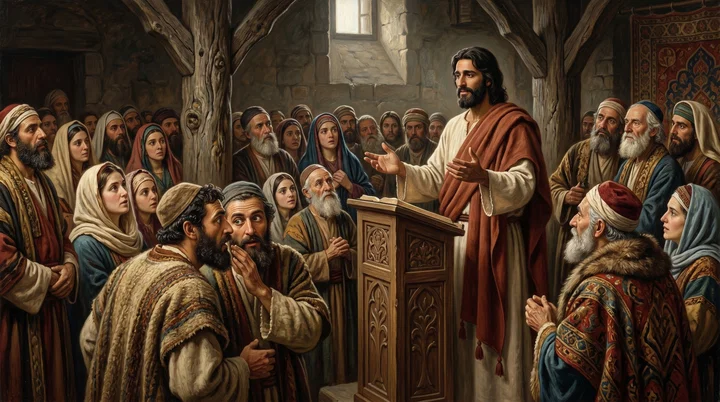
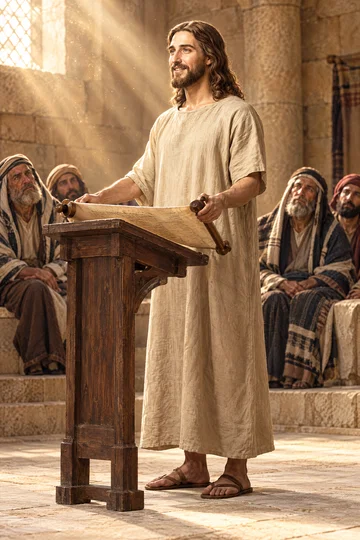
On the Sabbath day according to his custom Jesus stood up to read in the synagogue at Nazareth where he had been brought up, and being given the book of Isaiah he opened it and found this passage about the Spirit-anointed Messiah bringing good news to the poor, healing to the brokenhearted, deliverance to captives, sight to the blind, and liberty to the bruised.LC1 53.2–54.1RH Jul 2, 1908Ms 22, 1898, par. 5ST Jun 23, 1909Ms 31a, 1898, par. 28–29 He read it as prophecy concerning himself and applied it to himself, declaring that day that the scripture was fulfilled in the hearing of the people.LC1 53.2–54.1RH Jul 2, 1908Ms 22, 1898, par. 5ST Jun 23, 1909Ms 75, 1898, par. 1 His mission so outlined contrasted with expectation of a Messiah who would rule from an earthly throne in Jerusalem and end oppression by force, for his work was to give encouragement, comfort and help where need is greatest, especially to the poor whom the Pharisees and Sadducees despised and whom the rich and learned neglected.LC1 53.2–54.1ST Jun 23, 1909Ms 31a, 1898, par. 28–29 That word was fulfilled when the sick were healed, demoniacs restored, lepers and paralytics made whole, the lame walked, the deaf heard, the dumb spoke, the dead were brought to life, and the poor had the gospel preached to them, every miracle proving his true character as done by the power of God.RH Jul 2, 1908
The reading was his first sermon at Nazareth and his public announcement of his life-work at the beginning of his ministry, fully outlining his mission and showing him to be Saviour of the body as truly as Saviour of the soul.Ms 75, 1898, par. 1Ms 19, 1899, par. 18–193T 388.2 He spoke it after overcoming Satan in the wilderness and returning to teach in the synagogues of Galilee, showing people how they may overcome, and after laboring two days with the Samaritans on his journey to Galilee to the place where he had spent his youth and early manhood.Ms 19, 1899, par. 18–193T 388.23RED 14.2–15.1 At that time his work was confined to a small circumference among his own Jewish nation, not to the surrounding heathen nations who were not prepared for his work, because going to the Gentile world would have closed the door for his message to Israel.ST Dec 16, 1897 Even so Jewish prejudice against him was strong because truth did not languish on his tongue and because he had not received his instruction from the religious teachers of the nation, yet he showed perfect knowledge of the Jewish economy as represented in the Scriptures.ST Dec 16, 1897 His announcement met an unfavorable reception, so he made no tarry there but left to seek more fruitful fields to preach to ears that would listen and to hearts that would receive his message.3RED 14.2–15.1ST Feb 3, 1881
He read as the living expositor of prophecy concerning himself and stood as the divine interpreter of Scripture he himself had inspired, for the prophecy had first been given through Isaiah by his own inspiration.ST Jun 23, 1909Ms 29, 1895, par. 26 His manner and the import of his words carried divine power and the Holy Spirit's influence that broke down barriers, touched listeners as God speaking through his Son, and moved hearts to marvel and praise.Lt 32, 1895, par. 3ST Jun 23, 1909Ms 29, 1895, par. 2612MR 182.2–183.2ST Jan 10, 1900 All who heard his gracious words marveled, and divine power attended them while the Spirit impressed hearers with conviction, peace, grace and hope.Lt 32, 1895, par. 312MR 182.2–183.2ST Jan 10, 1900ST Jan 10, 1900 Yet when he exposed their true condition, doubt and unbelief soon followed, pride and prejudice quenched the Spirit to make room for Satan, and rage turned them against the truth until they would have taken the life of the Son of God, leaving their history as an exhibition of the result of hardening the heart.Ms 29, 1895, par. 2612MR 182.2–183.2ST Jan 10, 1900ST Jan 10, 1900
Anointing by the Spirit
The Spirit of the Lord being upon him means he is the Messiah, which means the Anointed One, anointed and empowered by the Spirit and sent by God as Redeemer and Saviour of mankind.2SP 110.2–111.21RED 53.2–57.1LC1 53.2–54.111MR 281.2–283.2Lt 51a, 1895, par. 5–8 Anointed by the Spirit, he brings good news to the poor, heals the brokenhearted, proclaims deliverance to captives, restores sight to the blind, and sets at liberty the bruised and oppressed, revealing the light of truth.2SP 110.2–111.2LC1 53.2–54.1Ms 3, 1897, par. 28Ms 12b, 1896, par. 5–711MR 281.2–283.2 He declared in the hearing of the people that day that this scripture was fulfilled in their ears, standing before them as its living display and claiming its mission as his own.1RED 53.2–57.1LC1 53.2–54.1Ms 12b, 1896, par. 5–711MR 281.2–283.2Lt 51a, 1895, par. 5–8 His gracious words carried divine identity and power, bringing conviction, peace, grace, and hope as hearers recognized him as the Promised One.2SP 110.2–111.2Ms 12b, 1896, par. 5–711MR 281.2–283.2 His messianic work is to relieve, liberate, and heal in meekness and humility, not to appear at the head of armies, rule from an earthly throne in Jerusalem, break enemies by force, or establish an earthly kingdom by military power.2SP 110.2–111.21RED 53.2–57.1LC1 53.2–54.1 His humble, ordinary background and life without outward display, known as Joseph's son, offended those expecting a glorious king, so prejudice and unbelief turned wonder into doubt, rejection of the Holy Spirit's influence, wrath, and a course ending at Calvary.Ms 12b, 1896, par. 5–711MR 281.2–283.2Lt 51a, 1895, par. 5–8 To reject the message God sends is to walk in that same path of unbelief, smitten with blindness, closing eyes and ears and darkening understanding against manifestations of the Spirit of God, and it is dangerous to call the work of the Spirit of God the work of Satan.Lt 51a, 1895, par. 5–8
That anointing with the Holy Ghost and with power took place at his baptism by John in the autumn of A.D. 27.GC88 327.1GC 327.1–328.2 It fulfilled the sixty-nine weeks, or 483 years, from the decree of Artaxerxes going into effect in the autumn of B.C. 457 unto Messiah the Prince.GC88 327.1GC 327.1–328.2 Afterward he began his Galilean preaching of the gospel of the kingdom that the appointed time is fulfilled.GC88 327.1GC 327.1–328.2
The Spirit equipped and sent him for this divinely appointed earthly mission, which is the gospel put into action through justice, mercy, and God's love.Ms 3, 1897, par. 28Ms 55, 1901, par. 18–20Ms 53, 1905, par. 7Lt 83, 1902, par. 17–21 His ministry of healing the sick and afflicted carried out this restorative mission, where practical care for the body prepares the way for restoration of the soul.Ms 55, 1901, par. 18–20 His work among the poor and meek is to reach poor people as well as rich people, to give mourners beauty for ashes, the oil of joy for mourning and the garment of praise for heaviness.Lt 83, 1902, par. 17–21Ms 50, 1895, par. 3 After ascending into heaven as Advocate and friend at court, he sends his representative the Holy Spirit and gives this same divine anointing to all who believe in Jesus.Ms 50, 1895, par. 3Lt 388, 1907, par. 8–9 This lays the foundation for faith in all ages and makes the plan of salvation and everlasting life the theme of all true sanctified education and conversation, the sacred bread of life that satisfies soul hunger.Ms 50, 1895, par. 3 This same work is what God purposes to accomplish through his servants for the glory of his name, so that every worker in whom Christ dwells by faith becomes a representative of the Saviour showing God's love, laying hold of divine strength in human weakness and becoming a laborer together with God through childlike faith in God's promises, bringing rich blessing to himself and letting blessing flow freely to others.Lt 388, 1907, par. 8–9 The declaration that the Spirit is upon her introduces the call for each person to do the work already shown them.Ms 50, 1895, par. 3Lt 388, 1907, par. 8–9
People Christ Came to Help
To preach the gospel to the poor means bringing good news, encouragement, comfort and help where need is greatest, especially to the poor, meek, needy, afflicted, suffering and despised whom religious leaders despised and whom the rich and learned neglected as of less value than themselves.Ms 31a, 1898, par. 28–29Ms 65b, 1898, par. 1–2ST Jul 21, 1898 His habits and practices did not follow the world's standard that honors the wealthy and despises the poor, but reversed that judgment and made the needy and unfortunate the special objects of healing, deliverance and liberty, with greatest success among them and the richest blessings of grace upon them.Ms 65b, 1898, par. 1–2ST Jul 21, 1898Ms 143, 1897, par. 33 His teaching for them used simple terms and plain symbols so ordinary people could hear and understand, and His words to poor, weary, dispirited souls in fruitless search after happiness were words of truth and light through which the Spirit spoke.CT 381.1ST Jul 21, 1898 He did not promise believers exaltation, honor and wealth or the worth of human greatness, but called them to deny self, take up the cross and follow Him as pledge of a crown of glory in God's kingdom.ST Jul 21, 1898 The poor also means the poor in spirit who know their condition, feel contrition and need of redemption, and humbly receive pardon, peace and help, while the proud, haughty and hardened who trample truth and feel no need receive no healing word.COL 158.2COS 144.4–145.1
To heal the brokenhearted means binding up broken hearts, giving peace and joy and supplying all need to those with broken hearts and disappointed hopes, so that receiving Him is not a costly sacrifice but remedy for blindness to one's own need.Ms 7, 1884, par. 3–4Ms 7, 1884, par. 1–2 He is the great Physician and Restorer who seeks and saves the lost, heals all manner of diseases, comforts mourners, and continues that unequaled work, so sufferers may place themselves in His hands, hope largely, come in faith, take Him at His word and receive abundantly of rich grace.Lt 106, 1898, par. 14–21Lt 91, 1895, par. 1 Faith in Him as personal Saviour brings light, reconciliation for sin, peace and hope to tempted and despairing believers with personal interest in Him.Lt 91, 1895, par. 1 Those who receive Him should eagerly join Him in the same restoring work of bringing healing and deliverance to others.Ms 7, 1884, par. 3–4 For followers, healing the erring means to restore not destroy and to lift up not cast down, helping the fallen to his feet again, binding with skilled hands the wounds sin has made, remembering those bound as bound with them, and using strength gained to benefit and bless weary, heartsick, sorrowful and disheartened beings.
It forbids words that cause deeper shame and hasty passionate words of denunciation and recrimination that beat down like hail, destroy hope springing in the heart, and cut cords of influence binding soul to soul, and it forbids charging a tempted soul with guilt. It requires instead pointing the erring discouraged one to Christ who saves to the uttermost, telling him Christ died for him that he might be accepted in the Beloved, inspiring hope that in Christ's strength he can do better and live a noble virtuous life, and helping him take hold of God's mercy and forgiving power.
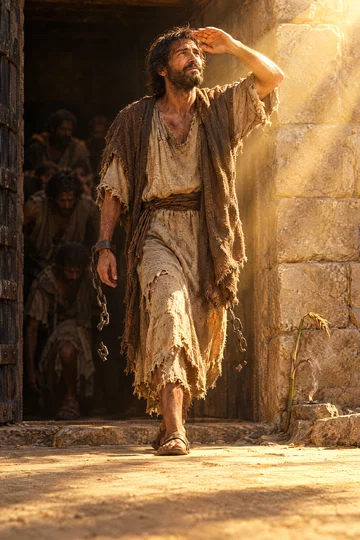
To preach deliverance to captives and set at liberty the bruised means freeing people held captive, enslaved and oppressed by Satan the destroyer, by sin and by moral darkness, for Christ the Restorer alone can overcome him and deliver His captives.Ms 75, 1898, par. 2ST Nov 19, 1896ST Mar 10, 1881 He presses back Satan's power, breaks every yoke, limits his cruel afflicting power within bounds God sets, establishes God's kingdom against his rule as prince of this world, and demonstrated this in Capernaum by driving the demon from the possessed man.Ms 8, 1888, par. 9–142SP 176.3–177.17MR 318.1 His freedom liberates and emancipates the enslaved human will so hearts and minds brought into harmony with His will serve willingly, with obedience becoming desire and delight, and restores complete humanity.ST Nov 19, 1896 Recovering sight and liberty also means deliverance from bondage to human traditions and error into truth as it is in Jesus, rescuing truth hidden and mixed with error, opening prison doors and Scriptures to those in darkness of error who are blind and bruised by human traditions taught as truth and ignorant of the Scriptures and power of God.5MR 40.1–41.1Ms 11, 1894, par. 13–15Ms 11b, 1894, par. 14–15 That mission announced amid struggle over human hearts, where Satan already influenced people to doubt truth and reject evidence, is the same work assigned to His professed people to do for others.Ms 8, 1888, par. 9–14Ms 11b, 1894, par. 14–15
Recovering of sight to the blind means both physical sight and spiritual sight, bringing people out of darkness, blindness and bondage into marvelous light by taking away traditions and maxims, removing rubbish, rescuing truth made to serve in the enemy's lines to strengthen error, restoring it to native loveliness of character, and letting it stand before the people without tradition, self, ideas or opinions so truth and the Spirit make their own impression.5MR 40.1–41.1Ms 11, 1894, par. 13–15Ms 11b, 1894, par. 14–15 Age does not turn error into truth.5MR 40.1–41.1Ms 11, 1894, par. 13–15 The blindness exposed was especially that of the Jewish nation, which separated from God by wicked works while claiming the oracles as authority and professing strictness for the law, yet continually broke the law, taught human maxims, traditions and doctrines for God's commandments, misled the people, kept neither love to God with all heart, soul and strength nor love to neighbor as self, made spiritual work inwrought on mind and character into outward exhibition, lost sight of genuine religion, disregarded principles of God's law while attending to pretentious piety, and remained ignorant of the Scriptures and power of God.5MR 40.1–41.1Ms 75, 1898, par. 3–5 His deliverance was not political release from Roman rule nor use of miracles for selfish advantage as hearers expected, but freeing souls held in slavery and opening blind eyes to the light of truth, while doubt hardened hearts, pride was offended at having deeds searched, and unbelief kept them from receiving what was offered.DA 237.4–238.1ST Jun 23, 1909
The whole outline shows He is Saviour of the body as truly as Saviour of the soul, the Majesty of heaven come as physician and healer of physical and spiritual maladies whose work was to do good.Ms 75, 1898, par. 1Ms 17, 1898, par. 1 The Spirit equipped Him to bring good news to the poor and meek, heal the brokenhearted, free captives and the bruised, and restore sight to the blind, and His ministry of healing the sick and afflicted carried out this restorative mission, reaching the poor, oppressed, neglected and fallen in deep bodily and spiritual need with tenderness and compassion, bringing relief to bodily pain and healing to the sin-sick soul.Ms 55, 1901, par. 18–20Lt 48, 1893, par. 29–34 His example joins care for bodily health with saving the soul, for practical care for the body prepares the way for restoration of the soul, awakens interest in God, counteracts the destroyer, and restores God's moral image.Ms 55, 1901, par. 18–20CH 209.26T 225.2 Followers are therefore to labor likewise for physical health and salvation.CH 209.26T 225.2 His making the sick whole and setting free those bound and oppressed by Satan comes as the balm of Gilead applied in answer to united, acting faith and prayer, drawing sufferers nearer to God in dependence on Him and raising them to go on with God's work.7MR 318.1
Messiah Promised and Present
The verse is Isaiah's prophecy of the Messiah's sacred office and work, read by Jesus in the hearing of the people and applied to Himself as its living display and living expositor, with the declaration that day that the scripture was fulfilled in their ears.2SP 110.2–111.21RED 53.2–57.1LC1 53.2–54.1Ms 22, 1898, par. 5ST Jun 23, 1909 It identifies Him as the Anointed One, anointed by the Spirit and sent to preach good news to the poor, heal the brokenhearted, proclaim deliverance to captives, restore sight to the blind, set at liberty the bruised and oppressed, and reveal the light of truth to the world.2SP 110.2–111.21RED 53.2–57.1LC1 53.2–54.1ST Jun 23, 1909Ms 12b, 1896, par. 5–7 His gracious explanation carried divine power that broke down barriers, and by the Holy Spirit moved hearts to praise while bringing conviction, peace, grace and hope as hearers recognized Him as the Promised One.ST Jun 23, 1909Ms 12b, 1896, par. 5–7
His messianic work is to relieve, liberate and heal in meekness and humility, a work of mercy, salvation and truth, not to appear at the head of armies to deliver Israel by force.2SP 110.2–111.21RED 53.2–57.1ST Jun 23, 1909ST Feb 17, 18814RED 3.2–4.2 It is not to rule from an earthly throne in Jerusalem, conquer Israel's enemies, break the Roman yoke, or establish a kingdom by military power as the people expected.2SP 110.2–111.21RED 53.2–57.1LC1 53.2–54.1ST Jun 23, 1909 That contrast defines the sacred office the verse describes, against a political ruler who conquers by force.ST Feb 17, 18814RED 3.2–4.2
That word was fulfilled when the sick were healed, demoniacs restored, lepers and paralytics made whole, the lame walked, the deaf heard, the dumb spoke, the dead were brought to life, and the poor had the gospel preached to them.RH Jul 2, 1908GC88 20.2GC 20.1–2SG1 37.1 In the temple courts after cleansing the temple He bent over the poor, suffering and afflicted in pity, giving health and peace to the sick, sight to the blind, hearing to the deaf, freedom from disease to children, and comfort to the afflicted amid songs of praise.Ms 37, 1894, par. 8–10 He went about doing good through three years among His people, healing all oppressed of the devil, comforting the brokenhearted, freeing those in bondage, cleansing lepers, raising the dead, and offering mercy and grace to all classes alike.GC88 20.2GC 20.1–2 He commenced His work by breaking Satan's power over the suffering, wrenching feeble sufferers from Satan's grasp to soundness of body and great joy, comforting the weak, trembling and desponding with gracious words, and delivering even the boy held by an evil spirit's control.DA 428.1–5SG1 37.1 Every miracle proved His true character and showed work done by the power of God as the Anointed of the Lord, though those who refused heaven's light set themselves against that evidence.RH Jul 2, 1908
In the synagogue He stopped before the prophecy's words about the day of God's vengeance, proclaiming God's gracious offer of mercy and salvation as their opportunity to accept heaven's call.DA 240.4 That omission did not deny the truth of judgment, but the people were eager for judgment against the heathen while failing to see their own greater guilt and need of mercy, and Jesus desired to save them from the ruin their sins were bringing.DA 240.4 His blessings were not limited to Israel but extended also to Gentiles, as shown by the widow of Sarepta and Naaman the Syrian who lived up to the light they received while backslidden Israel rejected it, warning that rebellion could cause God to turn from His chosen people to those in other lands who welcomed heaven's light.AA 416.2–417.1SLP 229.1–230.2RH Sep 25, 1900 His anointed work of preaching to the poor, healing the brokenhearted, delivering captives and restoring sight was His own coming to Israel as His vineyard to save it from destruction, digging about it, pruning and cherishing in unwearied effort with still yearning hope of fruitfulness after He had brought it as a goodly vine out of Egypt, planted it in a very fruitful hill, hedged it about and sent servants yet received wild grapes.GC88 20.1 That restoring, uplifting work that brings peace and happiness, representing the Father as the tree of life by giving life to the dead and soundness to the sick, stands opposite Satan's work to condemn and destroy, take away liberty and destroy life.Ms 136, 1899, par. 17–18
Character of His Ministry
Every act of the life announced in this verse reveals love, mercy, compassion, tender sympathy, and infinite wisdom reaching friendless, suffering, hopeless, fallen, and sin-sick souls in deep bodily and spiritual need, including the poor, oppressed, neglected, and afflicted.SC 11.2Ms 41, 1892, par. 9–12Lt 48, 1893, par. 29–34Ms 197, 1898, par. 3MH 423.1 To fulfill it He took human nature and clothed divinity with humanity to reach human wants and meet human weakness and sin, bringing relief to bodily pain and healing to the sin-sick soul.SC 11.2Ms 41, 1892, par. 9–12Lt 48, 1893, par. 29–34 He thereby made Himself approachable, so the poorest and humblest were not afraid to come to Him and even little children were attracted to Him.SC 11.2Ms 41, 1892, par. 9–12 This work as the Father's representative, done as the Spirit led Him, reveals God's standpoint on the value of humanity and the freedom that comes through Christ alone who died to redeem the race, so that honoring God requires esteeming His blood-bought people and rejecting selfish, extravagant living that withholds help from the needy.Ms 11b, 1894, par. 12–13Ms 197, 1898, par. 3 His life, suffering, and death show what it means to serve as God's messenger, for He lived out His teachings, welcomed those seeking instruction, and showed compassion, tenderness, and sympathy to all aware of their need, binding up the brokenhearted and comforting those who mourn.Ms 197, 1898, par. 3MH 423.1
He preached in simple terms and plain symbols so ordinary people, the poor, common workers, and even a child, old and young, could hear and understand.CT 381.1ST Sep 26, 1895Ms 55, 1886, par. 3–4Lt 164, 1899, par. 23–24ST Jan 27, 1904 That mission to the poor and suffering proves the Scriptures and their message are meant for every class, rich or poor, and not only the learned, and that people of every class can search them and understand God's revealed will, dispelling error.ST Sep 26, 1895ST Jan 27, 1904ST Aug 20, 1894 Those teaching truth for this time need deeper insight into His lessons and must copy the divine Teacher, feeding souls with the plain words of the living God rather than large words the unlearned cannot understand or studied phrases designed to please refined taste.Ms 55, 1886, par. 3–4Lt 164, 1899, par. 23–24 He met questioners with It is written, What saith the Scripture, and How readest thou, and proclaimed the word of God with clearness, power, and authority unlike the scribes and Pharisees, making His subject the word of God rather than tradition and human theory and speculation, so the Scriptures came as a new revelation shedding light on patriarchs and prophets with depth never before perceived.
His entire life was self-denial and self-sacrifice for others, giving Himself as the propitiation for a lost world, the highest gift that could be given, which judged from a human standpoint looks extravagant and wanton waste but is overflowing love fed by heavenly streams.Ms 28, 1897, par. 43–45 The One who speaks is the King of glory, the Majesty of heaven, who became the Head of humanity and began human life in poverty, accepting poverty as His own and taking His position with the poor.Ms 175, 1897, par. 103–104 By living and working in poverty all His life in this world, knowing its stigma and reproach, His humble birth and life among the poor drew them to Him as their Saviour and forever removes every thread of disgrace from the humble worthy poor, blessing them as inheritors of the kingdom, molding them by His example and influence, and placing them on vantage ground with God.Ms 16, 1893, par. 8–9Ms 175, 1897, par. 103–104 Though legions of angels would render Him homage, He walked among men unhonored and unconfessed as one of the poor and lowly, scattering blessings, healing the sick, relieving the oppressed, and binding up the brokenhearted, yet in place of praise He often met reproach, few called Him blessed, and the great passed Him by with disdain.ST Feb 27, 1893 So filled was He with His mission to men that His own mother could not draw Him from His work of laboring for the sick and suffering before Him, calling for simplicity of godliness, faith, and Christlike practice with a spirit willing to help where help is needed.Ms 95, 1908, par. 27
He came to establish God's kingdom against Satan's rule, counteracting the destroyer by bringing light and truth into spiritual darkness and restoring the moral image of God in all who receive Him.Ms 72, 1896, par. 8–10 With humility marking His path from manger to cross, He as man in this small world conquered Satan's power, set humanity free from his grasp, countered his affliction of mind and body, limited his power, and brought light out of darkness.Ms 21, 1895, par. 10–11Ms 1, 1891, par. 4–6 His mission was to press back Satan's power of moral darkness, dispute his claim as prince of this world, and bring freedom and light instead of bondage and darkness while bringing eternity into view, carried out amid a struggle over human hearts where Satan was already influencing people to doubt truth and reject evidence.Ms 8, 1888, par. 9–14 Wherever there is sin and every soul yielding to temptation is wounded by the adversary, Christ is present as Saviour bringing healing and restoration to those bruised by sin.ED 113.1 His work includes more than bringing consolation, for He also restores and reproves, searching deeds and exposing lives trusted in outward ceremony.Lt 81, 1896, par. 2–3
He chose to take the gospel to the poor instead of occupying the highest place among the teachers of the Jewish nation.ST Jun 20, 1916GW 43.4CH 321.5STB 814.3 Preaching to the poor meant going from place to place so people in the highways and byways could hear truth, speaking by the sea, on the mountainside, in the streets of the city, in the synagogue to explain the Scriptures, and often teaching in the outer court of the temple so Gentiles could hear.ST Jun 20, 1916 He explained the Old Testament Scriptures with clarity, power, and authority that captured attention and differed from the scribes and Pharisees.CH 321.5STB 814.3 Through tireless service He taught, comforted the afflicted, helped the helpless, and healed wounds caused by sin among all classes in ordinary life.ST Nov 25, 1903 He prepared for this work of relief, instruction, and freeing Satan's captives through solitary prayer before going among the people.DA 151.2
Rejection at Nazareth
At first the gracious words brought conviction, peace, grace and hope as the hearers felt the Spirit's influence and recognized the Speaker as the Promised One.Ms 12b, 1896, par. 5–711MR 281.2–283.2Ms 55, 1886, par. 26–27Ms 40, 1887, par. 5–7Ms 7, 1884, par. 1–2 His humble appearance, ordinary family as Joseph's son, and life without outward display offended those who expected a glorious king and conqueror, though that humility had been foretold as part of his divine character and mission.11MR 281.2–283.2Lt 4, 1889, par. 17–24Ms 40, 1887, par. 5–7 Pride and prejudice about his humble origins turned them against the Deliverer and the blessings he came to bring, and unbelief led them to reject the Holy Spirit's influence and the plain truth, beginning a course ending at Calvary.Ms 12b, 1896, par. 5–7Lt 4, 1889, par. 17–24Ms 55, 1886, par. 26–27Ms 40, 1887, par. 5–7Ms 7, 1884, par. 1–2
When he exposed their true condition and showed they were no more favored than Gentiles, doubt hardened into unbelief and wrath.Lt 51a, 1895, par. 5–8ST Jan 10, 1900ST Jan 10, 1900 They questioned whether he was Joseph's son and demanded miracles as had been done in Capernaum, and when told no prophet is accepted in his own country they were filled with rage.Lt 51a, 1895, par. 5–8Lt 4, 1889, par. 17–24Ms 55, 1886, par. 26–27 They drove him out and tried to cast him headlong from the precipice or otherwise kill him, but divine power and angels protected him until his work was complete.Lt 51a, 1895, par. 5–8Lt 4, 1889, par. 17–24Ms 55, 1886, par. 26–2712MR 182.2–183.2 He disappeared they knew not whither, to seek more fruitful fields and continue his mission elsewhere.Ms 55, 1886, par. 26–27
Their history stands as an exhibition of the result of hardening the heart in unbelief and pride until they would take the life of the Son of God.Ms 29, 1895, par. 26Lt 33a, 1888, par. 3–4Ms 15, 1888, par. 38–40 Admitting doubt quenched the Spirit and made room for Satan's suggestions, leaving them smitten with blindness, closing eyes and ears and darkening understanding against the manifestations of the Spirit of God.Lt 51a, 1895, par. 5–812MR 182.2–183.2Lt 33a, 1888, par. 3–4 To reject the message God sends is to walk in that same path of unbelief, and it is dangerous to call the work of the Spirit of God the work of Satan.Lt 51a, 1895, par. 5–8Lt 4, 1889, par. 29 To reject Christ in the person of his delegated messengers today is the same rejection as at Nazareth and is less excusable because the example of the Jews in rejecting Christ and his apostles stands as a warning not to fall after the same unbelief, yet those who once took that course are given a second opportunity to accept and must not harden their hearts in prejudice, pride and unbelief into final rejection and perishing.11MR 283.3–284.2
Work Entrusted to Followers
The same Spirit-anointed work announced at Nazareth is commissioned to the disciples and to every church member as human agents and co-workers with God, to continue bringing good news to the poor with healing, deliverance, sight, and freedom to the broken and oppressed.SW 39.1Ms 105, 1898, par. 15–17Lt 83, 1902, par. 17–21Ms 145, 1899, par. 5–7PK 718.1 Those who fully follow Him cooperate with Him to restore God's moral image in people, and with the Saviour abiding in the heart they possess His attributes and work as He worked, with hearts touched by human woe.Ms 105, 1898, par. 15–17Lt 83, 1902, par. 17–21Ms 145, 1899, par. 5–7 As the light of the world they let light shine by good works that lead men to glorify the Father, representing the same character and spirit by precept and example, looking to Jesus to catch His spirit of tenderness, meekness, and ready sympathy for the poor, lowly, and oppressed rather than hardness of heart and exalting self.PK 718.1RH Apr 24, 1913 This is the standard of true, healthy, influential Christianity, done in continual obedience while seeking first the kingdom, joining acts of mercy with the message of salvation and meeting endless obligations to God and fellow men as opportunities continually increase.SW 39.1Ms 145, 1899, par. 5–7RH Apr 24, 1913
They are to carry that gospel to the poor from house to house and in large cities, in highways and hedges, marketplaces, streets of great cities, and country lanes, deliberately not neglecting the poor who are usually passed by.Ms 45, 1895, par. 4–5GC88 87.1RH May 21, 19086T 83.2–4 They are to seek needy souls hidden among the debris, gathering sheaves for Him, bringing light and glad tidings of God's grace to humble homes and to every part of the land, including the aged, the sick, and the poor.Ms 45, 1895, par. 4–5GC88 87.1RH May 21, 1908 Reaching the poor does not limit the work to them but includes all classes, high and low, rich and poor, with ministers and medical missionaries working together in new fields, and even the ignorant becoming useful when meek and lowly as sincere disciples who understand God's design for a perishing race.Lt 83, 1902, par. 17–21ST Jun 21, 1899 Wycliffe followed this pattern by sending preachers throughout England to the poor, the aged, and the sick, and faithful preaching to the poor with healing of the sick can bring many into the church to be saved.GC 87.1GC88 87.16T 83.2–4
Because that mission brought light to the whole world for people of every nationality and race, preaching to the poor puts a stern rebuke on attaching importance to color or caste and demanding a refined Christianity that Christ does not accept.Ms 6, 1891, par. 1SW 1.1STA 155.1STBk 159.1 He died just as much for colored people as for the white race, and the same price was paid for the salvation of the colored man as for the white man.STA 149.1STBk 153.1STA 155.1 To slight a brother because of his color is to slight Jesus, misrepresenting Him and revealing selfishness, tradition, and prejudice polluting the soul and lack of sanctification through the truth.STA 155.1STBk 159.1 Christians are therefore to show impartial love, help those harmed by slavery, and oppose slavery, caste, prejudice, and oppression, guided by the principle that preaching the gospel to the poor is the will of God in which heavenly intelligences rejoice to join.SW 1.1STA 149.1STA 155.1
Following His example joins care for bodily health with saving the soul, laboring for physical health and salvation so as to awaken interest in God.CH 209.26T 225.2 Sanitariums, schools, and medical missionary work carry this forward by healing the sick and afflicted, restoring the suffering to health in opposition to Satan the destroyer, preparing the way for restoration of the soul, and directing the hopeless to trust Christ's power for body and soul.CH 209.213MR 213.1–2CT 466.3–467.1 Preaching to the poor in this healing work calls for counsel suited to their circumstances, recommending the most nourishing food they can obtain and can afford rather than imposing strict dietary rules when poverty makes them impractical.9T 163.1Lt 37, 1901, par. 30–31 Prescribing the strictest diet too soon, such as forbidding eggs, milk, cream, or butter where poverty forbids it, can do more harm than good.9T 163.1Lt 37, 1901, par. 30–31
His followers are to restore rather than destroy, lifting up rather than casting down, strengthening the weak, comforting mourners and those in sorrow, discouragement, sickness, or need, freeing debtors and those oppressed or bound, with tenderness, sympathy, and encouragement.Ms 4, 1902, par. 17–22MH 16.1RH Jul 22, 1902 They show the mind of Christ by a humble, tender heart sensitive to suffering, hearing the cry for pity and mercy, refusing to make faith harder or to crush wounded spirits and quench hope by harsh words, denunciation, and human restrictions that bar labor, and ministering to helpless souls in cooperation with angels instead of passing by on the other side.Ms 4, 1902, par. 17–22RH Jul 22, 1902RH Apr 10, 1900 Like the Samaritan for the wounded traveler, this is practical compassion without regard to identity, danger, or cost, tending injuries, protecting, and providing for continued care.DA 500.3–503.1 It requires meeting poor souls where they are, providing food and carriage and Sabbath meetings, guarding the poor's interests, and laboring with urgency, prayer, and living faith with Christ going before them.Ms 11, 1892, par. 9–11MH 16.1RH Apr 10, 1900
Those who receive God's love share it by giving generously and becoming co-workers in relieving need and oppression, for His gifts are meant to make love and generosity grow among His people.Ms 11, 1892, par. 9–11STMW7 58.1 Defending the poor's right to hear follows Christ cleansing the temple with scourge and divine authority against priests who would forbid it, foreseeing opposition through the ages to Jerusalem's downfall.Lt 81, 1896, par. 2–3STMW7 58.1 This work comforts all that mourn with beauty for ashes and the garment of praise, announcing the acceptable year of the Lord with judgment, law, and light that draws Gentiles and kings.MH 16.1Ms 15, 1898, par. 6 Rulers later remembered this Nazareth announcement, and the Scriptures about Christ came vividly to mind, convicting them that they were fighting against God, while those caught in Satan's snare are delivered when God intervenes and those who humbly believe have their names recorded in the book of life.DA 539.2SG2 221.2Ms 7, 1884, par. 10
Wesley's preaching of the gospel to the poor and neglected reflects this same Spirit-anointed mission to bring the gospel to the poor.GC88 700.4–5
Sources