Isaiah 38:21
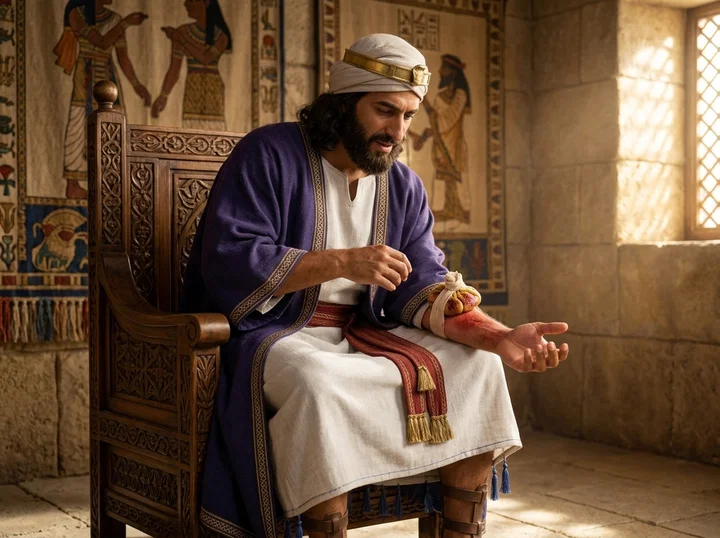
For Isaiah had said, Let them take a lump of figs, and lay it for a plaister upon the boil, and he shall recover.
Translations
For Isaiah had said, Let them take a lump of figs, and lay it for a plaster on the boil, and he shall recover.
King James Version, KJV Cambridge Paragraph Bible
For Isaiah had said, Let them take a lump of figs, and lay it for a plaister upon the boil, and he shall recover.
For Isaiah had said, Let them take a lump of figs, and lay it for a plaster upon the boil, and he will recover.
Now Isaiah had said, Let them take a cake of figs, and lay it for a plaister upon the boil, and he shall recover.
American Standard Version, Darby Translation
Now Isaiah had said, Let them take a cake of figs, and lay it for a plaster upon the boil, and he shall recover.
And Isaiah saith, 'Let them take a bunch of figs, and plaster over the ulcer, and he liveth.'
And Isaiah had said, Let them take a cake of figs, and let them press it over the boil, that he may recover.
Berean Standard Bible, Majority Standard Bible
Now Isaiah had said, “Prepare a lump of pressed figs and apply it to the boil, and he will recover.”
Now Isaiah had said, “Let them take a cake of figs, and lay it for a poultice on the boil, and he shall recover.”
And Isaiah said, Let them take a cake of figs, and put it on the diseased place, and he will get well.
Then said Isaiah, Take a lumpe of drye figs and lay it vpon the boyle, and he shall recouer.
Douay-Rheims (Challoner revision)
Now Isaias had ordered that they should take a lump of figs, and lay it as it plaster upon the wound, and that he should be healed.
Pictures
Cross-references
- 2 Kings 20:7
And Isaiah said, Take a lump of figs. And they took and laid it on the boil, and he recovered.
Isaiah gives the fig remedy for Hezekiah’s boil, and he recovers.
- Isaiah 38:1-5
In those days was Hezekiah sick unto death. And Isaiah the prophet the son of Amoz came unto him, and said unto him, Thus saith the LORD, Set thine house in order: for thou shalt die, and not live.
Hezekiah prayed during a fatal illness, and God promised to extend his life.
- 2 Chronicles 32:24
In those days Hezekiah was sick to the death, and prayed unto the LORD: and he spake unto him, and he gave him a sign.
Hezekiah prayed during his illness, and God answered him.
- Isaiah 38:9
The writing of Hezekiah king of Judah, when he had been sick, and was recovered of his sickness:
The song recounts Hezekiah’s illness and recovery.
- Isaiah 39
At that time Merodach-baladan, the son of Baladan, king of Babylon, sent letters and a present to Hezekiah: for he had heard that he had been sick, and was recovered.
The subsequent record connected with Hezekiah’s experience.
- 2 Kings 20:12-13
At that time Berodach-baladan, the son of Baladan, king of Babylon, sent letters and a present unto Hezekiah: for he had heard that Hezekiah had been sick.
Hezekiah’s recovery precedes the Babylonian visitors and his display of the kingdom’s riches.
Commentary
Each commentary is drawn from primary sources: the writings of Ellen G. White and Adventist pioneers and periodicals. Each commentary is separate. Its own words are not a quotation; follow the references to read the source passages.
Ellen G. White
12 sources
Hezekiah, king of Israel, was sick and received through a prophet the message that he should die.GW 220.2MH 232.1 He cried unto the Lord, and the Lord heard His servant and added fifteen years to his life.GW 220.2MH 232.1 Through Isaiah God directed that a lump or bunch of figs be taken and laid as a plaster or poultice upon the boil, sore, and diseased part, and that he should recover.Ms 169, 1902, par. 40–41CH 411.2–412.1Lt 67, 1899, par. 3–7Lt 182, 1899, par. 1–2Lt 106, 1898, par. 14–21 Hezekiah's attendants were to apply the figs to the sore and affected part.HPMMW 53.1–54.2Lt 37, 1892, par. 6–7Lt 67, 1899, par. 3–7
The direction was given in plain, ordinary language that everyone and ordinary people can understand.Ms 169, 1902, par. 40–4119MR 48.3–5 Though one word from God would have healed Hezekiah instantly, God gave special direction for healing through the fig remedy rather than by His direct restoring power alone.GW 220.2MH 232.1Lt 37, 1892, par. 6–7HL 241.1Lt 182, 1899, par. 1–2 That remedy was to be used by human hands, with the figs placed upon the boil and diseased part.HL 241.1Lt 182, 1899, par. 1–2Lt 106, 1898, par. 14–21 The recovery was gradual rather than instantaneous.Lt 106, 1898, par. 14–21
Using what God has provided to relieve pain and aid nature in restoration, working in harmony with natural laws and using available beneficial means wisely alongside prayer, is cooperation with God and with divine power and divine providence.GW 220.2MH 232.1CH 411.2–412.1HPMMW 53.1–54.2Lt 37, 1892, par. 6–7 It does not deny or hinder faith.GW 220.2MH 232.1CH 411.2–412.1HPMMW 53.1–54.2Lt 37, 1892, par. 6–7 The figs were a simple, familiar, natural remedy, blessed by God.CH 411.2–412.1HPMMW 53.1–54.2Lt 37, 1892, par. 6–716MR 288.2–289.2Lt 182, 1899, par. 1–2 It was given to turn attention from elaborate treatments to nature's restorative work and to reliance on it.Lt 67, 1899, par. 3–716MR 288.2–289.2 It teaches that the body should be allowed to rally and overcome disease rather than be hindered in recovery and weakened by drug treatment.Lt 67, 1899, par. 3–716MR 288.2–289.2
Sources
Pioneers and periodicals
10 sources
The verse stands in chapters 36-39, the historical sketch with included messages that closes the first division of Isaiah, chapters 1-39, distinct from chapters 40-66.ST May 28, 1912 It was given between 760 and 698 B.C., beginning when Isaiah was a young man in the reign of Uzziah and continuing through Jotham, Ahaz, and Hezekiah, with tradition extending his prophesying into the reign of Manasseh where he was martyred by that wicked king.ST May 28, 1912 Those were crucial times in Judah typical of the great days to come, and Isaiah is the Gospel prophet, with no other Old Testament prophet speaking so much of the last days, the sufferings and work of Jesus Christ, and the coming kingdom of glory, and his name means Jehovah is salvation.ST May 28, 1912
The verse belongs to the account of Hezekiah's sickness and the Lord's healing, and as a whole the chapter shows Hezekiah facing death, praying to God, and receiving fifteen more years of life, and after his recovery praising God as one of the living.ST Nov 25, 1886ST Oct 6, 1909 His recovery illustrates that God mercifully deferred the execution of a threatened death and granted a further period of life.ST Apr 3, 1879 The verse prescribes the treatment for his boil, that a lump of figs be taken and laid as a plaster or poultice upon the boil, with the promise that he shall recover, and he did recover.RH Dec 7, 1916RH Aug 27, 1901ST Jun 7, 1910 That plaster of figs was a material, remedial means used in his healing.RH Dec 7, 1916RH Aug 27, 1901ST Sep 21, 1915
During Hezekiah's grave illness, prayer was accompanied by a practical remedy, illustrating that prayer and suitable external treatments can be used together.RH Dec 7, 1916 The fig poultice was an ordinary remedy whose use did not require a miracle, presenting the use of practical means to treat a curable illness as approved. Isaiah instructed Hezekiah's attendants to apply the remedy as part of the healing process, showing the sick person's practical cooperation, and Hezekiah recovered quickly enough to go to the house of God within three days.
Hezekiah's experience is given as an admonition, in that he urged his petition until the Lord granted it, asking for his own will rather than submitting to God's will.RH Dec 29, 1868 God's healing of Hezekiah, together with the accompanying astronomical miracle, gave him an opportunity to show Babylon God's truth and grace.ST Jul 30, 1902 The surrounding account identifies his healing as an occasion when he failed to give God glory.ST Jun 7, 1910
Sources