But only as we live in obedience to His word can we claim the fulfilment of His promises. The psalmist says, “If I regard iniquity in my heart, the Lord will not hear me.” If we render to Him only a partial, half-hearted obedience, His promises will not be fulfilled to us.
In the word of God we have instruction relative to special prayer for the recovery of the sick. But the offering of such prayer is a most solemn act, and should not be entered upon without careful consideration. In many cases of prayer for the healing of the sick, that which is called faith is nothing less than presumption.
Many persons bring disease upon themselves by their self-indulgence. They have not lived in accordance with natural law or the principles of strict purity. Others have disregarded the laws of health in their habits of eating and drinking, dressing, or working. Often some form of vice is the cause of feebleness of mind or body. Should these persons gain the blessing of health, many of them would continue to pursue the same course of heedless transgression of God’s natural and spiritual laws, reasoning that if God heals them in answer to prayer, they are at liberty to continue their unhealthful practices and to indulge perverted appetite without restraint. If God were to work a miracle in restoring these persons to health, He would be encouraging sin.
It is labor lost to teach people to look to God as a healer of their infirmities, unless they are taught also to lay aside unhealthful practises. In order to receive His blessing in answer to prayer, they must cease to do evil and learn to do well. Their surroundings must be sanitary, their habits of life correct.228They must live in harmony with the law of God, both natural and spiritual.
Confession of Sin
To those who desire prayer for their restoration to health, it should be made plain that the violation of God’s law, either natural or spiritual, is sin, and that in order for them to receive His blessing, sin must be confessed and forsaken.
If we confess our sins, he is faithful and just to forgive us our sins, and to cleanse us from all unrighteousness.
The Scripture bids us, “Confess your faults one to another, and pray one for another, that ye may be healed.” To the one asking for prayer, let thoughts like these be presented: “We can not read the heart, or know the secrets of your life. These are known only to yourself and to God.
If you repent of your sins, it is your duty to make confession of them.” Sin of a private character is to be confessed to Christ, the only mediator between God and man. For “if any man sin, we have an advocate with the Father. Jesus Christ the righteous.” Every sin is an229offense against God, and is to be confessed to Him through Christ. Every open sin should be as openly confessed. Wrong done to a fellow being should be made right with the one who has been offended. If any who are seeking health have been guilty of evil-speaking, if they have sowed discord in the home, the neighborhood, or the church, and have stirred up alienation and dissension, if by any wrong practise they have led others into sin, these things should be confessed before God and before those who have been offended. “If we confess our sins, He is faithful and just to forgive us our sins, and to cleanse us from all unrighteousness.”
When wrongs have been righted, we may present the needs of the sick to the Lord in calm faith, as His Spirit may indicate. He knows each individual by name, and cares for each as if there were not another upon the earth for whom He gave His beloved Son. Because God’s love is so great and so unfailing, the sick should be encouraged to trust in Him and be cheerful. To be anxious about themselves tends to cause weakness and disease. If they will rise above depression and gloom, their prospect of recovery will be better; for “the eye of the Lord is upon them” “that hope in His mercy.”
Submission to God’s Will
In prayer for the sick, it should be remembered that “we know not what we should pray for as we ought.” We do not know whether the blessing we desire will be best or not. Therefore our prayers should include this thought: “Lord, thou knowest every secret of the soul. Thou art acquainted with these persons. Jesus, their Advocate, gave His life for them. His love for them is greater than ours can possibly be. If, therefore, it is for Thy glory and the good of the afflicted ones, we ask, in the name of Jesus, that they may be restored to health. If it be not Thy will that230they may be restored, we ask that Thy grace may comfort and Thy presence sustain them in their sufferings.”
God knows the end from the beginning. He is acquainted with the hearts of all men. He reads every secret of the soul. He knows whether those for whom prayer is offered would or would not be able to endure the trials that would come upon them should they live. He knows whether their lives would be a blessing or a curse to themselves and to the world. This is one reason why, while presenting our petitions with earnestness, we should say, “Nevertheless not my will, but Thine, be done.” Jesus added these words of submission to the wisdom and will of God when in the garden of Gethsemane He pleaded, “O My Father, if it be possible, let this cup pass from Me.” And if they were appropriate for Him, the Son of God, how much more are they becoming on the lips of finite, erring mortals!
The consistent course is to commit our desires to our all-wise heavenly Father, and then, in perfect confidence, trust all to Him. We know that God hears us if we ask according to His will. But to press our petitions without a submissive spirit is not right; our prayers must take the form, not of command, but of intercession.
There are cases where God works decidedly by His divine power in the restoration of health. But not all the sick are healed. Many are laid away to sleep in Jesus. John on the Isle of Patmos was bidden to write: “Blessed are the dead which die in the Lord from henceforth: yea, saith the Spirit, that they may rest from their labors; and their works do follow them.” From this we see that if persons are not raised to health, they should not, on this account, be judged as wanting in faith.
We all desire immediate and direct answers to our prayers, and are tempted to become discouraged when the answer is delayed or comes in an unlooked-for form. But God is too wise and good to answer our prayers always231at just the time and in just the manner we desire. He will do more and better for us than to accomplish all our wishes. And because we can trust His wisdom and love, we should not ask Him to concede to our will, but should seek to enter into and accomplish His purpose. Our desires and interests should be lost in His will. These experiences that test faith are for our benefit. By them it is made manifest whether our faith is true and sincere, resting on the word of God alone, or whether depending on circumstances, it is uncertain and changeable. Faith is strengthened by exercise. We must let patience have its perfect work, remembering that there are precious promises in the Scriptures for those who wait upon the Lord.
Not all understand these principles. Many who seek the Lord’s healing mercy think that they must have a direct and immediate answer to their prayers or their faith is defective. For this reason, those who are weakened by disease need to be counseled wisely, that they may act with discretion. They should not disregard their duty to the friends who may survive them, or neglect to employ nature’s agencies for the restoration of health.
Often there is danger of error here. Believing that they will be healed in answer to prayer, some fear to do anything that might seem to indicate a lack of faith. But they should not neglect to set their affairs in order as they would desire to do if they expected to be removed by death. Nor should they fear to utter words of encouragement or counsel which at the parting hour they wish to speak to their loved ones.
Remedial Agencies; Bible Examples
Those who seek healing by prayer should not neglect to make use of the remedial agencies within their reach. It is not a denial of faith to use such remedies as God has provided to alleviate pain and to aid nature in her work232of restoration. It is no denial of faith to co-operate with God, and to place themselves in the condition most favorable to recovery. God has put it in our power to obtain a knowledge of the laws of life. This knowledge has been placed within our reach for use. We should employ every facility for the restoration of health, taking every advantage possible, working in harmony with natural laws. When we have prayed for the recovery of the sick, we can work with all the more energy, thanking God that we have the privilege of co-operating with Him, and asking His blessing on the means which He Himself has provided.
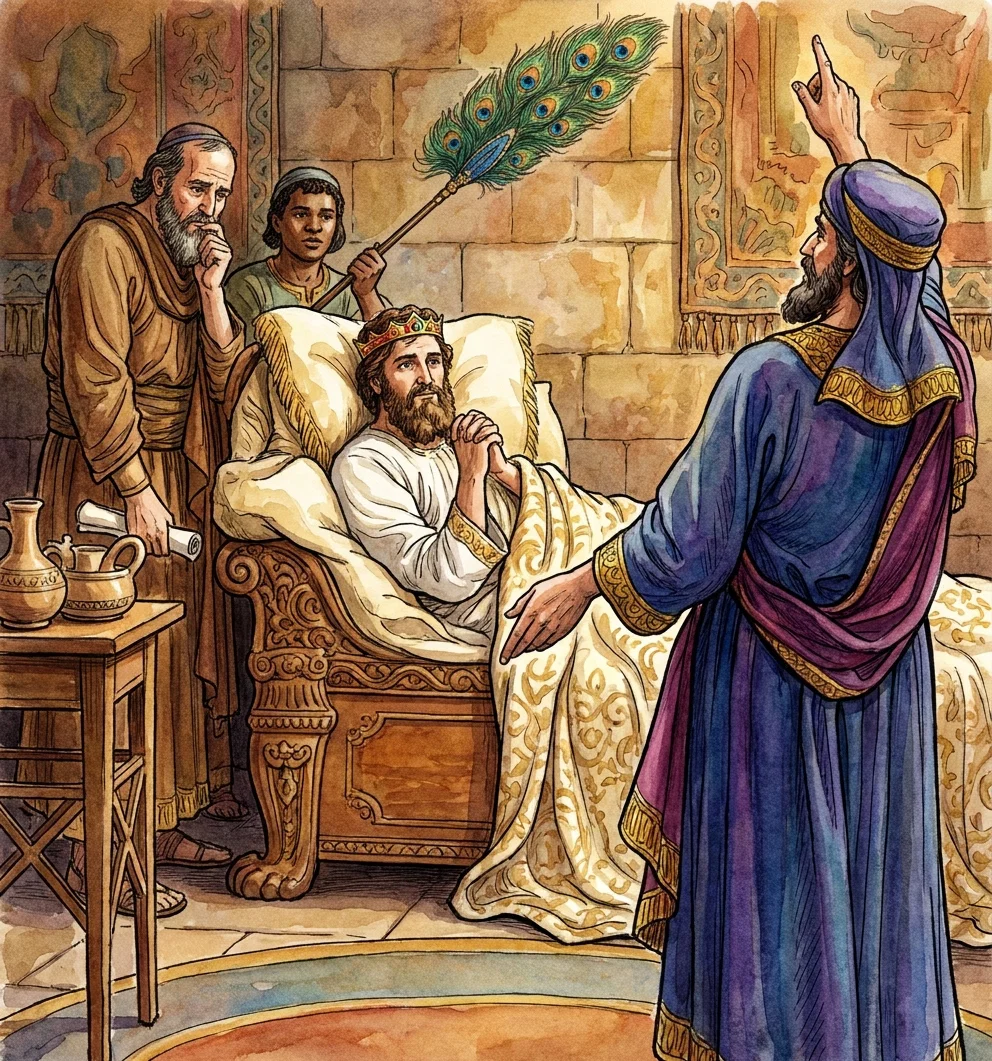
“The Lord . . . sent him a message that fifteen years should be added to his life.”
We have the sanction of the word of God for the use of remedial agencies. Hezekiah, king of Israel, was sick, and a prophet of God brought him the message that he should die. He cried unto the Lord, and the Lord heard His servant, and sent him a message that fifteen years should be added to his life. Now one word from God would have healed Hezekiah instantly; but special directions were given, “Let them take a lump of figs, and lay it for a plaster upon the boil, and he shall recover.”
On one occasion Christ anointed the eyes of a blind man with clay, and bade him, “Go, wash in the pool of Siloam. . . . He went his way therefore, and washed, and came seeing.” The cure could be wrought only by the power of the great Healer, yet Christ made use of the simple agencies of nature. While He did not give countenance to drug medication, He sanctioned the use of simple and natural remedies.
“Christ anointed the eyes of a blind man.”
When we have prayed for the recovery of the sick, whatever the outcome of the case, let us not lose faith in God. If we are called upon to meet bereavement, let us accept the bitter cup, remembering that a Father’s hand holds it to our lips. But should health be restored, it should not be forgotten that the recipient of healing mercy is placed under renewed obligation to the Creator. When the ten lepers were cleansed, only one returned to find Jesus, and give Him glory. Let none of us be like the unthinking nine, whose hearts were untouched by the mercy of God. “Every good gift and every perfect gift is from above, and cometh down from the Father of lights, with whom is no variableness, neither shadow of turning.”
The Use of Remedies
“WE ARE LABORERS TOGETHER WITH GOD.”
DISEASE never comes without a cause. The way is prepared, and disease invited, by disregard of the laws of health. Many suffer in consequence of the transgression of their parents. While they are not responsible for what their parents have done, it is nevertheless their duty to ascertain what are and what are not violations of the laws of health. They should avoid the wrong habits of their parents, and by correct living, place themselves in better conditions.
The greater number, however, suffer because of their own wrong course of action. They disregard the principles of health by their habits of eating, drinking, dressing, and working. Their transgression of nature’s laws produces the sure result; and when sickness comes upon them, many do not credit their suffering to the true cause, but murmur against God because of their afflictions. But God is not responsible for the suffering that follows disregard of natural law.
God has endowed us with a certain amount of vital force. He has also formed us with organs suited to maintain the various functions of life, and He designs that these organs235shall work together in harmony. If we carefully preserve the life force, and keep the delicate mechanism of the body in order, the result is health; but if the vital force is too rapidly exhausted, the nervous system borrows power for present use from its resources of strength, and when one organ is injured, all are affected. Nature bears much abuse without apparent resistance; she then arouses, and makes a determined effort to remove the effects of the ill treatment she has suffered. Her effort to correct these conditions is often manifest in fever and various other forms of sickness.
Rational Remedies
When the abuse of health is carried so far that sickness results, the sufferer can often do for himself what no one else can do for him. The first thing to be done is to ascertain the true character of the sickness, and then go to work intelligently to remove the cause. If the harmonious working of the system has become unbalanced by overwork, overeating, or other irregularities, do not endeavor to adjust the difficulties by adding a burden of poisonous medicines.
The Diet-Cure
Intemperate eating is often the cause of sickness, and what nature most needs is to be relieved of the undue burden that has been placed upon her. In many cases of sickness, the very best remedy is for the patient to fast for a meal or two, that the overworked organs of digestion may have an opportunity to rest. A fruit diet for a few days has often brought great relief to brain workers. Many times a short period of entire abstinence from food, followed by simple, moderate eating, has led to recovery through nature’s own recuperative effort. An abstemious diet for a month or two would convince many sufferers that the path of self-denial is the path to health.
Rest as a Remedy
Some make themselves sick by overwork. For these, rest, freedom from care, and a spare diet, are essential to restoration of health. To those who are brain weary and nervous237because of continual labor and close confinement, a visit to the country, where they can live a simple, care-free life, coming in close contact with the things of nature, will be most helpful. Roaming through the fields and the woods, picking the flowers, listening to the songs of the birds, will do far more than any other agency toward their recovery.
Alone amid the wilds of nature
The Use of Water
In health and in sickness, pure water is one of heaven’s choicest blessings. Its proper use promotes health. It is the beverage which God provided to quench the thirst of animals and man. Drank freely, it helps to supply the necessities of the system, and assists nature to resist disease. The external application of water is one of the easiest and most satisfactory ways of regulating the circulation of the blood. A cold or cool bath is an excellent tonic. Warm baths open the pores, and thus aid in the elimination of impurities. Both warm and neutral baths soothe the nerves and equalize the circulation.
But many have never learned by experience the beneficial effects of the proper use of water, and they are afraid of it. Water treatments are not appreciated as they should be, and to apply them skilfully requires work that many are unwilling to perform. But none should feel excused for ignorance or indifference on this subject. There are many ways in which water can be applied to relieve pain and check disease. All should become intelligent in its use in simple home treatments. Mothers, especially, should know how to care for their families in both health and sickness.
Benefits of Exercise
Action is a law of our being. Every organ of the body has its appointed work, upon the performance of which its development and strength depend. The normal action of all the organs gives strength and vigor, while the tendency of disuse is toward decay and death. Bind up an arm, even238for a few weeks, then free it from its bands, and you will see that it is weaker than the one you have been using moderately during the same time. Inactivity produces the same effect upon the whole muscular system.
Inactivity is a fruitful cause of disease. Exercise quickens and equalizes the circulation of the blood, but in idleness the blood does not circulate freely, and the changes in it, so necessary to life and health, do not take place. The skin, too, becomes inactive. Impurities are not expelled as they would be if the circulation had been quickened by vigorous exercise, the skin kept in a healthy condition, and the lungs fed with plenty of pure, fresh air. This state of the system throws a double burden on the excretory organs, and disease is the result.
Invalids should not be encouraged in inactivity. When there has been serious overtaxation in any direction, entire rest for a time will sometimes ward off serious illness; but in the case of confirmed invalids, it is seldom necessary to suspend all activity.
Those who have broken down from mental labor should have rest from wearing thought; but they should not be led to believe that it is dangerous to use their mental powers at all. Many are inclined to regard their condition as worse than it really is. This state of mind is unfavorable to recovery, and should not be encouraged.
Ministers, teachers, students, and other brain workers often suffer from illness as the result of severe mental taxation, unrelieved by physical exercise. What these persons need is a more active life. Strictly temperate habits, combined with proper exercise, would insure both mental and physical vigor, and would give power of endurance to all brain workers.
Those who have overtaxed their physical powers should not be encouraged to forego manual labor entirely. But labor, to be of the greatest advantage, should be systematic239and agreeable. Outdoor exercise is the best; it should be so planned as to strengthen by use the organs that have become weakened; and the heart should be in it; the labor of the hands should never degenerate into mere drudgery.
When invalids have nothing to occupy their time and attention, their thoughts become centered upon themselves, and they grow morbid and irritable. Many times they dwell upon their bad feelings until they think themselves much worse than they really are, and wholly unable to do anything.
A restful ride is conducive to health
In all these cases, well-directed physical exercise would prove an effective remedial agent. In some cases it is indispensable to the recovery of health. The will goes with the labor of the hands; and what these invalids need is to have the will aroused. When the will is dormant, the imagination becomes abnormal, and it is impossible to resist disease.
Inactivity is the greatest curse that could come upon most invalids. Light employment in useful labor, while it does not tax mind or body, has a happy influence upon both. It strengthens the muscles, improves the circulation, and gives the invalid the satisfaction of knowing that he is not wholly useless in this busy world. He may be able to do but little at first, but he will soon find his strength increasing, and the amount of work done can be increased accordingly.
Exercise aids the dyspeptic by giving the digestive organs a healthy tone. To engage in severe study or violent physical exercise immediately after eating, hinders the work of digestion; but a short walk after a meal, with the head erect and the shoulders back, is a great benefit.
Notwithstanding all that is said and written concerning its importance, there are still many who neglect physical exercise. Some grow corpulent because the system is clogged; others become thin and feeble because their vital powers are exhausted in disposing of an excess of food. The liver is burdened in its effort to cleanse the blood of impurities, and illness is the result.
Those whose habits are sedentary should, when the weather will permit, exercise in the open air every day, summer or winter. Walking is preferable to riding or driving, for it brings more of the muscles into exercise. The lungs are forced into healthy action, since it is impossible to walk briskly without inflating them.
Such exercise would in many cases be better for the health than medicine. Physicians often advise their patients to take an ocean voyage, to go to some mineral spring, or to visit different places for change of climate, when in most cases if they would eat temperately, and take cheerful, healthful exercise, they would recover health, and would save time and money.
Mind-Cure
“THE FELLOWSHIP OF THE SOUL WITH HIM WHO IS ITS LIFE.”
The relation that exists between the mind and the body is very intimate. When one is affected, the other sympathizes. The condition of the mind affects the health to a far greater degree than many realize. Many of the diseases from which men suffer are the result of mental depression. Grief, anxiety, discontent, remorse, guilt, distrust, all tend to break down the life forces, and to invite decay and death.
Disease is sometimes produced, and is often greatly aggravated, by the imagination. Many are lifelong invalids who might be well if they only thought so. Many imagine that every slight exposure will cause illness, and the evil effect is produced because it is expected. Many die from disease, the cause of which is wholly imaginary.
Courage, hope, faith, sympathy, love, promote health and prolong life. A contented mind, a cheerful spirit, is health to the body and strength to the soul. “A merry [rejoicing] heart doeth good like a medicine.”
In the treatment of the sick, the effect of mental influence should not be overlooked. Rightly used, this influence affords one of the most effective agencies for combating disease.
Control of Mind over Mind
There is, however, a form of mind-cure that is one of the most effective agencies for evil. Through this so-called science, one mind is brought under the control of another, so that the individuality of the weaker is merged in that of the stronger mind. One person acts out the will of another. Thus it is claimed that the tenor of the thoughts may be changed, that health-giving impulses may be imparted, and patients may be enabled to resist and overcome disease.
This method of cure has been employed by persons who were ignorant of its real nature and tendency, and who believed it to be a means of benefit to the sick. But the so-called science is based upon false principles. It is foreign to the nature and spirit of Christ. It does not lead to Him who is life and salvation. The one who attracts minds to himself leads them to separate from the true Source of their strength.
It is not God’s purpose that any human being should yield his mind and will to the control of another, becoming a passive instrument in his hands. No one is to merge his individuality in that of another. He is not to look to any human being as the source of healing. His dependence must be in God. In the dignity of his God-given manhood, he is to be controlled by God Himself, not by any human intelligence.
God desires to bring men into direct relation with Himself. In all His dealings with human beings He recognizes the principle of personal responsibility. He seeks to encourage a sense of personal dependence, and to impress the need of personal guidance. He desires to bring the human into association with the divine, that men may be transformed into the divine likeness. Satan works to thwart this purpose. He seeks to encourage dependence upon men. When minds are243turned away from God, the tempter can bring them under his rule. He can control humanity.
The theory of mind controlling mind was originated by Satan, to introduce himself as the chief worker, to put human philosophy where divine philosophy should be. Of all the errors that are finding acceptance among professedly Christian people, none is a more dangerous deception, none more certain to separate man from God, than is this. Innocent though it may appear, if exercised upon patients it will tend to their destruction, not to their restoration. It opens a door through which Satan will enter to take possession both of the mind that is given up to be controlled by another, and of the mind that controls.
Because I live
ye shall live also
Fearful is the power thus given to evil-minded men and women. What opportunities it affords to those who live by taking advantage of other’s weaknesses or follies! How many, through control of minds feeble or diseased, will find a means of gratifying lustful passion or greed of gain!
There is something better for us to engage in than the control of humanity by humanity. The physician should educate the people to look from the human to the divine. Instead of teaching the sick to depend upon human beings for the cure of soul and body, he should direct them to the One who can save to the uttermost all who come unto Him. He who made man’s mind knows what the mind needs. God alone is the One who can heal. Those whose minds244and bodies are diseased are to behold in Christ the restorer. “Because I live,” He says, “ye shall live also.” This is the life we are to present to the sick, telling them that if they have faith in Christ as the restorer, if they co-operate with Him, obeying the laws of health, and striving to perfect holiness in His fear, He will impart to them His life. When we present Christ to them in this way, we are imparting a power, a strength, that is of value; for it comes from above. This is the true science of healing for body and soul.